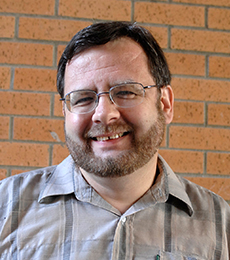
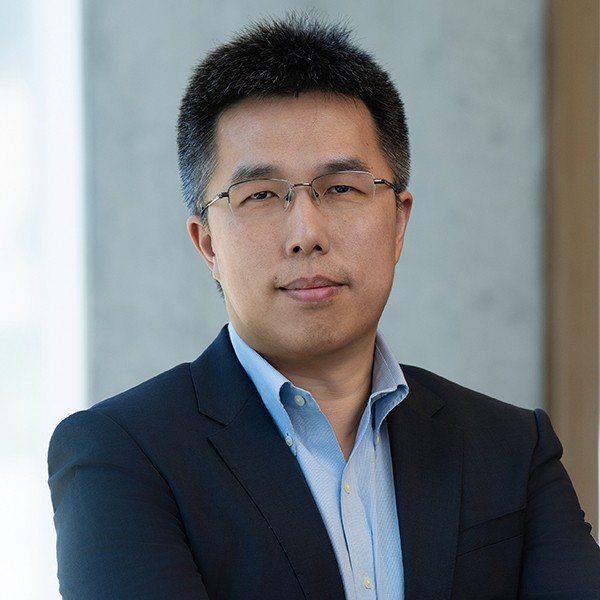
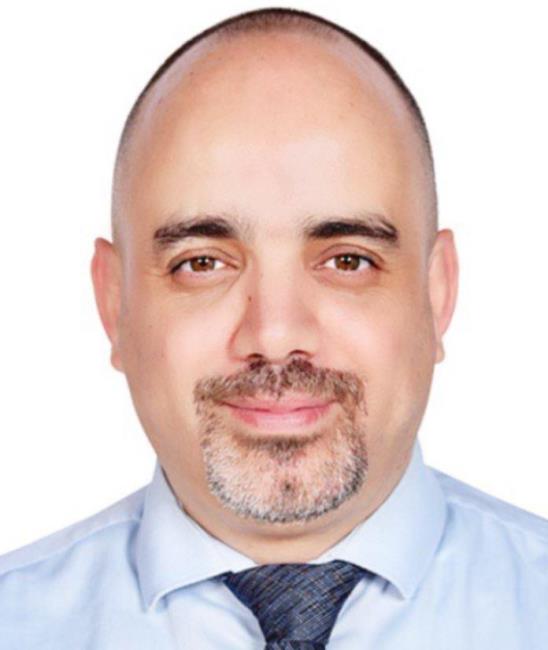
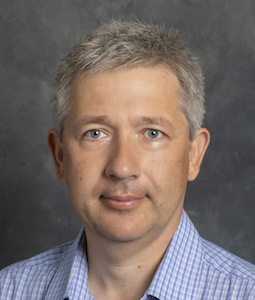
Alexandre Megretski is a Professor of Electrical Engineering and Computer Science at the Massachusetts Institute of Technology (MIT), affiliated with the Laboratory for Information and Decision Systems (LIDS). He specializes in control systems, signal processing, and machine learning applications. Previously, he held roles at the Royal Institute of Technology (Sweden), University of Newcastle (Australia), and Iowa State University. His work focuses on system modeling, neural networks, and robust optimization techniques. Research interests include dynamical systems, reinforcement learning, beamforming algorithms, and analog circuit design. He has contributed to advancements in MIMO systems, uncertainty quantification, and certification-based training frameworks. Notable projects include ConCerNet for physics-informed machine learning and studies on passive intermodulation cancellation in RF systems. Awards and grants are not explicitly listed in the provided materials. Megretski collaborates extensively with industry and academic institutions, emphasizing practical applications of theoretical research. His laboratory work at LIDS integrates interdisciplinary approaches to address challenges in data science and systems engineering.
Professor Liang Jiang is a faculty member at the University of Chicago's Pritzker School of Molecular Engineering, specializing in theoretical quantum systems. He leads the Jiang Group, focusing on quantum communication, computing, sensing, and error correction. His work emphasizes protecting quantum information via advanced control techniques and error correction to enable robust quantum processing. Education: BS from Caltech (2004), PhD from Harvard (2009), Sherman Fairchild Postdoc at Caltech. Previously held roles at Yale University before joining UChicago in 2019. Awards include Alfred P. Sloan and Packard Fellowships. Research spans modular quantum computation, global networks, and nano-scale sensors. Key areas of study include quantum control protocols, error correction mechanisms, and applications in sensing/simulation. Group members include graduate/postdoc researchers like Gideon Lee, Senrui Chen, and Junyu Liu. Active in patent development (e.g., quantum error correction patents from 2016–2020). Labs/Teams: Jiang Group actively recruits students/postdocs, emphasizing interdisciplinary research at the intersection of quantum theory and applied physics. Collaborates on hardware-software integration for scalable quantum systems.
Dr. Abdel-Karim Al-Tamimi is a Senior Lecturer in Computer Science and Software Engineering at Sheffield Hallam University (SHU), where he leads the Interactive Data Analytics Group (iDAG) and contributes to the Applied Software Engineering Research Group (ASERG). He previously served as an Associate Professor at Yarmouk University (Jordan), Director of the Entrepreneurship and Innovation Center (EIC), and Department Chair at the Higher Colleges of Technology (UAE). His roles include consultancy in digital transformation via the DIfG program and editorial board memberships for PLOS ONE and Research Reports on Computer Science . Education: MSc and PhD in Computer Engineering, Washington University in St. Louis (2007, 2010) Senior Fellow of the Higher Education Academy (SFHEA) Research Interests: Machine Learning applications in Natural Language Processing (NLP), Multimedia Networks, Computer Security, and IoT. Recent work focuses on conversational agents (e.g., Phyllis chatbot for adolescent health) and cybersecurity education frameworks. Projects include EU-funded initiatives (e.g., H2020, DFG) and interdisciplinary collaborations in AI-driven solutions. Publications: Over 50+ peer-reviewed articles, including recent contributions on optimization algorithms, game-based learning, and threat intelligence models. His work spans journals like Cluster Computing , ACM Transactions on Computing Education , and conferences such as IEEE BigComp. Grants & Awards: Received £10k for the Phyllis chatbot project and £9.8k for Sheffield’s population health initiative. Awards include SFHEA and industry certifications (Huawei HCIA-AI, Cisco CCNA). Advising & Teams: Oversees interdisciplinary projects and labs like the Orange-Yarmouk Innovation Lab. Active in academic entrepreneurship through roles like Co-Founder of Phyllis and mentor at global hackathons.
Yuriy V. Pershin is a Professor in the Department of Physics and Astronomy at the McCausland College of Arts and Sciences, University of South Carolina. His research focuses on emerging memory devices (e.g., memristors, memcapacitors), unconventional computing paradigms, and 2D materials like graphene. He leads experimental and theoretical investigations into device fabrication, nonlinear dynamics, and nanoscale phenomena. Research Interests: Emerging Memory Devices: Designing memristive systems with memory retention capabilities, modeling their electrical behavior, and exploring their applications in low-power circuits. Unconventional Computing: Developing computing architectures that integrate memory and logic (e.g., neuromorphic networks), demonstrated through FPGA implementations and memristive neural networks. 2D Materials: Studying graphene kinks and antikinks as nanoscale motion carriers, with applications in nanoelectromechanical systems (NEMS). Key contributions include defining rigorous tests for ideal memristors, optimizing Joule-loss reduction in memristive systems, and proposing hardware implementations of memcomputing. His work bridges fundamental physics with applied engineering, leveraging tools like SPICE modeling and molecular dynamics simulations. Publications emphasize theoretical rigor and experimental validation, often addressing controversies in memristor characterization. Notable themes include noise-induced chaos in memcomputing, synchronization in memristive networks, and graphene-based electromechanical systems. Awards and Grants: No specific awards listed, though his work reflects sustained research funding in nanotechnology and device physics. Collaborations span academia and industry, focusing on practical applications of novel materials and circuits. Labs/Teams: His laboratory focuses on interdisciplinary projects at the intersection of physics, electronics, and materials science, with ongoing efforts in device fabrication, circuit emulation, and theoretical modeling.
Bin Yang is a Professor at the Department of Computer Science, Aalborg University, affiliated with The Technical Faculty of IT and Design. His research focuses on data engineering, artificial intelligence, and machine learning, with emphasis on spatiotemporal data analysis, representation learning, and time series forecasting. He leads projects like aSTEP (spatio-temporal data analytics) and Light-AI for Cognitive Power Electronics. Key contributions include advancements in trajectory data processing, anomaly detection, and lightweight neural architectures. Research interests span machine learning, data mining, intelligent transport systems, and material science applications. Notable awards include the IJCAI 2019 Distinguished PC Member and Sapere Aude Research Leader (2018). He has supervised six PhD students and contributed to over 119 publications. His work is supported by grants from Villum Foundation and EU initiatives. Yang is involved in interdisciplinary collaborations, including data-driven decision-making frameworks and environmental monitoring systems. Labs and teams include the Daisy Center for Data-intensive Systems and AI for the People initiatives. Projects emphasize real-world applications in smart cities, traffic forecasting, and sustainable technologies. His research bridges theoretical foundations with practical implementations in domains like oceanography and crowdsourcing systems.
Arti Ahluwalia is Professor of Bioengineering at the University of Pisa's School of Engineering, affiliated with the Research Center 'E. Piaggio' and serving as Director of the Interuniversity Center for the Promotion of the 3Rs Principles in Teaching and Research (Centro 3R). With a multidisciplinary background spanning physics, instrumentation science, and bioengineering, her research integrates biomaterials, microfabrication, and computational modeling. Research focuses on human-based organ and system models using soft materials, cell derivatives, and intelligent bioreactor design. Current projects include: in-vitro models of metabolic disease/aging, nanotoxicology, advanced imaging, and open biomedical engineering education. Her work has produced commercialized multicompartment bioreactors through spin-off companies Kirkstall Ltd and IVTech srl. Recent publications demonstrate strong emphasis on open-source medical devices, 3Rs principles implementation, and computational platforms for nanotoxicology and cellular construct design. Key themes include regulatory frameworks for open-source medical technology, diagnostic tools for resource-limited settings, and ethical alternatives to animal testing. Teaching encompasses Biomechanics of Tissues, Micro & Nanobioscopy, and Design Principles for Bionics Engineering across undergraduate and graduate biomedical engineering programs.
Arjuna Madanayake is an Associate Professor in the Department of Electrical & Computer Engineering at Florida International University (FIU), part of the College of Engineering. His research focuses on multidimensional systems, wireless communications, array processing, and analog computing. He holds a Ph.D. from the University of Calgary and B.S. from the University of Moratuwa, Sri Lanka. Dr. Madanayake's work emphasizes low-complexity algorithms for multi-beam beamforming, RF sensing, and FPGA implementations. His lab (RAND Lab) develops innovative solutions in terahertz communications, spectrum intelligence, and AI-driven signal processing. He teaches EEL 5500 Digital Communication Systems and collaborates on projects involving reconfigurable intelligent surfaces and 5G/6G technologies. His recent publications (2020–2025) address challenges in ultra-broadband communication systems, analog computing for PDEs, and spectrum management. He has contributed to IEEE journals and conferences, focusing on practical implementations in hardware and software-defined radio platforms.
Marcello De Matteis serves as Associate Professor in the Department of Physics at the University of Milano-Bicocca, Italy, specializing in Application-Specific Integrated Circuit (ASIC) design for medical physics, high-energy experiments, and sensor systems. With over 35 ASICs developed since 2005—including principal design of 20+ chips across 0.5μm CMOS to 16nm FinFET technologies—he bridges electronics engineering with clinical applications in proton therapy and neuroscience. His educational background features a double degree from the Top Industrial Managers for Europe (TIME) program: Industrial Engineering, Polytechnic University of Madrid (2003) Electronic Engineering, Polytechnic University of Milan (2004) Research focuses on radiation-hardened analog circuits for particle detectors (ATLAS Muon Drift Tubes), proton therapy instrumentation (Proton Sound Detector project), and neuromorphic biosensors using neuron-electronic junctions. His work emphasizes low-power, high-precision front-ends for ionoacoustic imaging, with recent publications targeting FLASH radiotherapy monitoring and quantum computing interfaces. Analysis of his 15 most recent publications reveals dominant trends in medical physics instrumentation (70% of works), particularly ionoacoustic dosimetry for proton beam therapy, alongside growing contributions to neuromorphic engineering (20%) and radiation-hardened design (10%). All leverage advanced CMOS/FinFET nodes (28nm–12nm) to address noise, power, and radiation tolerance challenges in clinical and space applications. Key career recognition includes: Italian National Scientific Qualification for Full Professor (Electronics, 2020) Technical Program Committee roles for IEEE ESSCIRC, PRIME, and ICICDT conferences Associate Editor for Journal of Circuits, Systems and Computers (World Scientific) As Principal Investigator for INFN-funded projects since 2018, he coordinates multi-institutional teams across Italy and Germany on proton therapy instrumentation. His grant portfolio includes: Proton Sound Detector (INFN): 4-unit collaboration (Milano-Bicocca, CNAO, LMU Munich, INFN Catania) for real-time Bragg peak localization ScalTech28/FinFet16 (INFN): Rad-hard ASIC design in 28nm/16nm for high-luminosity LHC upgrades SAFIR GEM (2022): Submarine acoustic monitoring infrastructure funded by University of Milano-Bicocca Current leadership spans two research streams: CMOS 28nm biosensors for neuron-electronic interfaces and proton sound detectors for hadron therapy. Previously, he directed MEMS sensor development at University of Salento (2008–2012) and served as technical lead for ATLAS Muon Drift Tube ASICs. His industry collaborations include Infineon, IMEC, and STMicroelectronics, with recent work integrating PVDF ultrasound arrays for melanoma diagnosis and FinFET neurons for neuromorphic computing.
Hadi Mardani Kamali is an Assistant Professor at the University of Central Florida (UCF) in the Department of Electrical and Computer Engineering . His research focuses on VLSI design and testing , Hardware security and trust , FPGA design , Electronic design automation (EDA) , and Applied machine learning in hardware contexts. Dr. Kamali is actively engaged in research projects related to IC/IP protection , security-aware EDA , and security of learning models .
Alexander Haimovich is a Distinguished Professor in the Department of Electrical and Computer Engineering at New Jersey Institute of Technology (NJIT). He received his Ph.D. in Systems Engineering from the University of Pennsylvania in 1989 and joined NJIT in 1992. His leadership roles include directing the New Jersey Center for Wireless Telecommunications and serving as a visiting fellow at Princeton University. He holds the Ying Wu Endowed Chair and is a Fellow of the IEEE. Education: Ph.D., Systems Engineering, University of Pennsylvania, 1989 M.S., Electrical Engineering, Drexel University, 1983 B.S., Electrical Engineering, Technion - Israel Institute of Technology, 1977 Research Focus: Professor Haimovich specializes in wireless communications, radar systems, and signal processing. His work explores fundamental limits of detection and estimation theory, with applications in cognitive radar, MIMO systems, and interference mitigation. Current projects involve adaptive radar detection using meta-learning and blind source separation techniques for frequency-hopping signals. Publication Trends: His recent articles demonstrate strong focus on radar waveform optimization, machine learning applications in signal processing, and sub-Nyquist radar systems. Works frequently address challenges in spectral congestion and real-time adaptive detection. Awards: Fellow of the IEEE Academic Leadership: Oversees graduate research programs and maintains collaborations with defense and telecommunications industries. Manages laboratory facilities for wireless system prototyping.
Dr. Horacio Rostro González is an Assistant Professor in the Department of Industrial Engineering at IQS School of Engineering, Ramon Llull University. His research focuses on neural network implementations using field-programmable gate arrays (FPGAs), with applications in robotics, motor imagery systems, and industrial automation. Research Focus: Development of hardware-accelerated AI systems for pattern recognition, robot locomotion control, and human-machine interfaces. Key projects include neuromorphic computing for spatio-temporal classification and AI-driven photonics parameter optimization. Projects: Member of the Industrial Engineering Research Group (GEPI), working on offshore wind farm data analysis using machine learning and renewable energy prediction systems.
Michel Barbeau is a Professor and Director at the School of Computer Science, Carleton University. He holds a Ph.D. in Computer Science from Université de Montréal (1991) and has held academic roles at Université de Sherbrooke (1991–1999) and a visiting position at the University of Aizu, Japan. His research focuses on non-classical wireless networks, including underwater acoustic communication systems, quantum networks, and resilience assessment of cyber-physical systems. He leads projects involving acoustic signal processing, underwater node communication, and challenges like multipath propagation in aquatic environments. His team tested prototypes in Ottawa’s Rideau Canal. His work spans underwater communication protocols, quantum encryption, and AI-driven network optimization. He is active on YouTube and Twitter, and his ORCID profile highlights interdisciplinary contributions. His research emphasizes practical applications in environmental monitoring, coastal navigation, and secure quantum communication frameworks. Education: Ph.D. Computer Science, Université de Montréal (1991) M.Sc. Computer Science, Université de Montréal (1987) B.Sc. Computer Science, Université de Sherbrooke (1985) Research Interests: Underwater Acoustic Networks Quantum Communications and Cryptography Cyber-Physical Systems Resilience Ad Hoc and Mobile Networks Machine Learning for Network Optimization His current projects address challenges such as signal interference in underwater environments and developing quantum-safe cryptographic algorithms. Collaborations involve interdisciplinary teams of students and researchers. Advancement and Grants: Lead projects on underwater surveillance systems Explores quantum encryption protocols for post-quantum security Investigates AI-driven solutions for UAV and MIMO networks Labs and Teams: His research group focuses on experimental prototyping, including underwater acoustic networks and quantum communication frameworks. Collaborations span academia and industry for real-world applications.
Mostafa Rahimi Azghadi is a Professor and Head of the Electrical and Electronic Engineering Discipline at James Cook University (JCU). He specializes in neural-inspired computing, machine learning, and AI applications in agriculture, aquaculture, medicine, and biosecurity. He has secured over $20M in research funding and holds leadership roles in several ARC research hubs and centers, including Deputy Director of the ARC Training Centre in Plant Biosecurity and AI Leader of the ARC Industrial Transformation Research Hub for Aquaculture. Education: PhD in Electrical and Electronic Engineering (University of Adelaide, 2014), with prior degrees from Iranian National University. Affiliations: Acting Director of JCU's Agriculture Technology and Adoption Centre, IEEE Northern Australia Section Chair, and Associate Editor of Frontiers in Neuroscience and IEEE Access. Research Interests: Focus on AI, deep learning, neuromorphic engineering, and hardware acceleration. His work spans applications in sustainable agriculture, biosecurity, and healthcare, including projects on fish phenotyping, stress monitoring via wearables, and memristive neuromorphic systems. Publications & Impact: Over 100 journal articles and conference papers. Recent work includes advances in memristive neural networks, underwater fish segmentation, and stress prediction models. His research bridges theory and practice, emphasizing real-world problem-solving. Awards: Top 2% global citation rank in EEE (2020), QLD Young Tall Poppy Science Award (2017), and multiple best paper awards. Grants & Funding: Secured major grants for aquaculture genomics, sugarcane health monitoring, and robotic weed control. Teaching: Coordinates and lectures on embedded systems and sensors. Emphasizes hands-on learning and industry relevance, with a focus on connecting theory to practical engineering challenges.
Prof. Dr. Ece Olcay Gunes is a Professor at the Department of Electronics and Communication Engineering, Faculty of Electrical and Electronics, Istanbul Technical University. She specializes in analog circuit design, embedded systems, and biometric applications. Her research emphasizes signal flow diagrams, sensitivity analysis, and VHDL-based design methodologies. Her work spans multiple domains including stochastic computing optimization, embedded system implementations, and fault detection in electrical systems. Recent projects include AI-driven visual odometry for robotics and post-quantum cryptography algorithms for RISC-V processors. Prof. Gunes has advised over 20 graduate students, focusing on topics like multiple constant multiplications optimization, biometric gender classification, and FPGA-based elliptic curve cryptography. She leads research in agricultural robotics and IoT integration for smart farming, including autonomous robots for crop monitoring and seed classification.
George C. Alexandropoulos George C. Alexandropoulos is an Associate Professor at the Department of Informatics and Telecommunications, School of Sciences, National and Kapodistrian University of Athens (NKUA). He also holds an adjunct professorship at the University of Illinois Chicago. His research focuses on wireless communication systems, signal processing, and reconfigurable intelligent surfaces (RIS), with contributions to integrated sensing and communications (ISAC), millimeter-wave/THz systems, and distributed machine learning. Education Ph.D. in Computer Engineering and Informatics, University of Patras, Greece (2010) M.A.Sc. in Signal and Communications Processing Systems, University of Patras, Greece (2005) Engineering Diploma (5 years), Computer Engineering and Informatics, University of Patras, Greece (2003) Research Interests Alexandropoulos' work spans algorithmic design for wireless networks, optimization of multi-antenna systems, and full-duplex radios. He is particularly known for pioneering contributions to reconfigurable metasurfaces, including their application in ISAC and 6G networks. His research emphasizes practical implementations, such as prototypes for AoA estimation and field trials for RIS deployment. Articles His publications highlight advancements in secure ISAC, fluid RIS design, and edge-intelligence networks. Recent work explores challenges in THz RIS hardware and OTA edge inference using metasurface-integrated neural networks. Scientific Awards IEEE ComSoc Leonard G. Abraham Prize (2024) IEEE Marconi Prize Paper Award (2021) NKUA Research Excellence Award (2023-2024) Advising & Grants Alexandropoulos has led several EU and industry projects, including contributions to Huawei's 5G standards and TII's AI research. His work often involves interdisciplinary teams and practical prototyping. Labs & Teams He is affiliated with the Communications and Signal Processing division at NKUA and collaborates with institutions like ATHENA Research Center and the Technology Innovation Institute (Abu Dhabi).