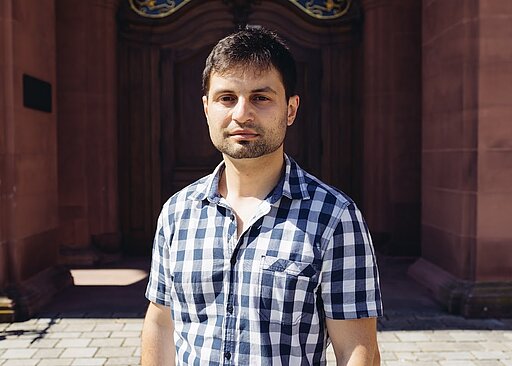
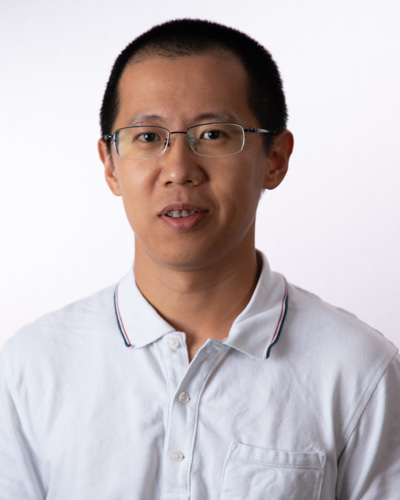
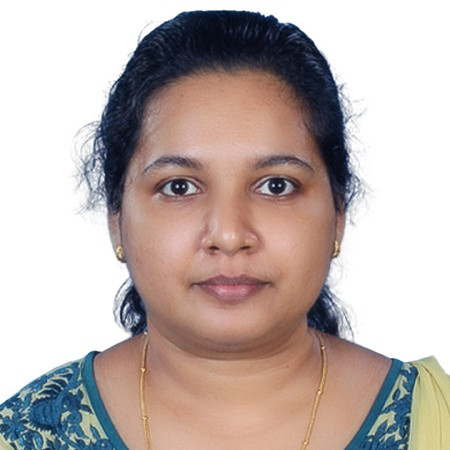
Goran Glavaš is a Professor at the University of Würzburg's Faculty of Mathematics & Computer Science, holding the Chair for Natural Language Processing (Computer Science XII) and affiliated with the Center for Artificial Intelligence and Data Science (CAIDAS). His research focuses on computational semantics, multilingual/low-resource representation learning, and democratizing language technologies through fairness and sustainability. Former Assistant Professor at University of Mannheim (2017-2021) Interim Associate Professor at LMU Munich (2021-2022) Doctorate in 2014 at University of Zagreb under Jan Šnajder Recent research trends emphasize cross-lingual learning, multilingual knowledge integration, and ethical AI frameworks. His group contributes to robust multilingual models, vision-language systems, and sustainable NLP applications in social sciences. Outstanding Paper Award at ACL 2024 (IRCoder) Outstanding Paper Award at EACL 2024 (Kardeş-NLU) Extensive publications in EMNLP, ACL, NAACL, EACL, and TACL Advises a team of researchers at the University of Würzburg's NLP Chair, including Benedikt Ebing, Gregor Geigle, and Fabian David Schmidt. Leads the WüNLP group within CAIDAS, focusing on democratizing language technologies.
Chen Pan is an Assistant Professor in the Department of Electrical and Computer Engineering at the University of Texas at San Antonio's Klesse College of Engineering and Integrated Design. His research focuses on energy-harvesting embedded systems, low-power computing, and IoT network optimization through machine learning techniques. Ph.D. from University of Pittsburgh Specializes in transient computing for batteryless devices Develops reinforcement learning solutions for UAV-assisted IoT systems Chen's recent publications emphasize energy-aware scheduling, non-volatile memory optimization, and sustainable communication protocols. His work intersects spatiotemporal modeling, fault tolerance, and resource-constrained AI execution across heterogeneous architectures.
Dr. Aamir Younis Raja is an Assistant Professor in the Physics Department at Khalifa University, UAE, where he co-founded the Medical Physics wing and co-developed the accredited M.Sc program in medical physics. He has held academic roles including Senior Research Fellow at the University of Otago, Visiting Research Fellow at the University of Canterbury, and Visiting Academic Teaching Staff at ARA Institute of Canterbury. His research focuses on radiation physics , medical imaging physics , and spectral photon-counting CT applications in bone/cartilage health , metal implant characterization , cancer imaging , atherosclerosis , and arthritis . Education: PhD in Medical Physics (University of Canterbury, 2013), M.Sc in Applied Physics (UET Pakistan, 2006), B.Sc in Physics & Mathematics (University of the Punjab, 2004) Dr. Raja’s work combines nanoparticle technology with low-dose multi-energy CT to identify non-toxic contrast agents, develops machine learning-based radiation monitoring tools , and pioneers AI-driven artefact reduction in CT imaging. His projects include collaborations with international institutions on material decomposition algorithms and biomedical applications of spectral CT. Notable scientific recognition includes being a Fellow of the Union for International Cancer Control and securing the Khalifa University Faculty Startup Grant . He has supervised over 20 thesis students across University of Otago, University of Canterbury, and Khalifa University, including PhD candidates working on material reconstruction software , parametric color imaging , and machine learning for CT artefact reduction .
Xingcheng Zhou is a Research Assistant at the Technical University of Munich (TUM), affiliated with the Chair of Robotics, Artificial Intelligence and Real-time Systems since 2023. He holds an M.Sc. in Electrical and Computer Engineering from TUM (2021) and previously worked as an Industrial AI Researcher at Siemens. Research Interests: Focus on Large Language Models , Vision Language Models , 3D Environment Perception , and Domain Adaptation in autonomous driving contexts. Publications: Contributions to 3D object detection refinement, sim2real domain adaptation, vision-language models, and dataset development for intelligent transportation systems. Teaching Involvement: Co-supervisor for master's theses and seminars on autonomous agents, perception models, and traffic environment understanding. Advising: Mentoring students on projects including LiDAR-guided monocular detection, world models, and multimodal benchmarks for transportation scenes. Trends in Research: Zhou's work bridges low-light image enhancement with spatial-frequency features, surface-aware frameworks for 3D detection, and weakly-supervised domain adaptation. He contributes to benchmarking spatio-temporal video understanding and evaluating autonomous driving datasets. Supervision and Collaboration: Co-authored key surveys and frameworks with Prof. Alois C. Knoll and peers, focusing on real-time roadside LiDARs, graph-based object relationships, and vision-language integration for traffic analysis.
Professor Hakim Al-Samoui is a distinguished faculty member in the Department of Civil Engineering at the Faculty of Engineering, University of Tripoli. He has served at the university since 2003, obtaining the rank of Professor in 2005 and receiving a promotion to job grade 16 in 2022 (effective from January 1, 2017). His academic career spans over three decades with significant contributions to concrete technology research and education. Bachelor's degree from University of Tripoli (1988) Master's degree from University of Gdansk, Poland (1990) PhD from University of Gdansk, Poland (1996) Worked at University of Gdansk (1996-2002) Professor Al-Samoui specializes in concrete technology with particular expertise in two-stage concrete pouring, concrete durability, fabric formwork, concrete recycling, pozzolanic materials, and concrete mix design. His research bridges theoretical advancements with practical applications in construction engineering. He has published over eighty research papers in distinguished journals and presented at numerous international conferences worldwide, establishing himself as a leading expert in specialized concrete technologies. His recent publications demonstrate a clear trajectory toward sustainable construction materials, advanced concrete technologies, and computational approaches to material science. The research spans traditional concrete innovations while increasingly focusing on eco-friendly alternatives, waste material utilization, and cutting-edge technologies like 3D printing and machine learning applications in construction materials. Scientific Recognition: Fellowship from American Concrete Institute (2020) - first Libyan to receive this honor Active member of American Concrete Institute committees since approximately 1999 External evaluator for leading journals including Construction and Building Materials, American Concrete Institute publications, and American Society of Civil Engineering journals Professor Al-Samoui has supervised six Master's theses at University of Tripoli and served as advisor for graduate students from Gdansk Technical University (Poland), Tehran University (Iran), and Dublin Institute of Technology (Ireland). He has also acted as an external examiner for numerous Master's and PhD theses across multiple universities in Libya, Lebanon, Iraq, and India. His extensive international collaborations include research visits to Columbia University, University of South Carolina, Munich University, and Gdansk University of Technology. Through his active participation in international conferences across more than 20 countries and his role on scientific committees, Professor Al-Samoui maintains a robust research network that spans the global concrete technology community. His recent activities in 2023-2024 demonstrate continued research productivity and academic engagement.
Miguel Costas Piñó serves as Associate Professor in the Department of Structural Engineering at the Norwegian University of Science and Technology (NTNU), where he has been faculty since 2017 and was promoted to Associate Professor in 2021. His research bridges computational mechanics with practical engineering applications in structural safety and material behavior. Education PhD in Civil Engineering, University of A Coruña (2016), thesis: "Crashworthiness analysis and design optimization of hybrid impact energy absorbers" (awarded Cum Laude, International Distinctions, and Extraordinary Doctorate Award) Master of Science in Civil Engineering, University of A Coruña (2011), specialization in Structural Engineering Research Focus Dr. Costas's work centers on computational and experimental solid mechanics , with particular expertise in metal plasticity , aluminium structures , and crashworthiness under extreme loading conditions. His laboratory investigates ballistic penetration phenomena and structural optimization for energy-absorbing systems, utilizing advanced finite element methods and physical testing protocols. Current projects integrate machine learning with traditional mechanics to model complex failure modes in multi-material systems. Publication Trends His 2020-2025 publications reveal three dominant trajectories: (1) ballistic resistance of additively manufactured metals for defense applications, (2) crash safety of electric vehicle battery systems, and (3) advanced modeling of mechanical joints. These works consistently combine experimental validation with computational innovation, particularly in neural network applications for large-scale structural simulations. Awards Cum Laude Doctorate International Distinctions (PhD) Extraordinary Doctorate Award Professional Activities Dr. Costas actively collaborates with industry partners on structural safety projects and serves as principal investigator for multiple NTNU research initiatives. His teaching includes graduate courses in materials mechanics, and he maintains dual professional engagement as a classical pianist with Norway's collaborative music community. Current work focuses on AI-driven crash simulation frameworks and next-generation armor materials.
Thomas Gärtner is a Professor at the Institute of Logic and Computation within the Faculty of Informatics at Vienna University of Technology, leading the Machine Learning research group (E194-06). His work bridges theoretical machine learning with practical applications in chemistry, biology, and network analysis. His primary research focuses on graph neural networks (GNNs) and geometric deep learning, with significant contributions to GNN expressivity, graph transformations, and kernel methods for structured data. He explores fundamental questions about the limitations of message-passing architectures while developing practical enhancements like path-based extensions and expectation-complete representations. His chemical informatics work applies these techniques to binding affinity prediction, reaction classification, and solvent selection, demonstrating real-world impact in computational chemistry. Analysis of his 15 most recent publications (2023-2025) reveals three dominant research thrusts: theoretical GNN advancements (35% of articles), chemical informatics applications (40%), and novel learning frameworks (25%). The theoretical work increasingly addresses expressivity limitations through graph transformations and path-based approaches, while chemical applications show growing sophistication in molecular representation. Recent publications also indicate expanding interest in foundation models for graphs and robustness verification. He actively supervises master's students including Fabian Traxler (binding affinity prediction), Maximilian Plattner (SGD optimization), Fabian Jogl (graph transformations), and Thomas Schmied (reinforcement learning). His research is conducted through the Network Lab at TU Wien, where he serves as Principal Investigator for the Structured Data Learning with Generalized Similarities project.
Simone Bianco is an Associate Professor at the Department of Informatics, Systems and Communication (DISCo) of the University of Milano-Bicocca, Italy. His academic and research contributions span computer vision, artificial intelligence, machine learning, and optimization algorithms applied to multimodal and multimedia systems. His educational background includes a PhD in Computer Science (2010) and BSc/MSc degrees in Mathematics (2003/2006), both from the University of Milano-Bicocca. Bianco’s research focuses on color constancy, deep learning for video restoration, neural architecture search, and computational color imaging, with a strong emphasis on practical applications like biometric recognition, medical imaging, and environmental monitoring. The 15 most recent articles (2025–2020) highlight trends in computer vision, including uncertainty estimation in color constancy, portable material appearance modeling, temporal consistency in low-light videos, and advanced deep learning architectures for image and video processing. His work often integrates photogrammetry, sensor technology, and multimodal data analysis. Scientific accolades include recognition on Stanford University’s World Ranking Scientists List for achievements in artificial intelligence and image processing. Bianco also serves as R&D Manager for the University of Milano-Bicocca spin-off Imaging and Vision Solutions and contributes to international conferences and workshops.
Leon Bungert is a Professor of Mathematics of Machine Learning at the University of Würzburg, working in applied analysis and numerics with a particular focus on data science and machine learning. His research investigates PDEs and variational models on graphs, adversarial robustness of machine learning, variational regularization, and nonlinear optimization. Dr. Bungert serves as a guest editor for the European Journal of Applied Mathematics, an associate editor for Advances in Continuous and Discrete Models: Theory and Applications, and is a member of the program committee at SSVM 2025. He is also an ELLIS member and actively organizes conferences and workshops, including "MIA'25" at IHP in Paris (January 13-15, 2025), "Synergies of Machine Learning and Numerics" in Osaka (March 11-13, 2025), and "Mathematical Analysis of Adversarial Machine Learning" in Oaxaca (August 17-22, 2025). Research Interests Dr. Bungert's primary research areas include: PDEs on graphs Adversarial robustness in machine learning Inverse problems Optimization Variational problems in L-infinity Nonlinear eigenvalue problems Image reconstruction with structural priors His work bridges theoretical mathematics with practical applications in machine learning, particularly focusing on the mathematical foundations of deep learning and developing robust algorithms that can withstand adversarial attacks. He has made significant contributions to understanding the connections between partial differential equations and machine learning algorithms. Research Trends Analysis of Dr. Bungert's recent publications reveals a strong focus on the intersection of machine learning and mathematical analysis. A key theme is the application of variational methods and partial differential equations to machine learning problems, particularly in understanding and improving the robustness of neural networks against adversarial examples. His work on Lipschitz learning on graphs has established important theoretical foundations for graph-based semi-supervised learning. Additionally, his research on the infinity Laplacian and p-Laplacian equations provides deep insights into the mathematical structure of machine learning algorithms. The development of Bregman learning frameworks for sparse neural networks represents a significant contribution to efficient deep learning model training. Professional Activities Dr. Bungert is actively involved in the academic community through editorial roles and conference organization. His current professional activities include: Guest editor for the European Journal of Applied Mathematics Associate editor for Advances in Continuous and Discrete Models: Theory and Applications Member of the program committee at SSVM 2025 ELLIS member Co-organizer of multiple international conferences and workshops Technical Contributions Dr. Bungert has developed several open-source software packages that implement his theoretical contributions, including: Code for convergence rates of Lipschitz learning on graphs A Bregman training framework for sparse neural networks CLIP: Cheap Lipschitz Training of Neural Networks Nonlinear Power Method for Proximal Operators and Neural Networks Robust Image Reconstruction with Misaligned Structural Information These implementations are primarily in Python and MATLAB, demonstrating his commitment to making theoretical advances accessible for practical applications.
Jia Hu is an Associate Professor in Computer Science at the University of Exeter. He holds a PhD in Computer Science from the University of Bradford (2010), and M.Eng/B.Eng degrees in Electronic Engineering from Huazhong University of Science and Technology. His research specializes in edge-cloud computing, federated learning, and AI-driven optimization for networks and IoT systems. Research Interests: Hu's work spans resource optimization, applied machine learning (particularly in distributed settings), network security, blockchain integration, and intelligent systems for electric vehicles and Industry 4.0. His recent projects focus on federated edge AI, 6G-enabled industrial IoT, and real-time federated learning via hardware-algorithm co-design. Publications: His 150+ papers emphasize federated learning, edge computing, and reinforcement learning applications. Recent works (2020–2025) show a strong trend toward optimizing AI at the network edge, with themes like digital twins, blockchain security, and EV-integrated systems dominating. Awards & Recognition: Best Paper Awards: IEEE SOSE'16, IUCC'14 Outstanding Service & Leadership Awards for IEEE conferences Top 4% contributor to EPSRC Peer Review Fellow of the Higher Education Academy (HEA) Grants & Projects: Secured €4.7M+ funding from EU Horizon, EPSRC, and Royal Society for projects including: SAILING (Secure AI for Smart Internet-of-Energy, €3.6M) REFINE (Real-time Air Quality Monitoring with UAVs, €897K) SustainAIRA6G (Energy-Efficient AI for 6G Networks, £118K) Advising: Supervised 12 PhD students to completion; currently mentoring 7 students in federated learning, edge computing, and AIoT.
Raji Susan Mathew is an Assistant Professor at the School of Data Science, Indian Institute of Science Education and Research Thiruvananthapuram (IISER TVM). Her research focuses on regularization techniques, compressed sensing, and deep learning for medical image reconstruction, particularly in magnetic resonance imaging (MRI) and quantitative susceptibility mapping (QSM). Current affiliation: School of Data Science, IISER TVM Prior appointments: C. V. Raman Postdoctoral Fellow and Research Associate III at Indian Institute of Science, Bangalore Education: Ph.D. in MR image reconstruction from IIIT-Kerala, M.Tech in Signal Processing from Cochin University of Science and Technology, B.Tech in Electronics and Communication Engineering from Mahatma Gandhi University Her recent publications highlight expertise in AI-driven medical imaging solutions, including QSM optimization , vision transformers for nerve tracking , and unsupervised learning for corrosion analysis . She has also contributed to book chapters on parallel MRI theory and regularization frameworks. Scientific awards include the C. V. Raman Postdoctoral Fellowship and Maulana Azad National Fellowship , supporting her work on efficient algorithms for medical image processing. Dr. Mathew advises Ph.D. and BS-MS students on topics like spiking neural networks in imaging , uncertainty-aware QSM reconstruction , and lightweight AI models for disease classification . She actively reviews for journals like IEEE Transactions on Medical Imaging and conferences like ISBI and ICASSP.
Yuzhang Shang serves as an Assistant Professor of Computer Science at the University of Central Florida, where he is affiliated with the Artificial Intelligence Initiative. His research bridges theoretical and applied aspects of efficient artificial intelligence systems. His academic credentials include: Ph.D. in Computer Science from Illinois Institute of Technology Dual B.S. in Applied Mathematics and Economics from Wuhan University Dr. Shang's primary research focuses on developing scalable and efficient AI methodologies, with particular expertise in model compression techniques for deep learning architectures. His work addresses critical challenges in deploying resource-intensive models on edge devices through innovations in quantization, binarization, and dataset distillation. This research spans computer vision, natural language processing, and generative models, aiming to reduce computational costs while maintaining model accuracy. Analysis of his 2023-2024 publications reveals a concentrated research trajectory in model compression, especially for large language models and diffusion architectures. His work demonstrates methodological innovations in contrastive learning for quantization calibration, causal approaches to data-free quantization, and mutual information optimization for dataset distillation, establishing him as an emerging leader in efficient AI. His notable recognitions include: ML and Systems Rising Stars 2025 by MLCommons Award of Excellence in Dissertation Research at Illinois Institute of Technology While no specific student advisement or grant information is publicly documented, his industry internships at Google DeepMind and Cisco Research indicate strong translational research capabilities. His ongoing work likely involves collaborations through UCF's Artificial Intelligence Initiative to advance practical AI deployment. As an active member of UCF's research ecosystem, he contributes to the university's Artificial Intelligence Initiative, which fosters interdisciplinary collaboration on cutting-edge AI challenges across academic and industry partners.
Arnab Kumar-Mondal is a Machine Learning Researcher at Apple Inc., with a Ph.D. in Deep Learning from McGill University and Mila – Quebec Artificial Intelligence Institute. His work bridges theoretical and applied research in computer vision, language modeling, robotics, and AI for science. Ph.D. from McGill University (2025 completion) Internships at Microsoft Research and Apple Visiting Researcher at ServiceNow Research and Huawei Noah’s Ark Lab B.Tech in Electronics and Electrical Engineering from IIT Kharagpur His research focuses on equivariant learning , state space modeling , and generative adversarial networks (GANs) , with applications in medical imaging, human motion analysis, and vector graphics generation. Key contributions include canonicalization frameworks for symmetry-aware modeling and spectral analysis of representation quality in self-supervised learning. Collaborations span institutions like ServiceNow, Huawei, and Mila. Recent publications (2023–2025) explore symmetry-aware generative modeling , efficient dynamics modeling in interactive environments, and rotation-invariant visual representation learning. His work on ternary language models at ICLR 2025 demonstrates scalable pretraining techniques. Arnab maintains active contributions to open-source software, including PyTorch implementations for semi-supervised segmentation via CycleGAN. His technical depth extends to VLSI engineering, embedded systems, and free-form lens design from undergraduate research. Professional activities include patents on video-language foundation models, internships at leading tech firms, and cross-institutional research roles.
Lars Schäfer , Professor at the Faculty of Chemistry and Biochemistry at Ruhr University Bochum , leads the Molecular Simulation Group. His research focuses on the interplay between structure, dynamics, and function of biological macromolecules using computational methods like molecular dynamics (MD) and QM/MM simulations. Key research areas: solvation science, membrane protein dynamics, ABC transporters, and hydration thermodynamics. His group contributes to the Cluster of Excellence RESOLV and utilizes the ZEMOS facility for solvent-driven process simulations. Recent work includes collaborations on oxygen-stable hydrogenases, nanodisc modeling, and force field development (e.g., Martini 3). The group's scientific approach spans from fundamental quantum mechanical studies (e.g., atomic radii calculations) to applied research in pharmaceuticals (e.g., therapeutic protein stabilization). Their simulations provide atomic-level insights into phenomena like liquid-liquid phase separation and ATP-driven membrane transport. Labs & Collaborations : Hosted at the Center for Theoretical Chemistry (ZEMOS). Active in interdisciplinary networks: Integrated Graduate School Solvation Science, RUB Research School, and international partnerships.
Zhao Zhigang is an Associate Professor at the School of New Materials and New Energy, Shenzhen University of Technology, where he has been employed since May 2017. Previously, he served as a Lecturer at the School of Optoelectronic Engineering, Shenzhen University (2013-2017) and completed postdoctoral research at Shenzhen University (2010-2012) after earning his PhD from Huazhong University of Science and Technology. His academic journey began with undergraduate and master's studies at PLA Ordnance Engineering College (now Army Engineering University). His educational background includes: PhD in Optical Engineering, Huazhong University of Science and Technology (2005-2010) Master's in Optical Engineering, PLA Ordnance Engineering College (2002-2005) Bachelor's in Military Optoelectronic Engineering, PLA Ordnance Engineering College (1995-1999) Zhao's research focuses on hyperspectral imaging systems and machine learning applications for material classification. His work emphasizes embedded image data acquisition and processing using ARM and FPGA platforms, with significant contributions to micro-hyperspectral imaging technology. His research spans three primary areas: hyperspectral image processing on ARM/FPGA systems, machine learning applications in spectral analysis, and embedded AI implementations on FPGA/Zynq platforms. This interdisciplinary work bridges optical engineering, computer vision, and hardware design. Analysis of his recent publications reveals a strong emphasis on hyperspectral data compression techniques , machine learning applications for spectral analysis , and embedded system implementations . His work demonstrates a consistent focus on practical applications of hyperspectral imaging in fields ranging from food quality assessment to battery health monitoring, with increasing incorporation of deep learning techniques in recent years. His scientific recognition includes: Multiple teaching awards at Shenzhen University of Technology (2019-2024) Shenzhen City high-level professional talent designation (2016) Numerous national competition awards as student supervisor (2016-2023) Outstanding Paper Award at Shenzhen Optical Society (2010) Zhao has secured substantial research funding as Principal Investigator, including horizontal projects (2023-2024), Shenzhen Postdoctoral Research Funding (2019-2020), and Shenzhen Basic Research Projects. He has successfully guided students in academic competitions, resulting in five national first prizes. His research group maintains strong industry connections through multiple school-enterprise cooperation projects focused on practical applications of hyperspectral imaging technology. His laboratory work centers on FPGA-based embedded systems for hyperspectral imaging, with recent projects developing micro-hyperspectral spectrometers for UAV platforms, real-time video processing systems, and specialized hardware for spectral data acquisition and compression. These efforts demonstrate a clear trajectory from fundamental optical engineering toward practical applications of machine learning in spectral analysis.