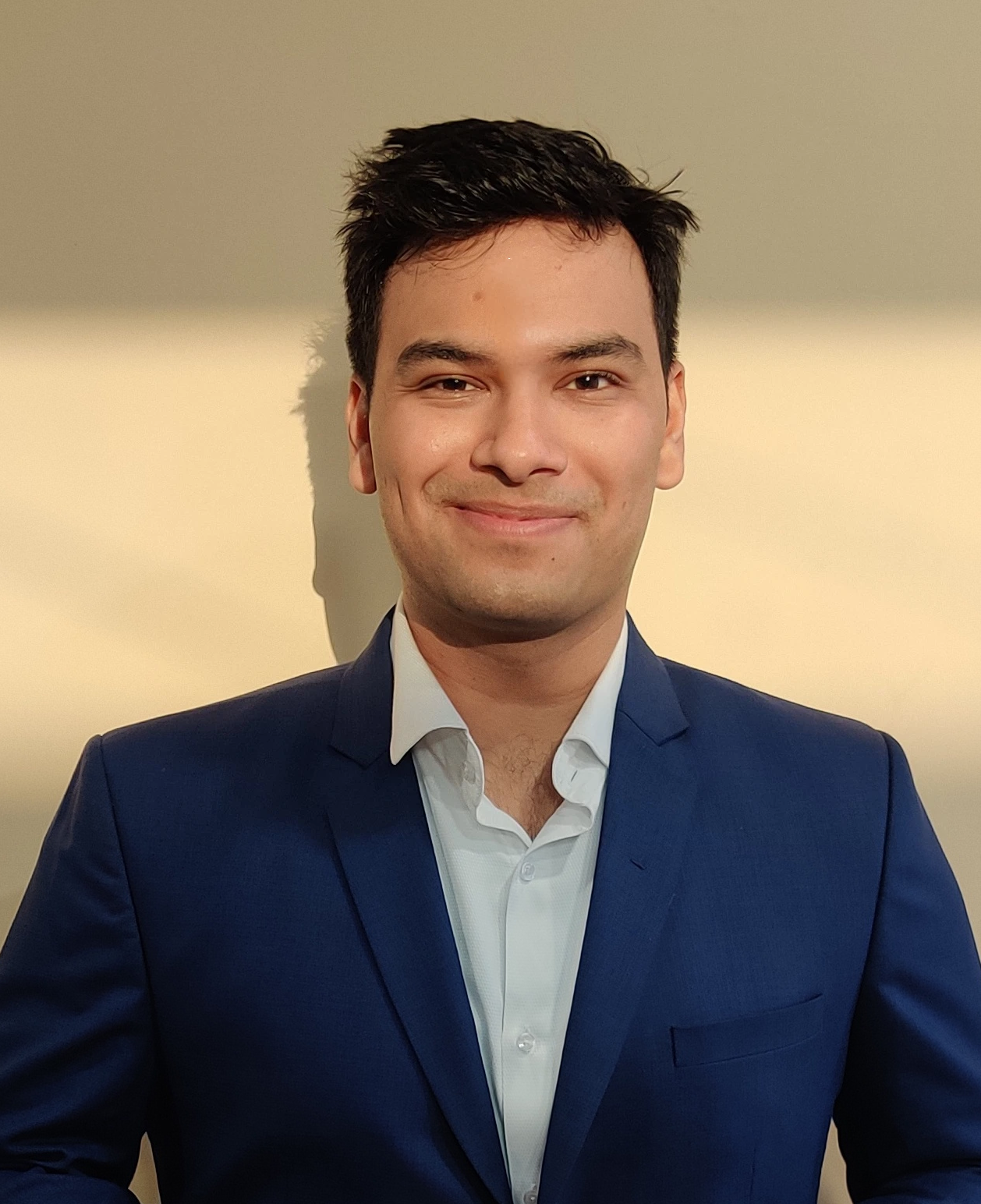
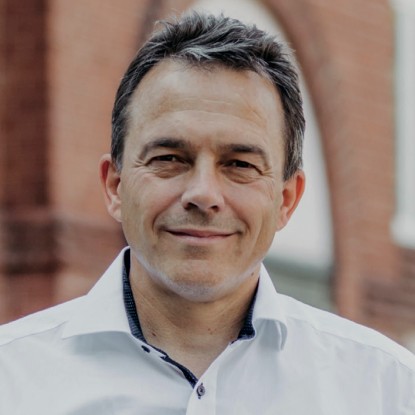
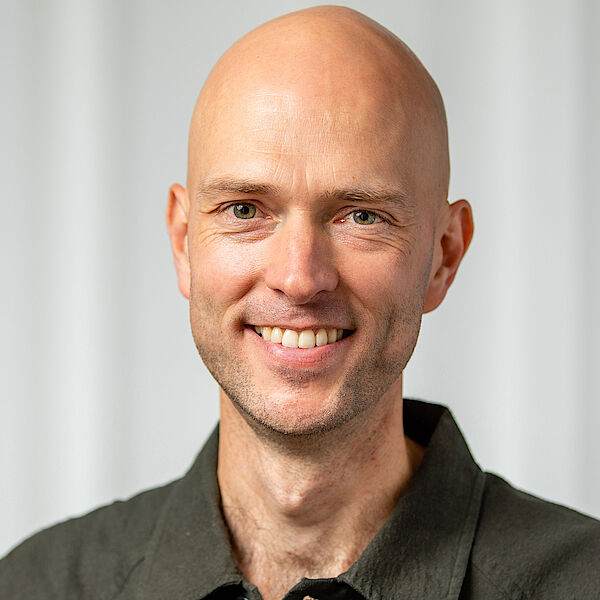
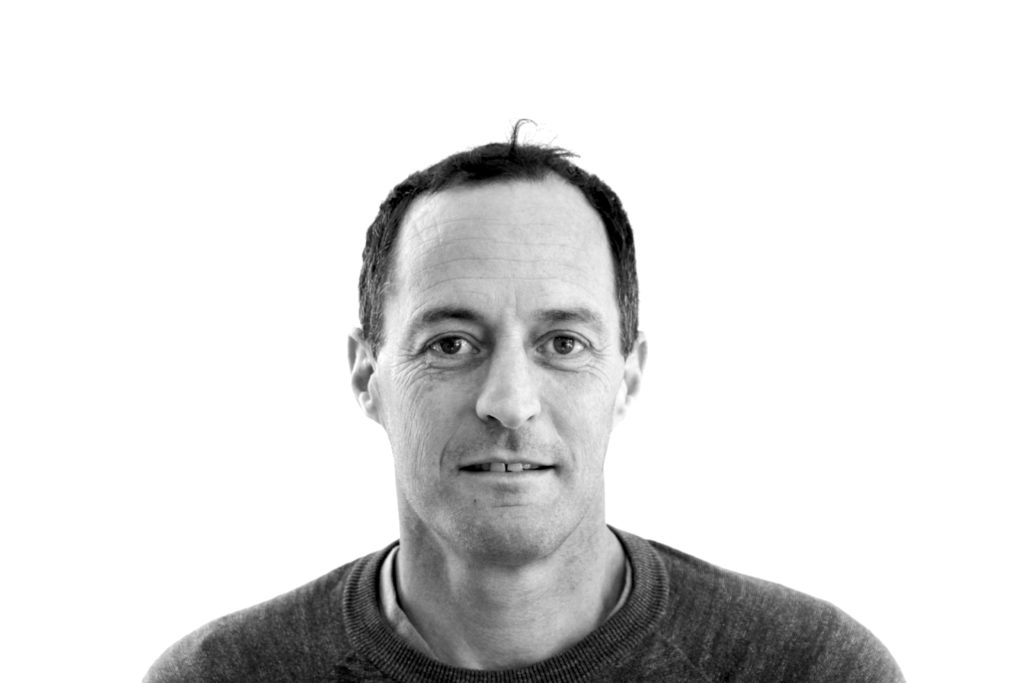
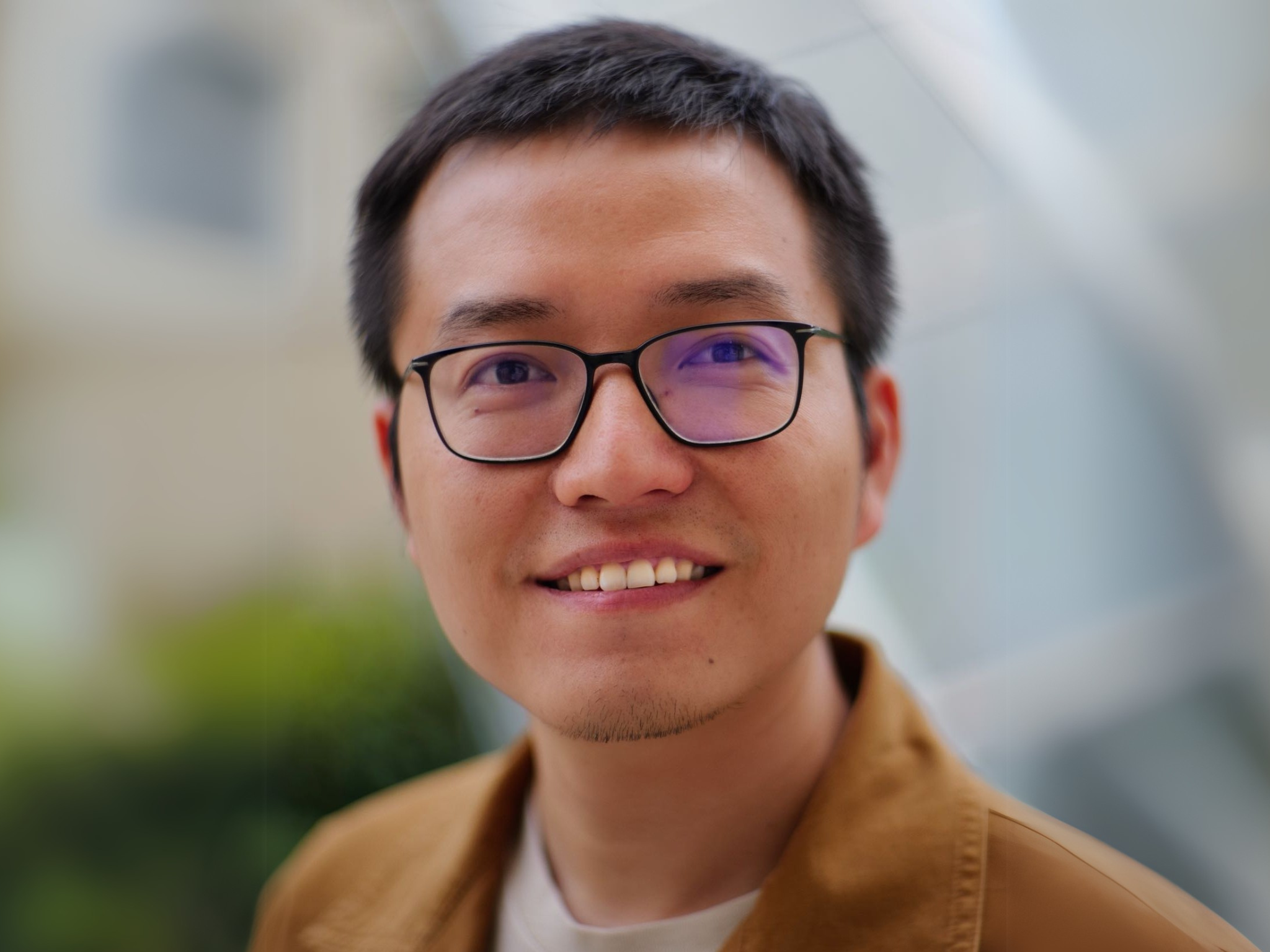
Rishabh Dabral is a Research Group Leader at the Max Planck Institute for Informatics since August 2024, leading the "3D Visual Intelligence" group. He is also affiliated with the Research Training Group on Neuro-Explicit Models of Language, Vision, and Action at Saarland University. Expertise: 3D computer vision, computer graphics, human-object interaction modeling, and motion synthesis. Leadership: Conducts cutting-edge research on 3D human performance capture and physical plausibility in motion. His research focuses on: 3D human pose estimation under gravity constraints Multi-modal gesture synthesis using neural architectures Quantum auto-encoding for 3D representations Wearable robotics informed by human behavior Temporal dynamics in human-object interaction Recent publications at top venues like SIGGRAPH , CVPR , and ICCV demonstrate his work on: Music-driven motion synthesis Egocentric motion capture systems Reactive two-person interaction models Diffusion-based gesture generation Object-aware motion prediction Wearable robotic limb design
Dr. Ilker Hacihaliloglu is an Associate Professor in the Department of Radiology and Medicine at the University of British Columbia's Faculty of Medicine. He holds a PhD from UBC (2010) and has held faculty positions at Rutgers University (2014-2021). His research focuses on applying machine learning to medical imaging, aiming to bridge clinical and engineering research for practical healthcare solutions. Key areas include AI-driven diagnostics, ultrasound imaging, and personalized medicine. Education: B.Sc. and M.Sc., Istanbul Technical University (2001, 2004) Ph.D., University of British Columbia (2010) Postdoctoral Fellow, Vancouver General Hospital (2010-2013) Research Interests: Artificial Intelligence in Medical Imaging Ultrasound-Based Diagnostics Image-Guided Surgery Computer-Aided Diagnostics for Orthopedics and Neurosurgery His work emphasizes explainable AI, standardization in machine learning metrics, and clinical translation of technologies. Scientific Contributions: Over 35 peer-reviewed articles (2019-2025) highlight innovations in medical image segmentation, AI-driven radiomics, and cross-modality imaging. Recent trends focus on synthetic data augmentation, diffusion models for medical imaging, and curriculum development in AI for healthcare. Grants and Advising: No explicit grants mentioned, but active mentorship in interdisciplinary research teams. Collaborations span clinicians, engineers, and computer scientists to address real-world healthcare challenges. Labs/Teams: Engaged in computational ultrasound and AI-driven diagnostics initiatives, though specific lab names are not provided in the text.
Marta Catillo is a Researcher at the Department of Engineering (DING) of the University of Sannio (UNISANNIO) . She specializes in Cybersecurity , with focus on Machine Learning applications for intrusion detection , IoT security , and cloud auto-scaling mechanisms . Her research addresses challenges in Denial of Service (DoS) mitigation , anomaly detection , and deep learning architectures for security. Teaching: [803004] PROGRAMMING 1 for Electronic and Biomedical Engineering students (2025 cohort) Contact: Office hours: Thursdays 3-5 PM, Room 23, Bosco Lucarelli Palace Research trends: From 2019-2025 publications, her work spans adversarial attack resistance , collective anomaly detection , outlier-aware architectures , and empirical analysis of defense mechanisms , with recurring collaborations with Antonio Pecchia , Umberto Villano , and Massimiliano Rak . Key methodologies include deep autoencoders , hybrid detection systems , and measurement-based security evaluation . Technical Contributions: Developed the ZED-IDS framework for zero-day threat detection, MultiCIDS for multivariate time series intrusion detection, and DEFEDGE for edge-cloud security testing.
Dr. Shunqiao Sun is an Assistant Professor in the Department of Electrical and Computer Engineering at The University of Alabama, College of Engineering. He joined the faculty in August 2019 as a tenure-track professor after working at Aptiv’s radar core team in Malibu, California. His research focuses on advanced signal processing, machine learning, and optimization for automotive and MIMO radar systems in autonomous vehicles. Ph.D. : Electrical and Computer Engineering, Rutgers University, 2016 M.S. : Electrical Engineering, Fudan University, 2011 B.S. : Electrical Engineering, Southern Yangtze University, 2004 Dr. Sun's research lies at the intersection of statistical and sparse signal processing , mathematical optimization , and machine learning , with applications in automotive radar , MIMO radar , and autonomous driving . His work emphasizes sparsity-oriented frameworks, AI-powered radar perception, and high-resolution 4D sensing. He leads a dynamic research group focused on next-generation radar technologies for intelligent transportation systems. His recent publications demonstrate a strong trend in deep learning for radar signal recovery , collaborative radar imaging , direction-of-arrival estimation with sparse arrays , and integrated sensing and communication . Several of his papers are among the most downloaded and cited in IEEE journals, including top articles in IEEE Signal Processing Magazine and IEEE Journal of Selected Topics in Signal Processing. Scientific Awards and Honors: NSF CAREER Award (2024) NSF CRII Award (2022) IEEE AESS Robert T. Hill Best Dissertation Award (2016) Best Student Paper Award at IEEE SAM Workshop (2020) Rutgers ECE Academic Achievement Award (2015–2016) University of Alabama Hewson Engineering Faculty Fellow (2025) Dr. Sun is actively involved in academic service and leadership. He is an Associate Editor for IEEE Signal Processing Letters and IEEE Open Journal of Signal Processing . He serves as Vice Chair of the IEEE Signal Processing Society’s Autonomous Systems Initiative and is an elected member of the IEEE Sensor Array and Multichannel (SAM) Technical Committee and the Integrated Sensing and Communication (ISAC) Technical Working Group. He has co-organized numerous workshops and special sessions at ICASSP, EUSIPCO, and IEEE Radar Conference. His lab has secured significant research funding from the National Science Foundation , NXP Semiconductors , MathWorks , and NOAA . He mentors multiple Ph.D. students, several of whom have interned at leading industry labs such as NXP and GM Cruise. He has co-organized the Workshop on Signal Processing for Autonomous Systems (SPAS) at ICASSP and EUSIPCO and delivered invited seminars at institutions including TU Delft, UC Davis, and Lehigh University.
Prof. Rolf Findeisen is a Professor in the Department of Control and Cyber-Physical Systems (CCPS) at Technische Universität Darmstadt. His work focuses on advancing control theory and its applications in cyber-physical systems, autonomous systems, and energy storage systems. Key areas include model predictive control (MPC), battery management systems, machine learning integration into control frameworks, and optimization of crystallization processes. He leads research on safety-critical systems, data-driven control methods, and interdisciplinary applications in robotics and biotechnology. His research spans theoretical advancements in MPC stability, stochastic control, and Gaussian process modeling, alongside practical implementations in autonomous vehicles, lithium-ion battery systems, and bioprocess optimization. Notable contributions include frameworks like HILO-MPC for integrating machine learning with control systems, and methodologies for safe exploration in autonomous navigation. Prof. Findeisen's publications emphasize energy-efficient trajectory planning, fault detection in battery systems, and real-time optimization of manufacturing processes. His work bridges academic theory with industrial applications, addressing challenges in scalability, safety, and computational efficiency. His lab collaborates on national projects like IN-Fly-Tec and INFLIGHT, focusing on innovative flight control systems and sensor technologies. Current research trends include hybrid intelligent optimization, cybergenetic control of microbial systems, and safe reinforcement learning for control systems.
Professor Danilo P. Mandic, affiliated with Imperial College London, UK, is a leading researcher in signal processing, machine learning, and biomedical signal analysis. His work spans quaternion algebra, tensor networks, and neural networks for real-world applications. 2025: Published 11+ works on EEG/PPG analysis, quantum learning, and tensor-based LLM compression 2024: Active in interpretable transformers, graph learning for financial data, and hearable devices Research focuses on hypercomplex signal processing, graph neural networks, and medical AI applications. Recent work explores quaternion calculus for signal processing, tensor network structures for LLMs, and hearable device optimization. Key publication trends include: 2025 emphasis on quantum-aware learning, 2024 graph-based time series clustering, and 2023 foundational work on graph CNNs and matched filtering approaches. Collaborates extensively with Dongpo Xu, Sayed Pouria Talebi, Clive Cheong Took, and Tobias Reichenbach on projects involving ear-EEG, ECG enhancement, and financial sentiment analysis.
Emmanuel Baccelli is a Professor for "Open and Secure IoT Ecosystem" at Freie Universität Berlin since September 2019, holding a joint position with Inria and the Einstein Center Digital Future (ECDF). He is also a scientific researcher at Inria since 2007 and co-founder/coordinator of the RIOT open source operating system for IoT devices since 2013. His research focuses on the intersection of low-power protocols, deeply embedded open source software, and security in the Internet of Things (IoT) ecosystem. Baccelli emphasizes the critical trade-off between energy efficiency and security in IoT systems, advocating for privacy-by-design principles and open specifications. His work addresses how users can maintain control over their systems and data in an increasingly connected world. Baccelli's publications demonstrate a clear progression toward secure, efficient IoT systems with recent work focusing on secure firmware updates, TinyML deployment, and privacy-preserving protocols. His research spans from foundational networking protocols to practical implementations for constrained devices, with a consistent emphasis on open source solutions and security-by-design. Baccelli completed his PhD in 2006 at École Polytechnique in Paris on "Routing and Mobility in Large Packet-Based Networks" and received his habilitation from Université Pierre et Marie Curie in 2012. He previously served as a Guest Professor at Freie Universität Berlin in 2013-2014 with a DAAD Grant. His professional activities include significant contributions to IETF standards, particularly RFCs related to routing protocols for low-power networks. Baccelli's research has practical applications across multiple domains including healthcare, smart agriculture, and industrial IoT systems, where security and energy efficiency are paramount concerns.
Karl Aberer is a full Professor for Distributed Information Systems at École polytechnique fédérale de Lausanne (EPFL) since 2000. From 2005 to 2012, he led the Swiss National Research Center for Mobile Information and Communication Systems (NCCR-MICS). Currently serving as Vice-President of EPFL responsible for information systems, he contributes to academic leadership while maintaining an active research profile. His research spans Distributed Systems Data Mining Machine Learning Social Computing Web Science Graph Neural Networks with recent work focusing on multimodal learning, federated unlearning, and social media analysis. He serves on the editorial boards of the VLDB Journal ACM Transactions on Autonomous and Adaptive Systems World Wide Web Journal and contributes to PeerJ Computer Science.
Dan Gutfreund is a Principal Research Scientist and Senior Manager at the MIT-IBM Watson AI Lab, focusing on machine learning with applications to natural language processing and computer vision. He previously held managerial and technical roles at IBM's Haifa Research Lab and was involved in IBM Project Debater. Gutfreund earned his PhD in computer science from the Hebrew University in Jerusalem in 2005. His research spans Neuro-Symbolic AI , Computational Complexity , and Foundations of Cryptography , with notable contributions to datasets like Moments in Time and ObjectNet . His recent work includes multimodal models for the metaverse, generative AI for engineering design, and simulator-assisted training for interpretable systems. Gutfreund's publications reflect expertise in AI applications for supply chain prediction, avatar personalization, and reconciling virtual disputes. He has also explored evolutionary algorithms for software engineering and constraint-based generative models in design tasks.
Mina Mortazavi is a Senior Lecturer at the University of Technology Sydney's School of Civil and Environmental Engineering with over 15 years of experience specializing in structural engineering. Her academic journey includes a PhD in Structural Engineering from Western Sydney University, an MEng in Structural Engineering from Amirkabir University of Technology in Tehran, and a BSc in Civil Engineering from Shahid Beheshti University in Tehran. Her research interests focus on three interconnected fields: cold-formed steel profile assessment and section optimization, modularization in construction, and prefabrication of seismic mounting systems for building services. Mortazavi has developed expertise in applying machine learning techniques to structural engineering problems, particularly in thermal buckling analysis, seismic performance evaluation, and concrete material behavior prediction. Her publication record demonstrates consistent output in high-impact journals such as Thin-Walled Structures , Automation in Construction , and Journal of Building Engineering . Recent research shows increasing integration of artificial intelligence methods with traditional structural engineering problems, particularly in thermal analysis, seismic performance evaluation, and material behavior prediction. Research Innovation Connection grant recipient Multiple contract research projects with industry partners Active PhD and Masters student supervision Mortazavi's teaching portfolio includes courses in Steel and Composite Design, Steel and Timber Design, Mechanics of Solids, and Application of Timber in Engineering Structures. Her industry collaborations demonstrate strong practical application of research findings to real-world structural engineering challenges.
Xingjie Ni is an Associate Professor in the Electrical Engineering department at the Materials Research Institute (MRI) . With a focus on metasurface physics , photonics , and plasmonics , their research spans advanced optical technologies and computational imaging. Research Trends : Recent work explores metasurface design for achromatic lenses and light manipulation machine learning-enhanced polarimetric imaging with encoding metasurfaces ultrathin optical devices enabling geometric image transformations reconfigurable liquid crystal systems for dynamic photonic applications electrically tunable nonlinear optics for ensemble learning nanoscale fabrication techniques for scalable metalenses Grants & Projects : Active grants include NSF funding for Photonic Integrated Guided-Wave-Driven Metasurfaces NASA collaboration on Metalens Origami Deployable Lidar National Institute of Biomedical Imaging and Bioengineering support for Metasurface-Based Endoscope
Seunghwa Jeong is a Professor in the Department of Contents Software at Sejong University. He holds a Ph.D. (2024) and M.S. (2015) from the Korea Advanced Institute of Science and Technology (KAIST), and a B.S. (2006) from Pusan National University. His professional experience includes serving as CEO at KAI Inc. (2022-2023) and Technical Lead at the same company (2015-2021). His research focuses on two interconnected domains: Immersive Video Processing including VR systems, multi-view environments, and 4D free-viewpoint technologies, and ML-based Video Processing covering video compression, super-resolution, and object detection/segmentation techniques. Recent publications demonstrate a strong focus on real-time video enhancement using deep learning, interactive 360° viewing systems, and consistent object segmentation across multiple viewpoints. His work appears in premier journals including IEEE Transactions on Pattern Analysis and Machine Intelligence and ACM Transactions on Graphics.
Tiago Manuel Ribeiro Gomes is an Assistant Professor at the Department of Industrial Electronics within the School of Engineering at the University of Minho, Portugal. He is also a Senior Researcher at Centro ALGORITMI and a member of both the IE R&D Group and the ESRG R&D Lab. Holding a Ph.D. in Electronics and Computers Engineering, his research focuses on embedded real-time systems, computer architectures, and hardware/software co-design for IoT devices. Academic Degree: Ph.D. in Electronics and Computers Engineering Current Position: Assistant Professor, School of Engineering, University of Minho Gomes has led extensive research in IoT systems over 15 years, particularly in hardware acceleration for automotive LiDAR sensors, secure embedded systems, and efficient OS frameworks for low-end devices. His work includes the EU-funded CROSSCON project and spans hardware-assisted security, dynamic binary translation, and wireless sensor networks. Recent publications highlight his expertise in automotive sensor technology, with articles like FOG-Zip for LiDAR compression, SecureQNN for TinyML security, and Hardware-Assisted Range Image Generation for LiDAR processing. His work bridges IoT, embedded systems, and cybersecurity, focusing on real-time performance and hardware-software co-design. Projects include the development of reliable/secure automotive sensor solutions and EU project CROSSCON. He contributes to open-source frameworks like UTango for IoT security and investigates heterogeneous fault tolerance architectures using Arm/RISC-V processors. Labs: IE R&D Group, ESRG R&D Lab Education: Ph.D. in Electronics and Computers Engineering, Master’s in Telecommunications Engineering (both from University of Minho)
Chang Liu is a Research Associate at NHR@FAU (Center for National High Performance Computing Erlangen) at Friedrich-Alexander-Universität Erlangen-Nürnberg (FAU), where he joined the AI group in April 2025 to support AI-oriented projects across diverse research fields. Prior to this position, he was a doctoral researcher at the Pattern Recognition Lab at FAU until March 2025. Chang Liu earned his degree in Medical Engineering at FAU. His academic journey at FAU began in September 2016 as a student, progressed to a researcher at the Pattern Recognition Lab starting in March 2020, and culminated in his doctoral research until March 2025. Dr. Liu's research focuses on medical image processing and analysis, with particular emphasis on the automated segmentation of computed tomography (CT) images and the generation of high-quality CT images. His work bridges computer science and medical applications through artificial intelligence to solve complex healthcare problems. Beyond his core research, he has contributed to applying AI technologies in diverse fields including second language education and nail disease diagnosis, demonstrating his interdisciplinary approach to problem-solving. His expertise spans data augmentation techniques, multi-organ segmentation, CT reconstruction, and radiation dose optimization. His publication record reveals consistent advancement in medical image analysis techniques, particularly in CT imaging and segmentation. His work shows a progression from foundational deep learning applications to more sophisticated approaches incorporating anatomical knowledge and addressing practical clinical constraints like limited annotations and radiation safety. Dr. Liu has mentored numerous students through their thesis work, guiding them in cutting-edge research at the intersection of AI and medical imaging. His advisees have completed projects on breast cancer risk stratification, medical segmentation annotation, U-Net architecture configuration, and other innovative topics in medical image analysis. As part of NHR@FAU, Dr. Liu works with the AI group to enhance research projects using modern high-performance computing systems, applying his expertise in medical image analysis to support diverse research fields across FAU.
Frank Hannig is a Professor at the University of Erlangen-Nuremberg, Germany, specializing in computer architecture and high-performance computing. His research focuses on FPGA acceleration, hardware-software co-design, neural network optimization, and embedded systems. He has collaborated extensively with co-authors such as Jürgen Teich and Oliver Reiche, producing over 200 publications since 2001. His work emphasizes domain-specific languages (DSLs) for image processing (e.g., Hipacc) and compiler optimizations for FPGAs. Key contributions include techniques for quantized neural networks on microcontrollers, CGRA toolchain evaluation, and efficient mapping of CNNs onto processor arrays. Hannig also explores energy-efficient architectures and reconfigurable computing for emerging applications like edge AI and automotive systems. Publications span conferences like ASAP, FPL, and ARC, reflecting his interdisciplinary approach to bridging algorithm design and hardware implementation. His research often addresses practical challenges in deploying machine learning models on resource-constrained devices while maintaining performance and energy efficiency.