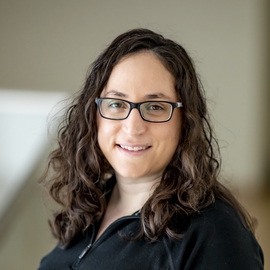
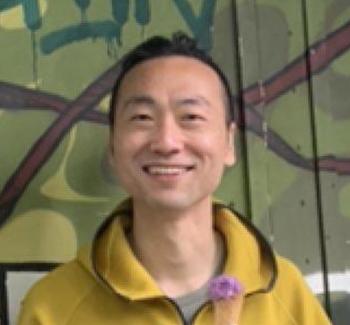
Filipp Schmidt is a Post-Doctoral Research Fellow at the Department of General Psychology within the Department 06 Psychology and Sports Science of Justus-Liebig-Universität Gießen. His research focuses on visual perception and cognition, particularly how humans integrate perceptive features into unified environmental representations through computer graphics, psychophysics, and modeling. PhD from Technische Universität Kaiserslautern (2014) Diploma in Psychology from Justus-Liebig-Universität Gießen (2009) Research interests span material recognition, shape transformations, and perceptual organization of naturalistic materials. Current projects combine behavioral experiments, machine learning, and fMRI to decode material categorization hierarchies and visual-semantic interactions. Recent publications analyze wood material perception (2023), gloss prediction (2024), animacy inference from shape (2017), and one-shot generalization via drawing tasks (2022). Collaborates with Prof. Roland W. Fleming on DFG-funded project C1. Email: Filipp.Schmidt@psychol.uni-giessen.de Advises PhD students Henning Tiedemann and Emily A-Izzeddin. Uses big data approaches to train machine learning models for material properties.
Joy Geng is a Professor of Psychology at the University of California, Davis, and Principal Investigator of the Geng Lab (Integrated Attention Lab), with additional affiliation at the Center for Mind and Brain. She teaches advanced courses in Cognitive Neuroscience, Perception, and Current Research in Psychology. Education: Ph.D. in Psychology from Carnegie Mellon University B.A. in Psychology from Cornell University Her research investigates how goal-directed and sensory-driven information integrate to shape perception, focusing on attentional control mechanisms that balance target selection and distractor suppression. Using fMRI, eye-tracking, and behavioral measures, she examines neural and cognitive processes underlying visual attention, with emphasis on template flexibility, distractor learning, and multisensory integration. Current work explores how attentional templates dynamically adapt to distractor contexts and how cross-modal expectations influence sensory processing. Recent publications (2024-2025) reveal strong trends in template-based visual search, distractor suppression strategies, and neural correlates of attentional guidance. Key themes include learned target-distractor relationships, alpha oscillation dynamics in multisensory processing, and boundary effects in object-based attention during scene perception. As Director of the Integrated Attention Lab, Professor Geng leads research combining computational modeling with neuroimaging to decode attentional priority maps. The lab investigates how real-world contexts like virtual shopping environments and navigation tasks shape attentional allocation, with growing emphasis on translational applications for attention disorders.
Dr. Kimberly Chan is an Assistant Professor and FIRST scholar at UT Southwestern Medical Center, jointly affiliated with the Advanced Imaging Research Center and the Department of Biomedical Engineering. Her work bridges biomedical engineering and clinical neuroscience through the development of advanced magnetic resonance spectroscopy (MRS) techniques. Research Interests: Dr. Chan's research centers on the development and application of novel MRS methods to study brain chemistry in neurological and psychiatric disorders. Her work focuses on spectral editing, metabolite quantification (e.g., GABA, glutathione), motion correction, and multi-site reproducibility. She aims to improve diagnosis, disease monitoring, and treatment planning through non-invasive neurochemical profiling. Publication Trends: Her recent publications demonstrate a strong focus on methodological innovation in MRS, including Hadamard encoding (HERMES, HERCULES), multi-metabolite detection, motion correction, and standardization across scanners and sites. These techniques are applied to conditions such as Huntington’s disease, Lafora disease, spinal cord injury, and cancer, showing translational impact. Scientific Awards: First Scholar Advising and Grants: As principal investigator of the CHAN Lab (Chemical Advanced Neuroimaging Lab), she mentors graduate students and postdoctoral fellows. She is actively recruiting and likely holds independent research funding, supported by her FIRST scholar status. While specific grants and advisees are not listed, her leadership role indicates active research supervision and extramural funding. Labs and Teams: Dr. Chan leads the CHAN Lab, a multidisciplinary team of biomedical engineers and imaging scientists focused on advancing MRS for clinical applications. The lab collaborates widely, as evidenced by multi-center studies like Big GABA, involving over 25 research sites globally.
Dr. Elena Paci is a Senior Lecturer in Biological Sciences at the School of Sciences, Bath Spa University, where she teaches physiology, anatomy, and pharmacology on the BSc Biology and BSc Biomedical Sciences courses. She focuses on teaching innovation to create authentic learning experiences and supports student skills development for future career readiness. BSc Biology, University of Cagliari (2013) MSc Neuropsychobiology, University of Cagliari (2015) PhD in Neural Dynamics, University of Bristol (2021) PGCAP, University of Bristol (2023) Her research centers on neuroscience, particularly cerebellar circuits, fear extinction, HPA axis regulation, and neurotoxicology. She investigates glucocorticoid signaling, maternal neuroplasticity, and stress-related behavioral mechanisms using animal models. Recent publications highlight computational modeling of fear circuits, developmental neurotoxicity, and hippocampal changes during pregnancy. Her scientific awards include a fellowship from the Higher Education Academy. She also serves as a Representative for the Physiological Society.
Dr James Dunn is a Lecturer and ARC DECRA Research Fellow in the School of Psychology at UNSW Sydney. His research focuses on face and person recognition, forensic science applications, and individual differences in cognitive performance, utilizing behavioral methods, machine learning, and eye-tracking technologies. Education: BSc(Adv) (Psychology) 2012, Ph.D. 2018 - UNSW Sydney Research Themes: Face Recognition, AI Applications, Forensic Science, Cognitive Assessment, Individual Differences, Visual Processing Grants: ARC DECRA (2025-2028), Royal Society Marsden Fund (2024-2027), Office of National Intelligence Postdoctoral Grant (2023-2025) His work bridges theoretical research with practical applications in high-stakes environments, particularly focusing on improving accuracy in identity verification and criminal investigations through collaborations with Australian Federal Police and NSW Police. He is also a member of the Psychology Equity, Diversity & Inclusion team at UNSW. Dr Dunn's publications demonstrate a consistent focus on face recognition expertise, visual information sampling, and forensic applications of AI. His research has been featured in top journals including Psychological Science , Journal of Experimental Psychology , and Scientific Reports , with recent work exploring AI-hyperrealism detection and computational value of facial information sampling. Scientific Awards Australian Research Council (ARC) Discovery Early Career Researcher Award (DECRA) Royal Society Te Apārangi Marsden Fund Grant Office of National Intelligence National Intelligence Postdoctoral Grant Early Career Impact Award - 2024 Community, Health & Safety, and Wellbeing Impact Award - 2023 UNSW Science Early Career Academic Award - 2021 As an educator, Dr Dunn coordinates courses in forensic psychology and psychology & law, while lecturing on perception and cognition topics. He supervises PhD students including Daniel Chu, and contributes to professional training programs for forensic practitioners. His research has significant implications for security systems, law enforcement practices, and AI development in facial recognition technologies.
Professor Ben Tatler serves as Chair in Psychology and Dean for Research Culture at the School of Psychology, University of Aberdeen. He has been a Professor of Psychology at the University of Aberdeen since 2015 and previously held positions as Lecturer, Senior Lecturer, and Reader at the University of Dundee starting in 2004. His academic journey began with an undergraduate degree in Natural Sciences (Biological) at the University of Cambridge in 1998, followed by a DPhil in Neuroscience at the University of Sussex in 2002, where he also worked as a postdoctoral fellow. His educational background includes: MA Natural Sciences (Biological) - University of Cambridge (1998) DPhil Neuroscience and Psychology - University of Sussex (2002) Professor Tatler's research focuses on understanding how vision supports natural behavior, specifically addressing two fundamental questions: where we look and what we encode and retain from the objects we look at. He emphasizes studying vision in the context of natural behavior in real environments rather than exclusively in laboratory settings. His work contributes to theoretical understanding of factors underlying decisions about where to look in complex scenes and the representations that underlie natural vision. He applies these research interests to real-world problems including hazard perception in driving, CCTV surveillance, and how comics can be used for conveying public health information. His recent publications demonstrate a consistent focus on eye movement patterns, scene perception, social attention, and applied visual cognition across various contexts. Professor Tatler has secured significant research funding including: Comics vs. Covid: informing and evaluating the design of public health information comics (SGSSS PhD studentship, 2021-2024) Giving cognition a helping hand: how gesture facilitates spatial thinking (Leverhulme Trust, £118,822, 2020-2021) Adult aging and social attention: the role of cognitive decline and social motivation (ESRC, £625,615, 2017-2020) He is actively involved in mentoring, currently accepting PhD students in Psychology, and teaches courses including Biological Psychology, Methodology B, Critical Review, Psychology Thesis, Core Principles: Individual Differences, Cognitive and Biological, and Quantitative and Qualitative Methods and Research Design. Professor Tatler maintains professional affiliations as a Fellow of the Higher Education Academy, Chartered member of the British Psychology Society, and member of several professional societies including the Experimental Psychology Society, Applied Vision Association, and Psychonomic Society.
Juha Pekka Samuli Salmitaival is a Visiting Professor at the Department of Neuroscience and Biomedical Engineering in the College of Engineering at Aalto University . His research focuses on cognitive processes in ADHD, memory strategies, and attention mechanisms using naturalistic and virtual reality methodologies. Research Trends: His recent work examines physiological arousal in self-disclosure , executive dysfunction in ADHD , and adaptive cognitive operations . Collaborative studies highlight neural connectivity patterns , digital health applications , and strategy evolvement in memory tasks .
Rachel Flood Heaton is an Assistant Professor at the University of Illinois in the School of Art and Design and an affiliate of the Siebel Center for Design. Her research focuses on modeling human vision using deep neural networks (DNNs), exploring the intersection of cognitive psychology, computational modeling, and artificial intelligence. She investigates how DNNs align with human visual processes and advocates for rigorous testing frameworks to evaluate these models. Her recent work includes the MindSet benchmark for comparing DNNs to human vision, critiques of current deep learning methodologies, and studies on visual search mechanisms. Articles highlight her expertise in visual perception, neural network design, and cognitive simulation.
Dr. Yulia Sandamirskaya is the Head of Research Center "Cognitive Computing in Life Sciences" at Zurich University of Applied Sciences (ZHAW), focusing on neuromorphic computing applications for embodied artificial intelligence. Her work bridges computational neuroscience and robotics, emphasizing neural-dynamic architectures for real-time decision-making, learning, and sensorimotor integration in autonomous agents. Key Research Areas: Neuromorphic hardware, dynamic neural fields, spiking neural networks, spatial language modeling, and autonomous sequence generation. Projects: Developed controllers for UAVs and robotic arms using event-based vision sensors, explored on-chip unsupervised learning, and designed models for spatial language interpretation in robots. Scientific Contributions: Her publications span robotics conferences and journals like Science Robotics and Frontiers in Neurorobotics , addressing topics such as path integration, obstacle avoidance, and cognitive architectures. Recent work (2024) includes visual odometry with resonator networks and hyperdimensional scene factorization on neuromorphic chips. Advising: Supervised multiple MSc theses at ETH Zurich and NSC/INI programs, mentoring students on neuromorphic navigation, spiking networks, and tactile learning. Collaborated with institutions like ETH Zurich, University of Queensland, and INI Bochum. Labs & Collaborations: Leads the "Neuromorphic Computing Applications: Embodied AI" group at ZHAW, partnering with INIvation (Zurich) and Jörg Conradt (KTH) on neuromorphic hardware implementations. Projects integrate cognitive models with robotic platforms, emphasizing energy efficiency and low-latency interaction.
Gina Leinninger is a Red Cedar Distinguished Professor at the Department of Physiology, Michigan State University, and holds affiliations with the Neuroscience Program and Genetics & Genome Sciences Program. She serves as Graduate Director of the Molecular, Cellular, and Integrative Physiology Graduate Program at the BioMolecular Science Gateway. Research Focus: Neurophysiological mechanisms of lateral hypothalamic area (LHA) neurons in energy balance regulation Key Techniques: Novel mouse models, neuronal tract tracing, and neuroregulation technologies Her research investigates how LHA neuronal populations (neurotensin, orexin, leptin receptor-expressing) respond to metabolic stimuli like adiposity signals, dehydration, and exercise, and how they modulate dopamine circuits to influence hedonic feeding, locomotion, and weight regulation. Current work explores therapeutic potential of LHA signaling for obesity and metabolic disorders. Recent publications reveal trends in Neurotensin-dopamine interaction Sex-dependent neural circuits Metabolic stimulus response mapping Neuronal projection analysis High-fat diet behavioral models Neurobiological basis of comorbid obesity-pain Her lab's work connects LHA dysfunction to pathogenesis of obesity through advanced methodologies in neuronal regulation and metabolic signaling.
Noga Zaslavsky is an Assistant Professor in the Psychology Department at New York University , focusing on understanding language, learning, and reasoning through machine learning and information theory . Interdisciplinary work bridging cognitive science , neural networks , and language evolution Research on emergent communication , semantic compression , and human-AI alignment Recent publications (2024-2023) emphasize: Information-theoretic models for language and cognition Human concept learning under compression constraints ANN-brain alignment with realistic training Emergent communication in complex environments Universals in conceptual representation across languages Scientific awards : ELSC Prize for Outstanding Publication (2018) Her work explores pragmatic reasoning , semantic systems , and evolutionary dynamics through computational principles.
Grégory Scherrer, PharmD, PhD is an Associate Professor at the University of North Carolina at Chapel Hill School of Medicine with joint appointments in the Department of Cell Biology & Physiology and the Department of Pharmacology. His research focuses on understanding the neurobiological mechanisms underlying pain perception and opioid analgesia, investigating how the nervous system generates the sensory, emotional, and cognitive dimensions of pain experience. Dr. Scherrer's research interests center on pain neurobiology and opioid systems, with particular emphasis on elucidating the mechanisms by which neural circuits generate pain at genetic, molecular, cellular, and behavioral levels. His work investigates the functional organization of the endogenous opioid system and the localization, trafficking, and signaling properties of opioid receptors in neurons to understand both pain relief and harmful side effects including tolerance, addiction, and respiratory depression. His publication record demonstrates consistent high-impact contributions to the field, with recent articles in top journals including Nature, Cell, and Science. The research trends show an increasing focus on circuit-level understanding of pain processing and the development of more targeted therapeutic approaches that minimize side effects while maintaining analgesic efficacy. Dr. Scherrer has received numerous prestigious awards for his research, including: 2023 NIH HEAL Initiative Director's Award for Excellence in Research in the Pain and Addiction Fields 2021 Brain Research Foundation Scientific Innovations Award 2020 McKnight Foundation Neurobiology of Brain Disorders Award 2017 New York Stem Cell Foundation (NYSCF) Robertson Neuroscience Investigator Award 2015 International Narcotics Research Conference (INRC) Young Investigator Award 2014 Rita Allen Foundation / American Pain Society (APS) Scholar Award 2011 NIH/NIDA K99R00 Pathway to Independence Award 2009 International Association for the Study of Pain (IASP) Fellowship Through his NIH-funded research program, Dr. Scherrer has established himself as a leader in pain neuroscience, with particular expertise in neural circuit mechanisms of pain and opioid action. His work bridges basic science discoveries with translational applications for developing more effective and safer pain treatments while addressing the opioid crisis through understanding addiction mechanisms. The Scherrer Lab maintains a strong research program investigating the neurobiological basis of pain and opioids, employing state-of-the-art techniques including optogenetics, chemogenetics, in vivo calcium imaging, and molecular pharmacology to map neural circuits and understand molecular mechanisms underlying pain perception and opioid action.
Prof. Xiangbin Teng is an Assistant Professor in the Department of Psychology at the Chinese University of Hong Kong. Previously, he was a postdoctoral researcher at the Neurocognitive and Experimental Psychology lab in Frankfurt/Berlin (2021–2022), following his PhD in Cognition and Perception from New York University and M.Sc./B.Sc. degrees from Peking University and Shanghai Jiao Tong University. His research focuses on neurocognitive mechanisms underlying auditory perception, particularly speech and music processing. Key areas include neural oscillations, temporal dynamics, and multiscale auditory encoding. He investigates how rhythmic patterns in language (e.g., ancient Chinese poetry) and music influence perceptual and neural processes. Publications highlight contributions to understanding theta/gamma band neural coding, EEG modulation spectra, and phase precession mechanisms. His work bridges computational models (e.g., recurrent neural networks) with empirical neuroscience findings. ERC Consolidator Grant (2025): Leading the "TRANSFORM" project exploring visual system development from infancy to adulthood. Grants & Collaborations: Extensive research on auditory cortex fMRI methods and cochlear implant simulations. Labs/Teams: Active in CUHK's cognitive neuroscience group and previously at the Max Planck Institutes. His current lab investigates sensory-motor interactions and predictive coding in perceptual systems.
Dr. Alexa Morcom is an Associate Professor in Cognitive Neuroscience at the School of Psychology, University of Sussex. Her research focuses on human memory, particularly how episodic memory and its neural substrates change with normal aging. She employs functional magnetic resonance imaging (fMRI) and electrophysiological techniques like event-related potentials (ERPs) to investigate memory processes. Key areas of interest include memory control mechanisms, functional compensation in aging brains, and the role of perceptual/semantic similarity in memory errors. Her work is supported by grants such as the 2019 BIAL Foundation grant (Temporal Decoding of Selective Recollection with Psychophysiology). She emphasizes reproducible research practices, publishing data and preregistering studies on platforms like OSF. Dr. Morcom teaches Cognitive Psychology and supervises undergraduate/postgraduate projects at the University of Sussex. Research highlights include demonstrating that increased frontal brain activity in older adults reflects nonspecific neural responses rather than compensation, and showing age-invariant mechanisms in associative false recognition. Her studies often involve collaborations with researchers like Knights, Henson, and Hoffman, focusing on neuroimaging meta-analyses and longitudinal aging studies. Labs/Teams: Active involvement in the Cam-CAN longitudinal study (Phase 4/5) and collaborations within the School of Psychology. Advising hours are held weekly via Zoom/in-person, emphasizing student accessibility.
Dr. Andriy Miranskyy is an Associate Professor in the Department of Computer Science at Toronto Metropolitan University. His research focuses on applied machine learning, quantum computing, cloud computing, and software engineering, with notable contributions to anomaly detection in cloud systems and quantum software engineering. He leads the AMiR Lab, exploring risk mitigation and software development challenges in emerging technologies. Education: Ph.D. in Computer Science from The University of Western Ontario (2011). Research Interests: He investigates quantum software engineering methodologies, cloud-native systems governance, and big data applications. His work bridges theoretical advancements with industrial-scale implementations, such as IBM Db2 quantum safety case studies and cloud monitoring tools like CloudHeatMap. He emphasizes practical solutions for flakiness detection in quantum programs and sustainable software development practices. Awards: Recognitions include the Rogers Cybersecure Catalyst Fellowship (2023-2024), IBM CAS Best Project (2021), and a Guinness World Record for pioneering a 3Pb data warehouse (IBM DB2 team). Teaching: Teaches courses like CPS 840 (Quantum Computing), CPS 847 (Software Tools for Startups), and CPS 731 (Software Engineering). Labs/Teams: Directs the AMiR Lab, focusing on risk-aware software engineering in quantum and cloud domains.