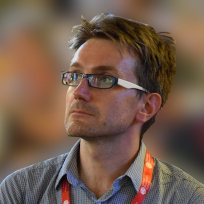
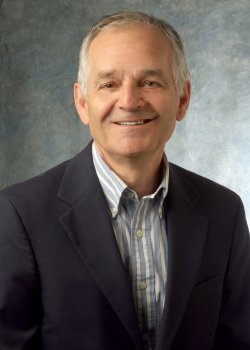
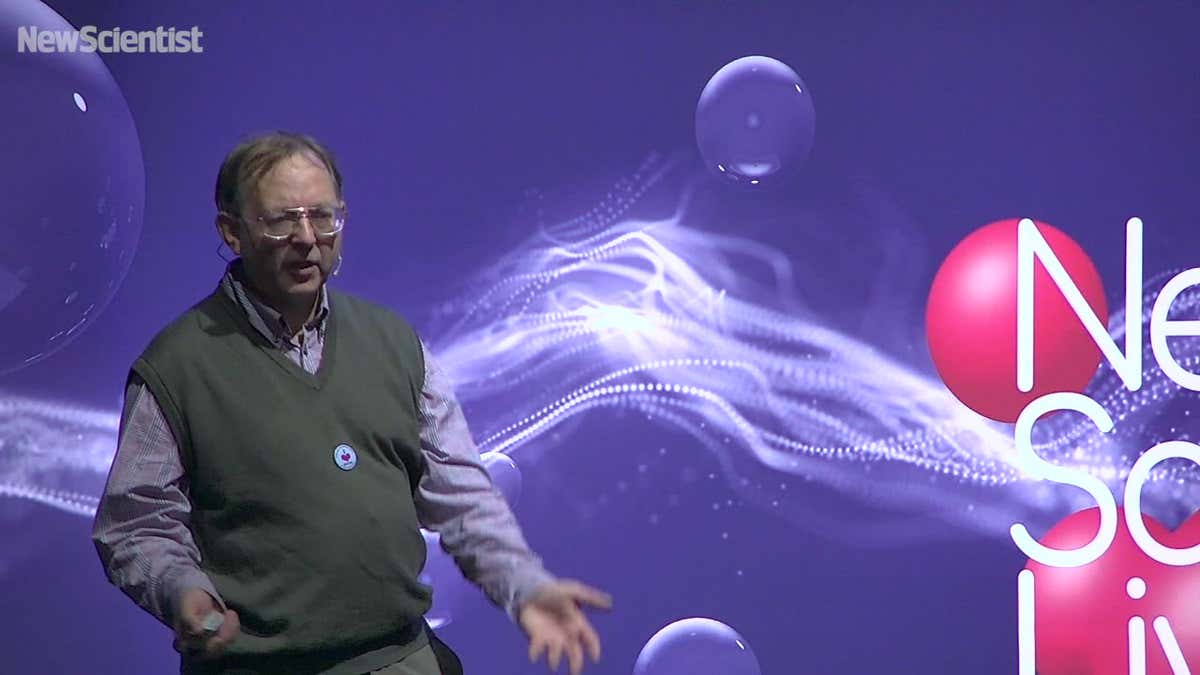
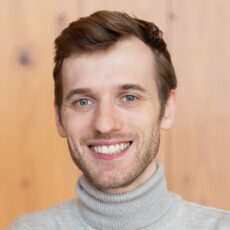
Brendan Lenfesty is a Researcher at Ulster University with affiliations to the School of Law and Faculty of Arts, Humanities & Social Sciences . His work bridges Machine Learning , Decision Science , and Neuroscience , focusing on data-driven methods to model stochastic decision processes and cognitive dynamics. Research Interests His research explores interdisciplinary intersections of computational modeling and legal decision-making, with specific emphasis on: Stochastic decision models Neural dynamics in cognitive processes Machine learning for equation discovery Drift-diffusion modeling in primates/rodents Signal-to-noise ratio analysis Behavioral neuroscience Publications Trends Recent work demonstrates expertise in applying data-driven techniques to uncover governing equations in perceptual decision-making, combining neuroscience with computational methods across 2022-2025 outputs. Contact Email: b.lenfesty@ulster.ac.uk
Andrea Tosin is a Full Professor of Mathematical Physics at the Department of Mathematical Sciences "G. L. Lagrange" (DISMA), Politecnico di Torino. He serves as Coordinator of the Doctoral College of Mathematical Sciences and Deputy Coordinator of the Doctoral College of Pure and Applied Mathematics. His research bridges kinetic theory, transport equations, and applied mathematics with applications in multi-agent systems, traffic, social dynamics, and epidemiology. His research interests focus on: Kinetic theory and its applications to real-world systems Transport and diffusion equations in complex environments Modeling of vehicular traffic, crowd dynamics, and social behavior Epidemiological modeling with a focus on viral load and multi-scale dynamics Mathematical modeling of collective behavior in biological and social systems His recent publications demonstrate a consistent trend in developing and analyzing kinetic models for traffic flow, opinion dynamics, and epidemic spread, often incorporating uncertainty, network structures, and multi-population interactions. These works frequently involve rigorous mathematical derivations from microscopic models to macroscopic equations, with applications in safety, public health, and urban planning. His scientific awards include: SIMAI Biennial Award (2013) INDAM-SIMAI Award (2010) He actively supervises PhD students and postdoctoral researchers, including Martina Fraia, Emanuele Bernardi, Elisa Paparelli, and Mattia Sensi. He has secured significant research grants from national (PRIN, INdAM) and institutional (Politecnico di Torino, Google) sources. His research is supported by projects such as IMASED (Integrated Mathematical Approaches to Socio-Epidemiological Dynamics) and ANATOMY (A Unitary Mathematical Framework for Modelling Muscular Dystrophies). He also leads the "Modelli e Metodi della Fisica Matematica" research group at DISMA.
Dr. Tillman Weyde is a Reader in the Department of Computer Science at City, University of London , where he has been employed since 2021. He leads the Machine Intelligence and Media Informatics Research Group and is a member of the Machine Learning Group . Prior to this, he served as Senior Lecturer (2009–2021) and Lecturer (2005–2009) at City, and worked as a researcher at the University of Osnabrück (2001–2005), coordinating the MUSITECH project. His academic background includes PhD in Music Technology (2002), MSc in Computer Science (1999), and MSc in Mathematics, Music, Philosophy & Pedagogy (1994), all from the University of Osnabrück. Research Focus: Machine learning and signal processing methods for data analysis with applications in finance, audio, NLP, music, health, security, and education. His recent work emphasizes inductive biases in neural networks for rule-learning, extrapolation, generalization, and interpretability. Grants & Projects: Principal Investigator for the AHRC-funded Digital Music Lab (2012–2017) and Integrated Audio-Symbolic Model of Music Similarity (2017–present). Co-investigator in Innovate UK and EPSRC projects on safer gambling ( Advancing Consumer Protection , 2015–2018) and Raven (2012–2021). Collaborations: Affiliated with the Institute of Cognitive Science (Osnabrück), Intelligent Systems Research Laboratory (Reading), and the MPEG Ad-Hoc Group on Symbolic Music Representation. Awards: Co-author of the 2000 Comenius Medal-winning educational software Computer Courses in Music Ear Training and co-editor of the Osnabrück Series on Music and Computation . Publications: Over 150 peer-reviewed works including conference papers, journal articles, and book chapters, focusing on interdisciplinary applications of machine learning in music, health, and finance. Students: Supervised 13 PhD students across topics like grammar bias in neural networks, emotion recognition from audio, extrapolation behavior in neural networks, relation-based patterns, legal text parsing, and more.
Professor Danilo P. Mandic, affiliated with Imperial College London, UK, is a leading researcher in signal processing, machine learning, and biomedical signal analysis. His work spans quaternion algebra, tensor networks, and neural networks for real-world applications. 2025: Published 11+ works on EEG/PPG analysis, quantum learning, and tensor-based LLM compression 2024: Active in interpretable transformers, graph learning for financial data, and hearable devices Research focuses on hypercomplex signal processing, graph neural networks, and medical AI applications. Recent work explores quaternion calculus for signal processing, tensor network structures for LLMs, and hearable device optimization. Key publication trends include: 2025 emphasis on quantum-aware learning, 2024 graph-based time series clustering, and 2023 foundational work on graph CNNs and matched filtering approaches. Collaborates extensively with Dongpo Xu, Sayed Pouria Talebi, Clive Cheong Took, and Tobias Reichenbach on projects involving ear-EEG, ECG enhancement, and financial sentiment analysis.
Jeongsub Choi is an Assistant Professor in the Department of Management Information Systems at West Virginia University's John Chambers College of Business and Economics. His work bridges machine learning, data mining, and business intelligence with applications in strategic management, patent analysis, and advanced manufacturing. Ph.D. in Industrial and Systems Engineering, Rutgers University M.S. in Statistics, Rutgers University M.S. in Industrial and Systems Engineering, Rutgers University Choi's research focuses on sparse learning models, network analysis, and virtual metrology systems for semiconductor manufacturing. His work spans predictive maintenance, competitor detection, and anomaly identification in dynamic networks. Recent publications highlight trends in sensor optimization, fault diagnosis, and technology lifecycle modeling. Applications span semiconductor manufacturing, financial transaction networks, and patent citation analysis.
Jeffrey Hutsler is an Associate Professor in the Department of Psychology at the University of Nevada, Reno, affiliated with the Institute of Neuroscience. His research focuses on the microanatomical organization of the human brain, particularly in individuals with autism spectrum disorders. Ph.D. in Physiological Psychology, University of California, Davis (1993) M.A. in Physiological Psychology, University of California, Davis (1991) B.A. in Psychology, San Jose State University (1988) Hutsler's research explores cortical layering, dendritic spine densities, white matter diffusion, and subplate abnormalities in autism. He integrates histological assessments with neuroimaging techniques to study structural and functional brain differences. His recent publications (2025-2011) emphasize autism-related cortical anomalies, visual processing, hemispheric specialization, and computational modeling. Key trends include the use of fNIRS and diffusion MRI to link structural changes to behavioral symptoms. Slifka-Ritvo Award for Innovation in Autism Research (2010) Vada Trimble Outstanding Mentor Award (2013) Hutsler has mentored numerous students through courses like Human Neuropsychology, Developmental Neuropsychology, and the Neuropsychology of Autism. His work often involves collaborations in neuroimaging, developmental neuroscience, and autism research.
Dominique Durand is a Professor of Biomedical Engineering at Case Western Reserve University and Director of the Neural Engineering Center. His research focuses on neural engineering, computational neuroscience, and neuromodulation, particularly for epilepsy treatment and neural interface development. Professor, Biomedical Engineering Director, Neural Engineering Center Research interests include: Neural interfacing and prostheses Non-linear dynamics of neural systems Control of epilepsy via electrical stimulation Carbon nanotube (CNT) yarn electrodes for chronic neural recording Computational modeling of neural activity Ephaptic coupling mechanisms in seizure propagation Recent work examines: Transcranial direct current stimulation (tDCS) effects on seizures Low-frequency stimulation for seizure suppression Neural activity in tumors for cancer-state determination Advanced electrode designs for peripheral nerve interfaces Autonomic nervous system modulation in disease Laboratory affiliations include the Neural Engineering Center, which develops technologies for neural system analysis and therapeutic interventions.
Professor Chris J Budd OBE is a distinguished Professor of Applied Mathematics at the University of Bath's Department of Mathematical Sciences, where he serves as Director of Knowledge Exchange for the Bath Institute for Mathematical Innovation (IMI). He is also Professor of Mathematics at the Royal Institution of Great Britain and a former Gresham Professor of Geometry. His leadership extends to directing the Centre for Nonlinear Mechanics and serving as Super Champion of the KE Hub. His educational background includes a gap year with Marconi that profoundly shaped his career, followed by undergraduate studies at Cambridge and a DPhil at Oxford. This industry experience during his formative years established his lifelong commitment to industrial mathematics and knowledge exchange. Budd's research focuses on nonlinear mathematical problems with industrial applications, particularly adaptive moving mesh methods for meteorology and climate modeling, data assimilation, non-smooth dynamical systems, and the mathematics of machine learning. He approaches linear problems as 'for cissies,' preferring the challenges of nonlinear systems that better represent real-world phenomena. His work bridges theoretical mathematics with practical applications across meteorology, environmental science, and engineering. His recent publications reveal a strong trend toward integrating machine learning with traditional numerical methods, particularly in climate modeling and solving partial differential equations. This includes Fourier Neural Operators, adaptive mesh methods enhanced by graph neural networks, and mathematical frameworks for understanding climate tipping points through non-smooth dynamics. OBE for services to mathematics National Teaching Fellowship (NTF) Knowledge Transfer Award for work with the Met Office Fellow of the Institute of Mathematics and its Applications (FIMA) Chartered Mathematician (C Math) British Science Association award for best science festival (2009) As principal investigator of the £3.5M EPSRC Programme Grant 'Maths4DL' on the Mathematics of Deep Learning, Budd leads a major collaborative effort between Bath, Cambridge, and UCL. He actively supervises numerous PhD students across diverse projects including climate modeling, machine learning applications, and industrial mathematics problems. His commitment to knowledge exchange is exemplified through V-KEMS (Virtual Forum for Knowledge Exchange in the Mathematical Sciences), which he co-founded to address challenges like the COVID-19 pandemic through mathematical approaches. Budd directs the Centre for Nonlinear Mechanics at Bath, fostering interdisciplinary research through mathematical modeling of complex systems. He also leads the Bath Institute for Mathematical Innovation's knowledge exchange activities, connecting academic mathematics with industrial and societal challenges. His work with V-KEMS has proven particularly effective during the pandemic, mobilizing teams of mathematicians to address urgent real-world problems.
Seda Keskin Avcı serves as Professor in the Chemical and Biological Engineering Department at Koç University, Istanbul, directing the Nanomaterials, Energy, and Molecular Modeling Research Group (NEMO). Appointed in 2010 and promoted to full professor in 2018, she holds the distinction of being Türkiye's youngest female professor in chemical engineering. Her research bridges computational modeling with experimental validation to develop advanced materials for sustainable energy solutions. Education: PhD, Georgia Institute of Technology (2009) MSc, Boğaziçi University (2006) BS, Boğaziçi University (2004) Professor Keskin's research focuses on AI-accelerated design of metal-organic frameworks (MOFs) and covalent organic frameworks (COFs) for gas separation and carbon capture. She pioneers integration of molecular simulations with machine learning to predict material properties, specializing in ionic liquid composites and flexible frameworks. Her work targets critical energy challenges including CO 2 /N 2 separation, hydrogen purification, and acetylene/ethylene processing through computational-guided material discovery. Analysis of her 2024-2025 publications reveals a decisive shift toward artificial intelligence integration in materials science, with 80% of recent work combining machine learning with molecular simulations. Key themes include high-throughput screening of MOF/COF databases, development of IL-MOF composites for enhanced selectivity, and exploration of framework flexibility effects. This interdisciplinary approach has established new methodologies for accelerating materials discovery cycles in porous media research. Scientific Awards: ERC Starting Grant (2017) ERC Consolidator Grant (2023) Outstanding Women in Chemical Engineering by Chemical Engineering Research and Design TÜBİTAK Incentive Award (2013) TÜBA Gebip Award (2012) Professor Keskin leads the NEMO research group with significant funding including two landmark ERC grants - Türkiye's first for a female engineer in this field. Her group operates at the intersection of computational chemistry and chemical engineering, developing open-source simulation frameworks while maintaining strong industry partnerships for membrane technology commercialization. Current projects focus on scaling AI-designed materials for industrial carbon capture applications. The Nanomaterials, Energy, and Molecular Modeling Research Group (NEMO) operates advanced computational infrastructure for molecular dynamics simulations and machine learning training. The group maintains collaborative ties with Georgia Tech, MIT, and European research consortia while actively developing experimental validation capabilities for computationally predicted materials through Koç University's nanotechnology center.
Professor Yalin Zheng is a faculty member at the University of Liverpool, specializing in artificial intelligence, machine learning, and medical image analysis with applications in ophthalmic imaging. They hold a Ph.D. in Computer Science from the University of Southampton (2003) and have held research roles at King's College London and Medicsight PLC prior to joining Liverpool in 2008. Research interests focus on developing AI-driven solutions for eye disease diagnosis and management, including glaucoma, diabetic retinopathy, and corneal imaging. Their work integrates deep learning and novel imaging technologies like optical coherence tomography (OCT) for applications in ophthalmology and cardiology. Recent publications (2024-2025) emphasize AI techniques for OCTA vessel segmentation, corneal analysis, and cardiovascular risk prediction. They have secured significant research grants from organizations including the Medical Research Council, Wellcome Trust, and Procter & Gamble. Teaching roles include modules in Clinical Imaging and Applications (MSc) Ophthalmology Clinical Imaging (Module Co-ordinator) Medical Image Processing Professional activities include editorial roles in BMJ Open Ophthalmology (Associate Editor) Nature Scientific Reports (Editorial Board Member) and invited presentations on automated segmentation and ophthalmic imaging technologies.
Vincent Sitzmann is an Assistant Professor at the Massachusetts Institute of Technology (MIT) in the Department of Electrical Engineering and Computer Science (EECS), where he leads the Scene Representation Group at MIT's Computer Science and Artificial Intelligence Laboratory (CSAIL). His research focuses on building machines that learn to understand and interact with the world autonomously through 'world models' - mental simulators that enable agents to predict environmental outcomes and the consequences of their actions. His educational background includes a PhD from Stanford University under Gordon Wetzstein and a Bachelor's degree from the Technical University of Munich. Sitzmann's research spans computer vision, graphics, and robotics, with pioneering contributions to neural scene representations. He introduced Scene Representation Networks (SRNs) that enable continuous 3D-structure-aware scene modeling from 2D images. His work on implicit neural representations with periodic activation functions has become foundational to the field. Recent research focuses on scaling 3D reconstruction techniques, improving generative models for visual content, and developing methods for robot control through neural Jacobian fields. His approach emphasizes both theoretical rigor and practical applications across multiple domains. His publication record shows a clear progression toward more sophisticated diffusion models applied to video generation, robotics, and 3D reconstruction. The 2025 Nature paper on robot control via Jacobian fields demonstrates his expanding influence beyond traditional computer vision into robotics. His work consistently bridges theoretical advances with practical implementations, as evidenced by the CVPR 2023 Best Paper Runner-Up for pixelSplat, which offers scalable solutions for 3D reconstruction. His notable scientific achievements include: CVPR Best Paper Runner-Up (2023) for 'pixelSplat' Multiple papers with 'Spotlight' or 'Oral' presentations at NeurIPS and CVPR 2023 Amazon Research Award for '2D and 3D Animation via Image-Conditional Generative Flow Models' NeurIPS Outstanding New Directions Honorable Mention (2019) As leader of the Scene Representation Group, Sitzmann mentors researchers working at the intersection of computer vision, graphics, and AI. The group has secured funding from prestigious sources including Amazon Research Awards. Their work has practical applications in virtual reality, robotics, and content creation industries. Sitzmann teaches advanced courses at MIT, including 'Advances in Computer Vision' (6.8300). The Scene Representation Group focuses on developing novel methods for 3D scene understanding and manipulation. Current projects include research on neural radiance fields, diffusion models for 3D content creation, and methods for autonomous scene understanding. The group maintains active collaborations with industry partners and academic institutions to advance visual computing research.
Steven Wu is an Associate Professor in the School of Computer Science at Carnegie Mellon University, with primary appointments in the Software and Societal Systems Department (S3D) and affiliated roles in the Machine Learning Department, Human-Computer Interaction Institute, CyLab, and Theory Group. Previously, he held positions at the University of Minnesota (Assistant Professor) and Microsoft Research-New York City (post-doctoral researcher). Ph.D. in Computer Science, University of Pennsylvania (co-advised by Michael Kearns and Aaron Roth) His research spans Machine Learning , Algorithms , Privacy , and Fairness , focusing on responsible AI foundations, interactive learning, causal inference, and economic applications. Recent work explores uncertainty quantification and privacy risks in synthetic data. He has received prestigious awards including the NSF CAREER Award and Penn's Rubinoff Award for his dissertation. His group mentors students across Ph.D. , postdoc, and visiting programs, with alumni now at institutions like UC Berkeley, Stanford, and Amazon. Key grants: NSF, Okawa Foundation, Open Philanthropy, Amazon, Google, J.P. Morgan, Meta, Mozilla, Apple, Cisco
Yang Cao is a Professor at the University of Science and Technology of China , Department of Automation, Hefei, China. He holds a PhD from Northeastern University (2004, Shenyang, China) and has active affiliations with institutions like Virginia Tech and Huazhong University of Science and Technology. Research Focus: Spatiotemporal modeling, event-based vision, 3D human-object interaction, and industrial defect detection. Publications: 15 recent articles highlight his work in diffusion models, transformers, and state-space networks for tasks like traffic emission imputation, eye tracking, and PCB defect detection. Collaborative Work: Co-authored with Zheng-Jun Zha, Wei Zhai, Yu Kang, and others in journals like IEEE Transactions on Neural Networks and CVPR Workshops. Scientific Contributions: His research bridges computer vision, machine learning, and industrial applications, emphasizing real-world challenges such as low-light enhancement and sensor fusion.
David Menotti is a prominent researcher in computer vision and machine learning, with a focus on biometrics, license plate recognition, and video analysis. He has collaborated extensively with institutions and researchers globally, contributing to over 171 publications between 2003-2025. Key research areas include face recognition, synthetic data generation, and zero-shot learning Major contributions in license plate super-resolution, sign language translation, and ocular biometrics Active in organizing competitions like FRCSyn and OCFR to advance synthetic data applications His work often combines diffusion models, CNN architectures, and multimodal approaches to solve real-world problems in unconstrained environments. Notable recent projects involve enhancing face recognition with synthetic data, vehicle color recognition under adverse conditions, and Libras-to-Portuguese translation. Menotti's publications appear in journals like Information Fusion , IEEE Access , and conferences including CVPR, SIBGRAPI, and IJCNN. He frequently collaborates with researchers such as Rayson Laroca, William Robson Schwartz, and Pedro Vidal.
Dr. Anton Ragni is a Senior Lecturer in Speech and Language Technologies at the University of Sheffield's School of Computer Science, where he serves as Assessments Lead and contributes to the Speech and Hearing (SpandH) research group. His educational background includes: BEng in Information Technology from the University of Tartu (2005) MEng in Information Technology from the University of Tartu (2007) PhD from the University of Cambridge (2013) Ragni's research centers on machine learning approaches for speech and language processing, with core expertise in automatic speech recognition (ASR), expressive speech synthesis, spoken language translation, information retrieval, and conversation modeling. His work increasingly integrates self-supervised learning and foundation models to address challenges in speech technology and cross-domain applications like music processing. Analysis of his recent publications reveals a strong trend toward applying speech processing techniques to music understanding and developing robust ASR systems for specialized populations, including hearing-impaired users and children. His work demonstrates consistent innovation in leveraging contextual information and novel architectures like energy-based models. His scientific recognition includes: Best Student Paper Award at IEEE ASRU 2011 for 'Generative kernels for noise robust ASR' Ragni has secured significant research funding as Principal Investigator and Co-Principal Investigator: EPSRC grant 'Exemplar-based Expressive Speech Synthesis' (2021-2023, £218,290) as PI Innovate UK grant 'Automatic voice conversion for transforming professional adult voice actors to artificial child voice actors' (2021-2023, £173,605) as Co-PI He actively contributes to the Speech and Hearing research group, focusing on advancing speech technology through interdisciplinary collaboration and real-world applications.