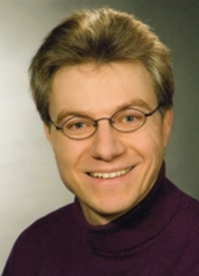
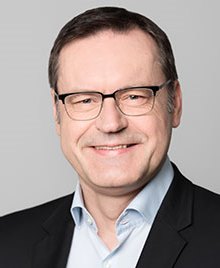
Oliver Deussen is a Professor of Visual Computing at the University of Konstanz, recognized by the German Informatics Society (GSI) as a Fellow for his contributions to computer science. His research focuses on visualization, robotics, and environmental modeling, particularly in plant and landscape representation. He has pioneered methods in image manipulation and robotic painting, emphasizing digitalization's societal impacts. His work spans computational biology (e.g., schooling fish behavior) and AI-driven creative technologies. Research Interests: Visualization techniques, swarm behavior analysis, robotic creativity, and interdisciplinary applications of computer science. He explores how computational methods can model natural systems and enhance human-machine interaction. Awards: Fellow of the German Informatics Society (GSI) His research often bridges theory and practice, with contributions to SLAM frameworks, style transfer algorithms, and uncertainty visualization tools. Collaborations in robotics and biology reflect his commitment to applied computational research.
Philippe Ciblat is a Professor at TELECOM Paris Tech, affiliated with the Department of Signal Processing and Communications. His research spans signal processing, wireless communications, and machine learning applications in networking. He has collaborated extensively with institutions like the University of Paris-Saclay and international researchers in areas such as cooperative communication protocols, resource allocation, and coding theory. Research Interests: Machine learning for signal processing, wireless channel modeling (Rician fading), lattice decoding, caching strategies, and distributed optimization. Notable Work: Pioneered transformer-based packet scheduling, neural network approaches to lattice decoding, and effective capacity analysis in fading channels. His contributions include over 170 publications in top venues (IEEE Trans. Signal Process., IEEE Trans. Wireless Commun.) and collaborations with industry partners on practical implementations like cache-aided polar coding. He has advised multiple researchers in distributed systems and wireless resource management.
Martin Hebart is a Professor for Computational Cognitive Neuroscience and Quantitative Psychiatry at Justus Liebig University Giessen and an Independent Max Planck Research Group Leader at the Max Planck Institute for Human Cognitive and Brain Sciences in Leipzig, Germany. His work bridges cognitive neuroscience, computer science, and psychology to explore visual perception, object recognition, and computational models of brain function. PhD in Psychology from Bernstein Center for Computational Neuroscience Berlin (2014) M.Sc. and B.Sc. in Neuro-cognitive Psychology from Ludwig Maximilian University Munich His research integrates psychophysics , neuroimaging (fMRI, MEG), and machine learning to decode how visual input transforms into stable object representations and how these insights inform psychiatric conditions like hallucinations. Articles highlight his focus on computational models , neural network alignment , and large-scale behavioral-neuroimaging datasets (e.g., THINGS-data). His group’s work spans from basic visual cognition to translational applications in psychiatry. Scientific awards include postdoctoral fellowships from the National Institute of Mental Health (2016) and Alexander von Humboldt Foundation (Feodor Lynen, 2016), alongside doctoral and study scholarships. He leads a multidisciplinary team at the intersection of JLU Giessen’s Medical Department and MPI, mentoring students in visual neuroscience , AI-driven modeling , and clinical applications .
Professor Gordon Cheng is a faculty member at the Technical University of Munich (TUM), affiliated with the School of Computation, Information and Technology (CIT). He serves as the Director of the Chair of Cognitive Systems at the Institute for Cognitive Systems (ICS), where he focuses on advancing cognitive systems, robotics, and their intersections. His research addresses fundamental challenges in creating intelligent systems capable of understanding and interacting with complex environments. Research Interests: His work spans Neuroengineering , Robotics , and Cognitive Systems , emphasizing the integration of biological principles into artificial systems. Key projects include robot skin development , EEG-based prosthetic control , and human-robot co-adaptation . Selected Publications: Recent articles highlight advancements in real-time tactile sensing , neuroprosthetics , and BCI-driven rehabilitation , reflecting his interdisciplinary approach bridging robotics and neuroscience. Supervision: He supervises PhD students from the Graduate School of Neuroscience (GSN), including Jasmin Kajopoulos and Nikolas Berberich. Contact: Email: gordon@tum.de | Website
Prof. Dr. Kai Essig is a Professor of Human Factors and Interactive Systems at the Faculty of Communication and Environment, Rhine-Waal University of Applied Sciences, Kamp-Lintfort, Germany. He has a strong interdisciplinary background combining computer science, cognitive science, and human-computer interaction, with a focus on eye tracking, visual perception, and assistive technologies. Master of Science in Computer Science and Chemistry, Bielefeld University (1998) Ph.D. in Computer Science, Bielefeld University (2007) His research centers on eye tracking, human-computer interaction, usability engineering, visual attention, and cognitive interaction technology . He investigates how movement expertise influences visual perception and how multimodal software can support real-time human actions. His work integrates computer vision, machine learning, and neuroscience to develop intelligent systems that adapt to user behavior. The 15 most recent publications reflect a consistent trend in eye movement analysis, mental representations, brain-machine interfaces, and assistive technologies . These works span domains such as sports psychology, robotics, augmented reality, and cognitive neuroscience, demonstrating a strong interdisciplinary approach. Key themes include gaze-based interaction, automated annotation of visual behavior, and the implementation of smart systems for daily living assistance. Scientific recognition includes: Landmark in the Land of Ideas (2018) – for the ADAMAAS project, awarded by 'Land of Ideas', a joint initiative of the German government and the Federation of German Industries Prof. Essig has been actively involved in research projects such as ADAMAAS (Adaptive and Mobile Action Assistance in Daily Living Activities), which received national recognition. He has collaborated extensively with the Neurocognition and Action-Biomechanics Research Group at Bielefeld University and the Excellence Cluster CITEC. While no formal advising of students is listed, his publications suggest mentorship and collaboration with junior researchers. His lab work is centered on eye-tracking systems, multimodal interaction, and cognitive modeling , particularly within applied environments like smart glasses and assistive technologies.
Pau Colomer is a Researcher at the Technical University of Munich , affiliated with the Theoretical Information Technology department. His work focuses on quantum communication, information theory, and wireless networks, contributing to foundational research in quantum channel identification and network information processing. His research interests span quantum information theory , neural networks , and signal processing , with recent publications addressing deterministic identification over quantum channels, coherence theory in quantum systems, and multi-user quantum communication. These works highlight advancements in quantum channel coding , decentralized processing , and security in wireless networks . Publications demonstrate a trend toward quantum communication and network information theory , emphasizing challenges in interference modeling , entanglement transmission , and information-theoretic security . Key subfields include superlinear rates in finite output channels , decoupling mechanisms , and quantum-enhanced sensing .
Aggelos K. Katsaggelos is a Professor in the Department of Electrical Engineering and Computer Science at Northwestern University's McCormick School of Engineering. His research focuses on biomedical imaging, machine learning, and computer vision applications in healthcare. He has collaborated extensively with interdisciplinary teams, including clinicians and engineers, to develop advanced algorithms for medical diagnosis and image analysis. Key research interests include medical image processing, deep learning for diagnostics, and computational methods in cardiology. His work spans applications such as MRI and ultrasound analysis, automated pathology detection, and multimodal sensing for health monitoring. Recent articles highlight contributions to myocardial scar quantification, lung ultrasound scoring, and AI-driven cough detection. His methodologies often combine domain-specific physics with modern machine learning techniques to solve real-world clinical challenges. Notable collaborations include projects with institutions like the University of Chicago and international teams in astrophysics and cognitive science. His work emphasizes translating algorithmic advancements into practical clinical tools.
Hannah Spitzer is a Research Group Leader at the Institute for Stroke and Dementia Research (ISD) at Ludwig Maximilian University of Munich and an associated Research Group Leader at Helmholtz Munich's Computational Health Center. She leads the Spitzer Lab, focusing on computational analysis of multimodal brain datasets to advance understanding of neurovascular and neurodegenerative diseases. Her educational background includes: PhD in Computer Science from Heinrich-Heine University Düsseldorf and Research Center Jülich (2015-2020) Master's in Computer Science from RWTH Aachen (2013-2015) Bachelor's in Computer Science from RWTH Aachen (2009-2013) Dr. Spitzer's research integrates computational biology and machine learning to decode brain complexity, with emphasis on spatial omics analysis , interpretable image representation learning , and cross-modal data integration . Her group develops tools like squidpy and campa for spatial omics while applying graph neural networks to epilepsy lesion detection through the international MELD project, prioritizing biological interpretability in AI models. Recent publications reveal strong trends in leveraging graph neural networks for subtle brain lesion detection and creating computational frameworks for spatial omics integration. Her work consistently bridges advanced machine learning with clinical neuroscience to uncover disease mechanisms in neurodegeneration and vascular disorders. Dr. Spitzer actively mentors students including current PhD candidate Beatrice Guastella and alumni Deniz Fettahoglu (MSc) and Katia Berr (PhD). Her lab operates through major collaborations including the MELD epilepsy consortium and Helmholtz Imaging Project, with funding supporting computational pipeline development for small-vessel disease prediction and multimodal brain atlasing. The Spitzer Lab comprises postdoc Wasim Aftab and PhD student Beatrice Guastella, working on computational pipelines that integrate histology, spatial omics, and neuroimaging data to decode brain disease mechanisms through interpretable AI approaches.
Susan Fischer is a Professor in the Department of Computational Neuroscience at the Max Planck Society, serving as Coordinator of the Alexander von Humboldt Professorship. Her institutional affiliation is with the Max Planck Institute for Biological Cybernetics in Tübingen, Germany, where she leads research activities and maintains contact via susan.fischer@tuebingen.mpg.de and phone numbers +49 7071 601 1638 / +49 7071 601 616. Her research centers on Computational Neuroscience, employing mathematical and computational frameworks to model brain function. This interdisciplinary work bridges neuroscience, computer science, and cognitive psychology, with specific focus on neural network simulations and cognitive modeling to decode information processing in biological systems. The field integrates theoretical approaches with empirical data to advance understanding of perception, learning, and decision-making mechanisms. Dr. Fischer directs an active research team within the Department of Computational Neuroscience, with laboratory facilities at Max-Planck-Ring 8, 72076 Tübingen. The group participates in the institute's well-established research ecosystem and actively recruits new members as indicated by the 'Join the lab' section on their webpage, fostering collaboration in cutting-edge neurocomputational studies.
Detlev Marpe is a leading researcher at the Fraunhofer Heinrich Hertz Institute (HHI), serving as Head of the Video Coding & Analytics Department and Head of the Image & Video Coding Group. His work focuses on advancing video compression standards, including HEVC (H.265) and its extensions. He has contributed significantly to tools like entropy coding, transform coding, and scalable video coding. His research emphasizes efficient compression techniques, such as adaptive context models and wavelet-based methods, with applications in multimedia communication and low-delay video encoding. Affiliations: Fraunhofer Institute for Telecommunications HHI, Berlin, Germany Roles: Department Head, Research Group Leader, and Adjunct Lecturer at TU Berlin (2013/14) Research Interests: Video coding standards (HEVC, H.264/AVC), entropy coding (CABAC), wavelet-based compression, scalable video coding (SVC), multiview video coding (MVC), and rate-distortion optimization. His work bridges theoretical advancements with practical implementations, addressing challenges in compression efficiency, scalability, and real-time applications. Publications & Awards: Over 200 publications in top-tier journals and conferences, including IEEE Transactions and SPIE. Notable awards include the Chester Sall Best Paper Award and multiple Best Paper Awards from IEEE journals. His contributions to video coding standards have been adopted in global specifications like MPEG and ITU-T. Grants & Labs: Involved in major research projects on HEVC extensions, 3D video coding, and low-delay applications. Collaborates with industry partners and academic institutions globally. His team at HHI develops reference software and test models for emerging standards.
Peter Jax is a Full Professor at RWTH Aachen University , leading the Chair of Communication Systems . His research focuses on speech and audio processing , with expertise in active noise control , spatial audio , and machine learning applications for acoustic systems. Diploma in Electrical Engineering (1997), RWTH Aachen University PhD (2002), RWTH Aachen University Research areas include binaural direction-of-arrival estimation , MIMO acoustic system identification , and adaptive filtering for consumer and medical audio applications. Recent articles highlight innovations in ambisonics upscaling , noise control for UAVs , and data-driven uncertainty modeling in headphones. Scientific honors : Distinguished Member of Technicolor Fellowship Network (2010) Johann-Philipp-Reis Preis Borchers Medal E-Plus Award for Best Dissertation With over 25 patents in speech/audio processing and leadership roles in industry (Deutsche Thomson OHG, 2005–2015), he bridges academic research and industrial innovation.
Prof. Dr. Thomas Schack is a faculty member in the Department of Sport Science at Bielefeld University , specifically within the Faculty of Psychology and Sport Science and the Center for Cognitive Interaction Technology (CITEC) . His research focuses on the intersection of Neurocognition and Movement - Biomechanics , with significant contributions to understanding motor learning, cognitive representations in sports, and neurophysiological adaptations. Key Research Areas : Academic resilience, EEG neurofeedback applications, sport emotion validation, motor imagery classification, and balanceability enhancement through spinal cord stimulation. Notable Methodologies : Psychometric validation across cultures, longitudinal studies on student engagement, and ERP/EEG studies on motor planning and execution. Impact : His work bridges sports science with cognitive neuroscience, emphasizing cross-cultural applications (e.g., Ghanaian educational contexts) and technological interventions in athletic performance. Publications show a strong emphasis on academic resilience in educational settings, motor skill acquisition through neurocognitive frameworks, and cross-cultural psychometric validation. His recent studies analyze balanceability support systems and expertise-dependent cognitive performance in sports and chess.
Jun Morimoto is a Professor and Head of the Department of Brain Robot Interface at ATR Computational Neuroscience Laboratories. He holds a Ph.D. in Information Science from the Nara Institute of Science and Technology (NAIST) and has held positions at Carnegie Mellon University and the Japan Science and Technology Agency (JST). His research focuses on reinforcement learning, humanoid robotics, exoskeleton systems, and brain-robot interfaces. He has led teams at RIKEN and contributed to projects such as the ICORP initiative. His work integrates neuroscience principles with robotics, emphasizing applications in assistive technologies and neurorehabilitation. Key contributions include developing exoskeleton control strategies, brain-computer interfaces, and adaptive humanoid robot systems. He has authored over 100 peer-reviewed papers, with recent work addressing EEG-based motor intent decoding and multi-site neuroimaging databases. His academic service includes organizing international conferences (e.g., Humanoid Robots, ICRA) and serving on program committees. He has also delivered invited talks on topics such as brain-controlled exoskeletons and stochastic optimal control in robotics.
Professor Danilo P. Mandic, affiliated with Imperial College London, UK, is a leading researcher in signal processing, machine learning, and biomedical signal analysis. His work spans quaternion algebra, tensor networks, and neural networks for real-world applications. 2025: Published 11+ works on EEG/PPG analysis, quantum learning, and tensor-based LLM compression 2024: Active in interpretable transformers, graph learning for financial data, and hearable devices Research focuses on hypercomplex signal processing, graph neural networks, and medical AI applications. Recent work explores quaternion calculus for signal processing, tensor network structures for LLMs, and hearable device optimization. Key publication trends include: 2025 emphasis on quantum-aware learning, 2024 graph-based time series clustering, and 2023 foundational work on graph CNNs and matched filtering approaches. Collaborates extensively with Dongpo Xu, Sayed Pouria Talebi, Clive Cheong Took, and Tobias Reichenbach on projects involving ear-EEG, ECG enhancement, and financial sentiment analysis.
Matthew M Nour is a psychiatrist (BM BCh MRCPsych) and neuroscientist (PhD) holding an NIHR Clinical Lectureship (equivalent to Assistant Professor) in the Department of Psychiatry at the University of Oxford. His research bridges cognitive science, computational neuroscience, and mental health, focusing on neural mechanisms underlying psychosis and schizophrenia through advanced neuroimaging and computational modeling techniques. His academic training includes: Medicine, Neuroscience, and Philosophy at the University of Oxford (2006–2012) PhD in Cognitive and Computational Neuroscience at University College London (2018–2022), supervised by Prof Ray Dolan (UCL) and Prof Zeb Kurth-Nelson (DeepMind) Dr. Nour investigates how the brain constructs 'cognitive maps' for environmental inference and outcome prediction, with specific emphasis on dopamine's role in decision-making/memory and schizophrenia pathophysiology. His work integrates functional MRI, multivariate neural decoding, and computational modeling to translate neuroscience findings into clinical psychiatry applications, particularly in psychotic disorders. His publication record shows consistent methodological evolution from dopamine-receptor neuroimaging (eLife 2019) to computational psychiatry approaches analyzing semantic trajectories in schizophrenia (PNAS 2023), reflecting a trajectory toward AI-driven mental health diagnostics. Key recognitions include: Wellcome Trust Clinical PhD Fellowship (2018) NIHR Clinical Lectureship in Psychiatry (2022) As a clinical academic, he secures competitive national research funding while maintaining active clinical psychiatry practice. His GitHub repositories demonstrate leadership in developing open computational tools for neuroscience research, though no formal advisees are publicly documented. Current projects focus on technological applications for understanding collective delusions ('technological folie à deux') and neural oscillation modeling. His work operates at the critical intersection of clinical psychiatry, cognitive neuroscience, and artificial intelligence, with growing emphasis on computational approaches to mental health diagnostics and treatment development.