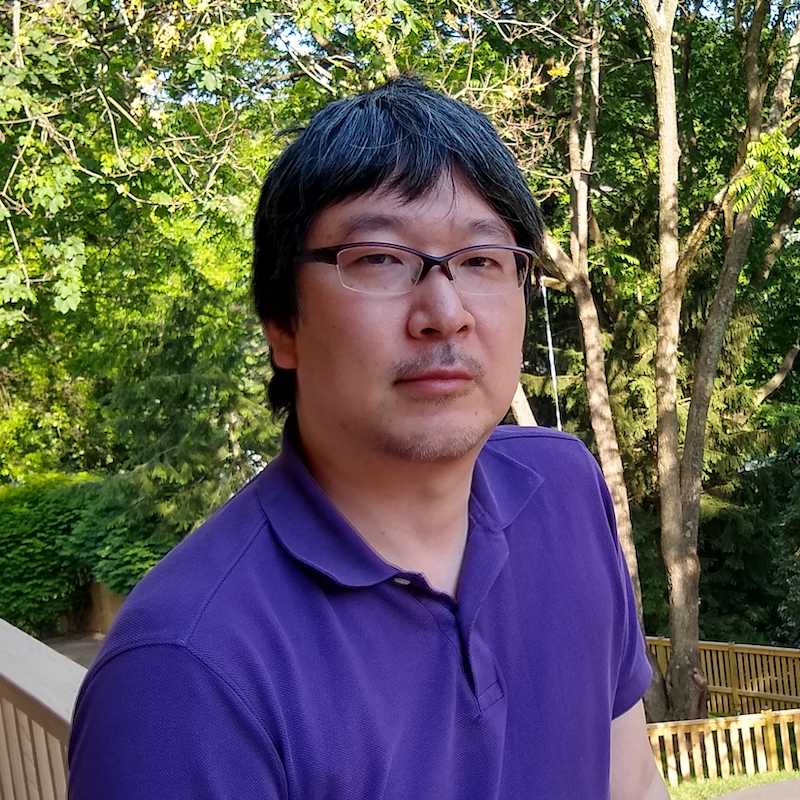
Gordon Geoffrey J. is a Professor at Carnegie Mellon University, specializing in Machine Learning , Artificial Intelligence , and Computer Science . His research spans Reinforcement Learning , Domain Adaptation , Graph-based Planning , and Relational Learning , with significant contributions to Adversarial Learning , Deep Learning Dynamics , and Mobile Sensor Networks . He has pioneered algorithms like ARA* and Anytime Dynamic A* for efficient planning under constraints. Key research areas: Transfer Learning , Bayesian Knowledge Tracing , Multi-agent Systems , Database Optimization His work has been cited thousands of times across foundational topics in AI and robotics, demonstrating sustained impact in algorithm design and applications to complex systems.
Associate Professor Jiwon Kim is a leading researcher in Transport Engineering at the University of Queensland's School of Civil Engineering. She serves as Director of Higher Degree by Research and was a DECRA Fellow from 2019-2022. Holding degrees from Korea University and Northwestern University, she specializes in AI/ML applications for transportation systems. PhD, Northwestern University BS & MS, Korea University Her research focuses on Artificial Intelligence and Machine Learning applications in transportation, including: Deep learning for traffic management Reinforcement learning in mixed traffic environments Multi-agent systems for urban mobility optimization Spatiotemporal trajectory analysis Recent publications demonstrate expertise in: Eco-driving strategies Traffic incident prediction Queue length estimation Crash risk modeling Scientific recognition includes: ARC DECRA Fellowship (2019-2022) She supervises doctoral students in: Transportation data analytics Autonomous vehicle systems Intelligent traffic management Current projects explore real-time traffic monitoring, synthetic mobility data generation, and connected vehicle technologies.
Dr. Ting-Feng Lin is an Assistant Professor at the Cell Biology, Neurobiology and Biophysics department within the Faculty of Science at Utrecht University, Netherlands. His research focuses on understanding the mechanisms of learning and memory formation in the cerebellum, particularly how synaptic and intrinsic plasticity mechanisms coordinate to regulate neuronal signaling and behavior. He employs advanced microscopy, optogenetic, and chemogenetic techniques in transparent zebrafish models to study these processes in vivo, with implications for neurodevelopmental disorders like autism spectrum disorder (ASD) and schizophrenia. 2025: Assistant Professor, Utrecht University 2019-2025: Postdoctoral Researcher, University of Chicago 2015-2019: PhD in Neuroscience, Neuroscience Center Zurich (ZNZ) 2010-2014: MS in Physiology, National Taiwan University 2006-2010: BS in Sports Medicine, China Medical University His work investigates how sensory experiences shape cerebellar processing during development, focusing on climbing fiber pathways and their role in sensory prediction errors. His group also studies the interaction between synaptic, intrinsic, and structural plasticity mechanisms in neural circuits, using zebrafish models with genetic modifications (e.g., Grid2 knockout) to model human neurological conditions. Dr. Lin has received scientific recognition including the SfN Trainee Professional Development Award for his work on Purkinje cell plasticity and the JNS Meeting Award for research on parallel fiber ramping activity and LTD. His publications span topics from cerebellar plasticity to voltage-gated K+ channel dynamics, reflecting his interdisciplinary approach to neurobiology.
Kwang Moo Yi is an Assistant Professor in the Department of Computer Science at the University of British Columbia (UBC), where he conducts research in computer vision and machine learning. He is affiliated with the Computer Vision Lab, CAIDA (Centre for Artificial Intelligence Decision-making and Action), and ICICS (Institute for Computing, Information and Cognitive Systems) at UBC. Education: B.Sc. from Seoul National University Ph.D. from Seoul National University under Prof. Jin Young Choi Post-doctoral researcher at École Polytechnique Fédérale de Lausanne (EPFL) with Prof. Pascal Fua and Prof. Vincent Lepetit Dr. Yi's research focuses on Visual Geometry with the goal of understanding local environments, adapting to them, and acting within them. His work spans applications in autonomous vehicles, drones, robots, and Augmented/Mixed Reality systems. He employs machine learning, particularly deep learning, as the primary tool for advancing computer vision capabilities. His recent publications demonstrate a strong focus on neural rendering techniques, especially 3D Gaussian Splatting and Neural Radiance Fields (NeRF). The research trends show increasing sophistication in handling occlusions, improving rendering quality, and developing more efficient training methods for neural fields. There's also significant work connecting computer vision with practical applications in industrial settings and energy systems. Dr. Yi serves as an area chair for top computer vision and machine learning conferences including CVPR, ICCV, ECCV, NeurIPS, ICML, and AAAI. He was part of the organizing committee for CVPR 2023. He supervises graduate students including Eric (who recently completed his PhD), Gopal (now at Samsung Research), and Jeong-Gi (joining as a postdoctoral fellow). His teaching includes CPSC 425: Computer Vision and CPSC 533Y: 3D Computer Vision with Deep Learning. Dr. Yi is actively involved with the Computer Vision Lab at UBC, collaborating with researchers across CAIDA and ICICS. His work bridges theoretical computer vision with practical applications in various domains including astronomy, industrial automation, and energy systems.
Professor Ian Davidson is a faculty member in the Department of Computer Science at the University of California Davis, College of Engineering. His research focuses on machine learning, data mining, and constraint programming, with applications in neuroscience, healthcare, and social networks. He emphasizes rigorous algorithm design and human-in-the-loop learning paradigms. Editorial Board Member: ACM TKDD, IEEE TKDE, Springer DMKD Conference Leadership: PC Chair (SDM 2012), Vice/Area Chair (IEEE ICDM, ACM KDD, SIAM DM, ECML/PKDD 2013-2015) Research Interests: Human-in-the-loop learning (active, transfer, and transductive frameworks) Constraint programming and spectral methods for clustering and classification Applications in neuroimaging analysis, intelligent tutoring systems, and social impact domains Fairness in machine learning and clustering algorithms Tensor decomposition and matrix factorization techniques Interdisciplinary collaborations in neuroscience and healthcare Recent publications highlight his work on fairness-aware clustering with constraint programming, advanced spectral methods for brain connectivity analysis, and explainable AI frameworks. His research often combines theoretical rigor with practical applications in clinical domains. Scientific Awards: Best Paper Award, SIAM Data Mining Conference 2005 Best Paper Award, ECML/PKDD 2006 Best Paper Award, ICDM 2006 Students & Collaborators: Former students: Xiang Wang (IBM Watson), Buyue Qian (Xi'an Jiaotong University), Tom Kuo (Google), Sean Gilpin (Google) Current advisees: Aubrey Guess, Zilong Bai, Erin McGinnis, Zheng Fang, Hongjing Zhang
Quoc Thong Le Gia is an Associate Professor in the School of Mathematics & Statistics at the University of New South Wales (UNSW), Sydney. He holds a PhD in Mathematics from Texas A&M University (2003), an MS in Mathematics from Texas A&M University (2000), and a BSc in Mathematics and Computer Science from UNSW (1998). His research focuses on Numerical Analysis , Approximation Theory , Partial Differential Equations , and Stochastic Processes , with particular expertise in problems on spherical domains. His work bridges theoretical mathematics with practical applications in computational science, data science, and machine learning. Le Gia's recent publications demonstrate a strong focus on numerical methods for PDEs on spheres, stochastic analysis, and machine learning applications. His work shows consistent progression from theoretical foundations to practical implementations, with increasing interdisciplinary applications in recent years. L. F. Guseman Prize in Mathematics, Texas A&M University (2003) As a dedicated academic mentor, Le Gia has supervised numerous PhD, Master's, and Honours students across computational mathematics and data science topics. He has secured significant research funding through ARC Discovery Projects including DP220101811 (2022-2024) and DP180100506 (2018-2020). Professionally, he serves as External Associate Editor for Frontiers in Applied Mathematics and Statistics , Secretary for ANZIAM's Computational Mathematics Group, and Co-chair of Mathematics of Computation and Optimisation (AustMS Special Interest Group).
Qing Cao is an Associate Professor of Materials Science and Engineering at the University of Illinois at Urbana-Champaign, with courtesy appointments in Chemistry and Electrical Engineering. He leads the Cao Research Group within the Grainger College of Engineering and serves as Deputy Editor of Science Advances. Dr. Cao received his B.S. in Chemistry from Nanjing University in 2004 and his Ph.D. in Materials Chemistry from the University of Illinois at Urbana-Champaign in 2009. After working for 9 years as a research scientist at IBM Thomas J. Watson Research Center, he returned to UIUC in 2018 as a faculty member. His research focuses on developing functional nanomaterials for unconventional electronic systems, high-performance logic devices, and low-cost energy harvesting. The Cao Research Group specifically works on: nanoelectronic devices based on novel nanomaterials; next-generation memory devices for neuromorphic and in-memory computing; monolithic 3D integration for high performance electronics; high-performance printable electronic materials; and bioelectronics for healthcare applications. His work bridges materials science, chemistry, electrical engineering, and device physics. Analysis of Dr. Cao's recent publications reveals a strong focus on electrochemical memory devices for neuromorphic computing, with significant work on carbon nanotube-based electronics and novel nanomaterials. His 2023 Nature Electronics paper on CMOS-compatible electrochemical synaptic transistors demonstrates his leadership in developing hardware solutions for deep learning acceleration. His research trajectory shows a progression from fundamental carbon nanotube device physics to more applied systems for computing and sensing applications. IBM Pat Goldberg Memorial Best Paper Award (2017) IBM Master Inventor Award (2016) MIT Technology Review TR35 (2016) Forbes '30 Under 30' (2012) and 'Most Influential All-Star Alumni' (2016) Atlantic Council Millennium Fellow (2017) US Frontiers of Engineering by National Academy of Engineering (2016, 2019) 17 IBM Invention Achievement Awards (2011-2018) Dr. Cao has secured significant research funding including NSF grants 1950182 and 2139185. His research group actively recruits graduate students and postdoctoral researchers to work on cutting-edge materials and device projects. His work has resulted in over thirty research papers and fifty patents and patent applications. He teaches graduate courses including MSE 403 (Synthesis of Materials), MSE 460 (Electronic Materials I), and MSE 488 (Optical Materials). The Cao Research Group operates within the University of Illinois' world-class facilities including the Frederick Seitz Materials Research Laboratory and Holonyak Micro and Nanotechnology Laboratory. His research has received support from NSF, DoD, DOE, and industry partners including TSMC. The group's recent $2 million project focuses on developing technology to help mobile devices learn and adapt to their surroundings.
Georgia Chalvatzaki is a Professor in the Department of Computer Science at TU Darmstadt, leading the PEARL-Lab (Interactive Robot Perception and Learning Lab) with a team of 13 PhD candidates and postdocs. Her research focuses on human-centered robotics, integrating perception, planning, and action to develop robots that adapt to dynamic environments through structured knowledge embedding. Key research areas: Robotics, Artificial Intelligence, Machine Learning, and Human-Robot Interaction Applications: Healthcare (assistive systems), logistics automation, and sustainable agriculture Notable innovation: SE(3)-Diffusionsmodelle for 3D spatial learning in robots Her work combines model-based robotics with modern learning techniques like reinforcement learning and graph-based neural networks, enabling robots to transfer knowledge across scenarios and adjust behavior contextually. Georgia has received significant accolades, including: ERC Starting Grant (2024) Alfried Krupp Prize (2025, €1.1 million) Ellis Scholar recognition in the European Lab for Learning and Intelligent Systems She actively promotes open science, diversity, and early-career researcher development, serving as a keynote speaker at major conferences like IROS and CoRL.
Qian Tao is an Assistant Professor at the Department of Imaging Physics , Faculty of Applied Sciences , Delft University of Technology . She previously worked at the Division of Image Processing, Department of Radiology, Leiden University Medical Center from 2009 to 2020. Academic Background: BSc in Electrical Engineering (Fudan University), MSc in Biomedical Engineering (Fudan University), PhD in Biometric Authentication (University of Twente) Research Interests: Focus on trustworthy AI methodologies for critical healthcare applications, including medical imaging for patient diagnosis and clinical intervention. Specializes in cardiac MRI analysis, image-guided interventions for cardiac arrhythmias, and AI in Radiology. Publication Trends: Recent work emphasizes motion correction in cardiac MRI, deep learning for image registration, and novel techniques like TRAFF2 mapping. Keywords include Medical Imaging , Machine Learning , Cardiac MRI , and Quantitative Analysis . Contact: Email: Q.Tao@tudelft.nl
Anil Madhavapeddy serves as Professor of Planetary Computing at the University of Cambridge's Department of Computer Science and Technology and directs the Cambridge Centre for Carbon Credits (4C). A Fellow of Pembroke College, he integrates systems research with environmental conservation through the Computer Laboratory's Environment and Energy Group. His career spans industry leadership (NetApp, Citrix, Intel), academic appointments (Cambridge, Imperial, UCLA), and entrepreneurial ventures (XenSource, Unikernel Systems, Docker). Madhavapeddy earned his PhD at Cambridge's Computer Laboratory in 2006. His research bridges computational systems and planetary-scale environmental challenges, with deep expertise in open-source development (OCaml, Xen, Docker, OpenBSD) and technology strategy advising for organizations including Zededa, Tezos Foundation, and Tarides. His work centers on environmental computing and climate informatics, leveraging distributed systems and functional programming to develop sensing infrastructure for conservation. Recent projects focus on carbon credit systems, AI-driven biodiversity monitoring, and sustainable computing architectures that minimize ecological footprints while maximizing analytical capability. Analysis of his 2025 publications reveals a concentrated effort on AI-integrated conservation tools, privacy-preserving carbon accounting, and energy-efficient computing. Key themes include spatial networking for ecological data, LLM-enhanced evidence retrieval in conservation science, and novel metrics for extinction risk assessment—demonstrating computational innovation applied to urgent planetary boundaries. No scientific awards were documented in the source material. Madhavapeddy advises multiple technology firms on strategic development while leading the Cambridge Centre for Carbon Credits, though specific grant funding details remain unreported. He actively contributes to the Environment and Energy Group at Cambridge's Computer Laboratory and directs the interdisciplinary Cambridge Centre for Carbon Credits (4C). His open-source leadership spans critical infrastructure projects including OCaml, Xen, and Docker, fostering collaborative development communities that underpin modern cloud and container technologies.
Florian Shkurti is an Assistant Professor in the Department of Computer Science at the University of Toronto Mississauga (UTM), affiliated with the UofT Robotics Institute, Vector Institute, and Acceleration Consortium. His research focuses on robotics, machine learning, and computer vision, emphasizing safe and effective autonomous systems in dynamic environments. He directs the Robot Vision and Learning (RVL) lab, exploring areas like environmental monitoring, autonomous navigation, and mobile manipulation. Research Interests: His work spans robotics, machine learning, and computer vision. Key areas include robot perception, planning under uncertainty, safe exploration, imitation learning, and applications in field robotics, autonomous vehicles, and chemistry lab automation. He develops methods enabling robots to perceive, reason, and act safely in collaboration with humans. Publications: Recent work includes advancements in safe multitask learning, interactive crowd navigation, and diffusion models for trajectory planning. His research bridges theoretical foundations with real-world applications in environmental science and autonomous systems. Affiliations: Faculty Member, UofT Robotics Institute; Faculty Affiliate, Vector Institute; Faculty Member, Acceleration Consortium. He also holds positions at UTM's Mathematical & Computational Sciences department. Teaching: Courses include Imitation Learning for Robotics, Neural Networks, and Mobile Robotics. He emphasizes hands-on experience with autonomous systems through projects involving RC cars and simulation tools. Labs & Teams: Leads the RVL lab, collaborating on projects like RoboCulture (automated biological experimentation) and SICNav (safe crowd navigation systems). The lab focuses on cross-disciplinary robotics solutions for real-world challenges.
Devi Parikh is an Associate Professor at the School of Interactive Computing, Georgia Institute of Technology, and a Research Director at Meta’s FAIR lab. Her research focuses on generative models, AI for creativity, computer vision, and natural language processing. Education: B.S. in Electrical and Computer Engineering from Rowan University (2005), M.S. and Ph.D. in Electrical and Computer Engineering from Carnegie Mellon University (2007, 2009). Research interests include embodied AI, human-AI collaboration, and creative applications of AI. She has held visiting positions at Cornell, MIT, CMU, and others. Awards include NSF CAREER Award, IJCAI Computers and Thought Award, and multiple fellowships. Led development of Habitat , a platform for embodied AI research, and contributed to the Open Catalyst Project for renewable energy storage.
Emily M. Bender is the Thomas L. and Margo G. Wyckoff Endowed Professor in the Department of Linguistics at the University of Washington. She also holds adjunct appointments in the School of Computer Science and Engineering and the Information School. Her research spans multilingual grammar engineering, computational linguistics, societal impacts of language technology, and sociolinguistic variation. She directs the Computational Linguistics Laboratory (The Treehouse) and leads the CLMS program. Bender is a Fellow of the AAAS (2022) and previously served as Howard and Frances Nostrand Endowed Professor (2019–2022). She has authored influential textbooks on NLP fundamentals and pioneered work on data statements to mitigate bias in NLP systems. Her work integrates linguistic theory with computational methods, emphasizing ethical AI and language documentation. Education: PhD in Linguistics from Stanford University (advisor: Ivan A. Sag), AB in Linguistics from UC Berkeley, with studies at Tohoku University. Past roles include NAACL Executive Board Chair (2016–2017) and current roles in the Association for Computational Linguistics leadership. Her Erdős number is 4. Research focuses on the LinGO Grammar Matrix, automatic grammar inference from interlinear glossed text (AGGREGATION project), and societal implications of NLP technologies like large language models. She co-leads the RAISE initiative and contributes to labs like the Tech Policy Lab and Value Sensitive Design Lab. Over 30 advisees have completed PhD and MS degrees under her mentorship. Teaching includes courses on syntax for NLP, societal impacts of language tech, and computational linguistics. Her 2020 ACL paper on form-meaning distinctions in NLP has been influential in ethical discussions. Current projects include The AI CON (2025) on combating tech hype.
Shinji Watanabe is an Associate Professor at Carnegie Mellon University's Language Technologies Institute and a Courtesy Professor in the Electrical and Computer Engineering department. He holds a Ph.D. (Dr. Eng.) from Waseda University, Japan, and has held research roles at NTT Communication Science Laboratories, Mitsubishi Electric Research Laboratories (MERL), and Johns Hopkins University. His research focuses on automatic speech recognition, speech enhancement, and machine learning for speech processing. Watanabe has published over 300 peer-reviewed papers and received the Best Paper Award at IEEE ASRU 2019. His work emphasizes robust speech processing in challenging environments, multilingual models, and neural audio codecs. He leads the ESPnet toolkit development for end-to-end speech processing systems and contributes to technical committees like IEEE SLTC and APSIPA SLA. Recent research trends include streaming speech systems, universal speech enhancement (URGENT challenges), and fusion of discrete speech units with self-supervised representations. He explores scalable speech foundation models through benchmarks like ML-SUPERB 2.0 and investigates cross-modal audio-visual processing in challenges like MISP 2025. Education : B.S., M.S., Ph.D. (Waseda University) Affiliations : CMU Language Technologies Institute, CMU ECE, Former roles at MERL and Johns Hopkins Key Projects : ESPnet, OpenWhisper-Style Models, URGENT Challenge Frameworks
Craig Jin is an Associate Professor at the University of Sydney, leading the CARlab (Computing and Audio Research Laboratory) and Spatial Audio Research initiatives within the School of Electrical and Computer Engineering. He holds a BS from Stanford University, an MS from Caltech, and a PhD from the University of Sydney. His work focuses on immersive audio technologies, biomedical signal processing, and assistive technologies for sensory augmentation. Research interests include spatial audio reproduction, binaural processing, acoustic sensing for accessibility, and machine learning applications in signal processing. Key contributions span HRTF interpolation, noise reduction algorithms, and acoustic touch systems for the visually impaired. Recent projects include real-time MRI analysis of vocal tract dynamics and sparse recovery techniques for sound field reconstruction. His publications span over 150 peer-reviewed articles in journals like IEEE Transactions on Audio, Speech, and Language Processing, and conferences such as ICASSP. He advises four current PhD/Master’s students on projects like predictive gesture tracking, voice disorder classification, and magnetic resonance imaging techniques.