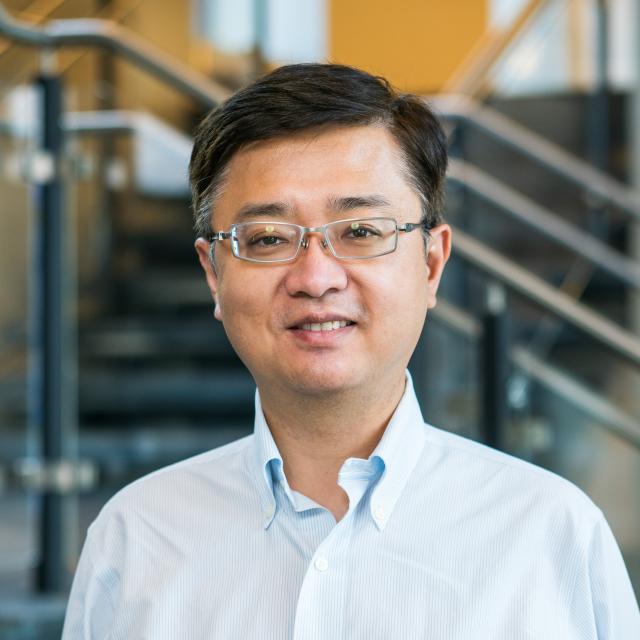
Florian Kerschbaum is a Professor and NSERC/RBC Industrial Research Chair in Data Security at the Cheriton School of Computer Science, University of Waterloo. His research focuses on data security and privacy, applied cryptography, and confidentiality in data science. Research interests span data collection/preparation management, secure multi-party computation, homomorphic encryption, differential privacy, and machine learning robustness/privacy. His work develops cryptographic solutions for practical data management challenges in distributed systems.
Luca Peretti is an Associate Professor in Electric Machines and Drives at KTH Royal Institute of Technology, affiliated with the School of Electrical Engineering and Computer Science and the Department of Electrical Engineering, Division of Electric Power and Energy Systems. He works as a researcher in the EMD (Electric Machines and Drives) group and serves as Partner Director for KTH's strategic partnership with ABB. Education: M.Sc. in Electronic Engineering (2005) from University of Udine, Ph.D. from University of Padova (2008) Professional Experience: Postdoc at University of Padova (2009-2010), Principal Scientist at ABB Corporate Research (2010-2018), Associate Professor at KTH (2018-present) His research focuses on: Automatic parameter estimation in electric machines Multiphase drive systems Sensorless control algorithms Loss segregation in drive systems Condition monitoring of industrial and transportation applications Recent publications demonstrate expertise in variable phase-pole machines, harmonic plane decomposition, predictive control algorithms, and advanced modeling of permanent magnet motors. Key application areas include transportation electrification, wind energy systems, and industrial drive technologies. Scientific roles include: Associate Editor, IET Electric Power Applications Journal (2019-present) Theme Co-Leader, Swedish Electromobility Center (2020-present) Member, IEEE (2021-present) and IET (2006-present) He leads the strategic partnership with ABB and contributes to doctoral program committees at University of Padova.
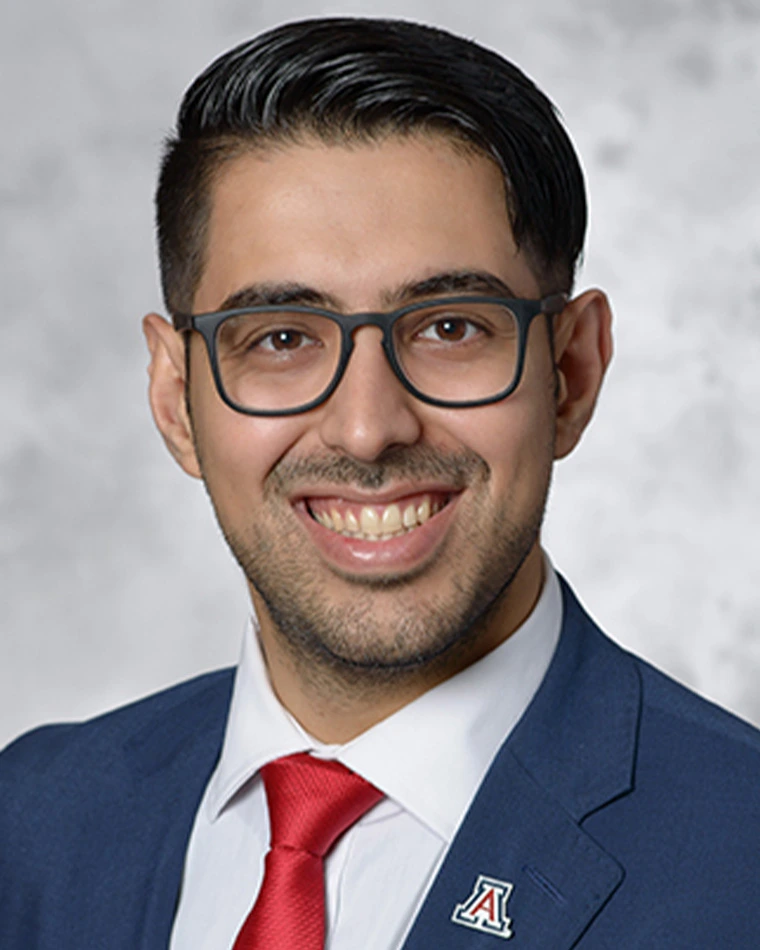
Soheil Salehi is a tenure-track Assistant Professor in the Department of Electrical and Computer Engineering at the University of Arizona, with a joint appointment in Systems and Industrial Engineering. He is the Director of the Privacy-preserving, Intelligent, and Secure Computing (PRISM) Lab, established in August 2022. Prior to this, he was an NSF-Sponsored Computing Innovation Fellow and Postdoctoral Research Fellow at the University of California, Davis. Ph.D., Electrical and Computer Engineering, University of Central Florida, 2020 M.S., Electrical and Computer Engineering, University of Central Florida, 2016 B.S., Isfahan University of Technology, Iran, 2014 Dr. Salehi's research focuses on the intersection of hardware, AI, and security. His work spans hardware and AI-enabled security in IoT , Generative AI for hardware design and security , neuromorphic and biologically-inspired AI hardware , emerging spin-based devices , reconfigurable architectures , low-power VLSI circuits , and digital twins and mixed reality for semiconductor workforce development . He also explores the application of Generative AI in personalized education . His recent publications, spanning 2023–2025, reveal a strong trend toward integrating AI and machine learning into hardware security and design. Key themes include automated secure IC design flows , AI-driven hardware obfuscation , firmware and side-channel attack analysis , security in neuromorphic and spiking neural networks , and educational frameworks using digital twins and generative models . His work appears in top venues like DAC, ICCAD, USENIX Security, IEEE TCAS-I, and ISCAS. Outstanding Reviewer Award, IEEE/ACM Design Automation Conference (DAC), 2023 Best Presentation of the Symposium Award, UC Davis Postdoctoral Research Symposium, 2021 UCF Excellence by a Graduate Teaching Assistant (University-Level), 2016 Nominated for 30-under-30 Award, UCF, 2020 Nominated for Postdoctoral Research Excellence Award, UC Davis, 2022 Dr. Salehi has secured significant research funding as PI and Co-PI, including a $300K NSF SaTC EAGER grant on Generative AI-based Personalized Cybersecurity Tutor, a $174,000 University of Arizona PIF Award, and multiple RII grants totaling over $198K. He has also received industry funding from CHEST. He actively mentors students and leads the PRISM Lab, which focuses on privacy-preserving and intelligent secure computing. His service includes roles as Technical Program Committee (TPC) Member and Session Chair at premier conferences such as DAC, ICCAD, CCS, NDSS, and GLSVLSI. The PRISM Lab, under his direction, conducts cutting-edge research in secure and intelligent hardware systems, with applications in IoT, edge computing, and workforce development. The lab emphasizes interdisciplinary collaboration and innovation in both research and education.
Professor Guy Williams is a leading academic at the University of Cambridge with a focus on imaging science and clinical neurosciences, affiliated with Downing College and the Wolfson Brain Imaging Centre . Holding a PhD in Physics from his initial Natural Sciences degree, he specializes in nuclear magnetic resonance (NMR) and MRI techniques for brain imaging. Education: BA, PhD in Physics His research centers on non-invasive imaging of brain structure and function, particularly in traumatic brain injury (TBI) and dementia. His work involves developing novel MRI pulse sequences and advanced data analysis algorithms, including AI-based diagnostic tools. He leads studies on white matter integrity post-trauma, longitudinal dementia assessment, and applications of MRI in disorders of consciousness and addiction. Recent publications highlight collaborations in traumatic brain injury outcomes, AI-guided dementia prediction, and neuroimaging of post-COVID cognitive deficits. His team's work on ultra-high field laminar fMRI and distortion correction methods has advanced clinical neuroscience applications. Key techniques include diffusion tensor imaging (DTI), 7 Tesla MRI, and positron emission tomography (PET/MR). His research spans from basic NMR physics to clinical translation, with a strong emphasis on multi-site studies and real-world diagnostic implementation.
Matthew Lakin is an Associate Professor with tenure in the Department of Computer Science at the University of New Mexico, with a courtesy appointment in the Department of Chemical & Biological Engineering. He is affiliated with the UNM Center for Biomedical Engineering and the School of Engineering, and collaborates extensively with the UNM Health Sciences Center and external institutions. Education: Ph.D., Computer Science, University of Cambridge, 2010 M.A. (Cantab), University of Cambridge, 2009 B.A. (Hons), Computer Science, University of Cambridge, 2005 Dr. Lakin's research focuses on molecular computing, DNA nanotechnology, synthetic biology, and formal verification of biomolecular circuits. He develops computational models and experimental systems for programmable biological devices, especially using heterochiral DNA to enhance stability in living cells. His work spans software tools for biodesign and experimental validation in mammalian systems, with applications in nanomedicine and biosensing. The recent publications highlight a strong trend in engineering robust, intelligent biomolecular systems. His work integrates machine learning concepts into chemical reaction networks, advances geometric modeling of DNA systems, and pioneers L-DNA-based circuits for intracellular applications. The research spans theoretical foundations, software tools, and wet-lab experimentation, emphasizing interdisciplinary innovation. Scientific Awards: Presidential Early Career Award for Scientists and Engineers (PECASE), 2025 NSF CAREER Award, 2021 UNM School of Engineering Junior Faculty Research Excellence Award, 2021 Multiple student awards under his mentorship, including the Outstanding Graduate Student Award and DNA28 Best Student Presentation recognition Dr. Lakin has advised numerous graduate and undergraduate students, including Ph.D. graduates in Biomedical Engineering and Computer Science. He leads major funded projects such as the NSF CAREER grant on heterochiral molecular computing, an EPSCoR Research Fellowship, and a $3M NSF grant on heavy metal biosensing in collaboration with Native American communities. He is also PI on multiple NSF grants related to synthetic cells and nucleic acid technologies. He directs the Lakin Lab for Programmable Biology, which operates within the Department of Computer Science and collaborates with Chemical & Biological Engineering and the Center for Biomedical Engineering. The lab emphasizes both computational modeling and experimental molecular biology, and runs an NSF-funded biotechnology summer camp in partnership with ¡Explora! science museum to strengthen STEM education in New Mexico.
Lars Nordström is a Professor at the Division of Electric Power and Energy Systems within KTH Royal Institute of Technology, Stockholm, Sweden. His work bridges control systems , communication networks , and power systems , with a focus on future architectures, functionality, and quality aspects of ICT for power grid operations. He has led initiatives such as the Swedish Centre of Electric Power Engineering and served as Thematic Leader for Smartgrids in KIC InnoEnergy. In 2014, he was a Visiting Professor at Washington State University. Education : Ph.D., MSc.EE Nordström's research explores the intersection of smart grids , machine learning , and cybersecurity for power systems. Key areas include: Wide-Area Monitoring and Control (WAMC) systems Decentralized control strategies for DC microgrids Impedance modeling using neural networks Data-driven methods for islanding detection ICT reliability and protocol design for grid operations His recent publications emphasize machine learning applications in power systems, including LSTM networks for EV charging management, graph attention networks for stability monitoring, and digital twin approaches for cyber-attack mitigation. These works span disciplines such as Smart Grids, Power Electronics, and Data Science. Scientific Recognitions : Senior Member, IEEE Senior Member, CIRED Senior Member, Cigre Past Chairman, Swedish IEC TC57 Mirror Committee Nordström actively teaches and examines graduate courses like Communication and Control in Electric Power Systems and Computer Applications and Machine Learning in Electric Power Systems . His work influences industry practices through collaborations on digital substations, energy market analysis, and resilience strategies.
K. Rajibul Islam is an Associate Professor at the University of Waterloo, affiliated with the Institute for Quantum Computing (IQC) and the Department of Physics and Astronomy. He holds a joint appointment with the Perimeter Institute for Theoretical Physics and co-founded Open Quantum Design and Lightflow Optics Inc. His research focuses on quantum information processing, quantum simulation, and trapped ion systems, with applications in quantum computing and entanglement studies. Education: Ph.D. in Physics (2012, University of Maryland), M.Sc. in Physics (2007, Tata Institute of Fundamental Research), B.Sc. in Physics (2005, Jadavpur University). Postdoctoral research at Harvard University (2012–2015) and MIT (2015–2016). Research Interests : Quantum simulation of spin models, quantum computing with trapped ions, entanglement measurement, frustrated spin systems, and quantum materials. His lab, QITI (Quantum Information with Trapped Ions), develops scalable quantum simulators and open-access quantum computers like 'QuantumIon.' Awards : Fellow of the American Physical Society (2024), VAIBHAV Fellowship (2024), Excellence in Teaching Award (2024), Early Researcher Award (2019), and Distinguished PhD Dissertation Award (2012–13). Teaching : Courses include PHYS 701 (Graduate Quantum Physics), PHYS 234 (Quantum Physics I), PHYS 393 (Physical Optics), and PHYS 256 (Geometrical and Physical Optics). He emphasizes outreach via initiatives like Bigyan.org.in , a Bengali-language science platform. Lab and Collaborations : Active in developing trapped-ion quantum hardware, including ion trap designs, optical addressing systems, and holographic control methods. Collaborates on quantum algorithms, machine learning for quantum systems, and experimental quantum thermodynamics.
Andrea Blanco-Redondo is Florida Photonics Center of Excellence Endowed Professor at University of Central Florida's College of Optics and Photonics. Her research focuses on quantum photonics, topological photonics, and nonlinear phenomena in integrated photonic systems. Research areas include: Topological protection of quantum states Pure-quartic soliton dynamics Programmable photonic circuits Non-Hermitian photonic systems Silicon-based quantum devices Recent publications (2023-2025) show primary focus on topological photonics (6/11) and soliton physics (4/11), with emerging work in optical neural networks. Current group includes 3 PhD students and 2 undergraduate researchers with backgrounds in optics, quantum physics, and materials science. Significant honors: Optica Fellow (2024) Geoff Opat Early Career Prize (2016) Ada Byron Award for women in technology (2014) Marie Curie Fellowship (2013)
Jun Zhuang is an Assistant Professor in the Department of Computer Science at Boise State University. He holds a Ph.D. from Indiana University-Purdue University Indianapolis (IUPUI), M.S. degrees in Computer Science (University at Buffalo) and Finance (Rochester Institute of Technology), and a B.E. in Safety Engineering (South China University of Technology). His research focuses on trustworthy and robust AI systems, Bayesian inference, generative models, quantum computing, and medical imaging. Education: Ph.D., Computer Science, IUPUI (2023) M.S., Computer Science, University at Buffalo (2018) M.S., Finance, Rochester Institute of Technology (2013) B.E., Safety Engineering, South China University of Technology (2011) Research Interests: Jun investigates robust machine learning algorithms, particularly in quantum information, medical imaging, and graph-based systems. He emphasizes mitigating adversarial attacks, enhancing model interpretability, and integrating blockchain for AI security. His work spans theoretical foundations and practical applications, including generative adversarial networks (GANs) and trustworthy AI frameworks. Recent Articles: His recent work addresses jailbreaking vulnerabilities in large language models (LLMs), quantum computing optimization challenges, and robust graph structure learning. These studies highlight interdisciplinary approaches to advancing AI reliability and security. Awards & Grants: Recipient of the SIGIR Student Travel Grant for CIKM 2022. Active in grant activities through research collaborations and institutional funding. Advising & Labs: Advisor to Ph.D. student Maqsudur Rahman and M.S. students Chia-Ying Wu and Shipra Kumari. Leads the T rustworthy and R obust AI L ab (TRAIL), focusing on developing resilient AI systems.
Dr. Krishnendu Guha is an Assistant Professor and CONNECT Funded Investigator at the School of Computer Science and Information Technology, University College Cork. His research bridges embedded systems, cybersecurity, and quantum-safe hardware design with AI and bio-inspired strategies. PhD: University of Calcutta (Department of Science and Technology, Government of India) Postdoctoral: University of Florida Past Roles: Research Fellow at Intel India, Visiting Scientist at Indian Statistical Institute, Temporary Assistant Professor at NIT Jamshedpur His research focuses on embedded systems security , real-time security mechanisms , and quantum-safe hardware . He integrates AI (e.g., neural networks) and bio-inspired strategies (e.g., gecko crypsis behavior) into security frameworks for FPGAs and edge platforms. Recent publications highlight trends in blockchain for supply chains , quantum machine learning , secure FPGA architectures , and distributed AI systems . His work addresses energy efficiency, fault detection, and decentralized security in hardware. As a CONNECT Centre member, Dr. Guha contributes to advanced research in reconfigurable systems and cybersecurity. Grants and collaborations span quantum-safe design, cloud FPGA security, and hardware trojan mitigation.
Xiongfei Wang is a Visiting Professor at KTH Royal Institute of Technology in Stockholm, Sweden, and a Digital Futures Fellow. He holds academic leadership roles, including Editor-in-Chief of IEEE Transactions on Power Electronics and chairs in IEEE committees. His research focuses on power electronics systems, stability analysis, and data-driven approaches for energy systems. Previously, he served as a Professor at Aalborg University (2009–2022). His work addresses challenges in power system stability, converter dynamics, and renewable integration. He leads projects like 'Machine Learning for Dynamics Analysis of Power Electronic Systems,' aiming to enhance grid resilience through AI-driven methods. Notable awards include IEEE Fellow (2023), Isao Takahashi Award (2022), and multiple best paper awards. Wang collaborates extensively, organizing conferences and editing journals. His research spans power electronics, grid stability, and smart grid technologies, with a focus on practical applications in energy transition.
Russell Tessier is a Professor and Department Head of Electrical and Computer Engineering at the University of Massachusetts Amherst, affiliated with the Manning College of Information and Computer Sciences. His research focuses on reconfigurable computing, FPGA architectures, and hardware security, with notable contributions in CAD algorithms for FPGAs, embedded systems, and multi-tenant FPGA vulnerability analysis. Education: B.S.C.S.E., Rensselaer Polytechnic Institute (1989) M.S. and Ph.D., Massachusetts Institute of Technology (1992 and 1999) Research Interests: Dr. Tessier's work spans FPGA security (e.g., side-channel attacks, power distribution vulnerabilities), reconfigurable cloud computing, and hardware acceleration for applications like SAR imaging and machine learning. His lab, the Reconfigurable Computing Group, develops open-source FPGA cores (e.g., FlexGrip GPGPU, DE4 NetFPGA) and explores cutting-edge security countermeasures. Awards and Honors: Chancellor's Leadership Fellow (2015-2016) NSF Information Technology Research Grant Lilly Teaching Fellow (2002-2003) Multiple College of Engineering Excellence Awards Grants and Projects: Active funding includes NSF SaTC grants on reconfigurable cloud security and NASA support for snowpack measurement systems. His research also addresses FPGA-based solutions for cybersecurity, such as intrusion detection and power-side channel mitigation. Labs and Teams: Leads the UMass Reconfigurable Computing Group, which collaborates on open-source FPGA tools, security frameworks, and embedded system designs. The group maintains platforms like the DE4 NetFPGA and FlexGrip architecture.
Gagan Wig is an Associate Professor at the University of Texas at Dallas, School of Behavioral and Brain Sciences, with adjunct appointments in Psychiatry at UT Southwestern Medical Center. He directs the Wig Neuroimaging Lab, focusing on brain network connectivity across lifespan, healthy/pathological aging, and brain health disparities. His research employs structural/functional MRI, DTI, and TMS to study large-scale brain networks and their relationship to memory and attention. Professional preparation includes: Post-doctoral Associate in Neurology, Washington University School of Medicine (2012) Post-doctoral Associate in Psychology, Harvard University (2009) Ph.D. in Cognitive Neuroscience, Dartmouth College (2006) B.S. in Behavioral Neuroscience, University of British Columbia (2001) Research explores how brain networks change during aging and how socioeconomic status moderates these changes. His work reveals that education protects against brain network decline and that participant diversity is crucial for advancing brain aging research. Publications focus on neuroimaging of lifespan changes, Alzheimer's biomarkers, socioeconomic impacts on brain health, and methodological innovations in network analysis. Recent work demonstrates how functional network organization supports cognition despite Alzheimer's pathology and how data quantity affects network segregation measures. Awards include the Understanding Human Cognition Scholar Award from James S. McDonnell Foundation (2006). He has received significant funding including a $2.9M NIH grant studying socioeconomic links to Alzheimer's susceptibility and DARPA support for novel data sonification approaches.
Patrik Hilber is a Professor at KTH Royal Institute of Technology, working in the Division of Electromagnetic Engineering and Fusion Science within the School of Electrical Engineering and Computer Science (EECS). He serves as Deputy Director of First and Second Cycle Education at EECS and heads the QED AM research group. He is also a board member of YH-electrical engineering. Research Interests: His research focuses on reliability engineering, asset management, maintenance optimization, and smart grid technologies in electric power systems. Key areas include transmission and distribution systems, dynamic line and transformer rating, wind power integration, multiobjective optimization, condition monitoring, and data quality in power systems. He applies advanced modeling and data-driven approaches to improve power system planning, operation, and resilience. The recent trends in his publications (2020–2025) highlight a strong emphasis on dynamic rating technologies (DLR and DTR), data quality and machine learning applications in outage analysis, reliability-centered planning for wind farms and distribution systems, and the integration of renewable energy and electric vehicles. His work bridges theoretical modeling with practical utility applications. Teaching and Academic Leadership: He is examiner and course responsible for several degree projects in electrical engineering, power systems, and energy innovation. He also teaches courses on reliability evaluation, asset management, and innovation in electric power engineering. Publications and Books: He has authored a book titled Reliability Analysis and Asset Management Applied to Power Distribution (2014) and a book chapter on cable segment replacement optimization. His scholarly output includes numerous peer-reviewed articles in leading journals such as IEEE Transactions on Power Systems , Reliability Engineering & System Safety , and Applied Energy . Education: He holds a Ph.D. (2008), a Licentiate degree (2005), and an M.Sc. (2000), all from KTH. He became a Docent (Associate Professor) in 2014.
Ju Lu serves as an Assistant Professor at Lehigh University with office location in Iacocca Hall (room 0111), contactable via phone (610.758-3687) and email (jul724@lehigh.edu). Her academic position reflects active engagement in neuroscience research and education within the university's life sciences framework. Education Background: Ph.D. in Neurobiology from Harvard University (2008) B.Eng. in Microelectronics from Tsinghua University (2002) Research Focus: Dr. Lu's work pioneers investigations into neural circuit dynamics and synaptic plasticity mechanisms using advanced optical imaging technologies. Her research spans: Cortical circuit reorganization during motor skill acquisition across species Stress-induced synaptic alterations mediated by microglia in prefrontal circuits Therapeutic applications of psychedelic compounds for neural circuit restoration Development of three-photon microscopy for deep-brain imaging Genetically-encoded neurotransmitter sensors for in vivo studies This multidisciplinary approach bridges molecular neuroscience, systems-level circuit analysis, and translational mental health applications. Publication Trends: Analysis of Dr. Lu's 15 most recent publications (2016-2023) reveals an evolving trajectory from foundational studies on dendritic spine plasticity toward translational neuroscience. Early work emphasized optical imaging methodology and basic plasticity mechanisms, while her 2021-2023 publications increasingly focus on stress-related circuit disruptions and psychedelic therapeutics. A consistent thread involves combining high-resolution in vivo imaging with behavioral models to establish causal links between neural circuit dynamics and cognitive functions. Honors and Awards: No scientific awards or fellowships were documented in the provided materials. Mentorship and Funding: While specific student mentees and grant funding details are not specified in the source text, her extensive collaborative publication record indicates active supervision of research personnel and successful acquisition of research support. Research Infrastructure: Her methodological expertise in advanced microscopy suggests utilization of specialized imaging facilities, though no dedicated laboratory or research team is explicitly identified in the available documentation.