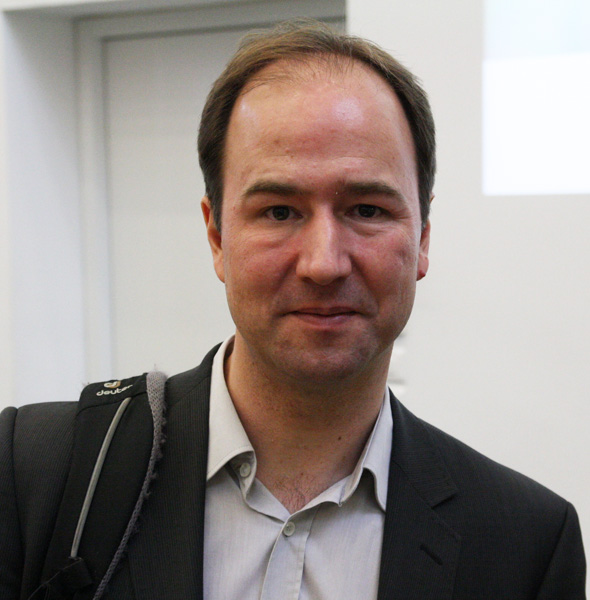
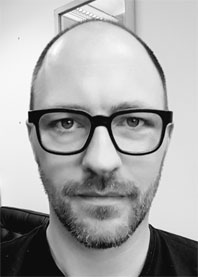
Lindsay M. De Biase is an Associate Professor at the David Geffen School of Medicine at UCLA, with dual appointments in the Department of Physiology and Neurobiology . Her research focuses on microglial regional specialization and its impact on basal ganglia circuits , synaptic function, and aging-related neuroinflammation. Education: PhD in Neuroscience (Johns Hopkins, 2011), B.S. in Molecular Cellular and Developmental Biology (Yale, 2003) Key research areas include: Lysosome and mitochondrial function in glial cells Microglial-astrocyte interactions Development and aging of basal ganglia circuits Extracellular matrix remodeling in cognitive aging The De Biase Lab investigates how microglia integrate mitochondrial signals, lysosomal challenges, and extracellular matrix cues to modulate synaptic health in aging and neurodegenerative diseases. Scientific Awards: 2021 Stanley Fahn Junior Faculty Award 2021 McKnight Brain Research Foundation Innovator Award 2019 Glen Foundation Grant 2018 NARSAD Young Investigator Award Her work is supported by the Glen Foundation , Parkinson's Foundation , and NIH/NIA , with recent studies revealing region-specific microglial responses to aging and stress. The lab also trains graduate students like Katherine Espinoza , who completed her PhD in 2024.
Paul Michael Macey is a Professor in the Nursing Department at the University of California Los Angeles (UCLA), where he leads a productive research program focused on neuroimaging and autonomic regulation in sleep disorders. His work primarily examines the neurological consequences of obstructive sleep apnea, with particular attention to gender differences and pain processing mechanisms. As Principal Investigator on multiple NIH-funded projects, he has established himself as a significant contributor to sleep medicine research. Sex-specific brain injury and symptoms in sleep apnea (NIH R56NR017435, 2018-2020) GABA and glutamate changes underlying altered autonomic function in obstructive sleep apnea (NIH R01HL135562, 2018-2022) Obstructive Sleep Apnea, Gender Biology, and Autonomic Regulation (NIH R01NR013693, 2013-2019) Gender Differences in Neural Deficits Associated with Obstructive Sleep Apnea (NIH R21NR011230, 2009-2012) Dr. Macey's research interests center on the neurological and physiological impacts of sleep disorders, particularly obstructive sleep apnea. His work employs advanced neuroimaging techniques including ultra-high field MRI to examine brain structure and function. A significant portion of his research investigates sex differences in how sleep apnea affects the brain and autonomic regulation, recognizing that men and women may experience different neurological consequences from the same condition. His recent work has expanded into pain processing mechanisms, migraine research, and the relationship between sleep disorders and cardiovascular function. Analysis of his recent publications reveals a clear progression in methodology, with increasing use of 7-Tesla MRI technology for more precise imaging of brain structures involved in pain processing and autonomic control. His research consistently demonstrates how obstructive sleep apnea alters brain chemistry (particularly GABA and glutamate levels), disrupts functional connectivity networks, and affects autonomic regulation. The gender-specific focus remains prominent across his publications, showing how neurological impacts differ between men and women. Dr. Macey's laboratory has made significant contributions to understanding how sleep apnea affects brain structure, particularly in regions like the insular cortex, hippocampus, and brainstem structures involved in pain modulation. His work has helped establish connections between sleep-disordered breathing and altered pain processing, providing insights that could improve treatment approaches for patients with both sleep disorders and chronic pain conditions. As a mentor and research leader, Dr. Macey has directed numerous NIH-funded projects examining the neurological consequences of sleep disorders. His laboratory regularly publishes high-impact research in top journals across neuroscience, sleep medicine, and neuroimaging fields. His collaborative approach is evident in the diverse author lists on his publications, which include researchers from multiple disciplines and institutions.
William Kwan is a Postdoctoral Research Fellow at the Queensland Brain Institute (University of Queensland). His research focuses on neural circuitry, optogenetic stimulation for artificial vision, and neuroregenerative strategies following brain injury. He investigates retinal ganglion cell projections, astrocyte roles in injury response, and primate visual system development. Key research areas include: Optogenetic approaches to restore visual function Neural circuit mapping in primates Role of astrocytes in brain injury repair Development of visuomotor systems His recent work demonstrates how stochastic optogenetic stimulation improves retinal cell efficacy and how infant-like astrocyte behaviors enhance adult brain recovery. He explores predator fear circuits in primates and connectivity between pulvinar nuclei and cortical regions. Kwan’s studies often use marmoset and rodent models to bridge basic neuroscience with translational applications. His publications highlight advancements in understanding: Artificial vision systems Stroke recovery mechanisms Neural plasticity in sensory systems Sexually dimorphic brain circuits No awards or grants are listed in the provided materials. His work is part of the Queensland Brain Institute’s mission to advance neuroscience research with clinical relevance.
Paolo Costa is a Senior Principal Research Manager at Microsoft Research Cambridge and Honorary Lecturer at Imperial College London. His research bridges distributed systems and networking with focus on optical technologies for next-generation data centers. Key innovations include Sirius nanosecond optical switching architecture, soliton microcomb-based circuit switching, and PANAMA in-network aggregation for machine learning clusters. Research explores programmable switches, hardware acceleration, and AI infrastructure optimization. Projects include 'CamCube' and 'Predictable Datacenters' enhancing application-network integration. Recent publications examine memory systems for AI, stateful in-network computing, and lite-GPU clusters for scalable AI infrastructure.
Matthew Smith is a Professor in Biomedical Engineering and Neuroscience Institute with a focus on computational and systems neuroscience. As Co-Director of the Center for the Neural Basis of Cognition, his research explores neural circuits, motor control, and spatial cognition. His work bridges experimental and computational methods, including studies on neural plasticity, electrophysiological recordings, and non-invasive neurostimulation techniques. Key contributions include advancing methods for estimating intracranial pressure and optimizing brain stimulation protocols. His interdisciplinary approach integrates machine learning, statistical analysis, and neuroimaging to understand complex brain functions. Research interests span neural coding mechanisms, visual perception dynamics, and the interplay between arousal systems and motor planning. Notable projects include investigations into V4 neuronal activity modulation by recent experience and the development of compact deep neural network models for visual cortex analysis. Smith’s lab employs advanced signal processing tools, such as SLEX analysis and latent dynamic factor modeling, to decode high-dimensional neural data. His recent publications highlight breakthroughs in understanding working memory robustness, transcranial ultrasound modulation specificity, and the spatial organization of prefrontal cortical networks. While no formal awards are listed, his extensive grant-funded research includes collaborations on cerebral autoregulation studies and neurovascular impedance modeling. Advising activities focus on training interdisciplinary PhD candidates in systems neuroscience and neural computation.
Professor Barry Dickson is a Professorial Research Fellow at the Queensland Brain Institute, University of Queensland. He was recently elected as a Fellow of the Royal Society in May 2024 in recognition of his 30+ years of contribution to neuroscience. His research primarily focuses on understanding neural circuits in Drosophila melanogaster (fruit flies), particularly those controlling behavior, locomotion, and courtship. Professor Dickson's research interests span several key areas in neuroscience: Neural circuit organization and function Behavioral neuroscience, particularly courtship and mating behaviors Decision-making processes in simple nervous systems Motor control and locomotion circuits Sensory processing and integration Drosophila neurogenetics and behavior Analysis of Professor Dickson's recent publications reveals a strong focus on mapping and understanding the neural circuits underlying complex behaviors in Drosophila. His work combines advanced genetic tools, high-resolution imaging, and behavioral analysis to dissect how specific neural circuits control behaviors ranging from courtship songs to walking patterns. A notable trend is the increasing use of connectomics approaches to map complete neural wiring diagrams and understand how information flows through these circuits to produce behavior. Professor Dickson's major scientific achievement is his election as a Fellow of the Royal Society in 2024, recognizing his decades of groundbreaking work in neuroscience. Professor Dickson leads an active research laboratory that investigates the neural circuits controlling walking in fruit flies. His lab aims to understand how local circuits in the nerve cord produce rhythmic motor patterns, how these patterns are coordinated across leg joints, and how brain signals modulate these operations to alter direction, speed, and gait. His work has been particularly noted for studies of fruit fly mating behavior, which have helped uncover how the brain processes information and makes decisions.
Annette Allen is a Research Fellow specializing in circadian rhythms and visual systems. Her lab investigates how biological clocks modulate neural circuits, physiology, and behavior, particularly in rodents. She explores retinal and brain adaptations to light cycles, and redesigns visual displays to control photoreceptors like melanopsin. Research focuses on circadian specializations in retinal cells, consequences of circadian disruption on vision, and ecological niches influencing visual systems. Techniques include in vivo/ex vivo electrophysiology and circuit manipulation in nocturnal/diurnal rodents. Key contributions include advancing understanding of melanopsin's role in vision and developing lighting standards for health and animal welfare. Projects span biological timing, sensory systems, and interdisciplinary collaborations. Awards : Sir Henry Dale Fellow (202X) Impacts : International lighting standards, healthy lighting guidelines, and re-designed artificial lights for biological needs. Labs/Teams : Lab focuses on visual systems as models for neural flexibility, with emphasis on circadian and ecological adaptations.
Professor John Bekkers is the Head of the Division of Neuroscience at the Eccles Institute of Neuroscience, Australian National University (ANU). He leads the JCSMR's research efforts in understanding olfactory and cortical processing mechanisms. His academic journey includes a BSc (Hons 1) in Physics from Griffith University, an MSc in History & Philosophy of Science from Manchester University, and a PhD in Neuroscience from Cambridge University. Postdoctoral training at Yale University and the Salk Institute further refined his expertise. Research interests focus on the neural circuits of the olfactory cortex, particularly the piriform cortex, exploring odor recognition, epilepsy susceptibility, and cortical dysfunction in mental disorders. His group employs advanced techniques like 2-photon microscopy, optogenetics, and computational modeling. Key projects include circuit mapping in the piriform cortex and studying epilepsy mechanisms. Over 500+ citations and awards such as the Queen Elizabeth II Fellowship highlight his contributions. Awards: Griffith University Medal, Alexander von Humboldt Fellowship, Award for Education in Neuroscience Advising: Supervises PhD students in olfactory neuroscience and epilepsy research Labs/Teams: The Bekkers Group - Olfaction, leading projects on odor processing and cortical dynamics His work bridges fundamental neuroscience with clinical insights into neurological disorders like epilepsy and Alzheimer’s.
Noam Shemesh is a Principal Investigator at the Champalimaud Foundation , specializing in ultrahigh-field MRI coupled with optogenetics and optical microscopy to study neural circuit dynamics and microstructural changes in neurodegeneration/plasticity models. His work bridges preclinical MRI with clinical translation . Research Interests : His lab focuses on Deciphering neural circuits via advanced fMRI and optogenetics Non-BOLD functional MRI mechanisms Microstructural determinants of behavior and disease Cellular-scale MRI in white/gray matter Longitudinal studies in rodent models Development of novel MRI methodologies Scientific Contributions : Key publications include 2023: Ultrafast macroscale oscillatory modes in rat brains 2022: Extracellular vesicle effects on bone marrow immunity 2019: Susceptibility mapping for tumor infiltration 2018: Microscopic anisotropy and axon diameter analysis 2017: Diffusion-weighted MRS and neuronal-astrocytic differentiation Students : Francisca Fernandes (MSc) Rita Alves (PhD) Ruxanda Lungu (PhD) Sara Pires Monteiro (PhD)
Reza Sharif-Naeini is a Professor in the Department of Physiology at McGill University, affiliated with the Cell Information Systems Group. His research focuses on neurophysiological mechanisms underlying mechanotransduction and pain transmission, particularly the role of ion channels in sensory and cardiovascular systems. He leads the Sharif Lab , which investigates molecular and circuit-level mechanisms of pain and mechanosensation. Education: B.Sc., Université de Montréal M.Sc. and Ph.D., McGill University Research Interests: Molecular basis of mechanotransduction in neurons Neuronal circuits mediating pain transmission Role of polycystins and TRP channels in mechanosensation Therapeutic targets for chronic pain and cardiovascular disorders His work bridges basic science and translational medicine, aiming to identify novel pain therapies through ion channel modulation. Lab & Collaborations: The Sharif Lab employs electrophysiological, genetic, and computational approaches. Key collaborators include researchers studying ion channel physiology, spinal cord circuits, and plant biomechanics.
Chen Song is a Senior Lecturer in the Department of Accounting and Finance at the University of Alabama at Birmingham (UAB), within the Collat School of Business. She holds a Master of Accounting from Virginia Polytechnic Institute and State University and has over 8 years of professional experience in public accounting at Ernst & Young LLP, where she became a registered Certified Public Accountant (CPA) in Alabama. Her teaching responsibilities include courses such as Financial Accounting, Essentials of Financial Literacy, and Accounting/Finance for Managers. Ms. Song has maintained her academic role at UAB since 2014, contributing extensively to undergraduate and graduate education in financial disciplines. Education: Master of Accounting (2005), Virginia Tech Master of Science in Computer and Information Sciences (2003), Virginia Tech Bachelor of Science in Computer and Information Sciences (1996), Institution Not Available Research interests are derived from her departmental affiliation, focusing on accounting methodologies, financial regulations, and professional accounting practices. She has no listed research awards but has demonstrated expertise in public accounting standards and educational pedagogy. Teaching activities span 155 courses across multiple terms, emphasizing foundational accounting principles and financial literacy. No listed grants or labs are associated with her current position.
Friedrich Rainer is a Professor of Neurobiology at the University of Basel, Switzerland (since 2011), and a Senior Group Leader (tenured) at the Friedrich Miescher Institute for Biomedical Research in Basel. His research focuses on neuronal computation, olfaction, neurophysiology, and optogenetics, with expertise in zebrafish neurogenetics and high-resolution imaging techniques. He holds an MSc from the University of Freiburg and Brock University (1989–1995), followed by a PhD in Biology from the Max Planck Institute for Developmental Biology (1995–1998). Postdoctoral training at Caltech (USA) and the Max Planck Society preceded his leadership roles at the Max Planck Institute for Medical Research (2001–2007) and current institute. Awards: Otto Hahn Medal (1998), James Heinemann Award (2003), EMBO membership (2014), and Academia Europaea membership (2014). Research Themes: Olfactory coding, neuronal circuit dynamics, optogenetic modulation, and sensory information processing. His publications (e.g., Nature Neuroscience, Nature) reveal a focus on odor representation optimization, recurrent network mechanisms, and neuronal population coding. Ongoing work integrates high-resolution imaging with optogenetic tools to dissect neural circuits in zebrafish models.
Sven Bestmann is a Professor in Movement Neuroscience at University College London (UCL), holding a Chair since 2016. His work spans the integration of non-invasive brain stimulation (NIBS) with fMRI and Magnetoencephalography (MEG) , focusing on motor control , action selection , and stroke research. He pioneered computational neurostimulation to mechanistically predict NIBS outcomes and co-developed OP-MEG , a wearable neuroimaging technology. Education : PhD in Neurological Studies (2004) under Profs Jens Frahm and John Rothwell, joint UCL-University of Goettingen program Research Highlights : Combining NIBS with fMRI to target cortico-subcortical networks in humans Advancing laminar-resolved MEG for precise neurophysiological measurements Formulating mechanistic models of decision-making and therapeutic NIBS Scientific Awards : ERC Starter Grant (2011) BBSRC David Phillips Research Fellowship (2008) Leadership & Advocacy : Vice-Chair of the Young Academy of Europe (2015–2017) Co-founder of the BrainBox Initiative , promoting innovation in brain stimulation Technological Impact : His OP-MEG work enables neuroimaging during natural movement, transforming human neurophysiology research.
Kristen Severi is an Assistant Professor in the Department of Biological Sciences at the New Jersey Institute of Technology. Her research focuses on interdisciplinary neuroscience, bridging neural circuits, locomotion, and evolutionary biology through zebrafish and cavefish models. Email: SEVERI@njit.edu Research Interests: Severi investigates neural network resilience, locomotor behavior, and evolutionary adaptations in vertebrate models. Her work spans Neuroscience , Physics , and Evolutionary Biology , with emphasis on zebrafish locomotion and optogenetics. Scientific Trends: Recent articles highlight collective behavior in confined spaces, feedforward motor circuits, and neural circuit organization using expansion microscopy. These studies integrate active matter physics with genetic animal models . Press Coverage: Severi's research has been featured in media discussions on zebrafish locomotion patterns, including " Panic wave mosh pits" for social distancing analysis and comparative motor control studies to Icelandic horses.
Sebastiano Bariselli is an Assistant Professor in the Department of Physiology at Humanitas University. He holds a PhD in Neuroscience from the University of Geneva (2016), and completed postdoctoral fellowships at NIAAA-NIH and NIDDK-NIH (USA). His research focuses on neural circuit mechanisms underlying behavioral disorders, with emphasis on ethanol-induced neuroadaptations, autism pathophysiology, and sensorimotor integration. Dr. Bariselli's work examines corticostriatal plasticity, dopamine-acetylcholine interactions, and developmental ethanol exposure effects using rodent models. His recent publications explore striatonigral circuit adaptations in addiction and motor control deficits in neurodevelopmental disorders. Teaching includes Physiology (Humanitas University) and Methods in Neuroscience (FAES). Awards include multiple Swiss National Science Foundation grants, the AMICITIA Excellence Prize (2019), and best thesis/presentation recognitions.