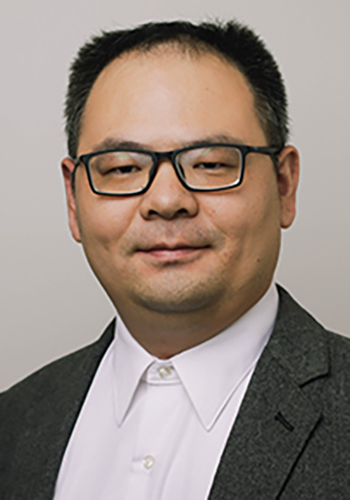
Dr. Lei Fan is an Assistant Professor in the Department of Engineering Technology at the University of Houston, with a joint appointment in the Electrical and Computer Engineering (ECE) Department. His research focuses on power system operations, optimization algorithms, quantum computing, and energy storage systems. He holds a Ph.D. from the University of Florida and a B.S. from Hefei University of Technology. Education: Ph.D., University of Florida B.S., Hefei University of Technology Research Interests: Dr. Fan’s work bridges theoretical optimization and practical energy systems, including quantum algorithms for power grid management, battery storage planning, and distributed quantum computing architectures. His LORE (Learning & Operations Research & Energy) lab explores cutting-edge applications in teleoperation, satellite networks, and environmental monitoring. Publications: Recent work emphasizes quantum computing’s role in solving complex optimization problems, such as entanglement routing in satellite networks and distributed hydrogen-power systems. His research also integrates machine learning for methane plume detection and hyperspectral imaging. Labs/Teams: He leads the LORE lab, advancing interdisciplinary research in energy systems and quantum technologies.
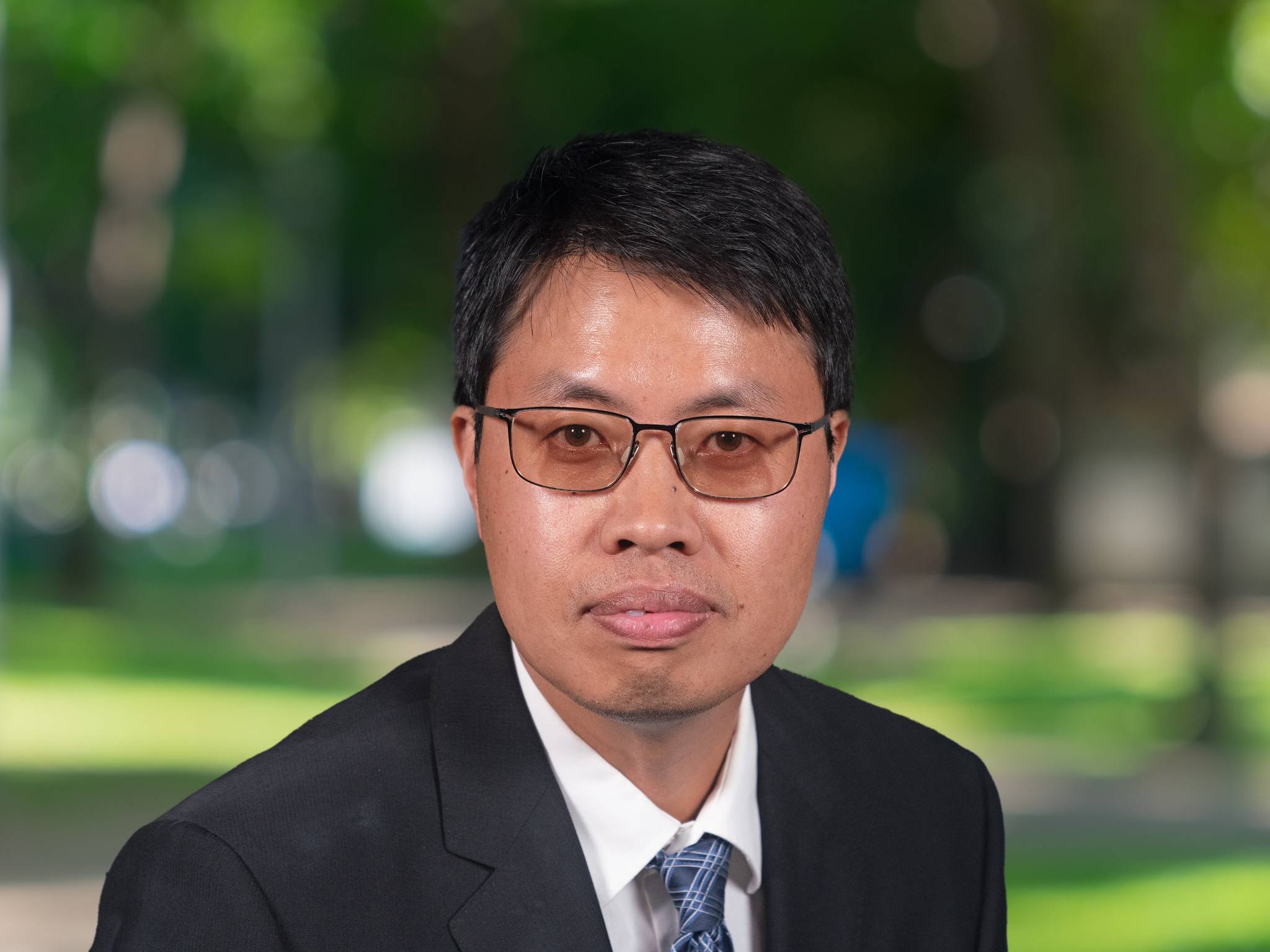
Marc Sánchez Artigas is an Associate Professor at Rovira i Virgili University, Department of Computer Engineering and Mathematics. He holds a PhD from Pompeu Fabra University (2009) and conducted postdoctoral research at EPFL (Switzerland). His research focuses on distributed computing, cloud storage systems, and serverless architectures. He leads the CloudLab research group and coordinates major EU projects like Horizon Europe's CloudSkin and H2020's IOStack. Education: PhD in Computer Science (2009), Pompeu Fabra University MSc in Computer Engineering (2004), Universitat Rovira i Virgili BSc in Computer Engineering (2002), Universitat Rovira i Virgili Research Interests: Distributed systems, cloud computing, software-defined storage, serverless computing, and privacy-preserving storage solutions. His work emphasizes scalable architectures, data management in heterogeneous environments, and optimizing cloud storage efficiency through novel algorithms and frameworks. Awards: Best Paper (IEEE LCN 2007), Best Dataset (ACM IMC 2015), Serra-Hunter Excellence Professorship, and multiple grants from EU and Spanish funding bodies. Grants & Projects: Coordinated over €5 million in projects including H2020 CloudButton (serverless analytics), FP7 CloudSpaces (personal clouds), and national initiatives like Software-Defined Edge Clouds. Active in coordinating IPCEI-CIS for cloud infrastructure. Teaching: Courses on distributed systems, parallel architectures, and cloud computing. Taught at Universitat Rovira i Virgili and Universitat Oberta de Catalunya.
Dr. Md Arifuzzaman is an Assistant Professor in the Department of Computer Science at Missouri University of Science and Technology (Missouri S&T). He specializes in High-Performance Systems, Quantum Networking, and Distributed Systems, focusing on optimizing large-scale system performance and scalability. His work addresses challenges in next-generation networks and storage systems, with publications in top venues like IEEE TPDS and ACM Supercomputing. Education: Ph.D. in Computer Science and Engineering, University of Nevada, Reno (2023) B.S. in Computer Science and Engineering, Bangladesh University of Engineering and Technology (2016) Research Interests: Dr. Arifuzzaman's work spans cutting-edge topics including quantum entanglement routing, reinforcement learning for network optimization, and high-speed file transfer protocols. His research emphasizes practical solutions for emerging technologies like terabit networks and quantum communication systems. Publications: Recent work focuses on quantum network protocols, machine learning-driven network probing, and storage reliability. His articles highlight advancements in both theoretical frameworks and real-world system implementations. Awards: No specific awards mentioned in the provided information. Advising/Grants: Details regarding student advising and grant activities are not explicitly stated in the text.
Lesia Mitridati is an Assistant Professor at the Department of Wind and Energy Systems, Technical University of Denmark (DTU). Her research focuses on optimizing energy systems, particularly in renewable energy integration, energy market design, and prosumer behavior modeling. She leads and collaborates on projects involving smart grids, distributed energy resources, and privacy-preserving market mechanisms. Her work contributes to UN Sustainable Development Goals related to affordable and clean energy. Key projects include AI-driven electricity market optimization, hydrogen-wind trading strategies, and risk-aware energy communities. She supervises multiple PhD students in areas like VPP bidding strategies and market-based heat-electricity coordination. Dr. Mitridati has published widely on energy communities, grid services, and reinforcement learning applications. Notable contributions include dynamic pricing frameworks for grid services and privacy-preserving market mechanisms. She co-organizes annual DTU summer schools on future energy systems and AI-driven optimization. Her research integrates machine learning with operational research techniques to address challenges in renewable energy integration, market design, and system resilience. Current initiatives focus on electrolyzer plant bidding strategies and feature-driven trading of renewable resources.
Dr. Liangping Li is an Associate Professor in the Department of Geology and Geological Engineering at South Dakota School of Mines & Technology. He holds a Ph.D. from Technical University of Valencia and an M.S. from China University of Geoscience, with expertise in hydrogeology, groundwater modeling, and geothermal energy systems. Education: M.S., China University of Geoscience; Ph.D., Technical University of Valencia His research focuses on integrating machine learning with groundwater modeling, data assimilation, geostatistics, and optimization of geothermal energy systems. He has pioneered methods combining generative adversarial networks (GANs) and ensemble smoother techniques for inverse modeling in complex aquifers. Recent publications highlight his work on extremal optimization for well placement, progressive growing GANs for facies modeling, and stochastic inversion of fracture networks. His research trends emphasize computational innovation in subsurface flow simulation and sustainable groundwater management. Scientific Awards: NSF RII Track-4 Grant, NSF REU Site Grant, BLM Environmental Monitoring Grant, and appointments as Associate Editor for Advances in Water Resources and Mathematical Geosciences . Dr. Li teaches courses in groundwater engineering, statistical methods, and environmental field camp, while mentoring graduate and undergraduate researchers in subsurface energy and water resource projects.
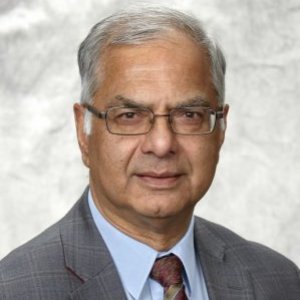
Dr. Vijay K. Sood is a Professor in the Department of Electrical, Computer and Software Engineering at Ontario Tech University. He holds a PhD in Power Electronics from Bradford University (UK), and has extensive experience in power systems, power electronics, and renewable energy integration. His research focuses on High Voltage Direct Current (HVDC) systems, Flexible AC Transmission Systems (FACTS), power electronics converters, and grid protection. He has received numerous awards, including Life Fellow of IEEE, Emeritus Fellow of the Canadian Academy of Engineers, and the 2000 IEEE Third Millennium Medal. Dr. Sood has authored/co-authored over 100 publications, including peer-reviewed articles in top journals like IEEE Transactions on Power Electronics and International Journal of Electrical Power & Energy Systems. His work addresses challenges in grid stability, renewable energy integration, and advanced control strategies for power systems. Education: PhD (Power Electronics), Bradford University, UK (1977) MASc (Electrical Machines), Strathclyde University, Scotland (1969) BSc (Electrical Engineering), Nairobi University, Kenya (1967) Awards: IEEE Third Millennium Medal (2000) Canadian Pacific Railway Engineering Award (2002) IEEE Regional Activities Board Achievement Awards (2001, 2006) His research emphasizes practical solutions for modern power systems, including HVDC controller design, synthetic inertia control for renewable grids, and advanced fault detection techniques. He has collaborated internationally on projects like the Energy System Observatory of Honduras and grid architecture models for multi-terminal DC systems.
Theo van de Ven is a Professor and holds the Sir William C. Macdonald Chair in Chemistry at McGill University's Department of Chemistry. He serves as Director of the Quebec Centre for Advanced Materials (QCAM/CQMF). His research focuses on cellulose chemistry and its applications in novel materials, including nanocellulose-based composites, biodegradable products (e.g., straws, films), and advanced materials for drug delivery and environmental applications. His work also explores polyphenolic chemistry, such as lignin and tannic acid interactions with proteins in viral and neurodegenerative contexts. Van de Ven teaches CHEM 233 (Physical Chemistry for Engineers) and CHEM 585 (Colloid Chemistry), emphasizing phase boundary dynamics, electrochemistry, and surfactant science. His labs are located at the Pulp & Paper Building, with research emphasizing green chemistry and sustainable materials. His scientific contributions include pioneering work on hairy nanocellulose architectures and functionalized cellulose derivatives, earning recognition through prestigious awards. His research spans environmental and biomedical applications, including carbon fiber production from asphaltenes, silica/cellulose hybrids for catalysis, and tannic acid's role in protein interactions (e.g., SARS-CoV-2 and Alzheimer's). Collaborative efforts with industry and academia aim to bridge fundamental research with industrial applications, such as scalable cellulose-based filaments and films.
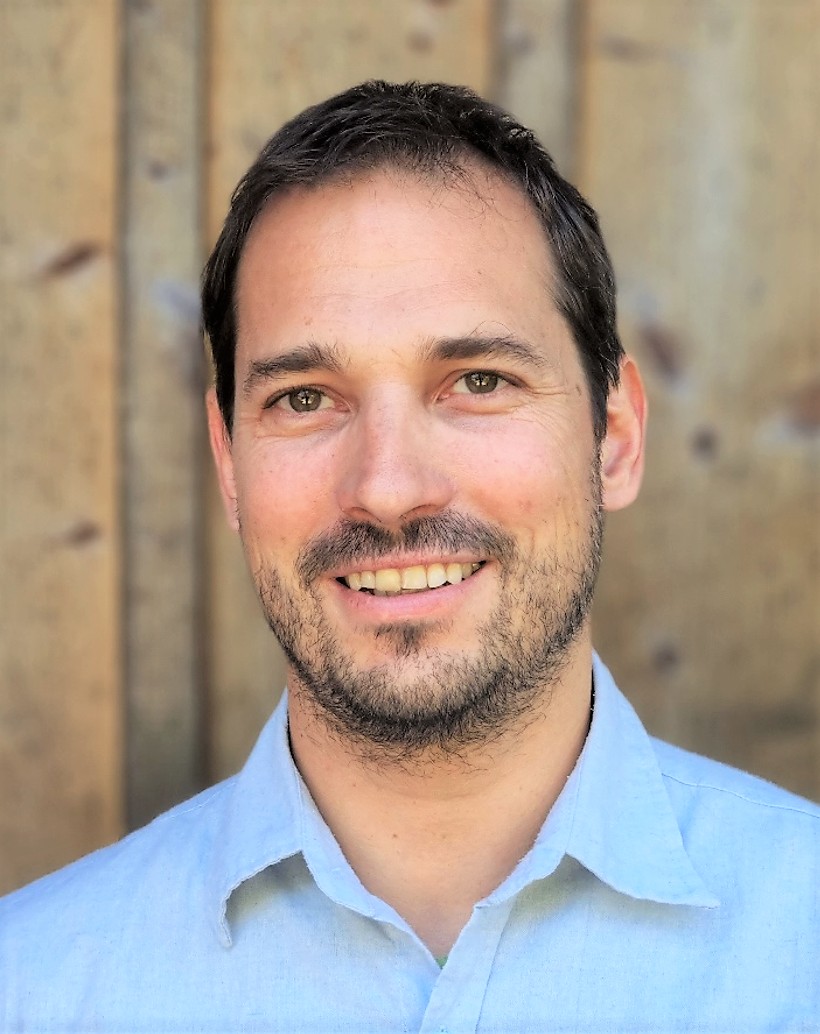
Stephan Pfister is a Professor at ETH Zurich in the Department of of Civil, Environmental and Geomatic Engineering, where he leads research in the Ecological Systems Design group. His office is located at HIF D 85.2, Laura-Hezner-Weg 7, 8093 Zürich, Switzerland. Professor Pfister teaches multiple courses including Introduction into Environmental Engineering, Advanced Environmental Assessments, and Computer Laboratory courses for the Autumn Semester 2025. Dr. Pfister received his PhD from ETH Zurich in 2011 with a dissertation on 'Environmental evaluation of freshwater consumption within the framework of life cycle assessment.' Following his doctoral studies, he completed a one-year post-doctoral position at UC Santa Barbara in 2011. His academic journey has resulted in over 100 original research publications spanning more than a decade of scholarly contributions. Professor Pfister's research is highly interdisciplinary, focusing on methodological advancements in the impact assessment of water consumption, land use, and biodiversity loss within Life Cycle Assessment (LCA) and Multi-Regional Input-Output Analysis (MRIO). His work spans multiple sectors including agriculture and forestry, material extraction and processing, and power production. He has notably advanced water footprint concepts, including future scenario analyses and assessment of international trade implications. His research integrates environmental science with practical applications for sustainable resource management, addressing critical global challenges related to freshwater scarcity and ecosystem preservation. Analysis of Professor Pfister's recent publication record (2024-2025) reveals a strong trend toward integrated environmental assessment methodologies, particularly at the intersection of water resources, climate change, and sustainable systems design. His work increasingly addresses complex supply chain analyses, with growing emphasis on policy-relevant applications in sustainable food systems, urban mobility, and resource extraction. The methodological focus remains firmly rooted in Life Cycle Assessment while expanding into complementary frameworks like Water Footprint Assessment, demonstrating his leadership in advancing environmental assessment science. Professor Pfister's research has been supported by various funding mechanisms including the Swiss National Science Foundation (SNF) project 'Minimizing Energy Input, Exergy Loss and Environmental Impacts of Greenhouse Systems in Iran and Switzerland Exploiting Industrial Symbiosis Opportunities' (Grant No. 192875). His interdisciplinary approach has fostered collaborations across multiple institutions and research groups, contributing to the advancement of environmental assessment methodologies globally. The Ecological Systems Design group at ETH Zurich, led by Professor Pfister, serves as a hub for innovative research at the intersection of environmental science, engineering, and policy. The group maintains strong connections with international research networks focused on sustainability assessment, contributing to methodological standardization efforts and practical applications of environmental assessment tools in industry and policy contexts.
Associate Professor Archie Chapman is an Associate Professor in Computer Science and Deputy Director (Teaching and Learning) at the School of Electrical Engineering and Computer Science, The University of Queensland. His research focuses on applying artificial intelligence, game theory, optimization, and machine learning to address challenges in future power systems, including renewable energy integration and battery storage optimization. Prior to UQ, he held roles as a Research Fellow in Smart Grids at the University of Sydney (2011-2019) and a postdoc at the University of Southampton (2009-2010), where he completed his PhD in 2004. Research interests include: - Large-scale optimization for energy systems - Demand response and peer-to-peer energy trading - Renewable energy integration and grid stability - Battery storage strategies for smart grids - Algorithmic game theory for energy market design Notable projects: - Bruny Island battery trial for network congestion management - Analysis of tariff impacts on solar households - Development of decentralized energy management frameworks Publications span over 100 articles, with recent work focusing on: - Prosumer battery systems and capacity firming (2025) - Unbalanced optimal power flow benchmarks (2024) - P2P energy trading mechanisms (2021-2023) Expertise includes: - Techno-economic analysis of energy systems - Distributed optimization algorithms - Policy and market design for renewable integration
Professor Martin Foster is a faculty member at the University of Sheffield's School of Electrical and Electronic Engineering, specializing in energy storage and power electronics. He holds a PhD from the University of Sheffield (2003) and has been a Professor since 2016. His research focuses on power electronic energy conversion, battery management systems, thermal modeling, and grid-connected energy storage. Notable projects include the FEVER initiative for off-grid EV charging and the Willenhall Energy Storage Systems facility. He has collaborated with industry partners like Nissan and Siemens, contributing to innovations in EV power electronics and wind energy technologies. He leads the Power Devices & Systems research group and teaches courses in power electronics and analog/digital electronics. His work spans EPSRC-funded projects such as FPET (piezoelectric resonant power supplies) and TransEnergy (railway energy storage). He is a founder of the Centre for Research in Electrical Energy Storage and Applications. His research interests include multilevel converters, piezoelectric transformers, and high-voltage power supplies for plasma chemistry applications. Recent publications highlight advancements in resonant converter design, battery energy storage systems, and condition monitoring for power devices. Awards and recognitions are not explicitly listed, but his extensive industry collaborations and leadership roles reflect his expertise. He advises on energy storage integration, grid technologies, and sustainable transportation systems. His contributions to both academic and applied research bridge theoretical advancements and practical industrial solutions in electrical engineering.
Dr. Constantin Catalin Dragan is a Senior Lecturer in Secure Systems at the University of Surrey, UK. He holds a PhD in Computer Science from Alexandru Ioan Cuza University of Romania (2014), focusing on cryptographic primitives. His research expertise includes applied cryptography, provable security, electronic voting systems, and formal verification. Dr. Dragan has held postdoctoral positions at LORIA, CNRS, INRIA (France) and the University of Surrey. He leads modules such as Privacy Enhancing Technologies (COM3030), Information Security Management (COM3017/COMM037), and supervises final year projects. Currently advising PhD student Navid Abapour, his teaching emphasizes cybersecurity, operating systems, and privacy-preserving technologies. His research focuses on formal verification of security protocols, end-to-end verifiable voting systems, and cryptographic primitives. Notable contributions include work on machine-checked proofs for accountability in systems, privacy-preserving e-voting protocols, and blockchain-based trust services like TAPESTRY and KYChain. Publications span venues like IEEE S&P, EuroS&P, and ESORICS, with a focus on cryptographic protocol design and formal security models. He actively contributes to international workshops on cryptology and cyber security, advancing theoretical foundations and practical implementations of secure systems.
Associate Professor Liz Ratnam is a leading academic in the Department of Electrical and Computer Systems Engineering at Monash University, serving as Deputy Postgraduate Director of Education ECSE. Her expertise spans power systems control, energy optimization, and resilient grid design. She holds a BEng (Hons I) and PhD in Electrical Engineering from the University of Newcastle (2006 and 2016), with postdoctoral research at UC San Diego and Berkeley. She previously served as Senior Lecturer and Sub-Dean for Educational Programs at ANU's College of Engineering & Computer Science, supported by a Future Engineering Research Leader (FERL) Fellowship. Her current research focuses on advancing transactive energy markets, EV coordination in distribution networks, and secure grid operations. She leads major grants including the National Facility for Electricity Grid Security (ARC LIEF 2023) and projects on EV fast-charging infrastructure. Education Background: - BEng (Hons I) in Electrical Engineering, University of Newcastle (2006) - PhD in Electrical Engineering, University of Newcastle (2016) Research Interests: Resilient, carbon-neutral power grid design Control and optimization of energy systems Synchrophasor-based estimation for grid stability Transactive multi-agent systems for energy markets Electric vehicle integration and coordination in unbalanced grids Grants & Projects: ARC Linkage Infrastructure Grant LE23010058 (2023): National Facility for Electricity Grid Security ARC Discovery Project DP22010135 (2022): Neural Architecture Search for Deep Learning ARC Linkage Project LP21200473 (2022): Building Australia's EV Fast-Charging Infrastructure Awards & Memberships: Fellow of Engineers Australia Senior Member of IEEE FERL Fellowship (ANU)
Orlin D. Velev is the S. Frank and Doris Culberson Distinguished Professor of Chemical Engineering at North Carolina State University (NC State), part of the College of Engineering. His research focuses on colloid science, soft materials engineering, nanotechnology, and sustainable nanocomposites. He leads the Velev Lab, pioneering innovations in self-propelling microdevices, environmentally benign nanomaterials, and responsive materials for energy and biomedical applications. Velev's academic journey includes a PhD in Physical Chemistry from Sofia University (1999), followed by M.S. and B.Tech degrees in Chemical Engineering from NC State. His work bridges chemistry, physics, and biology, with notable contributions to microfluidics, colloidal assembly, and battery technologies. He has supervised numerous graduate and undergraduate students, fostering interdisciplinary research and innovation. Key research areas include: Directed assembly of colloids using external fields Self-propelling microbots and active particles Sustainable biopolymer composites (e.g., lignin-based nanoparticles) Soft robotic components and smart materials Biodegradable electronics and energy storage solutions Honors include the Braskem Award, AIChE’s Andreas Acrivos Award, and multiple fellowships. His lab’s recent advancements include osmotic-capillary wearable patches for sweat analysis and high-performance lithium-sulfur battery separators using soft dendritic colloids. Velev collaborates extensively, with projects funded by NSF, industry partnerships, and federal grants. His work emphasizes translating fundamental science into real-world applications, such as biodegradable packaging, microplastic remediation, and wearable health monitoring devices.
Juan C. Vasquez is a Professor at Aalborg University's Faculty of Engineering and Science, Department of Energy Technology, and Co-Director of the Center for Research on Microgrids (CROM). He holds a PhD in Automatic Control from the Technical University of Catalonia and has held academic positions at Aalborg University since 2011. His research focuses on microgrid control, renewable energy integration, power electronics, and smart grids. He has supervised numerous PhD and master’s students and leads projects funded by EU and national grants. Education: BS in Electronics Engineering (Autonomous University of Manizales, Colombia, 2004); PhD in Automatic Control (Technical University of Catalonia, Spain, 2009). Research interests include operation and control strategies for AC/DC microgrids, maritime microgrids, energy management systems, and IoT integration in smart grids. He has authored 648+ publications, including highly cited works, and received awards like the Young Investigator Award (2019) and Clarivate’s Highly Cited Researcher status since 2017. Key projects: EU-DREAM (Digital Services for Energy Transition), NEST (National Research Infrastructure), and ActRes (Resilience in Energy Systems). Collaborations include Virginia Tech and Ritsumeikan University.
Eduardo Gildin is a Professor of Petroleum Engineering and Associate Department Head for Graduate Studies at Texas A&M University's College of Engineering. He holds the L.F. Peterson '36 Professorship and directs the university's graduate studies in petroleum engineering. His research focuses on reservoir modeling, control optimization, model reduction techniques, and CO2 sequestration. Gildin has pioneered data-driven approaches for reservoir simulation, integrating machine learning and physics-based models to enhance efficiency and accuracy. Education: Ph.D. in Aerospace Engineering, University of Texas at Austin (2006) M.S. in Mechanical Engineering, University of São Paulo, Brazil (1998) B.S. in Mechanical Engineering, Faculdade de Engenharia Industrial, Brazil (1995) Research Interests: Model reduction of large-scale dynamical systems Control and optimization of reservoir operations CO2 storage and geological carbon sequestration Machine learning applications in reservoir engineering and drilling automation Geomechanics and compaction damage evaluation Key Awards: 2020: William O. and Montine P. Head Memorial Research Award 2017-2018: Dean of Engineering Excellence Award 2013-2019: Energi Simulation Chair in Robust Reduced Complexity Modeling 2021: Distinguished Membership in Society of Petroleum Engineers Grants and Advising: Gildin has secured major funding for projects on reservoir simulation, drilling automation, and CO2 storage. He advises graduate students on topics such as surrogate modeling and reinforcement learning applications in petroleum systems. His lab collaborates with industry partners to translate research into practical tools for reservoir management and subsurface operations. Labs and Teams: He leads the Reservoir Simulation and Control Lab, focusing on advanced computational methods for reservoir optimization. His team develops open-source drilling models and collaborates globally on projects like the DREAMS (Drilling and Extraction Automated System) initiative.