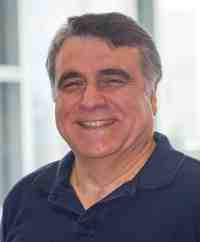
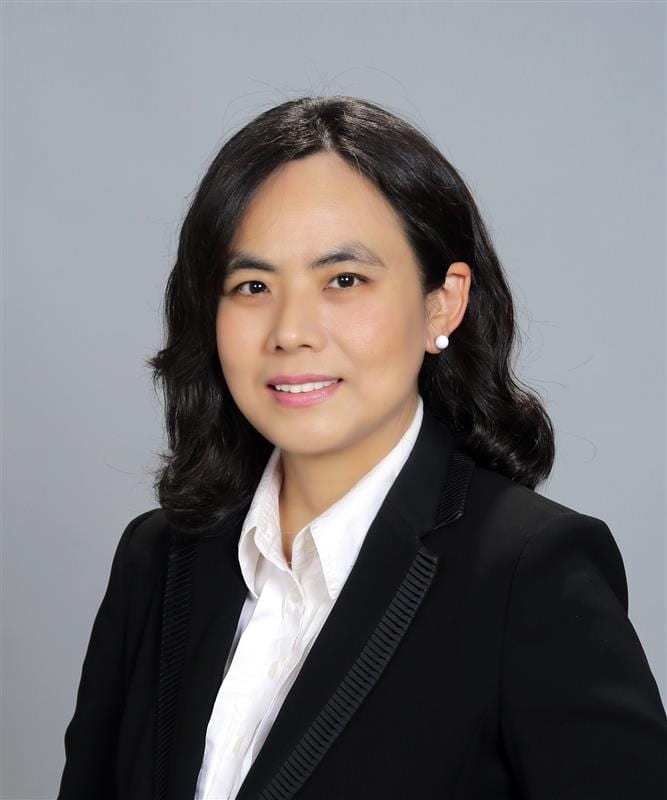
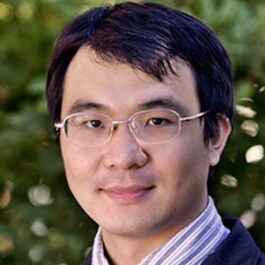
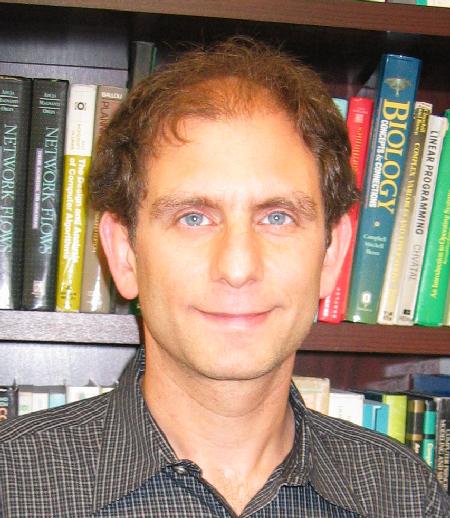
Christos Faloutsos is the Fredkin Professor of Computer Science at Carnegie Mellon University, with a courtesy appointment in Electrical and Computer Engineering. He holds a B.Sc. from the National Technical University of Athens and M.Sc./Ph.D. from the University of Toronto. His research focuses on data mining, graph analysis, fractals, and database systems. Notable contributions include foundational work on R-trees, graph mining laws (e.g., Kronecker graphs), and applications in medical imaging, network security, and fraud detection. Key projects include PEGASUS (petascale graph mining), fraud detection in online auctions (NetProbe), and tools for human trafficking analysis (TrafficVis). He has led NSF-funded projects on tensor mining, network anomaly detection, and bioinformatics. Over 300 refereed publications highlight his contributions across databases, data mining, and networks. Awards include the KDD Best Paper (2005, 2016), SIGMOD Test-of-Time Award, and recognition as a top nurturer in IT. His lab collaborations span the Parallel Data Lab (PDL), Machine Learning Department, and Computational Biology.
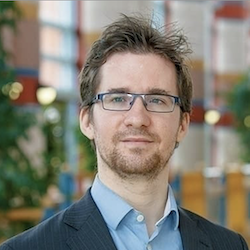
Jonas Fischer is the head of the Explainable Machine Learning group at the Max Planck Institute for Informatics, Department of Computer Vision and Machine Learning. His research focuses on interpreting complex machine learning models, particularly in genomics and healthcare, aiming to enhance robustness and alignment with human decision-making. Prior to his role at MPI, he was a postdoctoral fellow at Harvard University's Department of Biostatistics, where he worked on interpretable models for gene regulatory systems in cancer. Education: PhD in Computer Science from Saarland University (2022), with a thesis titled More than the sum of its parts , exploring the intersection of pattern mining and deep learning. He has contributed to advancing methods in neural network pruning, federated learning, and low-dimensional embeddings (e.g., dtSNE, Mercat). His work bridges computational biology, data mining, and machine learning, with applications in DNA methylation analysis, graph-based differential networks, and biomedical informatics. Key research areas include: (1) Explainable AI and neural network interpretability, (2) Biomedical applications of machine learning (e.g., gene regulatory networks, cancer genomics), (3) Low-dimensional embeddings and visualization techniques, (4) Federated learning for privacy-preserving collaborative models, and (5) Pattern mining for error analysis in NLP and classification tasks. Publications span top venues like NeurIPS, ICLR, Bioinformatics, and Genome Biology. His group develops tools such as BONOBO for omics data integration and node2vec2rank for scalable graph analysis. He actively collaborates with biomedical researchers to address challenges in data-driven healthcare and precision medicine.
Hyesoon Kim is a Professor at the Georgia Institute of Technology , affiliated with the College of Computing and leading the HPArch research group . She co-directs the Center for Research into Novel Computing Hierarchies (CRNCH) . Her research focuses on Computer Architecture , GPU , Compilers and Runtime Systems , and Hardware Security , particularly for heterogeneous systems. Contact : hyesoon@cc.gatech.edu Location : 266 Ferst Drive, KACB 2344, Atlanta, GA Research Trends Her recent work spans RISC-V extensions for security, CUDA optimization on softcore GPUs, memory safety techniques, and energy-efficient deep learning architectures. Articles emphasize heterogeneous computing , GPU performance scaling, and IoT -oriented neural network methods. Open Source Projects She leads development of Macsim (heterogeneous architecture simulator) and Vortex (open-source GPU platform).
Han Liu is a Professor in the Department of Computer Science at Northwestern University's McCormick School of Engineering. He directs the MAGICS (Modern Artificial General Intelligible and Computer Systems) Lab and the Center for Foundation Models and Generative AI at Northwestern, with prior roles as director of the Deep Reinforcement Learning Center at Tencent AI Lab and professor at Princeton and Johns Hopkins Universities. PhD in Machine Learning and Statistics from Carnegie Mellon University (2012), advised by John Lafferty and Larry Wasserman Han Liu's research focuses on integrating artificial intelligence with computer systems, particularly through foundation models and probabilistic graphical models. His work aims to revolutionize science, engineering, and business by deploying statistical machine learning methods in edge and cloud computing environments. Recent research trends include transformer-based models, modern Hopfield networks, genomic foundation models, and theoretical analysis of attention mechanisms. His 2025 publications explore topics like species differentiation with DNA embeddings, universal approximation capabilities of transformers, and metaverse spatial reasoning. Alfred P Sloan Fellowship in Mathematics IMS Tweedie New Researcher Award ASA Noether Young Scholar Award NSF CAREER Award Presidential Early Career Awards for Scientists and Engineers Han Liu serves as associate editor for the Journal of American Statistical Association, Electronic Journal of Statistics, Technometrics, and the Journal of Portfolio Management. He has directed research centers at Northwestern and contributed to major conferences as area chair (NeurIPS, ICML, ICLR).
Dr. Jimeng Sun is a Health Innovation Professor at the Siebel School of Computing and Data Science and Carle Illinois College of Medicine at the University of Illinois Urbana-Champaign. Co-founder of Keiji AI , he leads groundbreaking research at the intersection of artificial intelligence and healthcare, actively deploying clinical AI systems and developing frameworks like PyHealth and Therapeutics Data Commons . His research spans four major areas: Clinical AI Systems : Developing interpretable models (e.g., RETAIN) for patient similarity, temporal event prediction, medication recommendation, and clinical outcome forecasting Drug Discovery : Creating molecular optimization frameworks, drug-target interaction models, and AI-driven platforms Clinical Trials : Pioneering patient-trial matching, outcome prediction, and optimization frameworks using deep learning and graph neural networks Biosignal Analysis : Advancing sleep staging, seizure classification, and automated EEG/Cardiac monitoring systems With over 500 top-tier publications (including in Nature , NEJM AI , and leading AI conferences) and an h-index of 99, his work has been recognized with the Top 100 AI Leaders in Drug Discovery and Advanced Healthcare award. He maintains active collaborations with institutions like Massachusetts General Hospital , Medidata Solutions , and OSF Healthcare . His recent publications reveal a strong focus on: Reinforcement learning applications in medical data analysis Large language model adaptation for clinical tasks Knowledge graph integration with AI systems Synthetic data generation for healthcare Multi-modal learning in clinical contexts Explainable AI for medical applications Dr. Sun's lab ( Sunlab ) emphasizes practical impact over theoretical work, actively collaborating with hospitals and healthtech companies. He welcomes contributions from clinicians, researchers, and industry partners through initiatives like his AI for Health webinar series .
Daniel W. Bliss is a Professor in the School of Electrical, Computer and Energy Engineering at Arizona State University and Director of ASU's Center for Wireless Information Systems and Computational Architectures (WISCA). With over $50 million in research funding as principal investigator from organizations including DARPA, ONR, Google, and Airbus, his work bridges theoretical foundations with practical implementations across multiple domains of wireless systems. Dr. Bliss received his educational foundation with a B.S.E.E. from Arizona State University (1989), followed by M.S. and Ph.D. degrees in Physics from the University of California-San Diego (1995, 1997). His academic journey includes significant industry experience at General Dynamics (1989-1993) and MIT Lincoln Laboratory (1997-2012) before joining ASU. His research program focuses on advanced wireless systems spanning radar, communications, precision positioning, computational architectures, and medical monitoring applications. Bliss employs information theory, estimation theory, and signal processing to develop novel system concepts with disruptive capabilities. Current research emphasizes RF convergence, integrated sensing and communications, and anticipatory medical analytics using wireless technologies, with particular focus on extracting physiological data from radar signals. Analysis of recent publications reveals a strong trend toward integrated sensing and communications systems, particularly utilizing mmWave and radar technologies for medical monitoring applications. His work increasingly bridges traditional communications and radar domains while expanding into physiological monitoring, demonstrating a clear trajectory toward convergence of wireless technologies for healthcare applications and remote vital sign detection. Dr. Bliss has received significant recognition for his contributions: Fellow of the IEEE (2015) 2021 IEEE Warren D. White Award for Excellence in Radar Engineering 2016-2017 Top 5% Teaching Award at ASU 2017 ASU Fulton Engineering Exemplar Faculty As a dedicated mentor, Dr. Bliss has supervised numerous graduate students through successful dissertation and thesis defenses across both PhD and Master's programs. His research portfolio includes substantial funding from diverse sources with over $50 million secured as principal investigator. Current projects include the $17M DARPA DASH project focused on advanced software-reconfigurable heterogeneous SoCs for next-generation RF systems, and multiple initiatives in contactless vital sign monitoring using radar technologies. Dr. Bliss leads the BLISS Lab and serves as director of WISCA, fostering interdisciplinary research in wireless systems. His team includes researchers working on distributed coherent systems, MIMO radar, RF convergence, and medical monitoring applications, with recent successes including the Making Waves team that tied for first place in the Air Force Spark Tank challenge. He has founded two startup companies: DASH Tech Integrated Circuits Company and the Big Little Sensor Company, focusing on high-performance embedded processing and small-scale radar physiological monitoring, respectively.
Andrew Zisserman is a Royal Society Research Professor at the University of Oxford's Department of Engineering Science, affiliated with the Visual Geometry Group (VGG). His research focuses on computer vision, artificial intelligence, and neural networks, with significant contributions to multimodal learning, video understanding, and 3D scene analysis. He leads projects exploring visual-language models, audio-visual synchronization, and clinical imaging applications. Key research areas include: Video analysis and temporal modeling Multimodal systems for sign language translation and action recognition 3D shape estimation and physical property inference Foundation models and cross-modal retrieval Recent work highlights: Developed Flamingo and Tapir models for video-language tasks Advancements in spinal MRI analysis and clinical imaging Leadership in EGO4D and VoxCeleb challenges Honors include Fellowship of the Royal Society (FRS) and the ISSLS Prize in Clinical Science 2023 for spinal analysis innovations. His lab collaborates globally, emphasizing real-world applications in healthcare and autonomous systems.
Philip S. Yu is a Distinguished Professor in the Department of Computer Science at the University of Illinois at Chicago and holds the Wexler Chair in Information Technology. Previously, he led the Software Tools and Techniques department at IBM Thomas J. Watson Research Center. Education: B.S. in Electrical Engineering, National Taiwan University M.S. and Ph.D. in Electrical Engineering, Stanford University M.B.A., New York University His research spans data mining , big data , social networks , privacy-preserving data publishing , graph/network mining , recommender systems , and deep learning . He has authored over 970 papers with 74,500+ citations and an H-index of 127. Recent work focuses on heterogeneous graph representation, quantum walks in network analysis, and federated unlearning. Scientific Honors: ACM SIGKDD 2016 Innovation Award IEEE Computer Society 2013 Technical Achievement Award IEEE ICDM 2003 Research Contributions Award IEEE Region 1 Award (1999) UIC Research of the Year (2013) IBM Master Inventor with 300+ patents AI 2000 Most Influential Scholar Honorable Mentions (2024-2025) He served as Editor-in-Chief for ACM Transactions on Knowledge Discovery from Data and IEEE Transactions on Knowledge and Data Engineering , and on steering committees for ACM KDD and IEEE Data Mining. His work bridges theoretical advances in graph neural networks , deep learning , and privacy-preserving systems with applications in healthcare, social media, and enterprise analytics.
Prof. Srdjan Capkun is a Full Professor in the Department of Computer Science at ETH Zurich and Director of the Zurich Information Security and Privacy Center (ZISC). He holds a Dipl.Ing. from the University of Split (1998) and a Ph.D. from EPFL (2004). His research focuses on system and network security, including wireless security (e.g., secure positioning), trusted computing, blockchain technologies, and privacy-preserving systems. He co-founded 3db Access (acquired by Infineon) and Sound-Proof, addressing secure distance measurement and authentication. Notable achievements include an ERC Consolidator Grant (2016), ACM Fellowship, and IEEE Fellowship. Education: Dipl.Ing., Electrical Engineering / Computer Science, University of Split, 1998 Ph.D., Communication Systems, EPFL, 2004 Research Interests: Wireless security (e.g., UWB, GNSS, cellular) Trusted execution environments (TEEs) Blockchain and cryptocurrency systems Privacy-preserving technologies Awards & Grants: ERC Consolidator Grant (2016) ACM Fellow and IEEE Fellow Leadership of ZISC Advising & Labs: Leads the System Security Group at ETH Zurich Guided postdoctoral researchers and graduate students in security and privacy Companies: 3db Access (secure distance measurement) Futurae (online authentication)
Clifford Stein is a Professor of Industrial Engineering and Operations Research (IEOR) and Computer Science at Columbia University, and Associate Director for Research at the Data Science Institute. He holds a Ph.D. (1992), M.S. (1989), and B.S.E. (1987) from MIT and Princeton University, respectively. His research focuses on algorithms, combinatorial optimization, operations research, scheduling, and computational biology. A co-author of the best-selling textbook Introduction to Algorithms , Stein has published widely in top venues and holds prestigious awards like ACM Fellow and NSF Career Award. His work includes foundational contributions to minimum cut algorithms, scheduling theory, and network optimization, supported by NSF and Sloan Foundation grants. Stein has advised over 40 graduate and undergraduate students, many now in academia and industry.
Bei Wang Phillips is an Associate Professor in the School of Computing and a faculty member at the Scientific Computing and Imaging (SCI) Institute at the University of Utah. She holds a Ph.D. in Computer Science from Duke University and an undergraduate degree from the University of Bridgeport. Her research focuses on Topological Data Analysis (TDA), data visualization, computational topology, and machine learning, with applications in scientific data exploration and analysis. She has received prestigious awards including the NSF CAREER Award (2022) and the PECASE Award (2025). Her work spans projects funded by NSF, NIH, and DOE, including multiparameter TDA and topology-aware data compression. She advises numerous students and collaborates on interdisciplinary initiatives in astrophysics, climate science, and AI fairness. Education: Ph.D. in Computer Science, Duke University (2010) B.S. in Computer Science and Mathematics, University of Bridgeport (2003) Research Interests: Topological techniques for large-scale data analysis Integration of topological, geometric, and machine learning methods Applications in visualization, bioinformatics, and network analysis Key Projects: NSF-funded TDA research (DMS-2301361, OAC-2313124) DOE project on topology-preserving data compression Collaborations with NASA, Argonne National Lab, and Carnegie Institution of Washington Awards: Presidential Early Career Award for Scientists and Engineers (2025) NSF CAREER Award (2022) DOE Early Career Research Program (2020) Advising and Grants: Mentored over 30 students and postdocs Recipient of multiple NSF and DOE grants totaling millions
Andreas Bulling is a Professor at the Institute for Visualisation and Interactive Systems , University of Stuttgart, Germany. His research focuses on Human-Computer Interaction , Eye Tracking , and Computer Vision , with applications in Machine Learning , Virtual Reality , and Information Visualization . 2025 Publications: HOIGaze (Extended Reality), ChartQC (Data Visualization), HAIFAI (Human-AI Interaction), SummAct (Behavioral Summarization), Chartist (Chart Reading). 2024 Contributions: HumanEYEze (Multimodal AI), HOIMotion (3D Object Detection), MultiMediate'24 (Engagement Estimation), Unified Model of Saliency (Scanpath Prediction). His recent work explores gaze estimation , interactive behavior modeling , and privacy-preserving eye-tracking systems . Key subfields include Extended Reality , Neural Networks , and Behavioral Biometrics . While no explicit scientific awards are mentioned, his research has been widely cited (8,003 total citations) and downloaded (132,740 times). Andreas leads projects in Interactive Systems and collaborates with institutions such as Aalto University , KU Leuven , and National University of Singapore . His lab focuses on eye movement analysis , human motion forecasting , and task-driven input modeling .
Prof. Laura Leal-Taixé is a Professor at the Technical University of Munich (TUM) in the Department of Informatics, leading the Dynamic Vision and Learning group. She holds the Rudolf Mößbauer Tenure Track Assistant Professorship, promoted to W3 Associate Professorship in 2022. Her research focuses on computer vision and machine learning, particularly video analysis, multi-object tracking, and autonomous driving applications. Education: B.Sc./M.Sc. in Telecommunications Engineering (Technical University of Catalonia, UPC) Ph.D. in Information Processing (Leibniz University of Hannover, Germany) Postdoctoral Research at ETH Zürich (Switzerland) and TUM Research Interests: Laura’s work addresses challenges in video analysis, including motion analysis, semantic segmentation, and integrating social dynamics into urban traffic modeling. Her project socialMaps , funded by the Sofja Kovalevskaja Award, explores decoupling vehicle and pedestrian traffic using dynamic maps. Her research combines optimization techniques, deep learning, and sensor data for real-world applications like autonomous systems. Recent Trends: Her publications highlight advancements in multi-object tracking, 3D LiDAR segmentation, and trajectory forecasting, emphasizing neural networks and geometric approaches. Collaborations with industry and academia underscore her work’s practical impact. Awards: 2017 Sofja Kovalevskaja Award (€1.65M, Humboldt Foundation) 2017 DAAD Australia-German Joint Research Grant Travel grants from Women in CV, CVPR Doctoral Consortium, and Vodafone Foundation Labs & Projects: Leads the Dynamic Vision and Learning group at TUM, focusing on vision-based AI for autonomous systems and environmental monitoring. Active in developing datasets like DynamicEarthNet for semantic change analysis.
Priyanka Raina is an Assistant Professor of Electrical Engineering at Stanford University, with a courtesy appointment in Computer Science. She leads the Stanford Accelerate research group, focusing on domain-specific hardware architectures and agile hardware-software co-design. Her work emphasizes high-performance, energy-efficient accelerators for emerging technologies. Education: B.Tech. from IIT Delhi (2011), M.S. and Ph.D. from MIT (2013/2018). Postdoctoral experience includes NVIDIA Research (2018) and Amazon Visiting Academic (2023–present). Awards include the Sloan Research Fellowship (2024), NSF CAREER Award (2023), and Terman Faculty Fellowship (2018). Research Interests: Domain-specific architectures, near-memory computing, design productivity, and machine learning acceleration. Her group develops frameworks like AHA (Agile Hardware) for efficient accelerator design and compilers. Awards: Over 10 major awards, including best paper recognitions at VLSI, MICRO, and JSSC. Active roles as Associate Editor for IEEE JSSC and Program Chair for IEEE Hot Chips (2020). Advising & Teaching: Supervises multiple PhD and MS students in hardware design, CGRAs, and ML accelerators. Teaches VLSI design courses (EE271/272/372) and oversees independent studies in embedded systems and chip design. Labs & Collaborations: Affiliated with Stanford PORTAL Center, AHA Center, and SystemX Alliance. Projects include MINOTAUR (edge AI accelerator), Amber (CGRA-based SoC), and EMBER (RRAM macros).
David Stillwell serves as Professor of Computational Social Science at Cambridge Judge Business School and Academic Director of The Psychometrics Centre, University of Cambridge. His research leverages big data to understand human psychology and behavior, with significant contributions in personality prediction from digital footprints and personalized advertising applications. His educational background includes: BSc in Psychology from the University of Nottingham (2007) MSc in Research Methods from the University of Nottingham (2008) PhD in Decision Making from the University of Nottingham (2012) Dr. Stillwell's research centers on computational social science and psychometrics, pioneering the myPersonality Facebook application that collected data from over 6 million users. His work demonstrates computers can predict personality as accurately as spouses, reveals psychological targeting's advertising effectiveness, and establishes links between personality-matched spending and life satisfaction. He also explores linguistic honesty markers through profanity analysis and personality-based dating patterns. His recent publications (2019-2025) reveal a strong trajectory toward AI evaluation using psychometric frameworks, particularly in medical and general-purpose AI assessment. Key themes include fairness metrics in language models, crisis emotional responses through social media, and computational personality recognition - demonstrating consistent innovation at the psychology-technology intersection. He has received significant recognition: Top 10 most influential papers of 2013 by Altmetric Nieman Journalism Lab highlight of 2013 Named in 'top 30 thinkers under 30' by Pacific Standard Magazine Dr. Stillwell maintains active industry engagement through consultancy with Barclays, Hilton, and Ubisoft on projects spanning computer-adaptive testing systems to interactive experiences like Predictive World for Watch Dogs 2. His policy impact is substantial, with citations by the European Data Protection Supervisor, World Bank, and multiple national governments, leading to speaking engagements at the European Parliament and Bank of England. As Academic Director of The Psychometrics Centre, he leads a global hub for advancing psychological assessment through innovative methods including Concerto open-source software, collaborating with organizations ranging from the European Commission to major corporations on psychometric applications in people analytics and digital behavior.