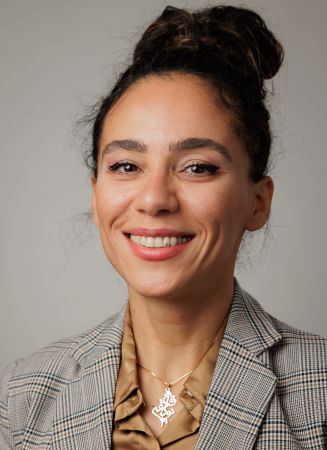
Ioannis Maniadis Metaxas is a lecturer at Queen Mary University of London's School of Electronic Engineering and Computer Science. He teaches undergraduate and postgraduate courses including Artificial Intelligence, Machine Learning, and Machine Learning for Visual Data Analysis. His research focuses on: Unsupervised representation learning Computer vision systems Large vision-language models Deep clustering techniques Generative models for data augmentation E-commerce personalization systems Recent publications demonstrate consistent focus on efficient learning methods for visual data, particularly investigating unsupervised pretraining, cluster optimization, and model fine-tuning approaches. His work shows progression from foundational 3D data augmentation to cutting-edge vision-language model optimization.
Tania Morimoto is an Associate Professor in the Department of Mechanical and Aerospace Engineering at the University of California San Diego. Her research focuses on the design and control of flexible and soft robots for medical and exploration applications, including personalized surgical robots and intuitive human-in-the-loop interfaces. She leads efforts in haptic device development for education, notably creating the Hapkit and H3Kit systems used in STEM labs globally. She holds a B.S. in Mechanical Engineering from MIT, and M.S. and Ph.D. from Stanford University's CHARM Lab. Her work bridges robotics, haptics, and medical engineering, with key innovations in continuum robot design, wireless sensing, and surgical teleoperation systems. Key research areas include soft robotics for minimally invasive surgery, wearable haptic devices, and scalable pneumatic control systems. Her team has developed novel methods for patient-specific robot design using preoperative medical imaging, along with virtual reality interfaces for surgical planning. Notable achievements include the NSF CAREER Award (2022) for work on handheld continuum robots, and contributions to wireless force sensing technologies. Her educational initiatives have expanded access to hands-on robotics learning through low-cost hardware kits adapted for remote instruction.
Paria Shirani is an Assistant Professor and Tier 2 Canada Research Chair in Cybersecurity at the School of Electrical Engineering and Computer Science (EECS), University of Ottawa. She holds a PhD in Information Systems Engineering from Concordia University (FRQNT Doctoral Scholarship recipient) and completed an NSERC Postdoctoral Fellowship at Carnegie Mellon University (CMU). Her research focuses on cybersecurity, including IoT security, vulnerability detection, malware analysis, threat intelligence, and AI/ML applications. She leads funded projects across undergraduate, master’s, PhD, and postdoctoral levels, emphasizing equity, diversity, and inclusion (EDI). Research Highlights: Develops AI-driven solutions for IoT security and vulnerability detection. Pioneers binary code fingerprinting and firmware analysis techniques. Advances threat intelligence through machine learning and anomaly detection. Key awards include the NSERC Postdoctoral Fellowship, FRQNT Doctoral Scholarship, and the Tier 2 Canada Research Chair. Collaborations involve institutions like Concordia University, Carnegie Mellon University, and IBM’s Cyber Range. She actively serves on editorial boards (e.g., ACM Computing Surveys) and organizes conferences (e.g., SecureComm, PST).
Sarah Harris is Professor and Undergraduate Coordinator in the Department of Electrical and Computer Engineering at University of Nevada, Las Vegas. Her research focuses on computer architecture education, FPGA-based systems, and hardware implementations of neural networks. Research areas include: RISC-V architecture education tools FPGA-based hardware design Embedded AI systems Computer engineering pedagogy Her publication portfolio shows strong focus on educational innovation with 7 publications (2021-2024) on RISC-V teaching tools and MOOCs, alongside hardware implementations of neural networks and contributions to bioinformatics tools. Earlier work includes digital design fundamentals and memory systems.
Zapater Sancho Marina is an Associate Professor at the ReDS Institute (Institute of Reconfigurable and Embedded Digital Systems) within the School of Engineering and Management Vaud (HEIG-VD), part of the University of Applied Sciences and Arts Western Switzerland (HES-SO). She holds dual master's degrees in Electronic and Telecommunication Engineering from Universitat Politècnica de Catalunya (2010) and a PhD in Computer Science from Universidad Politécnica de Madrid (2015). Her career includes postdoctoral work at EPFL (2016-2020) and assistant professorship at Universidad Complutense de Madrid (2015-2016). Education BSc & MSc in Electronic Engineering (UPC 2010) PhD in Computer Science (UPM 2015) Research Focus spans cross-layer optimization of heterogeneous architectures for performance and energy efficiency, with emphasis on: Embedded systems (IoT/edge computing) High-performance compute architectures Analog in-memory computing for AI Thermal/power management in 3D chips Cloud-edge AI workload orchestration Publication Trends show expertise in RISC-V simulation frameworks, analog computing tiles for CNNs, virtual memory redesign, and AI-driven cloud performance prediction. Her recent work explores thermal-aware 3D chip management, hybrid-cache reliability optimization, and open-source teaching platforms for radio theory. Awards include a Spanish government PhD fellowship. She has led 4 European H2020 projects since 2016 and currently serves as PI for 4 industrial collaborations (Facebook/Intel/Huawei), Innosuisse projects, and HES-SO initiatives. Labs & Teams include the ReDS Institute, EPFL's Embedded Systems Laboratory, and collaborations with Yale/Edinburgh. She co-developed the ALPINE simulation framework and SO3 operating system modifications for Midgard project validation.
Guillaume De Bo is a Professor of Organic Chemistry at the University of Manchester, leading the Organic Chemistry Group. He holds a prestigious Royal Society University Research Fellowship (2016–2023) and received an ERC Consolidator Grant (2022). His research focuses on harnessing mechanical force to control molecular reactivity for applications in synthetic chemistry, materials, and biology. De Bo earned an MSc (2004) and PhD (2009) from the University of Louvain. His work emphasizes mechanophores—molecules embedded in polymers to activate reactions under strain. Key contributions include developing rotaxane-based systems for controlled release, mechanochromic materials, and force-driven retro-Diels-Alder reactions. He has organized conferences like the RSC Organic Division North West Regional Meeting (2020) and the Leigh Group 30th Anniversary Symposium (2019). His research interests span mechanochemistry, polymer design, and molecular machines. Notable awards include the 2021 Macro Group UK Young Research Medal and Bob Hay Lectureship. His lab explores sustainable applications aligning with UN SDGs, particularly through innovative material design and energy-efficient chemical transformations.
Michael B. Chamunorwa is a Research and Design Engineer and PhD candidate at the University of Oldenburg's Department of Computing Science (School II), specializing in Media Informatics and Multimedia Systems. His research focuses on designing user interfaces embedded in everyday objects for smart home control, exploring embodied interaction and repurposing household items as smart home interfaces. He holds a Bachelor of Technology in Software Engineering and a Master's in Computer Science from the Namibia University of Science and Technology. Michael has taught as a tutor and project supervisor in courses such as 'Experiments and Studies' and 'Makers’ Lab - Things that Think', supervising projects like 'Rich Interactive Materials for Everyday Objects in the Home'. His work bridges theoretical research with practical applications, including developing tools for cultural preservation with marginalized communities in Namibia. Key research areas include tangible user interfaces, embodied interaction, and smart home systems. His projects often involve collaborations with industry-standard frameworks and have been published in venues like ACM International Conference on Mobile and Ubiquitous Multimedia (MUM) and Interactive Surfaces and Spaces. Michael's current PhD project investigates secondary affordances of everyday objects to enhance smart home user experiences. He has contributed to open-source tools like the 'Popup Observation Kit' for remote usability testing and the 'Sweet Spots' AR platform for interaction area visualization. He has been actively involved in the Virtual and Augmented Reality Lab (inf174) and the Makers’ Lab, emphasizing hands-on innovation in technology design. His work reflects a commitment to both academic rigor and real-world societal impact through technology.
Cliff C. Zou is a Professor at the Department of Computer Science, University of Central Florida (UCF), and Program Coordinator for Master's degrees in Digital Forensics and Cyber Security and Privacy. He serves as a UCF Cybersecurity and Privacy Cluster member, Point-of-Contact for UCF CAE-CD/CAE-R designations, and leads the Data Systems Group. With a Ph.D. from University of Massachusetts, Amherst (2005), and B.S./M.S. from USTC, he has received numerous awards including the UCF-TIP Award (2013, 2024), Best Paper Awards, and Fellowships. Ph.D., Electrical & Computer Engineering, University of Massachusetts, Amherst (2005) M.S., Automation, University of Science & Technology of China (USTC) (1999) B.S., Automation, USTC (1996) His research spans Computer and Network Security , IoT Security , Blockchain Systems , Wireless Network Security , and Malware Analysis . Recent work focuses on adversarial machine learning, side-channel attacks, encrypted traffic classification, and secure IoT architectures. His publications (2025-2020) highlight trends in deep learning-based defense , WiFi fingerprinting , TrustZone security , and malware propagation . Scientific Awards: UCF Teaching Incentive Program (TIP) Award (2024, 2013) Best Paper Award (2023) Best Student Paper Award (ACSAC 2007) Guo Moruo Scholarship (USTC, 1996) Graduate Fellowships (University of Massachusetts, 1999-2001) Prof. Zou has advised 14 PhD graduates and numerous Master's/BS students, many now holding academic/industry roles. His funded projects include NSF grants (DGE-2325452, DGE-2042996, DGE-1723587, DGE-1915780), US Army PEO STRI collaborations, and Florida Center for Cybersecurity seed grants. He leads the cyberforensic.net educational platform and has contributed to free IoT security labs for professionals.
Oliver Ozioko is a Lecturer in Electrical and Electronic Engineering at the College of Science and Engineering. His research focuses on advanced sensor technologies, wearable systems, and robotic applications. He specializes in developing soft, flexible sensors for robotics, prosthetics, and biomedical devices. Key areas of interest include tactile sensing, electronic skin (e-skin), additive manufacturing for sensors, and assistive technologies for the deafblind community. His work integrates interdisciplinary approaches combining material science, nanotechnology, and robotics. Notable contributions include capacitive sensors using recycled carbon fibers, 3D-printed robotic end-effectors, and multifunctional e-skin systems with temperature and pressure sensing capabilities. He has also pioneered tactile communication interfaces and haptic feedback devices for assistive applications. Publications span journals like IEEE Sensors Letters and Sensors, with conference contributions at IEEE International Conferences on Flexible Sensors and Systems. His research emphasizes sustainability (e.g., recycled materials) and real-world applications in healthcare and industrial automation. Awards and grants information is not explicitly detailed in the provided texts, though his prolific publication record indicates sustained research activity. He collaborates extensively with industry partners and academic institutions globally, though specific lab affiliations are not mentioned.
Dr. Amlan Chatterjee is an Associate Professor in the Department of Computer Science at California State University, Dominguez Hills. His work focuses on high-performance computing, big data analytics, and GPU-based graph compression techniques. He has held academic roles since 2015, including Assistant Professor (2015-2021) and currently serves as Associate Professor. His research explores efficient computation on large datasets using multi-core architectures and GPUs, alongside cloud computing optimization and IoT applications in aviation and health monitoring. Education: Ph.D., Computer Science, University of Oklahoma, 2014 M.S., Computer Science, State University of New York, 2009 B.Tech., Computer Science & Engineering, West Bengal University of Technology, 2007 Research Interests: Dr. Chatterjee's research spans graph compression, social network analysis, cloud resource optimization, and IoT-driven solutions for aviation safety and health monitoring. He has mentored students in projects like GPU-based big data processing and cloud computing efficiency. Awards: Graduate Computer Science Scholarship (University of Oklahoma, 2012-13) Computer Science Advisory Board Scholarship (2012) Phillips Petroleum Scholarship (2010-11) Top Undergraduate Rank (1st/68 students) Academic Contributions: He has served on numerous committees, including the Research Chair for Untenured Faculty (2016-17), IEEE conference session chairs, and accreditation boards. His teaching includes courses on data structures, operating systems, and introductory computer science.
Faegheh Moazeni is an Assistant Professor in the Department of Civil & Environmental Engineering at Lehigh University. Her research focuses on mathematical optimization, cybersecurity of critical infrastructure systems, and smart city technologies. She leads projects in water-energy nexus systems, resilient microgrids, and data-driven predictive control. Her work integrates machine learning, nonlinear model predictive control (MPC), and cyber-physical security frameworks to enhance infrastructure resilience. Recent efforts include hardware-in-the-loop validation of control systems and stochastic modeling for offshore renewable energy. Key research areas include securing smart water systems against cyberattacks, optimizing energy dispatch in islanded microgrids, and developing adaptive algorithms for real-time operational challenges. Her interdisciplinary approach addresses challenges at the intersection of environmental engineering, control theory, and cybersecurity. Notable contributions include frameworks for detecting cyberattacks in water networks, economic dispatch models for water-energy systems, and stability-guaranteed control architectures for naval and civilian infrastructure.
Mason Porter is a Professor in the Department of Mathematics at the University of California, Los Angeles (UCLA). His research focuses on network science, nonlinear dynamics, and mathematical modeling of complex social systems. He explores topics such as opinion dynamics, temporal networks, multilayer networks, and the interplay between network structure and dynamical processes. Porter’s work spans theoretical and applied domains, including the analysis of social networks, epidemic spread, and infrastructure resilience. He has contributed to methods for detecting community structures, analyzing hypergraphs, and modeling collective behavior in systems ranging from online social media to biological networks. His recent studies emphasize bounded-confidence models, quantum walks on networks, and the application of topological data analysis to spatial systems. His research also intersects with interdisciplinary projects, such as modeling disease mitigation strategies, customer mobility in supermarkets, and the coevolution of disease spread and opinions. He has collaborated on initiatives like the NSF-funded project to predict microbiome assembly via multilayer networks. Porter’s publications reflect a deep engagement with both foundational theory and real-world applications, often leveraging computational and analytical techniques to uncover principles governing complex systems. His work bridges mathematics, physics, and social sciences, addressing challenges in data ethics, information diffusion, and network-driven phenomena.
Dr. Max Kelly is a Postdoctoral Research Fellow in the International Marine Litter Research Unit at University of Plymouth's School of Biological and Marine Sciences, leading projects on global plastic pollution mitigation. Primary research initiatives: PISCES: Systems analysis of plastic waste in Indonesian societies Future Fibres Network+: Embedding environmental science in fashion/textile industry Biotic clothing prototypes with Procter & Gamble Publications focus on microplastic sources (textiles, paint), pollution pathways, and treaty development. Recent work emphasizes quantification methods for environmental plastic waste and enzymatic textile treatments.
Richard Paige is a Joseph Ip Distinguished Engineering Professor at McMaster University's Department of Computing and Software, Faculty of Engineering. He also holds a part-time position as Professor of Enterprise Systems at the University of York, UK. His primary research focuses on software engineering, particularly model-driven engineering, safety-critical systems, and low-code development. He leads the McMaster Centre for Software Certification (McSCert) and has extensive industry collaborations, including with Rolls-Royce, Leonardo, and NASA. Paige holds a PhD in Computer Science from the University of Toronto (1997), an MSc from the same institution (1994), and a BSc from McMaster University (1992). He has supervised over 22 PhD and 72 Master’s students, many of whom pursue careers in academia and industry. His funding exceeds $24M CAD from NSERC, Ontario Research Fund, and industry grants. His research emphasizes model management, assurance cases, and safety-critical systems. Key contributions include the Epsilon framework and advancements in model-driven tools. Paige chairs the STAF conferences and serves on editorial boards for journals like Software and Systems Modeling . He actively promotes open-source tooling and has won multiple best paper awards, including ACM Distinguished Paper at MoDELS (2010, 2017) and the Ten-Year Most Influential Paper Award (2016). Paige’s teaching focuses on problem-based learning and flipped classrooms, with awards for pedagogical innovation. He also leads interdisciplinary projects, such as SECT-AIR (reducing aerospace software costs) and CROSSMINER (developer-centric knowledge mining). His work bridges academia and industry, addressing challenges in automotive, healthcare, and aerospace sectors. Current projects include safety assurance for autonomous vehicles and model-driven sustainability evaluation.
Dr. Dimitrios Bakalis is an Assistant Professor at the Department of Physics, University of Patras, specializing in Digital Electronic Circuits and Systems. He joined the faculty in 2004 and focuses on the design and control of digital circuits, emphasizing low-power testing and built-in self-test (BIST) methodologies. His academic roles include teaching courses such as Computer Programming I, Digital Electronics, and Microcomputer Architecture at both undergraduate and postgraduate levels. Education: Diploma in Computer Engineering and Informatics (University of Patras) Master’s Degree in Computer Science and Technology (University of Patras) PhD in Computer Engineering and Informatics (University of Patras) Research Interests: His work revolves around VLSI design, arithmetic circuits, and low-power techniques. Key areas include modulo arithmetic circuits, fault-tolerant systems, and reconfigurable computing architectures. He has published over 50 papers in top-tier journals and conferences, contributing to advancements in digital circuit efficiency and reliability. Teaching: He instructs core courses in digital electronics and computer architecture, integrating cutting-edge research into his pedagogy. His MSc courses focus on FPGA-based digital system design, emphasizing practical applications. Labs/Teams: His research aligns with the Electronics & Computers sector within the Department of Physics, collaborating on projects involving arithmetic core optimization and low-power testing strategies.