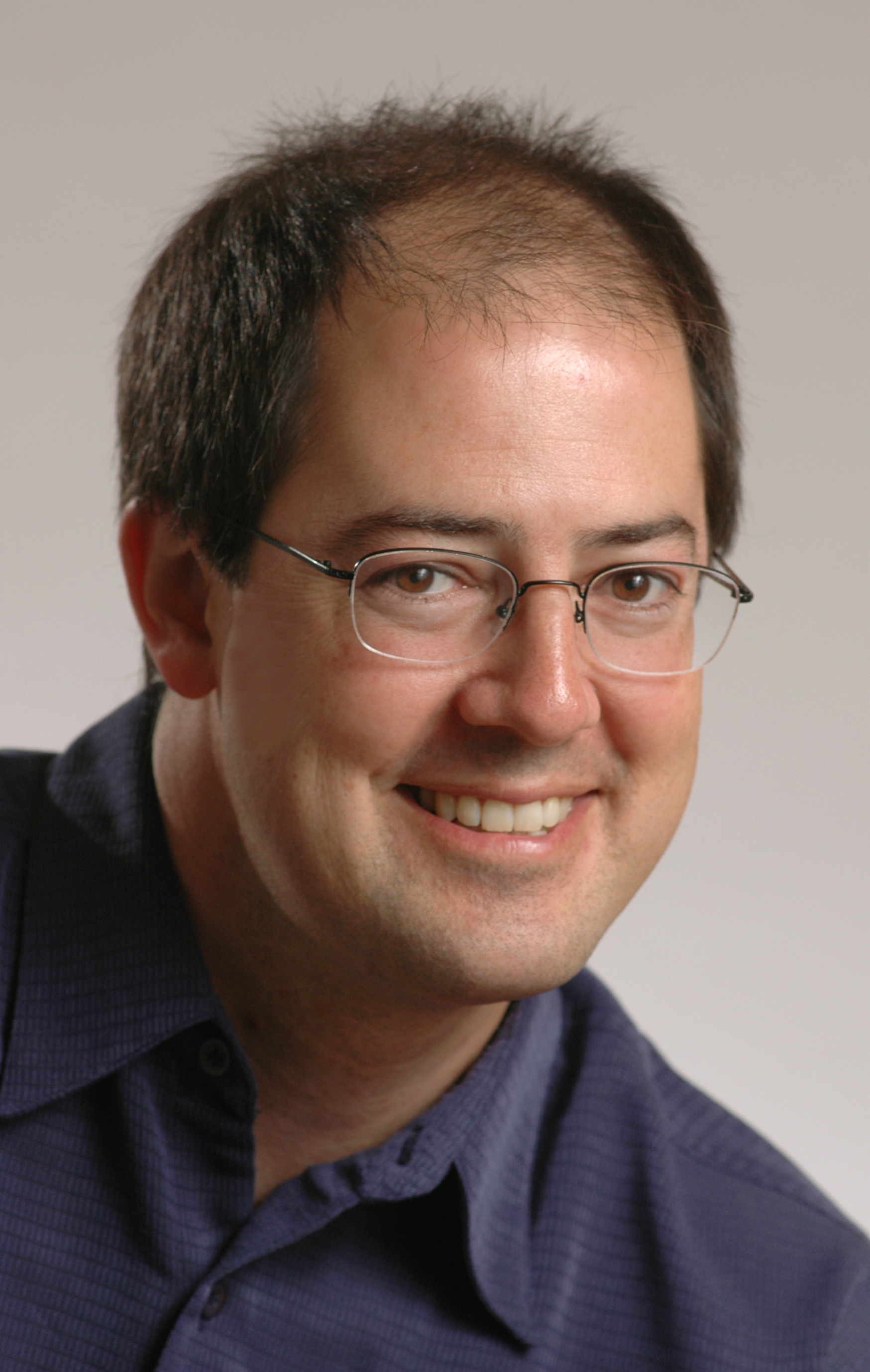
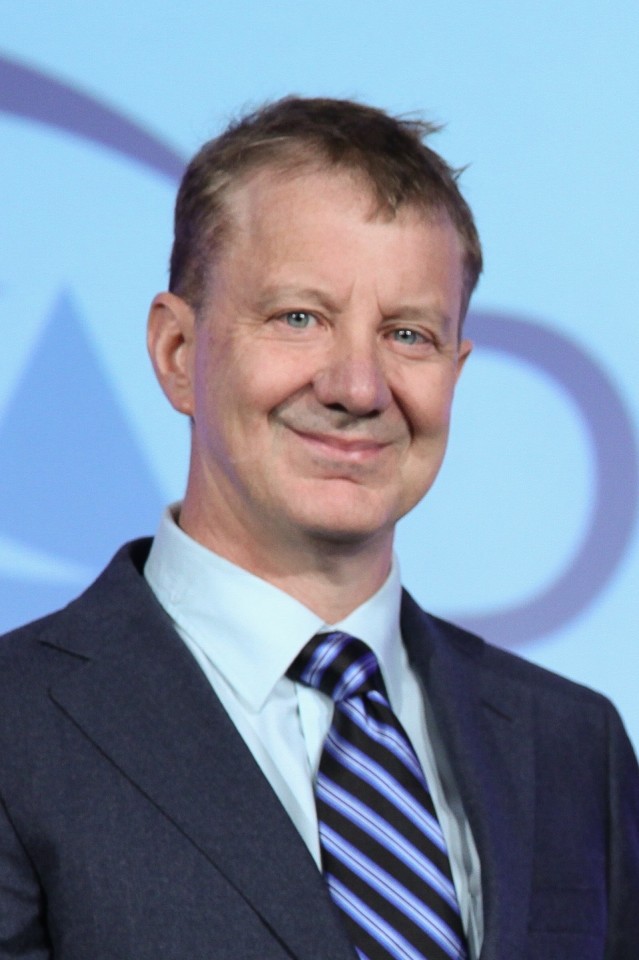
Kristofer Pister is a Professor in the Department of Electrical Engineering and Computer Sciences at the University of California, Berkeley. He co-directs the Berkeley Sensor and Actuator Center (BSAC) and the Ubiquitous Swarm Lab. His career spans groundbreaking innovations in Micro/Nano Electro Mechanical Systems (MEMS), Control Systems, and Low-Power Circuits, with a focus on Smart Dust and synthetic insects. Education: Ph.D. and M.S. in EECS from UC Berkeley (1992, 1989); B.A. in Applied Physics from UC San Diego (1986). His research areas include MEMS , Control Systems , Robotics , and Integrated Circuits , with recent work on self-powered micro-sensors, crystal-free radios, and interplanetary swarm networks. Key awards include the ISA Albert F. Sperry Founder Award (2009) , Alexander Schwarzkopf Prize (2006) , and the NSF CAREER Award (1996) . He has authored numerous influential publications in wireless sensor networks and microrobotics. His lab, Ubiquitous Swarm Lab , explores distributed robotics and swarm intelligence. Pister emphasizes open collaboration in research, ethical conduct in academia, and efficient resource utilization for graduate students.
Prof. Dr. Frank Pollmann is a Full Professor (W3) at the Department of Physics PH-I, Technical University of Munich (TUM), leading the Chair of Theoretical Solid-State Physics since 2022. His research focuses on condensed matter theory and quantum information concepts , particularly in systems of correlated electrons and quantum many-body dynamics . PhD: Max Planck Institute for the Physics of Complex Systems / TU Ilmenau (2006) Postdoc: UC Berkeley (2008-2010) Group Leader: MPIPKS Dresden (2011-2016) Associate Professor: TUM (2017-2022) His work spans topological phases , frustrated spin systems , and non-equilibrium quantum dynamics , utilizing tensor network methods and quantum information theory to study phenomena like many-body localization and Hilbert space fragmentation . His publications demonstrate trends in quantum scar states , Kardar-Parisi-Zhang hydrodynamics , and quantum transport anomalies . Scientific Awards : ERC Consolidator Grant (2017) Walter Schottky Prize (2015) Otto-Hahn Medal (2007) He teaches courses including Advanced Methods in Quantum Many-Body Theory , Solid State Theory , and Topology in Condensed Matter , while leading the Pollmann Group under the TUM School of Natural Sciences.
Christopher M. Overall is a Full Professor at the University of British Columbia in the Faculty of Dentistry, Department of Oral Biological and Medical Sciences . He is also a Principal Scientist at the Centre for Blood Research and holds associate memberships in UBC's Biochemistry & Molecular Biology , Obstetrics and Gynecology , and Bioinformatics Graduate Program departments. As a Canada Research Chair Laureate , he pioneered the field of degradomics to study proteases in vivo. B.D.S., University of Adelaide Ph.D., University of Toronto Postdoctoral Fellowship, UBC (with Nobel Laureate Michael Smith) Dr. Overall’s research focuses on protease proteomics and systems biology , particularly degradomics to analyze protease substrates in diseases like COVID-19 and immunodeficiency . His work on matrix metalloproteinases has revealed new therapeutic strategies for inflammatory diseases and cancer . His 15 most recent articles (2015–2008) demonstrate expertise in TAILS proteomics , protein terminomics , and protease network analysis with applications in arthritis , antiviral immunity , and precision medicine . Scientific Awards 2022 Helmut Holzer Award 2018 Royal Society of Canada Fellow 2014 Tony Pawson Canadian Proteomics Award 2013 IADR Distinguished Scientist Award Dr. Overall has mentored 61 trainees , including 9 full professors with department chairs, and received the UBC John McNeill Mentorship Award (2023). He leads the HUPO Chromosome-centric Human Proteome Project and consults for Genentech and Novartis .
Máté Szabó is an Assistant Professor at the University of Debrecen , affiliated with the Faculty of Informatics and the Department of Information Technology . His email contact is szabo.mate@inf.unideb.hu . He works in areas such as Machine Learning , Smart Cities , and Mobile Computing . His research spans topics like microservice architecture for ensemble models, Markov modeling of traffic flows, and distributed machine learning on mobile platforms. He has explored neural models for conversational AI and gamification in programming education through Minecraft-based challenges. His work also addresses edge computing and data parallelism in mobile environments. His publications (2016–2024) reflect trends in machine learning deployment on Android platforms smart city traffic analytics gamified educational tools cognitive modeling of numerical understanding microservice-based model integration .
Ranjay Krishna is an Assistant Professor at the Paul G. Allen School of Computer Science & Engineering at the University of Washington, where he co-directs the RAIVN lab and leads the computer vision team at the Allen Institute for AI (Ai2). His research intersects computer vision , natural language processing , robotics , and human-computer interaction . PhD in Computer Science from Stanford University (2021) Bachelor's and Master's degrees from Stanford and Cornell His work has received best paper , outstanding paper , and orals at top conferences like CVPR, ACL, CSCW, NeurIPS, UIST, and ECCV. Media outlets including Science , Forbes , and PBS NOVA have covered his research. He has been supported by grants from Google , Apple , NFS , and others. Ranjay advises a diverse group of 15 PhD and postdoctoral researchers , including Jieyu Zhang, Benlin Liu, and Cheng-Yu Hsieh. His teams have developed benchmarks like MemoryBench and The Colosseum , and his PathFinder framework achieved 74% accuracy in skin melanoma diagnosis—surpassing human experts by 9%. Notable contributions include: Perception Tokens for visual reasoning in MLMs SAM2Act for robotic manipulation with memory Synthetic Visual Genome dataset with 5.6M relationships
Andrew Miller is an Associate Professor in the Electrical and Computer Engineering department at the University of Illinois, specializing in Programming Languages, Formal Methods, Software Engineering, Security and Privacy, and Systems and Networking. His research focuses on blockchain technologies, cryptography, and secure systems. Professor Miller's research spans multiple critical areas in modern computer security. His work primarily focuses on blockchain technologies , where he has made significant contributions to understanding and improving the security, privacy, and performance of systems like Bitcoin and Ethereum. He has conducted empirical analyses of privacy in the Lightning Network and developed protocols for confidential smart contracts. His work in cryptography includes research on multiparty computation, zero-knowledge proofs, and formal methods for cryptographic protocol design. Miller also investigates security vulnerabilities in proof-of-stake systems and resource exhaustion attacks, contributing to the robustness of decentralized systems. His applied security research extends to privacy-preserving health applications, as evidenced by his work on the Safer Illinois platform for COVID-19 contact tracing. Miller's publication record demonstrates consistent contributions to top security and systems venues including IEEE Security & Privacy, ACM CCS, Financial Cryptography, and USENIX Security. His research shows a clear trajectory from foundational work in blockchain security to more applied systems addressing real-world privacy and security challenges. Recent work focuses on making multiparty computation services publicly auditable and developing decentralized identity solutions that maintain compatibility with existing systems. Distinguished Reviewer Award, IEEE Security & Privacy 2018 Professor Miller has advised students including Vivek Nair, who joined the prestigious Hertz Fellows program in 2022. He has taught various courses including Introduction to Algorithms & Models of Computation, Advanced Computer Security, Cryptography, Applied Cryptography, and Ideal Functionality in Cryptography. His research has received support through grants including the SaTC: CORE: Medium project on "Automated Support for Writing High-Assurance Smart Contracts" in 2018. Miller is actively involved in research groups focusing on blockchain security, cryptographic protocols, and privacy-preserving systems. His lab appears to collaborate extensively with researchers across multiple institutions, as evidenced by the diverse author lists on his publications. Current work seems to be focused on making decentralized systems more secure, privacy-preserving, and accessible for real-world applications.
Chandra Chekuri is the Paul and Cynthia Saylor Professor in the Department of Computer Science at the University of Illinois Urbana-Champaign, situated within the Grainger College of Engineering. He has been actively contributing to theoretical computer science for over two decades, with significant leadership roles including serving as Editor-in-Chief of the prestigious SIAM Journal on Computing since May 2025. His academic journey began with a B.Tech in Computer Science from the Indian Institute of Technology, Madras in 1993, followed by a Ph.D. in Computer Science from Stanford University in 1998. Prior to joining UIUC, he spent eight years as a Member of Technical Staff at Bell Labs, Lucent Technologies. Chekuri's research focuses on theoretical computer science with particular emphasis on the design and analysis of algorithms, discrete and combinatorial optimization, approximation algorithms, mathematical programming, and graph theory. His work explores fundamental connections between discrete structures and optimization problems, with applications spanning network design, data analysis, and computational complexity. His recent publications demonstrate a continued focus on hypergraph algorithms, submodular function optimization, and graph partitioning problems, showing how theoretical insights can yield practical algorithmic improvements. His approach often combines continuous relaxations with discrete rounding techniques to develop approximation algorithms for NP-hard problems. As Editor-in-Chief of SIAM Journal on Computing, Chekuri leads one of theoretical computer science's most respected publications, which covers analysis and design of algorithms, algorithmic game theory, computational complexity, and other mathematical aspects of computer science. His editorial leadership follows previous service as Associate Editor for several major journals including SIAM Journal on Computing, Mathematics of Operations Research, and Mathematical Programming. ACM Fellow (January 2024) Scott Fisher Teaching Award (for year 2022-23) from CS Department Chekuri has advised numerous PhD students to completion, including Kent Quanrud, Vivek Madan, Shalmoli Gupta, and Chao Xu, with several currently in progress such as Tanvi Bajpai, ElFarouk Harb, Rhea Jain, and Weihao Zhu. His teaching portfolio includes graduate courses on Randomized Algorithms, Approximation Algorithms, Algorithms for Big Data, and Combinatorial Optimization. He has served as Director of the Graduate Program in the Department of Computer Science from May 2014 to August 2017, demonstrating significant administrative leadership within the department.
Soumya Dutta is an Assistant Professor in the Department of Computer Science and Engineering at the Indian Institute of Technology Kanpur (IITK), where he leads the INSIGHT: Intelligent Scientific and Visual Computing of Big Data Research Group. He joined IIT Kanpur in October 2022 after working as a Scientist II at Los Alamos National Laboratory (LANL) from July 2019 to August 2022, and previously as a Postdoctoral Research Associate at LANL from June 2018 to July 2019. His educational background includes a Ph.D. and M.S. in Computer Science and Engineering from The Ohio State University (2011-2018), where he was part of the GRAVITY research group, and a B.Tech. in Electronics and Communication Engineering from West Bengal University of Technology, India (2005-2009). Research Interests: Dr. Dutta's research focuses on the intersection of machine learning, visual computing, big data, and high-performance computing. His primary research areas include Machine Learning for Visual Computing and Image Analysis, Big Data Visualization and Analytics, Data Science and HPC, Machine Learning for Scientific Computing, and Explainability and Interpretability of AI Models. His work addresses various big data characteristics including the 5 Vs: Volume, Velocity, Variety, Veracity, and Value. He develops techniques that make complex machine learning models more interpretable and explainable, enabling their effective adoption in real-life applications across scientific domains, social media, IoT, healthcare, and industry applications. Dr. Dutta's research group has secured multiple funded projects including: DAVi: An Intelligent Data Analytics and Visualization Framework (funded by ISRO), Intelligent Visual Computing of Extreme-scale Data for Accelerating Scientific Discovery (IIT Kanpur Initiation Grant), Enabling Interactive Big Data Analytics and Visualization at Exascale (SERB), Development of AI-Enabled National Portal for Efficient Search of Missing People (C3iHub), and Proactive and Generalized Deepfake Defense Mechanisms (C3iHub). Best Reviewer, Honorary Mention Award for IEEE Transactions on Visualization & Computer Graphics (TVCG), 2021 Best Paper Award at ISAV 2021, co-located with Supercomputing (SC) LAAP Award at Los Alamos National Laboratory, 2021 Best Paper Award at TopoInVis 2019 Best Paper Award at ISAV 2018, co-located with Supercomputing (SC) Best Poster Award in 12th Annual CSE Student Poster Exhibition, The Ohio State University, 2018 Best Poster Award in 11th Annual CSE Student Poster Exhibition, The Ohio State University, 2017 Best Paper Honorable Mention Award at IEEE Visualization Conference (IEEE VIS) 2016 Dr. Dutta actively mentors a large group of students including Ph.D., M.Tech., and B.Tech. students. His current Ph.D. students include Shanu Saklani, Sankhadeep Bhowmick, Ananya Chaturvedi, Arpita Santra, Anubhav Dixit (co-supervised), and Robin Shah. He has supervised numerous M.Tech. students with thesis topics ranging from uncertainty-aware neural networks to deepfake detection. Dr. Dutta currently teaches courses including CS360 - Introduction to Computer Graphics and CS661 - Big Data Visual Analytics. The INSIGHT research group collaborates internationally with researchers from Meta, Oak Ridge National Laboratory, and National Taiwan Normal University. The group's work focuses on building machine learning and data science-based solutions to analyze large-scale multifaceted data in a scalable way, enabling interactive and interpretable analytics of complex data from scientific simulations, social media, IoT, healthcare, and other application domains.
John Baillieul is Distinguished Professor at Boston University with joint appointments in Mechanical Engineering, Systems Engineering and Electrical & Computer Engineering. He directs experimental laboratories for real-time control of lightweight robotic systems and applies nonlinear control theory to complex multi-body, networked, and bio-inspired systems. Education: Ph.D., Harvard University Research Interests: Baillieul’s work spans robotics, nonlinear control, and networked systems. Early contributions resolved motion-planning for kinematically redundant manipulators; current themes include neuromimetic learning, vision-based navigation, and resilience of infrastructure networks such as power grids. His group couples rigorous geometric control with real-time hardware to create lightweight, high-performance robots and to uncover fundamental information limits in feedback systems. Recent Publication Trends (2021-2025): Over the past five years his output has concentrated on three synergistic directions: (i) neuromimetic and Koopman-based data-driven methods for estimating and controlling nonlinear systems, (ii) vision-based guidance and sparse optical-flow primitives for agile autonomous flight, and (iii) network-theoretic decomposition and information-rate studies for resilient operation of power grids and collective dynamics. Honors & Awards: IEEE Fellow 2025 Roger W. Brockett Control Systems Award Former Editor-in-Chief, IEEE Transactions on Automatic Control Affiliations & Service: He is a member of Boston University’s Center for Information and Systems Engineering (CISE), has served as Editor-in-Chief of IEEE Transactions on Automatic Control, and remains active in editorial and organizational roles across the IEEE control systems community.
Giuseppe Carlo Marano is a Full Professor at the Department of Structural, Building and Geotechnical Engineering at Politecnico di Torino. He is also a component of the SISCON Interdepartmental Center for Infrastructure Safety. With expertise in civil and structural engineering, his work focuses on machine learning applications, seismic risk reduction, and sustainable structural optimization. Education Graduated cum laude in Structural Engineering from Polytechnic University of Bari PhD in Structural Engineering from University of Florence (2000) Research Interests Marano's research spans structural optimization, seismic engineering, and machine learning applications in civil infrastructure. He develops advanced computational models for: Seismic retrofitting of existing structures Optimization of steel and masonry structures Recycled materials in concrete production AI-driven structural health monitoring Multiobjective design methodologies Publication Trends His recent work emphasizes: Machine learning for concrete mix design and damage assessment Optimization of gridshells and arch structures Seismic isolation systems and vibration control Sustainable construction practices with recycled materials Multiobjective genetic algorithms for structural design Scientific Recognitions National Scientific Qualification - First Band (2013, MIUR Italy) Certificate of Appreciation for Outstanding Lecture (2012, China) Academic Contributions As an educator, he teaches: Consolidamento Strutturale (Structural Consolidation) Dinamica delle Vibrazioni Random (Random Vibration Dynamics) Progettazione Generativa (Generative Design) He also leads Challenge@PoliTo initiatives and contributes to national infrastructure safety regulations. Research Projects ADAPT4CE - Adaptive Digital Systems for Circular Economy (2025-2028) AI-ENVISERS - AI for Seismic Retrofit Environmental Impact (2023-2025) ADDOPTML - Additive Manufacturing Optimization (2021-2025)
Tim Q. Duong, Ph.D., is a Professor at Albert Einstein College of Medicine, affiliated with the Departments of Radiology, Biochemistry, Ophthalmology & Visual Sciences, and Neuroscience. His research focuses on medical imaging, MRI, image analysis, machine learning, and predictive modeling for studying diseases like COVID-19 , neurodegeneration (Alzheimer's, multiple sclerosis), brain injuries , and breast cancer . Develops AI-driven MRI techniques for early disease detection Investigates neuroplasticity in glaucoma and diabetic retinopathy Leads grants from NIH and National Eye Institute Research Trends : Recent publications emphasize AI integration in medical imaging, long-term effects of SARS-CoV-2, and advanced MRI applications for ocular and neurological disorders. Grants include multiple R01 awards for diabetic retinopathy and glaucoma studies. Training Opportunities : Actively recruits postdocs, research coordinators, and faculty. Offers research positions for graduate, medical, and high school students, including Regeneron Scholar programs. Labs & Teams : Leads the Duong Lab at Montefiore Medical Center, focusing on translational research for clinical imaging solutions.
Morteza Fayazi is an Assistant Professor in the Department of Electrical and Computer Engineering at the University of Utah, with an adjunct position in the Kahlert School of Computing. His research focuses on Electronic Design Automation (EDA), applying machine learning to automate analog and mixed-signal circuit design, and developing high-performance computing systems. He holds a B.Sc. from Sharif University of Technology, and M.S.E./Ph.D. degrees from the University of Michigan. His research interests include AI-driven EDA, RF/circuit automation, and energy-efficient processors. Key achievements include the MEDAL lab’s work on terahertz radars, systolic-array processors (e.g., DAP and Versa), and open-source frameworks like FASCINET and Tablext. He has received awards such as the 2024 College of Engineering Dean’s ETR Fund and the 2017 Outstanding Undergraduate Thesis Award. Teaching responsibilities include multiple iterations of the Digital System Design course (ECE/CS 3700). His work spans over 15 peer-reviewed articles in IEEE Transactions, ACM, and top conferences like ICCAD and VLSI-SOC, emphasizing automation, efficiency, and AI integration in hardware design.
James J. Gross is the Ernest R. Hilgard Professor of Psychology at Stanford University, directing the Stanford Psychophysiology Laboratory. He specializes in emotion regulation, with affiliations in Philosophy (courtesy). His education includes a Ph.D. in Clinical Psychology from UC Berkeley (1993), a B.A. in Philosophy and Psychology from Yale (1987), and a visiting graduate year at Oxford (1988). Research focuses on emotion regulation mechanisms, psychopathology, neuroimaging, and cultural influences. His work bridges clinical, cognitive, and social psychology, examining how individuals manage emotions to influence mental health and behavior. Notable contributions include the Process Model of Emotion Regulation and interventions targeting emotion regulation deficits. Publications (~650, 250k citations) highlight studies on emotion regulation strategies, clinical applications, and neural underpinnings. Recent work explores transdiagnostic treatments, digital health interventions, and the interplay between beliefs and emotion regulation. Awards: Stanford Dean’s Teaching Award, Walter J. Gores Award (highest teaching honor), multiple mentoring awards, and honorary doctorates from UC Louvain and Tilburg. Professional Roles: Co-founding President of the Society for Affective Science, Founding Co-Editor-in-Chief of Affective Science , and Fellow of major psychological and scientific societies. Labs/Teams: Directs the Stanford Psychophysiology Lab, collaborating on projects involving neuroimaging, psychophysiological assessment, and computational modeling of emotion processes.
Tamara Broderick is an Associate Professor in the Department of Electrical Engineering and Computer Science at MIT, specializing in machine learning and statistics. Her research focuses on developing methods for uncertainty quantification in data analysis, Bayesian nonparametrics, and scalable inference algorithms. She leads a research group advising PhD students and postdocs in statistical machine learning. Her work spans Bayesian modeling, variational inference, spatial statistics, and applications in epidemiology and environmental science. Recent projects involve uncertainty-aware forecasting, robustness analysis of statistical methods, and efficient algorithms for high-dimensional inference. Broderick teaches Bayesian Modeling and Inference and contributes to MIT's statistics and data science initiatives.
Olga Fink is a Tenure Track Assistant Professor at the École Polytechnique Fédérale de Lausanne (EPFL), affiliated with the Department of Intelligent Maintenance and Operations Systems (IMOS) within the School of Architecture, Civil and Environmental Engineering (ENAC). She also holds roles in PhD program committees for Civil and Environmental Engineering (EDCE) and Robotics, Control, and Intelligent Systems (EDRS). Her research focuses on machine learning for infrastructure monitoring, predictive maintenance, and physics-informed AI models. She teaches courses on machine learning, data science for infrastructure, and advanced deep learning topics. Fink advises multiple PhD students and is involved in interdisciplinary projects such as ThermoNeRF (multimodal 3D thermal modeling) and physics-informed neural networks for fault diagnostics. Her work bridges AI and engineering with applications in smart infrastructure, energy systems, and industrial IoT. Education: PhD in Engineering (inferred from role) Affiliations: IMOS Lab, ENAC-SGC, EPFL PhD Committees (EDCE, EDRS) Key Research Themes: Explainable AI, Digital Twins, Structural Health Monitoring, Domain Adaptation Her publications (2023–2025) emphasize robust AI for industrial systems, including fault detection in high-voltage equipment, multimodal data fusion, and physics-consistent models. She collaborates on EU and industry-funded projects, focusing on real-world applications like predictive maintenance and energy efficiency.