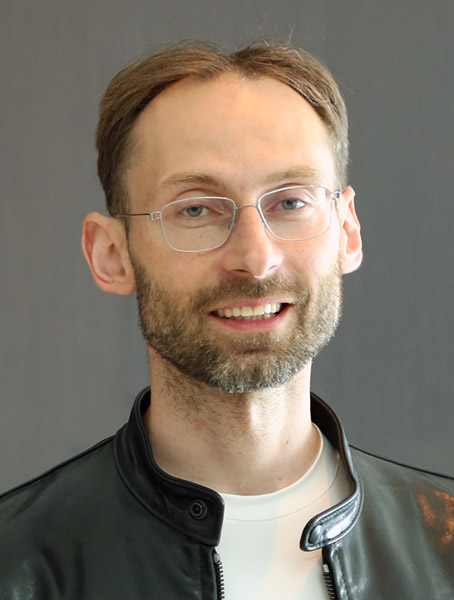
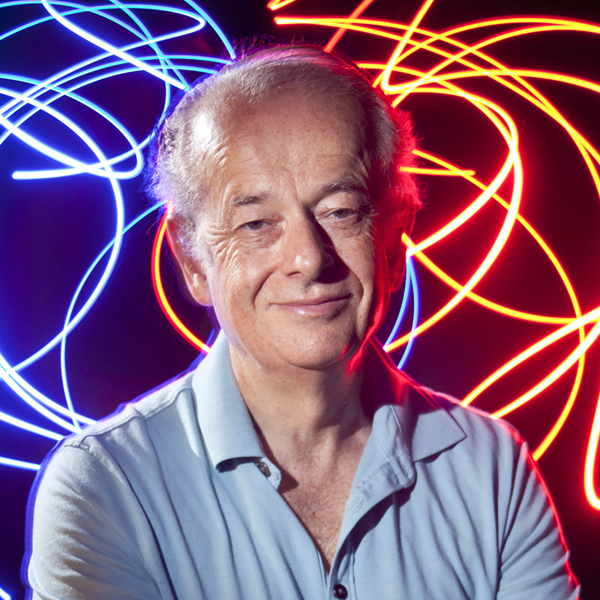
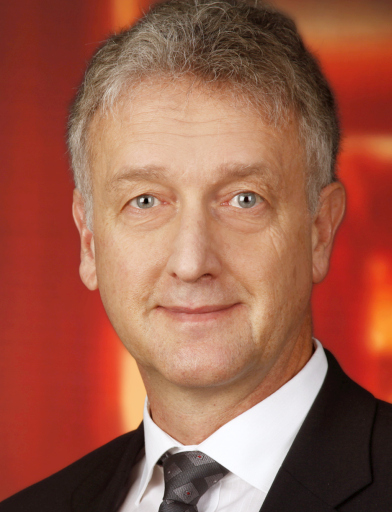
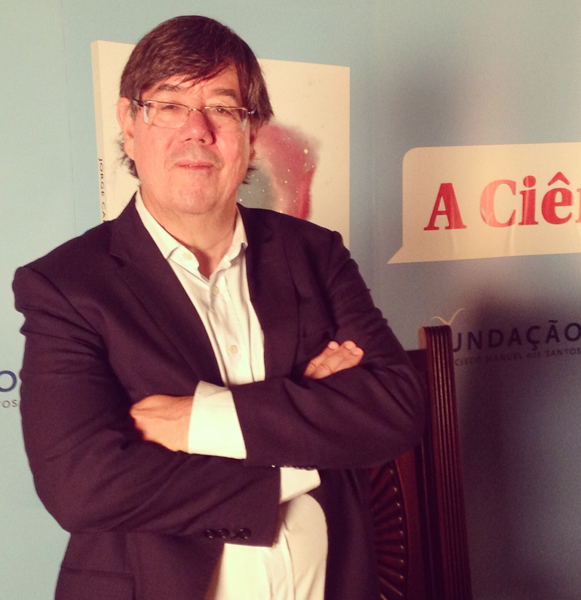
Günther Haring serves as a Full Professor at TU Wien's Faculty of Informatics, specifically within the Institute of Information Systems Engineering (E194), where he leads research in distributed systems and mobile computing architectures. His core research spans: Distributed Systems infrastructure design Mobile context-aware frameworks Wireless sensor network integration Shared data space computation models Location-based distributed services Professor Haring maintains active supervision of graduate researchers, with documented mentorship of diploma and doctoral candidates in mobile distributed systems. His work demonstrates consistent focus on mobility challenges within distributed environments over the past two decades. He operates within the Distributed Systems research group (E194-02), contributing to TU Wien's informatics infrastructure through both theoretical frameworks and practical implementations of context-aware computing systems.
Florian Ferdinand Huemer is a PostDoc Researcher at the Embedded Computing Systems department (E191-02 Faculty Council Substitute Member) within the Faculty of Informatics at Vienna University of Technology. His work focuses on fault-tolerant asynchronous circuits, delay-insensitive communication protocols, and FPGA reliability analysis. BSc , Vienna University of Technology Dipl.-Ing. , Vienna University of Technology Dr.techn. , Vienna University of Technology Key research areas include: Fault-Tolerant Computing : Designing systems resilient to transient faults and radiation effects. Asynchronous Circuits : Developing quasi-delay-insensitive logic and Muller pipelines. Embedded Metrology : Applying polarization cameras and time-to-digital converters for industrial measurements. Recent publications address: 2024 : Polarization camera-based inline thickness measurement and FPGA ring oscillator synchronization. 2023 : Mitigating single-event transients in QDI logic. 2021 : Automated fault-injection frameworks and QDI pipeline sensitivity analysis. Projects funded by the Austrian Science Fund (FWF) during 2013-2018 explored self-stabilizing Byzantine fault-tolerant algorithms. Supervisions include: Haschke (2024): QDI adder comparison Spitzer (2024): Automated fault-injection framework Schwendinger (2022): Asynchronous circuit testing tools Pircher (2022): Smart SoC testing via IJTAG Behal (2021): QDI design template fault sensitivity
Bernhard Kerbl is a Post-doctoral Researcher at the Computer Graphics Group (E193-02) within the Faculty of Informatics at Vienna University of Technology (TU Wien). He actively contributes to research in real-time rendering, GPU optimization, and 3D visualization. His work focuses on point cloud rendering, Gaussian splatting, and low-level graphics API development (particularly Vulkan). Core Research Areas: Real-time rendering, GPU programming, point cloud processing, 3D Gaussian splatting, task-based parallelism Projects: IVILPC (2023–2026), ACD (2020–2028), EVOCATION (2018–2022) Key Contributions: Developed real-time rendering techniques for massive datasets, pioneered GPU-based scene streaming architectures, and created novel methods for visual error prediction using machine learning. His work on Vulkan transition in academia received recognition, and he maintains active collaborations in GPU education. Scientific Achievements: Best Paper Award at EGPGV 2024 for "Fast Rendering of Parametric Objects on Modern GPUs" Recipient of Vienna Science and Technology Fund (WWTF) support for graphics research Technical Expertise: Specializes in CUDA, OpenGL/Vulkan APIs, and real-time systems. His work bridges academic research with practical implementations in virtual reality, augmented reality, and GPU education.
Raimund Kirner is an academic at the Institute of Computer Engineering (E191-01) at Technische Universität Wien , specializing in real-time and embedded systems. His career spans research in Worst-Case Execution Time (WCET) Analysis , Time-Triggered Communication , and Automated Testing for safety-critical systems. He has contributed to projects such as ALL-TIMES, COSTA, and HINT, focusing on timing predictability and composability in real-time systems. Key Research Areas : WCET Analysis, Real-Time Systems, Embedded Testing, Time-Predictable Computing Notable Collaborations : Peter Puschner, Andreas Prantl, Martina Zolda Recent Publications analyze cybersecurity in automotive networks, quantitative interface evaluation for time-triggered systems, and synchronization trade-offs. His work bridges theoretical timing models with practical compiler and hardware solutions for deterministic execution. Awards : Recipient of the Mobilitätsstipendium der Creditanstalt AG (2003) for outstanding dissertation. Advising includes supervising 11 theses from 2002–2014 on topics like Automated Load Balancing , WCET Estimation , and Compiler Timing Models .
Dr. Robert Keil is a Research Fellow at the Department of Experimental Physics, University of Innsbruck, Austria. His research focuses on quantum optics, many-particle interference, and hybrid quantum networks. He teaches courses in photonics and electromagnetism, including 'Photonik' and 'Physik2 - Elektromagnetismus und Optik'. Academic Role: Senior Scientist (Research Fellow) Affiliation: University of Innsbruck, Department of Experimental Physics Research Interests: Quantum Optics: Investigating non-interacting particles and photon interference phenomena Hybrid Quantum Networks: Developing photonic interfaces for quantum communication Quantum Mechanics Tests: Precision multi-path interferometry experiments Funding: Current projects include FWF-funded research on single-photon spectra and hybrid photonic circuits. Previous grants include studies on many-particle interference and foundational quantum tests.
Rolf Apweiler serves as Director of the European Bioinformatics Institute (EMBL-EBI), part of the European Molecular Biology Laboratory, a position he has held since 2015. Previously, he was Associate Director (2012-2015) and led multiple critical protein resources including UniProt and InterPro. His leadership extends to directing Open Targets since 2018 and spearheading EMBL-EBI's contribution to the European COVID-19 Data Platform. Apweiler's research spans Bioinformatics, Proteomics, and Genomics , with significant contributions to protein annotation methods, proteomics data standards, and major biological databases. His work enables comprehensive analysis of proteome sets across entire organisms and has established foundational resources for the global scientific community. His publication portfolio demonstrates consistent leadership in developing critical bioinformatics infrastructure, with major contributions including UniProt, PRIDE, IntAct, and InterPro. These resources form the backbone of modern proteomics research and have been widely adopted across the life sciences. HUPO Distinguished Achievement Award in Proteomics (2004) EMBO Member (2011) ISCB Fellow (2015) President of Human Proteomics Organisation (2007-2008) As Director of EMBL-EBI, Apweiler oversees one of the world's leading bioinformatics institutions, managing extensive research programs, international collaborations, and major data infrastructure projects. His leadership in Open Targets demonstrates significant engagement with translational research connecting basic science to drug discovery. Apweiler's teams maintain several critical global resources including PRIDE (proteomics identifications), IntAct (molecular interactions), and UniProt (protein knowledgebase), forming an integrated ecosystem for biological data analysis.
Francesco Paolo Battaglia is a Full Professor at the Donders Centre for Neuroscience, Radboud University Nijmegen, Netherlands. He has held previous academic positions including Associate Professor (2013-2020) and Assistant Professor (2006-2012), with ongoing contributions to computational neuroscience and memory research. Education: PhD in Cognitive Neuroscience (1998) from SISSA, Italy Master in Physics (1994) from University of Rome La Sapienza His research focuses on neuronal networks of memory, hippocampal function, neurophysiology, and computational modeling of neural systems. He has pioneered work on grid cells and spatial cognition frameworks. Scientific Awards: ERC Advanced Grant (2019) Neuron Top 30 Paper Recognition (2018) Neurotech-NL Plan Recognition (2015) Nobel Prize 2014 Citation Contribution Prix la Recherche (2010) He has secured over €6 million in funding through grants including ERC REPLAY-DMN (€2.38M), NWO TOP Exact Sciences (€750K), and EU-MSCA Postdoctoral Fellowship (€180K). Supervised 6 postdocs, 9 PhD students, and 10 Master students at Donders Institute.
René Bernards serves as Professor of Molecular Carcinogenesis at Utrecht University (part-time since 1994) and Head of the Division of Molecular Carcinogenesis at the Netherlands Cancer Institute (since 1992). He co-founded Agendia BV in 2003, a genomics diagnostics company that launched the first microarray-based breast cancer diagnostic test in 2004. His research focuses on genome-wide loss-of-function genetic screens to identify novel cancer drug targets and resistance mechanisms. Key areas include senescence induction therapy and MAP kinase pathway drug combinations , with his 2012 discovery of BRAF/EGFR inhibition efficacy leading to regulatory approval for BRAF-mutant colon cancer treatment. His publication portfolio demonstrates strong translational impact, with recent work spanning computational oncology (2018) and immunotherapy response prediction (2025). These studies reflect his laboratory's evolution from fundamental cancer genetics toward clinically applicable diagnostic and therapeutic strategies. Pezcoller Foundation-FECS Recognition for Contribution to Oncology (2005) Spinoza award, Netherlands Organization for Scientific Research (2005) ESMO Lifetime Achievement Award in Translational Research (2007) Foreign member, Royal Society (2023) Bernards leads a 17-member research team including PhD students and postdoctoral fellows, maintaining close clinical collaborations with affiliated hospitals. His group's work on senescent cancer cell elimination (2024) continues to generate significant research interest. The laboratory operates within the Netherlands Cancer Institute's infrastructure, leveraging specialized facilities for functional genomics and drug screening.
Berry Gérard is a distinguished Professor at Collège de France, holding the Chair in Algorithms, Machines, and Languages since 2012. He previously served as Director of Research at INRIA Sophia Antipolis and Chief Scientist at Esterel Technologies. His academic journey includes roles at École des Mines de Paris and École Polytechnique. Gérard specializes in models of computation, programming language design, and synchronous systems. He has contributed significantly to the development of the Esterel language for embedded systems and formal verification techniques. Education: Docteur d’Etat in Mathematics, Université Paris VII (Computer Science option), 1979 Ingénieur des Mines, Corps National des Ingénieurs des Mines, 1970 École Polytechnique, 1967 Research Interests: Focuses on computational models (e.g., lambda-calculus, synchronous concurrency), programming languages (Esterel, Hop/HipHop), circuit synthesis, and formal verification. His recent work explores diffuse programming and web orchestration. Key Awards: 2014: Médaille d'or du CNRS 2005: Member, Académie des technologies 1993: Member, Academia Europaea 1979: Bronze Medal of CNRS Professional Roles: President of the Council of Education and Research at École Polytechnique Member of the Scientific Council of IRCAM Former President of the INRIA Evaluation Committee Labs/Teams: Active in INRIA’s Indes project on diffuse programming and collaborates with IRCAM on real-time music systems.
Michael Bronstein is a Professor & Chair in Machine Learning and Pattern Recognition at the Department of Computing, Imperial College London (since 2018), with a concurrent professorship at the Institute for Computational Science, University of Lugano, Switzerland (since 2010, currently on leave). His academic career includes visiting positions at Stanford University (Visiting Lecturer, 2008-2009), Tel Aviv University (Visiting Associate Professor, 2015-2017), Harvard University (Visiting Scholar, 2017-2018), and MIT (Research Affiliate, 2017-2018). Dr. Bronstein's research focuses on theoretical and computational geometric methods for data analysis, with applications spanning machine learning, computer vision, graphics, geometry processing, biology, and social networks. His work in geometric deep learning has established foundational frameworks for processing non-Euclidean data such as graphs and manifolds, bridging the gap between traditional Euclidean deep learning and complex structured data. His publication record demonstrates a clear trajectory from fundamental geometric methods to their application in diverse domains. Early work focused on 3D shape analysis and non-rigid shape recognition, while more recent publications showcase the application of geometric deep learning to protein structure analysis, point cloud processing, and graph-based machine learning. The consistent thread throughout his research is the development of mathematical frameworks that respect the intrinsic geometry of data. Royal Academy of Engineering Silver Medal (2020) Fellow of IEEE, IAPR, and ELLIS Five ERC grants (Starting 2012, Consolidator 2016, and Proof of Concept 2016, 2018, 2019) Royal Society Wolfson Research Merit Award Young Scientist, World Economic Forum (2014) Bronstein has successfully translated academic research into practical applications through multiple entrepreneurial ventures. As ML Lead for Project CETI and Head of Graph Learning Research at Twitter (since 2019), he bridges academic research with industrial applications. His previous startups include Fabula AI (acquired by Twitter in 2019) and Invision (acquired by Intel in 2012), where he contributed to the development of Intel RealSense 3D camera technology. His research has been supported by significant funding including ERC grants and industry awards from Google, Amazon, and Facebook.
Guido Caldarelli is a Full Professor of Theoretical Physics at Ca' Foscari University of Venice , with affiliations at CNR-ISC, IMT Lucca, and the London Institute for Mathematical Sciences (LIMS). His career spans roles including President of the Complex Systems Society (2018-2020), co-founder of the Network Science Society, and director of CNR-ISC. Active in interdisciplinary research, he bridges statistical physics, network science, and applications in finance, urban planning, and biomedicine. PhD in Condensed Matter Physics, SISSA Trieste (1996) MPhil in Physics, SISSA (1994) Physics Degree, Sapienza Rome (1992) Guido's research focuses on complex systems and network theory , particularly in financial networks, urban dynamics, and biological systems. His work explores scale-free networks, systemic risk, and entropy-based models, with applications in digital twins for cities, microbiome analysis, and misinformation spread on social media. Recent publications highlight trends in network analysis for urban planning (green infrastructure), machine learning in NMR spectroscopy, and social media dynamics during political events. His interdisciplinary approach connects theoretical physics to practical challenges in healthcare, finance, and climate resilience. Scientific Awards Honorary ISI Fellow APS Fellow (2020) Member of Academia Europaea (2020) Fellow of the Network Science Society Outstanding Service Prize, Network Science Society (2020) Guido leads the Complex Networks group at CNR-ISC, co-founded Catchy s.r.l. (data-driven innovation), and serves on the Scientific Committee for Italian Police Force training . His work integrates theoretical rigor with real-world impact across disciplines.
Federico Capasso is the Robert Wallace Professor of Applied Physics at Harvard University, where he has been a faculty member since 2003. He is renowned for inventing the quantum cascade laser at Bell Laboratories and pioneering bandstructure engineering in semiconductor devices. His research spans plasmonics, metasurfaces, nanophotonics, and Casimir forces , with applications in light sources, optical antennas, and MEMS technology. PhD in Physics, summa cum laude, University of Rome (1973) Leadership roles at Bell Labs: Head of multiple departments (1987–2000), Vice President (2000–2002) Research Interests: Quantum electronics, terahertz radiation generation, plasmonic interfaces, and flat optics. His group at Harvard demonstrated optical antennas, plasmonic collimators , and generalized laws of reflection/refraction via metasurfaces. Article Trends: Recent work focuses on metasurface optimization , integrated solitons , optical rotatum , and active mid-infrared ring resonators , reflecting advancements in flat optics and quantum electronics. Scientific Awards: 2016 Balzan Prize 2013 SPIE Gold Medal 2005 King Faisal Prize 2004 Edison Medal 1995–1998: National Academy memberships and fellowships Labs/Teams: Leads the Capasso Group at Harvard, which co-founded the startup Metalenz for metasurface commercialization.
Dieter W. Fellner is a distinguished Professor of Computer Science at Technical University of Darmstadt, Germany, where he serves as Director of the Fraunhofer Institute of Computer Graphics (IGD). He also holds a concurrent position as Professor of Computer Science and Founding Director of the Institute of Computer Graphics and Knowledge Visualization at Graz University of Technology, Austria. With a career spanning over three decades, Fellner has established himself as a leading figure in computer graphics, digital libraries, and related fields. Education: Diploma in Technical Mathematics, Graz (1981) Doktorate (Ph.D.) in Technical Mathematics, Graz (1984) Habilitation, Graz (1988) Professor Fellner's research spans multiple domains within computer science, with a primary focus on computer graphics and its applications. His work encompasses computational geometry, 3D modeling and rendering, virtual and augmented reality, and digital libraries with emphasis on cultural heritage preservation. He has made significant contributions to algorithms for integrating modeling and rendering processes, efficient visualization techniques, and generative modeling approaches. His research extends to practical applications in internet-based multimedia systems, where he coordinated a strategic initiative funded by the German Research Foundation that supported approximately 50 researchers across 21 groups from 1997 to 2005. An analysis of Professor Fellner's publication record reveals a consistent trajectory of innovation in computer graphics and digital document systems. His early work focused on foundational graphics algorithms and videotex systems, evolving toward more complex 3D document modeling, visualization techniques, and digital library architectures. A notable trend is his interdisciplinary approach, bridging computer graphics with applications in cultural heritage, bioinformatics, and brain-computer interfaces. His research demonstrates a progression from theoretical algorithms to practical implementations addressing real-world challenges in information visualization and knowledge management. Scientific Awards: Fellow of the Eurographics Association (2000) Member of the IST Advisory Group for the European Commission (ISTAG) (2007) Best Technical Paper Award (Günther Enderle Award) at Eurographics'98 Conference Honorary Doctorate from the University of Rostock (2019) Throughout his career, Professor Fellner has supervised numerous students and researchers, though specific names are not documented in the available sources. His leadership extends to significant grant activities, most notably coordinating the German Research Foundation's strategic initiative on distributed processing and mediation of digital documents from 1997 to 2005. This major project provided funding for approximately 50 researchers annually across 21 research groups, demonstrating his capacity to lead large-scale collaborative research efforts. He has also served on editorial boards of leading journals and program committees of international conferences, shaping the direction of research in his fields of expertise. Professor Fellner directs the Fraunhofer Institute of Computer Graphics (IGD) in Darmstadt, a prominent research institution focused on applied computer graphics. He also founded and chairs the Institute of Computer Graphics and Knowledge Visualization at Graz University of Technology. These institutions serve as hubs for interdisciplinary research, bringing together computer scientists, domain experts, and industry partners to advance the state of the art in visualization, digital libraries, and knowledge management systems. The teams under his leadership have produced influential work in 3D document processing, cultural heritage digitization, and advanced visualization techniques.
Carlos Fiolhais is a distinguished Full Professor of Physics at the Department of Physics, University of Coimbra, where he has served since achieving this rank in 2000 after progressing through Associate and Assistant Professor positions at the same institution. Born in Lisbon in 1956, he graduated in Physics from the University of Coimbra in 1978 and earned his PhD in Theoretical Physics from Goethe University in Frankfurt/Main, Germany in 1982. His academic career includes sabbatical leaves at Tulane University in New Orleans (1991 and 1997) and professorships in the United States and Brazil. Fiolhais's research interests span three primary areas: Computational Condensed Matter Physics, History of Science, and Physics Education. As founder and director of the Center for Computational Physics at the University of Coimbra, he championed the installation of Portugal's largest computer for scientific computing. His work extends to science communication and public engagement through his direction of the 'Rómulo - Ciência Viva Center of the University of Coimbra' and regular contributions to the national newspaper 'Público.' Analysis of his publication record reveals a diverse scholarly output with significant contributions across multiple domains. His work demonstrates a consistent pattern of bridging theoretical physics with historical context and educational applications. The articles reflect strong interdisciplinary connections between computational methods, historical analysis, and pedagogical innovation, with increasing emphasis on digital approaches to physics education in recent years. Major Awards and Honors: Latin Union Prize for scientific translation (1994) União Latina - JNICT Prize for scientific translation (2005) Gold Globe of Merit and Excellence in Science (SIC TV channel) (2005) Order of Henry the Navigator (2005) Rómulo de Carvalho Prize (University of Évora) (2006) Innovation Prize by Third Millennium Forum (2006) BBVA Prize for the best article in teaching Physics in the Ibero-American space (2012) Innovation Prize Manuel Pinto de Azevedo Júnior (2012) Throughout his career, Fiolhais has demonstrated exceptional leadership in academic administration, having served as Director of the Computer Center of the University of Coimbra, Chairman of the Interdisciplinary Research Institute, Director of the General Library, and member of the Scientific Board of the Foundation for Science and Technology. His supervisory work includes mentoring numerous M.Sc. and Ph.D. students, though specific names aren't documented in the available sources. He has also coordinated multiple research projects and contributed significantly to science policy through his involvement with the Francisco Manuel dos Santos Foundation, where he created the GPS - Global Portuguese Scientists network. Fiolhais has established several notable institutional structures including the Center for Computational Physics, the Rómulo - Ciência Viva Center, and the Integrated Library Service of the University of Coimbra (SIBUC), along with digital repositories 'Estudo Geral' and 'Almamater.' His entrepreneurial spirit is evident in co-founding Coimbra Genomics and maintaining the blog 'De Rerum Natura.'
Leslie Ann Goldberg is Professor of Computer Science at the University of Oxford and Senior Research Fellow at St Edmund Hall. She has held academic positions at the University of Liverpool (2006-2013) and the University of Warwick (1995-2006), and previously worked at Sandia National Labs (1992-1995). Currently serving as Head of Department (sabbatical planned for 2025-26), she leads research in theoretical computer science with focus on algorithms and complexity theory. Her research interests span algorithms for approximately counting and randomly sampling combinatorial structures , analysis of Markov-chain based sampling algorithms , complexity of counting , and stochastic processes in computer science . She specializes in randomized algorithms, particularly their mathematical analysis regarding runtime and accuracy. Current projects include contentions resolution via backoff protocols, random sampling and approximate counting algorithms, counting complexity theory, and analyzing processes on networks like the Moran process. Professor Goldberg has published over 100 papers in top theoretical computer science venues, with recent work focusing on spin systems, graph homomorphisms, subgraph counting, and network processes. Her publications show consistent output in premier venues including ICALP (where she has won three Best Paper Prizes), SODA, STOC, and RANDOM. ERC Advanced Grant 'Mapping the Complexity of Counting' (2014-2019) Best Paper Prize at ICALP 2012, 2010, and 2006 UK Distinguished Dissertations in Computer Science (1991-1992) She actively supervises PhD students and collaborates with researchers including Andreas Galanis, Marc Roth, John Lapinskas, and Paulina Smolarova. Her work bridges theoretical computer science with statistical physics, combinatorics, and network theory, with applications to database systems, evolutionary dynamics, and communication protocols.