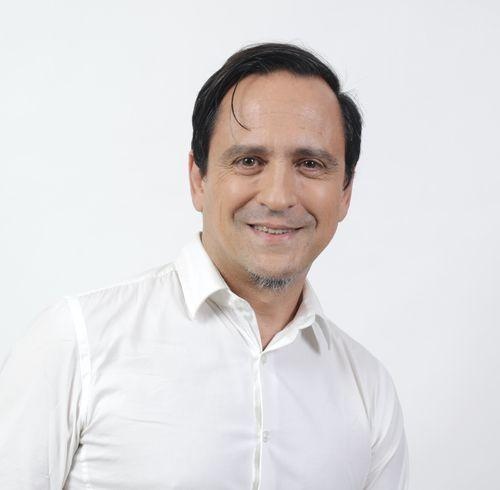
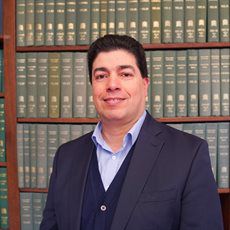
Ram Cnaan is a Professor of Social Work and Associate Dean for Research at the University of Pennsylvania, affiliated with The Weitzman School of Design. He chairs the Doctoral Program in Social Welfare and directs the Program for Religion and Social Policy Research. His work focuses on faith-based social services, congregational welfare provision, and nonprofit management. Cnaan has authored influential books like The Invisible Caring Hand and serves on seven academic journal editorial boards. His research explores volunteerism dynamics, including pandemic impacts on donor retention, cross-national civic participation, and episodic volunteering at religious events. He investigates social entrepreneurship in public sectors and evaluates faith-based organizations' roles in reentry programs for ex-prisoners. Cnaan's recent studies address CSR innovations, donor-advised funds strategies, and prosocial behavior in diverse cultural contexts. Notable contributions include pioneering national studies on congregational social service provision and analyzing Israeli-Palestinian Muslim collaboration in aid work. His work bridges academic research with practical policy solutions for urban quality-of-life challenges.
Peter Seele is a Full Professor at the Faculty of Communication, Culture and Society at Università della Svizzera italiana (USI). He is affiliated with the Center for Climate Finance and Sustainability (CCFS), Ethics and Communication Law Center (ECLC), and the Luxury Observatory Lugano (LOLugano). His research focuses on Corporate Social Responsibility (CSR), Business Ethics, Digital Ethics, Greenwashing, and Machinewashing. Dr. Seele holds dual PhDs in Economics (University of Witten/Herdecke, Germany) and Philosophy (University of Düsseldorf, Germany). He previously served as an Assistant Professor at the University of Basel and conducted post-doctoral research at the Institute for Advanced Studies in the Humanities (KWI) in Essen. His educational background includes studies at the University of Oldenburg and Delhi School of Economics, followed by two years as a business consultant in Frankfurt. His research explores ethical challenges in digitalization, sustainability, and technology. Notable themes include AI ethics governance, ethicswashing in corporate communication, and the interplay between blockchain and business ethics. Recent work addresses greenwashing trends, the ethical implications of algorithmic systems, and sustainable practices in luxury industries. Publications highlight critical analyses of digital ethics frameworks, sustainability backlashes, and the societal impact of emerging technologies. His interdisciplinary approach bridges philosophy, business studies, and environmental science, with a focus on practical solutions for ethical dilemmas in modern organizations. Peter Seele collaborates across academic and industrial sectors, emphasizing real-world applications of ethical theories. He advises on CSR strategies, digital transparency, and regulatory frameworks for sustainable business practices.
Dr. Mathew Todres is a Senior Lecturer in Management at the School of Business, Faculty of Business and Law, University of Wollongong. His research focuses on Management, Change Management, International Business Management, and Strategic Management, with a particular emphasis on Social Entrepreneurship and Workplace Value Congruence. He has conducted action research in Social Enterprise Development and published in journals such as the Social Enterprise Journal and Journal of Business Ethics . Dr. Todres currently supervises PhD candidates Douglas Opoku Agyeman (Micro Entrepreneurship in West Africa) and Grant Hughes (Sports Management). He has received a University of Wollongong Faculty of Business Start-Up Grant (2018). His peer-reviewed work spans organizational behavior, narrative analysis, and social enterprise innovation. His research interests include autoethnographic analysis, narratological analysis, and the application of social theory to entrepreneurial practices. Dr. Todres has contributed to journals such as Medical Education and serves as a reviewer for Journal of Spirituality, Leadership, and Management , among others. His work bridges theoretical frameworks with practical applications in organizational dynamics and social impact initiatives.
John Ferguson is a Professor in Accounting at the School of Management, University of St Andrews. He serves as Co-Director of the Centre for Social and Environmental Accountability Research (CSEAR) and the Centre for the Study of Philanthropy & Public Good. His work significantly contributes to the United Nations Sustainable Development Goals, particularly in areas related to responsible consumption and production, and peace, justice and strong institutions. His academic qualifications include BA (Hons), BA, MAcc, Ph.D, CertTHE, and professional designations FHEA, FRSA, CMBE. Professor Ferguson's research focuses on accountability and corporate governance, with particular emphasis on the social and organizational impact of different governance models and corporate accountability for human rights. His work explores how businesses can be held accountable for human rights violations and how governance structures influence corporate behavior. He has made significant contributions to understanding the implementation of the United Nations Guiding Principles on Business and Human Rights (UNGPs) in Scotland through his work with the Scottish Government on the National Baseline Assessment. His research demonstrates strong trends in business ethics, corporate social responsibility, and the intersection of human rights with corporate governance, with recent publications exploring forward-looking responsibility frameworks, translation of human rights principles into corporate contexts, and national action plan implementation. Winner of the British Accounting Association Accounting Education Special Interest Group Annual Prize (2008) for the paper 'Accounting Textbooks: Exploring A Cultural and Political Artifact' Professor Ferguson has supervised multiple postgraduate students and currently serves on the editorial boards of Accounting, Auditing and Accountability Journal and Human Relations. He previously served as Editor of the Social and Environmental Accountability Journal (SEAJ) from 2011-2015. He has led significant research projects including 'The In-Betweeners: Examining the role and impact of 'experts' in business and human rights' funded by The Royal Society of Edinburgh (2023). He is active in several research networks and advisory groups, including the International Corporate Accountability Roundtable (ICAR), and has organized numerous academic conferences and workshops on business and human rights implementation.
Chuqing Dong serves as Assistant Professor in the Department of Advertising and Public Relations at Michigan State University's College of Communication Arts and Sciences, where her research centers on corporate social responsibility (CSR), ESG communications, government relations, and AI-driven public relations practices through interdisciplinary frameworks. Her academic credentials include a Ph.D. from the Hubbard School of Journalism and Mass Communication at the University of Minnesota, complemented by dual master's degrees in Public Policy (M.P.P.) and Professional Strategic Communication. Research priorities encompass: CSR/ESG communication effectiveness in digital environments Strategic nonprofit-corporate alliances and societal impacts Ethical frameworks for caring public relations Government communication in the AI era Her 30+ publications reveal evolving trends toward AI ethics in PR, cross-cultural CSR analysis, and crisis communication during pandemics, prominently featured in Public Relations Review and Journal of Business Ethics. Recognition includes top paper awards from major associations: International Communication Association (ICA) Association for Education in Journalism and Mass Communication (AEJMC) National Communication Association (NCA) International Public Relations Research Conference (IPRRC) She mentors students in CSR/ESG communication and ethical consumerism while directing research funded by the C.R. Anderson Foundation, SSHRC, and Arthur W. Page Center examining oil industry dialogic communication, employee CSR engagement, and DEI ethics training.
Sebastian Pfotenhauer is a Carl von Linde Professor for Innovation Research at Technical University of Munich (TUM) and Deputy Head of the STS Department. He specializes in the societal dimensions of innovation, including governance of emerging technologies, regional innovation cultures, and responsible innovation practices. His work bridges academic research and policy, with leadership roles in major initiatives like the €50M Munich Cluster for the Future of Mobility (MCube) and the EU-funded SCALINGS project on co-creation in innovation. He holds a PhD in Physics from the University of Jena and postdoctoral training at MIT and Harvard. Research interests include innovation policy, science governance, and the interplay between technology and societal change. Notable projects include comparative studies of innovation cultures, governance frameworks for AI and neurotechnology, and global partnerships in science and innovation. He advises governments and international bodies like the OECD and the German Engineers’ Association (VDI). Publications span journals like Research Policy , Social Studies of Science , and Nature Biotechnology , addressing topics from regulatory sandboxes to neurotechnology ethics. Awards include the Leading Technology Policy Fellowship (MIT) and NSF grants for studying complex international partnerships.
Caroline Andre is an Associate Professor of Law at NEOMA Business School, specializing in private law with a focus on labor law, marketing law, and cooperative law. She teaches undergraduate and graduate students in both initial and continuing education programs, and has practiced law professionally. Her research bridges legal and management disciplines, addressing topics like social and solidarity economy (SSE), circular economy intersections, CSR policies, and entrepreneurial values. Her academic contributions span legal journals and management science publications, including monographs like Creating the Circular Economy (2024). She actively participates in national/international communities like EURAM and ACfas. Recent work examines SSE's role in ecological transition, pandemic crisis adaptation, and labor law compliance in SMEs. Key research outputs include analyses of social audits in SME acquisitions (2022), employer pooling models (2019-2020), and legal frameworks for SSE organizations. Her work frequently explores regulatory pressures and ethical governance in business environments. Caroline has no listed scientific awards but has contributed to numerous regionally funded research projects. Her teaching extends to professionals via continuing education, emphasizing practical legal applications in business contexts.
Ezequiel Reficco is an Associate Professor at ESCP Business School's Madrid campus, specializing in Management. Previously, he served as Associate Professor at EGADE Business School (Tecnológico de Monterrey) and Chair of the Strategy Department at Universidad de Los Andes School of Management (Bogotá, Colombia). His academic journey includes a post-doctoral fellowship and Senior Researcher role at Harvard Business School (2001–2008). He co-authored books with Harvard University Press and published extensively in journals like the Journal of Business Ethics and Harvard Business Review . He is recognized globally for his research output, ranking among the top 10% of SSRN authors and #108 in Colombia's most cited researchers (2015). His research focuses on responsible management education, corporate social responsibility (CSR), inclusive business models, and strategic cross-sector partnerships. Key areas include leveraging business strategies to address poverty (BoP markets), fostering sustainability through innovation, and redesigning educational curricula for ethical leadership. His work bridges theory and practice, with consulting engagements for multilateral organizations and corporations like Inditex (owner of Zara). Notable achievements include awards from Universidad de Los Andes and Tecnológico de Monterrey for research excellence. He actively contributes to policy debates on social entrepreneurship and global development, emphasizing Latin American contexts. His recent articles highlight trends toward integrating CSR into core business operations and rethinking educational frameworks to address global challenges. Professional roles beyond academia include membership in Inditex's Social Council, advising on ethical practices and sustainability initiatives. His career reflects a commitment to aligning business strategies with societal impact, particularly in underserved markets and developing regions.
Tal Simons is Professor of Organization Theory in the Department of Organisation and Personnel Management at Rotterdam School of Management (RSM), Erasmus University Rotterdam, and has been an ERIM Fellow since 2019. His research examines organizational responses to societal pressures through institutional and behavioral lenses. Simons' work centers on institutional theory applications in regulatory resistance, ideological dynamics, and organizational authenticity. He investigates how firms navigate social movements, media scrutiny, and moral legitimacy challenges across diverse sectors including tobacco, wine, and contemporary dance. His methodology blends historical analysis with qualitative case studies to uncover patterns in community cohesion, aesthetic innovation, and cross-cultural collaboration. Publication trends reveal an evolution from foundational studies on kibbutzim and Israeli wine industry transformation (1997-2010) toward contemporary analyses of CSR-media relationships, regulatory compliance, and authenticity construction (2015-2024). Recent work emphasizes ideological imperatives in news coverage and moral legitimacy frameworks, while maintaining consistent theoretical grounding in institutional logics and organizational ecology. Professional recognition includes: ERIM Fellow (2019–present) As an active doctoral supervisor, Simons mentors nine PhD candidates across organization theory and behavior domains. His advisees explore cross-cultural collaborations, multi-stakeholder organizing, sustainability-focused community enterprises, and societal change mechanisms. Supervision spans 2015 to present with roles as promotor and committee member, reflecting sustained commitment to developing organizational scholarship through next-generation researchers.
Maureen Meadows is a Professor of Strategic Management at Coventry University's Research Centre for Business in Society. Her work focuses on strategic decision-making, big data applications, privacy in business models, and M&A dynamics. She previously held leadership roles at the Open University and Warwick Business School, where she contributed to strategic management education and research. Education: PhD in Open University (2016) MSc in Management Science from University of Warwick (1987) Bachelor of Arts in Mathematics (Oxford University, 1986) Research Interests: Strategic management tools (e.g., scenario planning), customer data analytics, privacy implications of data sharing, and post-merger integration. She has co-led projects on surveillance society blurring and privacy in the digital economy, funded by Leverhulme and EPSRC. Key Projects: Leverhulme-funded 'Taking Liberties?' (surveillance society) EPSRC-funded 'Monetize Me?' (privacy and quantified self) Co-designing digital strategies for museums and education sectors Grants & Collaborations: Multiple internally-funded projects on board assurance frameworks, creative accounting, and hybrid business models in museums. Active in international conferences and professional bodies like BAM Council. Awards: While no specific prizes are listed, her h-index of 24 and 1,891 citations reflect significant scholarly impact.
Prof. Maureen Taylor is a Visiting Professor at the University of Technology Sydney (UTS), School of Communication, specializing in strategic communication and public relations. She holds a PhD from Purdue University and previously served as Director of the University of Tennessee’s School of Advertising and Public Relations and as the Gayford Family Chair at the University of Oklahoma. Her research focuses on public relations theory, dialogue, disaster resilience, and digital media impact. Taylor chairs the Public Relations Review journal and has authored over 70 articles and multiple books. She is a Pathfinder Award recipient (2010) and an ICA Fellow (2018). Supervision is available for Masters and PhD students in strategic communication. Education: PhD in Communication, Purdue University (1996). Research Interests: Nation building, civil society engagement, crisis communication, and media’s role in divided societies. Recent work includes frameworks for community disaster resilience and digital media’s cultural impact in post-Soviet regions. Funded Projects: Includes WHO-funded studies on health communication evaluation and Bushfire and Natural Hazards CRC-funded community preparedness models. Grants focus on measurement of government communications and pandemic response strategies. Current projects explore dialogic engagement architectures in social media. Awards: Pathfinder Award (2010), ICA Fellowship (2018). Grants & Collaborations: Over 10 funded projects since 2018, including evaluations of NSW government advertising and WHO’s Western Pacific Region campaigns.
Professor Hisham Farag is a distinguished academic at the University of Birmingham , where he serves as Professor of Finance and Director of Research at the Birmingham Business School . He is also the Founding Director of the Sustainable Financial Innovation Research Centre (SFIC) , underscoring his leadership in advancing research in sustainable finance and financial innovation. His work is deeply embedded in the Department of Finance , where he contributes to both research and academic leadership. His primary research interests span a wide and impactful range of topics in modern finance, including FinTech , corporate governance , board structure and diversity , corporate social responsibility (CSR) , behavioural finance , sustainable finance , ESG , and green finance . His research investigates how governance mechanisms, board composition, and financial innovations influence firm performance, risk, and ethical outcomes, particularly in both developed and emerging markets. His recent publications reveal a strong focus on global corporate governance, alternative finance, and the social dimensions of finance. Key themes include the role of board diversity in bank stability, the impact of FinTech on entrepreneurship, and the integration of CSR in Islamic and Chinese financial institutions. His work frequently appears in top-tier journals such as the Journal of Corporate Finance , British Journal of Management , and European Journal of Finance . Professor Farag has received significant research funding from notable institutions including the Bank of England , Innovate UK (Energy Systems Catapult) , and the Institute of Chartered Accountants of Scotland (ICAS) . His research projects have addressed critical issues such as board effectiveness, risk in financial institutions, and investment decisions in hedge funds. He is actively involved in the academic community, serving as Associate Editor for several prestigious journals: European Journal of Finance , Research in International Business and Finance , Business Ethics European Review , and African Accounting and Finance Association . He has also co-authored a research monograph titled Balancing the Board: Directors’ Skills and Diversity , funded by ICAS. Among his accolades, he received the Best Paper Award at the Global Finance Conference in California, USA. His scholarly output includes numerous peer-reviewed articles, book chapters, and professional reports, reflecting a sustained and influential contribution to the field of finance.
Adaeze Okoye is a Senior Lecturer at the University of Brighton's School of Business and Law, leading the Law, Society and Justice Research Excellence Group. She holds a PhD from the University of Hull and a Master's from the University of Dundee. Her research focuses on corporate social responsibility (CSR), corporate governance, oil and gas law, business and human rights, and law's role in African development. She has held fellowships at the Honourable Society of Inner Temple and the Institute of Advanced Legal Studies (IALS), and currently serves as an Honorary Member of Inner Temple and a Senior Fellow of Advance HE. Her work includes organizing international conferences such as the Critical Law and Corporate Social Responsibility Network conferences, funded by institutions like IALS and Inner Temple. She has authored over 30 peer-reviewed articles and book chapters, including a 2016 monograph on legal approaches to CSR. She supervises three PhD students and advises on corporate accountability, CSR, and sustainable development. Okoye's scholarly contributions span modern slavery regulation, African regional courts' roles, and tax ethics in Africa. She has held editorial roles for the IALS OBserving Law Series and served on committees like the Society of Legal Scholars (SLS) EDI Committee. Her external positions include Visiting Professor at Coal City University and membership in the African Union Law Research Network.
Miriam Wilhelm is a Full Professor of Sustainable Supply Chain Management at the Vienna University of Economics and Business (WU), where she contributes to Sustainability and Purchasing modules. She previously held a Full Professor position at the University of Groningen (2010-2022) and served as Academic Director for MSc programmes. Her research focuses on multi-tier supply chains, governance of sustainability, and human rights in global supply networks. She has published in top journals like Journal of Operations Management and Organization Science , and currently serves as Associate Editor at the Journal of Supply Chain Management . Her recent work explores forced labor mitigation via social intermediaries, plural sourcing for CSR, and mandatory due diligence legislation. She has received multiple Best Paper awards at Academy of Management Conferences (2016, 2018, 2020). Key Research Themes : Governance of supply chain sustainability Decent work and human rights Multi-tier supply chain complexity Education : Doctoral degree from Freie Universität Berlin; visiting researcher at University of Tokyo, Meiji University, and University of Melbourne. Activities : Regular speaker at Academy of Management Annual Meetings and other global conferences.
Jennifer Lynes is an Associate Professor at the University of Waterloo in the Department of Environment and Business, where she co-directs the Sustainability & Financial Management program. She also serves as Chair of REEP Green Solutions and co-founded the North American Sustainable Concerts Working Group. Current roles: Associate Professor, Co-Director (Sustainability & Financial Management), REEP Green Solutions Chair Education background: Marketing and Environmental Studies Her research bridges business and environmental sustainability, focusing on: Social and community-based green marketing Youth environmental engagement programs Residential energy conservation behavior Sustainable tourism and hospitality practices Recent publications analyze: Water efficiency programs and behavioral change Electric vehicle adoption strategies Textile waste management in fashion consumption Sustainable eating behaviors in Canadian universities Scientific recognition includes: Emerald Publishing Group Highly Commended Paper (2014) She teaches courses such as: ENBUS 102: Introduction to Environment and Business ENBUS 309: Applied Social Marketing ENBUS 630: Enterprise Strategies for Social Accountability