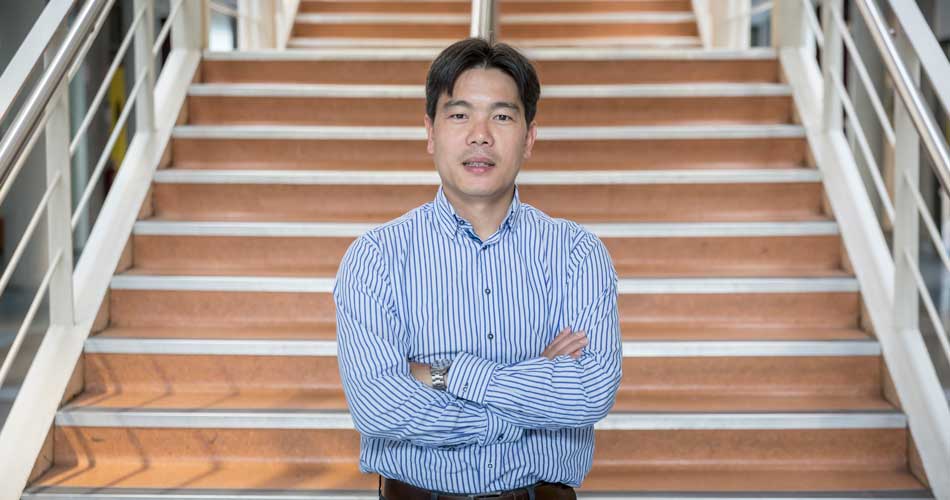
Vikram Iyer is an Assistant Professor at the Paul G. Allen School of Computer Science and Engineering and holds an Adjunct Appointment in Mechanical Engineering at the University of Washington. He co-directs the CS for Environment Initiative , focusing on interdisciplinary solutions that bridge computing, biology, and physical systems for environmental sustainability. Education : Ph.D. in Electrical & Computer Engineering (University of Washington), B.S. in Electrical Engineering and Computer Sciences (UC Berkeley) Research Interests revolve around bio-inspired wireless systems , environmentally sustainable electronics , and miniaturized autonomous robotics . His work includes: Biodegradable circuit boards Battery-free wireless sensors Insect-scale vision systems Wind-dispersed environmental monitors AI tools for sustainable design Article Trends highlight contributions to green hardware , energy-autonomous robotics , and environmental sensing networks , often integrating machine learning with physical world interaction . Awards include: NSF CAREER Award SIGMOBILE Dissertation Award Marconi Society Paul Baran Young Scholar Best Paper Awards (SIGCOMM 2016, Sensys 2018) Google/Amazon Research Awards Students advised include Kyle Johnson (NSF Fellow), Vicente Arroyos (GEM Fellow), and Qiuyue Xue (co-advised with Shwetak Patel). His lab collaborates with the Networks & Mobile Systems Lab and Urban Innovation Initiative .
Kelly Bijanki is an Associate Professor of Neurosurgery, Director of Intracranial Monitoring Research, and holds joint appointments in Psychiatry and Neuroscience at Baylor College of Medicine. Her work bridges clinical neurosurgery and neuroscience, focusing on understanding the neural basis of affective disorders and developing neuromodulation therapies. She directs the Translational Neuromodulation Lab, where she leverages stereotactic electroencephalography (sEEG) to study deep brain structures critical to emotional functioning. Dr. Bijanki's research explores the electrophysiological, neurobiological, and behavioral correlates of neuromodulation of affective neural circuits. Her lab primarily works with patients undergoing intracranial monitoring for epilepsy or depression, using this unique platform to conduct in-vivo studies of neural correlates to affective function. Her work has identified novel stimulation-based strategies for evoking positive affect and anxiolysis, including the discovery that stimulation to the cingulum bundle evokes changes in anxiolysis, mirth, and euphoria, which was featured as a cover article in the Journal of Clinical Investigation and highlighted in the NIH Director's Blog. Analysis of her recent publications reveals a consistent focus on mapping neural circuits involved in emotion processing, particularly using stereo-EEG informed deep brain stimulation approaches. Her work spans multiple psychiatric conditions including depression, obsessive-compulsive disorder, and anxiety disorders, with a strong emphasis on translating electrophysiological findings into therapeutic applications. The integration of computational approaches, particularly machine learning for decoding neural activity related to mood states, represents a growing trend in her research program. Her scientific achievements include: United States Patent (US:11,241,575) for a novel stimulation-based strategy for evoking positive affect and anxiolysis Journal of Clinical Investigation cover article (March 2019) on cingulum stimulation enhancing positive affect NIH Director's Blog feature highlighting her groundbreaking work Multiple NIH grants including R01, R21, and K01 awards Dr. Bijanki mentors a diverse team including graduate students, postdoctoral fellows, and undergraduate researchers. Her research program is generously funded by multiple NIH grants (R01-MH127006, R01-MH130597, K01MH116364, R21NS104953, UH3NS103549), as well as support from the ARCO Foundation, Caroline Wiess Law Fund, American Foundation for Suicide Prevention, and NARSAD. She maintains strong collaborations with researchers at institutions including UTSW, Iowa, Duke, UCLA, Brown, UPenn, and WashU. The Translational Neuromodulation Lab operates at the intersection of clinical neurosurgery, neuroscience, and engineering, utilizing stereo-EEG as a research platform to study deep brain structures involved in emotional processing. The lab employs multiple methodologies including advanced surgical neuroimaging, affective electrophysiology, autonomic surveillance, facial motor analysis, and pulse-evoked potentials to comprehensively characterize mood-relevant neural circuits. Their current flagship project involves using explainable artificial intelligence to map the relationship between mood and intracranial neural activity, with the goal of developing naturalistic patterns of intracranial stimulation for therapeutic applications.
Dr. Le-Nam Tran is a researcher at the UCD School of Electrical & Electronic Engineering , University College Dublin. His work focuses on optimizing the last hop of 5G/6G wireless networks through mathematical programming, with emphasis on energy efficiency, interference management, and security against eavesdropping. Develops low-cost, low-complexity transmission techniques Projects supported by Science Foundation Ireland Career Development Award Author of over 80 peer-reviewed publications Research Keywords: Wireless Communications Network Security Signal Processing Energy-Efficient Systems Beamforming Optimization Interference Mitigation
Daniel Fremont is an Associate Professor of Computer Science and Engineering at the University of California, Santa Cruz, where he conducts research at the intersection of formal methods and autonomous systems. His work focuses on developing mathematical techniques to improve the reliability of software, hardware, and cyber-physical systems through precise specification, formal verification, automatic synthesis, and principled testing approaches. Dr. Fremont's research interests center on applications of logic in computer science, particularly using automated reasoning to enhance system reliability. His work spans formal methods for cyber-physical systems (CPS), especially autonomous systems that incorporate machine learning. Key research areas include algorithmic improvisation for creating systems with controlled randomness, probabilistic programming through the Scenic language for environment modeling, and formal verification techniques applicable to safety-critical autonomous systems. His group has successfully applied these methods to autonomous vehicles, aircraft systems, and robotics, with significant contributions to both theoretical foundations and practical implementations. The publication record reveals a strong trajectory from theoretical foundations of control improvisation toward practical applications in autonomous systems verification. Early work established the theoretical framework of control improvisation, while recent publications focus on applying these techniques to real-world challenges in autonomous driving, aircraft systems, and AI-based autonomy. A consistent theme across his research is the integration of formal methods with machine learning to address the verification challenges posed by complex, learning-based systems operating in uncertain environments. Best Paper Award at IoTDI 2016 for 'Control Improvisation with Probabilistic Temporal Specifications' Dr. Fremont leads a research group focused on formal methods for autonomous systems, with significant contributions to the development of tools like Scenic (a probabilistic programming language for scenario specification) and VerifAI (a toolkit for formal design and analysis of AI-based systems). His work bridges theoretical computer science with practical engineering challenges in safety-critical autonomous systems, receiving funding from various sources supporting research at the intersection of formal methods and artificial intelligence. The group's approach combines theoretical algorithm development with practical implementation and testing, often collaborating with industry partners working on autonomous vehicle technology. The research group maintains active development of several open-source tools, including the Scenic language for scenario specification and VerifAI for formal analysis of AI systems. They have demonstrated applications across multiple domains including autonomous vehicles, aircraft systems, and robotics, with particular emphasis on simulation-based testing and verification approaches that can provide formal guarantees about system behavior.
Dr. Siyuan Ji is a Reader in Model-based Systems Engineering (MBSE) at Loughborough University, serving as Deputy Head of the Manufacturing, Systems & Management Academic Community and Deputy Director of the Doctoral Training Centre in MBSE. He previously held a Senior Lecturer position in Systems Engineering at the University of York, where he led the MSc Programme in Safety-Critical Systems Engineering. His academic journey includes a PhD and MSc in Physics from the University of Nottingham, followed by research roles in model-based systems engineering at Loughborough University. His research focuses on advancing model-based techniques for systems engineering, particularly in safety-critical systems, formal methods, and complex system design. He has contributed to areas such as hazard management (e.g., BSafeML framework), response time analysis in real-time systems, and model synchronization for requirements engineering. His work bridges theoretical foundations with practical applications in automotive systems, embedded software, and educational technology. Dr. Ji holds the title of Fellow of the Higher Education Academy and has published extensively on topics ranging from quantum technology reporting to conversational tutoring systems. His research emphasizes interdisciplinary collaboration, evident in projects like the EPSRC-funded analysis of vehicles as complex systems. He actively contributes to both academic and industrial advancements in systems engineering methodologies and education innovation. His professional roles include managing doctoral training programs, overseeing academic communities, and advancing systems engineering education. Collaborations span industry partnerships and international academic networks, reflecting his commitment to impactful research and training the next generation of systems engineers.
Riccardo Muradore is an Associate Professor at the University of Verona in the Department of Engineering for Innovation Medicine, within the Engineering and Physics section. His academic work focuses on robotics, control systems, and automation technologies with applications across various domains including industrial, surgical, and autonomous vehicle systems. Professor Muradore's research spans several key areas in robotics and control engineering: Industrial robotics and automation systems Teleoperation techniques for remote control of robotic systems Surgical robotics for medical applications Control and systems theory fundamentals Process control and fault detection methodologies Adaptive Optics technologies Unmanned Aerial and Ground Vehicles development His research is supported by numerous national and European projects as well as industry contracts, with notable projects including SARAS (Smart Autonomous Robotic Assistant Surgeon), MURAB (MRI and Ultrasound Robotic Assisted Biopsy), and ISUR (Intelligent Surgical Robotics). Professor Muradore holds several administrative roles including Communication and Third Mission Representative for the Department of Engineering for Innovation Medicine, and serves on various teaching committees and councils. He is affiliated with multiple research groups: ForMe - Formal Methods for the Design of Engineering Systems Networked Systems and Technologies PARCO – Parallel Computing Robotics, Artificial Intelligence and Control Sistemi robotici e automazione (Robotic systems and automation) His teaching portfolio includes Advanced Control Systems, Dynamic Systems, Robotics, Vision and AI, and other courses related to control engineering and robotics.
Yu Nie is a Professor in the Department of Civil and Environmental Engineering at Northwestern University, affiliated with the NU-TREND research group within the McCormick School of Engineering. His work focuses on optimizing transportation networks, integrating human behavior, infrastructure design, and network topology to enhance mobility, reliability, and sustainability. He holds a Ph.D. from the University of California, Davis, an M.S. from the National University of Singapore, and a B.S. (cum laude) from Tsinghua University. His research interests span interdisciplinary approaches combining optimization, network science, traffic flow theory, economics, and statistics. Key areas include congestion pricing strategies, ride-hailing market dynamics, autonomous vehicle integration, and transit system design. He has contributed to studies on dockless bike-sharing systems, ethics-aware transit design, and traffic management in autonomous vehicle zones. Nie’s recent publications (2024–2025) highlight advancements in modular autonomous vehicle systems, co-modal freight solutions, and policy frameworks for sustainable urban mobility. His work often bridges theoretical insights with practical applications, addressing challenges like EV charging chaos and ride-pooling impacts. He received the 2021 Transportation Science Meritorious Service Award for his editorial contributions. His research also explores freight exchange platforms, taxi market resilience during pandemics, and the role of route choice models in transit design. Labs/Teams: Yu Nie is associated with the NU-TREND research group, specializing in innovative transportation solutions through interdisciplinary collaboration.
Jodi Quas is a Professor in the Department of Psychological Science at the University of California, Irvine, with joint appointments in Nursing Science. Her work bridges developmental psychology and legal contexts, focusing on vulnerable child populations. Her research investigates: Memory development in early childhood Impact of trauma/stress on cognitive processes Child witnesses' experiences in legal systems Physiological stress reactivity patterns Emotional regulation in maltreated children Key methodologies include laboratory stress paradigms, longitudinal field studies, and forensic interview analysis. Recent publications reveal dominant trends in: Multi-system physiological stress measurement (HPA axis, autonomic responses) Developmental trajectories in trauma processing Interview techniques for abuse disclosure Courtroom consequences for child victims Her work consistently emphasizes practical applications for legal and child welfare systems. Quas actively mentors graduate students and leads the Adolescent and Childhood Experience Lab, currently recruiting for the My Life and Me project studying teens aged 12-18. Her collaborative network spans UC Davis, George Mason University, UC Berkeley, and medical institutions. Lab operations include: Community-based research across Orange County National/international field studies Partnerships with law enforcement Clinical collaborations with physicians Current projects examine stress-coping mechanisms, maltreatment-emotional competence links, and legal system impacts on youth.
Dr. Danesh Tarapore is an Associate Professor at the University of Southampton specializing in robotics and AI. He focuses on human-robot interaction, swarm intelligence, and autonomous systems. His current research involves developing resilient robotic teams and optimizing learning algorithms for constrained environments. He supervises 6 PhD students in the iPhD MINDS and Computer Science programs. Dr. Tarapore's work bridges theoretical advancements with practical applications in autonomous navigation, multimodal dataset creation, and quality-diversity optimization. His publications span conferences like HRI and journals in robotics and AI. He collaborates with institutions like the University Hospital Southampton and the Boldrewood Innovation Campus. Research Interests: Human-robot collaboration, swarm systems, machine learning, and adaptive control Key Contributions: HRI-SENSE dataset, evolutionary subset selection algorithms, forest navigation frameworks Grants and Funding: Active projects in multi-agent systems and resilient robotics Dr. Tarapore maintains active roles in the robotics community through conference participation and interdisciplinary collaborations.
Yves Marc Räth is a Ph.D. researcher at the ETH Zürich within the Department of Civil, Environmental, and Geomatic Engineering (D-BAUG). His work intersects urban morphology, historical settlement analysis, and network modeling. Education: MSc in Spatial Development and Infrastructure Systems (2018-2020), BSc in Geography (2015-2018) at University of Zurich Research focuses on urbanization patterns , settlement network evolution , and geospatial time series analysis . Key projects include the EMPHASES study on socio-ecological systems and HistoRiCH research on historical river landscapes. Recent publications analyze settlement archetypes through ResearchGate projects, with a 2025 Cities journal article identifying five distinct urban development pathways on the Swiss Plateau since 1899. His 2023 Scientific Reports study examines morphological homogeneity in small settlements near urban centers. Current affiliations include: Ph.D. Researcher at Institute for Spatial and Landscape Development Visiting Scholar at Urban Systems Lab, New York City (2024) Contributor to Swiss transport planning at INFRAS and EBP Technical expertise spans: Historical map digitization Building footprint analysis Commuter flow modeling Predictive urban archetypes
Roles & Affiliations: Prof. Piotr Dudek is a Professor of Circuits and Systems in the School of Electrical and Electronic Engineering at The University of Manchester. He has held visiting roles at Hong Kong University of Science and Technology, Gdansk University of Technology, and Sorbonne University. He is a Senior Member of the IEEE and chairs/co-chairs technical committees in circuits and systems. Education: Mgr inz (Technical University of Gdańsk, Poland), MSc and PhD (UMIST, UK). Research Interests: Focuses on VLSI design, vision sensors (SCAMP chip family), cellular processor arrays, neuromorphic engineering, and brain-inspired systems. Develops low-power, high-performance embedded vision systems for robotics, biomedical applications, and autonomous systems. Projects & Contributions: Leads projects like SCAMP vision chips, FORTE (memristor-based systems), and Agile robotic vision. Involved in EPSRC-funded initiatives and collaborates internationally. Active in reviewing for journals/conferences and holds editorial roles. Awards: Recipient of Best Paper/Demo awards at ISCAS, CNNA, IJCNN, and ICDSC. Holds the Royal Academy of Engineering/Leverhulme Trust Senior Research Fellowship. Lab & Teams: Directs the Microelectronics Design Lab, fostering interdisciplinary work between VLSI design, robotics, and neuroscience. Supervises 11 PhD students and collaborates with global researchers in bioelectronics and computational systems.
Pawel Ladosz is a Lecturer in Engineering Systems for Robotics at the Department of Mechanical and Aerospace Engineering, The University of Manchester. His research focuses on applying machine learning and computer vision to mobile robots, particularly in extreme environments such as total darkness or cluttered spaces. He is actively involved in developing autonomous navigation systems, wireless signal mapping, and high-level decision-making for robotic swarms. He teaches courses including Robotic Systems Design Project and Autonomous Mobile Robots. Education: PhD in Establishing and Optimising Unmanned Airborne Relay Networks (Loughborough University, 2014–2019) MEng in Aerospace Engineering (The University of Manchester, 2010–2014) Research Interests: Ladosz’s work emphasizes reinforcement learning for robotics, vision-based autonomous systems, and exploration in challenging environments. His projects often intersect with UN Sustainable Development Goals, contributing to innovations in robotic autonomy and sensor networks. Awards: He received the 2nd Autonomous Flying Technology Competition award in 2021, recognizing his contributions to autonomous flight systems. His research has also led to the establishment of the Centre for Robotic Autonomy in Demanding and Long-Lasting Environments (CRADLE), fostering cross-disciplinary collaborations. Grants & Projects: As Principal Investigator in the Aerospace Engineering initiative (2010–2035), he explores UAV communication networks and trajectory planning. His work addresses urban environment challenges, including relay positioning and signal prediction. Labs/Teams: Ladosz contributes to CRADLE, advancing robotic autonomy in extreme scenarios. His lab focuses on integrating AI and robotics for real-world applications.
Professor Hubert Shum is Professor of Visual Computing and Director of Research in the Department of Computer Science at Durham University. He co-directs the Durham University Space Research Centre and is a Fellow of the Wolfson Research Institute for Health and Wellbeing. His research develops responsible AI methods for computer vision and graphics. He leads projects funded by EPSRC, Ministry of Defence and Royal Society, focusing on human motion analysis, 3D reconstruction, and medical imaging. His work has applications in healthcare, autonomous systems and space technology. Recent publications in IEEE Transactions and CVPR conferences advance human motion prediction, surgical workflow modeling, and 3D vision. He has chaired leading conferences including Pacific Graphics and BMVC.
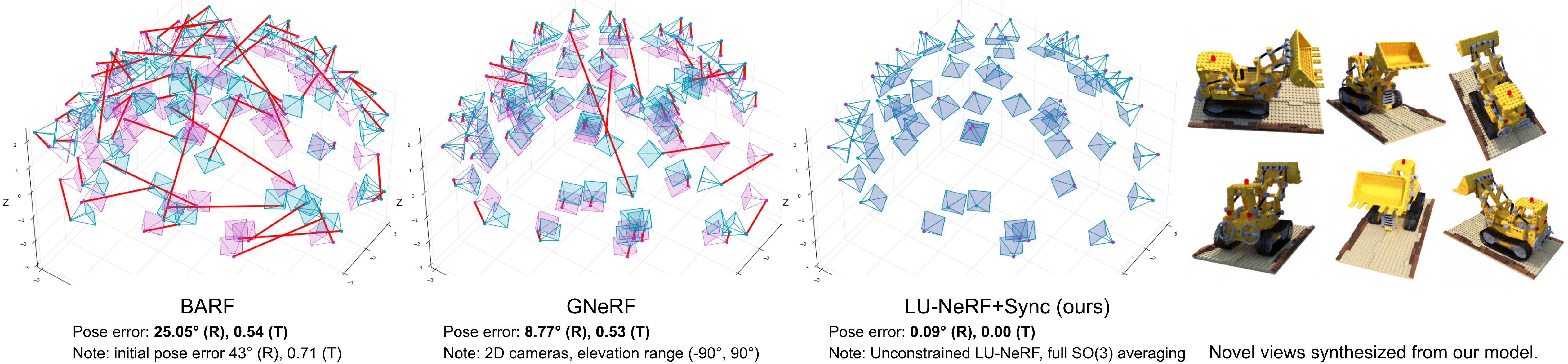
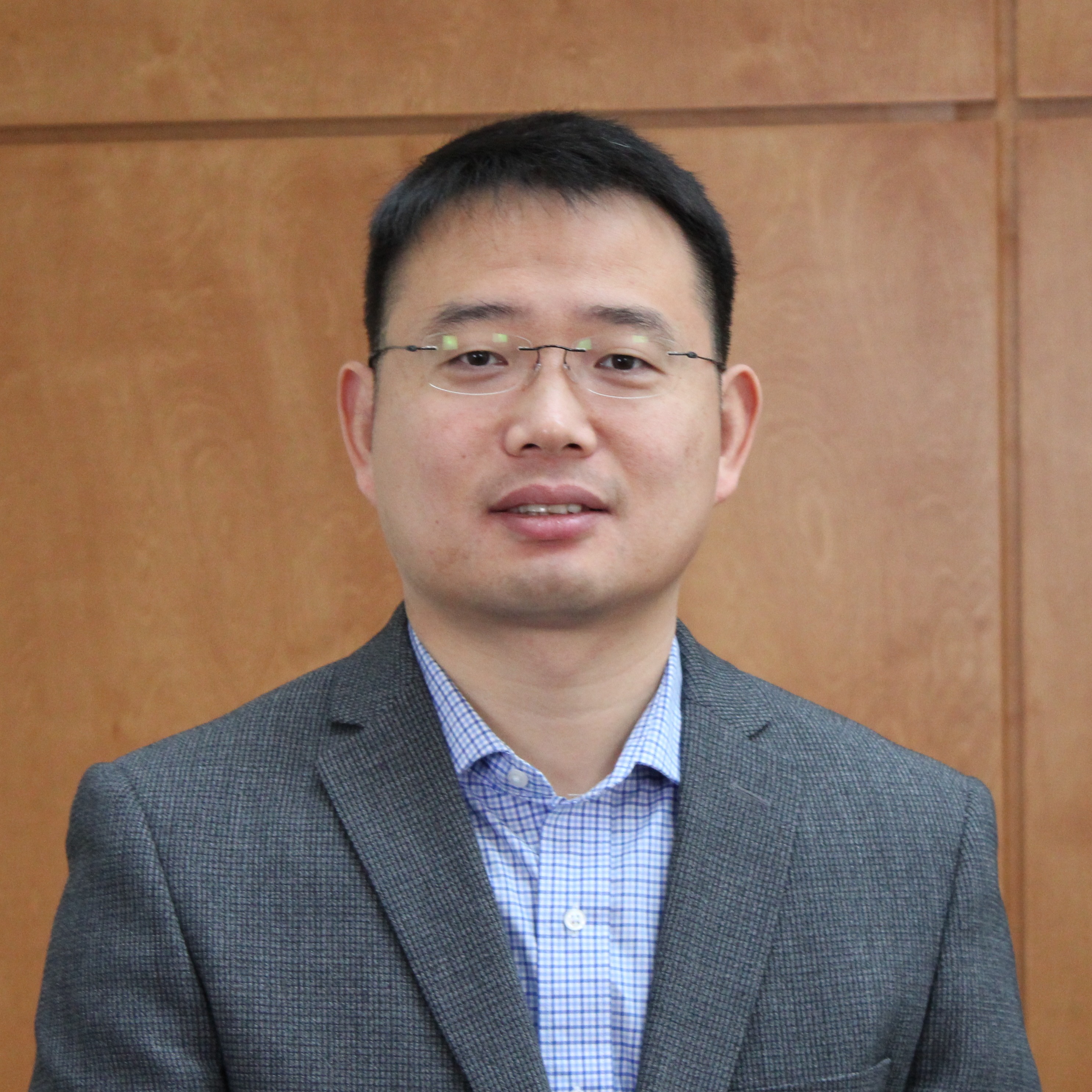
Zezhou Cheng is an Assistant Professor of Computer Science at the University of Virginia, leading the Computer Vision Lab. He holds a Ph.D. from UMass Amherst (2023), a postdoctoral position at Caltech, and a Bachelor's degree from Sichuan University (2015). His research focuses on computer vision, machine learning, and their applications in ecology, materials science, and autonomous systems. Key areas include 3D understanding, self-supervised learning, and AI-driven ecological monitoring. He has received awards such as the Best Synthesis Award (2020) and Outstanding Reviewer (CVPR 2021). His work spans publications in top venues like CVPR, ICCV, and ECCV, addressing challenges in 3D reconstruction, generative models, and ecological data analysis. Education: Ph.D. in Computer Science, UMass Amherst (2023) Bachelor's Degree, Sichuan University (2015) Postdoctoral Researcher, Caltech (advised by Georgia Gkioxari) Research Highlights: Developed LU-NeRF for unposed scene reconstruction and camera pose estimation Contributed to AI for ecology via bird roost detection using weather radar data Advanced 3D representation learning through procedural programs and self-supervised techniques Awards & Recognition: Outstanding Reviewer, CVPR 2021 Best Poster Award, New England Computer Vision Workshop 2019 National Scholarship (China, 2014 and 2016) His lab explores cutting-edge topics in computer vision, with a focus on interdisciplinary applications. Teaching roles include leading Caltech's AI Bootcamp and serving as a Teaching Assistant at UMass Amherst. Industry collaborations include internships at Google Research, Snap, and Amazon.
Xiaolei Guo is a Professor of Management Science at the Odette School of Business, University of Windsor. His expertise spans transportation systems, supply chain optimization, and infrastructure pricing strategies. He holds a Ph.D. in Transportation from the Hong Kong University of Science and Technology (2008) and a B.A. in Hydraulic Engineering from Tsinghua University (2004). His research focuses on congestion pricing mechanisms, transportation network modeling, and toll road economics. Notable areas include optimizing toll designs under uncertainty, analyzing autonomous vehicle impacts on ridesharing, and evaluating strategic distribution channel decisions under environmental regulations. Dr. Guo has contributed to over 30 peer-reviewed articles since 2005, exploring topics such as Braess paradox under bounded rationality, Pareto-improving congestion schemes, and profit maximization for private toll roads. His work bridges theoretical optimization with practical policy applications. He is an active member of the Canadian Transportation Research Forum (CTRF) since 2011 and the Institute for Operations Research and the Management Sciences (INFORMS) since 2009.