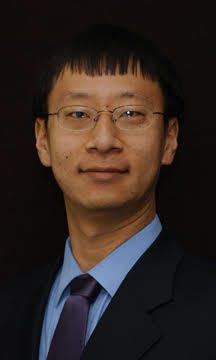
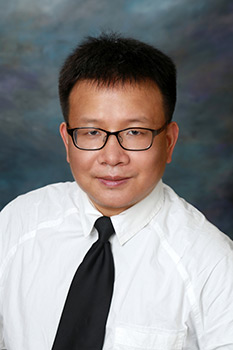
Weichao Wang is a Professor and Chair of the Department of Software and Information Systems at the University of North Carolina at Charlotte (UNC Charlotte). He holds a Ph.D. in Computer Science from Purdue University (2005), with earlier degrees from Tsinghua University. His research focuses on securing pervasive systems, wireless networks, cloud computing, and critical infrastructures, integrating multi-disciplinary approaches like information theory and visualization. He leads efforts in cybersecurity education for K-12 and higher education. Key roles include organizing IEEE conferences (e.g., IPCCC) and editorial roles in journals like ITU Intelligent and Converged Networks. His awards include the 2024 AECT Crystal Award and multiple Distinguished TPC recognitions. Students under his advisement have contributed to areas like mobile cloud computing and network security. Professional contributions include service on over 50 conference committees and journal reviewing. Current research emphasizes cybersecurity in education, IoT defense, and AI-driven security systems. His lab explores immersive visualization for cybersecurity training and augmented reality applications.
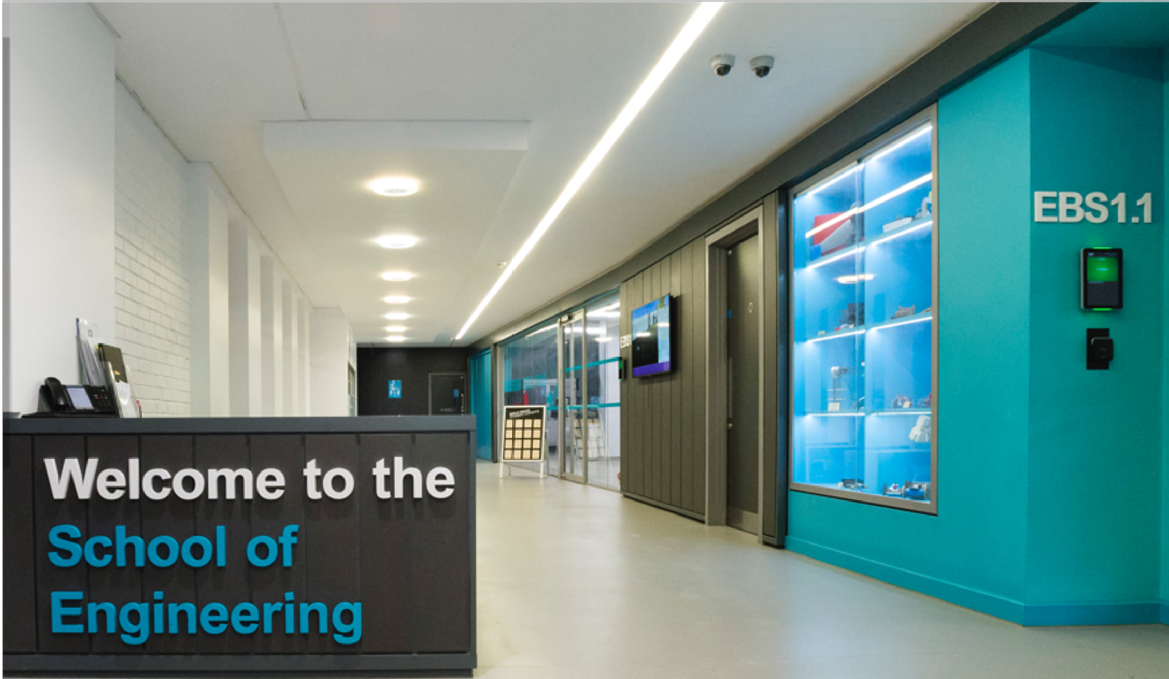
Dr. Tianhua Xu is a Reader in the School of Engineering at the University of Warwick and an Honorary Lecturer in the Department of Electronic and Electrical Engineering at University College London (UCL). He holds a Ph.D. in Optical Communications and Intelligent Signal Processing from KTH Royal Institute of Technology in Sweden, followed by postdoctoral and research roles at KTH, RISE Acreo, DTU, and UCL. His research focuses on optical communication systems, intelligent signal processing, machine learning, optical sensing, and advanced energy systems. He has secured major grants, including a €1.8M EU Horizon Europe project (SPAR) and a £285K UK National Grid initiative. Dr. Xu serves as an Associate Editor for IEEE Transactions on Communications and the Journal of the European Optical Society-RP, and chairs technical groups in the Optical Society of America. He has authored over 200 publications, including invited book chapters, with a Google Scholar h-index of 32. Current projects involve smart photonic sensing, energy storage systems, and deep learning in optical networks. His lab oversees six PhD students and multiple postdoctoral researchers. He actively recruits students through global scholarships and oversees vibrant research teams in optical communications, sensing, and energy systems.
Hubert Zangl is a Professor at the University of Klagenfurt and Head of the Institute for Intelligent System Technologies . He serves as Chairman of the Information Technology Curricular Commission and participates in the Faculty Conference of the Faculty of Technical Sciences. Key research areas include: Sensor technology Electrical measurement technology Robotics Signal processing Electronics Recent research trends focus on: High-fidelity FMCW radar simulation frameworks Energy-efficient sensor systems Printed electronics for structural health monitoring Uncertainty propagation in measurement science Modular robotics with secure transducer identification Capacitive tactile sensing for robotic grasping Contact: Hubert.Zangl@aau.at
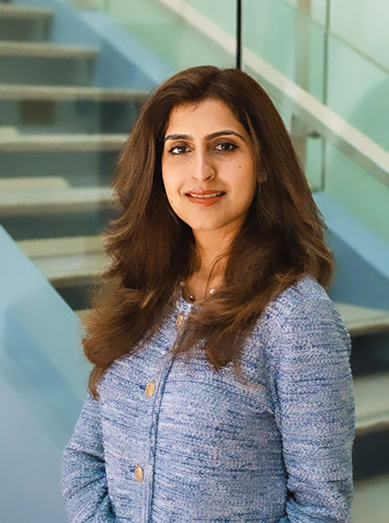
Dr. Ioanna Kantzavelou is an Associate Professor at the Department of Informatics and Computer Engineering, School of Engineering, University of West Attica. She leads the INSSec Research Group, focusing on Information, Networks, and Systems Security. Her expertise spans Cybersecurity, Game Theoretic approaches in Intrusion Detection, and Critical Infrastructure Protection. She holds a Ph.D. from the University of the Aegean (2011), an M.Sc. from University College Dublin (1994), and a B.Sc. from the Technological Educational Institution of Athens (1991). Education: Ph.D. in Intrusion Detection with Game Theoretic Approaches – University of the Aegean (2011) M.Sc. in Computer Security – University College Dublin (1994) B.Sc. in Informatics – TEI of Athens (1991) Research Interests: Intrusion Detection in IoT/Wireless Sensor Networks (WSN) and Cyber-Physical Systems Cyber Ranges for Education and Research Cybersecurity for Merchant Shipping and Critical Infrastructures Hybrid Threats, Cyberterrorism, and Cyberwarfare Digital Forensics and Blockchain-Based Authentication Systems Her work includes over 30 peer-reviewed publications, three books, and contributions to R&D projects funded by the Greek government, EU, and Irish government. She actively reviews for IEEE, Elsevier, and Springer journals, and is a member of ACM, IEEE Computer Society, and the Greek Computer Society. Grants & Collaborations: EU-funded projects on Cybersecurity and Critical Infrastructure Protection Greek government grants for Cyber Ranges and IoT Security Labs/Teams: Head of the INSSec Research Group, collaborating with industry partners on Cybersecurity solutions for maritime and industrial sectors.
Lu Su is an Associate Professor at the School of Electrical and Computer Engineering , Purdue University , with prior appointments at SUNY Buffalo . His research spans Internet of Things , cyber-physical systems , mmWave sensing , and crowd-sourced data validation , focusing on quality-of-information aware distributed sensing and security in autonomous systems . Ph.D. in Computer Science (2013) and M.S. in Statistics (2012) from University of Illinois at Urbana-Champaign M.E. and B.E. from Harbin Institute of Technology Research Interests: IoT , cyber-physical systems , crowd sensing , security and privacy , and machine learning for sensor networks. His work addresses quality-aware information integration , adversarial attacks in autonomous vehicles , and privacy-preserving crowd-sourced systems . Recent publications focus on mmWave-based sensing (e.g., 3D pose reconstruction), federated learning (driver monitoring), and data poisoning attacks in crowd-sourced systems. His research also extends to traffic optimization and human activity recognition using wireless networks. Professional Roles: Workshop Chair (INFOCOM 2023, 2022) TPC Vice Chair (INFOCOM 2021) Program Committee Member for top conferences Editorial Board, ACM Transactions on Sensor Networks Teaching: Courses on Embedded Systems , Internet of Things , and Network Concepts at both undergraduate and graduate levels.
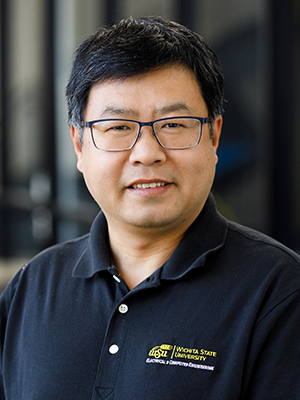
Chengzong Pang is an Associate Professor and MSECE Graduate Coordinator at the Department of Electrical and Computer Engineering, College of Engineering, Wichita State University. His work focuses on power systems, electrical engineering innovations, and renewable energy integration. He specializes in transient stability analysis, control systems, and smart grid technologies. Research Interests: Dr. Pang's expertise includes advanced control strategies for power electronics (e.g., PMSM, UPQC), machine learning applications for grid stability (LSTM/SVM), and energy storage solutions for renewable integration. His research also addresses challenges in microgrid operation, subsynchronous oscillation mitigation, and battery storage systems. Key Trends in Publications: Over 20 years of publications (2002–2022) emphasize: (1) Machine learning for power system analysis, (2) Control system design for renewable integration, (3) Grid stability enhancement via advanced algorithms, and (4) Smart grid infrastructure optimization. Recent works (2021–2022) highlight transient stability prediction and ANFIS-based power quality solutions. Labs/Teams: Active in energy systems research groups focusing on renewable integration and grid modernization, though specific lab names are not explicitly stated in the provided texts.
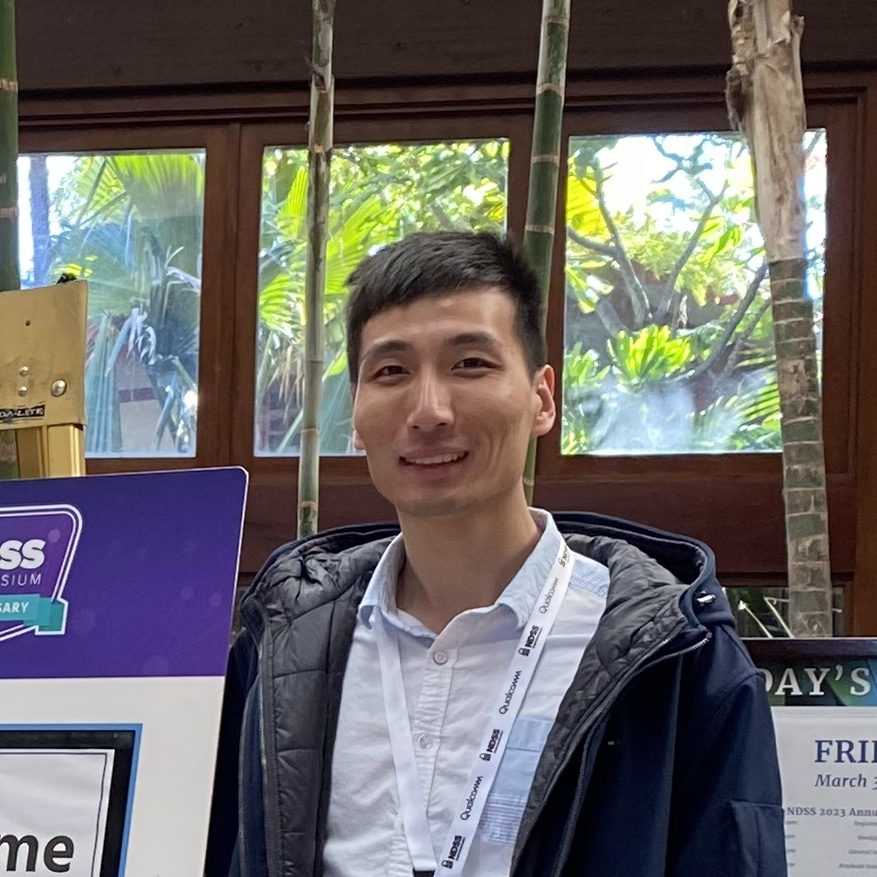
Guanhong Tao is an Assistant Professor at the Kahlert School of Computing, University of Utah. His research focuses on the security and safety of AI-enabled systems, particularly addressing adversarial attacks on machine learning models and large language models (LLMs). He has received notable awards, including the NVIDIA Academic Grant Award (2025) and the Maurice H. Halstead Memorial Award (2023). Educational Background: He earned his Ph.D. in Computer Science from Purdue University under Dr. Xiangyu Zhang’s supervision. His work spans adversarial generative AI, LLM agent security, and machine learning for security applications. Research Interests: Tao’s research emphasizes securing AI systems against adversarial threats, including backdoor attacks, alignment loss in LLMs, and privacy-preserving techniques. His projects have been published in top venues like IEEE S&P, USENIX Security, and NeurIPS. Recent Contributions: Key publications include 'Alleviating the Fear of Losing Alignment in LLM Fine-tuning' (S&P 2025) and 'BAIT: Large Language Model Backdoor Scanning' (S&P 2025). His work often bridges cybersecurity and machine learning, addressing real-world vulnerabilities in AI systems. Grants & Awards: In addition to his NVIDIA grant, Tao has received the ACM SIGPLAN Distinguished Paper Award (2019) and multiple best-paper recognitions. His research is funded by leading industry and academic partnerships. Advising & Teaching: He advises students like Shih-Chieh Dai and co-advises Kang Yang (with Dr. Jun Xu). He teaches courses such as 'Machine Learning Security' at the University of Utah and has guest-lectured at institutions like Purdue and Rutgers. Professional Service: Tao serves on program committees for top conferences, including IEEE S&P, ACM CCS, NeurIPS, and CVPR. He chairs workshops like BANDS (ICLR) and AISCC (NDSS), fostering collaborative research in AI security.
David Hästbacka is an Associate Professor (tenure track) at the Department of Computing Sciences, Faculty of Information Technology and Communication Sciences at Tampere University. His research focuses on software engineering, industrial automation, and energy systems, emphasizing system architecture, interoperability frameworks, and dependable IoT solutions. He leads a research group exploring edge and cloud computing, semantic integration, and smart energy systems. Education & Professional Background : While specific educational details are not provided, his academic career includes roles such as Postdoctoral Researcher in the SEMIS project (2017-2020) and extensive involvement in EU-funded initiatives like COCOP (EU H2020) and Horizon Europe projects. Research Projects : Active in high-impact projects like Hedge-IoT (Horizon Europe, 2024-2027), TwinfFlow (Business Finland), and TRINEFLEX (Horizon Europe), with a focus on industrial automation, distributed systems, and energy grids. Past projects include FEMMa (Business Finland), DisMa (Academy of Finland), and Arrowhead (ECSEL). Teaching & Supervision : Specializes in Web/Cloud architectures, IoT systems, and dependable automation technologies. Supervises students in topics like edge computing frameworks and MLOps pipelines. Technical Contributions : Develops frameworks for industrial interoperability (e.g., OPC UA PubSub integration), edge-cloud toolchains, and MLOps methodologies. His work addresses challenges in microservices, Kubernetes distributions, and semantic data integration. Labs & Teams : Leads a research group advancing automation technologies through interdisciplinary collaboration, with partnerships in industry and academia to bridge theory and practice in smart systems.
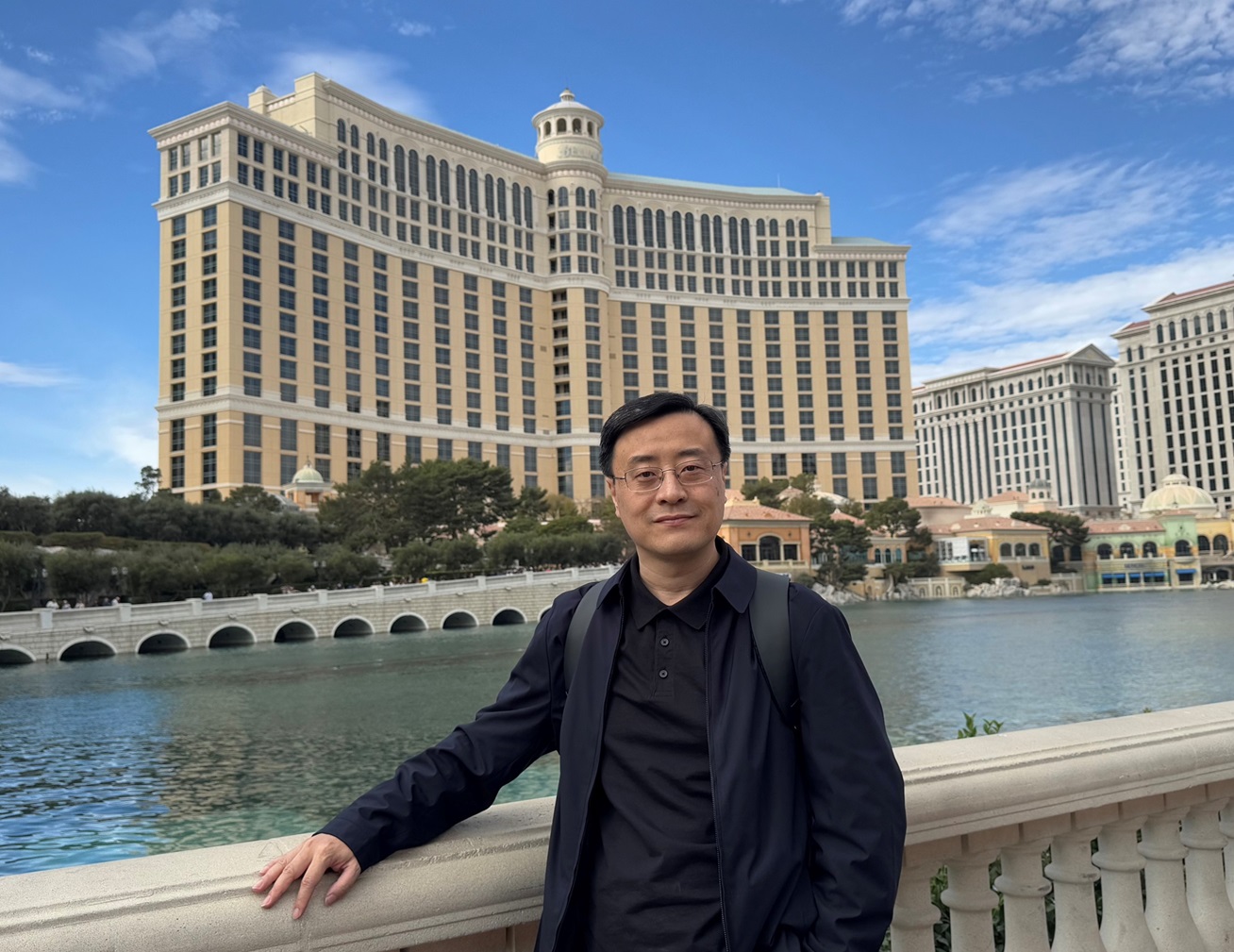
Rongxing Lu is an Adjunct Professor at the Faculty of Computer Science, University of New Brunswick (UNB), Canada, since August 2016. Previously, he held positions at Nanyang Technological University (NTU), Singapore (2012–2016) and the University of Waterloo, Canada (PhD in 2012). His research focuses on applied cryptography, privacy enhancing technologies, and IoT-big data security. He has over 7,500 citations and received prestigious awards like the Governor General’s Gold Medal (2012) and the IEEE ComSoc Asia Pacific Outstanding Young Researcher Award (2013). He is an IEEE senior member and serves on editorial boards of journals like IEEE Network. **Education**: PhD in Electrical & Computer Engineering, University of Waterloo (2012), awarded Governor General’s Gold Medal Postdoctoral Fellow at University of Waterloo (2012–2013) **Research Interests**: Developing cryptographic protocols for IoT and big data systems Privacy-preserving techniques for distributed systems Secure communication in 5G/6G networks and vehicular systems **Awards and Recognition**: Recipient of multiple best paper awards in IEEE conferences 2016–2017 Excellence in Teaching Award at UNB **Editorial and Leadership Roles**: Symposium co-chair at IEEE Globecom’16 Secretary of IEEE ComSoc CIS-TC Organized special issues on fog computing security (Elsevier) and big data security (IEEE IoT Journal) **Key Contributions**: Pioneered privacy-aware data reporting schemes for vehicular networks Designed lightweight IoT authentication protocols Advanced secure machine learning frameworks with privacy guarantees
Joseph Alejandro Gallego Mejia is an Assistant Teaching Professor in the Department of Computer Science at Drexel University's College of Computing and Informatics. He holds a PhD with meritorious distinction in Systems and Computing Engineering from the National University of Colombia, along with a Master’s and dual Bachelor’s degrees in Systems and Computing Engineering and Industrial Engineering. PhD in Systems and Computing Engineering, National University of Colombia (Meritorious Distinction) Master of Systems and Computing Engineering, National University of Colombia Bachelor of Engineering in Systems and Computing Engineering, National University of Colombia Bachelor of Engineering in Industrial Engineering, National University of Colombia His research focuses on artificial intelligence, machine learning, computer vision, quantum machine learning, natural language processing, and cybersecurity. He explores robustness estimation, anomaly detection, incremental learning, and scalable software architectures for AI systems. His work bridges theoretical foundations and practical applications in health, remote sensing, and edge computing. The recent publications reflect a strong trend in interdisciplinary AI research, combining machine learning with quantum computing, cybersecurity, and natural language understanding. His work spans domains such as satellite imagery analysis, medical diagnostics, IoT security, and conversational AI, demonstrating a commitment to scalable and robust intelligent systems. Keywords across publications include Computer Science, Machine Learning, Quantum Computing, and Cybersecurity, with subfields ranging from adversarial robustness to hybrid quantum-classical models. Scientific distinctions include: PhD with meritorious distinction, National University of Colombia Postdoctoral fellow, Frontier Development Lab (Trillium), supported by NASA and ESA He has served as a reviewer for top-tier journals and conferences including Neurocomputing, IEEE Access, Radioscience, NeurIPS, and NLDL. Though no formal grants are listed, his postdoc was funded by NASA and ESA, indicating significant external support. He teaches courses in programming, data science, machine learning, deep learning, NLP, and software engineering. He founded the tech company Sammu and mentors students through instruction and research supervision. He is actively involved in research and teaching, contributing to innovative programs in AI and computing education. His lab and team affiliations are not explicitly stated, but his work suggests collaboration with AI, quantum computing, and cybersecurity research groups.
Dr. Catherine Rychert is an Associate Professor in the Department of Geology and Geophysics at the University of Southampton, where she conducts cutting-edge research in seismology and marine geophysics. She is a member of both the Geology and Geophysics research group and the Southampton Marine and Maritime Institute, contributing significantly to our understanding of Earth's interior structure and dynamics through advanced seismic imaging techniques. Her research focuses on several key areas: Seismic imaging of lithosphere-asthenosphere boundary Subduction zone dynamics and slab structure Continental rifting processes Seafloor spreading mechanisms Mantle flow patterns and upwellings Development of novel seismic sensing technologies Dr. Rychert's recent publications (2023-2025) demonstrate a strong focus on applying advanced seismic techniques across diverse tectonic settings including subduction zones (Lesser Antilles, Cascadia, Hikurangi), mid-ocean ridges (Mid-Atlantic Ridge), and continental rift systems (East African Rift). A notable trend is her increasing use of distributed acoustic sensing technology for both terrestrial and planetary applications, showing interdisciplinary reach beyond traditional Earth science. Dr. Rychert actively supervises PhD students, including William Arnold Buffett working on the INSPIRE project. She has secured significant research funding from diverse sources including the European Union (EURO-LAB project), National Geographic Society, and Natural Environment Research Council (NERC). Her collaborative network includes Dr. Nicholas Harmon and Professor Derek Keir, with whom she frequently publishes. Her research team conducts fieldwork and data analysis focused on understanding fundamental Earth structure and processes through innovative seismic methodologies, contributing to both theoretical understanding and practical applications in hazard assessment and resource exploration.
Professor Mohan Lal Kolhe is a distinguished academic at the University of Agder , serving as a Full Professor in Smart Grid and Renewable Energy within the Faculty of Engineering and Science and the Department of Engineering Sciences . With over three decades of international academic experience, he has held positions at prestigious institutions including University College London, University of Dundee, and Hydrogen Research Institute in Canada. His career spans technical innovation, policy development (e.g., as a member of South Australia’s Renewable Energy Board), and extensive research leadership in sustainable energy systems. Research Leadership : Focus on Smart Grid integration, Electric Vehicles, Hydrogen Energy, Solar/Wind Systems, and Techno-Economic Energy Analysis. Global Recognition : Listed in the top 2% of scientists worldwide (2020-2023) by Stanford University, with 10 publications averaging 200+ citations. Recent publications emphasize advanced optimization techniques for renewable integration, EV charging infrastructure, hydrogen production, and power system stability. His work has secured competitive funding from entities like the Norwegian Research Council and EU programs. Awards and Expert Roles : Top 2% Global Scientist (Stanford, 2020-2023) Highly Cited Researcher (Top 10 publications, 200+ avg. citations) Expert evaluator for European Commission, Royal Society London, EPSRC, and Cyprus Research Foundation He actively contributes to international conferences as keynote speaker and editorial board member, with leadership roles in research groups like Autonomous and Cyber-Physical Systems and Energy Systems .
Karthik Dantu is an Associate Professor in the Department of Computer Science and Engineering at the University at Buffalo, State University of New York, within the School of Engineering and Applied Sciences. His research focuses on mobile sensor networks, robot networks, networked embedded systems, mobile computing, wireless networks, and embedded operating systems. He leads the Distributed Robotics and Networked Embedded Sensing (DRONES) Lab and has received significant funding including an NSF CAREER Award. Dr. Dantu's educational background includes: PhD in Computer Science from University of Southern California (2009) BE in Computer Science from Sri Jayachamarajendra College of Engineering (1999) His research interests center on algorithmic and systems challenges in Edge Computing Systems, with particular focus on enabling seamless vision sensing in cloud-edge environments. Dantu's work bridges mobile systems and robotics, developing novel approaches for UAV software, visual SLAM, and distributed sensing. His research addresses critical challenges in resource-constrained environments, security, and real-time performance for mobile and robotic systems, with emphasis on practical implementations that solve real-world problems in autonomous systems. Dr. Dantu's publication record shows a strong trajectory in mobile systems and robotics research, with increasing focus on edge computing applications for visual sensing. His recent work demonstrates expertise in adapting visual SLAM to edge environments, securing mobile systems through technologies like Rushmore, and developing novel approaches for UAV software reliability and depth sensing. The research spans theoretical algorithms and practical system implementations, with particular strength in bringing academic research to practical applications in robotics and mobile computing. Dr. Dantu has received several scientific honors: NSF CAREER Award on Enabling Seamless Vision Sensing in Cloud-Edge Systems Outstanding service award from the Office of International Services NSF Travel Grant for SenSys 2005 Conference Travel Grant for SIGCOMM 2002 As an advisor, Dr. Dantu has mentored numerous PhD students to completion, with graduates now working at companies like Samsung Research and Zoox Inc., or continuing academic careers as Assistant Professors. His research is supported by substantial grants including a DARPA OFFSET Sprint 4 award ($470k), an NSF CAREER award ($550k), and multiple NSF collaborative grants totaling over $1.5 million. He serves on numerous conference committees including Mobicom, MobiSys, and ICRA, demonstrating leadership in the mobile systems and robotics research communities. Dr. Dantu leads the Distributed Robotics and Networked Embedded Sensing (DRONES) Lab at UB, which focuses on developing algorithms and systems for mobile sensor networks, robot networks, and embedded sensing applications. The lab's work spans theoretical foundations to practical implementations, with particular expertise in UAV systems, visual SLAM, and edge computing for robotics, maintaining strong collaborations with industry partners and other academic institutions to advance the state of the art in mobile and robotic systems.
Konpal Ali serves as an Assistant Professor in the Division of Engineering & Mathematics within the School of Science, Technology, Engineering & Mathematics at the University of Washington Bothell. Her office is located in UW2-323 and she can be reached at ksali@uw.edu. Education Background: Ph.D. and M.S. in Electrical Engineering from King Abdullah University of Science and Technology (KAUST), Thuwal, Saudi Arabia B.S. in Electrical Engineering from Lahore University of Management Sciences (LUMS), Lahore, Pakistan Research Focus: Dr. Ali specializes in wireless communication systems with emphasis on physical layer design. Her work employs stochastic geometry to model large-scale wireless networks for real-world deployment scenarios. Key research thrusts include 5G/6G enabling technologies such as device-to-device communication, full duplex systems, non-orthogonal multiple access (NOMA), and intelligent reflecting surfaces (IRS). She actively investigates integrated sensing and communication (ISAC) frameworks, physical layer security mechanisms in interference-correlated environments, and machine learning applications for resource allocation optimization. Her recent publications explore meta distribution analysis to characterize percentile-level performance metrics in next-generation wireless networks. Teaching Responsibilities: Dr. Ali instructs core electrical engineering courses including EE 341A (Discrete Time Linear Systems), EE 517A (Wireless Communications I), EE 235A (Continuous Time Linear Systems), and EE 518A (Wireless Communications II), covering both undergraduate and graduate curricula. Professional Background: Prior to her faculty appointment, she completed postdoctoral research at the University of Manitoba and New York University (NYU) Abu Dhabi, building expertise in wireless network modeling and performance analysis.
Magdalena Szymczyk is a Lecturer in the Department of Biocybernetics and Biomedical Engineering at AGH University of Science and Technology, Faculty of Electrical Engineering, Automatics, Computer Science and Biomedical Engineering. Her work bridges embedded systems, biomedical signal processing, and geophysical data analysis. Research focuses on energy-efficient sensor networks, neural networks for GPR data classification, and mathematical transforms in signal analysis Expertise in parallel computing, real-time systems, and biomedical engineering applications Her publications (2015–2025) demonstrate a trajectory from parallel neural networks and S-transform/GPR methodologies to recent work on MicroPython in embedded systems. Key themes include energy optimization in distributed architectures and AI-driven signal processing across biomedical and geophysical domains. She has authored works on deterministic chaos in simulations, GPU image processing, and cybersecurity in microcontroller systems. Her current research emphasizes embedded systems security, medical signal diagnostics, and computational methods for geological analysis. She utilizes tools like OpenCL for GPU acceleration and MATLAB for parallel computing implementations.