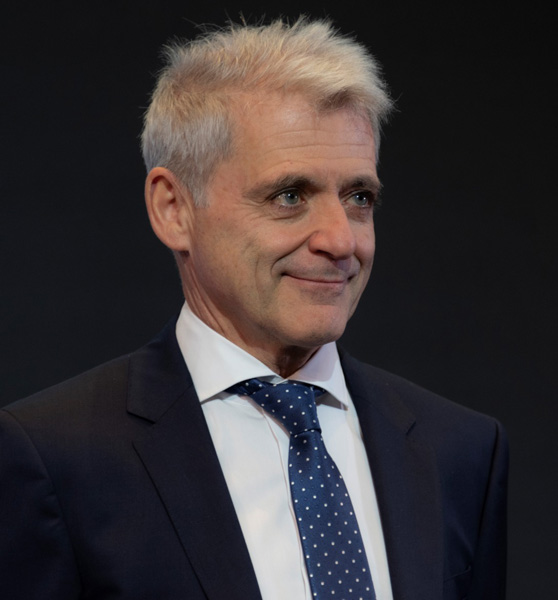
Rainer Winter is a Professor at the Institute for Media and Communication Studies at Alpen-Adria-Universität Klagenfurt. He specializes in Cultural Studies, Media Research, Media Education, and Qualitative Research Sociology. His work bridges critical theory with contemporary media analysis, focusing on mediatization processes, resistance studies, and the societal implications of media narratives.
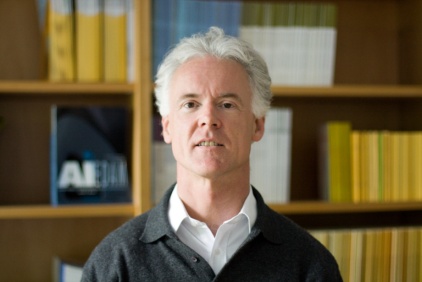
Jean Ponce is a Professor of Computer Science at Ecole Normale Superieure (ENS) in Paris and a Part-Time Global Distinguished Professor at New York University's Courant Institute of Mathematical Sciences and Center for Data Science (CDS). He previously served as Director of the ENS Computer Science Department (2011-2017) and held positions at Inria (2017-2022), University of Illinois at Urbana-Champaign (1998-2006), MIT, Stanford, and Inria (1982-1985). Academic Leadership: Scientific Director of PRAIRIE Interdisciplinary AI Research Institute in Paris Startup Involvement: Co-founder and CEO of Enhance Lab (2022) Editorial Roles: Senior Editor-in-Chief of International Journal of Computer Vision (2019-2022) Conference Leadership: Chair of IEEE CVPR (1997,2000), ECCV (2008), and upcoming ICCV (2023) Research Focus: Computer vision, machine learning, robotics, and AI with applications in exoplanet imaging, 3D reconstruction, and image quality assessment. His work bridges statistical learning and deep learning approaches. Awards: IEEE Fellow (2003) ELLIS Fellow (2019) ERC Advanced Grant (2011) IEEE CVPR Longuet-Higgins Prizes (2016,2020) ICML Test-of-Time Award (2019) Patents & Publications: Co-author of influential textbook Computer Vision: A Modern Approach (translated into Chinese, Japanese, Russian). Holds two US patents and one pending French patent. Google Scholar h-index of 78 with over 55,000 citations.
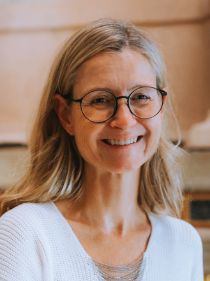
Christina Hainzl is the Head of the Platform for Sustainable Development (SDGs) and the Research Lab Democracy and Society in Transition at the University for Continuing Education Krems. She serves as an affiliated researcher at the University Ca' Foscari, Venice, and represents the university in the European Science Diplomacy Alliance. Her work focuses on contemporary challenges in democracy, sustainable development, cultural heritage, and science diplomacy. Dr. Hainzl holds a degree in contemporary history, art history, and political communication. She previously worked as a curator and research assistant at institutions like Lentos and Landesmuseum OÖ, alongside roles at the Institute for Art after 1945 in Linz. Her professional experience includes research stays in Florence, Rome, New York, and Washington DC, as well as internships at the Embassy of the Arab League and the American Anti-Discrimination Committee. Her research interests span socio-ecological transitions in urban contexts, democracy backsliding in Europe, material culture studies, and science diplomacy's role in cultural heritage protection. She actively contributes to interdisciplinary projects such as 'European Un/Orders,' examining Europe's global challenges, and has co-edited volumes on antisemitism post-1945 and pandemic-era healthcare policies. Christina Hainzl has received grants from the Rockefeller Foundation Archive Centre and the Emmanuel and Sophie Fohn Foundation for Visual Arts. Her work integrates academic research with practical applications, emphasizing societal transformations and evidence-based policy solutions. She collaborates across disciplines, leading initiatives on federalism and democratic resilience while maintaining a focus on art's role in societal discourse.
Nelson Nicolas Higuera Ruiz is a PreDoc Researcher at the Vienna University of Technology, affiliated with the Faculty of Informatics' Knowledge-Based Systems research group. His work bridges logic programming and deep learning for explainable AI. Research Focus: Neurosymbolic AI, Visual Question Answering (VQA), Answer Set Programming (ASP), and hybrid reasoning systems Projects: Leads optimization research in the LCS (2017–2025) project, developing neurosymbolic approaches for intelligent systems Key Contributions: Pioneering adaptive large-neighbourhood search algorithms for ASP optimization, modular neurosymbolic architectures, and contrastive explainability frameworks for VQA Collaborations: Active in international workshops and conferences including IJCAI, AAAI, and CLeaR, frequently collaborating with researchers like Thomas Eiter and Johannes Oetsch Publications: Focus on neurosymbolic integration, optimization algorithms, and explainability across AI, logic programming, and computer vision domains
Manfred Kern serves as Professor and Head of the Department of German Studies at Paris Lodron University Salzburg. With an extensive publication record dating back to 1995 and continuing through 2025, he maintains an active research profile in medieval literature and digital humanities. His leadership role as department head and project manager for significant research initiatives demonstrates his standing within the academic community. Professor Kern's research interests center on medieval literary cultures, particularly through the lens of digital humanities. His work on the Wenceslas Bible represents a significant interdisciplinary contribution, combining traditional philological approaches with cutting-edge computer vision techniques. His recent editorial work on disability representation in art ( Kunst und Gebrechen ) demonstrates expanding scholarly interests at the intersection of cultural history and visual studies. His research consistently bridges historical scholarship with contemporary methodological innovations. Kern's publication trends reveal a strategic evolution from traditional literary studies toward digital humanities applications. His most recent work (2024-2025) shows a strong emphasis on computational analysis of historical manuscripts, particularly the Wenceslas Bible project, while simultaneously developing theoretical frameworks for understanding disability representation in historical art contexts. This dual focus represents a sophisticated integration of technical and humanistic approaches to cultural heritage. As project manager for significant research initiatives including WB-DEA (The Wenceslas Bible - Digital Edition and Analysis, 2022-2024), TALC_ME (Textual and Literary Cultures in Medieval Europe, 2014-2017), and ALIENA (Old literature re-aestheticized in the experience space, 2010-2013), Professor Kern has secured substantial research funding and built collaborative networks across institutions. His organizational role in numerous academic events, including the IZMF lecture series and the In Nomine conference on medieval naming practices, further demonstrates his leadership in the field. Professor Kern actively participates in departmental and university governance, serving on habilitation committees and appointment committees (Berufungskommission). His academic service extends to editorial work and conference organization, reflecting his commitment to scholarly community building. His leadership of the German Studies department at Paris Lodron University Salzburg positions him at the center of academic activity in his field.
Prof. Dr. Gernot R. Müller-Putz is Head of the Institute of Neural Engineering and the Graz Brain-Computer Interface Lab at Graz University of Technology. He serves as Dean of the Faculty of Computer Science & Biomedical Engineering and holds editorial roles at Frontiers in Human Neuroscience IEEE Transactions in Biomedical Engineering Brain-Computer Interface Journal . With over 212 peer-reviewed publications and an h-index of 80, his research focuses on Brain-Computer Interfaces , Neuroprosthetics , and EEG-based Motor Control . His work investigates: Neural signal decoding for spinal cord injury rehabilitation Hybrid BCI systems with error processing Artificial sensory feedback mechanisms Machine learning applications in neural engineering VR-based neurofeedback environments Non-invasive multimodal biosignal recording Research trends show strong emphasis on EEG signal processing , BCI clinical applications , and neurotechnology integration . Scientific Awards : ERC Consolidator Grant (2015) Ludwig-Guttman Award (2017) CYBATHLON Best Paper (2019) State of Styria Research Award (2019) Förderstipendium (2013-2014) He advises 21 PhD students and has managed major projects like MoreGrasp (EU Horizon 2020) , Feel Your Reach (ERC) , and INTRECOM (EU EIC Pathfinder) . The Institute hosts the BCI Racing Team Mirage91 and offers international thesis opportunities.
Dr. Viola C. Schmid is a postdoctoral researcher in the Quaternary Archaeology research group at the Austrian Academy of Sciences (ÖAI) in Vienna, with additional teaching roles at the University of Tübingen and University of Vienna. She earned her master's degree in 2013 and completed a binational PhD magna cum laude in 2019 through a joint program between the Universities of Tübingen and Paris Nanterre. Her career includes research positions at the University of Geneva (2019), ÖAI (2020-2021), and Leiden University (2021-2022), before returning to ÖAI in October 2022. Her research explores prehistoric archaeology across Africa and Europe, focusing on human evolution during the Pleistocene. Key interests include: Population dynamics and knowledge transfer in hunter-gatherer societies Technological systems development in Paleolithic and Mesolithic contexts Middle and Later Stone Age site excavations Reanalysis of archaeological collections using modern methods Schmid's publications primarily investigate lithic technology evolution, site formation processes, and Middle Stone Age adaptations in Africa and Europe. Her work frequently employs experimental approaches and interdisciplinary methods to analyze raw material sourcing, tool production techniques, and cultural transitions. Research sites span South Africa (Umhlatuzana, Diepkloof), Senegal (Toumboura III), Austria (Csaterberg), and Germany (Swabian Jura caves). While no scientific awards are documented, she actively contributes to international projects like the South African Middle Stone Age research during MIS 5 and the Peuplement humain et paléoenvironnement en Afrique program. Her grants and students are not specified in available materials. At ÖAI, she collaborates within the Quaternary Archaeology research group, focusing on Pleistocene human-environment interactions. She maintains academic networks through co-authorships with researchers across Europe and Africa, particularly in lithic technology and Paleolithic site analysis.
Birgit Öhlinger is a Research Associate and Co-Excavation Director of the Monte Iato Project at the Leopold Franzens University of Innsbruck . Her work focuses on the archaeology of the ancient Mediterranean, particularly social transformation processes in cultural contact zones and identity formation through material culture, with a regional emphasis on Sicily. Education: Doctoral studies in Classical and Provincial Roman Archaeology (2010–2014), University of Innsbruck Master’s in Ancient History and Classical Studies (2005–2009), University of Innsbruck Master’s in Classical and Provincial Roman Archaeology (2002–2008), University of Innsbruck Research Interests: Öhlinger specializes in the archaeology of cultural contact zones, ritual and religious practices, and ceramic studies in the Archaic Mediterranean. Her methodological expertise includes digital excavation documentation, experimental archaeology, and material culture analysis, particularly focusing on Monte Iato in Western Sicily. Recent Publications: Her work examines technological choices in local ceramic production, neutron activation analysis applications in Mediterranean archaeology, and ritual consumption practices. She has contributed to debates on cultural hybridity, social identity, and the role of sanctuaries in elite formation. Awards: Anniversary Prize of Böhlau Verlag Vienna (2015) Prize of the Principality of Liechtenstein (2015) Merit Scholarship (2003–2007), University of Innsbruck Doctoral Scholarship (2013–2014), University of Innsbruck Professional Activities: Öhlinger leads projects like "Monte Iato Pots - Experimental Study on Organic Residue Analysis" and "Crime Scene Monte Iato around 500 BC: Microbiological Forensics" . She organizes international conferences and contributes to public outreach through media appearances and exhibitions.
Prof. Markus Valtiner is a Professor at TU Wien's Department of Applied Interface Physics, focusing on interfacial processes, corrosion science, and electrochemistry. His research combines experimental and theoretical approaches to study solid-liquid interfaces, surface chemistry, and material degradation mechanisms. He leads a team investigating high entropy alloys, passive film structures, and biomimetic membrane systems. Education: Dipl.-Ing. (Diplom-Ingenieur) in Engineering, Dr.techn. (Doctor of Engineering) from TU Wien. Research Interests: Corrosion mechanisms, electrochemical analysis, surface modification, and thin film characterization. His work spans applications in automotive materials, protective coatings, and biomedical systems. Recent Trends: Articles emphasize real-time visualization of ion dynamics, advanced surface analysis via LEIS and AFM, and sustainable material treatments. Studies on hydration layers and superlubrication highlight innovative solutions for friction reduction in confined spaces. Awards: None explicitly mentioned. Advising & Grants: Advised 19 thesis students (2018–2023) on topics like electrochemical functionalization, corrosion protection, and nanophotonic materials. Grant activities focus on interdisciplinary collaborations between physics, chemistry, and engineering. Labs & Teams: Leads the Network Lab at TU Wien, specializing in interfacial physics and advanced materials characterization using cutting-edge microscopy and spectroscopy techniques.
Wolfgang Nejdl is a Full Professor of Computer Science at Leibniz Universität Hannover since 1995 and the Head of the L3S Research Center since 2001. His research focuses on Web Science, search and information retrieval, semantic web technologies, peer-to-peer infrastructures, databases, technology-enhanced learning, and artificial intelligence. Education: M.Sc. (1984) and Ph.D. (1988) in Computer Science from Vienna University of Technology. Previous Positions: Assistant Professor in Vienna (1988–1992), Associate Professor at RWTH Aachen (1992–1995), and visiting professor/researcher at Xerox PARC, Stanford, University of Illinois at Urbana-Champaign, EPFL Lausanne, and PUC Rio. His research spans foundational and applied Web technologies, including social networks, trust and reputation, Web infrastructure, digital libraries, semantic web, collaborative filtering, and privacy-preserving systems. Recent projects like PHAROS, OKKAM, LiWA, and LivingKnowledge highlight his work in audio-visual search, web entities, web archive management, and diversity bias algorithms. Wolfgang Nejdl published over 230 scientific articles and held leadership roles as General Chair for AH'08 and PC Chair for WWW'09. He co-founded iSearch IT Solutions in 2006 to commercialize digital library and web engineering research from L3S projects. Scientific Awards: Founding member and head of the L3S Research Center The L3S Research Center, with a 2009 budget of €6 million (75% third-party funding), focuses on connecting the Web to real-world entities through research in Web Science, service computing, and security. Funding comes equally from the European Union and national/industry sources.
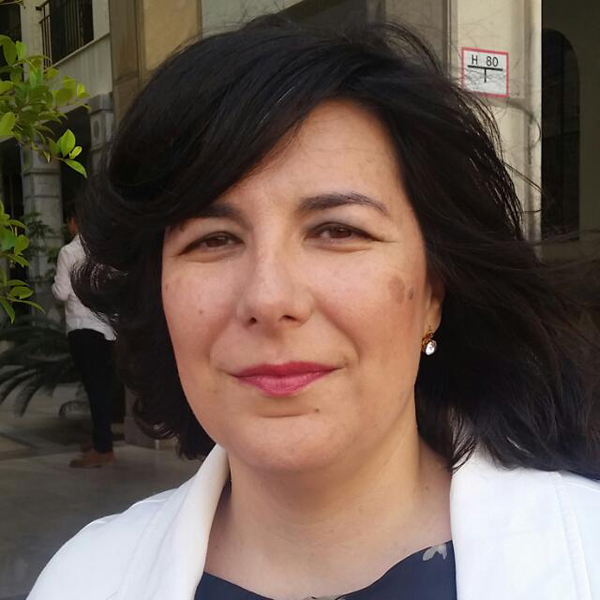
Dr. Rosario Arias Doblas is a full-time Professor of English Literature at the University of Málaga, Spain , with national eligibility to Full Professor. She has held leadership roles including Head of the Department of English, French and German Philology (2013–2021), Coordinator of the PhD Program in Linguistics, Literature, and Translation (2016–2023), and Deputy Director of the Doctoral School (2022–2024). As President of the Spanish Association of Anglo-North American Studies (AEDEAN) and founder of the Victorian and Neo-Victorian Society in Spain (VINS), she leads interdisciplinary research networks and projects like RELY: Reorienting Assemblage Theory in Anglophone Literature (2023–2026) and Gender and Spiritism in Andalusia (2019–2022). Her research spans Neo-Victorian literature , trauma and memory studies , gender theory , and interdisciplinary approaches to contemporary British fiction. She has co-edited volumes such as Haunting and Spectrality in Neo-Victorian Fiction (Palgrave, 2010) and Spiritualism, Science and Technology (Routledge, 2014), while her monograph Madres e hijas en la teoría feminista (2002) established her expertise in feminist psychoanalysis. Recent publications focus on sensory neo-Victorian narratives , material memory , and disorienting cultural identities in contemporary literature. Key Awards: Extraordinary Doctorate Award (University of Málaga, 2001) Second National Prize for Philology (Ministry of Education and Science, 1995) Extraordinary Bachelor's Degree Award (University of Málaga, 1995) Leadership: Principal Investigator of the Andalusian-funded Contemporary Literature in Europe research group (HUM-858) since 2007 Research Leader of the VINS Network (2015–2017), funded by Spain’s Ministry of Economy Organizer of conferences like Material Traces of the Past (2015) and Dis/Orientations in Contemporary Literature (2022)
Wolfgang Sandberger (b. 1961) is a Professor of Musicology and Director of the Brahms-Institut at Musikhochschule Lübeck. Specializing in German music history from the 17th to 19th centuries, he focuses on composers like Brahms, Bach, and Handel, as well as music philology and reception history. He has secured over €1 million in grants from DFG and Schleswig-Holstein for digitization projects, advancing musicological research accessibility. Education: Master's in Musicology, Philosophy, and History (Münster/Hamburg); PhD in Musicology His research integrates interdisciplinary approaches, including iconography, performance practice, and editorial methodologies. He leads major editorial projects such as the Brahms-Briefwechsel-Verzeichnis and Göttinger Händel-Beiträge. Sandberger holds leadership roles in organizations including the Göttinger Händelgesellschaft and the International Dieterich Buxtehude Society, fostering collaborative scholarly initiatives. Awarded the Joachim Jungius Society of Sciences Award (1996), he emphasizes outreach through radio collaborations and public engagement with Brahms' legacy. His work bridges academic rigor with public dissemination, making complex musicological research accessible to broader audiences.
Ahmet Tekalp is a Professor in the Department of Electrical and Computer Engineering at Koc University's College of Engineering since 2001. He holds dual citizenship in Turkey and the USA, with prior academic roles at the University of Rochester (1986-2005) and research positions at Eastman Kodak (1984-1987) and Rensselaer Polytechnic Institute (1981-1984). He chairs the Electronics and Informatics Group at TUBITAK since 2004 as a part-time position. B.S. (1980) in Electrical Engineering & Mathematics, Bogaziçi University M.S. (1982) and Ph.D. (1984) in Electrical, Computer, and Systems Engineering, Rensselaer Polytechnic Institute His research focuses on digital image and video processing, including video compression, motion-compensated filtering for high-resolution applications, video segmentation, object tracking, content-based video analysis, multi-camera surveillance processing, and digital content protection. He has led numerous European and U.S. grants, including FP7 STREP projects and NSF awards, emphasizing applications in sensor networks, visual databases, and medical imaging. His scholarly work spans diverse areas such as superresolution reconstruction, head gesture animation, 3DTV streaming, and reversible data hiding. He has played pivotal roles in editorial boards, including serving as Editor-in-Chief of Signal Processing: Image Communication, and has contributed to major standards bodies like ISO MPEG and ANSI NCITS. Member, Turkish Academy of Sciences (TUBA) Fellow, IEEE Fulbright Senior Scholarship (1999) TUBITAK Science Award (2004) IEEE Signal Processing Society Distinguished Lecturer (1998) He has led multiple international research collaborations and projects, including European FP6/FP7 networks and NATO programs, with substantial grant funding from NSF, NYSTAR, and industry partners like Eastman Kodak, Xerox, and Siemens.
Kornelia Hahn is Professor of General Sociology and Sociological Theory at the Paris Lodron University of Salzburg , affiliated with the Faculty of Social Sciences and Department of Sociology and Social Geography . Current roles include Chair of the Doctorate Curriculum Committee and co-coordinator of the ESA Research Network 29 Social Theory. PhD and Habilitation (venia legendi) from the University of Bonn, Germany Trained in Sociology, Modern German Literature, and General Linguistics Her research focuses on cultural dynamics through material, historical, and semiotic perspectives , examining (digital) communication, intimate relationships, political public spheres, and embodied service/fashion industries. Recent conference talks analyze fashion supply chains , platform economy privacy , and digital transformation in public spheres. Publications include the 2024 article Intimacy and the Transformation of the Public Sphere (Theory, Culture & Society) and the 2021 monograph Social Digitalization: Persistent Transformations Beyond Digital Technology . She co-edits the book series Media Cultures in the Digital Age (Springer Nature). Award for Outstanding Achievement in Lecturing (Leuphana University Lüneburg) Award for Outstanding Achievement in Publishing (Leuphana University Lüneburg) Teaching expertise in Sociological Theory, Sociology of Culture, Digital Communication, Fashion Industries, and Interpretive Methods. Serves as reviewer for German Research Foundation DFG , Einstein Foundation Berlin , and multiple international journals (Journal of Consumer Culture, Austrian Journal of Sociology, etc.).
Bettina Kubicek is Professor of Work and Organizational Psychology at the University of Graz, Faculty of Natural Sciences, where she leads research in the Smart Regulation profile area and contributes to the Human Factor in Digital Transformation and Brain and Behavior research networks. Her work bridges psychological theory with practical organizational challenges in contemporary workplaces. Her research spans work psychology, organizational psychology, and economic psychology with emphases on flexible work arrangements, work intensification, and human-robot collaboration. She investigates cognitive demands of flexible work, work-home interface dynamics, and digital transformation impacts through diary studies and experimental designs. Recent work explores telework challenges, AI in HR, and trust mechanisms in human-robot teams during disaster response. Analysis of her recent publications reveals growing focus on human-robot interaction in Industry 4.0, cognitive aspects of telework, and cross-cultural validation of work addiction scales. Her methodology combines intensive longitudinal designs with physiological measures, increasingly incorporating VR interfaces and AI-driven personnel selection experiments. Scientific awards include: Wirtschaftskammerpreis for project 'Flexible Arbeitsbedingungen und die Vereinbarkeit von Beruf und Familie' (2015) Innovationspreis der Universität Wien (2012) Multiple research stipends for University of Wisconsin-Madison stays (2005-2008) She has secured significant competitive grants including FWF-funded 'Cognitive demands of flexible work: Risks and challenges' (2017-2022) and FFG-supported 'Enabling and Assessing Trust when Cooperating with Robots in Disaster Response' (2021-2023), examining trust calibration and cognitive load in human-robot teams. Current projects address evidence-based guidelines for ICT use in work-life boundaries. As core member of the Human Factor in Digital Transformation network, she collaborates with engineers, computer scientists, and healthcare professionals to develop human-centered technological solutions, particularly in healthcare robotics and disaster response systems.