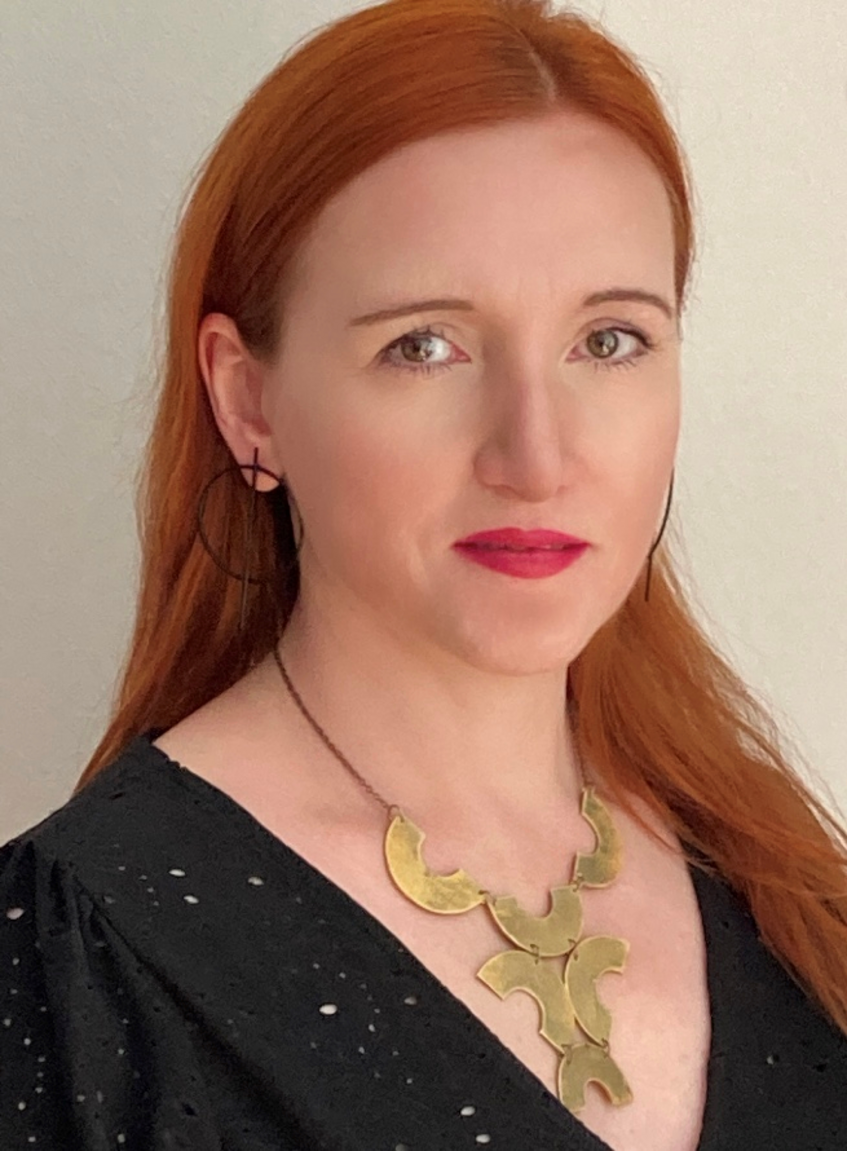
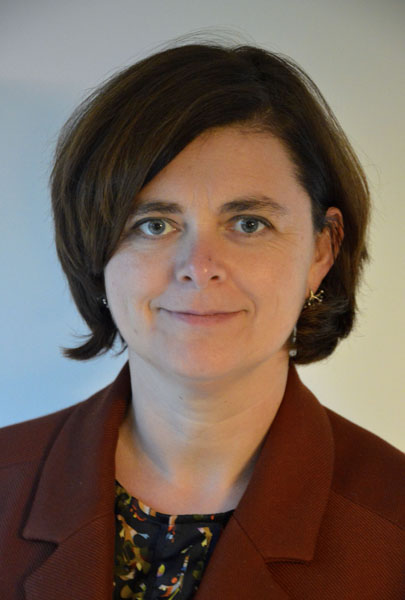
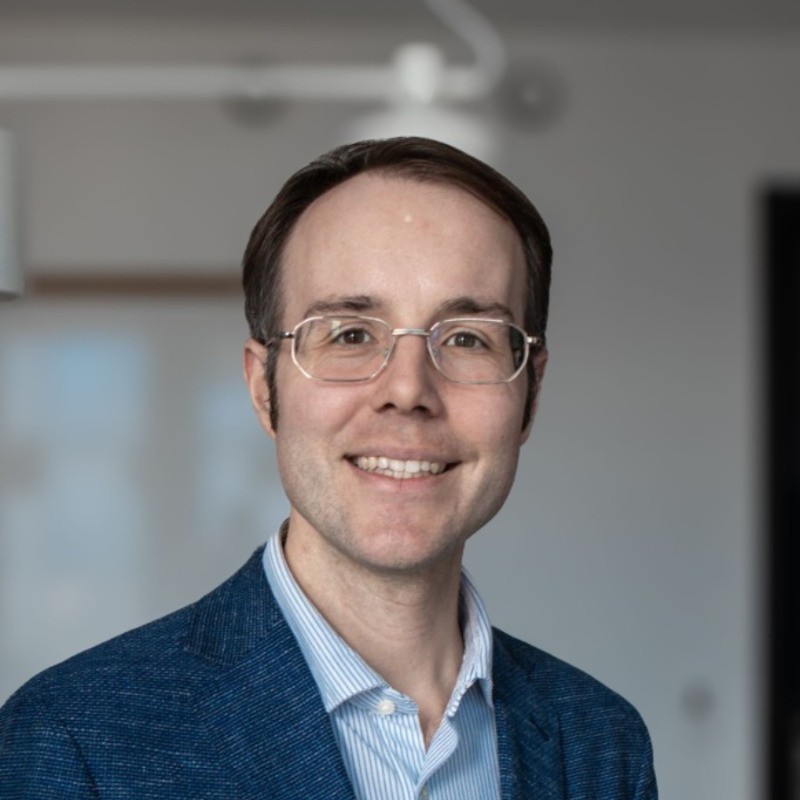
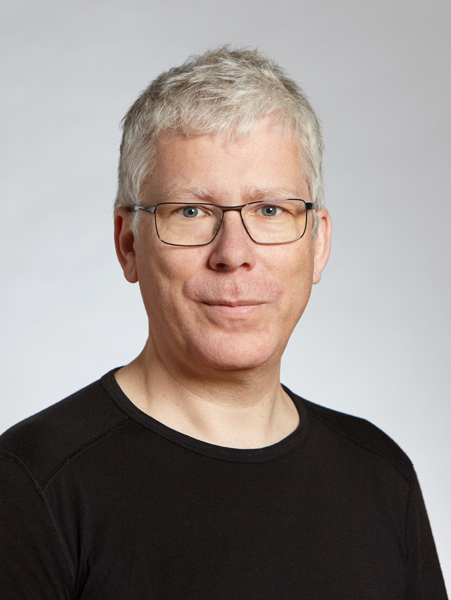
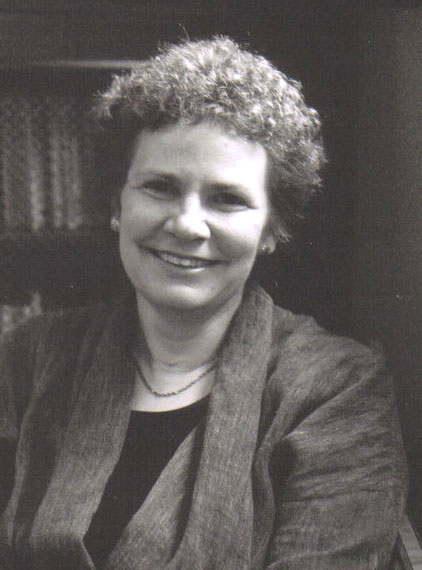
Prof. Rossella Ferrari holds a professorship in Chinese Studies at the Department of East Asian Studies, University of Vienna. Her research explores performance cultures across the Chinese-speaking world, with a focus on avant-garde theatre, transnational networks, and postsocialist transformations. Key contributions include the concept of 'pop avant-garde' and 'Xiqu 2.0,' examining how classical performance interacts with digital media. She co-edited Asian City Crossings (2021) and authored Transnational Chinese Theatres (2020). Current projects investigate 'performing postsocialism' and intercultural collaborations. Her work bridges disciplines like architecture, visual arts, and film, emphasizing methodologies rooted in Asian perspectives to challenge Eurocentric paradigms. Recent studies analyze pandemic impacts on transnational theatre networks and the role of cities as analytical frameworks. Collaborations with groups like Hong Kong's Zuni Icosahedron highlight her focus on boundary-crossing performance practices. Publications span monographs, edited volumes, and peer-reviewed articles addressing topics such as Brechtian influences in China, intertextuality in global performance, and avant-garde adaptations of classical works like Mudan Ting . Her research underscores the socio-political dimensions of artistic expression in East Asia, particularly in contested historical contexts.
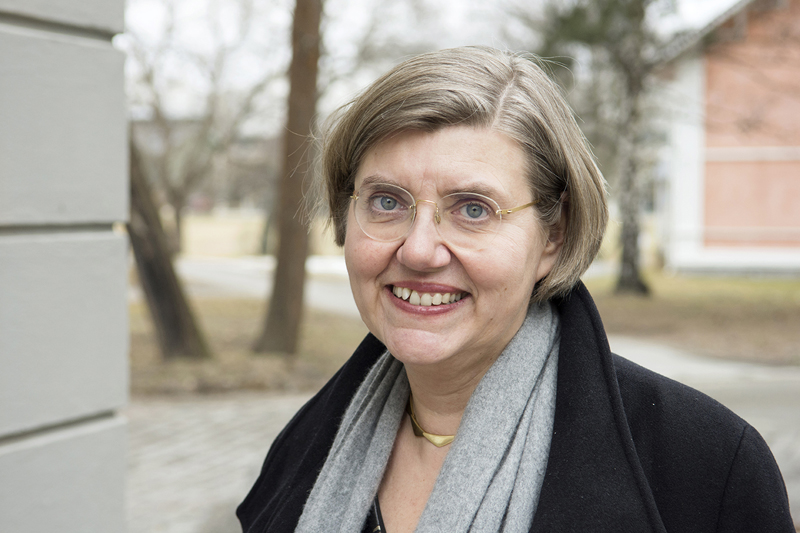
Astrid Söderbergh Widding is a Professor of Cinema Studies and current President of Stockholm University. She has held significant roles including Deputy President, Head of Department, and Deputy Dean at the Faculty of Humanities, Stockholm University. A founding member of the Centre for Fashion Studies and Editor-in-Chief of the Open Access Journal of Aesthetics and Culture (2009-2012), she also served as film critic and media columnist for Svenska Dagbladet (1996-2012). Her research focuses include: Film aesthetics Cinema studies Silent cinema Film theory The 8 listed publications (2006-2016) demonstrate expertise in Nordic film education, Tarkovsky's metaphysical themes, Ingmar Bergman's legacy, and digital media aesthetics. Her scholarly activities involved leadership in international film research networks like NECS and WFHI, with external funding from bodies including the Swedish Research Council and Knut and Alice Wallenberg Foundation. Scientific awards include: King of Sweden's Meritorious Award (2018) Icelandic Order of the Falcon (2018) French Legion of Honour (2015) Royal Swedish Academy of Sciences (2014) She supervised 17 PhD students (2001-2015) including Anu Koivunen and Malin Wahlberg. Current leadership roles extend to the Nobel Foundation (Chair 2023–) and Aarhus University Board (2018–).
Markus Vincze is an Associate Professor at the Institute of Automation and Control Engineering (ACIN) at Vienna University of Technology (TU Wien). He founded the Vision for Robotics (V4R) group in 1996 to advance robotic perception, particularly in real-world environments and homes. His work focuses on cognitive computer vision techniques for robotics. Education: Diplom in Mechanical Engineering (1988) and PhD (1993) from TU Wien; M.Sc. (1990) from Rensselaer Polytechnic Institute. V4R coordinates EU projects like ActIPret, robots@home, HOBBIT, and national initiatives like vision@home. Markus has edited a book on Robust Vision with Gregory Hager and authored 62 peer-reviewed journal articles and over 400 reviewed publications. His recent research explores zero-shot 6D pose estimation, sim-to-real transfer, and transparent object detection. Markus has served as program chair for ICRA 2013 and organized HRI 2017 in Vienna. He has advised numerous students and secured grants from the Austrian Academy of Sciences for work at HelpMate Robotics and Yale's Vision Laboratory. The V4R group leads innovations in robotic vision, including frameworks for synthetic data generation (Unrealgensyn), depth completion (CAGT), and educational robotics applications for sustainability. Their work spans household robotics (RH3), agricultural robotics (EdgeSoil), and human-robot collaboration.
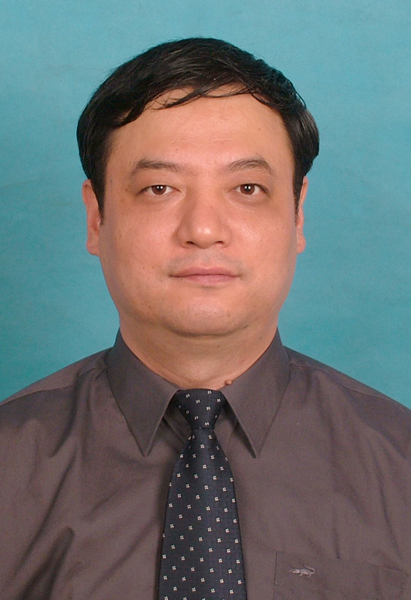
Prof. Maosong Sun is a Professor at the Department of Computer Science and Technology, Tsinghua University, China. He holds additional leadership roles including Executive Vice Dean of the Institute for Artificial Intelligence and Deputy Director of the National Engineering Laboratory for Cyberlearning and Intelligent Technology. His research focuses on natural language processing (NLP), artificial intelligence, machine learning, and computational education. He leads interdisciplinary projects in computational humanities, knowledge graphs, and MOOC platforms like XuetangX, which has over 58.8 million registered learners. Key contributions include pioneering work in Chinese NLP tools, poetry generation systems like Jiuge, and large-scale research initiatives funded by Chinese and Singaporean programs. Awards include the Tsinghua University Education Award (2019) and the National Outstanding Practitioner Award (2007). Established NLP and Computational Humanities & Social Sciences Lab (2008) Co-director of the Joint Research Center for Extreme Search (2011-present) Over 200 publications with 11,000+ citations (h-index 47)
Heidi Vandebosch is a Professor at the University of Antwerp's Department of Communication Studies. A prominent figure in cyberbullying research since 2005, she combines academic rigor with practical applications through her role as senior member of the MIOS research group and leadership in international COST actions. PhD in Social Sciences from KU Leuven (1999) Postdoctoral grants from FWO and KU Leuven research council Academic career progression from assistant professor (2004) to full professor (since 2016) Research Focus : Cyberbullying prevalence, impact, and interventions; digital health games; media psychology; food literacy promotion through social media. Her work bridges theoretical research with practical implementation, including development of the Friendly ATTAC digital game and Cyberscan anti-bullying tools. Key Projects : Friendly ATTAC (€1.04M IWT SBO grant) Cyber-shoc interdisciplinary research BOF Concerted Research Project on adaptive health interventions Awards & Grants : Multiple prestigious FWO grants, IWT SBO funding, and BOF research support. She chairs expert panels and contributes to national educational policy through the Flemish Educational Board (VLOR). Teaching : Offers courses at all academic levels including Introduction to Communication Studies (1BA), Media Audiences & Effects (2BA), and Health Communication (MA). International Engagement : Active in COST actions, editorial roles at Communications. The European Journal of Communication Research , and advisory positions for media literacy initiatives.
Hilda Tellioglu is an Associate Professor and Dean of Academic Affairs for Informatics at TU Wien, leading the Artifact-based Computing and User Research department. She holds a dual role as Head of Research Unit and oversees the Office of the Dean. Her work focuses on Human-Computer Interaction (HCI), Design Thinking, and Digital Transformation, with a strong emphasis on socio-technical systems and participatory design methodologies. Research interests span software engineering, CSCW, ambient assisted living (AAL), and digital co-creation practices in urban planning. She has spearheaded projects like aspern.mobil LAB, EnviSense, and StreetForum, exploring smart mobility, environmental sensing, and citizen participation in urban development. Her work frequently integrates tangible interfaces and model-based design approaches. Key contributions include frameworks for digital transformation evaluation (EEFCET 2020), user-centered design for informal caregivers (TOPIC platform), and crisis management systems using crowdsourcing (RE-ACTA). She has led over 20+ research projects funded by FFG, EU, and national agencies, focusing on mobility innovation, healthcare technology, and sustainable urban systems. Teaching responsibilities include courses on Design Thinking, Digital Transformation, and Research Methods across bachelor's, master's, and PhD programs. She actively promotes interdisciplinary collaboration through initiatives like the Center for Technology & Society (CTS) and Living Lab methodologies.
Emanuel Sallinger is a Full Professor at TU Wien's Databases and Artificial Intelligence Group and Vice Dean of Academic Affairs for Business Informatics and Data Science. He leads the Knowledge Graph Lab, focusing on scalable knowledge-based systems, reasoning in knowledge graphs, and AI integration. His research spans computational logic, database theory, and blockchain applications. Education: PhD in Computer Science (awarded 'sub auspiciis praesidentis rei publicae'), Master's degrees in Computational Intelligence and Informatics Management, and a Bachelor's in Software and Information Engineering. Research Interests: Knowledge graphs (construction, reasoning, scalability), logic-based systems, AI/ML integration with databases, enterprise architecture modeling, and financial knowledge systems. His work emphasizes practical applications like enterprise modeling, sustainable waste management, and regulatory compliance. Grants & Projects: Lead Vienna Science and Technology Fund (WWTF)-funded Knowledge Graph Lab. Involved in projects like 'Knowledge Graph-driven Tour Management' (sustainability), 'SustainGraph' (waste processing), and 'Enterprise Architecture Knowledge Graphs'. Teaching: Offers courses on Knowledge Graphs, Generative AI, Database Systems, and research methodology. Supervises doctoral and master's students in AI, databases, and knowledge representation. Labs/Teams: Knowledge Graph Lab at TU Wien, collaborating with industry on blockchain-based systems, financial AI, and enterprise architecture frameworks.
Tatjana Marković is an Austrian Academy of Sciences researcher and Adjunct Professor at the University of Music and Performing Arts Vienna, where she leads the FWF project on music historiography at the Habsburg Monarchy's southern borders (1750–1914). As editor of TheMA journal and chair of the IMS Study Group Music and Cultural Studies, she specializes in reconstructing pluricultural musical life along the Austro-Ottoman frontier. Adjunct Professor, University of Music and Performing Arts Vienna Head, FWF Discourses on Music project Editor, TheMA – Theatre, Music, Arts Chair, IMS Study Group Music and Cultural Studies Her research intertwines musicology with cultural studies, focusing on Southeast European musical traditions and their representation in Habsburg and Ottoman contexts. Key areas include diplomatic music exchanges, military border cultural dynamics, and gendered perspectives in regional music history. Recent publications address microregional musical networks, operatic diplomacy, and 19th-century battlefield commemorations through music. She contributes to international conferences on Balkan musicology and Austro-Ottoman cultural interactions, with editorial roles in multiple academic series.
Matthew Pelowski is an Associate Professor at the University of Vienna , affiliated with the Faculty of Psychology and the Institute for Psychology of Cognition, Emotion and Methods . He is a key member of the Cognitive Science Research Network . PhD in Information Science, Nagoya University (2011) MSc in Information Science, Nagoya University (2007) BFA in Studio Art (Oil Painting), University of Nebraska-Lincoln (2002) BJ in Advertising, University of Nebraska-Lincoln (2002) Pelowski's research bridges neuroaesthetics and cognitive neuroscience , focusing on how art impacts well-being , empathy , and social development . His work employs advanced neuroimaging techniques like fNIRS and hyperscanning to study interpersonal brain dynamics during art appreciation, while also exploring the relationship between artistic creativity and neurodegenerative diseases . Pelowski's recent publications reveal a strong focus on art's therapeutic potential , cross-cultural aesthetic differences , and temporal dynamics in art evaluation . His work has been recognized with prestigious awards including the APA Berlyne Award and the Alexander Gottlieb Baumgarten Award . American Psychological Association (APA) Berlyne Award (2020) Alexander Gottlieb Baumgarten Award (2016) Association of Media & Publishing Excel Awards Bronze Prize (2021) As Consortium Leader for projects like ARTIS (Horizon2020) and Unlocking the Muse (FWF), Pelowski drives transdisciplinary research connecting art with societal challenges and neurodegenerative disease studies . His work has been featured in over 30 media reports, demonstrating significant public engagement and societal impact.
Marc Pollefeys is a Full Professor of Computer Science at ETH Zurich and Director of the Microsoft Mixed Reality and AI Zurich Lab. He has held roles such as Visiting Professor at Stanford University (2007) and Assistant/Associate Professor at UNC-Chapel Hill (2002–2009). His research focuses on 3D computer vision, robotics, machine learning, and augmented reality. Education: PhD in Computer Science from KU Leuven (1999), followed by postdoctoral research there until 2002. He transitioned to academic roles at UNC-Chapel Hill before joining ETH Zurich in 2007. Research interests include 3D reconstruction, visual localization, SLAM, and applications in archaeology, urban modeling, and robotics. Notable projects include real-time 3D scanning, city-scale reconstruction, and autonomous vision-based drones. Key awards include ACM Fellow (2022), IEEE Fellow (2012), and ERC Starting Grant (2008). He advises numerous PhD students and collaborates with institutions like Google and Microsoft. Labs and teams: Leads the Computer Vision and Geometry (CVG) lab at ETH Zurich and directs the Microsoft Mixed Reality and AI Lab. His work bridges academia and industry, focusing on perception for mixed reality and autonomous systems.
Antonio Somaini is Full Professor of Film, Media, and Visual Culture Theory at Université Sorbonne Nouvelle (Paris 3) since 2012 and a Senior Member of the Institut Universitaire de France (IUF). He has held visiting professorships at Yale (2022) and Harvard (2024), and conducted fellowships at German research centers like ZfL Berlin and Cinepoetics. As director of the book series Images, médiums and co-director of the LIRA research unit, he bridges academic and curatorial practice. Key Research Areas: Eisenstein's montage theories, media archaeology, AI's impact on visual culture, history of photography, and interdisciplinary film-art-philosophy. Honors: 2012 Prize Limina for best Italian film studies book. Curatorial Projects: Chief curator of Time Machine: Cinematic Temporalities (2020) and upcoming AI and Contemporary Art at Jeu de Paume (2025). His work connects 1920s-30s avant-garde theories (Benjamin, Bloch, Eisenstein) with contemporary debates on digital media. Current research explores AI's transformative role in image creation and visual culture.
Professor Robert Eason is a leading academic at the University of Southampton, specializing in photonics and laser technology. His research spans interdisciplinary areas combining Machine Learning , Medical Diagnostics , and Microfluidics . Research Interests : Eason focuses on AI-driven laser applications, including deep learning for phototherapy , autonomous laser machining , and low-cost paper-based diagnostic devices . His work bridges photonics with biomedicine and advanced manufacturing. Recent Publications : His 2025 article in Scientific Reports explores AI simulations for psoriasis treatment, while 2024-2022 works address laser-controlled microfluidics, deep learning in microscopy, and reinforcement learning for laser machining. Supervision : He supervises PhD student Georgia Mourkioti in laser-based research projects. External Roles : Eason has served as a speaker at international conferences including the International Symposium on Laser Precision Microfabrication (2018), LAISER (2019), and Deep Learning for Control of Light-Matter Interactions (2022).
Professor Maxine Berg is a distinguished historian at the University of Warwick, where she has served as Professor of History since 1998. She is the Founding Director of both the Global History and Culture Centre (2006-2010) and the Warwick Eighteenth Century Centre (1998-2007), and directed the Luxury Project from 1998-2002. Her academic journey began in the Department of Economics at Warwick (1978-1993) before moving to the Department of History. Her educational background includes: BA Hons, Simon Fraser University, Canada (1967-71) MA, University of Sussex (1971-72) DPhil, Oxford (1972-76) Professor Berg specializes in global and world history, economic and social history, and historiography. Her research has significantly shaped our understanding of global trade networks, the development of consumer culture in the eighteenth century, and the connections between luxury goods, economic development, and cultural exchange. She has pioneered interdisciplinary approaches that connect economic history with cultural studies, examining how material culture and consumption patterns have shaped historical developments across national boundaries. Her work on the 'Cultures of Consumption' has been particularly influential in reframing historical narratives around economic development. Her scholarly output demonstrates a clear trajectory from examining British economic history toward increasingly global perspectives, culminating in her leadership of the Global History and Culture Centre. The publications reveal a consistent focus on how material culture, particularly luxury goods, served as conduits for cultural exchange and economic development across national boundaries during the eighteenth century. Her contributions to the field have been recognized through prestigious awards including: ERC Advanced Researcher Fellowship Honorary Fellow of Balliol College, Oxford (2007-present) Fellow of the British Academy (2004-present) Guggenheim Fellowship (2003-2004) Professor Berg has supervised 12 postdoctoral fellows, including one Marie Curie Fellow, and 10 PhD students (3 completed in 2010), and currently supervises 3 postdoctoral fellows, a Museum fellow, and 4 PhD students. She has been instrumental in organizing international scholarly exchange through 15 international conferences and workshops funded by the Leverhulme Research Interchange and the AHRC Global Arts Research Network (2002-2009), and 5 international conferences on Luxury and Consumption (1998-2003). She served on the Standing Committee and Grants Board of the British Academy, where she played a key role in shaping research funding priorities in historical studies. Her leadership extends to directing major research centers, serving on editorial boards, and participating in professorial appointments committees for universities across the UK, US, and France. She was instrumental in framing and setting up the ESRC Cultures of Consumption Programme and has served on funding panels of major research councils including the ESRC and AHRC.
Hervé Lacombe is a Professor of Musicology at the University of Rennes 2, where he has held a faculty position since 2002. He serves as Director of the Music Department (2009-2011, 2022-2023) and previously as Head of the Master's degree in Music and Musicology (2016-2019, 2020-2022). Recognized for his scholarly contributions, he became a Senior Member of the University Institute of France (IUF) in 2023 and is a member of the Academia Europaea. His academic leadership extends to the History and Criticism of Arts Research Unit (UR 1279) and editorial roles including Head of the 'Studies' series for the French Musicology Society publications. Lacombe's research centers on French music from the 19th to 21st centuries, with particular focus on opera history, lyrical dramaturgy, and the globalization of opera. His work explores interdisciplinary connections between music and other arts, cultural contexts of musical production, and historiographical approaches to musicology. He is internationally recognized as a leading authority on composers Bizet and Poulenc, having authored definitive biographies on both. His most significant scholarly achievement is the three-volume 'Histoire de l'opéra français' (2020-2022), a comprehensive history involving nearly 200 international collaborators. This monumental work has received multiple prestigious awards including the René Dumesnil Prize (2020) and the France Musique Claude Samuel Grand Prix du Livre (2021). His earlier works 'Les Voies de l'opéra français au XIXe siècle' (1997) and 'Bizet' (2000) also garnered significant recognition from the Academy of Fine Arts and French Academy. Bernier Prize from the Academy of Fine Arts (1997) Eugène Carrière History Prize from the French Academy (1998) Bordin Prize from the Academy of Fine Arts (2001) Grand Prix des Muses (2014) France Musique Claude Samuel Grand Prix du Livre (2021) Lacombe has directed eight doctoral theses to completion and currently supervises two more. His international influence extends through keynote addresses at institutions worldwide including Keele University, the University of Montreal, and the Kyiv Music Academy. He regularly contributes to opera programs for major international opera houses and has participated in numerous radio broadcasts and documentaries on French musical heritage.
ao. Univ.-Prof. Dr. Martin Heintel is an Associate Professor at the Department of Geography and Regional Research, University of Vienna. With over 30 years of experience, he focuses on regional development, cross-border cooperation, and sustainable urban-rural linkages. His work spans Europe, Southeast Asia, and North America, emphasizing participatory governance and evidence-based policy. International guest professorships: University of New Orleans, Hebrew University, German University of Technology in Oman Recipient of Marshall Plan Chair and bm:bwk research grants Keynote speaker at conferences in Austria, Germany, Croatia, and Japan Research interests include collaborative governance, regional disparities, and transformative planning in megacities. His recent publications explore EU cohesion policy, cross-sectoral cooperation, and urban resilience frameworks. He has advised regional governments on demographic shifts and sustainable development. Notable trends in his 293+ publications: 100% focus on regional development, 75% sustainable practices, 60% cross-border governance, and 45% urbanization in the Global South. His work bridges academic theory with practical policy interventions. Scientific engagement: Editorial Advisory Board, Europa Regional (2008-2023) Speaker at 243+ international events Media coverage in Der Standard , Österreichische Medien , and public debates Leadership roles include co-founding the Austrian Association for Applied Geography (ÖVAG) and coordinating the IGEN EU project (2011-2013). He mentors young researchers through conference sessions and regional workshops.