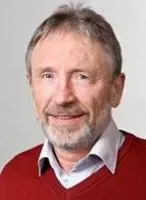
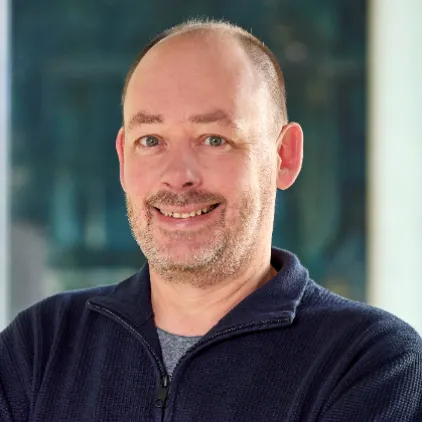
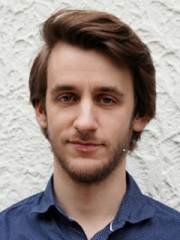
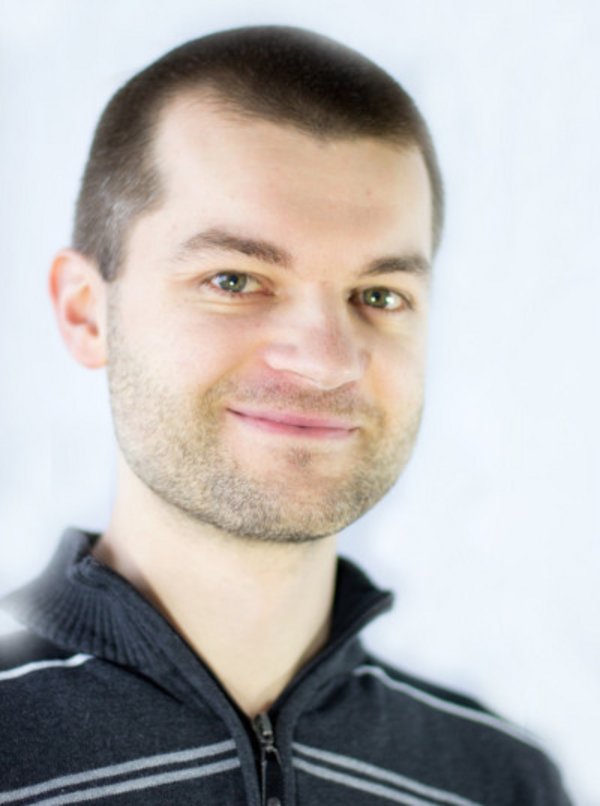
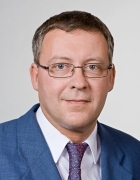
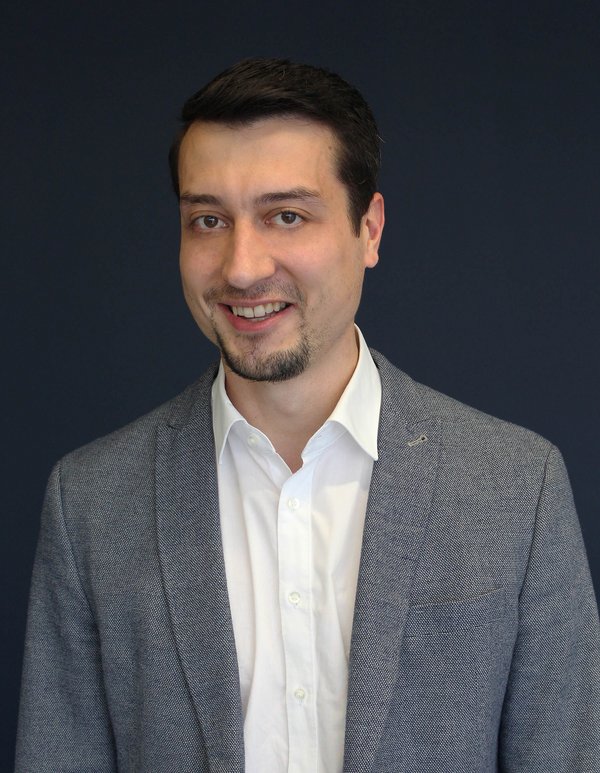
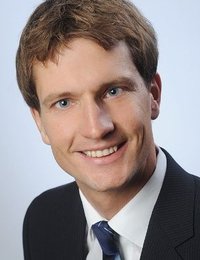
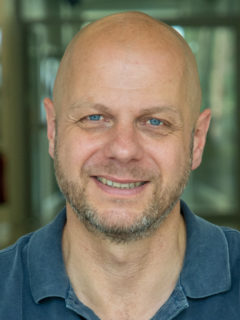
Wolfgang Domcke is a Professor of Theoretical Chemistry at the Technical University of Munich (TUM), specializing in photoinduced chemical dynamics of polyatomic molecules. His research employs ab initio quantum mechanics to study photochemical processes, focusing on photostability in biomolecules and solar water splitting. With over 420 publications, his work integrates computational chemistry with ultrafast spectroscopy to map reaction pathways. Education includes a doctorate in theoretical physics from TUM and a habilitation from the University of Freiburg. Previous academic roles include professorships at Heidelberg University and Heinrich Heine University Düsseldorf. Research interests span quantum wave-packet dynamics, molecular spectra, and nonadiabatic transitions. Recent articles emphasize photocatalytic water splitting, excited-state dynamics, and spectroscopic simulations. Awards include the 2008 Copernicus Award and an honorary doctorate from Charles University (2012). He is a member of the International Academy of Quantum Molecular Science and a Fellow of the Royal Society of Chemistry. Current projects explore organic photocatalysts for renewable energy and quantum dynamics of biological chromophores. Future work targets mechanistic insights for sustainable energy technologies.
Prof. Jürgen Schönwälder is a Professor of Computer Science at the School of Computer Science and Engineering, Constructor University Bremen gGmbH. His research focuses on computer networks, distributed systems, embedded systems, and computer security. He has held positions at TU Braunschweig, University of Twente, and Bell Labs. He leads the Computer Networks and Distributed Systems research group, which addresses challenges in robust network infrastructure and distributed systems resilience. Education: Doctoral Degree in Computer Science, Technical University Braunschweig (1996) Diploma in Computer Science, Technical University Braunschweig (1990) Research Interests: Design of scalable and resilient network services Security in distributed systems Measurement of network performance and behavior IoT and constrained device management Standardization of network protocols (e.g., NETCONF, YANG) Funded Projects: EU Horizon 2020 Concordia (2019-2023) EU FP7 Flamingo (2012-2016) Industry-funded projects in network management and security Key Contributions: Over 100 publications in top venues (IEEE/ACM Transactions, SIGCOMM) and co-chair roles in IETF working groups (NETMOD, ISMS). His work on network configuration (NETCONF), flow analysis, and IPv6 transition mechanisms has shaped modern network management practices.
Antoine Kaufmann is a Tenure-Track Faculty Member (W2) at the Max Planck Institute for Software Systems (MPI-SWS) and serves as Adjunct Faculty at TU Munich's Chair of Distributed Systems and Operating Systems. He leads the operating systems research group focusing on post-Moore systems – specialized architectures integrating hardware and software components. Education includes a PhD from University of Washington's Allen School of Computer Science and Engineering, and Bachelor/Master degrees from ETH Zürich. His work bridges systems research and practical implementations, resulting in publications at top-tier venues including SOSP, OSDI, and EuroSys. Research Interests: Centers on the interplay of software and hardware in specialized systems. Key areas include network communication architectures, machine learning systems, and methodologies for efficient post-Moore systems with manageable complexity through reusable components. Publications: Focus on network systems, operating systems, and distributed computing, with recent work on simulation frameworks (SplitSim), virtualized network stacks (Virtuoso), and reconfigurable packet processing (Kugelblitz). Awards: Distinguished Artifact Award for Clockwork at OSDI 2020. Teaching & Service: Developed courses on Operating Systems and Accelerating Applications with Specialized Hardware. Regularly serves on program committees for EuroSys, MobiSys, and other top conferences.
Thomas J. Naughton is a researcher affiliated with the University of Reading and Oak Ridge National Laboratory. He specializes in High Performance Computing (HPC), focusing on fault tolerance, quantum computing integration, and distributed systems. Research Interests: His work bridges HPC and quantum computing, develops fault-tolerant systems, and explores computational models through optical computing. Recent Publications: His 2026-2024 papers address quantum-HPC convergence software stacks, virtualization performance, and fault injection frameworks. Educational Contributions: He co-developed Bebras-inspired computational thinking resources for K-12 education, emphasizing task-based learning.
Dr. Zohreh Sheikh Khozani is a researcher at the Alfred Wegener Institute (AWI) in Bremerhaven, specializing in the Paleoclimate Dynamics department. Her work focuses on applying machine learning techniques to hydrological and environmental challenges, including river water level prediction, sediment transport modeling, and climate impact studies. She has contributed to advancements in ensemble and hybrid machine learning models for streamflow forecasting, drought prediction, and water quality analysis. Her research integrates computational methods with physical processes in hydraulic structures and environmental systems. Dr. Sheikh Khozani’s studies emphasize practical applications, such as optimizing dam safety assessments and improving aquifer management through data-driven approaches. Her research interests span hydrology, machine learning, and sediment dynamics. Key projects include developing novel algorithms for predicting scour around infrastructure, analyzing scour profiles in cohesive sediments, and enhancing effluent quality prediction using hybrid neural networks. She has also explored the use of entropy-based methods and optimization algorithms in hydraulic engineering contexts. Dr. Sheikh Khozani collaborates on interdisciplinary projects, addressing issues like ore grade estimation and ozone pollution forecasting. Publications highlight her contributions to modeling transverse shear stress in channels, optimizing hydraulic systems, and evaluating ecological risks in water bodies. Her work bridges theoretical advancements in machine learning with real-world environmental and engineering challenges, contributing to sustainable resource management and infrastructure resilience.
Gianluca Bontempi is a Professor in the Department of Computer Science at the Université Libre de Bruxelles (ULB), Faculty of Sciences. His research spans machine learning, time series forecasting, and big data analytics, with significant applications in credit card fraud detection, biomedical engineering, and causal inference. He leads projects on adaptive learning systems, financial cybersecurity, and high-dimensional data modeling. Research Focus: Bontempi's work integrates theoretical machine learning with real-world challenges. Key areas include: Developing dynamic factor models for multivariate time series forecasting Designing incremental learning frameworks for fraud detection in evolving data streams Advancing causal inference methods for personalized decision-making Creating interpretable AI systems for biomedical and financial applications Publication Trends: His recent articles (2019–2026) show a strong emphasis on combating concept drift in financial fraud systems, improving fairness in feature selection, and enhancing cross-domain adaptation techniques. Methodological innovations in multi-task learning and adversarial modeling are recurrent themes. Awards & Recognition: No awards explicitly mentioned in the source text. Research Infrastructure: Bontempi collaborates with interdisciplinary teams across Europe on large-scale projects involving biomedical data (TCGAbiolinks), urban mobility (traffic forecasting), and AI ethics (CLAIRE COVID-19 initiative).
Dr. Michael Kallweit serves as a Lehrkraft für besondere Aufgaben (Lecturer for Special Tasks) at the Faculty of Mathematics , Ruhr University Bochum. His work focuses on innovations in digital higher education, particularly in mathematics didactics . He leads the Rolka Group team and contributes to the Floer Center of Geometry . His research emphasizes digital mathematics tasks (e.g., STACK platform), AI integration in teaching, and collaborative projects like the DOMAIN database for math assignments. Key projects include: STACK.nrw : Collaborative task database for STACK exercises Computational Thinking makes sense of Mathematics (Erasmus+) DiAM:INT : Digital tasks for STEM fields (OERContent.nrw) He holds a 2017 Fellowship for Innovations in Digital Higher Education for the DOMAIN project , which created an open platform for sharing digital math assignments. His teaching includes supporting first-year students and developing RUBChecks for diagnostic testing. He also leads initiatives like MathePlus to prevent study dropouts through structured support. Notable contributions include: Adaptive learning systems using AI and STACK Open educational resources (OER) for stochastic and engineering mathematics International collaborations via Erasmus+ projects His work bridges educational technology and mathematics pedagogy , emphasizing practical applications in university and school settings.
Prof. Dr. Kevin Tierney is a Full Professor for Decision and Operation Technologies at Bielefeld University's Faculty of Business Administration and Economics. He also serves at the Department of Management Science & Business Analytics and is affiliated with the Bielefeld Center for Data Science (BiCDaS) and Center for Uncertainty Studies (CeUS). Chair of Business Administration, Decision and Operation Technologies Member of BIGSEM Graduate School PhD (2013) - IT University of Copenhagen Sc.M. (2010) & BS (2008) - Brown & RIT Research Interests His work focuses on: Learning to Optimize: Using deep reinforcement learning to automate solution heuristics for complex problems like routing and scheduling. Optimization under Uncertainty: Developing models that incorporate probabilistic elements for decision-making in unpredictable environments. Efficient Maritime Logistics: Specializing in container shipping, terminal operations, and fleet routing with real-world constraints. Recent publications demonstrate expertise in algorithm configuration, constraint programming, and machine learning applications to logistics challenges. Scientific Recognition Distinguished Paper Award - European Conference on Artificial Intelligence (2020) Projects & Grants Principal Investigator in projects: Self-learning methods with Deep Reinforcement Learning (DFG 2026) itsowl-MOVE (Land NRW 2024) AIPlan4EU Meta-planning engine (EU H2020 2023) Academic Leadership Module responsible for: Quantitative Business Administration Data Science Production and Operations Management
Prof. Hartmut Spliethoff is a full professor in Energy Systems at the Technische Universität München (TUM), part of the TUM School of Engineering and Design. His research focuses on energy conversion systems, thermal power plant efficiency, carbon capture, and biomass utilization. He holds a doctorate and habilitation from the University of Stuttgart, with prior professorship at Delft University of Technology until 2004. Current roles include scientific director of ZAE Bayern’s Department 1 and Superintendent of Research at the International Flame Research Foundation (IFRF). He is also on the scientific advisory board of VGB PowerTech. Education: Mechanical Engineering studies at Universities of Kaiserslautern and Stuttgart Doctorate (1992), Habilitation (1999) in Stuttgart Research Interests: Centralized/decentralized energy systems Thermal power plant flexibility and efficiency Biomass and fossil fuel conversion CO₂ capture technologies Low-temperature heat utilization Geothermal and waste-to-energy systems Recent research highlights include advancements in plasma gasification of biomass/plastic waste, thermochemical energy storage using CaO/Ca(OH)₂, and techno-economic assessments of Power-to-X pathways for sustainable aviation fuels. His work emphasizes sector-coupled energy systems and renewable integration, with contributions to geothermal heat pumps and district heating networks optimization. Collaborations span industry and international research institutions. Key Contributions: Development of gasification kinetics models NOx emission reduction strategies Heat transfer optimization in bubbling fluidized beds AI-driven process optimization for fuel cells Labs/Teams: ZAE Bayern (Center for Applied Energy Research) International Flame Research Foundation (IFRF) TUM Chair of Energy Systems
Jochen Altholz is a Researcher at the Department of Microwave Systems, Faculty of Electrical Engineering and Information Technology, Ruhr-Universität Bochum. He specializes in radar systems, material characterization, and microwave engineering. His work focuses on FMCW radar techniques, non-destructive testing, and applications in humanitarian demining and industrial monitoring. Research Interests: Microwave systems, radar imaging, material science, electromagnetic simulations, sensor fusion. Key Projects: KI-ROJAL, PINK, PluTO+, Terahertz-NRW. His research combines AI-driven radar simulations, millimeterwave sensing, and antenna design to address challenges in material analysis and communication systems. Recent work emphasizes ultra-wideband measurements and radar-based channel setups for 6G applications. Publications span radar techniques, GPR imaging, and sensor fusion, with contributions to IEEE conferences and journals. Collaborates with industry partners and international teams on humanitarian technology and industrial quality control systems.
Prof. Dr. Holger Hesse serves as Professor and Head of the Institute of Energy and Drive Technology at Kempten University of Applied Sciences' Faculty of Mechanical Engineering, appointed to the Research Professorship in Smart Energy Systems on September 1, 2022. Previously, he was Deputy Head at the Chair of Electrical Energy Storage Technology at Technical University of Munich (TUM). His educational background includes: PhD in Physics on organic photovoltaics from LMU Munich and University of Wollongong, Australia Research stays at UC Santa Barbara and Cambridge University Hesse's research focuses on energy storage systems with emphasis on: Optimization of battery systems for grid services and EV charging infrastructure Modeling of battery degradation and aging-aware control strategies Carbon footprint analysis of storage applications Economic evaluation in evolving energy markets Machine learning for state estimation and lifetime prediction Analysis of his 2023-2025 publications reveals strong trends toward deep reinforcement learning for energy management, probabilistic aging prediction, and real-time optimization of heterogeneous storage systems. Key developments include thermal-aging integrated control, market-adaptive revenue stacking, and environmental impact quantification through frameworks like Energy System Network. As head of the Institute of Energy and Drive Technology, Hesse leads the Stationary Energy Storage Systems (SES) research group, advising graduate students and collaborating with industry partners on smart energy system development and sustainable mobility solutions.
Erdmann Spiecker is a Professor in the Department of Materials Science at Friedrich-Alexander University Erlangen-Nuremberg (FAU). His research focuses on micro- and nanostructure analysis of materials, with expertise in electron microscopy, thin film technology, and catalytic material design. Key Research Areas: Nanotechnology, Photocatalysis, Surface Engineering, and Analytical Electron Microscopy. Notable Techniques: Correlative X-ray and electron tomography, 4D-STEM, Raman spectroscopy. Material Systems: Transition metal dichalcogenides, Ga–Pt liquid metal catalysts, TiO2 nanotubes, superalloys. His recent work explores stability mechanisms in organic photovoltaics, defect analysis in 2D materials, and hierarchical pore networks for catalysis. Articles highlight applications in renewable energy, alloy microstructures, and precision nanofabrication.
Dr. Siân Brooke serves as an Assistant Professor and MacGillavry Fellow at the Digital Interactions Lab (DIL), University of Amsterdam. Her interdisciplinary work bridges data science and critical social research to investigate gender and intersectional equality in technology interactions, with a focus on ethical AI and human-centered computing systems. Her research centers on gender dynamics in technology , inclusive platform design , and systemic bias mitigation in digital environments. Brooke employs mixed-methods approaches combining large-scale data analysis of platforms like GitHub and Stack Overflow with ethnographic studies and controlled experiments. Key themes include how programming styles reflect gender differences without impacting quality, how online labor markets perpetuate discrimination through design choices, and how internet memes reinforce toxic masculinity in physical tech spaces like hackathons. Analysis of her recent publications reveals consistent focus on exposing and redesigning discriminatory mechanisms in technology. Her 2024 work demonstrates how platform interventions (community composition, identity flairs) can reduce hiring discrimination in online labor markets, while her GitHub study proves gendered programming styles exist but don't correlate with code quality. A unifying thread across all work is the development of concrete design solutions for more equitable technology ecosystems. Dr. Brooke's recognition includes: NWO Veni Grant (€320,000) for "Human-Centered Code: Building Accessible IDEs for Neurodiverse Women in Computing Education" Leverhulme Early Career Fellowship examining gender in collaborative computing environments She actively mentors through hiring a PhD candidate for her NWO project (closing November 2024) and serves on the Open Tech Fund Advisory Council guiding global internet freedom initiatives. Her commitment to research transparency led to implementing Open Science Badges as Associated Editor for Data and Ethics, recognizing reproducible practices in scholarly work. Brooke leads the Digital Interaction Lab's research on technology equity, including the "Mock-Freelancer.com" experimental platform testing anti-discrimination interventions in online labor markets. Her lab collaborates across disciplines to develop accessible computing environments and policy recommendations for inclusive technology design, with recent work featured in LSE Research explaining gender disparities in programming.
Lina Gong is an Associate Professor at the School of Computer Science and Technology, Nanjing University of Aeronautics and Astronautics, China. She holds a Ph.D. in Computer Software and Theory from China University of Mining and Technology (2020) and completed a research visit at Queen's University's Software Analysis and Intelligence Lab (SAIL) under Prof. Ahmed Hassan (2019-2020). Her research focuses on leveraging machine learning to extract insights from software repositories, with emphasis on: ML-enabled defect prediction techniques Code pre-trained models for vulnerability detection Identifier normalization and issue classification Empirical studies of software quality attributes Her recent publications (2023-2025) demonstrate strong trends in applying transformer architectures to code analysis, with increasing focus on supply chain security and cross-platform UI translation. Key venues include IEEE TSE, ACM TOSEM, and ASE. Scientific recognition includes: National Natural Science Foundation of China (2022-2025) Natural Science Foundation of Jiangsu Province (2022-2025) Key National Laboratory Foundation (2022-2023) Excellent Ph.D. Student Award (CUMT) She actively mentors graduate students (14 advisees: 1 doctoral, 13 master's) and serves on program committees for ASE, APSEC, and SANER. Her research is supported by multiple competitive grants focusing on ML applications in software engineering.
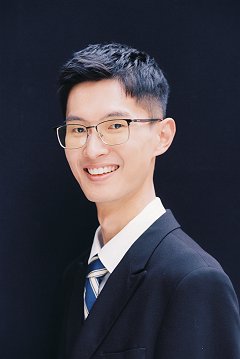
Shangwen Wang is an Assistant Professor in the School of Computer Science at National University of Defense Technology (NUDT) in Changsha, China. He earned his Bachelor's degree in June 2017, Master's degree in December 2019, and Ph.D. in December 2023, all from NUDT. During his graduate studies, he was supervised by Professor Xiaoguang Mao. From May 2022 to July 2023, he was a visiting student at Southern University of Science and Technology under Professor Yepang Liu. His educational background includes: Ph.D. in Software Engineering, NUDT (2020.3-2023.12), supervised by Prof. Xiaoguang Mao Visiting Scholar, SUSTech (2022.5-2023.7), supervised by Prof. Yepang Liu M.A. in Software Engineering, NUDT (2017.9-2019.12), supervised by Prof. Xiaoguang Mao B.A. in Software Engineering, NUDT (2013.9-2017.6) Wang's research focuses on program repair, program comprehension, mining software repositories, software maintenance and evolution, software testing, and AI for Software Engineering. His work bridges traditional software engineering techniques with modern AI approaches, particularly leveraging large language models for various software engineering tasks. He has made significant contributions to automated program repair, fault localization, vulnerability detection, and code generation. His research demonstrates a strong emphasis on empirical validation and practical applicability to real-world software development challenges. His recent publications show a clear trend toward integrating large language models with traditional software engineering tasks. The 15 most recent articles reveal a focus on applying LLMs to program repair, fault localization, vulnerability detection, and code generation, while maintaining strong empirical foundations. His work spans both theoretical advancements and practical tool development, with applications in software security, testing, and maintenance. His notable achievements include: CCF Outstanding Doctoral Dissertation (CCF优博) 2024 Outstanding Doctoral Graduates, NUDT, 2023 Multiple distinguished paper awards including ACM SIGSOFT Distinguished Paper Award (ISSTA'24) and IEEE TCSE Distinguished Paper Awards (ICSME'22, SANER'22) Prestigious scholarships from NUDT throughout his academic career As an active member of the software engineering community, Wang serves on numerous program committees for top conferences including ICSE, ASE, ESEC/FSE, and ISSTA. He has also contributed to teaching as a teaching assistant for courses such as Compiler, Python Programming, Discrete Mathematics, and C++ Programming. His research group appears to be actively mentoring students, as evidenced by his role as corresponding author on multiple student-led publications. Wang maintains an active research presence with collaborations across multiple institutions in China. His work demonstrates a clear trajectory from traditional program analysis techniques toward integrating cutting-edge AI approaches, particularly large language models, into software engineering practices.