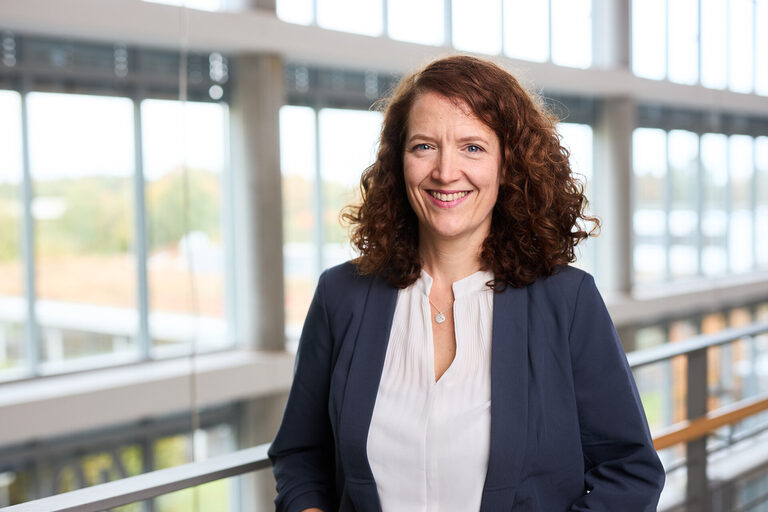
Prof. Dr. Andrea Schütze is a full professor at the Department of Microelectronics and Circuit Technology, Technische Universität Dresden. Her research focuses on nanoelectronics, energy-efficient systems, and bio-inspired circuits. She leads the Nanoelectronics and Circuits Group and directs the Dresden Center for Emerging Technologies. Education: PhD in Electrical Engineering, TU Dresden (2007) Diploma in Microelectronics, TU Ilmenau (2003) Research Interests: Andrea Schütze pioneers bio-inspired circuits for neuromorphic computing and develops ultra-low-power mixed-signal systems for IoT. Her work bridges nanoelectronics with biomedical applications, emphasizing energy-efficient architectures and novel device integration techniques. Publications: Recent articles highlight advancements in nanoelectronic devices, neuromorphic circuits, and 3D stacked CMOS integration. Her work frequently addresses emerging technologies like quantum dots and spintronics. Awards: 2018 IEEE Women in Engineering International Leadership Award 2020 German Future Prize Grants & Advising: Current EU Horizon 2020 grant (€4.2M) for bio-inspired computing. Supervises 5 PhD students and 12 master's students in topics ranging from neuromorphic hardware to energy harvesting circuits. Labs & Teams: Leads the TU Dresden Nanoelectronics Lab, collaborating with Fraunhofer Institute for Integrated Circuits (IIS). Active in EU-funded Clean Sky 2 consortium for energy-efficient avionics systems.
Sai Manoj Pudukotai Dinakarrao is a Professor in the Department of Computer Engineering at Rochester Institute of Technology's College of Engineering. He is an active researcher with numerous publications spanning hardware security, machine learning applications, VLSI design, and IoT security. His work focuses on developing innovative solutions for security challenges in hardware and embedded systems. Dr. Dinakarrao's research interests center around hardware security, machine learning for security applications, VLSI design methodologies, and IoT security frameworks. His work has pioneered approaches to hardware Trojan detection, processing-in-memory architectures, and energy-efficient security mechanisms for resource-constrained devices. He has made significant contributions to the understanding of hardware vulnerabilities and the development of robust countermeasures. His recent publications demonstrate a clear trend toward integrating machine learning techniques with hardware security solutions, particularly focusing on processing-in-memory architectures for efficient security implementations. His work spans both theoretical foundations and practical implementations, with applications in IoT security, malware detection, and hardware verification. The research shows increasing sophistication in addressing security challenges through novel hardware-software co-design approaches. Dr. Dinakarrao has mentored numerous graduate students who have co-authored publications with him, indicating an active research group focused on cutting-edge security and hardware design topics. His collaborations span multiple institutions and research groups, demonstrating his integration within the broader academic community.
Emilia Ndilokelwa Weyulu is a Ph.D. student and researcher in the Internet Architecture department at the Max Planck Institute for Informatics, Saarbrücken, Germany, with concurrent enrollment in Computer Science at Universität des Saarlandes. Her work focuses on internet congestion control mechanisms and transport protocol analysis within the Saarland Informatics Campus ecosystem. Her academic journey includes: Ph.D. in Computer Science (2019–present) at Universität des Saarlandes and Max Planck Institute for Informatics Master of Informatics (2016–2018) at Tokyo University of Information Sciences, thesis: Asymmetric RTS/CTS for Exposed Node Reduction Master of Computer Science (2014–2017) at Namibia University of Science and Technology, thesis: A Rate Adaptive and Forward Error Correction Scheme for Video Streaming in 802.11b WLANs Bachelor of Science in Computer Science and Statistics (2006–2011) at University of Namibia Weyulu's research centers on congestion control heterogeneity in internet infrastructure, with emphasis on BBRv3 protocol evaluation, in-band service routing, and network-assisted congestion feedback. Her work bridges theoretical protocol design with empirical measurement in public internet environments, extending to wireless networking challenges including ad hoc WLAN optimization and video streaming reliability. She employs cross-layer approaches to address exposed node problems and throughput limitations in wireless networks. Analysis of her 2024 publications reveals a concentrated focus on next-generation congestion control evaluation, particularly BBRv3's real-world performance across diverse network conditions. Her research combines protocol design with large-scale internet measurement, addressing both wired infrastructure challenges and wireless network constraints through innovative routing and feedback mechanisms. Weyulu has served as tutor for Data Networks courses during Winter 2018 and 2020 terms, and for the Hot Topics in Data Networks Seminar in Summer 2020 at Universität des Saarlandes. She also acted as student scribe for the CoNEXT 2020 TPC meeting, demonstrating active engagement in academic community service. As a core member of the Internet Architecture research group at Max Planck Institute for Informatics, she contributes to projects analyzing internet traffic patterns, transport protocol evolution, and network measurement methodologies within the institute's collaborative research environment on the Saarland Informatics Campus.
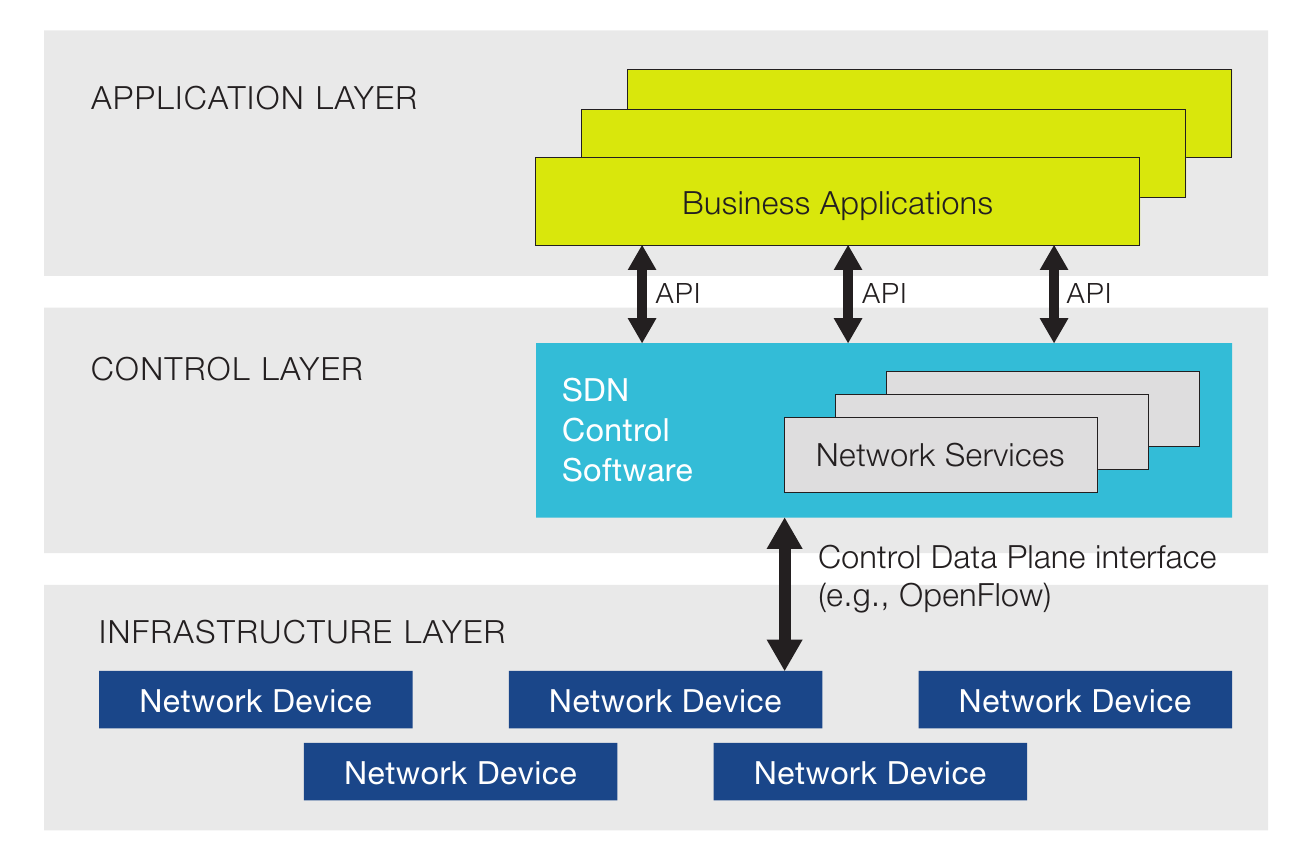
Fabian Ihle is a Researcher & PhD Student at the Chair of Communication Networks , Department of Computer Science , University of Tübingen . He works on Software-Defined Networking (SDN) , P4 Programming Language , and MPLS Network Actions , focusing on Time-Sensitive Networking and Network Resilience . His research includes data plane programming , network protocol development , and high-speed switching using hardware like Intel Tofino. He has contributed to IETF Internet Drafts and presented at workshops including ReNeSys 2025 and IETF MPLS WG meetings. Academic Background : B.Sc. and M.Sc. in Computer Science from University of Tübingen (2021-2023) His publications address MPLS extensions , BIER-TE , and P4-based tools for traffic generation and runtime control. He actively participates in KuVS workshops and serves as a reviewer for journals like IEEE Transactions on Cognitive Communications .
Zhe Liu is an Assistant Scientist at the Institute of Software, Chinese Academy of Sciences, and is affiliated with the University of Chinese Academy of Sciences. With a PhD from the University of Chinese Academy of Sciences, Liu focuses on innovative research at the intersection of software engineering, mobile testing, and artificial intelligence. Liu's research interests span multiple areas including: Software Engineering Mobile Testing Deep Learning Human-Computer Interaction Machine Learning Computer Vision UI Testing Crowd Testing Liu applies AI and lightweight program analysis technology in several key directions: AI/LLM-assisted automated mobile app development (requirement elicitation, app GUI testing, usability, bug replay) Human-machine collaborative testing (testing guides for testers) AI-empowered mining of software repositories (issue report mining) Liu has published 15 papers at top international Software Engineering and Human-Computer Interaction conferences/journals (CCF-A) with over 1,300 Google Scholar citations. The research shows a strong trend toward leveraging large language models for mobile app testing, with significant contributions in automated GUI testing, crash reproduction, and text input generation. Notable scientific achievements include: ACM Student Research Competition (SRC) 2023 Grand Finals Winners, 1st Place, Graduate Category Best Paper Honourable Mention in CHI'24 ACM Student Research Competition (SRC) at ICSE 2022, 1st Place ACM Student Research Competition (SRC) at ASE 2020, 1st Place Excellent Doctoral Dissertation of Chinese Academy of Sciences in 2024 Liu has served as a program committee member for ASE 2025 and has been involved in multiple research projects funded by the National Key Research and Development Program of China, National Natural Science Foundation of China, and Populus Innovation Research Funding. Current research focuses on advancing the integration of large language models with mobile application testing frameworks to improve app quality and user experience.
Kishore Kumar Pakkirisami Churchill is an academic researcher focused on the design and optimization of RF energy harvesting systems, integrated circuits, and IoT applications. His work emphasizes high-efficiency energy conversion, CMOS technology integration, and reconfigurable circuit design for wireless sensor networks and IoT devices. Collaborating with experts like Harikrishnan Ramiah and Yong Chen, he has contributed to advancements in rectifier architectures, charge pump systems, and ambient RF energy harvesting front-ends. Research highlights include developing a reconfigurable CMOS stack rectifier achieving 47.91% peak power conversion efficiency for IoT/WSN applications (2023) and a dual-topology CMOS rectifier with 19.5-dB dynamic range (2023). His publications span IEEE Transactions on Very Large Scale Integration Systems and other top venues, showcasing innovations in low-voltage operation, dynamic range optimization, and hybrid energy harvesting solutions. Though affiliations are not explicitly stated in the provided texts, his research aligns with departments specializing in electrical engineering or microelectronics. He maintains an active collaboration network and consistently publishes on cutting-edge topics in energy harvesting and circuit design.
Luis Gerhorst is a Researcher at the Department of Computer Science 4 (Distributed Systems and Operating Systems) at Friedrich-Alexander-Universität Erlangen-Nürnberg. He focuses on systems software, embedded systems, energy-efficient computing, and security mitigations against transient execution attacks like Spectre. His work spans kernel-level optimizations, carbon-aware cloud systems, and embedded system resilience. Education: Completed Bachelor's and Master's theses in system software at FAU, focusing on system-call aggregation and Linux kernel interrupt handling. Research Interests: His primary areas include operating systems, distributed systems, and energy-aware resource management. Notable contributions include the AnyCall system-call aggregation framework and VeriFence , a Spectre defense mechanism for BPF programs. He also explores carbon footprint modeling in cloud environments through projects like carbond . Publications: Recent work addresses energy-efficient embedded systems (vNV-Heap), power-failure resilient network stacks (PfIP), and reverse-engineering Wi-Fi drivers for energy analysis. His research often bridges hardware-software co-design and environmental sustainability. Grants/Advising: Supervised over 10+ theses on topics like carbon-aware timers, BPF sandboxing, and Rust-based alternatives to BPF. Active in open-source projects like Linux kernel contributions and GitHub repositories for systems research. Labs/Teams: Member of Lehrstuhl für Informatik 4, collaborating on projects related to system software and embedded systems resilience. Maintains active GitLab/ GitHub repositories for research tools and prototypes.
Dr. Kerstin Meyer is a Researcher at the Institute for Work and Technology (IAT) of the Westfälische Hochschule Gelsenkirchen Bocholt Recklinghausen, where she has been working since October 2016 in the research area of 'Spatial Capital.' She is also a doctoral candidate at the Technical University of Dortmund in the Department of Urban and Regional Planning within the Faculty of Spatial Planning, pursuing her doctorate on 'Urban Production as a Building Block of the Mixed-Use City of the Future' since 2020. Additionally, she serves as a lecturer at TU Dortmund University's Faculty of Spatial Planning and at Witten-Herdecke University's Studium fundamentale program since 2022. Dr. Meyer earned her B.Sc. in Geography and BA in International Economics and Development from the University of Bayreuth, followed by a Master's degree in Urban and Regional Development from the Technical University of Kaiserslautern. Her academic journey reflects a strong foundation in both geographical and economic perspectives on urban development. Her research focuses on transformative urban and regional development, with particular expertise in urban production, commercial area development, circular economy, startup ecosystems, and transformation knowledge through real-world laboratories. Dr. Meyer's work bridges theoretical frameworks with practical applications, as evidenced by her involvement in numerous research projects and her contributions to municipal strategies. She has developed comprehensive approaches to integrating production back into urban environments, analyzing the spatial distribution of manufacturing, and creating sustainable economic models for challenged regions. Her extensive publication record demonstrates a clear trajectory of deepening expertise in urban production systems. The most recent publications show increasing sophistication in analyzing spatial patterns of urban manufacturing, developing circular economy frameworks, and examining the relationship between industrial activity and urban form. Her work spans empirical analyses, conceptual frameworks, and practical implementation guides, with a growing emphasis on climate-neutral industrial development and spatial optimization through concepts like 'stacked production.' Dr. Meyer actively contributes to academic and professional communities through membership in the Young Talent Forum of the Academy for Spatial and Regional Planning (ARL), the Regional Studies Association (RSA), and the Transformative Knowledge Regions (TRAKR) network. She has organized the Transformation Talks NRW in 2023 and 2024 and was a member of the Urban Production Working Group of the ARL Forum NRW from 2020-2023. Her research is supported through significant projects including FAB.Region Bergisches Städtedreieck (2024-2026), Ecosys4you – Engaging Entrepreneurial Ecosystems for the Youth (2023-2026), and TRAKR – The Regional Studies Association Research Network on Transformative Regions (2023-2026), among others. These projects demonstrate her capacity to secure competitive funding and lead interdisciplinary research initiatives focused on sustainable urban economic development. Dr. Meyer's work with real-world laboratories, particularly through the UrbaneProduktion.Ruhr initiative, shows her commitment to translating academic research into practical urban interventions. Her projects often involve collaboration with municipal authorities, businesses, and community organizations to develop implementable strategies for urban economic development.
Yanlin Wang is an Assistant Professor at the School of Software Engineering, Sun Yat-sen University, where he joined in July 2022 after working as a senior researcher at Microsoft Research Asia in the Data, Knowledge, and Intelligence (DKI) group. His academic journey includes a B.S. from Zhejiang University and a Ph.D. from the University of Hong Kong under the supervision of Prof. Bruno C. d. S. Oliveira. Dr. Wang's research spans multiple domains within computer science, with particular emphasis on applying large language models to software engineering problems. His work bridges traditional software engineering with cutting-edge AI techniques, focusing on code generation, code search, and intelligent software development tools. He has made significant contributions to understanding how LLMs can be effectively applied to repository-level code completion, security analysis of smart contracts, and improving the efficiency of code generation processes. An analysis of his recent publications reveals a strong trend toward applying AI to practical software engineering challenges, particularly in the areas of code generation quality, security analysis, and efficient model deployment. His work often combines theoretical insights with practical implementations, as evidenced by multiple tools and frameworks developed by his research group, including MemoryBank for enhancing LLMs with long-term memory and AGIEval for evaluating foundation models. ACM SIGSOFT Distinguished Paper Award (ISSTA 2024) - for work on LLM code generation acceleration ACM SIGSOFT Distinguished Paper Award (ISSTA 2024) - for work on identifying code security issues ACM SIGSOFT Distinguished Paper Award (Internetware 2024) Distinguished Reviewer Award (Internetware 2024) Best Paper Award (Modularity 2016) Dr. Wang actively contributes to the academic community through service on program committees for major conferences including ISSTA, FSE, ICSE, and COLING. He serves as a reviewer for prestigious journals and conferences such as TKDE, TNNLS, and AAAI. His teaching portfolio at Sun Yat-sen University includes Principles of Compilers, AI Revolution: Decoding Large Models, and Software Source Codes Analysis, reflecting his expertise across both foundational and cutting-edge topics in computer science.
Dr. Andreas Beyer-Leser is a Researcher in the Physics Department (Department 13) at Philipps University of Marburg, where he leads the Structural and Technological Research Laboratory (STRL) and Functional Materials Group (AG Volz) within the Marburg Center for Quantum Materials and Sustainable Technology (mar.quest). His office is located in Building H|04 (Room 02C14) at Hans-Meerwein-Straße 6, 35032 Marburg. His research focuses on advanced electron microscopy techniques for materials characterization, particularly in energy storage systems and semiconductor heterostructures. Key areas include 4D-STEM electric field mapping , solid-state battery materials , quantum well formation , and 2D material synthesis . His work bridges fundamental physics with practical applications in sustainable energy technologies. Analysis of his recent publications reveals a strong emphasis on developing novel electron microscopy methodologies for nanoscale characterization. His 2025-2024 work shows increasing focus on in-situ characterization of battery materials under operational conditions and precise control of quantum heterostructures for optoelectronic applications. The research consistently integrates advanced computational analysis with experimental validation. Dr. Beyer-Leser maintains active laboratory facilities including the Structural and Technological Research Laboratory (STRL) and Functional Materials Group, which provide specialized infrastructure for electron microscopy, semiconductor growth, and materials synthesis. His work supports the university's strategic focus on quantum materials and sustainable technology development through the mar.quest initiative.
Prof. Andrei Vescan is a Universitätsprofessor (University Professor) at RWTH Aachen University's Department of Compound Semiconductor Technology. His research focuses on advanced semiconductor materials and optoelectronic devices, including III-nitrides, 2D materials like MoS2 and WS2, and hybrid organic-inorganic systems. Key applications include power electronics, flexible displays, solid-state lighting, and photovoltaics. His work emphasizes scalable fabrication techniques like MOCVD and CVD, as well as device integration challenges. Education and academic background: While not explicitly detailed in the provided texts, his professorship implies advanced degrees in materials science or electrical engineering. His research group investigates material growth, characterization, and device engineering. Notable areas include GaN-based power devices, memristors for neuromorphic computing, and large-area flexible electronics. Research interests span 3D/2D semiconductors, hybrid materials, and their integration into functional devices. Recent studies address surface damage reduction in GaN Schottky diodes, memristor-based artificial neurons, and optimized 2D material transfer techniques. His group's facilities include state-of-the-art equipment for nanoscale characterization and device fabrication. Publications highlight advancements in MOCVD-grown heterostructures, perovskite LEDs, and flexible photodetectors. While no specific awards are listed, his prolific publication record indicates recognition in semiconductor research. He advises on device reliability, process engineering, and scalable manufacturing of 2D material-based systems. Labs/teams: The Compound Semiconductor Technology (CST) group at RWTH Aachen University serves as his main research hub, equipped with advanced deposition and characterization tools. Collaborative projects likely involve industry partners for technology commercialization.
Dr. Kaveh Haghighi Mood is a computational researcher at Forschungszentrum Jülich's Jülich Supercomputing Centre (JSC), specializing in high-performance computing with emphasis on GPU acceleration and scientific application enablement. His work bridges atmospheric science, materials simulation, and exascale computing through the Helmholtz Association research infrastructure. His research focuses on optimizing computational methods for next-generation supercomputers, particularly in three domains: GPU-accelerated atmospheric modeling through the MPTRAC framework for Lagrangian transport simulations Exascale benchmarking via the JUPITER suite for evaluating future supercomputing architectures Quantum Monte Carlo methods applied to electronic structure theory and materials science Recent publications demonstrate expertise in CUDA, OpenACC, and performance portability across diverse hardware platforms. Haghighi Mood's publication trends reveal an evolving focus from foundational quantum chemistry (2010-2019) toward GPU optimization and exascale readiness (2020-2025). His work increasingly addresses atmospheric science applications while maintaining strong connections to materials simulation, reflecting JSC's strategic emphasis on climate modeling and computational materials design. The interdisciplinary nature spans computer architecture, numerical methods, and domain-specific scientific computing.
Oliver Lenke is a Scientific Assistant at the Chair of Integrated Systems , Technical University of Munich (TUM), affiliated with the TUM School of Computation, Information and Technology . He completed his Bachelor’s (2015-2018) and Master’s (2018-2020) in Electrical Engineering at TUM and has been a PhD student since 2020 . His research focuses on MPSoC architectures , memory hierarchies , hardware preloading mechanisms , and FPGA-based system prototyping . His recent publications address topics like near-memory computing , cache prefetching , and runtime adaptive MPSoCs . He supervises students in projects involving VHDL coding , C programming , and MPSoC optimization , collaborating with industry partners such as Infineon AG , BMW AG , and Huawei . His work includes developing non-intrusive performance monitoring frameworks and dynamic memory preloading solutions .
David Z. Pan is a Professor at the University of Texas at Austin, where he leads a prominent research group specializing in Electronic Design Automation (EDA) and Computer-Aided Design for Integrated Circuits. His extensive publication record spanning from 1997 to the present demonstrates his leadership in advancing the field of electronic design. Dr. Pan's research focuses on solving fundamental challenges in analog/mixed-signal circuit design automation, physical design methodologies, and the integration of machine learning techniques with traditional EDA problems. His work bridges theoretical advances with practical applications in semiconductor design, with particular emphasis on photonic computing, quantum circuit design, and FPGA optimization. His research has evolved from traditional layout and placement algorithms to incorporate cutting-edge AI and machine learning approaches for next-generation design automation. Analysis of his recent publications reveals a strong trend toward integrating artificial intelligence with EDA, including the use of large language models for circuit design automation, reinforcement learning for placement optimization, and deep learning for various aspects of the design flow. His work consistently addresses critical industry challenges while pushing the boundaries of what's possible in electronic design. Dr. Pan has advised numerous graduate students who have become significant contributors to the field, with many continuing their research careers in academia and industry. His research group has developed several influential tools and methodologies that have been adopted by both academic and industrial researchers. He actively contributes to major conferences in the field including ICCAD, DAC, ASP-DAC, and ISPD, often presenting invited talks that shape the future direction of EDA research. His work on open-source EDA tools has been particularly impactful, promoting accessibility and reproducibility in electronic design research.
Enrique S. Quintana-Ortí is a Professor at the Technical University of Valencia and Jaume I University , Spain, specializing in Computer Science of Systems and Computers . His work bridges High-Performance Computing (HPC) , Parallel Computing , and Deep Learning , with a focus on optimizing Matrix Algorithms for modern architectures. Key research areas: Quantized Inference , GEMM-Based Convolutions , GPU Acceleration , and Performance Portability across ARM, RISC-V, and NVIDIA processors. Recent projects include RED-SEA (European interconnect solutions), GreenLightningAI (decoupled AI systems), and Ginkgo (GPU-based linear algebra frameworks). His publications (2023–2025) emphasize edge computing , mixed-precision techniques , and energy-efficient AI . Collaborative efforts span institutions like Xilinx , Fujitsu , and co-authors such as Adrián Castelló , Héctor Martínez , and Francisco D. Igual .