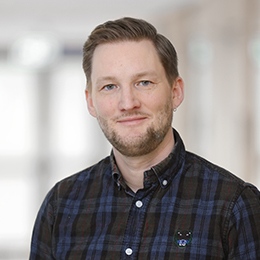
Hampus Bejnö is an Associate Professor and postdoctoral researcher at the Department of Special Education , Stockholm University. He also serves as Program Director for the Special Educator Program (specialpedagogprogrammet). Role: Associate Professor, Postdoctoral Researcher, Program Director Focus: Learning and participation of children with autism Key projects: APERS adaptation, TRAS evaluation, PANS qualitative studies Research Themes Improving educational environments for children with ASD Enhancing neuropsychological report readability Assistive technology for neurodiverse populations Awards & Collaborations While no explicit awards are listed, Bejnö contributes to interdisciplinary networks focused on neurodiversity and neuropsychiatric disabilities. His work bridges clinical practice with educational policy and technological innovation.
Dr.-Ing. Ullrich Mönich is a Senior Researcher and Lecturer at the Technical University of Munich (TUM) , affiliated with the Chair of Theoretical Information Technology and leading research activities at the Advanced Communication Systems and Embedded Security Lab (ACES Lab) . Since 2019, he has been instrumental in shaping experimental and theoretical research in 6G communications, physical layer security, and signal processing. Education: Dr.-Ing. in Electrical Engineering, Technische Universität München (2011) – supervised by Prof. Holger Boche Previous affiliations include MIT (2012–2015) and TU Berlin Research Focus: His research spans signal processing, wireless communications, machine learning, and sampling theory , with a strong emphasis on physical layer security , computability in signal processing , and 6G communications . He explores theoretical foundations and practical implementations, including neuromorphic computing, digital twinning, and secure modular coding schemes. Publications & Trends: His recent publications (2023–2025) are heavily concentrated in 6G communications , integrated sensing and communications (ISAC) , semantic physical layer security , and digital twinning . These works often combine theoretical analysis with experimental validation using 5G/6G testbeds and neuromorphic hardware. Teaching & Supervision: Regularly teaches "Foundations of Analog, Digital, and Quantum Computers" (tutorials since 2018) Previously taught "Applied Functional Analysis" and "Advanced Signal Theory" Involved in practical courses like "Software Defined Radio Laboratory" Labs & Teams: He leads the ACES Lab at TUM, which focuses on experimental validation of advanced communication systems, including physical layer security, neuromorphic computing, and 6G testbeds. The lab collaborates with national and international partners, including MIT, and is supported by major funding bodies such as the German Federal Ministry of Education and Research (BMBF) and the German Research Foundation (DFG).
Sadegh Talebi is a Tenure Track Assistant Professor in the Machine Learning Section at the Department of Computer Science, University of Copenhagen . His research focuses on theoretical aspects of reinforcement learning, Markov decision processes, online learning, stochastic multi-armed bandit problems, and resource allocation in networks. Education BSc in Electrical Engineering (minor: Electronics) from Iran University of Science and Technology (IUST) (2004) MSc in Electrical Engineering (minor: Communication Systems) from Sharif University of Technology (2006) PhD in Electrical Engineering from the Department of Automatic Control at KTH Royal Institute of Technology (supervised by Alexandre Proutiere and Mikael Johansson) Research Specializes in theoretical foundations of reinforcement learning and online learning Key contributions in stochastic optimization, MDPs, and bandit algorithms Collaborates on applications in resource allocation and quantum computing Publications include high-impact work on offline RL, differentially private exploration, and scalable MDP solutions in journals like Neural Processing Letters and conferences such as NeurIPS and UAI.
Yinqiu He is an Assistant Professor in the Department of Statistics at the University of Wisconsin-Madison. They hold affiliations with the School of Computer, Data & Information Sciences and the Data Science Institute at Columbia University (2021-2022 postdoc). Their research focuses on developing statistical methodologies for high-dimensional and complex data, with applications in genomics, metabolomics, and network analysis. Key areas include mediation pathway analysis, asymptotic theory for U-statistics, and functional connectivity modeling. Education includes a B.S. in Statistics from the University of Science and Technology of China (2016) and a Ph.D. in Statistics from the University of Michigan-Ann Arbor (2021), advised by Professors Gongjun Xu and Xuming He. They were awarded the ProQuest Distinguished Dissertation Award (2022) and received multiple travel grants from the Institute of Mathematical Statistics and ASA. Teaching includes core Ph.D. courses like STAT 849 (Regression Analysis) and applied courses like STAT 456 (Multivariate Statistics). Current mentoring includes MS student Yuhan Zheng (now pursuing UW-Madison Ph.D.) and Xiangyi Liao (Ph.D. in Educational Psychology). Research outputs include foundational work on adaptive U-statistics testing frameworks and scalable methods for large-scale genomic data analysis. Active in methodological contributions to biostatistics, their work bridges statistical theory and computational efficiency. Recent projects involve dynamic functional connectivity estimation from fMRI data and latent space modeling in heterogeneous networks. GitHub repository 'Adaptive-U-stats' hosts open-source implementations of high-dimensional testing algorithms developed in their research.
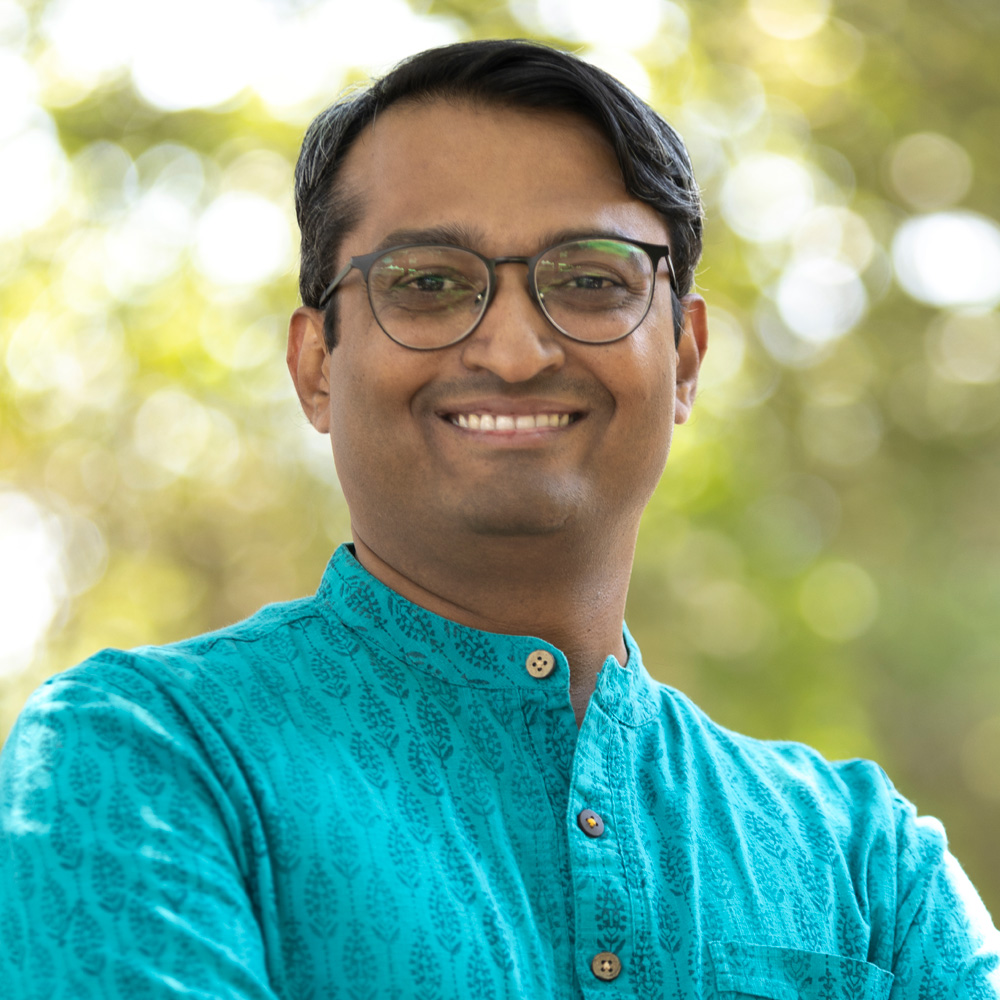
Harsha Gangammanavar is an Associate Professor in the Department of Operations Research and Engineering Management (OREM) at Southern Methodist University (SMU), affiliated with the Data Science Institute. He holds a Ph.D. in Operations Research and M.S. in Electrical Engineering from The Ohio State University, and a B.E. in Electronics and Communication Engineering from Visvesvaraya Technological University, India. Education: Ph.D. in Operations Research, The Ohio State University M.S. in Electrical Engineering, The Ohio State University B.E. in Electronics and Communication Engineering, Visvesvaraya Technological University Research Interests: His work focuses on stochastic programming, large-scale computational optimization, and their applications in infrastructure systems, healthcare, and wireless communication. Key areas include optimization under uncertainty, stochastic decomposition methods, and scalable algorithms for power systems and renewable energy integration. Recent Activities & Awards: Recipient of NSF XTRIPODS grant for collaborative research in data science (2024). DOE Office of Science grant for multiscale stochastic optimization (2022). ONR grant for decomposition-based stochastic models in discrete-event systems (2022). Awarded INFORMS Undergraduate Student Paper Award (2021) and INFORMS Minority Affairs Poster Competition (2016). Advising & Grants: Current advisees include Ph.D. students Ishara A.A.D.H., Jackson Forner, Chhavi Sharma, and Zhiyuan Zhang. Former students Niloofar Fadavi, Sakitha Ariyarathne, and others have secured roles in industry and academia. Active in securing grants from AFOSR, ONR, DOE, and NSF. Labs & Teams: Leads research on stochastic optimization algorithms, power grid resilience, and healthcare applications through interdisciplinary collaborations. Open to motivated students for Ph.D. research in optimization and data science.
Ted Mouw is a Professor of Sociology at the University of North Carolina at Chapel Hill. He holds a B.A. in English Literature from Oberlin College, an M.A. in Economics, and a Ph.D. in Sociology from the University of Michigan. His research focuses on demography, social stratification, and economic sociology, with emphasis on labor markets, globalization’s impact, and immigration. Current projects include studies on social mobility in the U.S., economic effects of globalization in Indonesia and Mexico, and labor market dynamics for Hispanic immigrants in North Carolina. He has taught courses such as Social Stratification, Economy and Society, and Applied Regression Analysis, reflecting his expertise in quantitative methods and social theory. His work frequently intersects with the Carolina Population Center and addresses topics like occupational segregation, wage inequality, and transnational social networks. Mouw’s research also explores the interplay between spatial diffusion, migration patterns, and racial/ethnic integration in urban areas.
Dr. Lianne Bakkum is an Assistant Professor at the Vrije Universiteit Amsterdam within the Faculty of Behavioural and Movement Sciences, holding affiliations in Clinical Child and Family Studies, APH - Mental Health, and LEARN! - Child rearing. She earned her PhD in Public Health and Primary Care from the University of Cambridge (2017–2021), focusing on attachment and trauma in the Adult Attachment Interview. Her research explores intellectual disability, child protection systems, mental health interventions, and the impact of digital social contact during crises like the COVID-19 pandemic. Her work contributes to UN Sustainable Development Goals related to quality education, good health, and reduced inequalities. Key projects include reducing involuntary care in intellectual disability settings and analyzing the effectiveness of EMDR therapy for PTSD in adults with intellectual disabilities. She teaches courses on family studies, child-rearing practices, and scientific reasoning rooted in attachment theory. Bakkum’s publications emphasize interdisciplinary approaches to disability care, trauma resolution, and policy evaluation. She leads and collaborates on projects funded by academic institutions, focusing on improving outcomes for vulnerable populations through evidence-based strategies.
Dr. Shuvo Bakar is a Senior Lecturer in the Sydney School of Public Health at the University of Sydney, within the Faculty of Medicine and Health. He holds a PhD in Statistics from the University of Southampton, UK, and has prior experience as an Assistant Professor at Yale University, Lecturer at the Australian National University, and Scientist at Data61 (CSIRO). His research focuses on statistical methods applied to public health challenges, including Bayesian hierarchical modeling, machine learning, spatio-temporal analysis, and their applications in epidemiology, clinical trials, and environmental health. Dr. Bakar's research interests span statistical methodologies such as Bayesian adaptive designs, small area estimation, and spatial risk modeling, alongside applications in child health, infectious diseases, and extreme weather impacts on health. He is an active member of academic communities, including the Royal Statistical Society (RSS Fellow), Statistical Society of Australia, and the Australian Trials Methodology Research Network. His work also involves collaborations on grants totaling millions in funding, addressing topics like climate change impacts on health inequity and cardiovascular disease prevention in remote regions. Education: PhD in Statistics (University of Southampton, UK) Key Research Themes: Obesity, Diabetes, Cardiovascular Disease; Reproductive, Maternal & Child Health Grants/Projects: Includes NHMRC-funded trials on respiratory infections in First Nations children and MRFF grants for cardiovascular risk reduction in regional Australia. Dr. Bakar's contributions extend to editorial roles for Nature Scientific Reports and Discover Public Health , and his research has been published in journals like PloS One , Climatic Change , and Journal of the Royal Statistical Society .
Hemant Purohit is an Associate Professor in the Department of Information Sciences and Technology at George Mason University, and Director of the Humanitarian Informatics Lab. He focuses on developing interactive intelligent systems to support emergency services and humanitarian organizations by analyzing non-traditional data sources like social media, web, and IoT using data mining, NLP, and human-centered computing. His work integrates social-psychological theories to enhance human capabilities in crisis contexts. Purohit holds a PhD in Computer Science and Engineering from Wright State University. His research has been recognized through prestigious awards including the ITU Young Innovator Award (2014), NSF CRII Award (2017), and a best paper award at IEEE/WIC/ACM Web Intelligence (2018). His lab is supported by grants from NSF and international agencies. Key research interests include crisis informatics, social computing, and AI ethics. He has led projects on adversarial scam detection, inclusive cybersecurity, and human-AI teaming for disaster response. Purohit serves on editorial boards for journals like Elsevier's Information Processing & Management and Frontiers in Big Data, and actively contributes to international conferences in his field. His work emphasizes real-world impact, bridging technical innovation with societal needs through collaborations between researchers and practitioners. Current projects address challenges in multilingual data analysis, social media activism, and resilience data repositories.
P. Michael (Mike) Kosro is a Professor at Oregon State University, specializing in coastal oceanography and physical oceanography. His work focuses on shelf/deep-sea exchange processes, eastern boundary currents, and the application of remote sensing and ocean acoustics to study ocean circulation. He holds a BA in Physics from the University of California, Santa Cruz (1973) and a PhD in Physical Oceanography from Scripps Institution of Oceanography (1985). Education: BA, UC Santa Cruz (Physics, 1973); PhD, Scripps Institution of Oceanography (1985) His research interests include coastal eddies, poleward undercurrents, and the use of HF radar for surface current mapping. He has contributed to major projects such as GLOBEC (Global Ocean Ecosystems Dynamics) and COAST (Coastal Ocean Advances in Shelf Transport). His work integrates observational data with numerical models to understand coastal circulation dynamics and their environmental impacts. Publications span over 40 years, addressing topics like mesoscale currents, El Niño effects, and the role of physical oceanographic processes in species distribution (e.g., invasive European green crab). His recent work emphasizes long-term data integration and interdisciplinary collaboration in ocean observing systems. Dr. Kosro’s research also explores the interplay between oceanography and marine ecosystems, including carbon transport and biogeochemical cycles. He collaborates with international teams to advance regional ocean observing networks, as seen in studies of the Northeast Pacific.
Dr. Vishnu Unnikrishnan is an Assistant Professor at the Department of Electrical Engineering, Tampere University, within the Faculty of Information Technology and Communication Sciences. His research focuses on energy-efficient high-performance analog/digital/RF integrated circuits and systems in nanometer-scale CMOS technologies. Key areas include time-based data conversion, high-speed serial links, and 5G/6G wireless transceivers. He leads research on analog interfaces using digital/switch components and collaborates with the SoC Hub ecosystem to bridge academic and industrial interests in system-on-chip design. He has secured significant funding, including an EU Marie Curie ITN grant (SMArT) worth €818k and an Academy of Finland Project (2021) of €821k. His work spans over 40 peer-reviewed publications, emphasizing innovations in time-based ADCs, beamforming receivers, and RF system design. Dr. Unnikrishnan actively supervises doctoral and postdoctoral researchers, offers paid master's theses and summer jobs in IC design, and collaborates with industry through the SoC Hub. His research aims to advance cross-technology portable analog interfaces and high-performance mixed-signal systems.
Dr. Saumen Mandal is a Professor in the Department of Statistics at the University of Manitoba, Faculty of Science. He holds a PhD from the University of Glasgow, UK, and MSc/BSc (Gold Medal) from the University of Calcutta, India. His research focuses on optimal experimental design, biostatistics, data science, shrinkage estimation, and constrained optimization. He has received numerous teaching awards including the Dr. and Mrs. H.H. Saunderson Award for Excellence in Teaching, Students Choice Best Professor Award, and multiple Merit Awards. He is also a P.Stat. designee from the Statistical Society of Canada. Education: PhD (Statistics), University of Glasgow, UK MSc (Statistics), University of Calcutta, India (First Class First, Gold Medal) BSc Honours (Statistics), University of Calcutta, India Research Interests: Optimal design theory and applications Biostatistical methods for clinical trials and healthcare data Data science and machine learning techniques Shrinkage estimation and model selection Linear models and goodness-of-fit testing Publications span topics like optimal regression designs, response-adaptive clinical trial methods, and statistical models for healthcare data. His work emphasizes practical applications in medicine and data-driven decision making. Awards include: Teaching Excellence Awards (2005-2007) Merit Awards for Teaching and Research (2010-2019) Faculty of Science Innovation in Teaching Award (2020) He advises graduate students in statistics and contributes to research teams in biostatistics and data science. His office is temporarily located at 256 Parker Building during construction.
Lenka Zdeborová is an Associate Professor at EPFL, jointly affiliated with the School of Basic Sciences and School of Computer and Communication Sciences. She leads the Laboratory of Statistical Physics of Computational Systems, where her research bridges statistical physics, machine learning, and computational biology. Education: PhD in Physics, Université Paris-Cité (2012) MSc in Fundamental Physics, École Normale Supérieure (2009) BSc in Physics, École Normale Supérieure de Lyon (2007) Her work focuses on phase transitions in learning algorithms, high-dimensional statistics, and neural network theory. Current projects investigate fundamental limits of machine learning, dynamics of graph neural networks, and applications to biological systems. Recent publications explore attention mechanisms in transformers, neural network depth advantages, and Bayes-optimal learning. Methodological innovations include cavity methods for hypergraphs and analysis of high-dimensional inference problems. Supervises doctoral students researching statistical physics approaches to machine learning and optimization. Teaches graduate courses in data science and machine learning for physicists.
Jelena Diakonikolas is an Assistant Professor at the Department of Computer Sciences at the University of Wisconsin-Madison, with a courtesy appointment in the Department of Statistics. She is also an affiliate of the Data Science Institute at UW-Madison. Her research focuses on large-scale optimization and its applications in machine learning. Prior to UW-Madison, she held postdoctoral positions at UC Berkeley and Boston University. She completed her Ph.D. in Electrical Engineering at Columbia University. Her academic journey includes a postdoctoral fellowship at the Simons Institute for the Theory of Computing and affiliations with leading institutions such as the Fields Institute and the Qualcomm Innovation Fellowship program. She has organized numerous workshops, including sessions on optimization and sampling at the Simons Institute and NeurIPS. Key research interests span optimization algorithms, distributed systems, wireless networking, and energy-efficient systems. Her work has been recognized with prestigious awards like the NSF CAREER Award and AFOSR Young Investigator Program Award. She co-founded the WISCERS program, which supports underrepresented undergraduates in research, earning Google’s exploreCSR award. Jelena has advised multiple Ph.D. students, including Dr. Lin and Dr. Cai. Her contributions to mentoring earned her the Award for Mentoring Undergraduates in 2023. She remains active in academic service, serving on program committees for ICML, ICLR, and other conferences.
Dr. Rachel Parkinson is a Research Fellow at Wolfson College, University of Oxford, and holds a Lecturer position in Biology at Keble College. She is also an Eric & Wendy Schmidt AI in Science Postdoctoral Fellow. Her research focuses on insect sensory processing, particularly how pollinators like bees perceive environmental stressors such as pesticides. She develops AI-driven tools to diagnose sublethal toxicity and leads projects using large language models for systematic reviews of pesticide risks. Her work aims to assess environmental threats to pollinators and devise mitigation strategies. Her research interests include neuroethology, pesticide impacts on insect behavior, and AI applications in ecological research. She collaborates with the Bee Lab to advance understanding of pollinator health and ecological resilience. Her interdisciplinary approach bridges biology, neuroscience, and computational methods to address global environmental challenges. Awards: Eric & Wendy Schmidt AI in Science Postdoctoral Fellow Labs/Teams: Bee Lab, University of Oxford