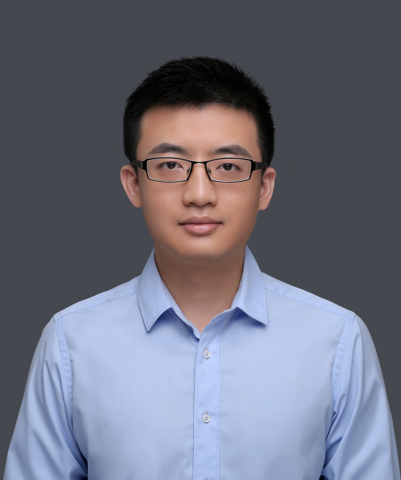
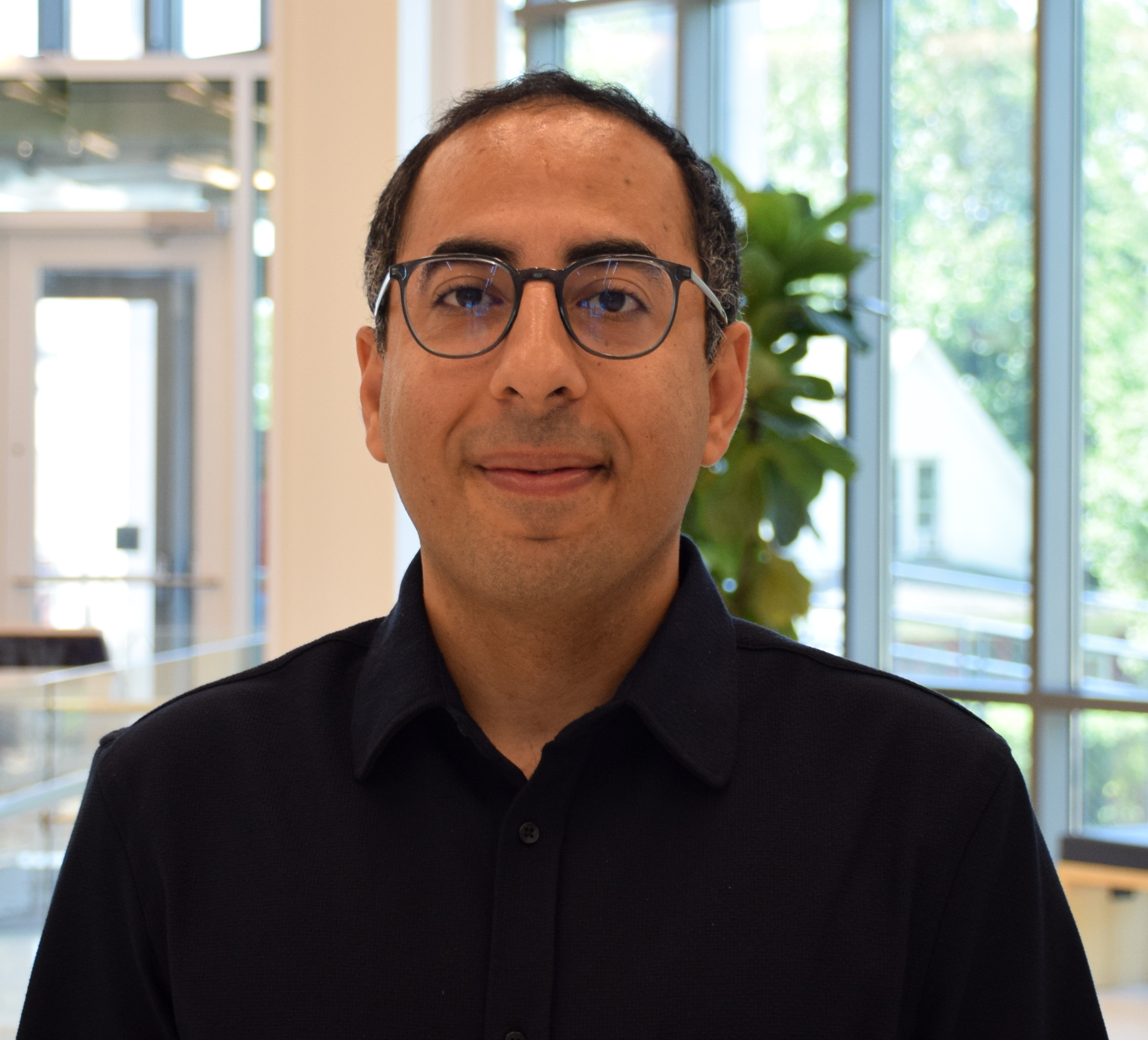
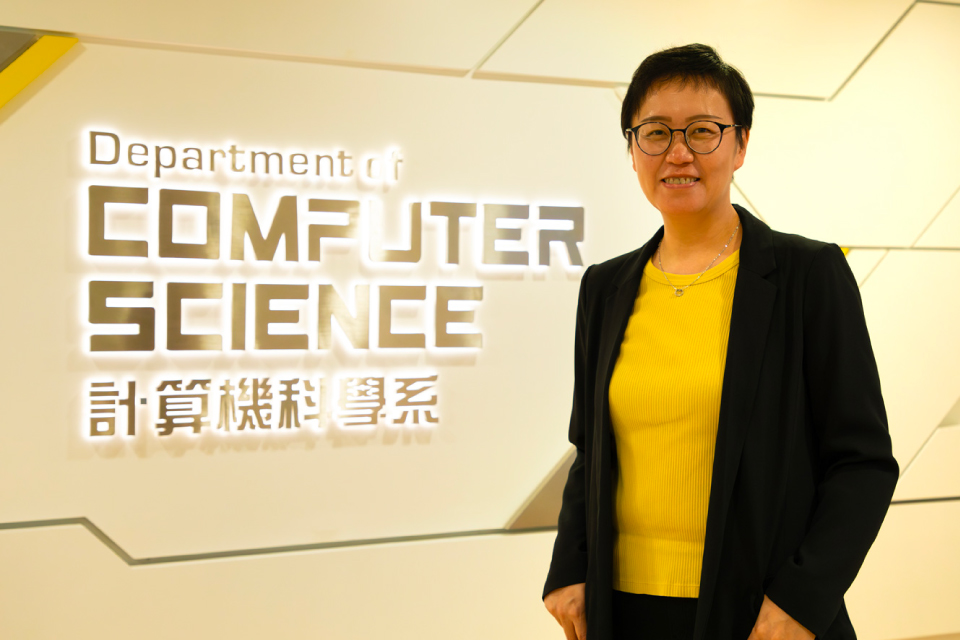
Abdol-Hossein Esfahanian is a Professor and Chairperson of the Computer Science and Engineering (CSE) Department at Michigan State University (MSU), part of the College of Engineering. He joined MSU in 1983 and has held leadership roles, including Graduate Director for 10 years and Associate Chair. His research focuses on applying graph theory to computer networks, algorithm design, and fault-tolerant computing. He has published extensively in journals like IEEE Transactions on Computers and Discrete Applied Mathematics, and serves as an editor for professional journals. Education: Ph.D. in Electrical Engineering and Computer Science from Northwestern University (1983), M.S. in Computer, Information, and Control Engineering from the University of Michigan (1977), and B.S. in Electrical Engineering from the University of Michigan (1975). Research interests include graph theory applications in network design, distributed systems, and fairness-aware algorithms. Notable awards include the Withrow Teaching Excellence Award (2005, 2015) and recognition as an IEEE Senior Lifetime Member. Teaching includes courses like CSE 835 (Algorithmic Graph Theory). He has contributed to curriculum development, emphasizing computational competencies for engineering students. His work integrates theoretical foundations with practical applications in networking and distributed systems.
Kede Ma is an Associate Professor in the Department of Computer Science at City University of Hong Kong (CityUHK). He received his B.E. from the University of Science and Technology of China (USTC) in 2012, and MASc and Ph.D. degrees from the University of Waterloo in 2014 and 2017, respectively. From 2018 to 2019, he was a Research Associate with the Howard Hughes Medical Institute and New York University. Prof. Ma has been named to the Highly Cited Researchers list by Clarivate Analytics in 2024 and currently serves on the editorial boards of IEEE Transactions on Image Processing, IEEE Transactions on Information Forensics and Security, and IEEE Signal Processing Letters. Prof. Ma leads the Multimedia Analytics (MA) Laboratory, an interdisciplinary research group focused on computational vision, computational modeling of human visual perception, perceptual multimedia signal processing, quality assessment, and multimedia forensics. His research spans computational photography, high dynamic range imaging and rendering, omnidirectional video analysis, camera processing pipeline design, and artificial intelligence safety in multimedia systems. His work integrates machine learning techniques including reinforcement learning, generative modeling, self-supervised learning, and continual learning for multimedia signal processing applications. His recent publications demonstrate a strong focus on image quality assessment, deep learning for multimedia processing, and multimedia forensics. His work bridges theoretical computer vision principles with practical applications in multimedia systems. The research trends show increasing integration of foundation models with specialized multimedia processing tasks, particularly in quality assessment and security applications. Highly Cited Researchers list by Clarivate Analytics (2024) Best Paper Award at IEEE International Conference on Virtual Reality and Visualization (2021) Best Paper Runner-Up at International Joint Conference on Artificial Intelligence Workshop (2021) Top 10% Award at IEEE International Conference on Image Processing (2015) Finalist for the Governor General's Gold Medal, University of Waterloo (2017) Spotlight presentation at NeurIPS (2022) Highlight paper at ICCV (2025) Oral presentation at ICLR (2025) Prof. Ma advises numerous PhD students and postdoctoral fellows in the MA Laboratory. His research is supported by various grants enabling work in multimedia analytics, image processing, and computer vision. The laboratory maintains active collaborations with researchers at institutions including SUSTech, ZJU, and HIT. Current projects focus on advancing image quality assessment methodologies, developing more robust deep learning techniques for multimedia forensics, and exploring new approaches to HDR imaging and omnidirectional video processing. The Multimedia Analytics Laboratory maintains a strong focus on both theoretical foundations and practical applications of multimedia processing. Current research directions include integrating large language models with image quality assessment, developing more robust deepfake detection methods, and advancing techniques for continual learning in multimedia applications. The lab emphasizes rigorous evaluation methodologies and maintains multiple datasets for multimedia quality assessment research.
Florent Krzakala is a Full Professor at École polytechnique fédérale de Lausanne (EPFL) in Switzerland, holding positions across multiple departments including the School of Basic Sciences (SB), School of Engineering (STI), and specifically within the Department of Physics (IPHYS) and Department of Electrical Engineering (IEM). He leads the Information, Learning and Physics Laboratory (IdePHICS) and maintains an office at ELD 239, Station 11, 1015 Lausanne. His research bridges statistical physics and computational disciplines, with significant contributions to understanding the theoretical foundations of machine learning and optimization problems. Dr. Krzakala received his MSc in Physics from Orsay, France in 1999, followed by a PhD in Statistical Physics from Orsay, Paris XI, France in 2002, and completed a postdoctoral position at Roma La Sapienza in 2004. This strong foundation in physics has informed his interdisciplinary approach to computational problems. His research interests span Statistical Physics, Machine Learning, Probability and Statistics, Computer Science, Information Theory, Inference on Graphs, Random Constraint Optimization, and Computational Optics. Krzakala's work focuses on applying methods from statistical physics to problems in theoretical computer science, probability, and machine learning. He investigates how concepts from disordered systems and phase transitions can illuminate computational barriers in optimization and inference tasks. His research has particular relevance for understanding the behavior of neural networks, compressed sensing, and high-dimensional statistical models. Analysis of his recent publications reveals a strong trend toward understanding the fundamental limits of learning in high-dimensional settings, with particular emphasis on phase transitions, statistical-to-computational gaps, and the theoretical properties of deep learning architectures. His work frequently bridges rigorous mathematical analysis with practical machine learning applications, demonstrating how insights from statistical physics can inform algorithm design and theoretical understanding in AI. Krzakala actively mentors the next generation of researchers, supervising numerous PhD students whose work continues to advance these interdisciplinary fields. His laboratory serves as a hub for researchers exploring the intersection of physics and computation, fostering collaborations across traditional disciplinary boundaries. He teaches advanced courses including Fundamentals of Inference and Learning, Statistical Physics, and Statistical Physics for Optimization & Learning, which examine the connections between physical principles and computational methods. His educational materials, including lecture notes on statistical physics methods in optimization and machine learning, have become valuable resources for students and researchers worldwide. As founder and scientific advisor of the startup Lighton, Krzakala has also demonstrated a commitment to translating theoretical insights into practical applications, particularly in the realm of optical computing for machine learning tasks.
Nick Koudas is a Professor in the Department of Computer Science at the University of Toronto. His research focuses on large-scale data management, integrating machine learning into data systems, and developing efficient query processing techniques for unstructured and streaming data. He holds a PhD from the University of Toronto, an MSc from the University of Maryland at College Park, and a Bachelor's from the University of Patras in Greece. Research interests include data systems, big data analysis, video query processing, and natural language interfaces for databases. He leads projects like ReDD (Relational Deep Dive), SVQ (Streaming Video Queries), and Reliable Text-to-SQL, aiming to bridge human-readable queries with database execution. His work emphasizes scalability, intelligence, and real-world applicability. Recipient of the University of Toronto's Inventor of the Year Award (2011), he translates research into startups like Sysomos, Aislelabs, and Workorb. His contributions span over 200 publications in top venues such as SIGMOD, VLDB, and ICDE. Courses taught include advanced data systems, database design, and system internals. Current projects explore schema extraction from unstructured data, video query optimization, and cost-effective machine learning pipelines. Collaborations with industry and academic partners drive innovations in both theory and practical applications.
Mohsen Heidari is an Assistant Professor in the Department of Computer Science at Indiana University, Bloomington. He is affiliated with the IU Quantum Science and Engineering Center (QSEc) and the NSF Center for Science of Information (CSoI). He previously held positions as a Visiting Assistant Professor at Purdue University and as a Postdoctoral Research Associate at CSoI. Ph.D. in Electrical Engineering (2019) and M.Sc. in Applied Mathematics (2017) from the University of Michigan His research focuses span quantum computing, theoretical machine learning, and information theory. Key themes include: Quantum algorithm design and sample complexity Fourier-based learning frameworks Quantum-classical duality in learning problems Information-theoretic approaches to biological systems Article trends show a strong emphasis on quantum-classical learning intersections (6/15 papers), Fourier analysis applications (5/15), and information-theoretic foundations (12/15). Notable venues include NeurIPS, IEEE Transactions, and ISIT. He directs research involving: Quantum Neural Network development Quantum measurement simulation Quantum data compression techniques Quantum algorithm implementation constraints
Anna Korba is an Assistant Professor at École Polytechnique, specifically affiliated with ENSAE/CREST in the Statistics Department since September 2020. She is also a co-administrator of the Master Data Science program at École Polytechnique. Her academic journey has positioned her as a leading researcher in machine learning, with particular expertise in kernel methods, optimal transport, and statistical optimization. Dr. Korba received her PhD from Telecom ParisTech in 2018 under the supervision of Prof. Stephan Clémençon. Prior to her current position, she was a postdoctoral researcher at University College London's Gatsby Computational Neuroscience Unit working with Arthur Gretton from December 2018 to August 2020. Her academic foundation includes a Master's degree in Machine Learning and Computer Vision (MVA) from ENS Cachan and ENSAE in 2015. Anna Korba's research primarily focuses on machine learning with emphasis on kernel methods, optimal transport, optimization, particle systems, and preference learning. Her work bridges theoretical statistics with practical machine learning applications, particularly in developing novel sampling and optimization methods. She has made significant contributions to understanding Wasserstein gradient flows, density ratio estimation, and variational inference techniques. Her publication record demonstrates a strong trajectory in top-tier machine learning conferences including ICML, NeurIPS, AISTATS, and ICLR. Her research shows a clear evolution from foundational work on ranking and preference learning during her PhD to more recent contributions in Wasserstein-based optimization, sampling methods, and deep probabilistic modeling. The interdisciplinary nature of her work connects statistics, optimization theory, and practical machine learning applications. Top 10% Oral Presentation at AISTATS 2022 Top 15% Long Oral Presentation at ICML 2021 She actively mentors PhD students and postdoctoral researchers, currently advising seven PhD candidates and having successfully guided several alumni to prestigious positions. Dr. Korba also contributes to the academic community through her role in administering the Master Data Science program and collaborating with researchers across institutions worldwide. As part of the CREST research center, Dr. Korba works within a vibrant team of researchers focused on statistics, machine learning, and their applications to economic and social sciences. Her research group includes current PhD students and postdocs working on various aspects of her research interests, creating a dynamic environment for advancing the field of statistical machine learning.
Peter Richtarik is a Professor at the King Abdullah University of Science and Technology (KAUST), specializing in Machine Learning, Optimization, and Federated Learning. He actively teaches courses such as Stochastic Gradient Descent Methods and mentors PhD and MS students like Konstantin Burlachenko, Kai Yi, and Lukang Sun. His research spans distributed optimization, parameter-efficient fine-tuning, and theoretical frameworks for non-convex and non-smooth problems. Recent work includes 2025 contributions to Bernoulli-LoRA (theoretical PEFT) and Gluon (LMO-based optimizers). He co-developed Thanos (block-wise pruning) and BurTorch (CPU-optimized training framework). His publications focus on communication efficiency ( ATA , LoCoDL ), differential privacy ( DP-RBCD ), and stochastic proximal methods. Richtarik received the Charles Broyden Prize for his work on quasi-Newton methods. He frequently presents at workshops like MLSS in Senegal and FLOW seminars.
Enno Mammen is a Professor of Mathematical Statistics at Heidelberg University, leading the Institute for Applied Mathematics. His career includes roles as Chair for Mathematical Statistics at Heidelberg (2014–present), Chair for Statistics at the University of Mannheim (2003–2014), and various academic positions since 1986. He holds a PhD (1983) and habilitation (1992) from Heidelberg University. Research interests focus on nonparametric statistics, bootstrap methods, additive models, high-dimensional data, and statistical theory. Key contributions include foundational work on the wild bootstrap, penalized nonparametric estimators, and nonparametric diffusion models. He has authored over 150 papers in top journals like the Annals of Statistics and Biometrika. Current research spans Hawkes processes, neural network statistics, and non-Euclidean data analysis. He has supervised 12 PhD students since 2010, with many progressing to academic roles. Awards include the Heinz Maier Leibnitz Prize (1989) and IMS Fellowship (1998). Active in editorial roles for journals like the Annals of Statistics and Bernoulli. Major funding includes leadership of the DFG-funded Research Training Group 'Statistical Modeling of Complex Systems' (2013–2022) and collaborations with Russian institutions on stochastic differential equations.
Claire Vernade is a Group Leader at the University of Tübingen in the Cluster of Excellence Machine Learning for Science. She leads an active research group focused on theoretical aspects of sequential decision making, with particular expertise in bandit problems and reinforcement learning theory. Her work bridges theoretical foundations with practical applications in scientific discovery. Her research interests span sequential decision making, bandit problems, theoretical Reinforcement Learning, Learning Theory, and principled learning algorithms. She has made significant contributions to understanding non-stationary environments, lifelong learning frameworks, and the theoretical foundations of bandit algorithms. Her work on "Eigengame: PCA as a Nash Equilibrium" received an Outstanding Paper Award at ICLR 2021. Dr. Vernade has been awarded prestigious grants including an Emmy Noether award (2022) for her FoLiReL project and an ERC Starting Grant (2024) for her ConSequentIAL project. Her current ERC project explores the role of Reinforcement Learning in developing Continual Learning agents, with applications to scientific domains like drug discovery and micro-chemistry. Emmy Noether award under the AI Initiative call (2022) ERC Starting Grant (2024) Outstanding Paper Award at ICLR 2021 She currently supervises three PhD students and actively recruits postdocs and PhD candidates through the IMPRS-IS and ELLIS doctoral programs. Her group collaborates extensively with the broader machine learning community, organizing workshops like FoRLaC at ICML 2024 and serving as co-chairs for tutorials at major conferences. Dr. Vernade is also deeply committed to diversity and inclusion in machine learning, co-leading initiatives like Women in Learning Theory and Tübingen Women in Machine Learning.
Professor Li Chen is a full Professor and Associate Head (Research) in the Department of Computer Science at Hong Kong Baptist University (HKBU), with an affiliate appointment at the Academy of Wellness and Human Development. She leads the Positive Intelligence Lab , focusing on intelligent technologies for human well-being. Her research spans conversational AI, explainable AI, recommender systems, and human-computer interaction. Education: PhD in Computer Science, Swiss Federal Institute of Technology in Lausanne (EPFL), Switzerland (Nominee for Best PhD Thesis Award) Master in Computer Software and Theory, Peking University, China Bachelor in Computer Science, Peking University, China Her research interests revolve around personalized conversational and explainable AI, with applications in entertainment, education, e-commerce, and mental well-being. She has published over 150 papers in top venues including ACM TOIS, IJHCS, CHI, SIGIR, AAAI, RecSys, and UMAP . Her work has been recognized with awards such as the RecSys Best Student Paper Award (2024), CHI Honourable Mention (2022), and multiple best paper awards at UMAP and UMUAI. The most recent publications reflect a strong trend toward fair, explainable, and user-centric recommender systems , with increasing integration of large language models , mental health applications , and conversational agents . Her research emphasizes user feedback, negative sampling techniques, and evaluation frameworks grounded in real user behavior. Scientific Awards & Recognition: President’s Award for Outstanding Performance in Teaching (Individual), HKBU (2024/25) President’s Award for Outstanding Performance in Research Supervision (2022/23) World’s Top 2% Most-Cited Scientists, Stanford University (2021–2024) ACM Senior Member (2015) RecSys’24 Best Student Paper Award CHI’22 Honourable Mention Award UMAP’20 Best Student Paper Award UMUAI 2018 Best Paper Award THE Awards Asia 2021 Excellence and Innovation in the Arts (Co-I) Professor Chen is actively involved in mentoring PhD and Master’s students such as Wanling Cai and Yuhan Zhao, who have co-authored award-winning papers. She has secured research funding through grants like the HKBU IRCMS Project. Her editorial leadership includes serving as Co-Editor-in-Chief of ACM Transactions on Recommender Systems (TORS) , Associate Editor for ACM TiiS , and Editorial Board Member for UMUAI . She has chaired major conferences including ACM RecSys’23 (General Co-Chair), RecSys’20 (Program Co-Chair), and UMAP’18 (Program Co-Chair). She leads the Positive Intelligence Lab , which conducts interdisciplinary research on AI for well-being. The lab has developed datasets like the Intent Annotation of Recommendation Dialogue (IARD) and focuses on user-centric AI design, mental health chatbots, and personalized recommendation interfaces.
Dr. Stevan Rudinac is a Researcher at the University of Amsterdam's Faculty of Economics and Business , Section Business Analytics . His work focuses on interactive learning systems and multimodal data analysis, particularly in urban contexts and multimedia modeling. Education: PhD in Multimedia and Information Retrieval from Delft University of Technology (2013). Research Interests: Stevan specializes in multimedia modeling , hypergraph learning , and interactive video search . He develops frameworks for scalable analysis of social networks, urban imagery, and large multimodal datasets, bridging machine learning with practical applications in city planning and financial social media. Recent Trends: His 2024-2025 publications highlight large language model optimization , diffusion model evaluation , and dynamic graph embedding for meme stocks. Collaborative projects include the CASTLE 2024 dataset and Exquisitor , a system for 100 million image exploration. Labs & Teams: He contributes to the Business Analytics group at UvA, collaborating with Prof. Marcel Worring and Dr. Björn Þór Jónsson. He co-organized the UrbanMM'21 workshop and participates in ACM Multimedia and MMM conferences.
Lenka Zdeborová is an Associate Professor at EPFL, jointly affiliated with the School of Basic Sciences and School of Computer and Communication Sciences. She leads the Laboratory of Statistical Physics of Computational Systems, where her research bridges statistical physics, machine learning, and computational biology. Education: PhD in Physics, Université Paris-Cité (2012) MSc in Fundamental Physics, École Normale Supérieure (2009) BSc in Physics, École Normale Supérieure de Lyon (2007) Her work focuses on phase transitions in learning algorithms, high-dimensional statistics, and neural network theory. Current projects investigate fundamental limits of machine learning, dynamics of graph neural networks, and applications to biological systems. Recent publications explore attention mechanisms in transformers, neural network depth advantages, and Bayes-optimal learning. Methodological innovations include cavity methods for hypergraphs and analysis of high-dimensional inference problems. Supervises doctoral students researching statistical physics approaches to machine learning and optimization. Teaches graduate courses in data science and machine learning for physicists.
Fariba Karimi is a Professor of Social Data Science at Graz University of Technology and leads the Algorithmic Fairness research group at the Complexity Science Hub (CSH) in Vienna. Her work sits at the intersection of computational social science, network science, and AI ethics, with a strong focus on fairness, inequality, and bias in algorithmic systems. She holds a PhD in Physics and Computational Science from Umeå University, Sweden (2015), and was a Postdoctoral Researcher at GESIS – Leibniz Institute for Social Sciences, Germany. Her research combines large-scale data analysis, agent-based modeling, and network science to study how social structures and algorithms interact to shape disparities, particularly for underrepresented groups. Computational Social Science Algorithmic Fairness and Bias Network Science and Homophily Digital Humanism Urban Inequality and Implicit Bias Gender and Age Equity in Academia Her recent publications reveal a consistent focus on understanding and mitigating algorithmic and structural inequities. Themes include the visibility of minorities in networks, the impact of segregation on health and cognition, gender citation gaps in physics, and the development of fair ranking and recommendation systems. She employs interdisciplinary methods to analyze both digital and real-world social systems. Fariba Karimi has received several prestigious recognitions, including: Young Scientist Award from the German Physical Society (2023) ERC Starting Grant (2024) Nomination for the Hedy Lamarr Award (2021) She leads the 'Humanized Algorithms' project at CSH, funded by the ERC, and co-leads an EU Horizon project (MAMMOth) on multi-criteria fairness in AI. She advises PhD researchers such as Lisette Espín-Noboa and collaborates with institutions like the University of Mannheim and the Centre for Social Sciences. Her work contributes to both academic knowledge and practical solutions for fairer AI systems and more equitable societies.
Chen-Yu Wei is an Assistant Professor in the Department of Computer Science at the University of Virginia. He holds a Ph.D. from the University of Southern California (2022), and M.S. and B.S. degrees from National Taiwan University (2015, 2012). His research focuses on interactive machine learning, emphasizing robust and adaptive algorithms for non-stationary/adversarial environments, sample-efficient reinforcement learning, and decentralized multi-agent systems. Education: Ph.D., Computer Science, University of Southern California, 2022 M.S., Electrical Engineering, National Taiwan University, 2015 B.S., Electrical Engineering, National Taiwan University, 2012 Research interests include reinforcement learning, game theory, and algorithmic economics. He has received prestigious awards such as the COLT and ALT Best Paper Awards (2021-2022) and the Simons-Berkeley Research Fellowship (2022). His work bridges theory and practice, addressing challenges in adversarial environments and multi-agent coordination. Current research group members include Haolin Liu (PhD), Braham Snyder (PhD), Kingsley Kim (Undergraduate), and Rishik Balerao (Undergraduate). Teaching includes courses on Reinforcement Learning, Artificial Intelligence, and Algorithmic Economics. He co-organizes the RL Meetup and Theory Seminar at UVA.
Ramazan Yeniçeri is a Lecturer at Istanbul Technical University's Department of Aeronautical Engineering. His research focuses on Unmanned Aerial Vehicles (UAVs), Field Programmable Gate Arrays (FPGAs), and computational fluid dynamics, with applications in hardware acceleration and autonomous flight systems. Academic Rank: Lecturer University: Istanbul Technical University Department: Aeronautical Engineering Research Interests: Yeniçeri's work bridges aerospace engineering and computer science, emphasizing: FPGA-based hardware acceleration for aerospace systems UAV communication networks (FANETs) and formation flight Dynamical modeling for 6-DoF systems Autopilot software and real-time operating systems Scientific Awards: He has received the BOEING Academic Work Encouragement Award (2017) and the Best Doctoral Thesis Award (2015) . Project Leadership: As Principal Investigator (PI), he leads projects like: "IHA Kayıt, Takip, Kontrol ve Hava Trafik Yönetim Sistemi" (2024–2025) "FPGA Tabanlı 6DoF Dinamik Hızlandırıcı Tasarımı" (2024) "EU Sürü İHA" (2020–2022) His recent publications highlight trends in UAV communication, FPGA acceleration, and multi-sensor tracking.