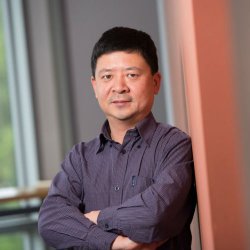
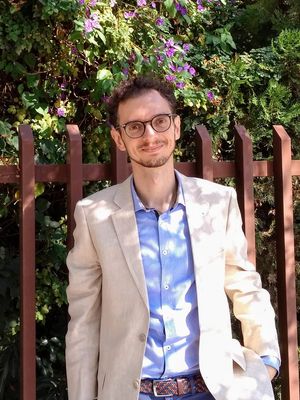
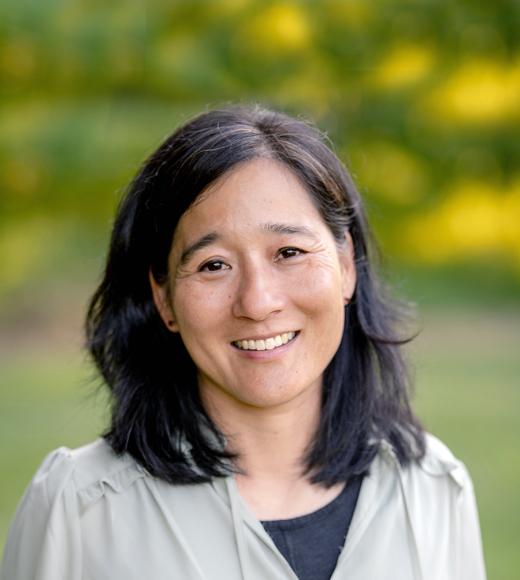
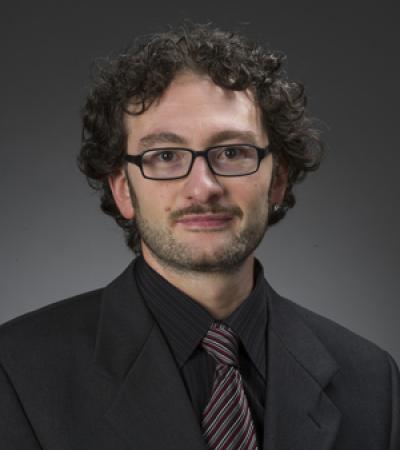
Dr. Yan (Cindy) Sun is a Lecturer in Telecommunications at Queen Mary University of London's School of Electronic Engineering and Computer Science. Her research focuses on routing strategies for ad hoc wireless networks, energy efficiency in IoT systems, and cross-layer design for next-generation wireless networks. She teaches modules on Ad Hoc Networks and Telecommunications Systems, emphasizing protocols like TCP/F, MANET routing (DSDV/ABR/AODV), and wireless broadband access technologies. Research Interests: Optimized routing in heterogeneous wireless environments Energy-saving mechanisms for IoT devices Cross-layer protocol design for 5G/6G networks Her publications (2017-2023) address VANET privacy, game-theoretic intrusion detection, and mMTC network optimization. Active in both theoretical and applied research, she has contributed to eHealth systems integrating wearable sensors with IoT frameworks. Teaching responsibilities include modules taught in collaboration with BUPT (Beijing), covering information theory, queuing theory, coding principles, and wireless network fundamentals.
Professor Ning Wang is a leading academic in communication systems at the University of Surrey's Institute for Communication Systems (ICS), School of Computer Science and Electronic Engineering. He holds a PhD from the University of Surrey (2004) and has expertise in 5G/6G networks, edge computing, and space-terrestrial integration. As a coordinator for the EuroMaster Programme and Communication Networks and Software (CNS) pathway, he leads research in network management, mobile video delivery, and IoT applications. His work has been featured in IEEE ComSoc Technology News three times since 2012. Current leadership roles include 5GIC Work Area 1 leader for content and network context. Research collaborations span global institutions like UCL, ETH Zurich, and industry partners like BT and InterDigital. Notable contributions include SDN-based space-terrestrial network integration (VDPA scheme) and O-RAN automation via federated DRL. Over 130 publications and active participation in standards bodies (IETF, 3GPP) reflect his impact on future network architectures. Educations: BEng in Computing (Changchun University of Science and Technology, 1996) MEng in Electronic Engineering (Nanyang Technological University, 2000) PhD in Electronic Engineering (University of Surrey, 2004) Research Focus: Future Internet design, network intelligence, content-centric networking, and satellite integration. Key projects include EU Horizon Europe SPIRIT (immersive telepresence), ESA TINA (satellite 5G functions), and EPSRC NG-CDI (converged digital infrastructures). His research emphasizes practical solutions like edge-AI for VNF splitting and holographic frame synchronisation. Grants & Projects: Over £20M in grants from EPSRC, EU Horizon, InnovateUK, and Royal Society. Active in EU-funded SAT5G (satellite-terrestrial 5G) and C-DAX (smart grid cybersecurity).
Professor Bishnupriya Gupta is a leading scholar in economic history and development at the University of Warwick's Department of Economics, where she has served as Professor since 2016. She also directs the Centre for Competitive Advantage in the Global Economy (CAGE), a major ESRC-funded research center examining long-term economic transformations. Her research focuses on India's long-run economic development , with particular attention to industrial entrepreneurship patterns in colonial India, gender dynamics including the 'missing women' phenomenon and women's labor market participation, and comparative analyses of the Great Divergence between Europe and Asia. Her work combines rigorous historical analysis with contemporary economic theory to understand centuries-long development trajectories. Gupta's scholarship demonstrates a consistent pattern of examining institutional structures that shape economic outcomes over extended historical periods. Her recent publications reveal growing interest in gendered economic impacts of demographic shocks, community-based industrial organization, and comparative analyses of Asian economic development paths. She frequently employs innovative methodologies to extract economic insights from historical data. She serves as co-editor of the Journal of Economic History and has secured substantial research funding through two consecutive ESRC grants for CAGE (2015-2020 and 2020-2025), supporting collaborative research involving numerous scholars across economic history and development economics. Gupta teaches advanced courses including EC9C1: Topics in Economic History and EC313: The International Economic System Since 1918. She initiated the CAGE-Discover Economics Schools Project, demonstrating commitment to broader educational outreach. Her influential publications include the 2025 Cambridge University Press monograph An Economic History of India: Growth, Income and Inequalities from the Mughals to the 21st Century and the co-edited 2015 Routledge volume A New Economic History of Colonial India .
Giorgos Bourogiannis is an Adjunct Professor at the Department of History and Archaeology , National and Kapodistrian University of Athens. He holds a PhD in Classical Archaeology from the University of Athens and has conducted postdoctoral research at institutions including the British Museum, Medelhavsmuseet (Stockholm), and the National Hellenic Research Foundation. His research focuses on the Early Iron Age Aegean , Cypriot-Phoenician interconnections , and script development in the Eastern Mediterranean. Education : BA in History and Archaeology (University of Athens), MSc by Research in Classical Archaeology (University of Edinburgh), PhD in Classical Archaeology (University of Athens) Current Appointments : Adjunct Faculty at Universities of Athens, Aegean, Hellenic Open University, and Open University of Cyprus Research Themes : Explores Iron Age state formation , maritime trade networks , and religious landscapes through archaeological theory and fieldwork. His 15 most recent publications (4 listed here) emphasize Cypriot connectivity, Aegean-Phoenician interactions, and the role of scripts in cross-cultural exchange. He has organized two international conferences on ancient Cyprus and authored a catalogue raisonné of Cypriot pottery. Scientific awards include a prestigious Harvard Early Career Fellowship . Bourogiannis has excavated extensively in Greece, Italy, Egypt, Cyprus, and Lebanon, and remains an active member of the American Society of Overseas Research and editorial board of Rivista di Studi Fenici .
Dr. Abigail Colson is a Senior Lecturer in the Department of Management Science at Strathclyde Business School, University of Strathclyde. She specializes in decision and uncertainty analysis with a focus on public health, including expert judgment elicitation methods. Her work addresses global health challenges such as antimicrobial resistance (AMR) and health evaluation in low-resource settings. She holds a PhD in Management Science from the University of Strathclyde, an MPP from the University of Chicago, and a BA in political science and environmental studies from American University. Her research integrates structured expert judgment techniques to inform policy decisions, particularly in cost-effectiveness analysis, benefit-cost prioritization, and health technology assessment. Recent projects include quantifying future AMR trends, evaluating child mental health interventions, and designing antibiotic financing models. She collaborates with international organizations and governments to strengthen healthcare systems in developing countries. Key areas: AMR forecasting, global health economics, expert elicitation protocols Notable projects: EFSA EKE Training, Credible Routes to GB Electricity Collapse Study Professional roles: Principal Investigator on multiple grants, Resident Scholar at Center for Disease Dynamics Dr. Colson’s publications emphasize methodological innovations in decision-making frameworks and their application to pressing global health issues. She develops training programs for structured expert judgment and advocates for evidence-based policy across diverse sectors.
Gautam Basu is a Professor of Practice at Aalto University's Department of Information and Service Management. His research focuses on illicit supply chains, transnational smuggling, and border security strategies. He holds a prominent role in analyzing logistics vulnerabilities and criminal networks within global trade systems. His key research interests include understanding institutional corruption in illicit activities, strategic attributes of smuggling operations, and supply chain risk management frameworks. He emphasizes transaction cost analysis and operational stealth tactics used by criminal networks. Basu's articles consistently address challenges faced by customs organizations, focusing on logistics flexibility in smuggling, concealment mechanisms, and counter-smuggling strategies. His work bridges criminology with supply chain management to develop practical solutions for border security challenges. No academic awards or grants are explicitly mentioned in the provided texts. He has no listed advisees or students. His professional profile includes active involvement in research without indication of part-time status or former institutional roles.
Dr. Shanmuga Sundar Dhanabalan is an Adjunct Senior Fellow in the School of Engineering at RMIT University, specializing in flexible/stretchable electronics, wearable biosensors, and photonics. His research focuses on smart medical devices like Smart Mattresses for aged care and Smart Eye Patches for chronic eye disease management. He collaborates extensively with industry and holds roles in research supervision and curriculum development. **Affiliations**: Functional Materials and Microsystems Research Group, RMIT University (Melbourne, Australia). **Research Interests**: Wearable sensors, optical communications, photonics, antennas, and sustainable nanomaterials. His work bridges materials science with healthcare technologies, emphasizing practical industry applications. **Awards**: Fondecyt Postdoctoral Fellowship (2018), TEQIP Doctoral Scholarship (2013), and fellowships with the Optical Society of India and Computer Science Teacher Association. **Supervision & Grants**: Active in mentoring postgraduate research projects (e.g., smart sensors, bioelectronic devices). His publications span over 60 peer-reviewed articles in journals like Optical and Quantum Electronics and Renewable and Sustainable Energy Reviews . **Labs/Teams**: Engaged in cross-disciplinary teams developing wearable health monitoring technologies and sustainable materials for electronics.
Nikita Borisov is an Associate Professor in the Department of Electrical and Computer Engineering at the University of Illinois at Urbana-Champaign (UIUC). He also holds Research Associate Professor positions at the Coordinated Science Laboratory and the Information Trust Institute. His affiliations include the Department of Computer Science as an affiliate and the Advanced Digital Sciences Center. His research focuses on network security, online privacy, and anonymous communication systems. He teaches courses in computer security, distributed systems, and computer systems engineering. Education: B.Math in Computer Science and Pure Math from the University of Waterloo (1994–1997), M.S. and Ph.D. in Computer Science from UC Berkeley (1998–2005), advised by Eric Brewer. His thesis explored anonymous routing in structured peer-to-peer overlays. Research interests span privacy-enhancing technologies, anonymous communication (e.g., Tor improvements), botnet detection, watermarking for network flows, and social network privacy. He has advised numerous Ph.D. and M.S. students, many of whom now hold academic and industry roles globally. Notable contributions include the Off-the-Record Messaging protocol, uncovering vulnerabilities in 802.11 WEP security, and developing frameworks like Ninja for scalable Internet services. His work has been recognized with best paper awards and invited journal publications. He has served on program committees for conferences like NDSS, PETS, and CCS, and co-edited books on privacy technologies. Current and past projects include cryptographic protocols, secure aggregation in publish-subscribe systems, and covert botnet detection in social networks.
Prof. Michael Schneider is Universitätsprofessor and Chair of Computational Logistics at RWTH Aachen University since 2016. Previously, he held positions at TU Darmstadt (2013-2016) and earned his doctoral degree from TU Kaiserslautern (2012). His research focuses on logistics optimization, including transportation routing, warehouse management, and metaheuristic methods for solving complex operational challenges. He leads the Global Challenges Lab and serves as communication chair of VeRoLog (EURO's vehicle routing group). Research interests include: quantitative modeling for supply chains, heuristic/exact optimization methods, electric vehicle routing, territory design, and production planning. Notable achievements include the INFORMS Journal on Computing Meritorious Paper Award (2021) and editorial roles in journals like Applied Mathematical Modelling. Publications span topics like vehicle routing with time windows, electric logistics networks, and warehouse automation strategies. His work integrates advanced algorithms with real-world industry applications (e.g., DHL, Picnic). The Computational Logistics group collaborates on projects addressing sustainability, autonomous systems, and modern warehousing challenges. Education: Business Admin & Computer Science (University of Mannheim), PhD (TU Kaiserslautern) Professional Roles: VeRoLog Communication Chair, EURO Working Group Key Projects: Electric vehicle routing optimization, warehouse automation, and sustainable logistics networks
Dr. Linda K. Nozick is a Professor and Director of Civil and Environmental Engineering at Cornell University, leading research in infrastructure resilience and disaster risk management. She co-founded the College Program in Systems Engineering and previously served as a Visiting Associate Professor at the Naval Postgraduate School. Her work focuses on mathematical modeling for complex systems, including transportation networks, natural hazard mitigation, and critical infrastructure protection. Education: B.S. in Systems Analysis and Engineering, George Washington University (1989) M.S./Ph.D. in Systems Engineering, University of Pennsylvania (1990-1992) Research Interests: She pioneers models for transportation systems, network science, and disaster risk management. Key areas include: Optimization of infrastructure resilience Hurricane evacuation modeling Insurance-market dynamics for catastrophic risks Seismic retrofitting strategies Data-driven decision support systems Recent Work Highlights: Recent studies address hurricane evacuation behavior prediction using mobility data, equity in hazmat routing, and multi-hazard risk assessment for power grids. Awards: 2011 Presidential Early Career Award for Scientists and Engineers NSF CAREER Award (1997) Sandia National Labs Recognition Award (2009) Member of Nuclear Waste Technical Review Board Academic Service: Leads Cornell's Master of Engineering strategic planning and coordinates the Engineering Systems & Management mission area. She advises federal agencies on infrastructure renewal through National Academy Committees. Lab/Team Affiliations: Directs research initiatives in disaster resilience engineering and collaborates with Sandia National Labs on infrastructure optimization tools.
Andrea Araldo is an Associate Professor at Telecom SudParis within the SAMOVAR research lab, specializing in NeSS (Networks, Systems, and Services). His work focuses on optimizing transportation systems, edge computing, and network resource allocation using advanced techniques like reinforcement learning and game theory. He has published extensively on topics including demand-responsive transit, vehicular cloud computing, and multi-tenant edge resource management. His research addresses challenges in urban mobility equity, infrastructure resilience, and energy-efficient network design. Research Interests: Transportation systems optimization Edge computing architectures Reinforcement learning applications Network resource allocation Urban accessibility equity Autonomous mobility systems Recent Trends in Publications: Recent work emphasizes adaptive transport network design during disruptions, equity-driven public transit planning, and vehicular cloud alternatives to traditional edge computing. He explores hybrid optimization methods combining reinforcement learning with classical algorithms for virtual network embedding and resource scheduling. Grants & Collaborations: Engages in multi-institutional projects involving institutions like Université Paris-Saclay and industry partnerships. Active in conferences such as TRB, IEEE ICC, and ACM SIGCOMM. Labs/Teams: Leads projects within SAMOVAR lab focusing on smart transportation and edge computing systems.
Professor Joy J. Geng is a faculty member at the University of California, Davis, where she leads the Integrated Attention Lab. Her research focuses on understanding how goal-directed and sensory-driven information interact to shape perception, with a particular emphasis on attentional control mechanisms. She employs neuroimaging (fMRI), eye-tracking, and electrophysiological techniques to study neural and cognitive processes underlying attentional selection and distractor suppression. Dr. Geng holds a Ph.D. in Psychology from Carnegie Mellon University and a B.A. in Psychology from Cornell University. She teaches courses in Cognitive Neuroscience, Perception, and Current Research in Psychology. Her work has been supported by grants, including a James S. McDonnell Foundation grant for studying memory and attention in virtual reality. Her lab investigates how behavioral goals and prior experiences influence attentional priorities, using methodologies such as virtual reality, EEG/ERP, and collaborations with TMS and pharmacology studies. Recent advancements include exploring multisensory integration, task-adaptive target templates, and distraction mitigation strategies. The lab maintains a supportive environment highlighted in its lab manual and has produced notable alumni across academia and industry. Dr. Geng advises numerous graduate and undergraduate students, many of whom have pursued postdoctoral research or faculty positions. Her contributions to the field include pioneering studies on attentional suppression, template adaptation, and the neural underpinnings of visual search efficiency.
Dr. Andrea Flack is an Independent Emmy Noether Group Leader at the Max Planck Institute of Animal Behavior, Konstanz, Germany, and a Junior Group Leader at the Centre for the Advanced Study of Collective Behaviour, University of Konstanz. Her research focuses on understanding how ecological, environmental, and genetic factors shape migratory behaviors in birds, particularly white storks, and their evolutionary consequences. Current Positions: Independent Emmy Noether Group Leader, Max Planck Institute of Animal Behavior (2022–present) Junior Group Leader, Centre for the Advanced Study of Collective Behaviour (2020–present) Education: DPhil in Zoology (2009), University of Oxford Diploma in Biology (2009), Freie Universität Berlin Her work integrates cutting-edge technologies such as high-resolution GPS, accelerometers, and on-board cameras with experimental approaches like delayed-releases and cross-fostering to explore behavioral variation and its implications. Recent research highlights include social learning in migration and the impact of anthropogenic habitats on stork movement patterns. Key trends across her publications emphasize collective decision-making, environmental adaptation, and technological innovations in tracking. Notable contributions appear in journals like PNAS , Current Biology , and Journal of Applied Ecology . Scientific Awards: Emmy Noether Fellowship Dr. Flack collaborates extensively, utilizing Movebank for data integration and leading studies on avian collision risks and migration phenology. Her lab team includes researchers like William Fiedler and Emily Aikens , focusing on experimental designs and ecological modeling.
Maurizio Albahari is an Associate Professor of Anthropology at the University of Notre Dame and concurrently serves as Associate Professor in the Keough School of Global Affairs. He has been a Kellogg Institute faculty fellow since 2016 and maintains a research associate position at the Center for Comparative Immigration Studies at UC San Diego. His academic work bridges anthropology with global affairs, focusing on critical issues of migration, sovereignty, and human rights in contemporary Mediterranean contexts. Albahari's research centers on migration and refugee mobility, sovereignty, democracy and human rights, citizenship, cities and aesthetics, and religious pluralism in public life. His scholarly approach examines how political and social structures shape migration experiences through the lens of social-cultural anthropology. He investigates the ethics of migration control, the politics of humanitarian response, and the lived experiences of refugees and migrants, with particular attention to Italian and European contexts. His work challenges conventional narratives about migration by emphasizing migrant agency and the political dimensions of humanitarian responses. Analysis of Albahari's publications reveals a consistent scholarly trajectory focused on Mediterranean migration, border politics, and human rights. His work spans ethnographic studies of migration routes, critical analyses of European border policies, and examinations of the humanitarian-military complex governing migration flows. A recurring theme across his scholarship is the tension between state sovereignty and human rights in contexts of forced migration, with particular attention to how border enforcement mechanisms transform humanitarian principles into instruments of control. University of Notre Dame Rome Global Gateway Affiliated Fellowship, American Academy in Rome (2016–2017) As a Kellogg Institute faculty fellow since 2016, Albahari engages in interdisciplinary research and likely mentors students interested in migration policy and human rights. His concurrent appointment in the Keough School of Global Affairs suggests involvement in policy-relevant scholarship and advising students pursuing careers in international affairs. While specific grant details aren't provided, his research on Mediterranean migration appears supported by institutional affiliations and fellowships that facilitate cross-institutional collaboration. Albahari's work is conducted through multiple institutional affiliations, including the University of Notre Dame's Department of Anthropology, the Keough School of Global Affairs, and the Kellogg Institute. His research associate position at UC San Diego's Center for Comparative Immigration Studies indicates collaborative work across institutions. His scholarship engages with critical global issues including Catholic Social Teaching, Citizenship, Civil Society, Democracy, Globalization, Governance, Human Rights, Identity, Migration/Border Studies, Religion, Transnationalism, and Violence, reflecting a comprehensive approach to understanding contemporary migration phenomena.
Afsah Anwar is a tenure-track Assistant Professor in the Department of Computer Science at the University of New Mexico (UNM), Albuquerque, leading the Beyond Defense Lab focused on Internet security, malicious activity analysis, and incident response frameworks. Her work bridges technical cybersecurity research with societal impact assessment. Her research spans Malware Analysis, Threat Intelligence, and Vulnerability Management, with specialized expertise in Machine Learning-based defenses for IoT/mobile platforms, Internet censorship measurement, space security, and web fraud detection. The lab emphasizes real-world applicability through tools that address concept drift in malware detection and robustness against adversarial attacks. Analysis of her 2020-2025 publications reveals dominant themes: IoT malware robustness under adversarial conditions (40% of output), Internet measurement studies including censorship and routing security (30%), and vulnerability database refinement (15%). Key methodologies integrate graph-based analysis, time-series measurement, and multimodal LLMs for interpretable security reasoning. Scientific Awards: Best Paper Award at WISE 2024 Research Grants: NSF SaTC Medium grant (August 2025) on VPN security with Roya Ensafi (UMich) and Jed Crandall (ASU) Advising: PhD Students: Enrique Sobrados (Mobile Security), Ramsha Anwar (Mobile Security/Privacy), Dheeman Saha (Censorship/Internet Measurement; co-advised) Master's: Jack Vanlyssel (NSF SFS Scholar, Space Security), Muhammad Danish (Web Security; CRA Outstanding Undergraduate) Undergraduate: Muneeb Ahmad (AI/Cybersecurity) Mentorship: Weekly CTF events, Sandia National Labs collaborations (Ross, Doakes, Hassan), and dedicated support for students from Bihar, India The Beyond Defense Lab operates from Farris Engineering Center #2150, hosting industry experts (e.g., Meta's Dr. Abusnaina, X's Dr. Saad) and developing healthcare security frameworks with Dr. Sazzadur Rahman. Current projects include Russian censorship analysis using time-series methods and multimodal LLMs for vulnerability reasoning (LLaVul).