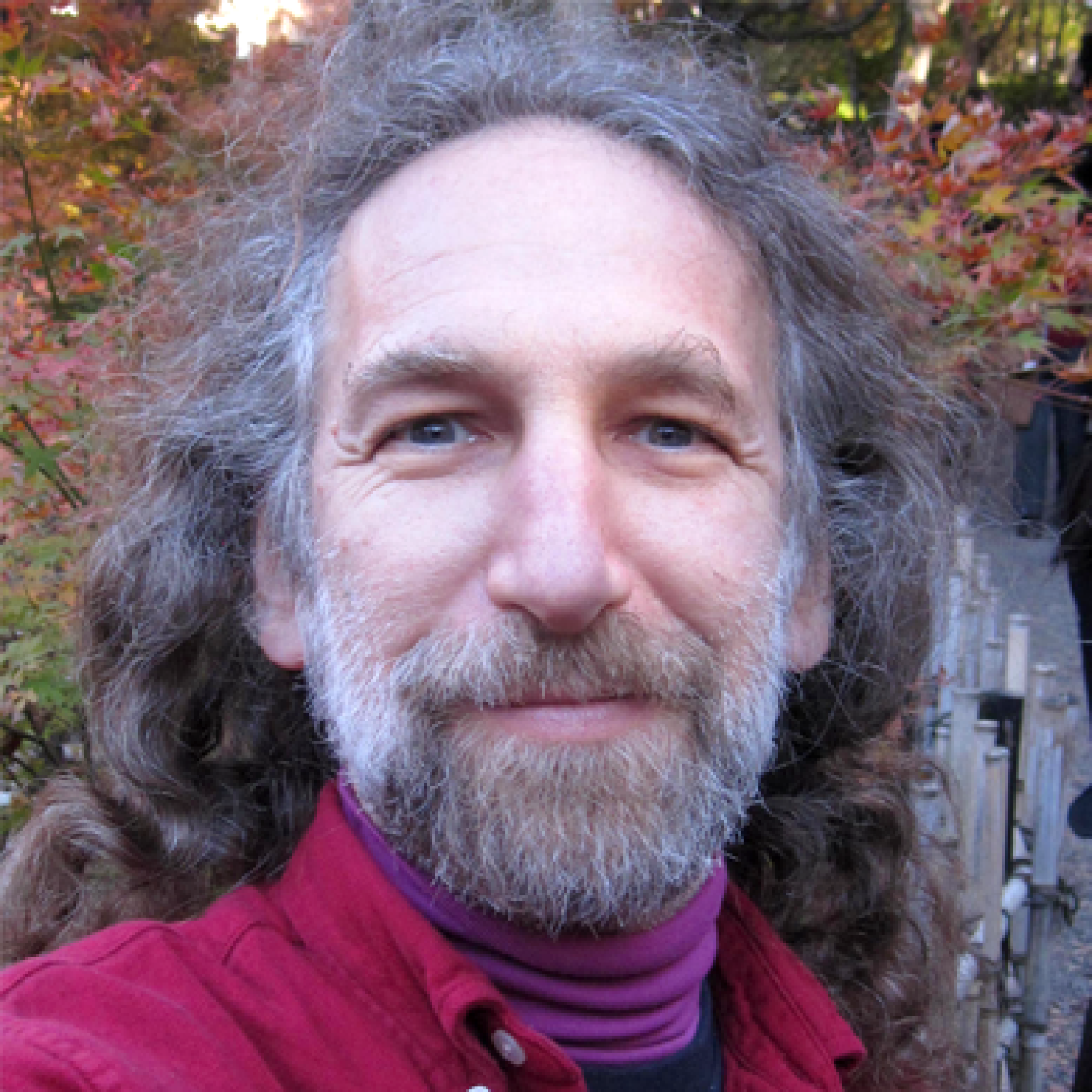
Mark D. Gross is a Professor of Computer Science and Director of the ATLAS Institute at the University of Colorado Boulder, where he leads an interdisciplinary hub for creativity and invention. His academic journey began at MIT with BS and PhD degrees, followed by faculty roles at Carnegie Mellon University (2004-2013), University of Washington Seattle (1999-2004), and CU-Boulder (1990-1999, 2014-present). As co-founder of Modular Robotics Incorporated and Blank Slate Systems LLC, he bridges academia and entrepreneurship. Education: BS and PhD in Computer Science from MIT Gross’ research spans design methods, modular robotics, computational design tools, and tangible interaction. He pioneered sketch recognition software like 'The Electronic Cocktail Napkin' and explores physical computing through projects such as shape-changing interfaces, interactive construction kits, and augmented reality systems. His work integrates IoT, digital fabrication, and educational technology. Recent publications highlight innovations in AR/VR collaboration, shape-changing robotics, and interactive fabrication. Key themes include climate communication through data physicalization, AI-driven creative systems, and soft robotics for dynamic interfaces. Despite no explicit awards listed, his career demonstrates sustained impact through ACM conference leadership (Creativity and Cognition 2009, TEI 2011) and industry partnerships. Gross’ prior industry experience includes positions at Atari Cambridge Research and Logo Computer Systems. His lab at ATLAS fosters radical creativity through projects like PaperMech, DynaBlock, and WearAir, emphasizing hands-on learning and cross-disciplinary experimentation.
Dr. Ting Hu is an Associate Professor in the School of Computing at Queen's University, affiliated with the Faculty of Arts and Science. She leads the Machine Intelligence & Biocomputing (MIB) Laboratory, focusing on bio-inspired AI and bioinformatics. Her research bridges evolutionary computing, machine learning, and biomedical data analysis. Dr. Hu holds a PhD in Computer Science from Memorial University and completed postdoctoral training at Dartmouth College. She teaches courses with strong student evaluations, winning the Howard Staveley Teaching Award (2019-2020) and recognition as a Mental Health Champion (2023). Education: B.Sc. in Computational Mathematics, Wuhan University M.Sc. in Computer Science, Wuhan University PhD in Computer Science, Memorial University Postdoctoral Fellowship, Geisel School of Medicine, Dartmouth College Research Interests: Evolutionary algorithms and genetic programming Interpretable and explainable AI Biomedical data mining (metabolomics, genomics) Complex network analysis Applications in precision medicine and disease prediction Awards & Recognition: Queen's AMS Undergraduate Mentorship Award (2025) IEEE CIBCB Best Student Award (2022) Howard Staveley Teaching Award (2019-2020) NSERC Discovery Grant Reviewer (2019) Memorial University's Best Professor Award (2016) Lab & Collaborations: MIB Lab develops tools like geneDRAGNN (graph neural networks for gene-disease prioritization) Active roles in IEEE Computational Intelligence Society and EuroGP Advances include vaccination strategies via graph-RL and interpretable clustering methods
Daniel M. Roy is a Professor at the University of Toronto with cross-appointments in the Departments of Computer Science and Electrical and Computer Engineering. He serves as Associate Chair, Statistics, and is a Research Director at the Vector Institute and a CIFAR Canada AI Chair. His research focuses on foundational principles of prediction, inference, and decision-making under uncertainty, spanning machine learning, statistics, mathematical logic, applied probability, and computer science. He has contributed to learning theory, statistical network analysis, probabilistic programming, and Bayesian nonparametric statistics. Education: Ph.D. in Computer Science from MIT (2011), advised by Leslie Kaelbling. Postdoctoral fellowships at the University of Cambridge (Newton International Fellow and Research Fellow). His research explores information theories of learning , online learning , and nonstandard foundations for decision theory . Recent work includes best paper awards at ICML 2024 and advancements in probabilistic programming systems like Church. His publications address problems in generalization bounds, causal bandits, neural network theory, and exchangeable random structures. Scientific Awards include the MIT/EECS George M. Sprowls Doctoral Dissertation Award and the ICML 2024 Best Paper Award. He advises students and postdocs across statistics, computer science, and machine learning, with alumni now holding positions at institutions like Princeton, Imperial College London, and the University of Chicago.
Tom Mitchell is the Fredkin Professor of AI and Learning and Director of the Center for Automated Learning and Discovery (CALD) at Carnegie Mellon University's School of Computer Science. His research focuses on machine learning, computational neuroscience, and their applications in neuroimaging and natural language processing. He is renowned for pioneering work in developing algorithms to decode brain activity and for contributions to foundational machine learning theory, including co-training and explanation-based learning. Mitchell authored the seminal textbook *Machine Learning* (McGraw Hill, 1997) and has led projects like Never-Ending Learning (NELL), an AI system that autonomously learns from web content. His work bridges computer science and cognitive science, exploring how machines can learn from data and human interaction. Notable research interests include brain-computer interfaces, automated knowledge extraction, and ethical AI. Mitchell's publications span influential journals like *Science* and *Nature*, and he has been recognized for advancing interdisciplinary research in AI and neuroscience. He has advised numerous students and contributed to initiatives like the AAAI Presidential Address on AI and brain sciences. Mitchell's current projects include studying the neural basis of language and developing AI tools for education and healthcare.
Dr. Burkhard Maess is a Research Professor and Group Leader at the Max Planck Institute for Human Cognitive and Brain Sciences, leading the Methods and Development Group Brain Networks. His research focuses on auditory and language processing, signal analysis, and dynamic modeling of neuronal networks. He holds a Diploma in Physics (University of Leipzig, 1987) and a PhD in Physics (University of Leipzig, 1990). His career includes postdoctoral positions at the Academy of Sciences of the GDR and the Free University of Berlin before joining the MPI in 1995. Since 2000, he has led research groups on MEG/EEG signal analysis and cortical network dynamics. His work integrates advanced neuroimaging techniques like MEG and EEG to study sensory processing, neural network dynamics, and the effects of aging on auditory attention. Key contributions include developing high-resolution BEM-FMM methods for source localization and analyzing cross-frequency coupling in neuroscience data. His group also explores spinal cord electrophysiology and the neural underpinnings of perceptual decision-making. Dr. Maess’ research spans cognitive neuroscience, biomedical engineering, and computational modeling, with a focus on bridging empirical findings with theoretical frameworks in neuroscience.
Dr. Jingyun Wang is an Assistant Professor in the Department of Computer Science at Durham University. Previously, she held an Assistant Professor position at Kyushu University, Japan. Her primary affiliations include the Centre for Neurodiversity & Development and the Artificial Intelligence and Human Systems Group (AIHS), as well as the Pedagogical Innovation in Computer Science Group (PICS). She is a Fellow of the Higher Education Academy and has led or contributed to research projects funded by JSPS, JST, NICT, Innovate UK, and industry partners. Her research focuses on AI-driven educational technologies, including AI-based feedback systems, computational thinking education, game-based learning, and ontology techniques. She actively contributes to editorial boards (e.g., Computers & Education: Artificial Intelligence ) and serves as a conference chair for AIED, ICCE, and LTLE. Current research includes adaptive learning systems for mathematics education, serious games for cybersecurity training, and visualization tools for e-learning. Her scientific contributions span over 50 peer-reviewed publications, with recent work emphasizing learning analytics, multimodal systems, and digital health interventions. She advises multiple PhD students and mentors in professional recognition pathways. Key projects include developing the BETTER speech training system, the MEMORABLE cybersecurity game framework, and ontology-based language learning platforms.
Dr. Victoria C. P. Chen is a Professor in the Industrial, Manufacturing, and Systems Engineering (IMSE) department at The University of Texas at Arlington (UTA), where she has served since 2002. She previously held positions at the Georgia Institute of Technology from 1993-2001. Dr. Chen has held several leadership roles at UTA, including Interim Department Chair (2012-2014), Director of the Center on Stochastic Modeling, Optimization, & Statistics (COSMOS) (2008-2012, and again from 2017-present), and Director of Doctoral Studies (2019-present). She was also the George & Elizabeth Pickett Professor from 2015-2017 and was inducted into the UT Arlington Academy of Distinguished Teachers in 2019. Dr. Chen is actively involved with INFORMS (Institute for Operations Research and the Management Science), where she currently serves as Secretary on the Executive Board. Dr. Chen earned her B.S. in Mathematical Sciences from The Johns Hopkins University, and her M.S. and Ph.D. in Operations Research and Industrial Engineering from Cornell University. Her academic journey includes visiting professorships at the University of Genoa, Italy, and Iowa State University. Dr. Chen's research utilizes statistical perspectives to create new methodologies for operations research problems appearing in engineering and science. Her expertise includes the design of experiments, statistical modeling, and data mining, particularly for computer experiments and stochastic optimization. Through her statistics-based approach, she has developed computationally-tractable decision-making methods for many high-dimensional complex systems. Her work spans multiple domains including sustainability, energy, water management, healthcare, and law enforcement. Specific application areas include inventory forecasting, airline optimization, water reservoir networks, wastewater treatment, air quality monitoring, green building design, nurse assignment systems, and pain management programs. Her recent publications demonstrate continued innovation in mixed integer programming for electric vehicle charging stations, vacuum ultraviolet spectroscopy prediction, and sustainable building education. Senior Member, Institute for Operations Research and the Management Sciences (INFORMS) (2024) Data Mining Prize (Lifetime Achievement Award), INFORMS Society on Data Mining (2023) College of Engineering Teaching Award, UT Arlington (2021) Third Place Award, C3.ai COVID-19 Grand Challenge (2020) Academy of Distinguished Teachers, University of Texas at Arlington (2019) George & Elizabeth Pickett Professorship (2015-2017) As an educator and mentor, Dr. Chen has advised over 25 doctoral students across diverse research topics in operations research and systems engineering. She has secured substantial research funding from multiple sources including the National Science Foundation (over $1.5 million in active projects), Environmental Protection Agency, National Institute of Justice, and industry partners like Luminant and Dallas-Fort Worth International Airport. Her current research projects focus on decision analytics for sustainable urban environments, optimization for Texas water management, and statistical methods for pain management programs. She has served as Principal Investigator or Co-PI on more than 20 externally funded research projects totaling over $3 million in funding. Dr. Chen co-founded the Center on Stochastic Modeling, Optimization, & Statistics (COSMOS) at UTA with Dr. H. W. Corley. This research center brings together faculty and students from multiple disciplines to address complex problems through advanced statistical and optimization methods. She also leads interdisciplinary research teams working on projects related to sustainable infrastructure, energy systems, and healthcare optimization, frequently collaborating with researchers from civil engineering, environmental science, and medical fields.
FANG Yuan is a tenured Associate Professor at the School of Computing and Information Systems (SCIS), Singapore Management University (SMU). He holds the prestigious Lee Kong Chian Fellowship and leads research in artificial intelligence and data science. His institutional affiliation includes: School of Computing and Information Systems, Singapore Management University Education: Ph.D. in Computer Science, University of Illinois at Urbana-Champaign (2014) Bachelor of Computing (First Class Honors), National University of Singapore (2009) - Top student in Computer Science Research Focus: Dr. FANG specializes in data mining, machine learning, and AI with emphasis on graph learning, information networks, recommendation systems, and knowledge graph applications. His work bridges theoretical foundations with practical applications in social analytics, biomedical informatics, and digital transformation, often employing advanced neural network architectures. Publication Trends: Recent works (2024-2025) demonstrate strong focus on graph machine learning innovations, including graph foundation models, prompt-based learning for dynamic graphs, and LLM-graph integrations. Key themes include few-shot/zero-shot learning, non-homophilic graph processing, and applications in recommendation systems, bioinformatics, and NLP. Methodological advancements frequently involve contrastive learning, transformer architectures, and explainable AI techniques. Awards & Honors: Lee Kong Chian Fellow World's Top 2% Scientist (2024) by Stanford/Elsevier #1 Most Influential Paper at WWW'23 (GraphPrompt) - Paper Digest (2024-09) Top 5 Most Influential Papers at WWW'23 (GraphPrompt) - Paper Digest (2024-05) Top Computer Science Graduate, NUS (2009) Student Advising: Currently advises doctoral candidates including DONG Viet Hoang, LIU Ran, and NIU Yudong. Recently supervised Dr. Zhongzhou Liu's successful PhD defense (2024) on trustworthy recommendation systems. Professional Engagement: Regularly organizes tutorials at premier venues (WWW, KDD) and delivers invited talks internationally on graph learning advancements. Leads multiple research projects in collaboration with industry partners.
Bo Wu is an Associate Professor in the Department of Computer Science at Colorado School of Mines. His research focuses on compilers and programming systems, particularly program optimizations for heterogeneous computing and emerging architectures, with applications in machine learning and graph processing. He joined Mines in 2014 after earning a Ph.D. from The College of William and Mary and earlier degrees from Central South University in China. Education : B.S. in Computational Science and Technology (Central South University, 2005) M.S. in Computer Science (Central South University, 2008) Ph.D. in Computer Science (The College of William and Mary, 2014) Research Interests : Wu's work emphasizes enhancing data locality in heterogeneous systems, GPU scheduling, and optimizing applications for emerging architectures. His contributions include frameworks like GraphZero for efficient graph mining and FLEP for GPU preemption. Awards & Grants : NSF SPX Award (2018) NSF CAREER Award (2018) Supercomputing Best Paper Award (2015) Multiple NSF grants for GPU-related research Advising & Grants : Wu has led several NSF-funded projects and actively participates in conference program committees (e.g., PPoPP, SC, ICS). His research spans compiler optimizations, parallel computing, and high-performance systems. Labs & Teams : While specific labs aren’t named, his work involves collaborations on GPU-based systems, graph processing frameworks, and compiler toolchains.
Cody Hyndman is a Full Professor and Acting Department Chair at the Department of Mathematics and Statistics, Concordia University, with a focus on Mathematical Finance, Machine Learning, and Stochastic Analysis. He has held significant administrative roles including Department Chair (2017–2023) and Acting Graduate Programs Director (2025–2025). Education: PhD, University of Waterloo (2005) MSc, University of Alberta BCom, University of Alberta His research spans Mathematical Finance , Stochastic Differential Equations , and Machine Learning , with notable contributions to arbitrage-free modeling, neural networks, and computational methods. Recent publications emphasize geometric deep learning and regularization techniques in finance. Scientific Awards: 2023: Concordia Academic Leadership Award Hyndman supervises graduate students in Mathematics and Statistics and co-founded the NSERC CREATE Program on Machine Learning in Quantitative Finance and Business Analytics (FIN-ML) , fostering industrial internships and interdisciplinary training.
Dr. Laraib Niaz is a Research Associate at the Faculty of Education, University of Cambridge, where she contributes to the independent evaluation of the Girls' Education Challenge II initiative. She holds an MSc in Development Management from the London School of Economics (LSE) and a PhD in Education from University College London (UCL). Previously, she served as an education consultant at the World Bank and has taught at LUMS and University College London. Her research focuses on inclusive education, disability studies, gender and development, national identity construction, and decolonizing research practices. She is affiliated with the Cambridge Network for Disability and Education Research (CaNDER) and the REAL Centre. Her research interests include exploring the role of religion in education, particularly in Pakistan, and analyzing media narratives during pandemics. She examines how textbooks construct national identity and investigates the impact of pseudoscience in educational systems. Her work also addresses academic freedom in higher education institutions in India and Pakistan. Laraib has extensive experience in supervising students and collaborating with international organizations such as the World Bank on inclusion-focused projects. Laraib has supervised students during her academic roles at LUMS and UCL. While specific grants are not detailed here, her current work involves evaluating 41 GEC II projects across 17 countries to assess support for girls with disabilities. Her research often intersects with global development and educational equity initiatives. She is part of the Cambridge Network for Disability and Education Research (CaNDER) and the REAL Centre , focusing on equitable access and learning in education systems.
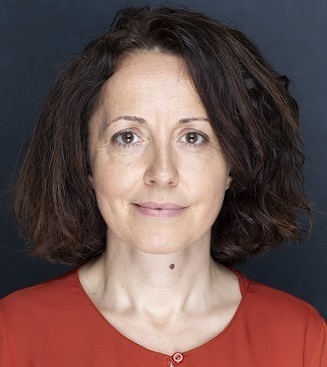
Prof. Hatice Gunes is a Full Professor of Affective Intelligence and Robotics at the University of Cambridge's Department of Computer Science and Technology, leading the Affective Intelligence and Robotics Lab (AFAR Lab). She holds an EPSRC Fellowship and is an EPSRC Fellow. Her research focuses on multimodal affective and social intelligence for AI systems, particularly embodied agents and robots, integrating Machine Learning, Affective Computing, and Human Nonverbal Behaviour Understanding. Key projects include the CHANSE initiative (2025–2028) for child mental health assessment via social robotics, the EPSRC Fellowship on robotic EQ for wellbeing (2019–2025), and the EU Horizon 2020 WorkingAge project. Prof. Gunes has pioneered systems like the EU SEMAINE project's SAL system, recognized with Best Demo and Paper Awards, and co-founded SensingFeeling, a spin-out company from the Innovate UK Sensing Feeling project. Her work emphasizes ethical AI and fairness, earning awards like the Best Paper Award in Responsible Affective Computing (IEEE ACII'23). She has delivered keynote talks at IEEE FG’19 and ICPR’22 and collaborates with the Department of Psychiatry and wellbeing professionals. Education: PhD in Computer Science from University of Technology Sydney (UTS) under Australian Government IPRS Scholarship Postdoctoral Research at Imperial College London (SEMAINe project) Research Interests: Multimodal affective computing, social robotics for mental wellbeing, fairness in AI systems, human-robot interaction (HRI), and ethical deployment of AI technologies. Her lab develops robots for workplace wellbeing coaching and child mental health assessment, with over 700 media coverages and partnerships with industry and healthcare sectors. Notable Achievements: Runner-up Collaboration Award (2023 VC Research Impact) Better Future Award (2023 Hall of Fame) Finalist RSJ/KROS Interdisciplinary Research Award (2021) Shortlisted Sony Women in Technology Award 2025 Labs & Teams: AFAR Lab drives interdisciplinary research in Cambridge, focusing on socially intelligent robots and AI systems that address critical societal challenges in wellbeing and mental health.
Pietro Liò is Full Professor in the Department of Computer Science and Technology at the University of Cambridge, where he leads research in Artificial Intelligence and Computational Biology as part of the AI group and the Cambridge Centre for AI in Medicine. He holds additional affiliations as Fellow and Council member of Clare Hall College, member of Ellis (European Lab for Learning & Intelligent Systems), and member of Academia Europaea. Professor Liò earned dual PhDs in Complex Systems and Non Linear Dynamics from the University of Florence and in Theoretical Genetics from the University of Pavia, Italy. His educational background bridges theoretical computer science with biological sciences, forming the foundation for his interdisciplinary research approach. His research focuses on developing Artificial Intelligence and Computational Biology models to understand disease complexity and advance personalized medicine. Current work emphasizes Graph Neural Network modeling for integrating multi-scale, multi-omics, and multi-physics data; combining deep learning with mechanistic approaches; explainability in medical AI; and developing AI-based medical digital twins and personal decision support systems. His work spans from fundamental algorithm development to clinical applications, with particular emphasis on translating computational advances into medical solutions. Analysis of his recent publications reveals strong activity in geometric deep learning , explainable AI for healthcare , and multi-omics integration , with increasing focus on clinically applicable tools that maintain both predictive power and interpretability. Member of Academia Europaea Listed among Top Italian Scientists by VIA-Academy Professor Liò has mentored over 40 PhD students and postdoctoral researchers, including notable names such as Petar Velickovic, David Buterez, and Chaitanya Joshi. His research is supported through collaborations with the Cambridge Centre for AI in Medicine and various international partnerships. He serves on departmental committees including Student Complaints and Postdoc Mentoring, and has completed equality and diversity training essentials. He leads research within the Artificial Intelligence group at Cambridge, focusing on creating computational frameworks that bridge biological complexity with clinical applications through advanced machine learning techniques.
Chris Russell is the Dieter Schwarz Associate Professor of AI, Government & Policy at the Oxford Internet Institute (OII), University of Oxford. His work bridges computer vision, machine learning, and ethical AI governance. He leads the Governance of Emerging Technologies programme, focusing on algorithmic accountability, transparency, and fairness. Prior roles include Group Leader at the Alan Turing Institute and Reader at the University of Surrey. Russell’s research has been recognized with awards, including the ICRA Best Paper Prize for autonomous driving mapping work. Research interests span algorithmic fairness, explainable AI, and responsible AI design. Notable projects include collaborations with the British Antarctic Foundation on climate modeling and causal approaches to algorithmic fairness. His work with Sandra Wachter and Brent Mittelstadt informs GDPR guidelines and tools like TensorFlow’s 'What-if Tool.' Current projects include advancing medical machine learning for inflammatory arthritis prediction and governance frameworks for emerging tech. Russell advises PhD students on socio-technical AI evaluations and teaches courses in machine learning and AI ethics. Recent publications address deepfake proliferation, LLM regulation, and fairness in foundational models. He co-leads initiatives like the Digital Good Network to align tech development with societal benefit.
Fatma Deniz is a Full Professor (W3) of Computer Science at Technische Universität Berlin, supported by the Berlin Equal Opportunities Program. She leads the Chair of Language and Communication in Biological and Artificial Systems, and is a member of the Berlin Bernstein Center for Computational Neuroscience. Her roles include membership in TU Berlin's Executive Board and the Berlin University Alliance Steering Committee. She holds a Ph.D. (Dr. rer. nat.) from TU Berlin and a Diploma in Computer Science from Technische Universität München, with research training at Caltech and postdoctoral work at UC Berkeley. Her research focuses on understanding neural mechanisms of language processing, integrating computational neuroscience, cognitive science, and artificial intelligence. Key areas include semantic representation dynamics, cross-modal neural alignment, and language learning in bilingual contexts. She has pioneered studies showing the brain's invariant semantic processing across reading and listening modalities. Her grants include an ERC Starting Grant (2023-2028) for studying language learning shifts and a NSF-BMBF CRCNS grant on bilingual representations. She co-edited The Practice of Reproducible Research: Case Studies in Data Science (UC Press, 2017) and contributed to foundational work on reproducible data science methodologies. She has advised projects in neuroimaging, AI ethics, and computational linguistics, and collaborates with institutions like UCSF and the German Academic Exchange Service. Her lab explores neural correlates of language through fMRI, MEG, and machine learning techniques.