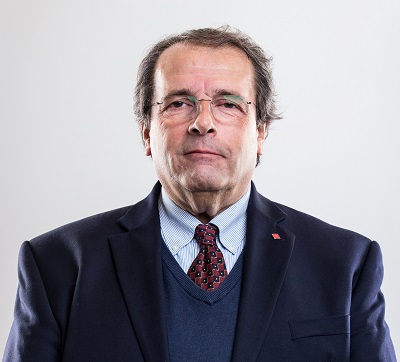
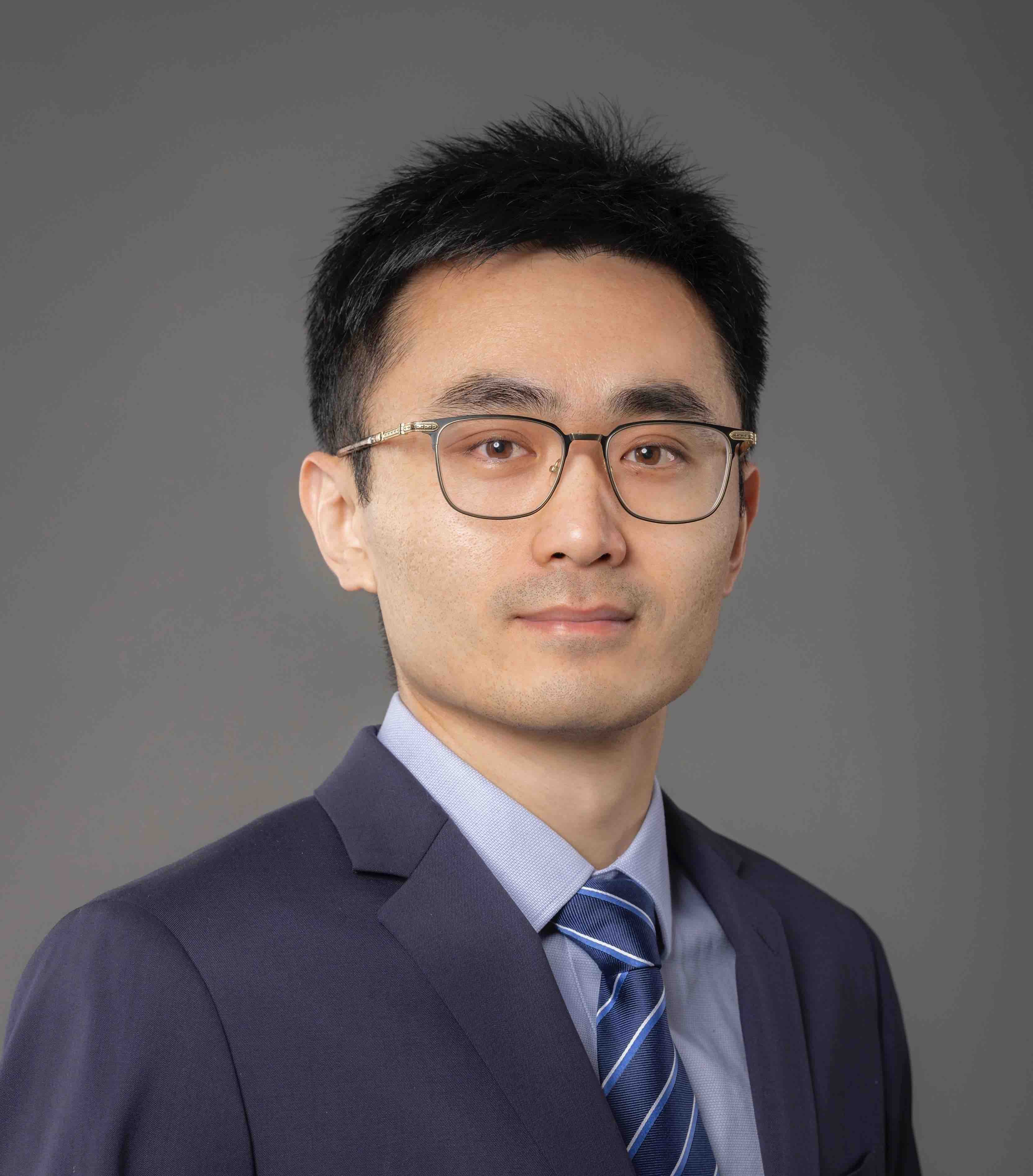
Luis Amaral is an Associate Professor at the School of Engineering, University of Minho, where he has served since 1998. He holds a PhD in Computer Science (Information Systems) from the University of Minho (1995) and has extensive experience in teaching, research, and administrative leadership. His research focuses on Information Systems in social and organizational contexts, particularly in public administration, with over 400 publications including books, journal articles, and conference papers. Key roles include Vice-Rector for Organizational Transformation and Administrative Simplification, Director of the Information Systems Department (2005–2006, 2010–2012), and leadership in projects like the Virtual Campus (e-UM). He has held numerous administrative positions, including President of the School of Engineering’s Council (2013–2016) and Pro-Rector (2006–2009). His work emphasizes e-government, digital transformation, and public procurement systems. Recent research trends include digitalization of public services, regulatory compliance (e.g., GDPR in higher education), and optimization of renewable energy systems. He has contributed to international initiatives such as the ICEGOV conference and projects in Mozambique and Timor-Leste. His publications highlight innovation in administrative processes, citizen engagement, and institutional digital readiness. Luis Amaral has coordinated postgraduate programs, including the Master’s in Information Systems (2001–2002, 2016–2017), and led research centers like IDITE Minho. His career reflects a balance between academic rigor and practical impact in technology-driven governance and organizational change.
Soufiene Djahel is a Professor at the Centre for Future Transport and Cities (CFTC) at Coventry University, UK. His research focuses on connected and autonomous vehicles (CAVs), unmanned aerial vehicles (UAVs), cyber security, and smart cities. He holds a PhD in Secure Routing and Medium Access Protocols from Université des Sciences et Technologies de Lille (2010), and has held academic positions including Senior Lecturer at the University of Huddersfield and Manchester Metropolitan University. His research interests include CAV coordination protocols, cyber-physical security solutions, and intelligent transportation systems. Djahel leads projects such as the £1.2M AeroPharma Logistics initiative and has secured funding from the Newton Fund and JSPS. He is a recipient of the 2021 JSPS Invitational Fellowship and has published extensively in IEEE journals and conferences. Current projects explore UAVs-as-a-service, digital twins for CAVs, and B5G/6G for smart infrastructure. He advises PhD students on topics like AI-based threat mitigation and transport electrification. Djahel also serves as an external examiner and editorial board member for journals like IEEE Transactions on Intelligent Transportation Systems.
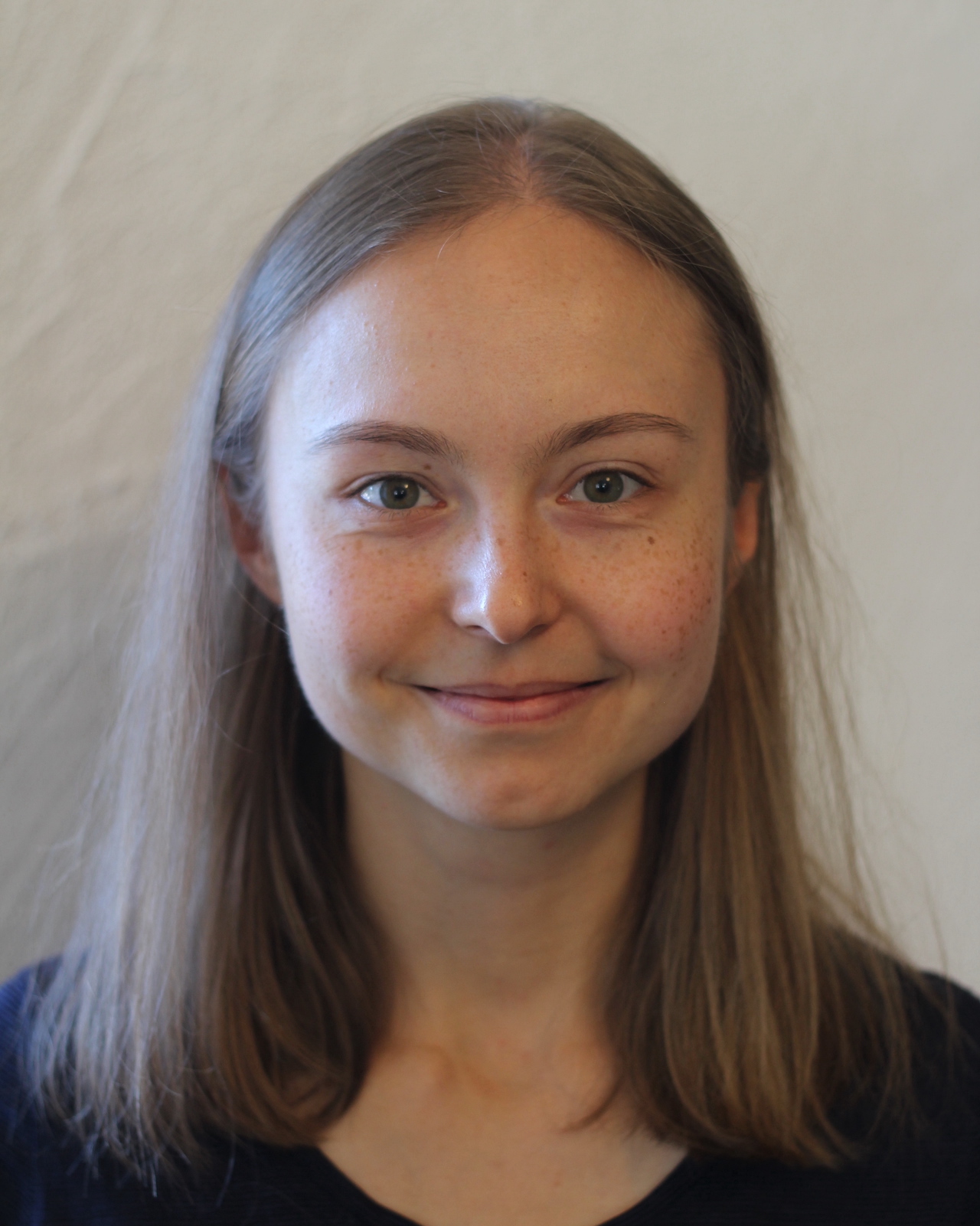
Dr. Lenka Mareková is a postdoctoral researcher in the Applied Cryptography Group at ETH Zürich. Previously, she completed her PhD in the Information Security Group at Royal Holloway, University of London, supervised by Martin R. Albrecht. Affiliation: ETH Zürich - Department of Computer Science Cryptographic analysis of secure messaging platforms Research focus on end-to-end encryption and real-world security implementations Her research interests span cryptographic protocol analysis, secure communication systems, and privacy-preserving technologies. The 10 most recent publications in her DBLP profile reflect expertise in: Secure messaging protocols (Telegram, Delta Chat) Cloud storage security (MEGA analysis) E-voting systems (Zerovote, E-cclesia) Mobile security frameworks (Android policy enforcement) Mesh network vulnerabilities Current work appears to focus on practical cryptographic implementations and their real-world security implications. Contact via hi@lenka.sh or lenka.marekova@inf.ethz.ch .
Professor Henning Grosse Ruse Khan is a leading academic in International and European Intellectual Property (IP) Law at the University of Cambridge, where he serves as Professor of Law, Co-Director of the Centre for Intellectual Property and Information Law (CIPIL), and Fellow of King’s College. He also holds affiliations with the Lauterpacht Centre for International Law and has been a Global Hauser Visiting Professor at New York University (2024). Education: Dr iur (University of Münster, Germany) Research Focus: His work bridges IP law with trade, investment, and technology, emphasizing sustainable development, environmental law, and the ethical implications of automation. Recent projects explore AI regulation, data access, and the legal dimensions of the Anthropocene. Key Article Trends: His publications analyze TRIPS-Plus agreements, investor-state disputes, and the intersection of IP with environmental and human rights frameworks. Themes include platform governance, data law, and historical justice. Scientific Honors: Distinguished Fellow, Hanken School of Economics (2016-2017) Global Hauser Visiting Professor, NYU (2024) Senior Fellow, Max Planck Institute (2013-2022) Co-Founder, Society of International Economic Law (SIEL) IP Network Advising & Grants: He advises the World Intellectual Property Organization (WIPO) and contributes to policy reports, including the UN ESCAP Handbook on Negotiating Development-Oriented Provisions in Trade and Investment Agreements (2017). His research has been funded by the 6th EU Framework Programme and other international bodies. Labs & Teams: As Co-Director of CIPIL, he leads research on global IP governance. He is affiliated with the Centre for Law, Medicine and Life Sciences (LML) and the Society of International Economic Law (SIEL).
Katrin Leifels is a Lecturer in Construction Management at RMIT University's School of PCPM. Her research focuses on occupational health, stress prevention, mental wellbeing, and psychosocial work aspects. She also explores human resource management, cultural diversity in teams, and workplace safety. Katrin holds a PhD and has received scholarships during her postgraduate studies, alongside industry-focused research grants. She has extensive teaching experience across RMIT and universities in Germany and China, and previously led projects at a German research institute, with industry experience in automotive and aviation sectors. Her teaching responsibilities include courses such as 'The Psychosocial Work Environment' and 'Work Health and Safety Intervention Project.' Katrin actively presents at international conferences and collaborates with industry partners. Her work spans construction safety, intercultural teamwork dynamics, and the impact of university environments on staff wellbeing. She is open to supervising Masters and PhD students. Research highlights include analyzing stressors in multicultural teams, cultural intelligence in global workforces, and systematic reviews on psychological harm in construction. Her contributions emphasize practical solutions for workplace mental health and safety, bridging academic research with industry applications.
Chaim Braun is an affiliate and former consulting professor at the Center for International Security and Cooperation (CISAC), Stanford University. He specializes in nuclear power economics, fuel supply assurance, and nuclear nonproliferation, with a focus on regional implications in the Middle East, South Asia, and South America. He is actively engaged in research on nuclear security policy and the implications of nuclear energy expansion. His research interests include nuclear nonproliferation, nuclear fuel cycle security, energy security, and safeguarding nuclear facilities. Braun pioneered the concept of proliferation rings related to the A.Q. Khan network and has worked extensively on nuclear fuel lease and take-back models. He also examines terrorist threats to nuclear power plants and research reactors, and has led studies on safeguarding the Agreed Framework in North Korea. The recent publications reflect a consistent focus on nuclear policy and security in high-risk regions, especially North Korea and South Korea, with an emphasis on geopolitical stability, denuclearization challenges, and the balance between civilian nuclear energy and weapons proliferation. Member, World Nuclear Association (WNA) Committees on Nuclear Economics and Assured Fuel Supplies Permanent Lecturer, World Nuclear University (WNU) One-Week Courses Member, DOE Generation IV Roadmap Study Working Groups Braun has conducted research for the Department of Energy (DOE), Energy Information Administration (EIA), Electric Power Research Institute (EPRI), Nuclear Energy Institute (NEI), and Non-Proliferation Trust International. Prior to CISAC, he worked at Bechtel Power Corporation, United Engineers and Constructors (UE&C), EPRI, and Brookhaven National Laboratory, leading studies on power plant performance and nuclear marketing in East Asia and Eastern Europe. He is affiliated with CISAC’s research initiatives and has contributed to summer studies on nuclear power expansion and nonproliferation, including chairing a working group on the back-end of the nuclear fuel cycle.
Kenneth DE ROECK is an Associate Professor of Management at SKEMA Business School (Lille, France) and held tenured positions previously at the University of Vermont (USA). He specializes in understanding how employees respond psychologically to organizations' CSR initiatives, focusing on mechanisms like organizational identification, justice perceptions, and ethical leadership. His work bridges CSR theory with practical implications for sustainable business practices. Affiliations: SKEMA Academy, SKEMA Centre for Sustainability Studies Editorial Roles: Journal of Business Research (since 2023), Journal of Business Ethics (Senior/Associate Editor since 2018) Research Interests: Psychological mechanisms behind employee reactions to CSR CSR's impact on organizational identification and ethical behavior Paradoxes and tensions in CSR stakeholder management Key Article Trends: Focus on CSR's dual roles as both value-creating and value-protecting mechanism, with recent emphasis on abusive supervision's impact on CSR behavior and insurance-like effects of CSR during organizational breaches. Awards: SKEMA Research Excellence Award (2024), SAGE Scholarly Impact Award (2023), Best CSR Communication Paper (2019) Grant & Advisory Work: Extensive consulting with ENGIE (CSR/HRM) and ERAMET (Business Analysis). Active in Academy of Management and Louvain CSR Network.
Rainald Loehner is a Distinguished Professor of Fluid Dynamics at George Mason University's Center for Computational Fluid Dynamics. Since 2003, he has led the Center for Computational Fluid Dynamics at George Mason University. He is currently a Hans Fischer Senior Fellow at the Technical University of Munich's Institute for Advanced Study (TUM-IAS) for 2023, hosted by Professors Kai-Uwe Bletzinger and Roland Wüchner in the 'Adjoint-Based System Identification of Large-Scale Structures' Focus Group. Loehner received his Diplom Ingenieur (Maschinenbau) degree from the Technical University of Braunschweig, and his PhD and a DSc in civil engineering from the University College of Swansea, Wales. After teaching at Swansea for a year, he worked at the Naval Research Laboratory in Washington, DC, followed by a research professorship at George Washington University. He joined George Mason University as an associate professor and was promoted to full professor in 1995 and distinguished professor in 2004. With over 35 years of experience, Professor Loehner's research spans the complete pipeline of numerical solvers and simulation tools. His expertise includes pre-processing, grid generation, numerical methods, field solvers, parallel computing, adaptive mesh refinement, fluid-structure interaction, shape optimization, system identification, and computational crowd dynamics. His current work focuses on developing advanced field solvers for compressible and incompressible flows, acoustics, electromagnetic wave propagation, heat and mass transfer, structural mechanics, and fluid-structure interaction. Key application areas include blast mitigation, ship hydrodynamics, blood flow, contaminant transport, and pedestrian safety. Loehner's recent research output (2020-2024) shows a strong trend toward digital twin technology and adjoint-based methods for structural analysis and optimization. His publications focus on high-fidelity digital twins for detecting structural weaknesses, risk assessment in engineering systems, and optimization of sensor placement. His work bridges computational mechanics with machine learning approaches, particularly in system identification and inverse problems, demonstrating how computational methods can solve complex real-world engineering challenges. 2020: Ranked #15119 in the Stanford List of Most Influential Scientists of the World; #8 in Aerospace and Aeronautics 2010: Distinguished International Career Award, Argentine Association of Computational Mechanics 2008: Fellow, International Association for Computational Mechanics 2006: Associate Fellow, AIAA 2005: Honorary Professor, University of Wales Swansea 2005: Advisory Professor, Shanghai Jiao Tong University 2004: Distinguished Professor of Fluid Dynamics, George Mason University 1999: Computational Mechanics Achievements Award, Japan Society of Mechanical Engineering 1993: Doctor of Science in Civil Engineering, University College of Swansea 1979-1983: Studienstiftung des Deutschen Volkes (Top 1% of German Students) Professor Loehner has mentored numerous students through his work at George Mason University and has supervised research in computational fluid dynamics, structural mechanics, and related fields. His research has been supported by various grants from government agencies and industry partners, enabling the development of advanced simulation tools applied in aerodynamics, hydrodynamics, shock-structure interaction, and medical applications. His codes and methods have been widely adopted in industry and academia for applications ranging from aircraft and ship design to medical simulations and urban pathogen transmission modeling. Loehner leads the Center for Computational Fluid Dynamics at George Mason University, which focuses on developing cutting-edge computational methods for fluid dynamics and related multiphysics problems. The center works on strategic application areas including blast mitigation, ship hydrodynamics, blood flow simulation, and pedestrian movement modeling. As a TUM-IAS Fellow, he collaborates with the Chair of Computational Modeling and Simulation at TUM on adjoint-based system identification of large-scale structures, bringing together expertise in computational mechanics and digital twin technology to address complex engineering challenges.
Yan Huang is an Associate Professor in the Department of Software Engineering and Game Development at Kennesaw State University (KSU). His work bridges Federated Learning (FL) and Cybersecurity Education , with a focus on personalization and privacy in distributed systems. Research spans Machine Learning , Extended Reality (XR) , and Data Privacy . He has served as Editor of WCMC and Program Co-Chair for CyberSciTech 2020-2024. Research Trends: Recent publications emphasize Federated Learning for non-IID data, VR-based Cybersecurity Education , and Privacy-Preserving Algorithms in IoT and social media analytics. Key subfields include personalized learning architectures, graph learning, and game-theoretic privacy frameworks. Scientific Awards: Excellent Paper Award (Tsinghua Science and Technology, 2021) Best Paper Award (Future Generation Computer Systems, 2019) Best Paper Awards at IEEE SmartWorld 2021, COCOA 2019, and WASA 2019 Grants: Led over $600,000 in NSF and NSA-funded projects, including VR cybersecurity education for K-12 and XR engineering curricula. His lab recruits VR/AR Research Assistants via industry partnerships.
Dr. Jasper van den Boom is currently a Postdoctoral Research Fellow at the Chair for Civil Law, German and European Competition Law at Heinrich Heine University Düsseldorf. He holds a Master’s degree from Tilburg University in European Economic & Competition Law and completed his PhD there with a thesis on digital market regulation. His research focuses on competition law, digital regulation, energy law, and cybersecurity. He has taught at Utrecht University and supervised theses on competition law and digital governance. Key achievements include nominations for the Tilburg University Dissertation Award and KNHW Award for interdisciplinary work. His research spans topics like Digital Markets Act (DMA) enforcement mechanisms, ecosystem competition analysis, and cybersecurity policy. He contributed to policy reports for the Dutch National Cybersecurity Centre and co-authored studies on EU competition law’s interactions with digital markets. Dr. van den Boom’s work bridges legal frameworks with technological and economic realities, emphasizing practical regulatory solutions for modern challenges in digital ecosystems and energy sectors.
Mia Hakovirta is a Professor in the Department of Social Work at the University of Turku, Finland. Her work is centered on family policy, child support, lone parenthood, child poverty, and financial social work. She holds a PhD from the University of Turku (2006) and an MA from the University of Tampere (1994). MA, University of Tampere (1994) PhD, University of Turku (2006) Her research focuses on the economic well-being of families after separation, particularly in shared care arrangements, and the impact of child support policies across welfare states. She has led major research projects including EconShared (Academy of Finland), TALSOS (Ministry of Social Affairs), and Children First (NordForsk). Her expertise extends to international comparative studies, with visiting scholar experience at SPRU (UK), Rutgers University, University of Wisconsin–Madison, and RMIT University. Her recent publications explore joint physical custody, child support systems, financial abuse of children, and cross-national comparisons between Finland and the US. These works reveal a strong trend toward analyzing the intersection of legal frameworks, economic support mechanisms, and child well-being in post-separation families. Although no specific scientific awards are listed, her leadership in externally funded research projects highlights her scholarly recognition. She has contributed significantly to policy-relevant research in Nordic and international contexts. Mia Hakovirta advises students and leads research teams focused on family economics and social policy. She has secured grants from the Academy of Finland, NordForsk, and the Finnish Ministry of Social Affairs. Her collaborative network spans multiple countries, reflecting her role in advancing comparative family policy research. She has also contributed to public discourse through blog posts and commentaries on the social impacts of the pandemic on children. She is actively involved in research groups and projects that examine financial social work, child support enforcement, and the economic integration of lone-parent families. Her work bridges academic research and practical social work interventions, particularly in supporting families with children facing economic hardship.
Fabrizio Lombardi is the ITC Endowed Professor at Northeastern University's Department of Electrical and Computer Engineering, part of the College of Engineering. He previously held faculty positions at Texas Tech University, University of Colorado-Boulder, and Texas A&M University. He earned his B.Sc. from the University of Essex (1977), M.Sc. and Ph.D. from the University of London (1982). His research focuses on fault-tolerant computing, VLSI CAD, quantum computing, and configurable computing systems. He has led major projects like the NSF-funded Neural-Network-based Stochastic Computing Architectures for Machine Learning . He holds leadership roles including President of the IEEE Nanotechnology Council (2022-2023), IEEE Computer Society Vice President (2021), and IEEE PSPB member. His 200+ publications span IEEE Transactions on Computers, Nanotechnology, and Design & Test. Awards include IEEE Fellow, Søren Buus Outstanding Research Award, and multiple research fellowships. His work bridges theory and application, emphasizing defect-tolerant nanosystems and energy-efficient computing hardware. Recent innovations include approximate computing methodologies and secure PUF-based hardware designs.
Dr. Roxanna Dehaghani is a Reader in Law at the School of Law and Politics, Cardiff University. A socio-legal researcher, she specializes in criminal justice, human rights, and legal psychology, focusing on the vulnerabilities of suspects and defendants during pre-trial processes. Her work bridges academic research with policy and practice to improve safeguards for neurodivergent and at-risk populations in legal systems. Ph.D. in Law, University of Leicester (2014-18) LL.M. in Forensics, Criminology & Administration of Justice, Maastricht University (2011-12) LL.B. (Hons.) in Law, Queen’s University Belfast (2007-10) Her research examines how criminal justice policies either advance or exacerbate the vulnerable position of the accused. Key areas include appropriate adult safeguards , neurodiversity in policing , and fair trial rights . She has conceptualized vulnerability theory and led initiatives like training videos for police and healthcare professionals. Recent publications highlight trends in multi-jurisdictional legal safeguards , pre-charge bail challenges , and neurodivergent defendant governance . Her work has influenced REF2021 impact case studies and policy revisions across English and Welsh police forces. Learned Society of Wales Dillwyn Medal (2024) University of Leicester Alumna of the Year (2025) Dr. Dehaghani supervises PhD candidates in vulnerable suspect rights and has secured significant funding from the British Academy, ESRC, and ERC. She co-chairs the Vulnerability Research Network and collaborates with the National Police Chief's Council to refine custody risk assessments. Her academic leadership includes editorial roles in the Howard Journal of Crime and Justice and the Journal of Adult Protection , alongside advisory positions for ESRC and Nuffield-funded projects.
Elena Niculina Dragoi is a Lecturer at the Faculty of Chemical Engineering and Environmental Protection 'Cristofor Simionescu' at Gheorghe Asachi Technical University in Iasi, Romania. Her academic work integrates Artificial Intelligence and Machine Learning tools for solving complex problems in Chemical Engineering and Environmental Protection . With over 30 published papers and six active research projects, her contributions span process optimization, nanomaterials, and sustainable technologies. Teaches Applied Informatics (Years 1 & 4) and Artificial Intelligence at the Faculty of Chemical Engineering Contributes to Programming Engineering at the Faculty of Computer Science, University 'Alexandru Ioan Cuza' Engaged in interdisciplinary courses at the Faculty of Automatic Control and Computer Engineering Research Interests : Elena's work focuses on modelling and optimization (90% emphasis) of chemical processes using AI methodologies, with cross-disciplinary applications in environmental engineering (70%) and chemical engineering (95%). Her recent publications highlight innovations in: 3D-printed nanocomposite adsorbents for pollutant removal Metaheuristic optimization algorithms for industrial processes Hydrogen generation via nanocatalysts Electrochemical biosensors for environmental and health monitoring AI-driven wastewater treatment systems Green chemistry applications in pharmaceutical and dye removal
Mohammed Y Niamat is a full-time Professor in the Department of Electrical Engineering and Computer Science at the University of Toledo's College of Engineering . His research focuses on hardware security, FPGA vulnerabilities, and blockchain applications in cybersecurity. Research Interests : Physical Unclonable Functions (PUFs), FPGA Security, Blockchain-based Security Frameworks, IoT Security, Smart Grid Authentication, Machine Learning Vulnerability Analysis Publications : Over 85 publications from 1986-2024, with recent works on integrations of blockchain and PUFs for secure supply chains, neural network modeling attacks on PUFs, and hardware Trojan detection techniques. Collaborations : Co-authored with Junghwan Kim (4), Weiqing Sun (2), Richard Molyet (1). Recent Article Trends : 2024 works on zero-trust architecture for FPGA supply chains using blockchain and ROPUFs; 2023 studies on IoT device authentication, hardware Trojan detection, and NFT-based IP protection; 2021-2019 research on machine learning attacks against PUFs, lightweight cryptographic designs for IoT, and BER optimization in wireless systems.