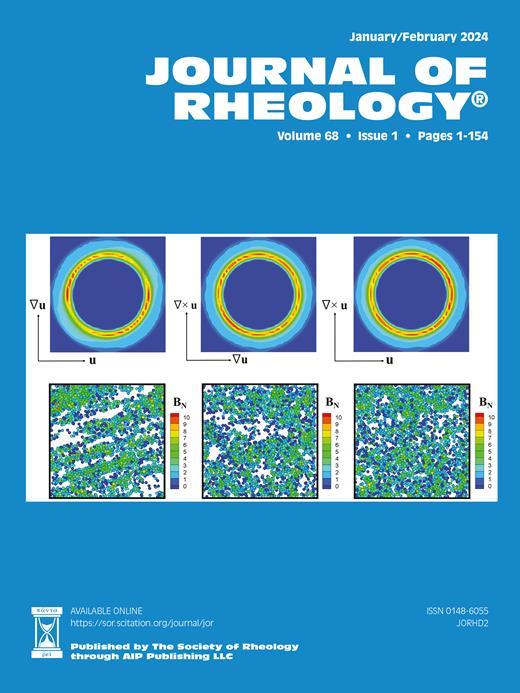
Randy H. Ewoldt is the Alexander Rankin Professor in the Department of Mechanical Science and Engineering at the University of Illinois at Urbana-Champaign (UIUC), part of the Grainger College of Engineering. He holds the Kritzer Faculty Scholar distinction and has been a faculty member since 2011, progressing from Assistant to Associate Professor before his current rank. His research focuses on fluid mechanics and rheology of complex fluids, with interdisciplinary applications in bioengineering, manufacturing, and robotics. Education includes a PhD and MS in Mechanical Engineering from MIT (2009 and 2006) and a BS from Iowa State University (2004). He has held visiting roles, including Guest Professor at ETH Zurich (2018). Research interests span rheology of complex fluids, nonlinear viscoelasticity, and material design. Notable contributions include pioneering work on protorheology and yield-stress fluids. His work often combines experiment and theory, emphasizing practical applications. Awards include the 2025 Society of Rheology Fellowship, PECASE (2017), and multiple teaching accolades. He advises on advanced fluid mechanics and rheology courses, including TAM 435, TAM 534, and ME 310. Labs/Teams: Ewoldt Research Group focuses on fluid mechanics and rheology, collaborating on projects like 3D printing and material design. Recent highlights include studies on embedded solvent exchange printing and viscoelastic fluid behavior.
Olga Papaemmanouil is a Professor of Computer Science at Brandeis University and Senior Associate Provost for Academic Affairs and Curriculum. She is affiliated with the Michtom School of Computer Science and the Volen National Center for Complex Systems. Ph.D. in Computer Science, Brown University (2008) M.S. in Information Systems, University of Economics and Business, Athens (2001) B.S. in Computer Science and Informatics, University of Patras, Greece (1999) Her research focuses on data management, integrating machine learning with cloud databases, query optimization, and performance prediction. She has pioneered techniques for interactive data exploration, reinforcement learning in query scheduling, and economic models for database provisioning. Recent publications highlight her work on learned query optimizers , deep reinforcement learning for database operations, and platform-independent neuroscience data interfaces . NSF Career Award (2013) Amazon Research Award (2019) Huawei Innovation Research Awards (2017, 2018) SIGMOD Best Demonstration Award (2015) Paris Kanellakis Fellowship (2002) She has secured multiple NSF grants and developed systems like Neo (learned query optimizer) and XCloud (performance management for cloud data services). Her work bridges database systems and machine learning for scalable data analytics.
Professor Rainer Böhme is a prominent academic in the field of IT security and privacy at the University of Münster's School of Business and Economics, Department of Information Systems. He also holds a professorship for Security and Privacy at the University of Innsbruck's Institute of Computer Science. His research spans multiple dimensions of digital security, with particular expertise in steganography, digital forensics, privacy-enhancing technologies, and the economic aspects of cybersecurity. Dr. Böhme earned his Doctoral Degree from TU Dresden's Faculty of Computer Science in 2008, following studies in Communications, Economics and Computer Science at Technische Universität Dresden and Université Paris XII. His academic journey includes positions as Assistant Professor at the University of Münster (2010-2015), Postdoctoral Fellow at the International Computer Science Institute in Berkeley (2009-2010), and Scientific Staff at TU Dresden's Chair of Privacy and Data Security. His research interests focus on steganography and steganalysis, digital forensics, privacy-enhancing technologies, security and usability, economic and behavioral aspects of information privacy, virtual currencies, and the economics of information security. His work bridges technical security mechanisms with economic and behavioral considerations, creating a unique interdisciplinary approach to cybersecurity challenges. Analysis of his recent publications reveals a strong trend toward the economics of security, particularly regarding blockchain technologies, cryptocurrency, and privacy valuation. His work increasingly examines the intersection of technical security mechanisms with market dynamics, regulatory frameworks, and user behavior. The research spans theoretical game-theoretic models, empirical studies of user behavior, and practical applications in digital forensics and privacy protection. Program Co-Chair, Financial Cryptography and Data Security (2015) Program Co-Chair, New Security Paradigms Workshop (NSPW) (2015) General Chair, 8th International Conference on IT Security Incident Management & IT Forensics (2014) Organizer and Program Co-Chair, 1st Workshop on Bitcoin Research (2014) Associate Editor, Electronic Commerce Research (since 2013) Associate Editor, EURASIP Journal on Information Security (since 2013) Professor Böhme has supervised multiple Master's theses in Information Systems, including work on static code analysis for smart contracts, remote maintenance protocol security, and application protection requirements in retail banking. His research is supported by significant grants from the German Federal Ministry of Research, Technology and Space, the DFG, and the EU FP7 program, with projects focusing on digital forensics, privacy-enhancing technologies, and cryptocurrency crime prevention. He leads the IT Security Research Group at the University of Münster, which investigates theoretical and applied aspects of information security with particular emphasis on the economic dimensions of security decisions.
Jason M. LaBelle is a Professor of Anthropology at Colorado State University (CSU), affiliated with the College of Liberal Arts. He serves as Director of the Center for Mountain and Plains Archaeology (CMPA) and Curator of the Archaeological Repository of CSU (AR-CSU). His research focuses on hunter-gatherer societies, particularly in the Intermountain West, emphasizing subsistence, mobility, and pre/post-contact Native American cultures. His work spans environments from the Great Plains to high alpine regions, with specialties in Clovis/Folsom cultures, communal hunting practices, and lithic technology. LaBelle teaches courses in archaeology, lithic technology, and public archaeology. He oversees CMPA projects funded by federal agencies like the National Park Service and the Bureau of Land Management, supporting student training in fieldwork, lab analysis (lithics, faunal studies), and report writing. His lab houses extensive collections from Colorado’s South Platte and Colorado River Basins, including alpine artifacts. He actively engages with tribal partners and the public through outreach, conferences, and NAGPRA coordination. LaBelle’s recent research includes studies on lithic quarries, ice patch archaeology, and Bayesian chronology modeling. His publications address prehistoric mobility, site chronology, and cultural resource management. He values interdisciplinary collaboration and student mentorship, aiming to bridge academic and applied archaeology.
Lorraine (Xiang) Li is an Assistant Professor in the Department of Computer Science at the University of Pittsburgh’s School of Computing and Information (SCI). Her research focuses on the intersection of natural language processing, commonsense reasoning, knowledge representation, and machine learning, particularly in designing probabilistic models and evaluation methods for implicit commonsense knowledge in language. Li holds a PhD from the University of Massachusetts, Amherst, and previously worked as a young investigator with the Mosaic team at AI2. She has an M.S. in Computer Science from the University of Chicago, where she conducted research at TTIC. Her work emphasizes advancing AI’s ability to reason contextually and generate robust, human-like understanding through probabilistic frameworks. Key research themes include bias detection in reasoning models, iterative model editing, domain adaptation with LLMs, and evaluating commonsense through probabilistic measures. Her recent publications explore challenges like confirmation bias in chain-of-thought reasoning and geographical robustness in object recognition. Li actively contributes to the NLP community, serving on program committees for ACL, EMNLP, NAACL, and ARR. Though no formal awards are listed, her prolific publication record reflects her impact in AI research. She currently leads research in procedural knowledge models (e.g., Plasma) and long-tail knowledge generation, advancing foundational AI methodologies.
Charles F. Harvey is a Professor in the Department of Civil and Environmental Engineering at the Massachusetts Institute of Technology (MIT), where he investigates hydrology, carbon cycling, and groundwater contamination. His work spans tropical peatlands, arsenic pollution in South Asia, and coastal groundwater dynamics, with field sites in Borneo, Bangladesh, and Vietnam. Education: B.A. in Mathematics (Oberlin College, 1986), M.S. in Applied Earth Science (Stanford University, 1992), Ph.D. in Geological and Environmental Sciences (Stanford University, 1996). Harvey’s research focuses on hydrogeology , carbon sequestration , and contaminant transport . He explores how groundwater flow and biogeochemical processes interact in tropical peatlands and coastal systems, with significant implications for climate change and water security. His recent publications emphasize tropical peatland hydrology , arsenic mobilization , and coastal groundwater exchange , integrating field experiments, remote sensing, and computational models. Scientific Awards AGU Fellow GSA Fellow Meinzer Award (GSA) Prince Sultan bin Abdulaziz International Prize for Water M. King Hubbert Award for Hydrology NSF Young Investigator Award Harvey leads the Harvey Lab , mentoring students and researchers in projects ranging from groundwater arsenic mitigation to coastal marsh biogeochemistry . His work bridges terrestrial and marine systems , addressing critical planetary challenges.
Dr. Edward Wei is a Research Fellow at the University of Sydney Business School's Institute of Transport and Logistics Studies (ITLS), where he has been since 2018. His work focuses on transport modeling, urban mobility, and policy analysis, with an emphasis on post-pandemic commuting patterns and sustainable transport initiatives. He holds a PhD from the University of Technology Sydney (UTS), an MBus from Queensland University of Technology (QUT), and a BEc from UIBE in China. Dr. Wei's research explores the intersection of work arrangements (e.g., hybrid work, flexi-time) and their impacts on transportation demand, urban planning, and environmental sustainability. His recent projects include developing state-wide transport models, analyzing micro-mobility adoption, and assessing the role of non-traditional mobility service providers in MaaS frameworks. Key areas of expertise include discrete choice modeling, transport demand forecasting, and policy evaluation. His publications span over 30 peer-reviewed articles, with recent contributions emphasizing post-pandemic commuting behavior, zero-emission truck transitions, and sustainable university travel strategies. His academic contributions bridge theoretical transport economics with practical policy applications, addressing challenges such as car tolling regimes, public transport patronage optimization, and the integration of remote work patterns into urban planning frameworks.
Eduardo Azevedo is the John M. Bendheim and Thomas L. Bendheim Professor of Business Economics and Public Policy at the Wharton School , University of Pennsylvania. He holds a courtesy appointment as Professor of Economics and was awarded the 2016 Sloan Foundation Fellowship. His research integrates economic theory with practical applications across science and business domains. His research interests include: Market design Selection markets Social science genetics Experimental economics Game theory Recent publication trends focus on: Economic theory applications to healthcare and digital markets Empirical Bayes methods in A/B testing Adverse selection in insurance markets Strategic behavior in two-sided matching Evolutionary behavioral economics He serves as an instructor for BEPP2500 - Managerial Economics , emphasizing real-world application of microeconomic theory to business problems. His work also involves software development for economic research, including MATLAB-based empirical Bayes tools for analyzing treatment effects in large-scale experiments. Scientific awards : Sloan Foundation Fellow (2016)
Mi Zhang is an Associate Professor in the Department of Computer Science and Engineering at The Ohio State University and Director of the OSU AIoT and Machine Learning Systems Lab. He holds multiple affiliations including the Institute for Cybersecurity and Digital Trust, Translational Data Analytics Institute, and 5G and Broadband Connectivity Center. Dr. Zhang received his Ph.D. from University of Southern California and B.S. from Peking University, followed by a postdoctoral position at Cornell University. His academic journey previously included a position at Michigan State University before joining OSU. His research focuses on Empowering Billions of Everyday Devices with AI to realize the Artificial Intelligence of Things (AIoT) vision. His lab works across several interconnected domains including efficient generative AI (multimodal LLMs, diffusion models), edge AI for mobile/AR/wearables, systems for AI agents, spatial computing, foundation models for IoT, and human-centered mobile health applications. This interdisciplinary work draws from mobile/edge computing, AI/machine learning, distributed systems, computer networks, and human-centered computing. Analysis of his recent publications reveals a strong focus on making AI more efficient and accessible for resource-constrained devices. His research trajectory shows increasing emphasis on large language models and their optimization for edge deployment, alongside continued work in federated learning for IoT applications. The publications demonstrate both theoretical contributions and practical applications across healthcare, wireless networks, and human-computer interaction. Best Paper Award, IEEE Internet Computing Magazine (2024) University of Chicago Outstanding Educator Award (2024) Best Paper Award, ECCV'24 Workshop (2024) USC ECE SIPI Distinguished Alumni Award (2023) Multiple Best Paper Awards from ACM/IEEE conferences NSF CRII Award Facebook/Meta Faculty Research Award Amazon Research Award MSU Innovation of the Year Award (2020) Dr. Zhang actively mentors students at all levels, with a current group of Ph.D. students working on cutting-edge AI/ML systems. His lab has secured significant funding including Meta Reality Labs Faculty Awards, NVIDIA academic grants, and NSF grants. The OSU AIoT and Machine Learning Systems Lab serves as the central hub for his research activities, fostering collaboration across multiple disciplines to advance the field of AIoT.
David S. Eisenberg is a Professor of Chemistry and Biochemistry and Biological Chemistry at the University of California, Los Angeles, where he also serves as Director of the UCLA-DOE Institute for Genomics and Proteomics and as an HHMI Investigator. His research focuses on protein interactions, particularly the structural basis for conversion of normal proteins to the amyloid state and conversion of prions to the infectious state. Dr. Eisenberg earned his undergraduate degree in biochemical sciences from Harvard College and his D.Phil. degree in theoretical chemistry from Oxford University on a Rhodes Scholarship. His postdoctoral research was on ice and water with Walter Kauzmann at Princeton and in protein crystallography with Richard Dickerson. He joined the UCLA faculty after his postdoctoral studies. Dr. Eisenberg and his research group focus on protein interactions in amyloid and prion diseases. These diseases involve protein aggregation where normal functional proteins convert to abnormal aggregated forms. Systemic amyloid diseases like dialysis-related amyloidosis result from fiber accumulation until organ failure, while neurodegenerative diseases like Alzheimer's, Parkinson's, ALS, and prion conditions appear to be caused by smaller oligomers. In 2005, his team determined the atomic-level structure for the amyloid fiber spine, revealing a 'steric zipper' of two parallel beta sheets packed across a dry interface. Since then, they've determined approximately 90 amyloid spines from 15 disease-related proteins. In 2010, they identified the structure of a toxic amyloid-related oligomer consisting of six anti-parallel beta strands forming a cylindrical barrel. His recent publications demonstrate continued innovation in amyloid research, with focus areas including structural prediction of amyloid formation, mechanisms of tau fibril disassembly in Alzheimer's disease, cryo-EM analysis of amyloid polymorphism, and structure-based design of inhibitors for amyloid toxicity. His work integrates computational, structural, and biochemical approaches to understand protein aggregation across multiple disease contexts. Dr. Eisenberg has received numerous prestigious awards and honors: National Academy of Sciences Member American Philosophical Society Member Institute of Medicine Member Howard Hughes Medical Institute Investigator Biophysical Society Emily M. Gray Award Harvard Westheimer Medal UCLA Seaborg Medal Technion - Israel Institute of Technology Harvey Prize in Human Health As Director of the UCLA-DOE Institute for Genomics and Proteomics and an HHMI Investigator, Dr. Eisenberg leads significant research initiatives in protein structure and aggregation. His laboratory combines X-ray crystallography, bioinformatics, and biochemical techniques to investigate protein interactions, with particular emphasis on amyloid-forming proteins and their role in disease. The Eisenberg Lab, located in Boyer Hall at UCLA, maintains an active research program investigating the structural basis of protein aggregation. The lab continues to build on its landmark discoveries of amyloid structures while exploring new frontiers in understanding protein misfolding diseases and developing potential therapeutic interventions.
Yanzhi Wang is a Professor in the Department of Electrical and Computer Engineering at Northeastern University , affiliated with the Institute for Experiential AI and the Institute for the Wireless Internet of Things . He holds a PhD from the University of Southern California (2014). His research focuses on real-time AI systems, deep neural network compression, neuromorphic computing, and non-von Neumann architectures. Notable projects include NSF-funded initiatives on age-inclusive urban design, superconducting computing (DISCoVER), and edge device optimization (PatDNN). He has received prestigious awards such as the Army Research Office Young Investigator Award and the Constantinos Mavroidis Translational Research Award. His work emphasizes algorithm-hardware co-design for energy efficiency, with grants from NSF, ARO, and industry partners like Google. Recent research trends reflect his focus on accelerating vision transformers, diffusion models, and large language models for edge computing. He has pioneered methods like AutoViT and Fastcar, addressing latency and resource constraints in mobile platforms. Collaborations span academia and industry, driving innovations in superconducting circuits and neuromorphic systems.
Jana Diesner is a Professor at the Technical University of Munich (TUM), leading the Human Centered Computing group within the School of Social Science and Technology. Previously, she held a tenured position at the University of Illinois Urbana Champaign (UIUC) School of Information Sciences. She earned her PhD in Computation, Organizations, and Society from Carnegie Mellon University's School of Computer Science. Her research focuses on human-centered data science, computational social science, network science, and ethical AI. She integrates methods from natural language processing, machine learning, and social science theories to study societal systems and responsible computing. Key areas include crisis informatics, data regulations, and impact assessment of media and research. Leadership Academy Fellow for underrepresented STEM leaders (2020) R.C. Evans Data Analytics Fellow (2018) NCSA Faculty Fellow (2015) Siebel Scholarship (2011) Recent work addresses stereotypes in large language models, reliability of crisis data extraction, and societal impact assessment of research. She advises on projects like the NCSA Faculty Fellowship and collaborates with organizations globally. Her teaching includes independent studies at TUM. Her research has been presented at venues like the International Conference on Computational Social Science (IC2S2), European Computational Social Science Symposium, and conferences on ethics in AI. She actively engages in initiatives promoting inclusive STEM leadership and responsible data science practices.
Daniel Rodríguez is Chancellor’s Professor of City & Regional Planning at UC Berkeley and Director of the Institute for Transportation Studies. His research examines transportation-land development interactions and their environmental/health consequences, with focus on climate adaptation strategies, equity in urban mobility, and health impacts in Latin American cities. Current projects analyze behavioral responses to extreme heat, green space benefits, and low-emission zones. Education: PhD, University of Michigan (2000) MS, Transportation, MIT (1996) BS, Business Administration, Fordham University (1994) Rodríguez employs interdisciplinary approaches to study how physical urban attributes influence behavior and health. His work integrates transportation policy, environmental planning, and health geography, emphasizing low-income communities. Research utilizes geospatial analysis, epidemiological methods, and behavioral modeling to inform urban sustainability. Publications focus on transportation equity (45%), urban health (35%), and climate adaptation (20%), with strong emphasis on Latin America. Recent articles demonstrate innovative spatial analysis techniques including computer vision and multi-city ecological studies. Awards: Best Paper, Risk Analysis (2015) Excellence in Safety Research Award, RWJF/CDC (2015) Fred Burggraf Award, TRB (2000) Advises doctoral students and teaches sustainable mobility, transportation policy, and active transportation planning. Leads research teams on SALURBAL project analyzing urban health determinants across 11 countries. Future work focuses on climate-resilient infrastructure financing and mega-city mobility transitions.
José F. Martínez holds the Lee Teng-hui Professorship of Engineering at Cornell University's College of Engineering, where he leads research in computer architecture and systems. His roles include Vice Chair of ACM SIGARCH, IEEE Fellow, and past leadership roles in ISCA, MICRO, and IEEE Computer Society journals. He has received prestigious awards such as the NSF CAREER Award, IBM/Qualcomm Faculty Awards, and multiple teaching accolades including Tau Beta Pi Professor of the Year (2011). Education: Licenciado en Informática de Sistemas (1996), Universidad Politécnica de Valencia M.S. (1999) and Ph.D. (2002) in Computer Science, University of Illinois at Urbana-Champaign His research focuses on computer architecture , including microprocessors, multiprocessors, memory subsystems, embedded systems, and processing-in-memory (PIM) innovations. He co-leads the DARPA/SRC ACE Center for Evolvable Computing and NSF's CROPPS Center, and previously co-founded Cornell's Institute for Digital Agriculture (CIDA). His work bridges hardware-software co-design and sustainable computing. Key Contributions: Advancing energy-efficient multiprocessor architectures Developing PIM frameworks like PUMICE and Membrane Market-based resource allocation systems (e.g., XChange, ReBudget) His advising spans over 15 graduate students and has guided Merrill Presidential Scholars. Current research explores evolvable computing paradigms and AI hardware acceleration, reflecting his dual focus on foundational architecture and applied systems innovation.
Junjian Qi serves as the Hohbach Endowed Associate Professor in the Department of Electrical Engineering and Computer Science at South Dakota State University's College of Engineering, holding this position since 2023. His academic journey includes prior appointments as Assistant Professor at Stevens Institute of Technology (2020-2023) and University of Central Florida (2017-2020), along with research roles at Argonne National Laboratory and University of Tennessee. His educational background includes: Ph.D. in electrical engineering from Tsinghua University, Beijing, China (2013) B.E. in electrical engineering from Shandong University, Jinan, China (2008) Dr. Qi's research centers on electric power systems resilience, with particular expertise in cascading failure mechanisms, microgrid control architectures, cyber-physical security vulnerabilities, and synchrophasor applications. His work integrates advanced data analytics and machine learning techniques to enhance grid stability against extreme weather events and cyber threats. Current investigations focus on developing distributed control strategies for inverter-dominated grids and modeling system interdependencies during failure propagation. Analysis of his 15 most recent publications (2021-2024) reveals a strong methodological shift toward data-driven approaches for power system challenges. Key trends include machine learning applications for cascading failure prediction, novel distributed control frameworks for AC/DC microgrids, and cybersecurity enhancements for inverter-based resources. His work consistently bridges theoretical models with real-world utility data, particularly evident in multiple Best Paper Award-winning publications analyzing actual outage sequences. Dr. Qi's scientific recognition includes: NSF CAREER Award (2020) Three consecutive Best Paper Awards at IEEE PES General Meetings (2022-2024) World's Top 2% Scientist designation in energy (2020-2023) IEEE PES Outstanding Working Group Award (2023) Multiple journal Best Paper Awards (IEEE Transactions on Power Systems, Journal of Modern Power Systems) He currently leads significant research initiatives including an NSF CAREER project ($500k) on cascading failure analysis and an NSF collaborative grant ($219k) for grid stability, alongside previous DOE funding ($1.8M) for cybersecurity of distributed energy resources. His service includes editorial roles for IEEE Transactions on Power Systems and IEEE Power Engineering Letters, plus leadership in IEEE PES technical committees focused on voltage control and smart grid security.