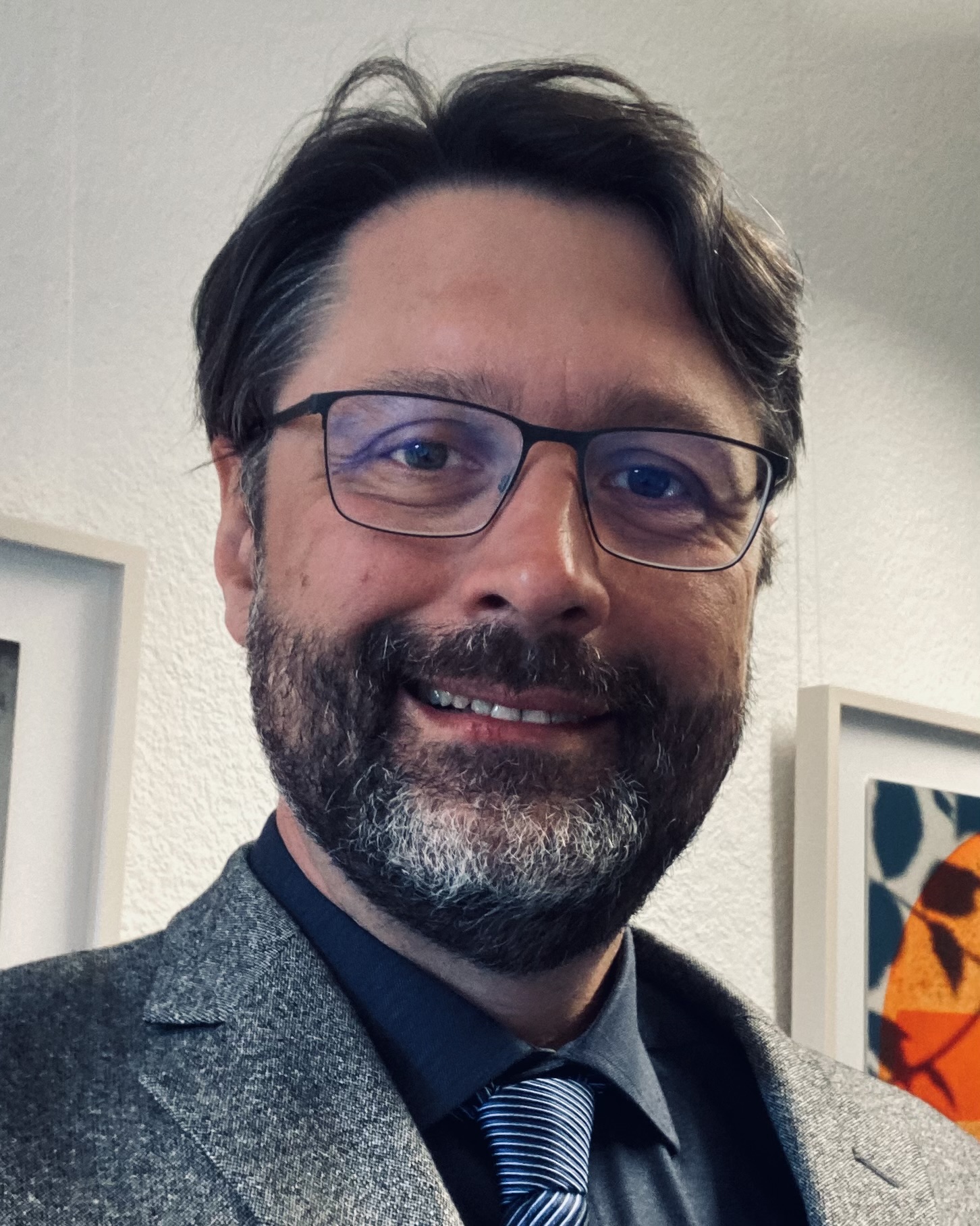
Jan von der Assen is a doctoral student at the Communication Systems Group (CSG) within the Department of Informatics at the University of Zurich . His research focuses on Holistic Cybersecurity , spanning Threat and Asset Management , Security Economics , and AI-powered Malware Mitigation . Education : MSc in Software Systems from University of Zurich (2021) Research Affiliations : Involved in 12+ national/EU projects (2021–2025) including CheeseChain , CONCORDIA , and DSI Cybersecurity . His work emphasizes Moving Target Defense (MTD) for IoT security, Decentralized Federated Learning with blockchain-based reputation systems, and Ransomware Detection using hypervisor-level system call monitoring. Recent publications include: GuardFS (JISA 2025) for Linux ransomware mitigation HyperDtct (IEEE CSR 2025) on hypervisor-based detection ThreatFinderAI (CNSM 2024) for LLM threat modeling
Dr. Shuting Han leads a Junior Research Group at the University of Zurich under the Helmchen Lab, funded by the SNSF Ambizione Fellowship since 2024. She holds a Research Fellow position focusing on cortical dynamics underlying sensory processing and memory. Her research examines how distributed cortical areas interact during sensory processing and memory formation, utilizing multi-area two-photon calcium imaging, virtual reality behavior paradigms, electrophysiology, and advanced data analysis techniques. Key projects include investigating sensory representation in cortical areas, predictive processing in neural circuits, cortico-cortical interactions, memory consolidation across the neocortex, and developing high-throughput imaging methodologies. Her recent publications demonstrate expertise in cross-modal predictions, cortical microstates during consciousness alterations, and neural ensemble dynamics. She directs research on top-down predictive signals in neocortex and develops tools for volumetric neural imaging. SNSF Ambizione Fellowship Dr. Han mentors PhD students Maï Ly Leclair and Saidong Ma in the Helmchen Lab. Her group develops custom multi-area two-photon microscopes and applies machine learning for neural data analysis, bridging experimental neuroscience with computational approaches to decode cortical information processing.
Prof. Edouard Bugnion is a Full Professor at the Data Center Systems Laboratory within the School of Computer Science and Communications at École Polytechnique Fédérale de Lausanne (EPFL). Since joining EPFL in 2012, he has led research in datacenter systems and virtualization, with prior experience as VMware's first CTO and Cisco's VP/CTO. Research Interests: Data Center Systems Network and Data Plane Efficiency Operating System Design Virtualization Technologies Trusted Execution Environments Low-Latency Computing His recent publications focus on datacenter efficiency for OLDI applications, system security through hardware-based trust, and network-compute co-design . These works span topics from microsecond-scale latency optimization to privacy-preserving proximity tracing systems. Scientific Recognition: Elected ACM Fellow (2017) ACM Software Systems Award (2009) Teaching: Currently teaching CS-212: Systems Programming Project , with past courses including CS-522: Principles of Computer Systems and CS-410: Technology Ventures .
Arseny Sokolov is a full professor at the University of Lausanne's Faculty of Biology and Medicine and Head of the University Neurorehabilitation Service (SUN) at CHUV and Lavigny Institution since November 1, 2024. His work focuses on neurology, cognitive/affective/social function neurorehabilitation, and neurotechnological innovations. Education : Medical degree (2010) and MD (2011) from University of Tübingen; PhD in Clinical Cognitive and Social Neuroscience (2020) from University College London. Experience : Trained at CHUV and Munich hospitals; held leadership roles including Deputy Chief of Clinic (2015-2017), Head of Clinic (2017-2020), and Associate Professor (2021-2024) at UNIL. Research : Explores brain networks via neuroimaging, develops neurotech solutions for cognitive/behavioral disorders, and pioneers VR/video game applications in neurorehabilitation through international studies. Affiliations : World Health Organization, World Federation of Neurorehabilitation, European Academy of Neurology.
Sébastien Doeraene is a Lecturer at the Swiss Federal Institute of Technology Lausanne (EPFL) , affiliated with the School of Computer and Communication Sciences and the Information Systems Laboratory . He is best known as the creator of Scala.js and serves as the Executive Director of the Scala Center . His research focuses on cross-platform language design, compiler optimization, and interoperability between statically and dynamically typed languages. PhD in Programming Languages (EPFL, 2018) Master of Science in Computer Science Engineering (Université catholique de Louvain, Belgium) His work bridges theoretical language design with practical implementations, particularly for JavaScript interoperability. Key projects include: Scala.js (compile Scala to JavaScript) Mozart 2 (Oz language implementation) Ozma (Scala extension with Oz concurrency) FunLabyrinthe (customizable maze game) Teaching contributions include courses on algorithmic thinking (C programming) and software development (Python, object-oriented design). As part of the LAMP laboratory , he advances Scala ecosystem tools and education initiatives.
Chantal Michel is an Associate Professor and Group Leader at the University Hospital of Child and Adolescent Psychiatry and Psychotherapy, University of Bern. She is also the Scientific and Clinical Co-Head of the Early Detection and Intervention Centre for Mental Crisis (FETZ Bern). Her work focuses on early detection and intervention for individuals at clinical high risk (CHR) for psychosis, with expertise in transdiagnostic therapeutic approaches and the application of technologies like ecological momentary assessments and virtual reality. Dr. Michel holds a habilitation in Psychiatry and has led numerous studies on neuroimaging correlates of psychosis risk, cognitive deficits, and mental health service utilization patterns. Her research interests span psychosis spectrum disorders, developmental psychopathology, and the neurobiological underpinnings of mental health issues. Dr. Michel has published extensively on topics such as EEG biomarkers in psychosis, white matter abnormalities in CHR populations, and the implementation of national psychosis prevention networks. She is actively involved in clinical trials and machine learning approaches to personalize treatment decisions for at-risk individuals. Dr. Michel's contributions include pioneering work on age-related effects of psychosis symptoms, the role of coping strategies in psychopathology, and the integration of innovative technologies in mental health monitoring. She has presented her findings at major conferences like the International Early Intervention in Mental Health (IEPA) and the European Society for Child and Adolescent Psychiatry (ESCAP).
Marcel Burger is a Full Professor in the Department of French within the Faculty of Arts at the University of Lausanne (UNIL), where he specializes in discourse analysis in French linguistics, particularly focusing on public, political, and media communication in the digital age. He began his academic career at UNIL in August 1996 and formally assumed his full professorship in 2018. He is also the Director of the Centre for Linguistics and Language Sciences and has held visiting professorships at Venice International University (2018), the University of Hong Kong (2017), the University of Macau (2017), and Auckland University of Technology (2017). Prior to his appointment at UNIL, he taught at the Universities of Geneva and Neuchâtel between 2000 and 2008. University: University of Lausanne (UNIL) School: Faculty of Arts Department: Department of French Academic Rank: Professor Marcel Burger’s research is centered on interactional sociolinguistics and discourse analysis, with a strong emphasis on multimodal digital communication and ethnographic methodologies. His work explores how language functions in digital environments, particularly in newsrooms and social media, and how public and political discourses are constructed and framed. He has conducted extensive ethnographic research on the Swiss audiovisual public service and aims to develop interdisciplinary collaborations with scholars and practitioners in journalism and political communication, especially concerning expert discourses on new media platforms. His recent publications reflect a consistent focus on digital communication, media discourse, and the ethnography of journalism. Themes such as online communities, newsroom practices, linguistic ethnography, self-presentation in digital public spheres, and the framing of public debates recur throughout his work. He investigates how journalists navigate ethical dilemmas, construct narratives, and manage audience interactions, often combining discourse analysis with ethnographic fieldwork. Marcel Burger has authored or edited approximately fifteen books, including Les manifestes. Paroles de combat (2002), Discourse on Social Networks. Public, Political and Media Issues (2017, co-authored), and Rethinking the Role of Social Practices in the Constitution of Social Spaces (2015, co-authored). His research contributes significantly to understanding the evolving nature of language and communication in contemporary digital culture. Discourse Analysis French Linguistics Sociolinguistics Digital Communication Media Discourse Political Communication Burger has been actively involved in academic leadership and pedagogy. As Director of the Centre for Linguistics and Language Sciences, he plays a key role in advancing linguistic research at UNIL. His teaching and research bridge theoretical linguistics with practical applications in media and public communication. While no specific information about students or awards is provided in the source texts, his extensive publication record and institutional roles indicate a strong influence in his field.
Jason Armitage is a Researcher in the Department of Computational Linguistics at the University of Zurich, specializing in multimodal machine learning and embodied AI within the Language, Technology, and Accessibility team. His work bridges virtual environments, accessibility technologies, and cross-modal reasoning. His academic background includes: Cognition and Computation from University of London, Birkbeck Data Science from University of Stirling Machine Learning studies at UC San Diego Armitage's research centers on aligning visual and linguistic inputs for embodied AI systems, with current projects enhancing scientific data accessibility through cross-modal formats and applying nonlinear time series modeling to 3D scene editing. His methodology integrates multimodal fusion techniques with embodied cognition principles to develop more intuitive human-AI interactions. Publications from 2020-2025 reveal consistent advancement in multimodal learning frameworks, particularly in vision-language navigation systems and multilingual multimodal benchmarks. Key innovations include trajectory planning algorithms using feature-location cues and novel architectures for multitask learning across diverse language-modalities. Professional experience spans research at the University of Bonn and industry roles at BBC and Disney, where he developed digital video services, games, and mobile applications. He actively contributes to the Language, Technology, and Accessibility team's mission of creating inclusive technological solutions through computational linguistics.
Dr. Marcin Copik is a Researcher in the Professorship for Scalable Parallel Computing at ETH Zürich, focusing on advancing high-performance computing (HPC), serverless systems, and cloud computing. His work emphasizes optimizing resource utilization, improving scalability, and enhancing performance in distributed and parallel environments. His research interests span parallel computing architectures, serverless benchmarking (e.g., SeBS suite), and sustainable HPC practices. He explores techniques like automatic loop scheduling, acceleration-as-a-service models, and fault-tolerant distributed systems (e.g., FaaSKeeper). His contributions address challenges in cloud elasticity, stateful services, and energy-efficient computing. Recent publications highlight innovations in serverless workflows, AI reasoning frameworks, and hardware-accelerated protocols. His work bridges theoretical foundations with practical implementations, such as Cppless for high-performance serverless programming and XaaS for HPC-cloud integration. While no formal awards or grants are listed, his contributions to open-source projects like STEllAR-GROUP/hpx and Extrapeak demonstrate active engagement in the HPC community. He collaborates closely with academic and industry partners to advance scalable computing solutions.
Jean-Philippe Bacher is a Full Professor at the University of Applied Sciences and Arts Western Switzerland (HES-SO), specifically affiliated with the Fribourg School of Engineering and Architecture. He serves as a key researcher at the Institute for Applied Research in Energy Systems, where he leads multiple significant research initiatives focused on energy transition and building performance optimization. His work bridges academic research with practical applications in the energy sector, particularly in the context of Switzerland's Energy Strategy 2050. Professor Bacher's research interests span the critical domains of energy transition, energy efficiency and management, Smart Building technologies, and building performance analysis. His expertise extends to photovoltaic systems, energy storage solutions, Building Information Modeling (BIM), and the intersection of Internet of Things (IoT) technologies with building management. He has developed a particular focus on understanding human behavior in built environments and its impact on energy consumption patterns. His work often addresses the complex challenges of district energy systems and innovative approaches to building decarbonization strategies, with numerous publications demonstrating his leadership in these fields. An analysis of his recent publications reveals a strong trajectory toward integrated solutions for energy transition in the built environment. His work increasingly focuses on the convergence of multiple technologies - particularly the combination of BIM, IoT, and virtual reality for facility management, as well as the integration of photovoltaics with hydrogen-based storage systems for seasonal energy balancing. His research demonstrates a methodological shift toward data-driven approaches using machine learning techniques to optimize energy systems at multiple scales, from individual buildings to district-level infrastructure. The consistent theme across his publications is the practical application of research to address Switzerland's and Europe's energy transition challenges, with particular attention to grid stability issues arising from decentralized renewable energy production. EXPOSITION project (2024-2025): Experimentation Platform for Smart Districts focusing on grid stability issues ProRen project (2019-2021): Interventions on existing building stock for large-scale energy optimization Multi-Confort project (2011-2020): Comprehensive approach to workplace comfort considering physiological, psychological, and functional components CityPulse project (2017-2020): Sensor platform for urban quality of life monitoring in Fribourg's BlueFactory district Professor Bacher leads a substantial research team within HES-SO, collaborating with numerous colleagues across multiple disciplines. His work demonstrates strong industry engagement through practical applications of research findings and technology transfer initiatives. He serves as a bridge between academic research and practical implementation in the energy sector, particularly in the context of Switzerland's Energy Strategy 2050 and the challenges of integrating renewable energy sources into existing infrastructure.
Bastiaan Ibelings is an Ordinary Professor in Microbial Ecology at the University of Geneva's Department for Aquatic and Environmental Sciences and the Institute for Environmental Sciences. With 30 years of experience, his research focuses on cyanobacteria, microalgae, and parasitic chytrid fungi, emphasizing phytoplankton biodiversity and climate change impacts. He leads the interdisciplinary Master’s program MUSE and collaborates globally through GLEON, a grassroots network addressing lake ecosystem dynamics. Over 100 peer-reviewed publications and numerous water management reports highlight his work on harmful cyanobacterial blooms and lake restoration. Education: Not explicitly detailed in text. Previous Roles: Senior Scientist, Netherlands Institute of Ecology Group Leader, Eawag Program Manager Lakes, Netherlands Institute for Inland Water Management Research Interests: Microbial ecology, phytoplankton biodiversity across scales, functional diversity in plankton communities, climate change effects, eutrophication threats, and lake restoration strategies. Integrates evolutionary processes with ecological dynamics to predict ecosystem responses to environmental changes. Grants & Funding: Secured funding for projects involving over 20 supervised PhD students and collaborative initiatives. Labs/Teams: Active in the Institute for Environmental Sciences and leads the GLEON network as co-chair, fostering global collaborations on lake ecosystem research.
Jean-Paul Calbimonte is an Associate Professor at the University of Applied Sciences and Arts Western Switzerland (HES-SO Valais-Wallis) , specifically affiliated with the School of Business Administration . His research spans multiple domains, including Medical Informatics , Semantic Web , Ontology Engineering , Stream Processing , and Knowledge Management . His recent work focuses on AI applications in healthcare (Alzheimer’s diagnosis via MRI analysis, cancer survivor support systems), semantic web technologies for wind energy data sharing, and decentralized health data management systems. He leads projects like TechnoPortal (ontology hosting for wind energy) and SMARTEDGE (edge intelligence toolchain). He employs cutting-edge methods in Machine learning for medical diagnostics Semantic stream processing Blockchain for clinical data governance Multi-agent systems for personalized healthcare His publications highlight collaborations with institutions like CHUV , Pryv SA , and University of Maribor , alongside industry partners including NVIDIA and Bosch .
Florian Wamser is a Professor at the Lucerne School of Computer Science and Information Technology, part of Lucerne University of Applied Sciences and Arts. His research focuses on Quality of Experience (QoE), network management, and emerging technologies like SDN and IoT. He leads projects such as 'Post-Processing in Quantenkryptographie' and has contributed to over 50 peer-reviewed articles since 2012. His work spans video streaming optimization, mobile network analysis, and edge computing. Notable contributions include studies on YouTube QoE, SDN resilience under DDoS attacks, and IoT connectivity challenges. He has developed tools like YoMoApp for crowdsourced QoE monitoring and contributed to frameworks like MvnoCoresim for virtualized networks. Recent research trends highlight machine learning applications in QoE prediction, serverless computing definitions, and energy-efficient edge-cloud integration. His datasets on video streaming metrics and mobile network measurements are widely cited in academic and industry studies. No scientific awards or grants are explicitly listed, but his extensive publication record reflects sustained academic leadership. He engages in collaborative projects with industry and academic partners, emphasizing practical network solutions for real-world challenges.
Martin Tomasik is a Professor at the Institute of Educational Science , University of Zurich, focusing on Research Methods in Developmental and Educational Sciences . He leads the development of digital tools for measuring learning processes and advancing mathematical models for intensive longitudinal data analysis, in collaboration with the Institute for Educational Evaluation in Zurich. Research spans quantitative methodology , mathematical modeling , and longitudinal data in education and development. His work involves statistical software development and analysis of large-scale assessments and formative feedback systems . Key research themes include: Competence trajectory modeling and psychometric software. Cross-domain longitudinal studies on social change , developmental barriers , and adaptive disengagement . Applications of virtual reality and machine learning in cognitive and educational assessments. Scientific Awards : German Study Prize/Recognition Award (Körber Foundation) for his doctoral work on developmental barriers and disengagement. Project Leadership includes the Zurich Learning Progress Survey (LEAPS) , examining learning trajectories from kindergarten to compulsory schooling, and collaborations with institutions like PH Zurich , Witten-Herdecke University , and Max Planck Institute for Human Development .
Pierre-Marie Allard is a Senior Researcher in the Department of Biology at the Faculty of Science and Medicine, University of Fribourg. His work bridges metabolomics, natural products chemistry, and molecular networking to advance drug discovery and ecological research. Research Focus : Metabolomics, molecular networking, plant-microbe interactions, and computational frameworks for natural product discovery. Methodologies : Mass spectrometry, chemodiversity analysis, open science initiatives (e.g., Earth Metabolome Initiative). Publication Trends : His recent contributions emphasize taxonomically driven data analysis, plant-derived antiparasitic compounds, and ecological metabolomics. Collaborative efforts include interdisciplinary projects in chemical ecology and pharmacognosy.