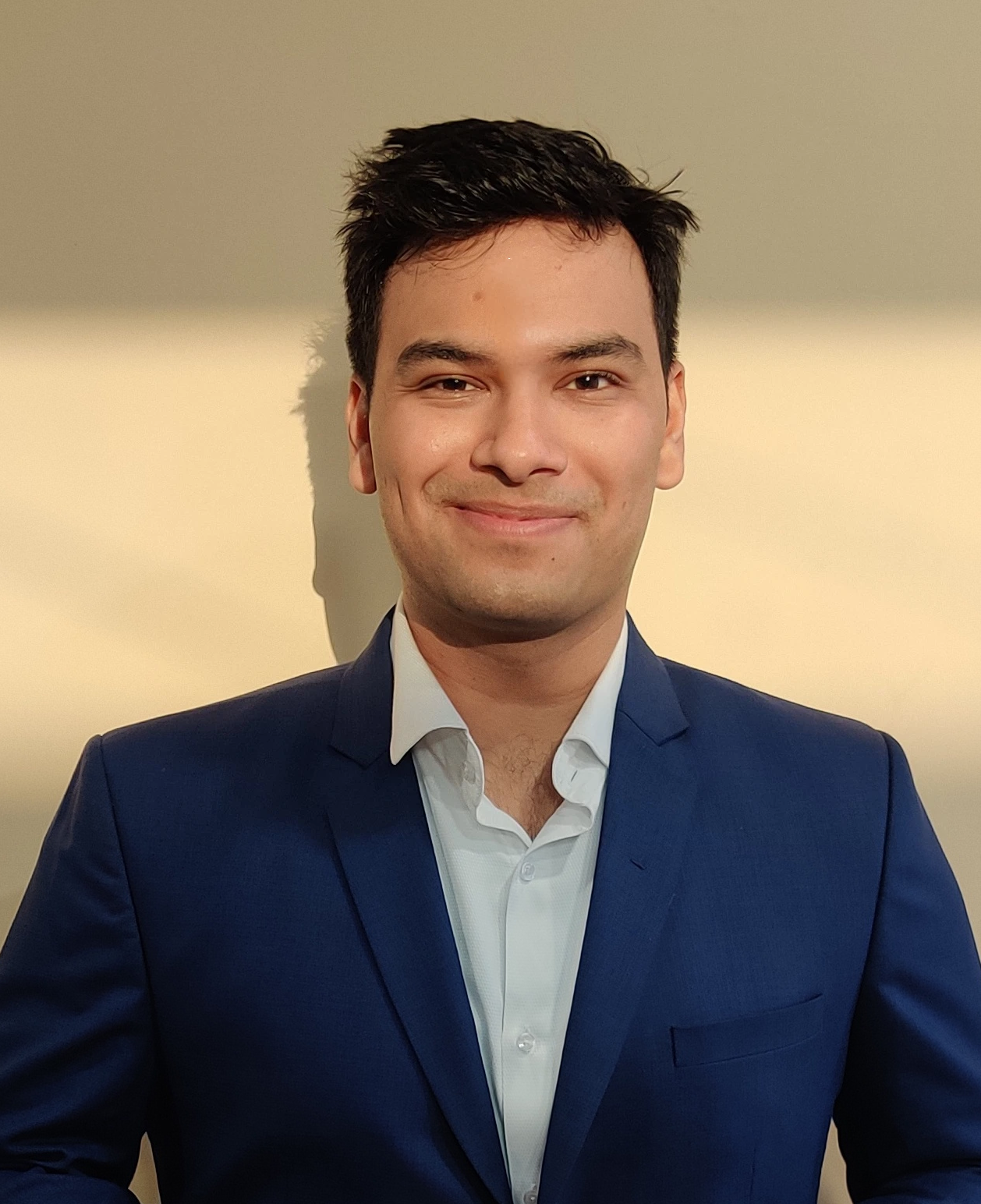
Mario Baldi is a researcher affiliated with the Polytechnic University of Turin, Italy , with significant contributions to computer networking , distributed systems , and software-defined networking . Key research themes: network function virtualization , programmable dataplanes , time-driven scheduling , and traffic analysis . Recent work focuses on RDMA-enabled compute offloading (2023) and DNN inference in network data planes (2023). Longstanding expertise in multicast routing , voice/data packet efficiency , and XML-based protocol parsing (2000–2006). Collaboration network includes Yoram Ofek , Fulvio Risso , and Han Hee Song , with 99+ publications spanning 1994–2023.
Summary Prof. Tim Kacprowski is a Professor and Head of Data Science in Biomedicine at the Peter L. Reichertz Institute for Medical Informatics (PLRI), jointly affiliated with TU Braunschweig and Hannover Medical School. His research focuses on integrating computational methods with biomedical challenges, particularly in network medicine, federated learning, and alternative splicing analysis. Key projects include the development of the NeDRex platform for drug repurposing and the FeatureCloud framework for privacy-preserving federated learning in healthcare. Research Interests His work spans multiple domains: Network Medicine: Leveraging molecular networks for disease module identification and drug discovery. Data Science: Advanced analytics for biomedical data, including ECG monitoring, microbiome studies, and flow cytometry. Federated Learning: Developing decentralized AI systems to protect patient data while enabling collaborative research. Alternative Splicing: Investigating splicing patterns in diseases like cancer and kidney disorders. Publications Trends Recent publications emphasize tools for drug repurposing (NeDRex-Web), ethical AI in clinical decision-making, and microbiome dynamics in chronic diseases. His work bridges computational methods with clinical applications, addressing challenges in precision medicine and healthcare technology. Labs & Collaborations As head of the Data Science group at PLRI, he leads interdisciplinary teams advancing biomedical informatics. Collaborations span institutions in Germany and internationally, focusing on translational research and AI-driven healthcare solutions.
Prof. Dr. Peter Wald serves as Professor for Business Administration with a specialized focus on Human Resource Management at the Leipzig University of Applied Sciences (HTWK Leipzig) since March 2009. He is affiliated with the Faculty of Business Administration and Industrial Engineering, where he maintains office TO 109 and actively contributes to academic and professional development in HR. Prof. Wald organizes the annual HR Innovation Day at HTWK Leipzig and serves on the scientific advisory board of Parität Sachsen, demonstrating his commitment to bridging academic research with industry practice. His research expertise centers on the digital transformation of human resource management, with particular emphasis on virtual leadership, modern recruiting practices, and organizational development in the context of Work 4.0. Prof. Wald investigates how digital technologies are reshaping traditional HR functions and how organizations can adapt their talent management strategies to meet emerging workforce challenges. His work spans theoretical frameworks and practical applications, with a strong focus on candidate experience, social media recruiting, and the evolving expectations of students regarding internships. Analysis of his publication record reveals a clear trajectory toward examining the practical implementation of digital tools in HR processes. His research shows increasing focus on deskless work, flexible scheduling, and the candidate journey, reflecting current workforce trends. His publications demonstrate consistent engagement with both academic scholarship and practical HR challenges, often presented through collaborative industry case studies. Prof. Wald maintains active engagement with students, regularly publishing thesis topics on the OPAL learning platform and welcoming topic suggestions from both students and industry partners. He communicates his expertise through the 'Leipzig HRM Blog' and social media channels, particularly via his Juicer.io feed, maintaining a visible presence in the HR professional community. His approach combines academic rigor with practical relevance, making his work valuable to both scholars and practitioners in the field of human resource management.
Dr. Sandra Diaz Pier is a Scientific Lead at the Jülich Supercomputing Centre (JSC) within the Jülich Research Centre , Germany. Specializing in computational neuroscience , high performance computing (HPC) , and machine learning , she bridges neuroscience and advanced computational methods through her research. Education: B.Sc. in Electronic Systems Engineering, Mexico M.Sc. in Computer Science (focus: machine learning, quantum computing), Mexico Second M.Sc. in Electrical Engineering, Ontario, Canada Ph.D. in Computer Science, Germany (2021) Her research focuses on modeling and simulating brain dynamics and plasticity at multiple scales, leveraging HPC to accelerate large-scale neural network simulations. She actively contributes to EU projects like the Human Brain Project (HBP) , Virtual Brain Cloud , and EBRAINS 2.0 , emphasizing infrastructure development and educational training. Her work includes open-source tools such as the NEST simulator , The Virtual Brain , and L2L , enabling efficient parameter exploration and multiscale co-simulation frameworks. The 15 most recent publications highlight her interdisciplinary approach, spanning topics from quantum computing in biomolecular simulations to neural plasticity algorithms and cloud-based brain modeling . These articles reflect her expertise in integrating machine learning , multi-scale simulation , and HPC infrastructure for neuroscience challenges, including seizure propagation, Parkinson’s disease progression, and swarm intelligence in spiking networks. She leads technical coordination in projects like EBRAINS and serves as a task leader in the HBP infrastructure work package , while also organizing workshops and hackathons for open-source tools. Her role involves supporting domain scientists through methodological research and workflow optimization for brain simulations.
Prof. Dr. Antonella Di Pizio (born 1984) is an Associate Professor for Chemoinformatics and Protein Modelling at the Department of Molecular Life Sciences within the TUM School of Life Sciences at the Technical University of Munich. Since 2018, she has led the Molecular Modeling group at the Leibniz Institute of Food Systems Biology at TUM in Freising, Germany. Her academic journey includes a PhD in Pharmaceutical Sciences from the University of Chieti, Italy (2012), followed by research at Philipps University in Marburg, Germany, and a postdoc position at the Hebrew University of Jerusalem, Israel. Prof. Di Pizio's research focuses on computational approaches to understanding chemosensory G protein-coupled receptors (GPCRs), particularly taste and smell receptors. Her work combines molecular modeling, chemoinformatics, and structural bioinformatics to investigate the molecular basis of ligand recognition and activation mechanisms. Her group develops predictive models for screening and designing bioactive compounds relevant to food reformulation and therapeutic applications. Analysis of Prof. Di Pizio's publication record reveals a strong focus on bitter taste receptors, particularly TAS2R family members, and odorant receptors. Her research spans computational modeling of receptor-ligand interactions, development of predictive algorithms for taste compound identification, and investigation of the structural basis of chemosensory perception. Recent work demonstrates increasing integration of machine learning approaches with traditional molecular modeling techniques. Scientific Recognition: Leibniz Best Minds Programme for Women Professors (2022) Platinum Manfred Rothe Excellence Award in Flavor Research (2019) Bernardo Nobile doctorate award VIII Edition (2013) Keystone Symposia Future of Science Fund Fellowship (2017) Prof. Di Pizio serves on the editorial board of Frontiers in Molecular Biosciences and is a Working Group Leader and Management Committee member of the ERNEST Cost Action CA18133. She teaches courses including 'Modeling and simulations of Biological Macromolecules' and 'Drug and Protein Design' at TUM. Her Molecular Modeling group collaborates extensively with other research groups at the Leibniz-LSB@TUM on interdisciplinary projects focused on food systems biology. The Molecular Modeling group, established relatively recently at the institute, investigates food-relevant molecules and their interactions using computational tools including molecular docking, molecular dynamics simulations, pharmacophore modeling, QSAR, machine learning, and virtual screening. Their work aims to develop next-generation methodologies for food design that address current challenges in the food system.
Prof. Ondrej Vaculin, Ph.D., is a Professor at Technische Hochschule Ingolstadt (THI), specializing in passive vehicle safety, mechatronic systems, and automated driving. He joined THI in 2018 and previously held roles at TÜV SÜD Prague (2008–2018) as Vice President for Safety and Security in Automotive, and as a researcher at Czech Technical University (2005–2008) and DLR Oberpfaffenhofen (2000–2005). His research focuses on enhancing vehicle safety through advanced simulation, sensor integration, and machine learning applications. Education: Ph.D. in Mechanics of Solids, Deformable Bodies and Continua from Czech Technical University in Prague (2001), and a degree in Technical Cybernetics from the Faculty of Electrical Engineering at the same university (1991). His work bridges theoretical research and practical implementation, addressing challenges in automated driving systems, crash simulation, and human body diversity in safety design. Research interests include passive safety systems, autonomous vehicle dynamics, and infrastructure integration for safety enhancements. Recent publications emphasize collaborative smart infrastructure, sensor fusion for free space detection, and machine learning in crash detection. He actively contributes to FISITA, serving as a Council Delegate and member of technical committees. Awards/memberships: Active in FISITA, holding leadership roles in technical committees. No explicit awards listed, though his contributions to automotive safety standards are notable. Grants and advising: While no specific grants or students are detailed, his extensive industry and academic collaborations (e.g., IN2Lab testing field projects) highlight his role in applied research and development.
Rishabh Dabral is a Research Group Leader at the Max Planck Institute for Informatics since August 2024, leading the "3D Visual Intelligence" group. He is also affiliated with the Research Training Group on Neuro-Explicit Models of Language, Vision, and Action at Saarland University. Expertise: 3D computer vision, computer graphics, human-object interaction modeling, and motion synthesis. Leadership: Conducts cutting-edge research on 3D human performance capture and physical plausibility in motion. His research focuses on: 3D human pose estimation under gravity constraints Multi-modal gesture synthesis using neural architectures Quantum auto-encoding for 3D representations Wearable robotics informed by human behavior Temporal dynamics in human-object interaction Recent publications at top venues like SIGGRAPH , CVPR , and ICCV demonstrate his work on: Music-driven motion synthesis Egocentric motion capture systems Reactive two-person interaction models Diffusion-based gesture generation Object-aware motion prediction Wearable robotic limb design
Prof. Georg Carle is a full Professor in Network Architectures and Network Services at the Technical University of Munich (TUM), affiliated with the TUM School of Computation, Information and Technology. He leads research in Internet technology, focusing on future network architectures, security, and real-time communication. Prior roles include positions at the University of Tübingen and Fraunhofer Institute for Open Communication Systems (FOKUS). Education: Electrical Engineering diploma from University of Stuttgart (1992), Master of Science in Digital Systems (Brunel University, London), and PhD in Telematics from University of Karlsruhe (1996). He held scholarships in complex systems and European Union-funded research at Institut Eurécom. Research Interests: Prof. Carle's work spans network security, sensor networks, autonomous systems, and future Internet protocols. His group develops tools like MoonGen (packet generator) and pos (experiment workflow system). Recent focus includes QUIC protocol analysis, network slicing, and reproducible experimentation frameworks. Key Contributions: Award-winning research includes Applied Networking Research Prizes (2017-2018), Best Paper Awards in IMC/PAM, and innovations in network measurement, security, and programmable data planes. His lab explores cutting-edge topics like post-quantum cryptography, low-latency networking, and 6G automation. Recognition: Honors include ACM SIGCOMM Community Contribution Award, IRTF ANRP, and multiple conference best paper accolades. He advises on network infrastructure for industrial IoT, automotive systems, and secure multiparty computation.
Tobias Meuser is a Researcher at the Multimedia Communications Lab of Technische Universität Darmstadt, leading the "Adaptive Communication Systems" group since 2020. He holds a PhD (2019) focused on vehicular network data management and has been a central figure in the third phase of the Collaborative Research Center (CRC) MAKI as a principal investigator in subproject B1. His work emphasizes resilient 5G networks, edge AI, and distributed systems. Education: B.Sc. Business Informatics (Fernuniversität Hagen) M.Sc. Informatics (TU Darmstadt) Research Interests: Resilience in 5G and beyond Edge AI and distributed machine learning Information assessment in vehicular networks Collaborative perception systems Hardware acceleration for network functions Key Projects: Principal Investigator in CRC MAKI's B1 (Monitoring and Analysis) Collaborations with Opel (cooperative maneuvering) and Deutsche Bahn (5G resilience) Labs/Teams: Head of Adaptive Communication Systems group at Multimedia Communications Lab Member of Distributed Sensing Systems group (2016–2020)
Eduard A. Jorswieck is a University Professor of Communication Systems at the Institute of Communications Engineering , Technical University of Braunschweig, since 2019. He has previously held a professorship at TU Dresden (2008–2019) and has been a lecturer at TU Berlin (2005–2008). Currently, he serves as the Geschäftsführender Leiter (Managing Director) of the Institute of Communications Engineering. Education: Dipl.-Ing. in Computer Engineering (2000), Doctorate (2004) from TU Berlin. Research Interests: His work bridges information theory and wireless communications, focusing on physical layer security , energy efficiency , reconfigurable intelligent surfaces (RIS) , NOMA , MIMO systems , and machine learning for network optimization . He explores stochastic orders, game theory, and fractional programming for resource allocation in 5G/6G networks. Publications & Trends: Recent articles emphasize RIS-aided URLLC , STAR-RIS , 6G security , and AI-driven resource management . His studies span multi-antenna systems , terahertz ISAC , and multi-agent reinforcement learning for UAV networks. Awards: IEEE Signal Processing Society Best Paper Award (2006) IEEE Fellow (2020) Fellow of Industry Academy (AIIA, 2024) Best Paper Award at IEEE ICC 2024 Students & Collaborations: He has mentored researchers like K.-L. Besser, P.-H. Lin, and M. Mross. His lab collaborates on projects involving quantum communication , industrial IoT , and multi-agent systems .
Prof. Dr. Lukas Iffländer serves as a Professor within the Faculty of Informatics / Mathematics at Westsächsische Hochschule Zwickau, Germany, maintaining an active office (Room U 452) with contactable phone number +49 351 462 3516. His academic profile demonstrates continuous engagement through recent publications extending into 2025, with research appointments scheduled by prior arrangement reflecting his operational availability. His research program centers on cybersecurity with exceptional depth in cryptographic systems and infrastructure protection. Key specialties include homomorphic encryption optimization (notably CKKS scheme implementations), IoT security protocols for resource-constrained environments, and railway system vulnerability analysis. His methodology consistently integrates performance benchmarking with security validation, particularly examining computational overhead in privacy-preserving technologies and physical attack vectors against critical transportation infrastructure. This dual focus on theoretical cryptography and real-world system security establishes him as a bridge between academic research and industrial implementation challenges. Analysis of his 15 most recent publications (2023-2025) reveals three dominant research trajectories: (1) Cryptographic performance evaluation, where he pioneers benchmarking frameworks for homomorphic and attribute-based encryption in practical scenarios like linear regression; (2) Railway security innovation, addressing digital interlocking systems and physical attack mitigation through technology forecasting; (3) IoT security optimization, developing multi-objective recommendation systems for group communication protocols. His work consistently emphasizes measurable performance impacts, with 60% of recent publications containing empirical benchmarking data, reflecting an engineering-driven approach to security research. No scientific awards were documented in the source materials. Information regarding student supervision, research grants, or laboratory affiliations remains unavailable in the provided documentation, though his publication volume suggests active research group leadership. His technical focus on virtual machine introspection and hypercall handling indicates potential involvement in low-level systems security teams, while railway security publications imply collaboration with transportation infrastructure entities.
Riccardo Marin is a Postdoctoral Researcher at the Technical University of Munich (TUM), affiliated with the School of Computation, Information and Technology and the Computer Vision Group . His research focuses on Spectral Shape Analysis , 3D Shape Matching , Geometric Deep Learning , and Virtual Humans . PhD from University of Verona Postdoctoral experience at GLADIA (Sapienza University of Rome) and Tuebingen University's AI Center His work bridges geometric modeling and deep learning, with notable contributions to neural surface fields, diffusion-based avatar creation, and scalable 3D human registration. He has authored publications in top venues like CVPR, ECCV, and NeurIPS, with a focus on geometric consistency and implicit representations in 3D vision. Scientific awards : Humboldt Research Fellowship Marie-Curie Postdoctoral Fellowship ELLIS Membership His research often involves collaboration with institutions such as MPI-INF and Tuebingen AI Center, with GitHub repositories like NICP, Diff-FMAPs-PyTorch, and FARM demonstrating his technical contributions in spectral analysis and 3D reconstruction.
Prof. Dr. Katja Dörschner Boyaci is a Professor at Justus-Liebig-Universität Gießen , Faculty of Psychology and Sports Science, leading the Perception & Active Exploration Group . Her research focuses on understanding how the human brain constructs rich perceptual experiences from sensory input, particularly in the perception of material properties like softness, glossiness, and roughness. Research Interests: Computational and neural mechanisms of material perception Integration of visual and haptic information Expectation-driven modulation of perception Neuroimaging (fMRI, EEG) and psychophysical approaches Virtual reality and computational modeling Her work combines psychophysics , neuroimaging , and computational modeling to explore how humans judge material properties from static and dynamic images, and how prior experiences shape these perceptions. Scientific Contributions: Published extensively on material perception, with recent papers in Nature Human Behaviour , Journal of Neuroscience , and Vision Research . Leads the collaborative B8 project on integrating experience and sensory information in material perception. Collaborations & Funding: Co-leads the B8 project with Prof. Hüseyin Boyaci, funded to investigate neural mechanisms of expectation-based perception. Employs interdisciplinary methods including EEG, fMRI, VR, and behavioral experiments. Laboratory & Team: The Perception & Active Exploration Group at Giessen University studies how humans perceive intrinsic object qualities through active exploration and sensory integration, with implications for product design, computer graphics, and robotics.
Tatjana Wingarz is a Research Associate and PhD student in the IT-Security and Security Management (ISS) research group at the University of Hamburg's Department of Computer Science (MIN). She holds a Master's degree in IT-Security from Ruhr-University Bochum (2020) and a Bachelor's in Media Communication and Computer Science from Rhine-Waal University of Applied Sciences (2017). Her research focuses on Secure Machine Learning and Privacy-preserving Data Processing , addressing challenges in data integrity, cryptographic protocols, and network security. Recent publications highlight contributions to QUIC-aware load balancing, privacy-preserving data sharing, and edge computing middleware. Team & Collaborations: She collaborates closely with Prof. Mathias Fischer and colleagues like Dr. Heiko Bornholdt, Liliana Kistenmacher, and Kevin Röbert. Her work spans interdisciplinary projects in network security, functional encryption, and educational innovation in computer science pedagogy. Contact: tatjana.wingarz@uni-hamburg.de | Office F 624
Kwan H. Lee is a prominent researcher in computer graphics and augmented reality, affiliated with the University of Alberta in Canada. With a publication record spanning over three decades (1990-2020), he has established himself as a leading figure in visual computing research with 56 documented publications. His research interests focus on Computer Graphics , Augmented Reality , 3D Modeling and Reconstruction , Computer Vision , and Cultural Heritage Computing . Dr. Lee's work demonstrates particular expertise in material appearance modeling, projection mapping techniques, and spatial augmented reality applications. His research has evolved from foundational work in manufacturing systems to cutting-edge applications in cultural heritage preservation and industrial visualization. Analysis of his recent publications (2015-2020) reveals a strong emphasis on practical applications of augmented reality in construction, museum exhibitions, and cultural heritage preservation. His work consistently bridges theoretical computer graphics concepts with real-world implementations, particularly in projection mapping systems and 3D reconstruction techniques. The publications show increasing focus on industrial applications and cultural heritage preservation in his later career. Dr. Lee has collaborated extensively with researchers from Korean institutions, suggesting strong international connections. His co-author network includes Yong Yi Lee, Jong Hun Lee, Min Ki Park, and other frequent collaborators who appear across multiple publications spanning more than a decade.