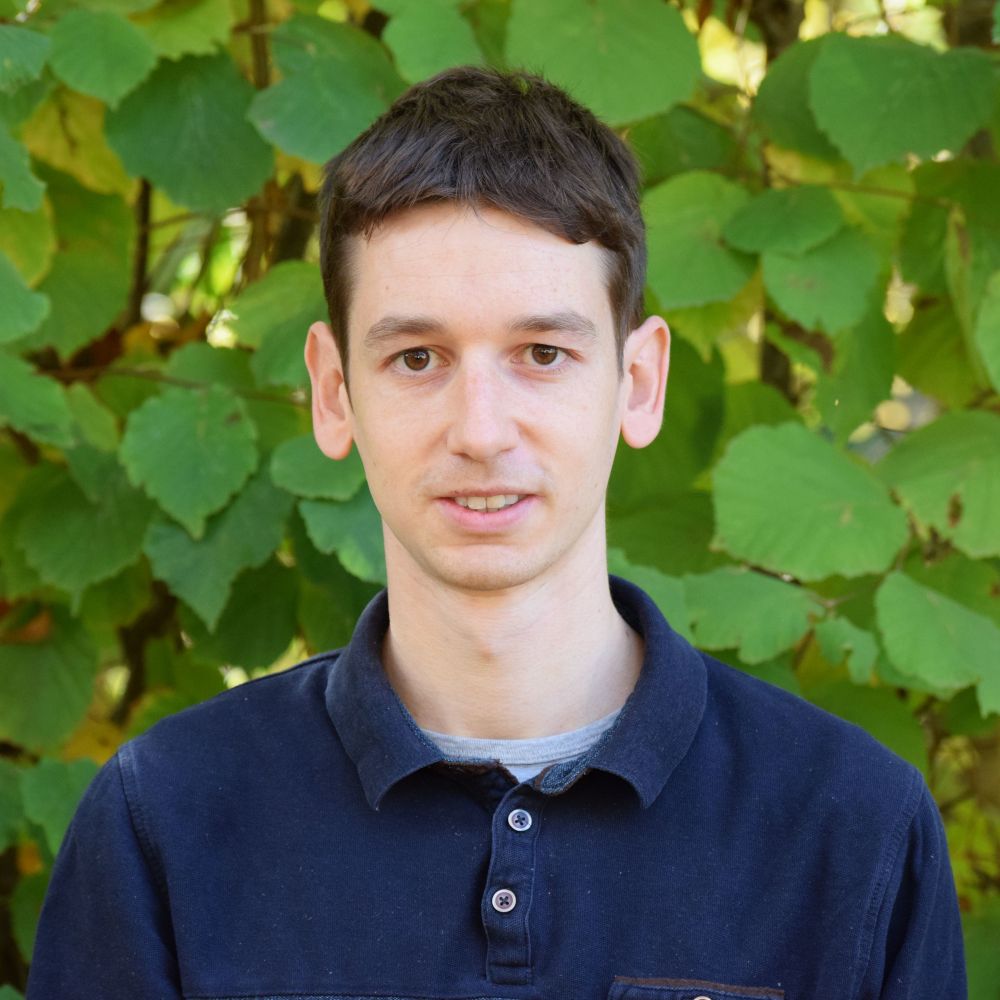
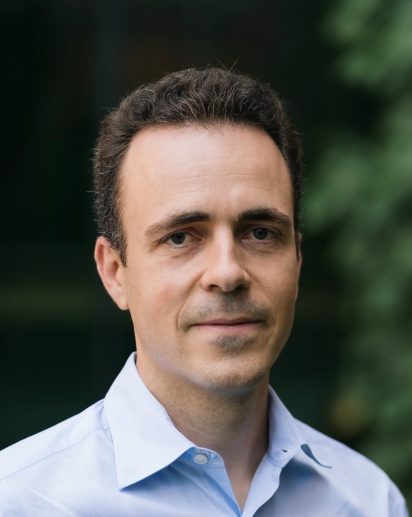
Wojciech Thomas is a Lecturer at the Department of Applied Informatics, Faculty of Information and Communication Technology, Wrocław University of Science and Technology. He teaches courses including Technologies Supporting Software Development (DevOps) , Cloud Computing , and Script Languages . Since 2016, he has directed the postgraduate program Computer Network Administration , designed for professionals seeking advanced knowledge in network/server management. His research focuses on DevOps, cloud technologies (AWS/Azure), automation of complex IT environments, web applications, and software engineering. He has published on topics ranging from task scheduling algorithms to trends in software engineering education. His publications (2000–2021) reflect interdisciplinary work in computer science, operations research, and educational methodology. Common themes include optimization algorithms, cloud infrastructure, and academic curriculum development.
Emilia Ndilokelwa Weyulu is a Ph.D. student and researcher in the Internet Architecture department at the Max Planck Institute for Informatics, Saarbrücken, Germany, with concurrent enrollment in Computer Science at Universität des Saarlandes. Her work focuses on internet congestion control mechanisms and transport protocol analysis within the Saarland Informatics Campus ecosystem. Her academic journey includes: Ph.D. in Computer Science (2019–present) at Universität des Saarlandes and Max Planck Institute for Informatics Master of Informatics (2016–2018) at Tokyo University of Information Sciences, thesis: Asymmetric RTS/CTS for Exposed Node Reduction Master of Computer Science (2014–2017) at Namibia University of Science and Technology, thesis: A Rate Adaptive and Forward Error Correction Scheme for Video Streaming in 802.11b WLANs Bachelor of Science in Computer Science and Statistics (2006–2011) at University of Namibia Weyulu's research centers on congestion control heterogeneity in internet infrastructure, with emphasis on BBRv3 protocol evaluation, in-band service routing, and network-assisted congestion feedback. Her work bridges theoretical protocol design with empirical measurement in public internet environments, extending to wireless networking challenges including ad hoc WLAN optimization and video streaming reliability. She employs cross-layer approaches to address exposed node problems and throughput limitations in wireless networks. Analysis of her 2024 publications reveals a concentrated focus on next-generation congestion control evaluation, particularly BBRv3's real-world performance across diverse network conditions. Her research combines protocol design with large-scale internet measurement, addressing both wired infrastructure challenges and wireless network constraints through innovative routing and feedback mechanisms. Weyulu has served as tutor for Data Networks courses during Winter 2018 and 2020 terms, and for the Hot Topics in Data Networks Seminar in Summer 2020 at Universität des Saarlandes. She also acted as student scribe for the CoNEXT 2020 TPC meeting, demonstrating active engagement in academic community service. As a core member of the Internet Architecture research group at Max Planck Institute for Informatics, she contributes to projects analyzing internet traffic patterns, transport protocol evolution, and network measurement methodologies within the institute's collaborative research environment on the Saarland Informatics Campus.
Sam Otto is an Assistant Professor in the Sibley School of Mechanical and Aerospace Engineering at Cornell University, joining the faculty in July 2024. His research lies at the intersection of machine learning and continuum mechanics, with a focus on developing rigorous, data-driven methods for modeling, forecasting, and controlling high-dimensional nonlinear systems such as fluid flows. He leads the Otto Lab, which advances scientific machine learning through principled algorithms and theoretical understanding. Research Interests: Dr. Otto’s work centers on scientific machine learning, particularly in developing algorithms that integrate physical knowledge—such as symmetry, scale hierarchy, and smoothness—into data-driven models. His research addresses fundamental questions about what can be learned from limited data and how to ensure reliability in engineering applications. Key areas include model reduction, operator learning, sensor placement, and symmetry enforcement in neural networks. He applies these methods to fluid dynamics and other continuum mechanics problems. Publication Trends: His recent publications (2019–2024) show a strong trajectory in developing theory and algorithms for learning in nonlinear dynamical systems. There is a clear emphasis on incorporating physical structure into machine learning models, with recurring themes of symmetry, dimensionality reduction, and operator-based modeling. The work spans theoretical advances and practical computational methods, often leveraging Koopman theory, autoencoders, and covariance-based reductions. Education: Ph.D. in Mechanical and Aerospace Engineering, Princeton University, 2022 B.S. in Aeronautics and Astronautics, Purdue University, 2016 Scientific Awards: Advising and Grants: While no current students or grants are listed, Dr. Otto is expected to advise graduate students through the Mechanical and Aerospace Engineering graduate program at Cornell. As a new faculty member, he is likely pursuing funding for his research in scientific machine learning and dynamical systems. His lab is actively publishing in top journals and preprint servers, indicating ongoing research support, possibly through postdoctoral fellowships or early-career grants. Labs and Teams: Dr. Otto leads the Otto Lab at Cornell, which focuses on machine learning for high-dimensional dynamics. The lab develops computational tools that combine data and physical principles to model complex systems. It is part of the broader research ecosystem in the Sibley School, collaborating with experts in fluid mechanics, control theory, and applied mathematics.
Robert G. Bland is a Professor at Cornell University's School of Operations Research and Information Engineering (ORIE). He earned his B.S., M.S., and Ph.D. in Operations Research from Cornell University (1969–1974). His career includes roles as Assistant Professor at SUNY Binghamton (1974–1978) and has been at Cornell since 1978, advancing to Full Professor. His research focuses on linear programming, combinatorial optimization, and algorithmic design, with notable contributions to the simplex method and matroid theory. He is affiliated with the Center for Applied Mathematics and holds memberships in the Mathematical Optimization Society and the American Society for Engineering Education. Bland’s teaching spans optimization, game theory, and legislative mathematics. He has received prestigious awards, including the Sloan Foundation Fellowship (1978–1982), multiple Cornell Outstanding Educator Awards, and the McCormick Advising Award (2017). His service includes contributions to engineering education and final exam scheduling. He has authored influential papers in Mathematics of Operations Research , Journal of Combinatorial Theory , and Scientific American . His research emphasizes duality theory, network flow algorithms, and applications in scheduling and resource allocation. Bland’s work bridges theoretical rigor with practical computational methods, shaping modern optimization practices.
Axel Parmentier is a Lecturer and researcher at the École Nationale des Ponts et Chaussées, where he founded the AI for Air Transport industry research chair with Air France. His work focuses on the intersection of operations research and machine learning, particularly in data-driven combinatorial optimization and stochastic optimization, with industrial applications in air transportation, supply chain, and predictive maintenance. He holds a Ph.D. and has been recognized with awards including the AMIES Dissertation Award (2017) for applied mathematics with industrial impact and the Robert Faure Prize (under 35) from ROADEF. His research also includes contributions to structured reinforcement learning, optimization layers in machine learning, and explainable AI for operational decisions. Awards: AMIES Dissertation Award, Robert Faure Prize Labs/Teams: CERMICS laboratory, AI for Air Transport Chair (collaboration with Air France) Grants/Projects: Continent-scale inventory routing solutions, Renault’s logistics optimization His advising includes students like Victor Cohen, whose work on predictive maintenance was featured on France Culture.
Clarice Bertin is an Associate Professor in the Department of Strategy & Entrepreneurship at ICN Business School and a researcher at BETA (Bureau d'Economie Théorique et Appliquée) within the CSI research axis (Creativity, Science, Innovation). She holds a PhD in Management from the University of Strasbourg and is qualified by the National Council of Universities (CNESUP) for Associate Professor positions. Her research focuses on collaborative innovation between startups and large firms, sustainable entrepreneurship, digital transformation, and strategic decision-making. She co-leads the ResInn research project on responsible and innovative management in public organizations. Education: 2022: Qualified as Associate Professor in Management Sciences (Section 06), University of Strasbourg 2020: PhD in Management, University of Strasbourg 2010: Master in Business Administration, IAE Nancy 2005: Master in Information & Communication Sciences, University of Lorraine 1997: Master in German Studies, University of Lorraine Research Interests: Her work examines strategic capabilities for collaborative innovation, open innovation ecosystems, entrepreneurial ecosystems, and the digital transformation of organizations. She emphasizes proximity dynamics (cognitive, organizational, geographical) enabling successful partnerships between startups and established firms. Teaching: She teaches strategic intelligence, creative thinking, innovation management, and sustainable entrepreneurship across various programs at ICN Business School. Recent courses include e-learning modules on corporate strategy and digital-ecological transformations. Research Contributions: Over 30 peer-reviewed publications, including articles in Innovations , Entreprendre et Innover , and IEEE Transactions on Engineering Management . Co-authored a textbook on enterprise management ( Management des Entreprises , 2023) and multiple case studies deposited at The Case Center and CCMP. Advising & Projects: Leads the ResInn project (public sector innovation management) and collaborates with regional organizations. Has advised SMEs on strategic decision-making and innovation strategies. Labs & Teams: Member of BETA Research Lab (University of Lorraine) and affiliated with the ICN Business School's Strategy & Entrepreneurship department.
Jan S. Hesthaven is a Professor and Provost at EPFL, leading academic affairs. He holds a Master's from the Technical University of Denmark (DTU) and a PhD in Numerical Analysis, followed by an honorary dr.techn degree from DTU. His research focuses on high-order computational methods for wave problems, reduced order models, and machine learning integration. He has co-authored over 175 papers and 4 monographs. Previously, he served as Dean of the School of Basic Sciences at EPFL and held roles at Brown University, including Director of the Center for Computation and Visualization. Awards include the Alfred P. Sloan Fellowship and the Philip J. Bray Award. Education: Master of Science in Computational Physics, DTU (1991) PhD in Numerical Analysis, DTU (1995) dr.techn in Computational Mathematics, DTU (2009) Research Interests: Development of high-order numerical methods, computational wave propagation, geophysical flows, and machine learning applications in scientific computing. His work bridges traditional methods with AI-driven approaches for real-time modeling and structural health monitoring. Recent Work: His 2023–2025 publications emphasize machine learning-enhanced models, reduced order methods, and seismic data analysis for environmental applications. Key techniques include physics-informed neural networks and graph-based operator learning. Awards: Alfred P. Sloan Fellowship (2000) NSF Career Award (2002) Philip J. Bray Award (2004) Dr.techn from DTU (2009) Grants & Leadership: Led the Center for Computation and Visualization (CCV) at Brown (2006–2013) and co-directed the NSF Institute ICERM (2010–2013). Current roles include Provost at EPFL and leadership in MATHICSE. Collaborates with industry and applied scientists on computational challenges. Labs & Teams: Active in the MATHICSE lab, focusing on numerical methods and high-performance computing. Involved in interdisciplinary projects combining AI with traditional computational science.
Nicolas Boulle is an Assistant Professor in Applied Mathematics at Imperial College London's Department of Mathematics within the Faculty of Natural Sciences. His research focuses on the intersection of numerical analysis and deep learning, particularly in discovering mathematical models (e.g., partial differential equations) from data and developing theoretically grounded numerical techniques. Education: DPhil (PhD) in Numerical Analysis from the University of Oxford (2018–2022) Research interests include numerical analysis, operator learning, machine learning, and their applications in solving complex mathematical problems. His work emphasizes data-driven methods for Green’s functions and the development of rational neural networks for enhanced accuracy in deep learning. Recent publications explore topics like dynamic mode decomposition, Koopman operators, and large language models' behavior. He advises PhD students and visiting researchers on projects involving operator learning and neural networks. Boulle contributes to open-source projects such as GreenLearning (for PDE Green’s functions) and RationalNets (rational activation functions in neural networks), hosted on GitHub.
David A. Edwards is a Professor of Mathematics at the Department of Mathematical Sciences , University of Delaware , where he has been tenured since 2007. His work spans applied mathematics , industrial modeling , and interdisciplinary research involving polymer diffusion , mathematical finance , bioreactions , and 3D printing . Education : B.S. in Applied Mathematics , California Institute of Technology (1990) Ph.D. in Applied Mathematics , Caltech (1994) Research Interests focus on solving real-world problems via asymptotic methods and numerical modeling . Key areas include: Polymer diffusion (non-Fickian transport, trapping skinning) Biosensor dynamics (steric hindrance, receptor heterogeneity) Mathematical finance (mortgage refinancing, options pricing) 3D printing (extrusion rates, welding temperatures) Biological systems (olfactory signaling, blood clotting) Industrial applications (fuel cells, UV irradiation effects) Recent Publications analyze copulas in finance , weld strength in additive manufacturing , and thermal models for 3D printers , reflecting his interdisciplinary approach. Scientific Awards : Caltech Merit Scholar Southern California Edison Scholarship National Merit Scholarship University of Delaware Arts and Science Award Outstanding RSO Advisor (2018) NSF, NIH, and UD Research Foundation grants Advising includes PhD/MS students in applied mathematics and undergraduate researchers working on topics like optical biosensors and 3D printing dynamics . He has co-organized Mathematical Problems in Industry Workshops and advised on NSF-funded modeling camps .
Dr. Zicheng Su is a Distinguished Researcher at Tongji University's College of Transportation Engineering, specializing in intelligent transportation systems. He joined the university in July 2023 and maintains affiliations with the Department of Traffic Information and Control Engineering and the MAGIC research group. His work bridges transportation engineering and artificial intelligence to solve urban mobility challenges. Dr. Su's educational background includes: Ph.D. in Advanced Design and Systems Engineering from City University of Hong Kong (2018-2022) under Prof. Andy H.F. Chow Bachelor's degree in Transportation Engineering from Sun Yat-sen University (2014-2018) under Prof. Renxin Zhong His research centers on traffic flow modeling and adaptive control systems using reinforcement learning. Key contributions include hierarchical control frameworks for stochastic traffic networks, multi-intersection management solutions, and bus service reliability optimization through connected vehicle technology. His work integrates model-based and data-driven approaches to address real-world urban mobility problems. Analysis of Dr. Su's publications (2017-2023) reveals consistent focus on reinforcement learning applications in traffic control, with increasing emphasis on decentralized solutions and multi-agent systems. His work spans transportation journals (Transportation Research Parts B/C) and top AI conferences (AAAI), demonstrating interdisciplinary impact in both transportation engineering and machine learning domains. Dr. Su's scientific recognition includes: HKSTS Outstanding Student Paper Award (1st place, 2021) Outstanding Academic Performance Award, City University of Hong Kong (2021) Best Student Presentation Award at Zhejiang University Workshop (2020) Multiple scholarships including HKRGC Postgraduate Studentship (2018-2022) As part of the MAGIC research group at Tongji University, Dr. Su contributes to projects on traffic design, cooperative vehicle infrastructure, and smart urban mobility systems. The group has developed the MAGIC Dataset and practical demo systems for intelligent driving assistance and traffic management applications.
Jean-Pierre Bertoglio is a researcher at the Laboratory of Fluid Mechanics and Acoustics (LMFA), part of Ecole Centrale de Lyon, France. He works within the Turbulence & Instabilities research team and has been actively contributing to both fundamental fluid mechanics research and applied epidemiological modeling. His work spans several decades with recent focus on turbulence modeling and application of these techniques to epidemiological problems during the COVID-19 pandemic. His research interests include fluid mechanics, turbulence theory, mathematical modeling, and computational approaches to complex systems. Bertoglio's work demonstrates a unique interdisciplinary approach where turbulence modeling techniques have been successfully adapted to epidemiological problems. His expertise in statistical modeling of complex systems has allowed him to make significant contributions to understanding both turbulent flows and disease transmission dynamics. His recent publications show a clear trend toward applying fluid dynamics modeling techniques to epidemiological problems, particularly during the COVID-19 pandemic. While maintaining his expertise in turbulence and fluid mechanics, he has successfully bridged these fields with public health applications, developing novel approaches to model disease spread using concepts from turbulence theory and statistical physics. Bertoglio's scientific contributions include fundamental work in turbulence modeling and more recent impactful research on epidemic dynamics. His publications demonstrate rigorous mathematical approaches applied to complex real-world problems across disciplines. His research methodology combines theoretical development with practical applications, often creating novel bridges between seemingly disparate fields. This interdisciplinary approach has allowed him to contribute meaningfully to both fluid mechanics and public health domains, demonstrating the power of cross-disciplinary scientific thinking.
Mathieu Morlighem is a Professor in the Department of Earth Sciences at Dartmouth College, holding the Evans Family Distinguished Professorship. His research focuses on ice sheet physics, climate system interactions, and sea level rise projections. Expertise in polar climate change Specialization in ice sheet numerical modeling Leadership in data assimilation techniques Development of Physics-Informed Neural Networks for ice dynamics His work combines high-resolution numerical models with remote sensing data to understand glacier behavior in Greenland and Antarctica. Recent publications emphasize subglacial topography estimation, calving parameterizations, and ice-hydrology coupling mechanisms. Current projects involve the Ice-sheet and Sea-level System Model (ISSM) and collaborations with institutions across Europe and the US. He teaches courses in Earth system modeling and mathematical geosciences.
Patrizia Beraldi is an Associate Professor of Operations Research at the Department of Mechanical, Energy and Management Engineering (DIMEG), University of Calabria. She has been with the university since 2001, holding roles from Research Fellow to her current position. With over 80 publications, her work focuses on stochastic programming, probabilistic constraints, and their applications in energy systems, healthcare, finance, and logistics. Education: PhD in System Engineering and Computer Science (2000), University of Calabria Degree in Management Engineering (cum laude, 1995), University of Calabria Her research spans solution methods for network flow problems, stochastic programming with recourse, and probabilistic constraint modeling in diverse fields like energy procurement, drone routing, and financial optimization. Recent publications emphasize stochastic bilevel models for energy tariffs and ML-enhanced optimization frameworks. Scientific Awards: Best paper award, 2015 IMA Journal of Management Mathematics Best presentation award, ICEER Conference 2017 Best poster award, ICORES 2018 She supervises numerous master's and PhD students and leads the Financial Engineering and Risk Management Laboratory at DIMEG. Her editorial roles include Associate Editor for TOP , Algorithms , and IMA Journal of Management Mathematics .
Dr. Irina Sidorenko is a Researcher in the Department of Mathematics at the Technical University of Munich, working within the School of Computation, Information and Technology. She is affiliated with the Chair of Analysis and Modelling under Prof. Zimmer and is an active member of the Analysis and Mathematical Biology research group. Her work bridges advanced mathematical techniques with critical biomedical applications, particularly in neonatal physiology. Dr. Sidorenko's research focuses on mathematical modeling of physiological systems, with particular emphasis on cerebral blood flow and oxygen transport mechanisms in the developing brain. Her work combines differential equations, inverse problems, and numerical analysis to create sophisticated models that capture complex biological processes. She has made significant contributions to understanding hemodynamics in preterm infants, developing models that account for factors like hematocrit levels, blood gases, and capillary network structures. Her research has evolved from plasma physics in her early career to biomedical applications, demonstrating remarkable interdisciplinary versatility. Analysis of her recent publications reveals a strong focus on neonatal cerebral physiology, with consistent output in high-impact journals spanning mathematics, engineering, and medical disciplines. Her work shows increasing sophistication in modeling approaches, moving from basic continuum models to more complex spatially-averaged network models that incorporate multiple physiological factors. The research demonstrates a clear translational trajectory, with mathematical insights increasingly directed toward solving specific clinical challenges in neonatal care. Dr. Sidorenko maintains active collaborations with medical researchers, particularly in neonatology, creating a productive interdisciplinary research environment. Her work on cerebral blood flow modeling has direct clinical relevance, potentially informing diagnostic and therapeutic approaches for preterm infants at risk of intraventricular hemorrhage. The Analysis and Mathematical Biology group provides a rich research environment where mathematical theory meets biomedical application. Dr. Sidorenko's work exemplifies how sophisticated mathematical modeling can address complex physiological questions, creating quantitative tools that have the potential to improve clinical outcomes for vulnerable patient populations.
Gramoz Goranci is an Assistant Professor (tenure-track) of Algorithms in the Department of Computer Science at the University of Vienna. He leads research in algorithm design with strong interdisciplinary connections to optimization, graph theory, and machine learning. He is a member of the Research Group Theory and Applications of Algorithms and a board member of the Research Network Data Science. His research focuses on the design of fast dynamic algorithms for large-scale optimization problems, combining techniques from combinatorial data structures, algorithmic graph theory, numerical linear algebra, and metric embeddings. His work emphasizes both theoretical guarantees and practical efficiency. The recent publications highlight a consistent trend in dynamic and incremental graph algorithms, particularly in shortest paths, connectivity, flow, and facility location problems. His work increasingly bridges theoretical computer science with applications in machine learning and high-dimensional data. Keywords across publications include dynamic algorithms, graph sparsification, electrical flows, and optimization in metric spaces. FWF ESPRIT grant (supporting PostDoc Peter Kiss) He advises a growing team of researchers, including PostDoc Peter Kiss and PhD students Eva Szilagyi and Ali Momeni Mohammadabadi. His research is supported by independent funding and collaborations with leading institutions like ETH Zürich, University of Toronto, and UC Berkeley's Simons Institute. He has served on program committees of top conferences including FOCS, STOC, SODA, ICML, ESA, and ALENEX. He is actively involved in the academic community through seminars and talks at institutions such as ETH Zürich, University of Warwick, and Google Research. His team contributes to foundational work in dynamic graph algorithms and their applications in data science.