Yingni Guo is a Visiting Associate Professor of Economics at Duke University, affiliated with the Trinity College of Arts & Sciences. She holds a Ph.D. from Yale University (2014). Her research focuses on game theory, mechanism design, and information economics with applications to regulatory policy, optimal disclosure strategies, and strategic interactions in economic systems. Recent work includes studies on robust monopoly regulation, regret-minimizing project selection, and optimal information transmission in voting contexts. Selected publications highlight contributions to Journal of Economic Theory , American Economic Review , and Econometrica . Notable topics include Bayesian persuasion, principal-agent problems, and cooperative game theory. Guo teaches graduate-level courses like ECON 885 (Special Topics in Economic Theory) and ECON 905 (Microeconomic Theory Workshop), emphasizing advanced theoretical frameworks. Her work often addresses real-world challenges such as designing robust regulatory policies and mitigating strategic misbehavior in economic systems.
Professor Xiaodong Li is a faculty member at RMIT University's School of Computing Technologies, serving as Assistant Associate Dean for Data Science & Artificial Intelligence. He holds a Ph.D. in Artificial Intelligence from the University of Otago, New Zealand. His research focuses on machine learning, evolutionary computation, swarm intelligence, and optimization techniques with applications in blockchain security, renewable energy, and logistics. He has received prestigious awards including the 2013 ACM SIGEVO Impact Award and the 2017 IEEE Transactions on Evolutionary Computation Outstanding Paper Award, and is an IEEE Fellow. His academic contributions include editorial roles at IEEE Transactions on Evolutionary Computation and leadership in IEEE Task Forces on Swarm Intelligence and Multi-modal Optimization. Current research interests span automated code generation, quantum AI-driven logistics, and anomaly detection. Supervision projects highlight interdisciplinary applications in AI ethics, solar energy monitoring, and fraud detection. Education: Ph.D. in Artificial Intelligence, University of Otago, New Zealand Key Roles: IEEE Fellow, ARC College of Experts (2023–2025) Publications: Over 280 peer-reviewed articles, including works on niching methods and evolutionary algorithms. Research trends show strong emphasis on hybrid optimization techniques, blockchain security, and AI-driven solutions for sustainability challenges. Recent articles explore dynamic environments, quantum rerouting strategies, and explainable machine learning systems. Awards: ACM SIGEVO Impact Award, IEEE Fellow, ARC College Membership Grants/Projects: Multiple industry-collaborative grants in smart logistics and energy systems. He leads the Data Science & AI team at RMIT, fostering innovation in large-scale optimization and metaheuristics. Active in international conferences like GECCO and IEEE CEC, he promotes open-source benchmark datasets for algorithm testing.
Stefan Roth is a Professor of Computer Science at Technische Universität Darmstadt, where he leads the Visual Inference Lab. His research focuses on statistical models for visual inference problems, with expertise in computer vision, machine learning, and deep learning applications. Specific areas include semantic scene understanding, image motion estimation, and probabilistic models for low-level vision tasks. Key research areas: Semantic scene understanding and segmentation Optical flow and scene flow estimation Deep learning architectures for vision Probabilistic modeling in computer vision Video analysis and understanding Professor Roth's recent publications explore transformer-based scene graph generation, unsupervised segmentation techniques, and foundation models for depth estimation. His work demonstrates strong interdisciplinary connections between computer vision, machine learning, and autonomous systems, with applications in urban scene understanding and intelligent transportation systems.
Professor Stefan Gumhold is a leading academic in computer graphics and visualization at TU Dresden. He has held roles including Head of the Chair for Computer Graphics and Visualization since 2005 and served as Dean of the Faculty of Computer Science from 2010 to 2012. His expertise spans visualization techniques, medical imaging, and immersive technologies. Gumhold earned his Ph.D. in 2000, focusing on mesh compression, and later received a Dissertation Award in the same year. He has contributed to projects like the Heisenberg Scholar Research Group and led the Kommission Umwelt at TU Dresden. His teaching includes courses such as Introduction to Computer Graphics, Data Visualization, and Scientific Visualization. Gumhold’s research emphasizes visualization platforms (e.g., ISAAC), image fusion, and neural network applications in medical diagnostics. His work often integrates virtual reality for data analysis, as seen in tools like VRCellLabeler and ExtremeWeatherVis. Education: Diploma in Computer Science (University of Tübingen, 1998), M.Sc. in Applied Physics (University of Massachusetts Boston, 1996). Research Highlights: Development of visualization frameworks, 3D reconstruction, and invertible neural networks for outlier detection. Awards: Dissertation Award 2000. Grants & Labs: Leadership in TU Dresden’s Computer Graphics lab and contributions to collaborative research projects like Fast-Haptic.
Dr. Lewis Ntaimo is a Professor and Department Head of Industrial & Systems Engineering at Texas A&M University. He holds a Ph.D. in Systems & Industrial Engineering (with a minor in Electrical & Computer Engineering) from the University of Arizona, alongside M.S. and B.S. degrees in Mining Engineering. His research focuses on stochastic programming, optimization methods, and their applications in healthcare, wildfire management, energy systems, and operations research. Notable awards include the Distinguished Educator Award (2022), INFORMS Computing Society Prize (2015), and the Marilyn and L. David Black Faculty Fellowship (2016). He is a Fellow of the Institute of Industrial and Systems Engineers (IISE). Key contributions include developing stochastic models for wildfire risk mitigation, healthcare scheduling under uncertainty, and carbon capture systems. His work bridges simulation and optimization, exemplified by the DEVS-FIRE wildfire modeling framework and the SIPLIB test problem library. Education: Ph.D., Systems & Industrial Engineering, University of Arizona (2004) M.S., Mining & Geological Engineering, University of Arizona (2000) B.S., Mining Engineering, University of Arizona (1998) Grants & Projects: Includes NSF-funded research on wildfire fuel treatment planning, space surveillance scheduling, and wind energy reliability. Labs/Teams: Leads research in stochastic optimization and discrete event simulation, collaborating on interdisciplinary projects with IISE and INFORMS.
Zhang Shixuan is an Assistant Professor in the Department of Industrial & Systems Engineering at Texas A&M University. His research focuses on mathematical optimization theory and its applications to data science, operations research, and systems engineering. Education: Ph.D. in Operations Research from Georgia Institute of Technology Postdoctoral: Institute for Computational and Experimental Research in Mathematics (ICERM), Brown University His primary research areas include: Polynomial Optimization Integer Optimization Stochastic Optimization Robust Optimization His recent publications explore advances in distributionally robust optimization, security-constrained power flow algorithms, and theoretical aspects of multistage stochastic programming. Key trends in his work emphasize computational efficiency, algorithm design for nonconvex problems, and applications to energy systems and convex geometry. Doctoral Advisees: Jiamin Chen and Qi Xiao.
Dr. John Bissell is a Senior Lecturer in Engineering Mathematics at the University of York. He holds a Ph.D. from Imperial College London and an M.A. from the University of Cambridge. Previously, he held roles including Senior Teaching Fellow at the University of Warwick (2018-2019), Teaching Fellow at the University of Bath (2015-2017), and Research Associate at the University of Durham (2012-2015). His research focuses on thermal convection, buoyancy-driven instabilities, nonlinear heat flow, plasma transport, and dynamical systems analysis. He also explores applications of mathematical models in ecological and sociological systems. Notable contributions include studies on laser-produced plasmas, numerical methods for sparse matrices, and bifurcation theory in mechanical systems. Recent publications emphasize pedagogical innovations in physics education, such as pendulum-based experiments for teaching mechanics, and analytical proofs for foundational mathematical concepts. His work bridges theoretical mathematics with practical engineering applications, including additive manufacturing simulations and grid electricity transmission analysis. Bissell has co-edited Tipping Points: Modelling Social Problems and Health (Wiley, 2015) and contributed chapters on conformity bias in social dynamics and dimensional analysis in applied sciences. His research has been published in Proceedings of the Royal Society A , Physical Review Letters , and Physics of Plasmas .
Sergio Rojas is a Senior Lecturer in the Applied and Computational Mathematics section at Monash University's School of Mathematics. His expertise spans numerical analysis, scientific computing, and mathematical modeling, focusing on residual minimization-based methods for solving complex partial differential equations. He holds a PhD and MSc in Engineering Sciences from Pontificia Universidad Católica de Chile, a Master's in Mathematics from the University of Pavia, and a Bachelor's in Mathematics from Pontificia Universidad Católica de Valparaíso (PUCV). Education: PhD and MSc in Engineering Sciences, Pontificia Universidad Católica de Chile Master's in Mathematics, University of Pavia, Italy Bachelor's in Mathematics, PUCV, Chile Research Interests: Dr. Rojas develops advanced numerical methods including Finite Element, Discontinuous Galerkin, and Physics-Informed Neural Networks. His work emphasizes robust algorithms for complex PDEs, with applications in computational fluid dynamics, geophysics, and solid mechanics. Recent studies explore adaptive stabilization techniques and solver optimization for parallel architectures. Article Trends (2023-2025): Recent publications highlight robust neural network approaches for PDEs, adaptive finite element methods, and computational efficiency in parallel solvers. Key themes include residual minimization, stability analysis, and integration of machine learning in numerical simulations. Supervision: Accepts undergraduate, master’s, and PhD students in numerical analysis and scientific computing. Current PhD projects include variational physics-informed schemes and residual minimization methods. Labs/Teams: Collaborates on interdisciplinary projects involving computational mathematics and engineering applications, though specific lab affiliations are not detailed in the provided text.
Vesa Julin is an Associate Professor at the University of Jyväskylä, affiliated with the Department of Mathematics and Statistics within the Faculty of Mathematics and Science. His research focuses on Nonlinear Partial Differential Equations, particularly in geometric analysis, mean curvature flow, and free boundary problems. He is part of the research group for Nonlinear Partial Differential Equations. Key research themes include the analysis of geometric evolution equations, metastability in stochastic systems, and the dynamics of charged liquid drops. His work bridges pure mathematics with applications in areas like materials science and fluid dynamics. Julin’s publications from 2023–2025 highlight contributions to the theory of mean curvature flow, quantitative geometric analysis, and stochastic processes. Notable trends include rigorous mathematical frameworks for understanding phase transitions, stability of geometric configurations, and novel applications of PDE techniques to real-world phenomena. No scientific awards or grants are explicitly listed in the provided materials. Advising roles or student mentorship details are not included. He collaborates actively with researchers such as Benny Avelin, Joonas Niinikoski, and international colleagues, reflecting a global network in mathematical analysis.
Umang Bhaskar is a Professor at the School of Technology and Computer Science , Tata Institute of Fundamental Research (TIFR), Mumbai, India. His research focuses on Algorithmic Game Theory , Combinatorial Optimization , and Approximation Algorithms . He has taught graduate courses including Algorithms and Data Structures and Computational Social Choice . Education : PhD from Dartmouth College, MTech from IIT Bombay, BSc from NIT Allahabad. Experience : Postdoctoral scholar at University of Waterloo and Caltech; software engineer at Tata Consultancy Services. His research explores computational challenges in multi-agent systems, particularly equilibrium computation in games, mechanism design , and network routing . He co-organizes academic workshops like the 2024 Workshop on Algorithmic Mechanism Design in IIT Gandhinagar. Recent publications span topics such as approximation algorithms , congestion games , and inverse optimization . His work has appeared at conferences including ESA , IJCAI , AAAI , and EC . Students include Phani Raj Lolakapuri , a PhD candidate who tragically passed away in 2019. Umang collaborates with researchers like Siddharth Barman and Katrina Ligett .
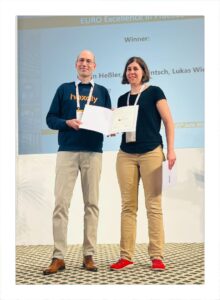
Prof. Stefan Irnich is a Professor at the Chair of Logistics Management, Johannes Gutenberg University Mainz. His research focuses on logistics optimization, vehicle routing problems, and operations research. He leads projects like the DFG-funded 'BiPISh: Bin Packing with Irregular Shapes' (2025), aiming to develop methods for packing irregular 2D shapes. His work bridges theoretical advancements and practical applications, such as integrating drones into routing systems and optimizing last-mile delivery networks. Notably, his former students Dr. Katrin Heßler and Dr. Timo Hintsch won the 2025 EURO Excellence in Practice Award for their BinPACKER project. Dr. Jeanette Schmidt received the Alfred Teves Foundation Prize for her dissertation on routing problem solutions. Irnich also organizes academic events like the SynchroTrans 2013 workshop on synchronization in transport. He maintains an active role in teaching, overseeing Master’s and Bachelor’s seminars in logistics. His research spans algorithm design (e.g., branch-price-and-cut methods), network optimization, and sustainability in transportation. Recent publications address challenges in scattered storage systems, multi-depot routing, and public transport integration.
Sina Khanmohammadi is an Assistant Professor in the School of Computer Science at the University of Oklahoma. His research focuses on neural data science, machine learning, and network neuroscience, aiming to understand brain dynamics and develop data-driven methods for neural implants to improve cognitive function. He holds a Ph.D. in Systems Science from SUNY Binghamton, M.Sc. in Manufacturing Management from the University of Hertfordshire, and B.Sc. in Computer Science from the University of Tabriz. Before joining OU, he was a Postdoctoral Associate at Washington University in St. Louis (Electrical & Systems Engineering) and an Adjunct Lecturer at SUNY Binghamton. His work integrates neuroimaging data with advanced computational techniques to study brain disorders and cognitive mechanisms. Key research interests include EEG analysis, functional connectivity, and applying machine learning to biomedical problems. His lab, 3SigmaLab (www.3sigmalab.com), explores interdisciplinary applications in neuroscience and systems science. He has contributed to over 25 peer-reviewed articles since 2012, focusing on neurological disorders, signal processing, and network dynamics. Notable achievements include developing novel methods for seizure detection, EEG modulation analysis, and predictive models of cognitive decline post-brain injury. His long-term goal is to translate computational insights into clinical tools for improving patient outcomes and cognitive health.
Antonio Carzaniga is a Full Professor and founding member of the Faculty of Informatics at Università della Svizzera italiana (USI), where he has been active since 2004. Previously, he served as an Assistant Research Professor at the University of Colorado at Boulder from 2001 to 2007. He holds a Ph.D. in Computer Science and a Bachelor’s degree in Electronic Engineering from Politecnico di Milano. Full Professor, Faculty of Informatics, Università della Svizzera italiana (2004–Present) Assistant Research Professor, Department of Computer Science, University of Colorado at Boulder (2001–2007) Ph.D. in Computer Science, Politecnico di Milano Bachelor’s in Electronic Engineering, Politecnico di Milano His research spans distributed systems and software engineering, with a strong focus on content-based addressing networks, publish/subscribe systems, middleware, software fault tolerance, and verification. He has pioneered work in information-centric networking and developed the Siena project, a scalable publish/subscribe service. His recent work extends into programmable networks, GPU-accelerated matching, and performance annotations for cloud systems. The 15 most recent publications highlight a consistent trajectory in scalable, high-performance networking and adaptive software systems. Key themes include content-based communication, packet subscriptions, information-centric networking, and leveraging redundancy for fault tolerance and testing. His work bridges theoretical foundations with practical implementations, often involving system-level software and performance evaluation. Best Paper Award, ACM SIGCOMM Workshop on Information-Centric Networking (ICN'13) Carzaniga has advised multiple graduate students, including Michele Papalini, Koorosh Khazaei, and Daniele Rogora, and has collaborated on funded research projects in distributed systems and networking. He has contributed to software development through projects like the Siena Fast Forwarding engine and the Synthetic Workload Generator. His service includes organizing workshops and contributing to major conferences in software engineering and computer systems. He leads research initiatives such as Siena and Content-Based Networking, focusing on scalable, decentralized communication infrastructures. His lab has developed key tools for evaluating publish/subscribe performance and implementing high-speed forwarding algorithms.
Enrico Napoli is a Full Professor in the College of Engineering at the University of Palermo, where he has been since 2001 (promoted from Associate Professor). He conducts research in numerical modeling of incompressible fluid flows with applications across civil, environmental, and industrial engineering domains, particularly focusing on turbulence analysis. He developed the PANORMUS open-source software (with finite-volume and SPH modules) for 3D hydrodynamic simulations, fully parallelized via MPI libraries and distributed as free software. As a delegate for the Rector's Program and Strategic Plan implementation, he also serves on the University's Academic Senate since 2009. Graduated Magna Cum Laude in Civil Hydraulic Engineering (1993) at University of Palermo His research covers: (1) 3D hydrodynamic modeling using finite-volume and SPH methods for free-surface and confined flows; (2) Development of PANORMUS open-source software (including hybrid FVM-SPH capabilities); (3) Water distribution network modeling with characteristic method applications; (4) Turbulence analysis in environmental and engineering contexts; (5) Biomedical fluid dynamics applications including cardiovascular FSI and thrombus formation. His computational work addresses both fundamental fluid mechanics and applied problems like desalination technologies , water quality management , and pollutant dispersion . Scientific activities include: Computational Advancements : Developed PANORMUS software with multi-domain parallelization and deformable wall capabilities Environmental Applications : Studied Augusta Harbour hydrodynamics, Stagnone Lagoon circulation, and urban stormwater pollution Biomedical Research : Modeled thrombus formation in cardiovascular systems using SPH Engineering Solutions : Analyzed energy recovery systems with PAT technology and flow regulation via PRVs
Professor Karl Jenkins is a Professor of Computational Engineering at Cranfield University , where he leads the Centre for Computational Engineering Sciences . His expertise spans Computational Fluid Dynamics (CFD) , Turbulent Combustion , High Performance Computing (HPC) , and Multiphase Flow Modeling . Jenkins has published over 100 papers and received the Gaydon Prize for his contributions to combustion research. His research focuses on reacting flows , turbulence modeling , and compressible multiphase flows , with recent work addressing green hydrogen production , aircraft component segmentation , and virtual reality applications in aviation safety. He has developed high-order numerical methods for shock wave analysis and interface-capturing in unstructured mesh environments . A former Sir Arthur Marshall Research Fellow at Cambridge University, Jenkins combines academic rigor with industrial collaboration , having worked with companies like Rolls-Royce plc , Airbus SE , and Siemens AG . He mentors research students including Yiren Tong and actively contributes to LES/DNS computational frameworks for aerospace and environmental applications .