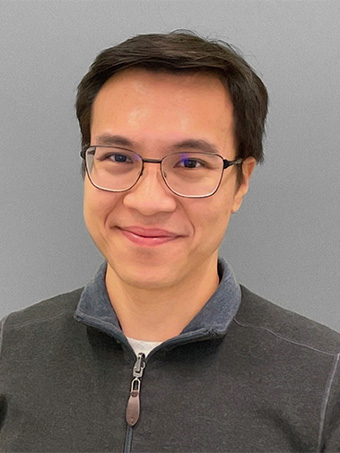
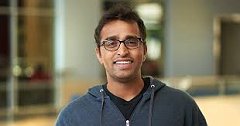
Marc HON is an Assistant Professor at the National University of Singapore (NUS) under the NUS Presidential Young Professorship, specializing in time-domain astronomy and machine learning applications for NASA missions including Kepler, TESS, and the Roman Space Telescope. His work focuses on characterizing stellar populations and discovering novel astrophysical phenomena through data-driven methodologies. His research spans asteroseismology for probing stellar interiors and Galactic archaeology to map the Milky Way's evolution using variable stars, alongside exoplanetary science investigations into planetary system evolution, habitable worlds, and James Webb Space Telescope atmospheric characterization. A core methodology involves developing machine learning frameworks like deep learning classifiers and generative models for large-scale astronomical datasets. HON's publication trends (2018-2024) reveal consistent innovation at the astrophysics-ML intersection, with emphases on red giant asteroseismology, exoplanet dynamics, and scalable analysis pipelines for space telescope data. Key contributions include flow-based stellar evolution emulators, deep learning oscillation detectors, and large-scale TESS Galactic archaeology studies. Scientific recognition includes: NASA Hubble Fellowship (2020) He actively contributes to major international collaborations as a member of both the TESS and Kepler Asteroseismic Science Consortia, with direct involvement in MIT's TESS mission operations and data pipelines.
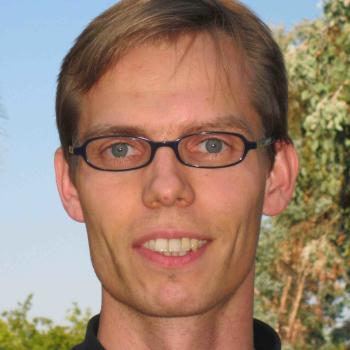
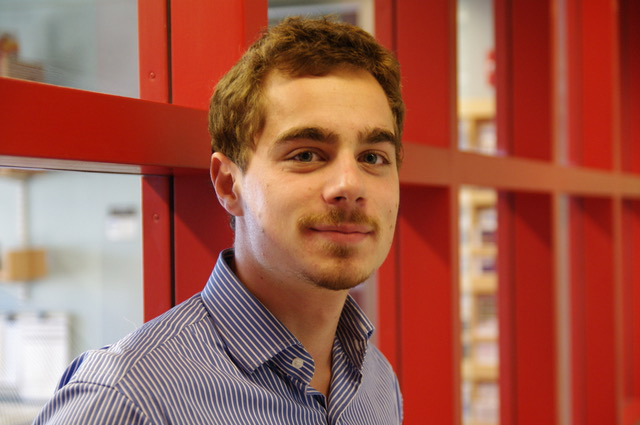
Zhidan Zheng is a researcher at the Technical University of Munich (TUM), working within the Chair of Electronic Design Automation led by Prof. Ulf Schlichtmann. His office is located in room 0509.05.911 at Arcisstr. 21, 80333 Munich, with direct contact available via email zhidan.zheng@tum.de and phone +49 (89) 289 - 23692. Zheng holds a Master of Science degree as indicated by his academic title M.Sc. and has been actively contributing to the field of optical interconnects and network-on-chip design. Zheng's research focuses on wavelength-routed optical networks-on-chip, with particular expertise in network topology optimization, fault tolerance mechanisms, waveguide routing algorithms, and bandwidth allocation strategies. His work addresses critical challenges in photonic integrated circuit design, including thermal variation effects, crosstalk mitigation, and lifetime extension for communication-intensive systems. Zheng has developed several innovative methodologies including ToPro+ for topology projection, LightR for fault-tolerant architectures, and WROXIM for network-level simulation. Analysis of Zheng's publication trends from 2021-2025 reveals a consistent focus on practical implementation challenges of optical networks-on-chip. His research has evolved from foundational topology design (Light, 2021) to increasingly sophisticated solutions addressing reliability (LightR, 2023) and comprehensive system integration (ToPro+, 2025). The work demonstrates strong collaboration with researchers including Mengchu Li, Tsun-Ming Tseng, and Ulf Schlichtmann across multiple high-impact venues including DAC, DATE, ICCAD, and ASP-DAC. Zheng actively contributes to the Electronic Design Automation research group at TUM, participating in projects related to analog EDA, emerging technologies, and optical networks. His research is situated within TUM's broader initiatives in photonic integration and high-performance computing architectures, working closely with Prof. Schlichtmann's team on funded projects in the optical NoC domain.
Reed Essick is an Assistant Professor at the Canadian Institute for Theoretical Astrophysics (CITA), University of Toronto. His research focuses on experimental gravity, astrophysical signals, and nuclear physics, with particular emphasis on neutron stars, black holes, and gravitational waves. He develops advanced statistical methods like hierarchical Bayesian inference and nonparametric analysis for interpreting observational data from pulsars and gravitational wave detectors. Dr. Essick collaborates extensively with international observatories such as LIGO, Virgo, and KAGRA, contributing to cutting-edge projects like multimessenger astronomy and precision cosmology. His work bridges computational astrophysics with observational techniques, addressing fundamental questions about dense matter and strong-field gravity. Key contributions include studies on gravitational wave equation-of-state constraints, pulsar timing analysis, and the application of machine learning to detector data. His research leverages both ground-based interferometers and space-based observations to explore extreme astrophysical environments.
Dr. Christos Papavassiliou is an Associate Professor in the Department of Electrical and Electronic Engineering at Imperial College London, part of the Faculty of Engineering. His research focuses on instrumentation electronics, memristor modeling, signal integrity, and novel device technologies such as SiGe devices, RF MEMS, and ReRAM. He leads the Space Lab and collaborates with the National Centre for Scientific Research in Athens. He holds senior membership in IEEE and is a member of the IET. Education: Ph.D. in Applied Physics, Yale University (1983–1989) MPhil in Applied Physics, Yale University (1983–1988) MS in Applied Physics, Yale University (1983–1985) B.S. in Physics, MIT (1979–1983) Research Interests: Memristor-based neuromorphic computing and stochastic systems High-performance instrumentation hardware and data acquisition Multi-state memristive memory and selectorless arrays Integration of memristors with CMOS for hybrid circuits Applications in biomedical wearables and edge AI deployment Key Contributions: Developed novel memristor models for circuit simulation Pioneered work on memristor-based true random number generators Advanced understanding of resistive drift and energy-constrained storage Designed FPGA-based systems for analog circuit emulation Labs & Teams: Active in the Space Lab at Imperial College, focusing on interdisciplinary research in electronics and space applications.
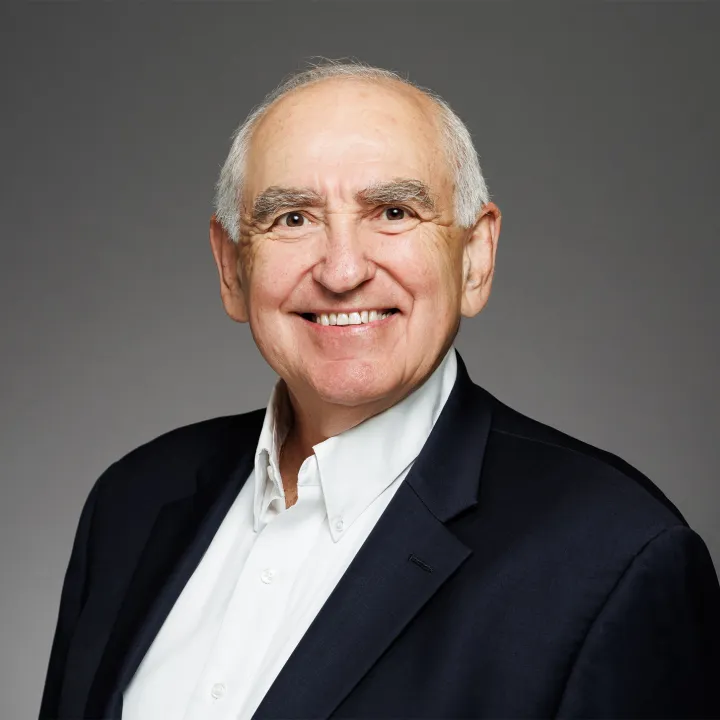
Matthias Ihme is a Professor in the Department of Mechanical Engineering and Photon Science Directorate at Stanford University. His research focuses on large-eddy simulation (LES) of turbulent reacting flows, aeroacoustics, combustion-generated noise, numerical methods, and high-order schemes. He holds a Ph.D. from Stanford University (2008), an M.Sc. in Computational Engineering from the University of Erlangen (Germany, 2002), and a Dipl.-Ing. in Mechanical Engineering from Munich University of Applied Sciences (Germany, 2000). His work bridges computational fluid dynamics, combustion science, and photon science, with notable contributions to supercritical fluid dynamics, machine learning integration in fluid simulations, and high-fidelity atmospheric transport modeling. Recent research emphasizes ultrafast cluster dynamics, shock-induced interface behavior, and stochastic ignition mechanisms in advanced fuel systems. Publications highlight interdisciplinary advancements, including physics-informed ML frameworks for reacting flows and experimental studies using X-ray photon correlation spectroscopy. His projects often involve high-performance computing and collaboration with national labs like SLAC.
Althaff Irfan Cader Mohideen is a Lecturer at the School of Computing, Engineering and Physical Sciences. His research focuses on Internet engineering, computer security, and applied cryptography, with expertise in security protocols, authentication mechanisms, and trust management. He has contributed to interdisciplinary projects such as the NEAT Horizon2020 initiative and the SMILE project funded by Thales Alenia Space. His work includes developing network access methodologies for rural broadband, optimizing web performance via satellite, and exploring IoT security challenges. Mohideen holds a PhD in authentication mechanisms for e-assessments and collaborated on the award-winning 'Intelligent Keyboard' project. He currently serves as an External Examiner at Staffordshire University and advocates for multidisciplinary collaboration. Research Areas: IoT Security, Network Protocols, Authentication Mechanisms, Trust Management Key Projects: NEAT (Web Performance), SMILE (Streaming Optimization), Rural WiFi Deployment His research emphasizes practical solutions grounded in formal analysis, balancing theoretical rigor and real-world applicability. He actively seeks collaborations across academia and industry, particularly in securing constrained IoT devices and improving trust-based access control systems. Awards: Queen’s Award (2011), Recognition from Google’s 'Making the web Faster' Community Mohideen’s future work targets IoT authentication protocols, trust management in distributed systems, and scalable security solutions for constrained devices. He is committed to advancing sustainable development goals through secure, accessible digital infrastructure.
Dr. Ioanna Kantzavelou is an Associate Professor at the Department of Informatics and Computer Engineering, School of Engineering, University of West Attica. She leads the INSSec Research Group, focusing on Information, Networks, and Systems Security. Her expertise spans Cybersecurity, Game Theoretic approaches in Intrusion Detection, and Critical Infrastructure Protection. She holds a Ph.D. from the University of the Aegean (2011), an M.Sc. from University College Dublin (1994), and a B.Sc. from the Technological Educational Institution of Athens (1991). Education: Ph.D. in Intrusion Detection with Game Theoretic Approaches – University of the Aegean (2011) M.Sc. in Computer Security – University College Dublin (1994) B.Sc. in Informatics – TEI of Athens (1991) Research Interests: Intrusion Detection in IoT/Wireless Sensor Networks (WSN) and Cyber-Physical Systems Cyber Ranges for Education and Research Cybersecurity for Merchant Shipping and Critical Infrastructures Hybrid Threats, Cyberterrorism, and Cyberwarfare Digital Forensics and Blockchain-Based Authentication Systems Her work includes over 30 peer-reviewed publications, three books, and contributions to R&D projects funded by the Greek government, EU, and Irish government. She actively reviews for IEEE, Elsevier, and Springer journals, and is a member of ACM, IEEE Computer Society, and the Greek Computer Society. Grants & Collaborations: EU-funded projects on Cybersecurity and Critical Infrastructure Protection Greek government grants for Cyber Ranges and IoT Security Labs/Teams: Head of the INSSec Research Group, collaborating with industry partners on Cybersecurity solutions for maritime and industrial sectors.
Roman Kuc is a Professor of Electrical Engineering at Yale University, affiliated with the School of Engineering & Applied Science. He directs the Intelligent Sensors Laboratory, focusing on biomimetic sensors for robotics and bioengineering. His research explores brain-based devices (BBDs), sonar sensing, and neuromorphic processing inspired by biological systems. He holds a BSEE from Illinois Institute of Technology and a PhD from Columbia University. Dr. Kuc’s work bridges signal processing, robotics, and bioengineering, with applications in autonomous systems and clinical diagnostics. He has published over 200 papers and authored textbooks like Electrical Engineering in Context and The Digital Information Age . Notable honors include an honorary doctorate from the Glushkov Institute of Cybernetics and the Yale Sheffield Distinguished Teaching Award. His research themes include cognitive mapping via sonar echoes, neural network-based classification of environmental features, and biomimetic approaches to echolocation. Recent work emphasizes sensorimotor integration and robust performance in uncertain environments. Scientific awards highlight his contributions to robotics, signal processing, and education. His lab develops systems that emulate biological sensory mechanisms, aiming to advance robotics, medical applications, and assistive technologies.
Karthik Dantu is an Associate Professor in the Department of Computer Science and Engineering at the University at Buffalo, State University of New York, within the School of Engineering and Applied Sciences. His research focuses on mobile sensor networks, robot networks, networked embedded systems, mobile computing, wireless networks, and embedded operating systems. He leads the Distributed Robotics and Networked Embedded Sensing (DRONES) Lab and has received significant funding including an NSF CAREER Award. Dr. Dantu's educational background includes: PhD in Computer Science from University of Southern California (2009) BE in Computer Science from Sri Jayachamarajendra College of Engineering (1999) His research interests center on algorithmic and systems challenges in Edge Computing Systems, with particular focus on enabling seamless vision sensing in cloud-edge environments. Dantu's work bridges mobile systems and robotics, developing novel approaches for UAV software, visual SLAM, and distributed sensing. His research addresses critical challenges in resource-constrained environments, security, and real-time performance for mobile and robotic systems, with emphasis on practical implementations that solve real-world problems in autonomous systems. Dr. Dantu's publication record shows a strong trajectory in mobile systems and robotics research, with increasing focus on edge computing applications for visual sensing. His recent work demonstrates expertise in adapting visual SLAM to edge environments, securing mobile systems through technologies like Rushmore, and developing novel approaches for UAV software reliability and depth sensing. The research spans theoretical algorithms and practical system implementations, with particular strength in bringing academic research to practical applications in robotics and mobile computing. Dr. Dantu has received several scientific honors: NSF CAREER Award on Enabling Seamless Vision Sensing in Cloud-Edge Systems Outstanding service award from the Office of International Services NSF Travel Grant for SenSys 2005 Conference Travel Grant for SIGCOMM 2002 As an advisor, Dr. Dantu has mentored numerous PhD students to completion, with graduates now working at companies like Samsung Research and Zoox Inc., or continuing academic careers as Assistant Professors. His research is supported by substantial grants including a DARPA OFFSET Sprint 4 award ($470k), an NSF CAREER award ($550k), and multiple NSF collaborative grants totaling over $1.5 million. He serves on numerous conference committees including Mobicom, MobiSys, and ICRA, demonstrating leadership in the mobile systems and robotics research communities. Dr. Dantu leads the Distributed Robotics and Networked Embedded Sensing (DRONES) Lab at UB, which focuses on developing algorithms and systems for mobile sensor networks, robot networks, and embedded sensing applications. The lab's work spans theoretical foundations to practical implementations, with particular expertise in UAV systems, visual SLAM, and edge computing for robotics, maintaining strong collaborations with industry partners and other academic institutions to advance the state of the art in mobile and robotic systems.
Sophie Nowicki is an Empire Innovation Professor at the University at Buffalo's RENEW Institute, Department of Earth Sciences within the College of Arts and Sciences. She serves as Director of the Center for Geological and Climate Hazards. Her research focuses on ice sheet and sea level dynamics, using a combination of applied mathematics, remote sensing observations, and numerical modeling to understand how ice sheets interact with the global climate system. Empire Innovation Professor, University at Buffalo Director, Center for Geological and Climate Hazards Member of UB RENEW Institute Department of Earth Sciences, College of Arts and Sciences Dr. Nowicki's research interests center on glaciology, ice-sheet modeling, climate modeling, and sea level change. She studies how ice sheets interact with the global climate system and affect sea level change using a spectrum of models from idealized to large-scale continental ice sheet models. Her work is integral to climate models that provide forcing for ice sheet models, particularly through the Ice Sheet Model Intercomparison Project for CMIP6 (ISMIP6). She teaches courses including Introduction to Computational Earth Science, Environmental Remote Sensing, and various graduate research courses. Her recent publications reveal a strong focus on Antarctic and Greenland ice sheet modeling, sea level rise projections, and the development of advanced modeling frameworks. The research spans from fundamental glaciological processes to large-scale climate impacts, with a particular emphasis on quantifying uncertainties in ice sheet contributions to sea level rise. Her work frequently appears in top journals including Nature, The Cryosphere, and Geophysical Research Letters, and she has made significant contributions to the IPCC Sixth Assessment Report. Empire Innovation Professor recognition Lead contributor to IPCC AR6 Working Group I Principal Investigator for ISMIP6 (Ice Sheet Model Intercomparison Project) Dr. Nowicki actively mentors graduate students and postdoctoral researchers, with current advisees working on various aspects of ice sheet dynamics and sea level change. Her research is supported by multiple grants from NASA, NSF, and other agencies focused on improving our understanding and projections of ice sheet behavior in a warming climate. She leads the development of critical tools like the Cryosphere Model Comparison Tool (CmCt) and has been instrumental in establishing community standards for ice sheet modeling. She is involved with several research groups and initiatives including the Ice Sheet & Sea Level Lab at UB, which focuses on understanding how ice sheets will evolve in a warming world and what this means for future sea levels. Her team combines observational data with sophisticated modeling approaches to address key questions about ice-ocean and ice-atmosphere interactions that drive ice sheet changes.
Aravind Machiry is an Assistant Professor at Purdue University's Electrical and Computer Engineering Department and a founding member of the Purdue Systems and Software Security (PurS3) Lab . His research focuses on system security, particularly vulnerability detection, prevention, and secure system development using static/dynamic program analysis, fuzzing, type systems, and machine learning. Designing practical solutions for software and embedded system security Recipient of NSF CAREER and Amazon Research awards Active participant in SPLASH 2025 as OOPSLA Review Committee member His recent work includes automated vulnerability detection in embedded software, spatial memory safety enhancements, and security analysis of GitHub workflows. He has received recognition for his research through multiple distinguished paper awards and industry funding. Selected scientific awards include NSF CAREER Award (2024) Amazon Research Award (2022) Test of Time Award at FSE 2023 for DynoDroid Distinguished Paper Award at OOPSLA 2022 for 3c Qualcomm Innovation Fellowship (2025) His research team has developed frameworks like ARGUS for taint analysis of CI/CD workflows and FuzzUEr for UEFI interface fuzzing, discovering hundreds of critical vulnerabilities in open-source projects and thousands of command injection flaws in GitHub repositories.
Vincent Sitzmann is an Assistant Professor at the Massachusetts Institute of Technology (MIT), affiliated with the Computer Science and Artificial Intelligence Laboratory (CSAIL). He leads the Scene Representation Group and is part of the Visual Computing research community at CSAIL. His work focuses on advancing artificial intelligence's ability to perceive and interact with the physical world, particularly through neural fields, 3D scene representations, and robotics. His research bridges computer vision, machine learning, and robotics, aiming to create systems that emulate human perception and decision-making. He holds a dual role in the PI Core/Dual program at MIT and contributes to interdisciplinary efforts in AI & ML, Graphics & Vision, and Robotics. His recent projects include developing generative models for 3D avatars, robust camera pose estimation, and learning-based control for soft robots. He collaborates widely within MIT’s engineering ecosystem and has led initiatives such as the Collaborative Research grant on compositional implicit representations for 3D scene understanding (2022). His lab, the Scene Representation Group, emphasizes scalable 3D reconstruction, material estimation, and embodied AI. Notable technologies include Flowmap for camera calibration and Dittogym for soft robotics control. While no awards are explicitly listed, his work has been featured in top conferences like SIGGRAPH and IEEE Robotics.
Giovanna Turvani is an Associate Professor at the Department of Electronics and Telecommunications (DET) at Politecnico di Torino, with affiliations in both the College of Electronic, Telecommunications and Physics Engineering and the College of Computer, Film, and Mechatronics Engineering. Scientific Branch: IINF-01/A - Electronics ERC Sectors: PE7_4, PE7_11, PE6_1, PE6_14, PE7_3 SDG Goals: Quality Education, Gender Equality, Affordable Energy, Industry Innovation Her research focuses on advanced electronics and quantum technologies, including: Logic-in-memory computing Quantum computing architectures Microwave imaging for medical and agricultural applications CAD tools for emerging nanotechnologies Embedded systems for bee health monitoring IoT solutions for bio-waste valorization Publications show strong expertise in quantum computing, nanocomputing, and microwave imaging, with recent trends emphasizing quantum optimization frameworks, in-memory architectures, and IoT-based agricultural technologies. She supervises PhD students in areas like quantum machine learning algorithms, predictive on-board systems, and quantum hardware design. Collaborations span multiple disciplines, including medical device development and agricultural electronics. Patents include innovations in microwave imaging, racetrack memory logic functions, and in-memory computing devices.
Tom Beucler is a Conditional Pre-Tenure Assistant Professor in Geo-Environmental Data Science at the University of Lausanne’s Institute for Earth Surface Dynamics (IDYST). He holds a Master’s degree in Science and Mechanics from École Polytechnique (2014) and a PhD in Atmospheric Science from MIT (2019). Postdoctoral research at Columbia University and UC Irvine focused on machine learning applications in climate science under Professors Pierre Gentine and Michael Pritchard. Research Interests: Climate informatics, atmospheric physics, fluid dynamics, tropical meteorology, and integrating machine learning into climate models for extreme weather prediction and hydrological cycle modeling. Collaborations: Works with environmental scientists and computer engineers to improve climate models using neural networks and causal discovery methods. Initiatives: Organizes weekly brainstorming sessions to promote machine learning adoption in environmental sciences. Publications span climate-invariant machine learning, data-driven parameterizations, and hybrid AI-climate modeling frameworks like ClimSim. His work emphasizes causal consistency and generalizability across climate conditions.
Sonia A. Fahmy is a Professor of Computer Science and Associate Department Head at Purdue University's Department of Computer Science (College of Science). She holds a PhD from The Ohio State University (1999). Her research focuses on network architectures, protocols, and security, with over 100 refereed publications. Key areas include virtual reality networking, cellular network optimization, and network experimentation tools like NFV-VITAL and ENVI. Her work is supported by NSF, DHS, industry partners, and she leads Purdue's CERIAS cybersecurity initiatives. Education: PhD in Computer and Information Science from The Ohio State University (1999). Research Interests: Network security, distributed systems, wireless sensor networks, and network function virtualization. Notable contributions include the HEED clustering algorithm and Contain-ed latency management system. Awards: NSF CAREER Award (2003), IEEE Fellow. Grants: NSF, DHS, AT&T, Cisco, Juniper, and Meta-funded projects. Professional service includes leadership roles in IEEE ICNP, INFOCOM, and editorial roles in top journals. Advising: Mentored over 20 PhD students and postdocs. Current advisees include Umakant Kulkarni and Yufeng Chen. Research teams collaborate with industry partners like Hewlett-Packard and Sandia National Labs. Labs/Teams: Active in Purdue's CERIAS, leading projects on secure network protocols and experimentation frameworks. Tools developed include EMIST, Testbed Mapping, and iHEED for sensor networks.