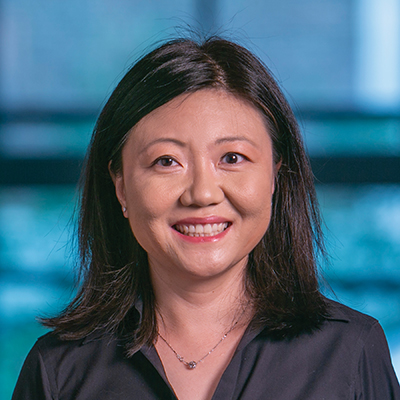
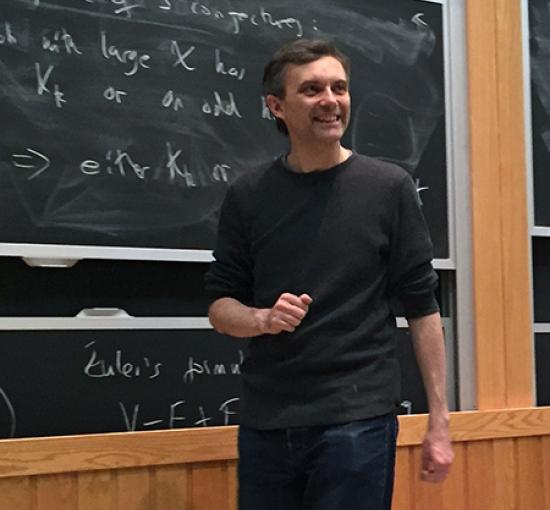
Srdjan Lukic is the Deputy Director of the FREEDM Systems Center and a Distinguished Professor in the Department of Electrical and Computer Engineering at North Carolina State University. His research focuses on power electronics, power systems, and electric vehicle infrastructure. He holds a Ph.D. in Electrical Engineering from the Illinois Institute of Technology (2007). His work emphasizes high-power converters, DC microgrids, and extreme fast charging (XFC) technologies for electric vehicles. Recent projects include the development of a 13.2 kV solid-state transformer for EV XFC stations and resilient distributed control frameworks for smart grids. He has contributed to wireless charging systems and modular medium-voltage fast chargers. Key Awards: University Faculty Scholars (2022) Grants: DOE-funded XFC projects, modular EV charging infrastructure Labs/Teams: FREEDM Systems Center, RIAPS control architecture development Publications highlight innovations in microgrid control, power electronics modeling, and privacy-preserving distributed systems. His work addresses grid resilience, cyber-physical integration, and high-efficiency energy conversion.
Wenping Wang is a Professor in the Department of Computer Science & Engineering at Texas A&M University, part of the College of Engineering. His research focuses on computer graphics, computer vision, geometric modeling, and visualization. He holds Fellowships from ACM and IEEE, and has received notable awards including the 2021 AsiaGraphics Outstanding Technical Contributions Award and the 2017 John Gregory Memorial Award. Wang's educational background includes a Ph.D. from the University of Alberta and M.Eng. and B.Sc. degrees from Shandong University. His work spans advancements in neural implicit surfaces, 3D reconstruction, and medical imaging applications such as orthodontic treatment prediction. He has authored numerous influential papers in top-tier conferences like SIGGRAPH and journals like ACM Transactions on Graphics. His research interests emphasize bridging geometric modeling with machine learning, particularly in neural rendering, surface parameterization, and medical visualization. Recent projects include developing frameworks for automatic tooth alignment and high-fidelity 3D geometry generation. Wang's contributions have significantly impacted both theoretical foundations and practical applications in computer graphics.
Jiang Hu is a Professor in the Department of Electrical and Computer Engineering at Texas A&M University, holding the Eric D. Rubin '06 Endowed Professorship. He also serves as Co-Director of Graduate Programs and is affiliated with the Computer Science & Engineering department. His research focuses on VLSI design automation, machine learning applications, and hardware security. He has held roles as editor for IEEE Transactions on CAD and ACM Transactions on Design Automation, and chaired the 2012 ACM International Symposium on Physical Design. Education: B.S. in Optical Engineering (Zhejiang University, 1990), M.S. in Physics (1997), and Ph.D. in Electrical Engineering (University of Minnesota, 2001). He worked at IBM Microelectronics before joining Texas A&M in 2002. Research interests include energy-efficient VLSI circuits, on-chip communication fabrics, analog layout automation, and AI-driven EDA. Recent work emphasizes machine learning for design closure, privacy-preserving frameworks, and systolic array-based architectures. Awards: IEEE Fellow (2016) Humboldt Research Fellowship (2012) Multiple best paper awards at DAC, ICCAD, and ASPDAC Advising and grants: Leads initiatives like the SLICE project, NSF workshops on ML-EDA infrastructure, and serves as Editor-in-Chief of ACM TODAES since 2024. His work bridges academic research and industry applications in EDA and semiconductor design. Labs/Teams: Active contributor to open-source tools like ALIGN for analog layout generation and collaborations on machine learning for EDA commons.
Dr. Jing Li is an Associate Professor and Eduardo D. Glandt Faculty Fellow at the University of Pennsylvania , holding dual appointments in the Electrical and Systems Engineering and Computer and Information Science departments. As co-director of the CyberSavvy nationwide security research center and director of the Penn Computational Intelligence Lab (PennCIL) , she pioneers innovations in non-von Neumann computing paradigms. Her research spans post-CMOS technologies, in-memory computing, and hardware-software co-design for security and AI applications. PhD in Computer Engineering, Purdue University (2009) BSc in Electrical Engineering, Shanghai Jiaotong University (2004) Research Focus: Dr. Li's work addresses fundamental challenges in computer systems across the stack. Key areas include: In-Memory Computing: Liquid Silicon architecture combining RRAM with silicon CMOS through monolithic 3D integration Security Engineering: Transforming computer security from "Art" to formal "Engineering" discipline within CyberSavvy Virtualization: Cloud FPGA abstraction layers decoupling compilation from runtime resource management Graph Analytics: Degree-aware optimization techniques for massive-scale graph processing Deep Learning Systems: Roofline model extensions for FPGA-based CNN acceleration Scientific Impact: Awarded DARPA Young Faculty Award , NSF CAREER Award , and IBM CEO Milestone Award , her team has achieved world records in energy-efficient computing (ENIAD supercomputer). With 46 U.S. patents and over 80 publications, she leads ecosystem development for emerging computing architectures through initiatives like the open-source MEG simulation platform . Community Leadership: Dr. Li serves on program committees for flagship conferences ( ISCA , FPGA Symposium ), chairs the International Memory Workshop , and contributes to the MLsys conference's inaugural committee. She actively mentors through multiple PhD openings and industry collaborations.
Professor Alexander Scott is a faculty member at the University of Oxford, holding positions as Professor of Mathematics and Dominic Welsh Tutor in Mathematics at Merton College. His research focuses on combinatorics, probability, algorithms, and graph theory, with a particular interest in the interplay between local and global structures in networks. He has organized the Oxford Combinatorics Seminar and co-founded the online Oxford Discrete Mathematics and Probability Seminar, fostering collaboration in these fields. Professor Scott’s work bridges theoretical foundations with applications in statistical physics and algorithmic design. He has supervised numerous graduate students in combinatorics and regularly teaches undergraduate courses in analysis and discrete mathematics. His contributions include advancements in extremal graph theory, probabilistic methods, and structural combinatorics, with over 150 publications in prestigious journals. He actively organizes academic events such as the annual One-Day Meeting in Combinatorics, hosting speakers from around the world. Despite the absence of explicit awards noted, his prolific research output and academic leadership reflect significant contributions to the field. His current interests continue to explore the Erdős-Hajnal conjecture, induced subgraph densities, and algorithmic challenges in combinatorial structures.
Viswanath Nagarajan is an Associate Professor of Industrial & Operations Engineering and Computer Science Engineering (courtesy) at the University of Michigan. His research focuses on combinatorial optimization, approximation algorithms, and stochastic models for routing, scheduling, and location problems. He previously served as an Assistant Professor at the University of Michigan (2014–2020) and a Research Staff Member at IBM T.J. Watson Research Center (2009–2014). He holds a Ph.D. in Algorithms, Combinatorics, and Optimization from Carnegie Mellon University (2004–2009) and a B.Tech. in Computer Science from IIT Bombay (1999–2003). His research explores uncertainty management in optimization, including stochastic models and approximation algorithms for decision-making under uncertainty. He has contributed to adaptive algorithms, submodular optimization, and applications in logistics, network design, and scheduling. Education: Ph.D., Algorithms, Combinatorics, and Optimization (Carnegie Mellon University, 2009) B.Tech., Computer Science and Engineering (IIT Bombay, 2003) Prof. Nagarajan has organized major conferences like IPCO 2019 and served on editorial boards for journals including Operations Research , ACM Computing Surveys , and ACM Transactions on Algorithms . His service includes program committees for SODA, APPROX, and IPCO. He advises Ph.D. students focusing on optimization theory and applications, with advisees securing positions at Yahoo! Research, the University of Chicago, Ford Motor Company, and Georgia Tech.
Thatchaphol Saranurak is an Assistant Professor at the University of Michigan , specifically in the Computer Science and Engineering Division . Prior to this, he earned his PhD in Computer Science from KTH Royal Institute of Technology in 2018 under Danupon Nanongkai , followed by a postdoctoral research assistant professorship at Toyota Technological Institute at Chicago (2018-2020). Research Focus : His work bridges fundamental problems in graph theory, including Dynamic graph algorithms for max-flow and min-cut Expander graph decompositions and their applications Robust algorithms against adaptive adversaries Continuous optimization for combinatorial problems Scientific Contributions : He has made breakthroughs in deterministic graph algorithms, notably improving vertex connectivity bounds, developing near-linear time Gomory-Hu trees, and advancing dynamic matching algorithms. His research has been recognized by Sloan Research Fellowship NSF CAREER Award Presburger Award 2023 Teaching : He teaches courses like Expander and Graph Algorithms and Introduction to Algorithms (Winter 23, Winter 25). His lecture videos and notes are publicly available. Collaborations : He works with leading researchers including Sayan Bhattacharya , Joakim Blikstad , and Jason Li , with affiliations to institutions like TTIC , KTH , and SODA conferences.
Michael Lepech is a Professor of Civil and Environmental Engineering and Senior Fellow at the Woods Institute for the Environment at Stanford University. His research focuses on integrating sustainability into civil engineering through quantitative assessment and multi-scale modeling, particularly via the Sustainable Integrated Materials, Structures, Systems (SIMSS) framework. He also leads the Stanford Center at the Incheon Global Campus (SCIGC) in South Korea, exploring smart city technologies for urban sustainability. Education : PhD in Civil and Environmental Engineering (2006), MBA in Finance and Strategy (2008) from the University of Michigan. Research Areas : Sustainable infrastructure design, biopolymer composites, life cycle assessment, digital twinning, smart city technologies, and multi-physics deterioration modeling. Leadership : Director of SCIGC, advancing research on smart and sustainable urban environments in Songdo, South Korea. His recent publications focus on biopolymer-bound composites, traffic signal optimization, and life cycle sustainability analysis. He has received recognition as a Senior Fellow at Stanford’s Woods Institute for environmental research.
Hamsa Bastani is an Associate Professor of Operations, Information and Decisions at the Wharton School, University of Pennsylvania, with a secondary appointment in Statistics and Data Science. She co-directs the Wharton Healthcare Analytics Lab and serves as an Associate Editor for Operations Research, M&SOM and OR Letters. Her academic journey began with summa cum laude graduation from Harvard in 2012 with an A.M. in physics and A.B. in physics and mathematics. She completed her PhD in Stanford's Electrical Engineering department under Mohsen Bayati, followed by a Herman Goldstine postdoctoral fellowship at IBM Research. Professor Bastani's research focuses on developing novel machine learning algorithms for data-driven decision-making, with applications spanning healthcare operations, social good, and revenue management. Her work demonstrates particular expertise in sequential decision-making (bandits, reinforcement learning), learning from auxiliary data sources (transfer learning, meta-learning), and designing effective human-AI interfaces (interpretability, fairness). She has made significant contributions to understanding how AI systems affect and augment human behavior, with the goal of designing AI tools that help humans thrive. Her publications reveal a strong trend toward high-impact applications of machine learning in critical societal domains. A significant portion of her recent work focuses on healthcare applications, including optimizing health supply chains in low- and middle-income countries, designing clinical trial protocols, and creating targeted public health interventions. Another major theme examines the complex relationship between humans and AI systems, particularly how AI affects learning outcomes and decision-making processes. Her work frequently bridges theoretical advances with practical implementation, as evidenced by country-scale deployments in Greece and Sierra Leone. Wagner Prize for Excellence in Operations Research Practice (2021) Pierskalla Award for Best Paper in Healthcare (2021, 2019, 2016) Behavioral OM Best Paper Award (2021) Public Sector in OR Best Paper Award (2024) INFORMS Data Mining Best Paper Award (2022) Wharton Teaching Excellence Award (2019, 2020, 2021) Professor Bastani has advised numerous PhD students who have gone on to prominent positions, including Pia Ramchandani (Director of Responsible AI at PwC), Arielle Anderer (Assistant Professor at Cornell Johnson), and Kan Xu (Assistant Professor at ASU Carey). Her research has been supported by collaborations with national governments, including the Greek government where she co-designed Eva, the national-scale reinforcement learning system for targeted COVID-19 testing, and the Government of Sierra Leone where she improved patient access to essential medicines by nearly 20% via decision-aware learning. She has also conducted the first large field study deploying generative AI tutors in high school math classes. She leads the Wharton Healthcare Analytics Lab and serves on the Steering Committee for the Penn Center for Health Incentives and Behavioral Economics and on the statistics advisory committee for the AHA Food is Medicine Initiative. Outside academia, she serves on the Workday AI Advisory Board, demonstrating her commitment to translating academic research into practical applications.
Ruth Fong is a Teaching Professor at the Department of Computer Science, Princeton University , where she teaches foundational and advanced AI/ML courses (COS324, COS126) while leading the Looking Glass Lab in explainable AI research. She collaborates closely with the Visual AI Lab and Professor Olga Russakovsky . Education: PhD in Visual Geometry Group, University of Oxford (advised by Andrea Vedaldi , funded by Rhodes Trust and Open Philanthropy ) MSc in Neuroscience, University of Oxford (with Rafal Bogacz , Ben Willmore , and Nicol Harper ) AB in Computer Science, Harvard University (with David Cox and Walter Scheirer ) Research Focus: Pioneering Explainable AI and ML Fairness , with emphasis on post-hoc model understanding, interpretable-by-design architectures, and human-AI interaction frameworks. Her work spans computer vision, self-supervised learning, and neuroscience-inspired methodologies. Publication Trends: Recent papers (2023-2025) analyze interactive explanations , concept salience , and gender artifacts in vision datasets . Earlier work (2017-2020) established foundational techniques in extremal perturbations , backpropagation saliency , and neural network interpretability . Scientific Awards: Princeton Engineering Council Teaching Award (2025) Keller Center Summer Course Development Grant (2025) CHI Honorable Mention Paper Award (2023) Open Philanthropy AI Fellowship (2018) Rhodes Scholarship (2015) Advising: Directly mentored 10 Princeton undergraduates on IW/senior theses projects spanning generative AI , medical imaging fairness , and interactive visualization tools . Grants include Princeton SEAS and Open Philanthropy funding for the Looking Glass Lab. Lab & Team: Leads the Looking Glass Lab with 6 graduate/postgraduate members including Rawand Aziz , Matthew Barrett , and Ben Wachspress . Collaborates with faculty across Princeton and Oxford.
Minsu Kim is a CIFAR AI Safety Post-doc Fellow at KAIST and Mila, collaborating with Prof. Yoshua Bengio, Prof. Sungjin Ahn, and Prof. Sungsoo Ahn. His work bridges System 2 Deep Learning, Bayesian posterior inference, and combinatorial optimization. Ph.D., Industrial Engineering, KAIST (2025) M.S., Electrical Engineering, KAIST (2022) B.S., Mathematics and Computer Science (Dual Degree), KAIST (2020) Kim's research focuses on enabling AI systems to measure uncertainty, represent causality, and perform sequential reasoning for safety-guaranteed planning. His methodology integrates GFlowNets and diffusion models with off-policy amortized inference, targeting applications in scientific discovery , hardware design optimization , and large language model alignment . Recent work explores Bayesian posterior inference through GFlowNets, aiming to unify deep learning with probabilistic reasoning. His 15 most recent publications (2025–2024) reveal a trend of combining combinatorial optimization with generative models for tasks like molecular graph discovery, vehicle routing, and neural architecture search. He also investigates diffusion samplers for Bayesian inverse problems and symmetry-based neural methods (Sym-NCO) to enhance sample efficiency. Jang Yeong Sil Fellowship (2025) KAIST Presidential Best Ph.D. Thesis Award (2025) Qualcomm Innovation Fellowship (2023) DesignCon Best Paper Awards (2021–2022) Kim's collaborations span KAIST's Industrial Engineering department and Mila's AI research groups. He actively contributes to academic peer review for top conferences (NeurIPS, ICML, ICLR) and journals (IEEE TNNLS, TPAMI), emphasizing the intersection of AI safety , uncertainty quantification , and systemic reasoning .
Nicolò Cesa-Bianchi is a Professor of Computer Science at the University of Milan, where he serves as head of the Computer Science programs. He is also associated with the Department of Electronics, Information and Bioengineering (DEIB) at Politecnico di Milano. Cesa-Bianchi holds significant leadership roles including Board member, Fellow and co-director of the Milan unit of the European Laboratory for Learning and Intelligent Systems (ELLIS), and membership in the prestigious Accademia Nazionale dei Lincei. He is also involved with The European Lighthouse on Secure and Safe AI (ELSA), The European Lighthouse of AI for Sustainability (ELIAS), and The FAIR foundation. Professor Cesa-Bianchi's research focuses on the theoretical foundations of machine learning, with special emphasis on sequential decision making and online learning algorithms. His work spans multiple areas including multi-armed bandit problems, regret analysis, prediction with expert advice, and learning on graphs. He has made significant contributions to understanding the theoretical limits of learning algorithms and developing efficient methods for various learning scenarios. His research has important applications in online markets, social networks, and bioinformatics. His monographs 'Prediction, Learning, and Games' and 'Regret Analysis of Stochastic and Nonstochastic Multi-armed Bandit Problems' are considered seminal works in the field. His recent publications demonstrate continued leadership in advancing the theoretical understanding of machine learning, with 2024-2025 papers covering cooperative online learning, multitask learning, fair trade mechanisms, and refined analyses of bandit algorithms. The research shows increasing focus on practical economic applications while maintaining strong theoretical foundations. Google Research Award Xerox Foundation UAC Award Member of the Accademia Nazionale dei Lincei ELLIS Fellow Cesa-Bianchi has been deeply involved in academic service, having served as action editor for the Machine Learning Journal, IEEE Transactions on Information Theory, and the Journal of Machine Learning Research. He currently serves as associate editor for the Journal of Information and Inference and TheoretiCS. He has held leadership positions including President of the Association for Computational Learning and member of the steering committee for the EC-funded Network of Excellence PASCAL2. He was program chair of the 13th Annual Conference on Computational Learning Theory and the 13th International Conference on Algorithmic Learning Theory. He leads the Laboratory for AI and Learning Algorithms (ALGA) at the University of Milan, which focuses on theoretical and applied research in machine learning. His international collaborations are extensive, with visiting positions at UC Santa Cruz, Graz Technical University, Ecole Normale Supérieure in Paris, Google, and Microsoft Research. As an educator, he teaches advanced courses including Reinforcement Learning and Statistical Methods for Machine Learning, and has supervised numerous students through the years.
Miroslav Pajic serves as a Professor in the Department of Electrical and Computer Engineering at Duke University's Pratt School of Engineering. He also holds joint appointments as Associate Professor in the Thomas Lord Department of Mechanical Engineering and Materials Science and Associate Professor of Computer Science. As Director of Master's Studies, he oversees the graduate program in Electrical and Computer Engineering and teaches numerous courses spanning embedded systems, cyber-physical systems design, and robotics. Education: Ph.D. in Electrical and Computer Engineering from University of Pennsylvania (2012) Miroslav Pajic's research focuses on the design and analysis of cyber-physical systems (CPS) with varying levels of autonomy and human interaction. His work spans the intersection of embedded systems, artificial intelligence, machine learning, control theory, formal methods, and robotics. He specializes in developing high-assurance autonomous systems with applications in robotics, automotive systems, and medical devices, with particular emphasis on CPS security and resilient autonomy. His research addresses fundamental challenges in creating systems that can operate reliably in uncertain environments while maintaining security against potential cyber attacks. Analysis of Pajic's recent publications reveals a strong interdisciplinary research program bridging theoretical foundations with practical applications. His work spans secure sensor fusion for distributed autonomy, medical applications of CPS (particularly deep brain stimulation for neurological disorders), and innovative sensing technologies for autonomous vehicles. A significant portion of his research addresses security challenges in cyber-physical systems, including stealthy GPS attacks on UAVs and methods for attack-resilient state estimation. His publications increasingly integrate machine learning techniques with traditional control theory to create more adaptive and robust autonomous systems. Pajic actively mentors graduate students and leads research groups focused on cyber-physical systems security and high-assurance autonomy. His research is supported by multiple grants, including the NSF AI Institute for Edge Computing (Athena), which he co-leads. He has received funding from various sources to support his work on secure and resilient cyber-physical systems, medical device security, and autonomous vehicle technologies. Pajic collaborates extensively with medical researchers on applications of cyber-physical systems in healthcare, particularly in deep brain stimulation for neurological disorders. His work bridges the gap between theoretical control systems and practical implementations in safety-critical domains, with a growing emphasis on translating research into real-world applications that improve system security and reliability.
Miguel Ángel Bernal Merino serves as a Part-Time Lecturer in the Department of Modern Philology, Translation and Interpretation at the University of Las Palmas de Gran Canaria. Concurrently, he acts as convener of the MA in Translation at the University of Roehampton in London, managing its Specialised Translation, Audiovisual Translation, and Intercultural Communication pathways since 2005. His academic profile bridges theoretical research and industry application in localization disciplines. PhD in The Localisation of Video Games, Imperial College London MSc in The Localisation of Multimedia Interactive Entertainment Software, Imperial College London Certificate in Software Localisation, University of Limerick CELTA, University of Cambridge MPhil in Lip-Synched Dubbing, Universidad de Alicante MA in Hispanic Literature, University of Rhode Island BA in English & Spanish Linguistics, Universidad de Alicante Bernal Merino's research pioneers the expansion of Translation Studies into interactive media domains. His work on video game localization examines interactivity, cultural adaptation, glocalisation, and playability, while his audiovisual translation research investigates creativity in lip-synched dubbing, subtitling, and audiodescription. He extends these frameworks into gaming-based language learning through haptic environments and multisensory reinforcement, exploring physiological aspects of multilingual cognition and polysemiotic neural networks. This multidisciplinary approach fundamentally challenges traditional boundaries in translation theory. His publication trajectory reveals evolving industry-academia integration, shifting from foundational game localization frameworks (2008-2015) toward user-centered research and educational applications (2018-2024). Recent work emphasizes measurable business impacts through quality localization, regional market adaptations, and crowd-sourced methodologies, demonstrating consistent influence on professional standards across gaming and translation sectors. Fellow of the Higher Education Academy Bernal Merino supervises doctoral research on mobile game localization, transmedia fan experiences, and historical game content translation while developing industry-academia pipelines through projects like AHRC's Media Across Borders. His funded initiatives—including Maximising ROI through Quality Game Localisation and Video Games for Language Learning—bridge theoretical innovation with commercial implementation, focusing on glocalisation strategies, interactivity metrics, and playability optimization. These collaborations connect European universities, gaming studios, and localization service providers. As chair of the IGDA Localization SIG and member of GIR Discourse, Communication and Society, he directs international forums for game localization discourse. His work with Routes into Languages promotes audiovisual media in language education, while REF-readiness collaborations enhance research excellence across European institutions through his professional network spanning industry conferences like GDC Summit and Game Global.
Pekka Marttinen is a tenured Associate Professor of Machine Learning at Aalto University, Department of Computer Science, and leads the Machine Learning for Health (Aalto-ML4H) group within the Helsinki Institute for Information Technology HIIT. Education: M.Sc. in Applied Mathematics, University of Helsinki (2004) Ph.D. in Statistics, University of Helsinki (2008) Title of Docent in Information and Computer Science, Aalto University (2015) Research Focus: His methodological work spans large language models, reinforcement learning, deep learning, probabilistic machine learning, and causal inference . These techniques are applied to critical domains of healthcare, bioinformatics, statistical genetics, epidemiology, and personalized medicine . The group develops novel algorithms, theoretical guarantees, and open-source software that enable data-driven discovery and decision-making in medicine and biology. Publication Trends: Across 2022-2024 the lab has concentrated on (i) rigorous causal reasoning over temporal clinical data, (ii) principled uncertainty quantification in LLMs, (iii) representation learning for neural network comparison, and (iv) translational projects that turn raw EHRs into actionable clinical insights. Earlier work integrated high-dimensional genomics with metabolomics and mapped evolutionary forces in bacterial pathogens. Scientific Awards & Recognition: While no specific awards are listed, his sustained publication record in top-tier venues (NeurIPS, ICML, AISTATS, Nature Genetics, PLOS CB) and his role as responsible professor of the Machine-Learning, Data-Science and AI major signify significant peer recognition. Advising & Grants: Prof. Marttinen currently mentors 8 PhD students as primary supervisor and an additional 7 PhD students as co-supervisor. He has already graduated 8 PhDs since 2014. The group is supported through competitive funding including the Finnish Center for Artificial Intelligence (FCAI) doctoral program. Labs & Teams: He directs the Machine Learning for Health (Aalto-ML4H) research group, comprising postdocs Hans Moen, Ti John, Alexander Nikitin, Negar Safinianaini, Linli Zhang, Zhiyuan Li, and the above-mentioned PhD cohort.