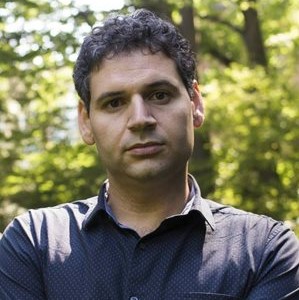
Karam Dana is the Alyson McGregor Distinguished Professor of Excellence and Transformative Research at the University of Washington Bothell's School of Interdisciplinary Arts & Sciences. He holds adjunct professorships in Political Science and Sociology at UW Seattle, and is core faculty in the Interdisciplinary Ph.D. Program in Near and Middle Eastern Studies. His research focuses on transnational political identities, Palestinian politics, and Muslim American communities. Dana has led major surveys including the Muslim American Public Opinion Survey (MAPOS) and the Middle East Public Opinion Project (MEPOP). He has been recognized with UW Bothell's top teaching (2018) and research (2023) awards. Education: B.A. Economics/Political Science (UW Seattle), M.A.I.S. International Studies (UW Seattle), Ph.D. Interdisciplinary Near and Middle Eastern Studies (UW Seattle). Former appointments include Harvard Kennedy School's Dubai Initiative (2010-2012), Tufts University (2010-2011), and Temple University press contributions Led the 2020 Muslim American oversample of the Collaborative Multiracial Post-Election Survey Founder of the American Muslim Research Institute (AMRI) Teaching emphasizes inclusive pedagogy with real-world applications, using case studies and problem-based learning to engage students across differences. Research bridges social science theory with applied public opinion analysis in contentious political environments.
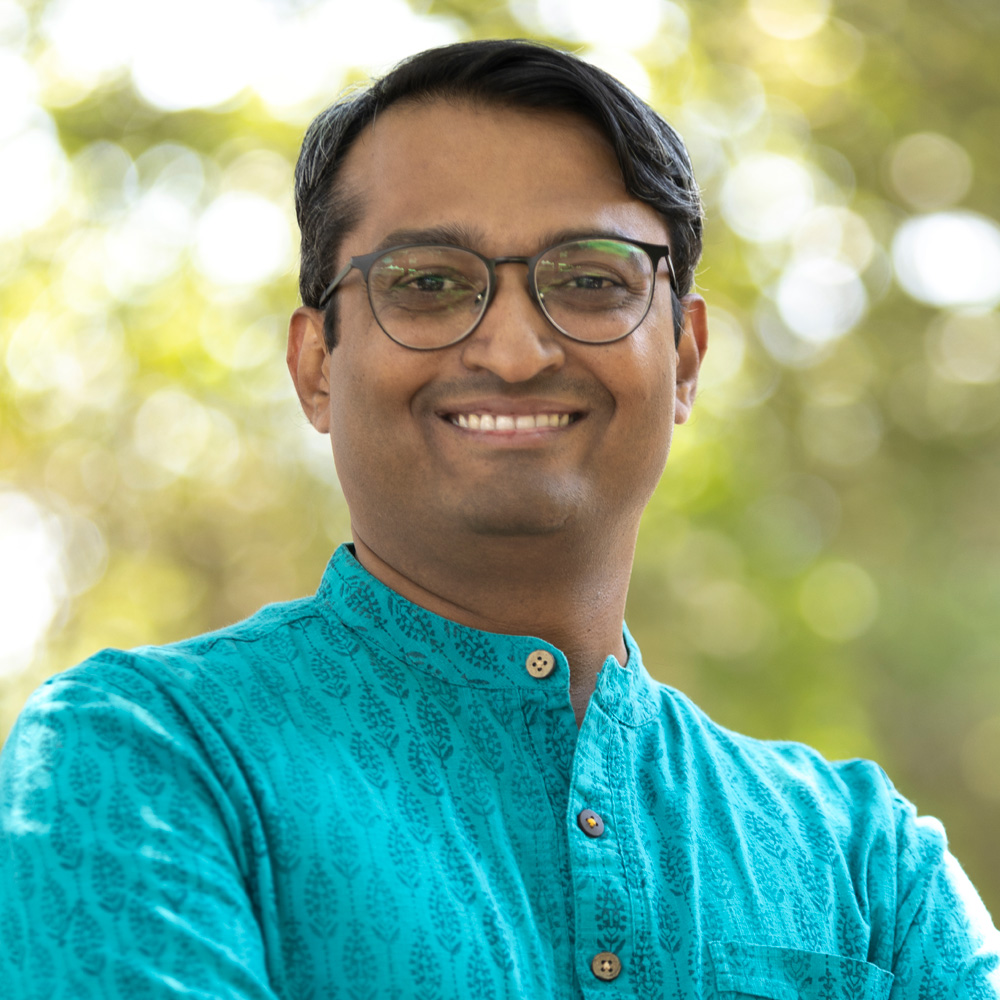
Harsha Gangammanavar is an Associate Professor in the Department of Operations Research and Engineering Management (OREM) at Southern Methodist University (SMU), affiliated with the Data Science Institute. He holds a Ph.D. in Operations Research and M.S. in Electrical Engineering from The Ohio State University, and a B.E. in Electronics and Communication Engineering from Visvesvaraya Technological University, India. Education: Ph.D. in Operations Research, The Ohio State University M.S. in Electrical Engineering, The Ohio State University B.E. in Electronics and Communication Engineering, Visvesvaraya Technological University Research Interests: His work focuses on stochastic programming, large-scale computational optimization, and their applications in infrastructure systems, healthcare, and wireless communication. Key areas include optimization under uncertainty, stochastic decomposition methods, and scalable algorithms for power systems and renewable energy integration. Recent Activities & Awards: Recipient of NSF XTRIPODS grant for collaborative research in data science (2024). DOE Office of Science grant for multiscale stochastic optimization (2022). ONR grant for decomposition-based stochastic models in discrete-event systems (2022). Awarded INFORMS Undergraduate Student Paper Award (2021) and INFORMS Minority Affairs Poster Competition (2016). Advising & Grants: Current advisees include Ph.D. students Ishara A.A.D.H., Jackson Forner, Chhavi Sharma, and Zhiyuan Zhang. Former students Niloofar Fadavi, Sakitha Ariyarathne, and others have secured roles in industry and academia. Active in securing grants from AFOSR, ONR, DOE, and NSF. Labs & Teams: Leads research on stochastic optimization algorithms, power grid resilience, and healthcare applications through interdisciplinary collaborations. Open to motivated students for Ph.D. research in optimization and data science.
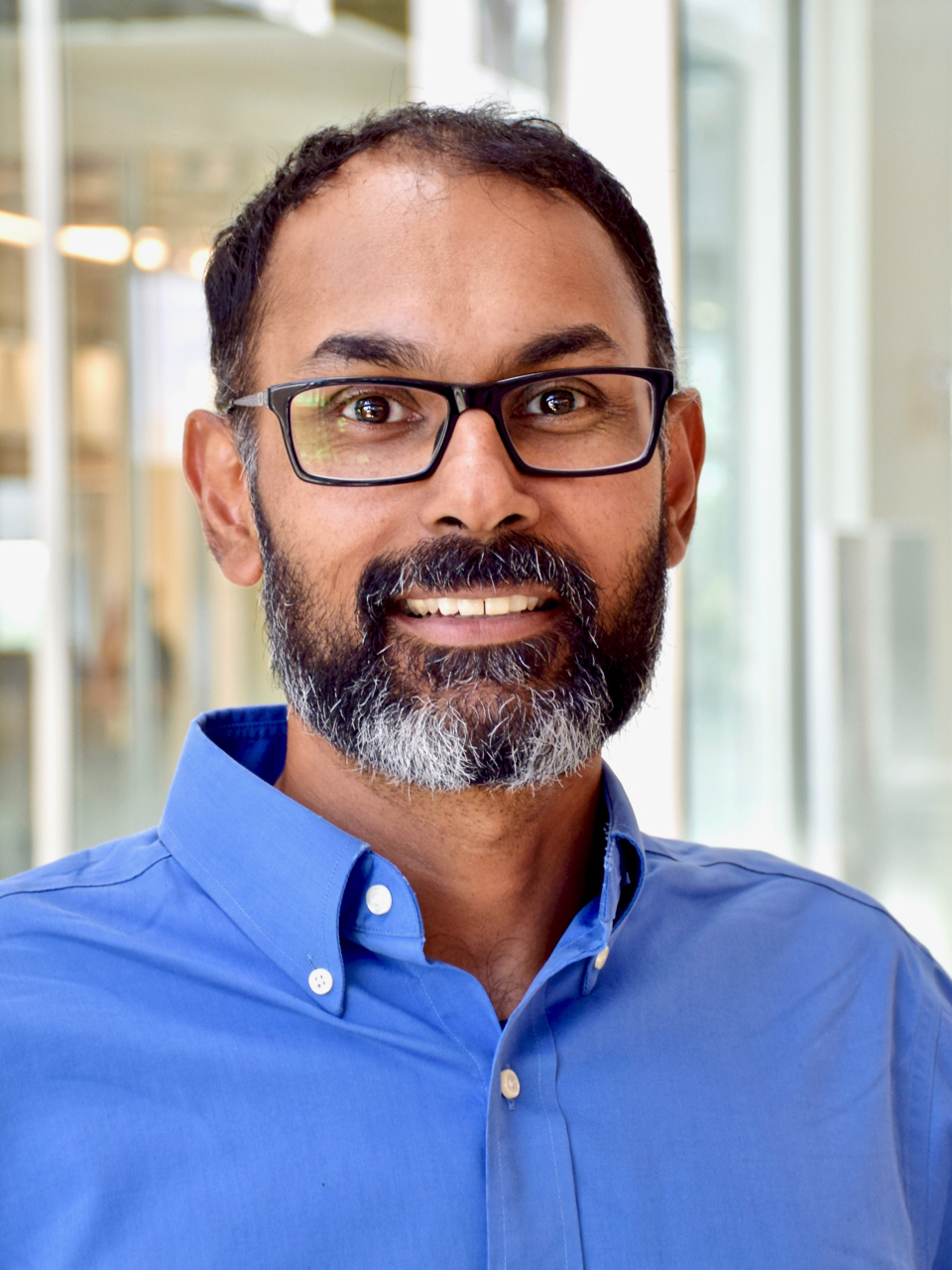
Michael Mühlebach is a Lecturer at the Department of Information Technology and Electrical Engineering at ETH Zurich, affiliated with the Max Planck Institute for Intelligent Systems in Tübingen, Germany. He received Bachelor (2010) and Master (2013) degrees from ETH Zurich, awarded the Outstanding D-MAVT Bachelor Award and Willi-Studer Prize for top performance. His research specializes in multibody dynamics , control of nonlinear systems , and model predictive control , with applications in robotics and aerospace systems. Publications demonstrate consistent focus on theoretical control frameworks validated through experimental platforms like ducted fans and reaction-wheel systems. Awards: Outstanding D-MAVT Bachelor Award Willi-Studer Prize (Best Master in Robotics, Systems, and Control)
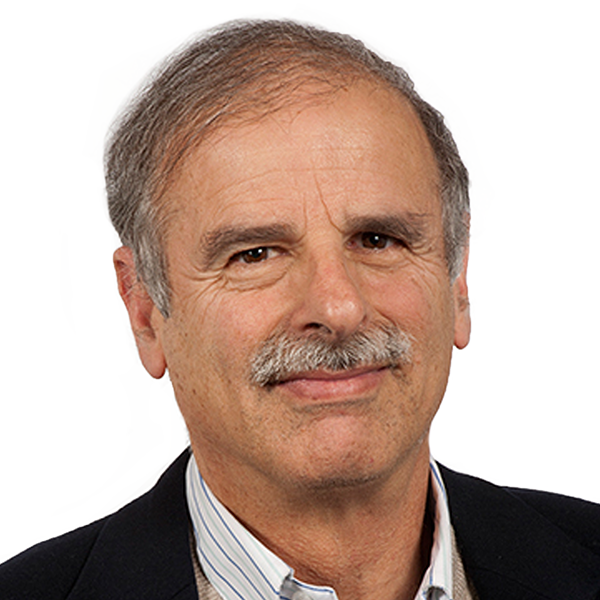
Apu Kapadia is a Professor in the Department of Computer Science at Indiana University Bloomington, affiliated with the Luddy School of Informatics, Computing, and Engineering. His research focuses on computer security and privacy, with emphasis on usable security, human-centered computing, and privacy challenges in the Internet of Things (IoT), pervasive photography, and audio interactions with voice assistants. He has explored topics such as accountable anonymity and applying crowdsourcing to security problems. He teaches courses including Security for Networked Systems , Systems & Protocol Security , and Advanced Topics in Privacy . His advising includes current PhD students and graduates who now hold academic and industry roles. He leads the Privacy Lab, advancing research in privacy-preserving technologies. His work spans theoretical and applied security, including firewall design, TLS protocols, and malware analysis, as reflected in his teaching and research collaborations.
Eva Hammar Chiriac is a Professor in the Department of Behavioural Sciences and Learning at Linköping University, specializing in the Division of Psychology. Her research focuses on group processes within educational systems, emphasizing cooperative learning, problem-based learning (PBL), and interprofessional problem-based learning (iPBL). She explores how group dynamics influence learning outcomes, particularly in contexts like classrooms and higher education settings. Her work also addresses challenges in assessing knowledge and abilities developed through group collaboration, as well as fostering positive school climates. Her academic journey includes a PhD in Psychology (2003) and becoming a full Professor at Linköping University in 2020. She leads research projects on group work assessment, classroom management, and school climate improvement, often employing qualitative methods like group observations and focus groups. Collaborations include national and international researchers in social psychology, pedagogy, and medical fields. Key research areas include: Assessment strategies in cooperative learning Interprofessional education dynamics Student and teacher perspectives on group work fairness School climate and teacher-student relationships Her teaching includes courses on group psychology, social psychology, and group observation techniques. She actively supervises PhD students, including Johan Forsell, and contributes to academic networks like the International Association for the Study of Cooperation in Education (IASCE).
David Castañón is a Professor of Electrical and Computer Engineering (ECE) and Systems Engineering (SE) at Boston University. He holds a PhD from MIT (1976) and has held leadership roles including Department Chair of BU ECE (2010-2014) and President of the IEEE Control Systems Society (2008). His research focuses on stochastic control, optimization, game theory, and distributed computing, with applications in sensor management, inverse problems, and autonomous systems. Education: PhD, Massachusetts Institute of Technology (1976). Key affiliations include the Center for Information and Systems Engineering, the Rafik B. Hariri Institute for Computing, and the ALERT Department of Homeland Security Center of Excellence. He teaches courses such as EC702 Recursive Estimation and EC719 Statistical Learning Theory. Research interests span stochastic control, estimation theory, optimization algorithms, and multi-agent systems. Notable contributions include work on sensor management, cooperative operations, and inverse problem solutions for medical and security imaging. His work often integrates theoretical frameworks with practical applications in autonomous systems and distributed computing. Scientific achievements include IEEE Fellow status (2006), CSS Distinguished Member Award, and leadership roles in major conferences like the IEEE Conference on Decision and Control (2007 as General Chair). He has also served on the Air Force Advisory Board and the IEEE Society Review Committee. Grants and lab affiliations include the NSF Engineering Research Center for Subsurface Sensing (2001-2013) and the SENTRY DHS Center of Excellence (2021-present). His interdisciplinary collaborations bridge robotics, medical imaging, and security systems.
James R. Perkins is an Associate Professor in the Department of Manufacturing Engineering at Boston University's College of Engineering. His primary affiliations span the Mechanical Engineering, Product Design & Manufacturing, and Systems Engineering departments as both primary and affiliated faculty within the university's academic structure. Education: B.A. in Engineering Science from Harvard University (June 1986) M.S. in Electrical Engineering from University of Illinois at Urbana-Champaign (January 1990) Ph.D. in Electrical Engineering from University of Illinois at Urbana-Champaign (October 1993) Professor Perkins' research focuses on systems engineering with emphases on control, decision analysis, and scheduling theory. As a member of the Boston University Operations Research and Manufacturing Systems group, his work spans real-time scheduling and control of manufacturing systems, supply chain management, resource pricing and congestion control in communications networks, and scheduling human resources in transportation systems and product development. Current projects include synchronization and scheduling of manufacturing systems, data mining and clustering in genetic networks, and analytical solutions of controlled queueing networks. His manufacturing-related research is performed in the Production Control of Manufacturing Systems (PCMS) Laboratory at Boston University. Analysis of Professor Perkins' publication record reveals strong trends in manufacturing systems optimization, with particular emphasis on scheduling algorithms, production control, and resource allocation. His work bridges theoretical operations research with practical applications across manufacturing, communications networks, and product development. Over the past two decades, his research has evolved from fundamental control theory in manufacturing systems to more complex applications involving wireless networks, supply chain management, and new product development, demonstrating remarkable adaptability and interdisciplinary reach. Scientific Awards: NSF Research Initiation Award (1994-1998) IBM Manufacturing Research Graduate Fellowship (1989-1991) John Harvard Scholarship (1985-1986) Harvard College Scholarship (1984-1985) Professor Perkins has served as Principal Investigator for several significant research projects, including "Efficient Control of Manufacturing Systems with Buffer Costs" (NSF Research Initiation Award, 1994-1998) and "Managing the New Product Development Portfolio and Pipeline: An Integrated Approach" (NSF, 1999-2001). He was also Principal Director of a Graduate Assistance in Areas of National Need (GAANN) Award from the Department of Education (1997-2000) and Co-Principal Investigator on projects with Nokia Research Center and NSF. His teaching portfolio includes advanced courses in scheduling models, engineering mathematics, production systems analysis, and statistics and quality engineering, where he has developed new curriculum for specialized topics. Professor Perkins conducts his manufacturing-related research in the Production Control of Manufacturing Systems (PCMS) Laboratory at Boston University. His work often involves collaboration with colleagues such as Professor R. Srikant and Professor P. R. Kumar from the University of Illinois. His research group focuses on developing theoretical frameworks and practical solutions for complex scheduling and control problems across various domains including manufacturing, communications, and transportation systems, with an emphasis on mathematical rigor and real-world applicability.
Cristiana Bolchini is a Professor at the Department of Electronics, Information and Bioengineering (DEIB) at Politecnico di Milano. She holds a PhD in Automation and Computer Science Engineering (1997) and a Laurea in Electronic Engineering (1993), both from Politecnico di Milano. Her research focuses on dependable systems, fault tolerance, and embedded systems design, with recent work on ICT solutions for smart buildings and energy efficiency. She coordinates projects such as the FP7 SAVE initiative and serves on technical committees for conferences like DATE and DAC. Education: PhD in Automation & Computer Science (1997), Laurea in Electronic Engineering (1993), both from Politecnico di Milano. Research interests span dependability (fault modeling, diagnosis), heterogeneous architectures, and sustainable smart environments. She collaborates with Prof. Giuliana Iannaccone on foresight for sustainable built environments and has led EU-funded projects like the SAVE initiative. Publications include over 150 refereed papers on dependability and context-awareness. She holds editorial roles for journals such as IEEE Transactions on Computer-Aided Design and ACM Transactions on Embedded Computing Systems. Awards include IEEE Senior Member status and two Cisco University Research Program Fund gifts (2012, 2014). Academic roles include Rector’s delegate for Southeast Asia relations and leadership of Technology Foresight workgroups. She teaches courses on computer science fundamentals and dependable systems, emphasizing problem-solving and programming in Python and C.
Thomas Heldt is Associate Professor of Electrical and Biomedical Engineering in the Department of Electrical Engineering and Computer Science at MIT, and a Principal Investigator at MIT's Research Laboratory of Electronics. He leads the Integrative Neuromonitoring and Critical Care Informatics Group and serves as Associate Director of the Institute for Medical Engineering and Science. Research focuses on: Noninvasive intracranial pressure monitoring Computational models of cerebrovascular dynamics Sepsis detection algorithms Wearable physiological monitoring Clinical decision support systems Recent publications (2022-2024) demonstrate advances in hemodynamic modeling, diagnostic algorithms for critical care, and AI applications for physiological monitoring. Key innovations include open cranium models for intracranial hypertension studies, deep learning frameworks for fatigue assessment, and mobile-based neurocognitive tracking. Professor Heldt collaborates with Boston Children's Hospital, Beth Israel Deaconess Medical Center, and Boston Medical Center to translate research into clinical practice. His work has been recognized through the W.M. Keck Career Development Professorship and IEEE EMBS Distinguished Lectureship.
Michael Herbst is an Assistant Professor (tenure-track) at EPFL, holding a joint appointment in the School of Basic Sciences (SB) and the School of Engineering (STI). He leads the Mathematics for Materials Modelling (MatMat) research group, focusing on error control in atomistic simulations, density-functional theory (DFT), and interdisciplinary computational methods. His work bridges mathematics, materials science, and computer science, emphasizing robust algorithms and Julia-based software development. Herbst holds a PhD from Heidelberg University and has held postdoctoral positions at RWTH Aachen and Inria Paris. He is a core member of the MARVEL and CESMIX research centers. Education: 2018: Dr. rer. nat. (magna cum laude), Heidelberg University 2009–2013: BA and MSci (1st class) in Natural Sciences, University of Cambridge 2008–2009: Studies in Mathematics/Physics, TU Kaiserslautern Research Interests : Herbst's research centers on developing reliable computational methods for materials modeling, including error estimation in DFT, black-box SCF algorithms, and Julia-based tools like the Density-Functional Toolkit (DFTK). His work addresses challenges in high-throughput simulations, numerical stability, and interdisciplinary collaboration across mathematics, physics, and computer science. Grants & Projects : MARVEL Center for Computational Design (EPFL) CESMIX Center for Extreme-Scale Simulations (MIT) EMC² Project (Sorbonne/Inria/École des Ponts) Awards : HGS MathComp PostDoc Fellowship (2018–2021) DAAD Travel Funding (2018) Exploratory Research Space Fund (RWTH Aachen, 2022) Labs & Teams : Head of the MatMat group at EPFL, focusing on error-controlled simulations and open-source software development.
Mark Hoover is an Associate Research Scientist and Intermittent Lecturer at the University of Michigan's Marsal Family School of Education, Department of Mathematics Education. His work focuses on disrupting systemic educational inequities through mathematics teaching and teacher professionalization, emphasizing social justice and ethical pedagogy. He draws inspiration from civil rights activist Robert Moses and education researcher Deborah Ball, whose collaborations are highlighted in his research. Hoover has held roles in both research and teaching, contributing to the development of practice-based approaches to studying teaching demands and advocating for curricula that promote civic participation. His research bridges mathematics content and pedagogy, exploring how teaching practices can address historical injustices embedded in educational systems. Research Interests: Equity in STEM education, mathematical knowledge for teaching (MKT), teacher professionalization, curriculum development, assessment design, and the intersection of mathematics education with social justice movements. He critiques oppressive educational standards and accountability systems while investigating how teaching can be reimagined to center justice. His work also explores the role of mathematicians in shaping mathematics education and the importance of tasks for assessing teaching proficiency. His scholarly output reflects a sustained engagement with equity and justice, analyzing classroom practices and teacher education through critical frameworks. Recent publications emphasize collaborative research initiatives (e.g., TWG19) and the moral dimensions of pedagogy. Grants: Recipient of the Communicating Mathematically Across Difference in the Work of Teaching Award (2018-2025). Advising: No formal advisees listed in provided materials, but his work supports professional learning communities across disciplines. Hoover is affiliated with the Connected Mathematics Project, contributing to curriculum development and its impact assessment. His contributions span both research and practical teaching, aiming to create inclusive and just educational environments.
Donovan Fuqua is an Assistant Professor in the Department of Accounting and Information Systems at New Mexico State University's College of Business. He specializes in supply chain management, operations research, and the application of artificial intelligence in logistics. His research focuses on optimizing supply chain resilience, disaster recovery models, and the use of advanced algorithms in solving complex logistical challenges. He holds a physical office at the Business Complex, 127, and can be reached at dfuqua@nmsu.edu. Address: Business Complex, 127 • Las Cruces, NM 88003 Phone: (575) 646-2812 His research interests span supply chain resilience , optimization algorithms , and neural networks in logistics . He has published extensively on topics such as commodity demand forecasting, state-of-charge prediction in vehicle batteries, and chaos theory applications in military decision-making. Recent work analyzes the Bank of North Dakota's financial strategies and explores resilience models for global disruptions. His articles often bridge theoretical frameworks with real-world applications, such as using deep learning for humanitarian logistics planning. Dr. Fuqua has not been noted for scientific awards in the provided texts. His advising and grant activities are not detailed here, but his research portfolio reflects a strong focus on interdisciplinary solutions for complex logistical systems.
Sonja Wogrin is a University Professor (Univ.-Prof.) at Graz University of Technology (TU Graz), where she has been heading the Institute for Electricity Economics and Energy Innovation since August 2021. She holds a Dipl.-Ing. in Technical Mathematics from TU Graz (2008), a Master of Science in Computation for Design and Optimization from MIT (2008), and a doctorate in Electricity Systems from Universidad Pontificia Comillas (2013). Her educational background includes: Doctorate in Electricity Systems, Universidad Pontificia de Comillas (June 2013) Dipl.-Ing. in Technical Mathematics, Graz University of Technology (October 2008) Master of Science in Computation for Design and Optimization, MIT (June 2008) Professor Wogrin's research focuses on decision support systems in the energy sector, optimization methodologies, and particularly the problem of generation capacity expansion. Her work spans several key areas including bilevel programming, capacity expansion planning, energy storage systems, and time series aggregation for energy system optimization. She has made significant contributions to understanding how to integrate renewable energy sources into power systems while maintaining economic efficiency and grid stability. Her research often addresses the challenges of decarbonizing electricity systems through advanced mathematical modeling and optimization techniques. Her recent publications demonstrate a strong focus on improving the computational efficiency of energy system models while maintaining accuracy, with particular attention to the integration of renewable energy sources, energy storage systems, and the development of resilient energy communities. She has pioneered work on time series aggregation methods that balance computational tractability with model accuracy, which is crucial for long-term energy planning under uncertainty. Professor Wogrin has received several prestigious awards and fellowships including: 4th EASE Student Award for "Co-Optimisation of energy storage technologies in tactical and strategic planning models" (2019) Beca de movilidad para investigadores "NILS Ciencia y Sostenibilidad" (2015) Beca Erasmus "Personal Docente/Investigador" de formación (2016) Beca Iberdrola de ayuda a la investigación en energía y medio ambiente (2020) She leads multiple significant research projects including EU - NetZero-Opt, RINGs, iKlimET, V2G-QUESTS, and CIDEAL, which focus on optimizing energy systems for net-zero emissions, resilient energy networks, climate and energy system modeling, vehicle-to-grid integration, and industrial decarbonization. Her work has substantial practical implications for energy policy and grid operations in Austria and beyond. Professor Wogrin collaborates extensively with industry partners including Austrian Power Grid AG, KELAG, and Netz Niederösterreich, ensuring her research addresses real-world energy challenges. Professor Wogrin leads the research group at the Institute for Electricity Economics and Energy Innovation, which develops advanced optimization models for energy systems. Her team has created the LEGO (Low-carbon Expansion Generation Optimization) model, an open-source tool for energy system optimization that has gained international recognition. The group's work spans from fundamental optimization methods to practical applications in energy system planning and operation, with a strong emphasis on computational efficiency and model accuracy.
Olivier ALLIX is a Professor at the Laboratoire de Mécanique et Technologie (LMT) at École Normale Supérieure de Cachan (ENS-Cachan). His research focuses on computational mechanics, including multiscale modeling of composite materials, structural failure analysis, and non-intrusive coupling strategies. He has held leadership roles such as Head of LMT-Cachan and Vice-president of the International Association for Computational Mechanics (IACM). Expertise: Computational structural mechanics, material failure, inverse problems, and multiscale approaches. Editorial Roles: Associate editor of multiple journals including Computational Mechanics and Computer Methods in Applied Mechanics and Engineering . Awards: IACM Fellow, Euromech Fellow, and recipient of the Gay-Lussac Humboldt Prize (2019). His work integrates experimental mechanics with computational methods, emphasizing big data applications and model validation. He has organized major conferences like the World Congress on Computational Mechanics and co-led international research initiatives such as the IRTG ‘Virtual Material and Structures’ with Hannover University. Teaching includes advanced courses on structural dynamics, composite materials, and computational mechanics at the Master’s level. His research group collaborates with industries like Safran, IFPEN, and DGA on projects involving fatigue analysis, mooring systems, and composite testing.
Elena Panteley is a Research Director at the CNRS and a member of the Laboratoire des Signaux et Systèmes (L2S) at CentraleSupélec. She holds a PhD in Applied Mathematics from Saint Petersburg State University (1997) and has extensive experience in research, including roles at the Institute of Problems in Mechanical Engineering, Russian Academy of Sciences (1986–1998). She co-chairs the International Graduate School of Control at the European Embedded Control Institute (EECI-IGSC) and serves as a Book-reviews Editor for Automatica and Associate Editor for IEEE Control Systems Letters . Education: PhD in Applied Mathematics, Saint Petersburg State University, 1997 MSc/BSc in relevant fields (implied by career progression) Research Interests: Focuses on stability and control of nonlinear dynamical systems, networked systems, multi-agent systems, and their applications. Her work emphasizes robust control, consensus algorithms, synchronization, and distributed control strategies for autonomous systems. She explores theoretical frameworks like Lyapunov methods and adaptive control, with practical applications in robotics and communication networks. Publications: Over 100 peer-reviewed articles in top journals like IEEE Transactions on Automatic Control and Automatica . Recent trends include advancements in consensus algorithms for multi-agent systems, synchronization of nonlinear oscillators, and control under communication delays. Awards: No specific awards mentioned, but contributions to control theory and networked systems are widely recognized. Grants/Advising: Leads research on adaptive control, network synchronization, and robotics. Collaborates internationally and advises on projects involving autonomous vehicles and distributed systems. Labs/Teams: Active in L2S and affiliated with CNRS, contributing to teams like MODESTY, COMEDY, and SYCOMORE. Engaged in transverse research on energy, industry automation, and healthy systems.