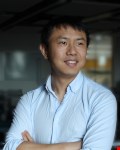
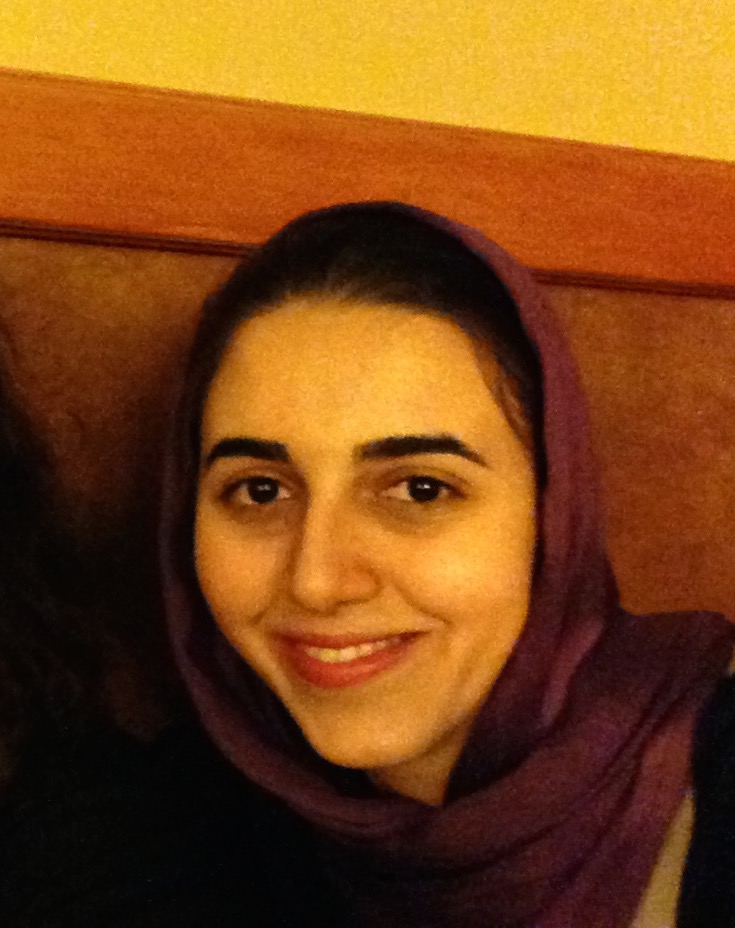
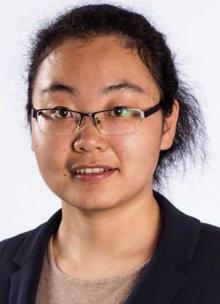
Assoc Prof Henry Nguyen is an Associate Professor at Griffith University's School of Information and Communication Technology, with expertise in data integration, data quality, recommender systems, and big data visualization. He directs the Responsible Big Data Lab and has secured over $3.5M in funding since 2015 from ARC, DFAT, and industry partners. PhD & Master's from EPFL, Switzerland ARC DECRA Award (2020) His research focuses on privacy-preserving AI for social data , IoT , and satellite analytics , with over 200 publications in top venues like SIGMOD, KDD, and IEEE TKDE. Recent work spans federated learning , graph neural networks , and secure AI systems . Article trends highlight 2024-2025 publications on: Federated recommendation security On-device AI optimization Privacy-preserving explainable AI Graph condensation techniques LLM-powered risk analysis Cloud-edge collaboration Scientific contributions include ARC DECRA Award 2020 Multiple senior PC roles in A* conferences Citations in International AI Safety Report 2025 Henry Nguyen supervises 12 active PhD/MSc students and has directed 8 completed doctoral theses . His funded projects include collaborations with Ubitech , KARI , and CSIRO , focusing on Australia-Korea partnerships and responsible AI development.
Jian Tang is an Assistant Professor at HEC Montreal and the Montreal Institute for Learning Algorithms (MILA), as well as an Associate Professor at the Department of Computer Science and Operations Research (DIRO) at Université de Montréal. He is also affiliated with IVADO (Institut de valorisation des données) as a member. His research spans multiple institutions including collaborations with leading biology labs worldwide and access to extensive computational resources through industry partners. Ph.D. in Computer Science, Peking University (2009-2014) Visiting Ph.D. student, University of Michigan (2011.10-2013.8) B.S. in Mathematics, Beijing Normal University (2005-2009) Professor Tang's research focuses on the intersection of deep learning and graph theory, with particular emphasis on geometric deep learning, knowledge graph reasoning, and applications in drug discovery. His work bridges symbolic and neural approaches to create robust reasoning systems that can handle complex structured data. He has pioneered techniques in graph representation learning that have significantly advanced the field of molecular property prediction and protein design. His publication record shows a clear trajectory toward applying geometric deep learning to biological problems, with a growing emphasis on protein design, molecular conformation generation, and multi-omics analysis. Recent work demonstrates sophisticated integration of 3D geometry with deep learning architectures to model complex biomolecular interactions. Canada CIFAR Artificial Intelligence Chairs (CCAI Chair) Tencent AI Lab Rhino-Bird Gift Fund Amazon Faculty Research Award Microsoft-Mila collaboration grant National Research Council Canada (NRC) Collaborative Research and Development Grant Professor Tang actively mentors doctoral and master's students, with six recent graduates working on cutting-edge topics including graph neural networks for reasoning, protein design, and molecular representation learning. His research is supported by substantial funding from industry partners including Microsoft, Amazon, and Tencent, as well as government agencies like NRC. He collaborates extensively with biology labs worldwide, applying AI to solve real-world biomedical challenges. He leads a research group focused on geometric deep learning for drug discovery, with active projects in protein design using geometric-aware models and large language models for multi-omics analysis. The group has access to thousands of GPUs through industry collaborations, enabling large-scale experiments in molecular simulation and generative modeling.
Dr. Mingfeng Wang is a Senior Lecturer in Robotics and Autonomous Systems at Brunel University London, affiliated with the Department of Mechanical and Aerospace Engineering within the College of Engineering, Design and Physical Sciences. His research focuses on specialized robotic systems including continuum, legged, soft, precision farming, and miniaturized robots. Chartered Engineer (CEng) with Engineering Council UK Fellow of the Higher Education Academy (FHEA) Member of IEEE, IEEE-RAS, IMechE, and IFToMM Editorial roles: Associate Editor of International Journal of Advanced Robotic Systems (JCR-Q3); Associate Editor of Frontiers in Robotics and AI (JCR-Q2); Editor of Information Processing in Agriculture (JCR-Q1), Biomimetic Intelligence and Robotics (JCR-Q1), and STEM Education Research expertise includes: Continuum Robotics : Design of extra-slender continuum robots (diameter-to-length ratio Legged Robotics : Parallel mechanism-based biped and hexapod robots for extreme environments Miniaturized Robotics : Active locomotion and drug delivery in capsule endoscopes Soft Robotics : Compliant end-effectors and bio-inspired designs Precision Farming : Laser weeding systems and agricultural automation Key scientific awards: BRIEF award (2022) TAROS Best Paper Post Nomination (2022) IFToMM Asian-MMS Best Paper Award (2014) Recent publications focus on: Cochlear implant surgery robotics Passive compliance in train fluid servicing Snake-biomimetic sealing surfaces Parallel kinematic manipulators Capsule endoscope image enhancement Professional services include conference organization (TAROS 2023/2024 Steering Committee; TAROS 2024 Programme Chair) and journal refereeing for IEEE-ASME Transactions on Mechatronics and Scientific Reports.
Hedyeh Beyhaghi is an Assistant Professor in the Department of Computer Science at the University of Massachusetts Amherst , affiliated with the Manning College of Information and Computer Sciences. She holds a PhD in Computer Science from Cornell University and completed postdoctoral research at the Toyota Technological Institute at Chicago , Northwestern University , and Carnegie Mellon University . Research Interests : Her work focuses on algorithmic game theory , mechanism design , machine learning theory , and algorithms under uncertainty . She investigates strategic agent behavior, fairness in algorithmic systems, revenue maximization in auctions, and optimization under stochastic constraints. Recent Publications address topics like the Strategic Perceptron , Pandora’s Box Problem , and Fair Incentive Design , reflecting trends in strategic learning , multi-agent optimization , and fairness-aware algorithms . These studies often intersect economics , machine learning , and theoretical computer science . Teaching : She teaches COMPSCI 611 - Advanced Algorithms , covering randomized algorithms, approximation techniques, and computational complexity. Weekly quizzes and biweekly assignments emphasize collaboration policies and academic integrity in algorithm design. PhD Advisee : Amirmahdi Mirfakhar. No scientific awards are currently documented.
Nazish Tahir is a Lecturer at the School of Computing, University of Georgia. Her research focuses on collaborative control in multi-robot systems, edge computing applications, and intelligent algorithms for resource optimization in networked robotics. Education: PhD in Computer Science, University of Georgia Master of Science in Information Technology, Nadirshaw Edulji Dinshaw University of Engineering & Technology, Pakistan (2016) Her work bridges robotics, artificial intelligence, and distributed computing, with a particular emphasis on: Collaborative multi-robot task execution Edge computing frameworks for robotics Dynamic resource allocation and scheduling Human-AI supervisory control systems Recent publications highlight trends in simulation twins, communication-aware edge selection, and utility-driven task offloading. She has received awards such as the UGA Spark Award and NSF Student Travel Grant. Scientific Awards: UGA Spark Award NSF Student Travel Grant Outstanding Graduate Student Award (2023) Contact: nazish.tahir@uga.edu | Office: Boyd Research and Education Center, 200 D. W. Brooks Dr., Athens, GA
Jean-Marie Bonnin is a Researcher at IMT Atlantique , affiliated with the Network Systems, Cyber Security and Digital Law department. His work spans autonomous industrial vehicles, vehicular networks, and cooperative systems, with a focus on energy management, task allocation, and safety protocols. IMT Atlantique, Rennes Campus Research in Industry 4.0 and Smart Mobility Research Interests : Autonomous Industrial Vehicle Fleets Fuzzy Logic for Multi-Agent Systems V2X Communication Protocols Scientific Contributions include: Modeling energy consumption in extreme-edge IoT nodes Decentralized task allocation for autonomous vehicles Collision avoidance in industrial environments
Dr. Eve M. Schooler is a Visiting Professor of Sustainable Computing at the University of Oxford , sponsored by the Royal Academy of Engineering. She is an IEEE Fellow and co-recipient of the IEEE Internet Award (2020), with expertise in Networking , Distributed Systems , and Carbon-aware Networking . Her work bridges industry-academia partnerships, focusing on edge-cloud infrastructure and AI for cybersecurity . BS, MS, PhD in Computer Science (Yale, UCLA, Caltech) Board of Directors, Computing Research Association (US) Advisory Council, University of Delaware College of Engineering Her research spans IoT security , smart grids , reverse CDNs , and data-centric networking . She co-founded the IETF's SUSTAIN research group on sustainability and chairs standards initiatives in fog computing and open footprints. Recent trends in her publications include carbon-aware networking , edge-cloud convergence , and AI-driven cybersecurity , with over 100 papers and 35 patents. IEEE Fellow (2021) IEEE Internet Award (2020) N2Women Stars in Networking (2023) Dr. Schooler champions STEM outreach , serving organizations like Grace Hopper Conference and Sally Ride Science. She leads industry-academia collaborations through projects like EU H2020 SPATIAL and NSF-Intel ICN-WEN.
Hua Huang is an Assistant Professor in the Department of Computer Science and Engineering at the University of California, Merced. He holds a Ph.D. in Computer Engineering from Stony Brook University (2020), an M.S. in Computer and Information Sciences from Temple University (2014), and a B.E. in Electronic and Information Engineering from Huazhong University of Science and Technology (2012). Ph.D. in Computer Engineering, 2020 — Stony Brook University, New York M.S. in Computer and Information Sciences, 2014 — Temple University, Pennsylvania B.E. in Electronic and Information Engineering, 2012 — Huazhong University of Science and Technology, Wuhan, China Hua Huang's research focuses on sensor systems, wireless networks, ubiquitous computing, and smart healthcare. His work bridges theoretical and practical challenges in mobile computing, emphasizing real-world applications like device-free intrusion detection, driving safety monitoring, and healthcare wearables. His publications span key conferences and journals such as ACM MobiCom, IEEE ICCPS, ACM Transactions on Sensor Networks, and INFOCOM, with a notable Best Paper Runner-Up award at ACM MSWiM 2018. Themes include wireless sensor optimization, deep learning applications, and mobility-aware infrastructure design. Scientific Awards Best paper runner-up at ACM MSWiM 2018 Research Collaborations Collaborated with prominent researchers like Shan Lin, Fei Miao, and Tian He Advising Seeks self-motivated students with backgrounds in wireless systems and signal processing Labs & Teams Leads a research group at UC Merced focusing on wireless and ubiquitous systems
Professor Foto N. Afrati is a Distinguished Faculty Member at the National Technical University of Athens, specifically within the School of Electrical and Computing Engineering and the Division of Communication, Electronic and Information Engineering. She has held this position since 1993, following previous academic ranks at the same university as Associate Professor (1989-1993), Assistant Professor (1985-1989), Lecturer (1982-1985), and Research Fellow (1980-1982). She completed her PhD in Electrical Engineering at Imperial College of the University of London in March 1980, with a dissertation focused on Error Correcting Codes by Algorithms. Her academic journey also included a Diploma from Imperial College (March 1980) and an earlier Diploma in Electrical and Mechanical Engineering from the National Technical University of Athens (June 1976). Professor Afrati's research interests span several critical areas in computer science: Parallel and distributed computation Processing of very large data (including MapReduce) Data and web mining Database Systems Information integration Query optimization Computation and complexity of algorithms Approximation algorithms Her most recent publications demonstrate expertise in MapReduce environments, query optimization with views, and data exchange frameworks. These works are published in prestigious venues like EDBT, VLDB, PODS, and ICDT, with specific focus areas including adaptive sampling techniques, data source integrity, and algorithm complexity in database environments. Professor Afrati has received significant recognition in her field, including Fellow of the Association for Computing Machinery (ACM) Best Paper Award at the International Conference on Database Theory (ICDT) 2009 She has advised numerous PhD students throughout her career, including Theodoros Mitakos, Ezz Hattab, Nikos Kiourtis, and Angelos Vasilakopoulos. Her current PhD students include Victor Kyritsis and Nikos Stassinopoulos. Professor Afrati maintains strong professional networks through her various visiting positions at institutions such as Google, Stanford University, IBM Research Center, University of Helsinki, University of Paris, DIMACS, and others. She has served as associate editor and reviewer for major academic journals and conferences including IEEE TKDE, ACM Transactions of Database Systems (TODS), Journal of ACM (JACM), and Theoretical Computer Science (TCS). Her extensive work in research projects spans both national and international initiatives, with funding from sources including the European Union's Thalis project, ESPRIT working groups, HCM networks, and Greek General Secretariat of Research and Technology grants.
Jayneel Parekh is a Postdoctoral Researcher in the MLIA (Machine Learning and Artificial Intelligence) team at ISIR (Institut des Sciences et Industries du Réel), Faculty of Science, Sorbonne University, working with Prof. Matthieu Cord. His research focuses on understanding and enhancing large multimodal models, with applications across audio, visual, and multimodal domains. Parekh completed his PhD at LTCI, Telecom Paris under Prof. Florence d'Alche and Prof. Pavlo Mozharovskyi, researching neural network interpretability applied to image and audio data. He earned his undergraduate degree in Electrical Engineering from IIT Bombay, where he worked with Prof. Preeti Rao and Prof. Yi-Hsuan Yang on Speech-to-Singing conversion. His research spans neural network interpretability, audio processing, computer vision, and multimodal models, with emphasis on explainable AI. His work demonstrates a consistent trajectory from foundational audio/image interpretability methods to cutting-edge large multimodal model analysis, showing increasing complexity and impact across NeurIPS, ICML, and ICCV publications. L2I paper awarded 2nd prize for STIC Best Scientific Contribution 2023 Top Reviewer at NeurIPS 2023 Parekh actively contributes to the academic community through workshop organization (ICCV on Explainable Computer Vision, ELLIS Unconference on Robustness/Fairness/Explainability) and presentations at institutions including IIT Jodhpur, Deezer Research, and IBM Research. His collaborative network spans MPI Informatics, TU Darmstadt, TU Munich, and Télécom Paris.
Denny Yu is an Associate Professor at the Edwardson School of Industrial Engineering, Purdue University. His work bridges human factors, neuroergonomics, and healthcare safety through advanced sensor systems and AI. Primary Affiliation : Edwardson School of Industrial Engineering, Purdue University Research Themes : Surgical ergonomics, autonomous vehicle human factors, cognitive workload assessment, multimodal physiological sensing Dr. Yu's research focuses on neuroergonomics and human-robot interaction , particularly in surgical and transportation contexts. His team develops sensor-based systems for workload monitoring, including: EEG-eye tracking fusion for situation awareness Wearable exoskeletons for surgical posture support Computer vision tools for lifting task risk analysis Smart infusion pump usability frameworks AI-driven surgical coaching systems Recent publications emphasize deep learning applications in soft tissue deformation estimation and real-time adaptive systems for robotic surgery augmentation. His work spans both occupational health (veterinary surgeons, airport workers) and medical device innovation domains.
Constantin Grigo is a PhD researcher at the Technical University of Munich (TU Munich), actively engaged in the Continuum Mechanics group. His work focuses on Uncertainty Quantification (UQ) and Machine Learning (ML), particularly for applications in maritime safety, bicycle traffic modeling, and stochastic systems. He has presented his research at major conferences like SIAM UQ and WCCM, and has been recognized with Student Travel Awards from SIAM UQ 2018 and SIAM CSE 2019. Education: Master of Science in Physics, LMU Munich (2015) Bachelor of Science in Physics, LMU Munich (2012) Year abroad at Grenoble INP (2010-2011) Research Interests: Probabilistic machine learning for coarse-graining high-dimensional systems Bayesian model and dimension reduction Stochastic differential equations in heterogeneous media Microscopic traffic simulation for bicycles and autonomous vehicles Digital twin applications for maritime and urban mobility Reduced-order modeling of random materials Selected Awards: SIAM UQ 2018: Student Travel Award Winner SIAM CSE 2019: Student Travel Award Winner His publications span topics such as data-driven scenario specification for autonomous vehicles, bicycle maneuver prediction using neural networks, and physics-constrained surrogates for UQ. He also contributes to open-source simulation tools like SUMO for traffic modeling.
Yanrong Yang is an Associate Professor at the Research School of Finance, Actuarial Studies and Statistics, The Australian National University. Her research focuses on high-dimensional statistical inference, large-dimensional random matrix theory, functional data analysis, and responsible statistical learning. She has developed asymptotic theories for high-dimensional statistics and applied them to time series forecasting and panel data analysis. PhD in Statistics, Nanyang Technological University (2009-2013) MSc in Statistics, Shandong University (2006-2009) BSc in Statistics, Shandong University (2002-2006) Her research explores high-dimensional data analysis, including eigenvalue methods, functional principal component analysis, and applications to mortality forecasting and financial portfolio optimization. Recent publications examine fairness-aware models for annuity pricing, robust PCA techniques, and eigen-analysis for time series clustering. She has published extensively in top journals such as the Annals of Statistics, Journal of Econometrics, and Journal of the American Statistical Association. Her current project, Feature Learning for High-dimensional Functional Time Series (2023-2026), investigates representation learning in financial time series.
Pedro Miguel Sanchez Sanchez is a researcher affiliated with the University of Murcia , specializing in Machine Learning , Cybersecurity , and IoT . He earned his doctorate in 2024 with the thesis Identical IoT device identification via hardware performance fingerprinting and Machine Learning , supervised by Dr. Alberto Huertas Celdrán and Dr. Gregorio Martínez Pérez. Research Interests Pedro's work focuses on applying Machine Learning and Federated Learning to solve critical challenges in Cybersecurity and IoT environments. His research includes: Developing decentralized federated learning frameworks (e.g., Flighter, ProFe) for secure and efficient model training. Designing malware detection systems using system call data and large language models . Enhancing IoT device authentication via hardware fingerprinting techniques. Exploring moving target defense strategies to counter zero-day attacks on IoT networks. Building knowledge graphs for cyber defense applications. Recent Publications Pedro's 2025–2024 publications demonstrate a strong focus on decentralized federated learning , malware mitigation , and hardware-based security . Key trends include: Advancements in zero-shot learning for multilingual tasks on edge devices. Security frameworks (e.g., Cyberforce, Sentinel) for military reconnaissance and industrial IoT . Behavioral analysis techniques for ransomware detection and continuous authentication . Robustness studies on federated learning architectures under adversarial conditions. Creation of benchmarks like LwHBench for hardware performance evaluation. Collaborations He has collaborated with researchers in the Intelligent Systems and Telematics group, contributing to projects in 5G security , crowdsensing platforms , and trusted execution environments .
Laxmikant V. Kale is a Professor and the Paul and Cynthia Saylor Professor Emeritus at the University of Illinois at Urbana-Champaign , where he has been a faculty member since 1985. He directs the Parallel Programming Laboratory and is a Fellow of the ACM and IEEE . Educational Background: B.Tech, Electronics Engineering (1977), Banaras Hindu University M.E., Computer Science (1979), Indian Institute of Science Ph.D., Computer Science (1985), SUNY Stony Brook Research Interests include parallel computing with a focus on adaptive runtime systems , message-driven execution , and interdisciplinary applications such as biomolecular simulations (NAMD), computational cosmology (ChaNGa), and quantum chemistry (OpenAtom). His work integrates high-performance computing with distributed systems to improve scalability and efficiency. Recent Publications highlight advancements in exascale resilience , N-body simulations , power management , and fault tolerance via migratable objects , reflecting his commitment to scalable and robust parallel systems. Scientific Awards Gordon Bell Award (2002) for NAMD IEEE Sidney Fernbach Award (2012) for parallel software development HPCC Challenge Class 2 Award (2011) for Charm++ C. W. Gear Outstanding Junior Faculty Award (1990) ONR Young Investigator (1990-93) Students and Collaborators include Maya Taylor , Jessica Williams , Abhinav Bhatele , Gengbin Zheng , and James C. Phillips , who have contributed to projects like Charm++ , NAMD , and BigSim . Grants include funding from the NIH , NSF , DOE , and NCSA for projects such as NAMD , OPEN ATOM , and Blue Waters .