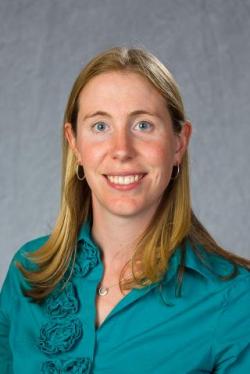
Dr. Alison M. Elliott is an Associate Professor in the Department of Medical Genetics at the University of British Columbia , and a Principal Investigator at the BC Children's Hospital Research Institute . She specializes in genetic counseling , genomics , and congenital skeletal anomalies , with a focus on improving clinical service delivery through implementation science.
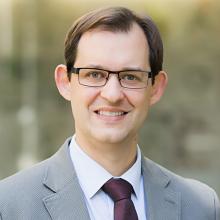
Prof. Dr. Tim Rollenske is a faculty member and principal investigator at the University of Bonn , affiliated with the Faculty of Medicine and the Institute of Immunology . He leads the Tim Rollenske Laboratory , focusing on mucosal immunology and B cell responses to the microbiota. His research is supported by prestigious grants such as the Emmy Noether DFG Grant and the ImmunoSensation 2 Seed Funding. His research interests include: Mucosal Immunology and IgA function B cell biology and antibody repertoire Host-microbe interactions and microbiota modulation Monoclonal antibody discovery and therapeutic potential Analysis of his recent publications (2018–2025) reveals a strong focus on the role of secretory IgA in shaping microbial communities, B cell development in early life, and cross-reactive antibody responses in infection and immunity. His work integrates human samples, gnotobiotic mouse models, and single-cell BCR analysis. Scientific awards include: Fritz and Ursula Melchers Prize (2022) ImmunoSensation 2 Seed Funding Prize (2023) Travel grant and poster prize at IMMEI Retreat (2024) He mentors several PhD students, including Jonathan Schreiber, Sophie Burkhalter, Antonia Geisse Anguita, and Chris Johann Göschel. His lab is part of a collaborative network within the University of Bonn’s immunology research ecosystem, including the Christian Kurts, Natalio Garbi, and Veronika Lukacs-Kornek laboratories. He has received funding from DFG, Excellence Cluster ImmunoSensation 2, and SFB 1454 Metaflammation. His laboratory investigates the molecular mechanisms by which B cells and antibodies maintain mutualistic host-microbe relationships at mucosal surfaces, with long-term goals of improving mucosal vaccination and developing monoclonal antibody therapies.
Jerrold S Meyer is a Professor in the College of Natural Sciences at the University of Massachusetts Amherst, where he maintains an active research program focused on stress physiology and neuroendocrinology. His laboratory is located in Tobin Hall (441 Tobin Hall, Amherst, MA 01003), and he can be reached at 413-545-2168. Dr. Meyer's research primarily investigates the physiological and behavioral effects of stress, with particular expertise in hair cortisol analysis as a biomarker for chronic stress exposure. His work spans multiple domains including Primate models of stress and early life adversity Developmental effects of stress on children Epigenetic changes related to early life experiences Refugee and immigrant stress physiology Methodological development for hair and nail cortisol measurement His recent publication record (2022-2025) demonstrates continued leadership in the field, with approximately 30 publications in the last three years. These works reveal several key trends: a growing emphasis on cross-generational effects of stress, increasing application of epigenetic analyses to primate models, expansion into human refugee populations, and methodological refinements in stress biomarker measurement. His research consistently bridges basic science with clinical and public health applications. Dr. Meyer maintains extensive collaborations with researchers across multiple institutions, particularly with Novak MA, Dettmer AM, and Tarullo AR in primate research, and with clinical researchers studying stress in vulnerable human populations. His work has been cited extensively, with several papers receiving over 100 citations, indicating significant impact in the fields of psychoneuroendocrinology and developmental stress research. His laboratory appears to focus on both non-human primate models (particularly rhesus macaques) and human populations across the lifespan, from infants to adults. The research integrates behavioral observation, physiological measurement, and increasingly, molecular analyses to understand the mechanisms through which early experiences shape later outcomes.
Jane Barlow is a Professor of Evidence-Based Intervention and Policy Evaluation at the Department of Social Policy and Intervention, University of Oxford, and Deputy Head of Department (on sabbatical 2025–26). She leads the national evaluation of the A Better Start program and collaborates with organizations like the NSPCC. Her role includes supervision of DPhil students at St Hilda's College and contributions to the Centre for Evidence-Based Intervention. Academic Affiliation: University of Oxford, Department of Social Policy and Intervention Research Groups: Child and family mental health and well-being, Social inequality and poverty, Violence prevention Barlow's research focuses on early parenting's role in child mental health, preventive interventions for child abuse, and pandemic impacts on maternal and infant services. Her work spans global health (e.g., rural Gambia adaptations), domestic abuse policies, and health visiting practice evaluations. Her recent publications address safer sleep practices, video feedback interventions, health visiting models, and pandemic-related anxiety. These studies employ systematic reviews, cross-cultural validations, and administrative data analyses, emphasizing policy implications. Scientific Honors : Fellow of the Faculty of Public Health (Honorary) President of AIMH UK Affiliate Council Representative, WAIMH Executive Board Associate Editor, Infant Mental Health Journal Jane Barlow supervises DPhil students in areas including parental mental health, child protection, and pandemic service adaptations. She leads the Supporting Early Minds Research Network and has developed training courses like Babies in Mind with the NSPCC.
Emily Callander is a Professor of Women’s Health Economics at the Monash Centre for Health Research and Implementation, Monash University, and Head of Discipline in Health Services Management at the University of Technology Sydney (UTS). She leads the Women’s Economics and Value Based Care research program and holds leadership roles in national health policy, including as Vice President of Women's Healthcare Australasia and member of the Pharmaceutical Benefits Advisory Committee Economics Subcommittee. BA in Economics and Policy, Griffith University PhD in Health Economics, University of Sydney Postdoctoral training at NHMRC Clinical Trials Centre and Charles Perkins Centre, University of Sydney Her research focuses on maternal and women's health, utilizing linked administrative data, economic evaluation, and modelled analysis to influence health policy and delivery. Her work spans efficient staffing models, rural health access, national maternity initiatives (e.g., Safer Baby Bundle, Normal Birth Strategy), and cost analyses for global maternal health programs supported by the Gates Foundation. Her recent publications reflect a strong trend in health economic evaluations of maternity care models, medication use in pregnancy, digital health implementation, and preterm birth prevention. These works emphasize real-world applicability, equity, and cost-effectiveness, aligning with her mission to embed economic evidence into health systems. She has been supported by prestigious NHMRC awards, including a Doctoral Scholarship, Early Career Fellowship, and Career Development Fellowship. Her scientific contributions are recognized through active research projects and expert media commentary on maternity care policy. NHMRC Doctoral Scholarship NHMRC Early Career Fellowship NHMRC Career Development Fellowship Emily Callander advises on multiple national and international research projects, often as Chief or Associate Investigator, and collaborates with institutions such as Coventry University. She is actively accepting PhD students and contributes to policy through advisory roles in government and non-profit organizations. Her research is supported by grants from NHMRC, government departments, and international foundations. She leads the Women’s Economics and Value Based Care program at Monash and is a key member of the Transforming Maternity Care Collaborative. Her work is embedded in real-world health systems, partnering with consumers, providers, and policymakers to improve women’s health outcomes globally.
Christopher E. Colby, MD, is a physician scientist at Mayo Clinic's Department of Pediatrics and Critical Care in Rochester, Minnesota. With a medical degree from Medical College of Wisconsin and specialized training in neonatal-perinatal medicine at Stanford's Lucile Salter Packard Children's Hospital, he has dedicated his career to advancing neonatal care through clinical practice, education, and research. 2003: Fellow in Neonatal and Developmental Medicine 2013-2016: Director of Neonatal-Perinatal Medicine Fellowship 2018: Inpatient Medical Director, Mayo Clinic Children's Center His research focuses on neonatal resuscitation , teleneonatology , and quality improvement in NICUs . Key contributions include: Development of 3D-printed CPAP masks Telemedicine applications for newborn resuscitation Regionalized perinatal care optimization Scientific Awards: Multiple 'Teacher of the Year' awards 2020 Minnesota Monthly Top Neonatologist 2013 DPAM Education Leadership Award
Kristine Urschel serves as Assistant Dean for Instruction and Professor in the Department of Animal and Food Science at the University of Kentucky's Martin-Gatton College of Agriculture, Food and Environment. Since joining the faculty in 2008 with a 60% research and 40% teaching appointment, she has established a prominent research program focused on equine nutrition and physiology, particularly protein and amino acid metabolism across the equine lifespan. Her educational background includes a Post-doctoral Fellowship at Virginia Polytechnic Institute and State University (2008), a Ph.D. in Philosophy from the University of Alberta (2007) with thesis research on arginine metabolism in neonatal piglets, and a B.S. in Animal Science from the University of Alberta (2002) where she received the Dean's Medal in Agriculture as the top graduate in the Faculty of Agriculture, Forestry and Home Economics. Dr. Urschel's research investigates protein and amino acid requirements in horses of all ages, with particular emphasis on muscle protein synthesis regulation and aging effects. She employs advanced methodologies including isotopic tracer techniques, HPLC, Western blot, ELISA, RT-PCR, and physiological assays such as hyperinsulinemic euglycemic clamps to study metabolic responses to diet, disease, and physiological states. Her work bridges comparative animal nutrition with clinical equine applications. Analysis of her publication record (2005-2014) reveals consistent focus on metabolic regulation in equines and comparative models, with recent work examining insulin dynamics, amino acid utilization, and aging impacts on protein synthesis. Key thematic areas include metabolic disorders like equine Cushing's disease, dietary protein optimization across life stages, and interspecies differences in amino acid metabolism. Her significant scientific recognition includes: Multiple American Society of Nutrition awards (2005-2007) including Procter & Gamble Graduate Student Competition wins Banff Pork Seminar Graduate Student Competition victory (2007) Canadian Society of Animal Science Graduate Student Oral Presentation First Place (2005) Dean's Medal in Agriculture as undergraduate top student While specific grant details aren't provided, her research program involves extensive collaboration with veterinary scientists and nutrition researchers. She mentors graduate students through research projects and teaches core courses including Animal Physiology, Equine Science, and Macronutrient Metabolism, integrating her laboratory findings into pedagogy. Her research environment features specialized capabilities for conducting metabolic studies including isotopic tracer techniques, physiological clamp procedures, and advanced biochemical analyses on equine subjects, supporting investigations into nutrient requirements throughout the horse's lifespan from weanlings to geriatric animals.
Connie J. Mulligan is a Professor in the Department of Anthropology at the University of Florida (UF) , with affiliations to the Center for African Studies and the Genetics Institute. She has led a distinguished research program since 2005, focusing on molecular genetics, epigenetics, and biocultural approaches to health disparities. Her work bridges evolutionary anthropology and public health, supported by continuous NSF grants since 2005. Educational Background: Ph.D. in Molecular Biophysics and Biochemistry from Yale University (1990) B.S. in Honors Biology and Chemistry from University of Illinois, Champaign-Urbana (1983) Mulligan's research investigates how childhood adversity , maternal stress , and racial discrimination interact with genetic/epigenetic factors to influence health outcomes. Her team studies populations in Tallahassee (hypertension in African Americans), DRC (intergenerational stress effects), and Jordan (Syrian refugee resilience). She pioneered biocultural frameworks showing gene-environment interactions in diseases. Her 15 most recent publications span three major research themes: (1) epigenetic mechanisms linking maternal stress to neonatal health (2016-2020), (2) genetic ancestry analysis in African/Ethiopian populations (2009-2011), and (3) molecular anthropology of prehistoric migrations (2008-2009). Notably, she discovered gene-specific DNA methylation patterns in war-affected DRC mothers and Science -featured refugee resilience research. Scientific Recognition: UF Term Professorship (2017-2018) President of American Association of Anthropological Genetics (2017-2018) Senior Editor at American Journal of Physical Anthropology Workshop Organizer on Social & Behavioral Epigenetics (2014-2019) As an advisor, she has mentored 10 PhD candidates (as chair) , 9 Masters students, and >50 undergraduates (>200 semesters total). Her lab collaborates with Yale , Hashemite University , and Washington University , focusing on trauma epigenetics and global health research. Her work appears in Nature , Science , and PLoS ONE , with media coverage in National Geographic , The Atlantic , and NPR . She co-organized NSF workshops on data sharing in biological anthropology and serves on editorial boards of major journals.
Professor Alistair McEwan, affiliated with the University of Sydney's School of Biomedical Engineering, specializes in biomedical devices and instrumentation for neurological and cardiovascular diagnostics. As the Cerebral Palsy Chair of Technology and Engineering and Associate Head (External Engagement), he focuses on low-cost medical solutions for resource-limited settings, including neonatal care and stroke detection. His research bridges biophysics and clinical translation, with applications in electrical impedance tomography, wearable sensors, and neuroprosthetics. PhD from University of Oxford Member of the Sydney Nano Institute, Brain and Mind Centre, and Charles Perkins Centre His work explores how tissue electrical properties can enhance understanding of neural signaling and implant design. Clinical collaborators include the Bill & Melinda Gates Foundation for newborn nutrition monitoring. Recent projects involve AI-assisted critical care modeling, bionic devices for stress measurement, and adaptive control systems for neonatal resuscitation equipment.
Dr. Andreas Rauschecker is a neuroradiologist at the University of California San Francisco (UCSF), specializing in advanced imaging technologies (CT, MRI) for diagnosing nervous system disorders in adults and children. He employs AI and image-processing techniques to enhance diagnostic accuracy and collaborates with multidisciplinary teams to improve patient outcomes. Fellowship in Neuroradiology, University of California San Francisco (2020) MD PhD in Neuroscience, Stanford University (2013) MSc in Neuroscience, Oxford University (2005) BS in Biology & Psychology, Georgetown University (2004) His research focuses on applying artificial intelligence to neuroimaging, particularly for conditions like multiple sclerosis, brain tumors, and developmental disorders. He investigates how AI can standardize myelination assessments, detect lesions, and reduce reliance on contrast agents in MRI. Recent publications highlight his work on automated lesion segmentation, transfer learning for MRI analysis, and large language models in radiology. Collaborative efforts include multi-institutional datasets for meningioma and glioma segmentation, emphasizing reproducibility and open science. UCSF Chen Scholar (2024-2026) UCSF Weill Award for Clinician-Scientists (2023) ASNR/ASfNR MIT-E Scholarship (2019) NVIDIA GPU Seed Grant (2018) RSNA Roentgen Fellow Research Award (2019) Rauschecker mentors trainees and collaborates on grants related to AI-driven radiology tools. His work bridges clinical practice and computational innovation, aiming to integrate cutting-edge technologies into standard neuroradiology workflows.
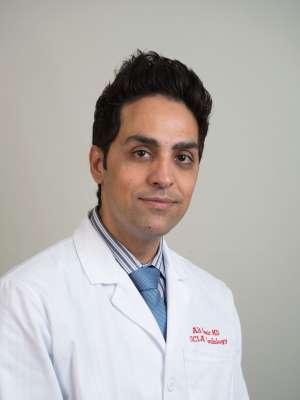
Ali Nsair, MD, is a Clinical Professor at the David Geffen School of Medicine, University of California, Los Angeles (UCLA). He serves as the Director of the Heart Transplantation and Mechanical Circulatory Support Program at UCLA and is a key member of the Interventional and Structural Cardiology program. Nsair received his MD from the University of Alberta Faculty of Medicine in 2002, followed by Internal Medicine residency and Cardiology fellowship at the University of Alberta Hospital, with advanced training in Advanced Heart Failure and Interventional Cardiology at UCLA Medical Center and post-doctoral fellowship in regenerative therapies. His clinical focus spans heart transplantation, mechanical circulatory support, interventional cardiology, and sports cardiology.
Nuria Martin Pozuelo is affiliated with the University of Deusto in the Faculty of Health Sciences , Department of Physiotherapy . She specializes in pediatric physiotherapy and motor development research, particularly focusing on preterm children. Research Interests : Spatial navigation and visuospatial integration in children Motor development in preterm toddlers Family empowerment in early intervention Neurodevelopmental assessment tools Application of neuroscience in pediatric physiotherapy Her work includes the development of the Walking Corsi Test adaptations and longitudinal studies on preterm children's cognitive-motor correlations. She has participated in multiple conferences across Spain since 2006, addressing topics from family resource assessment to rare disease physiotherapy.
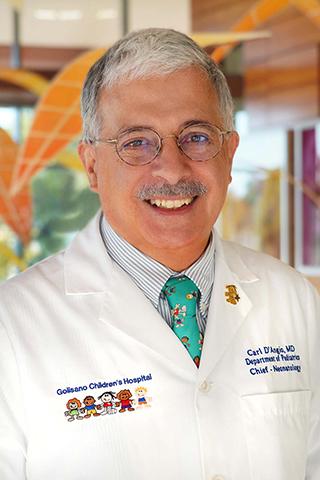
Carl T. D'Angio, M.D. is Professor of Pediatrics at the University of Rochester School of Medicine and Dentistry , Chief of the Division of Neonatology, and attending neonatologist at both URMC and Rochester General Hospital. With over three decades of clinical and research leadership, his work focuses on improving outcomes for at-risk newborns through clinical trials, infection/immunity research, and neonatal ethics. MD from Johns Hopkins University (1983) Pediatrics Residency at Children's Hospital of Philadelphia (1985-1987) Neonatology Fellowship at University of Rochester (1991-1994) His research leadership includes principal investigator roles in the NICHD Neonatal Research Network for multi-center trials on immunizations in premature infants , lung injury prevention , and catheter-related infections . Recent work examines antibiotic effects on preterm outcomes and social determinants of care . Scientific contributions span bronchopulmonary dysplasia pathogenesis , vaccine immunogenicity in preterm infants, and hyperoxia-induced lung injury mechanisms. Awards include Best Doctors in America (multiple years) and Buswell Fellowship . Collaborative studies address neonatal ethics , developmental outcomes , and global perinatal health through publications in JAMA , JAMA Pediatrics , and Pediatrics . As a principal investigator, he bridges clinical practice with research through the Prematurity and Respiratory Outcomes Program (PROP) and AWAKEN acute kidney injury studies.
Raquel Alexandra Gonçalves Costa is an Associate Professor at University Lusófona's Faculty of Psychology and Education, where she serves as a key researcher in the School of Psychology and Life Sciences and the Human Environment Interaction Lab (HEI-LAB). With an h-index of 20 and 1,690 citations across 181 research outputs, she has established herself as a leading scholar in perinatal mental health research. Her research interests span maternal mental health, psychometric assessment in perinatal contexts, parenting programs, obstetric violence, and child development. Dr. Costa has made significant contributions to understanding depression screening tools like the Edinburgh Postnatal Depression Scale and has developed expertise in fear of birth assessment through multicountry studies. Her work bridges clinical psychology with practical healthcare applications, particularly in improving maternal care systems. Analysis of her recent publications (2023-2025) reveals a strong focus on how social support systems impact perinatal mental health outcomes, with particular attention to partner dynamics during childbirth and the moderating effects of women's mental health history. Her research increasingly incorporates innovative methodologies including EEG assessment during pregnancy and statistical learning approaches to mental disorder etiology. Best Research Article with a Practice Focus Award (2022) Dr. Costa actively leads and participates in significant research grants , including the TIK-PT project adapting emotion-focused parenting programs for the Portuguese context, the multinational Riseup-PPD-COVID-19-BABYS study comparing maternal mental health across pandemic cohorts in Spain and Portugal, and the HiTOP-SR project advancing psychological assessment methodologies. She serves on the Marcé Society for Perinatal Mental Health committee and regularly contributes expert evaluation for research funding bodies. As a core member of the Human Environment Interaction Lab (HEI-LAB), she collaborates with interdisciplinary teams integrating psychological research with technological approaches to mental health assessment and intervention. Her work with the Tuning in to Kids® program demonstrates her commitment to translating research into practical parenting support systems that address emotional regulation in parent-child relationships.
Siobhan Brennan is a Lecturer in Audiology at the Division of Psychology Communication and Human Neuroscience (L5). She holds external roles as an Educator at ERA Training & Consultancy Ltd and a Lead Clinical Scientist (Audiology) at Sheffield Teaching Hospitals NHS Foundation Trust. Her expertise spans Hearing Impairment, Intellectual Disability, and Learning Disorders, with contributions to UN Sustainable Development Goals related to Education. Dr. Brennan’s educational background includes a Bachelor of Engineering in Music Technology (University of York, 1997), Master in Science in Audiological Science (University of Manchester, 1998), a PhD in Audiology (University of Sheffield, 2004), and a Master of Arts in Intellectual and Developmental Disabilities (University of Kent, 2023). Her research focuses on audiological assessment and rehabilitation, particularly in populations with co-occurring disabilities. Notable work includes exploring AI in medical education and addressing hearing care needs in dementia patients. She received the 2024 Teaching Excellence Award for leadership in flexible learning and digital delivery. Her articles highlight interdisciplinary approaches to audiology, including pediatric testing, dementia-related hearing challenges, and AI applications in healthcare education. Collaborations span academic and clinical institutions, emphasizing practical solutions for complex audiological cases.