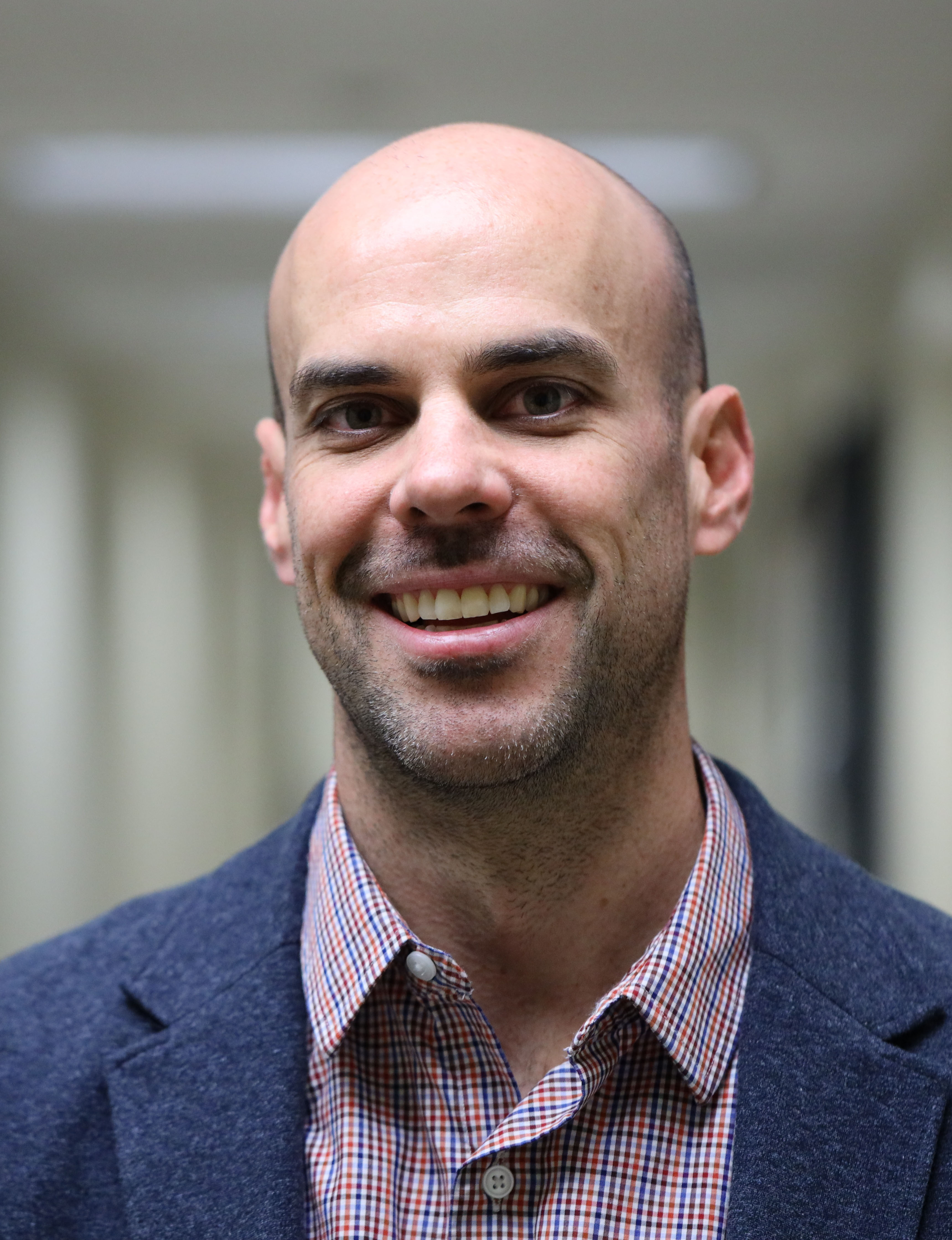
Dr. Daniel Peppe is an Associate Professor in the Department of Geosciences at Baylor University, located in Waco, Texas. He holds a Ph.D. from Yale University and leads the Peppe Research Group, which focuses on paleoclimatology, paleobotany, and paleomagnetism. His research integrates methods from ecology, stratigraphy, and sedimentology to study ancient climates and ecosystems in North America and East Africa. Key initiatives include developing paleoclimate proxies using leaf traits, reconstructing Neogene East African environments linked to hominid evolution, and analyzing Paleocene plant communities' responses to mass extinctions. Education: Ph.D., Yale University Research Interests: Paleoclimatology, Paleoecology, Geoarcheology, Stratigraphy, and Tectonic Processes His lab's work emphasizes field-based research and methodological integration, such as digital leaf physiognomy and paleomagnetic dating. Current projects include studying Pleistocene environments in the Lake Victoria Basin and early Miocene hominoid habitats in Kenya and Uganda. Dr. Peppe advises multiple graduate students (e.g., Dava Butler, Evan Cerna) and has an extensive record of publications across paleontology, geology, and climate science. His group collaborates internationally on projects like the REACHE initiative to understand East African hominoid evolution. Lab facilities at Baylor support fieldwork and analyses of fossils, sediments, and geochemical data. Dr. Peppe’s research contributes to understanding climate change impacts on ecosystems, with implications for modern environmental challenges.
Prof. Dr. Madelaine Böhme is a faculty member in the Department of Geosciences at Eberhard Karls University Tuebingen , where she leads the Terrestrial Palaeoclimatology work group. She is also affiliated with the Senckenberg Centre for Human Evolution and Palaeoenvironment (HEP) . Her research integrates fossil amphibians and reptiles to reconstruct Miocene climate patterns and paleoprecipitation gradients in Europe. Her primary research interests include: Palaeoclimatology and Neogene environmental dynamics Fossil-based climate reconstruction using herpetofauna Miocene precipitation modeling European biogeography and ecosystem evolution Taxonomy and evolution of vertebrates, especially mammals and reptiles Analysis of her recent publications reveals a strong focus on quantitative paleoclimatic methods, fossil vertebrate assemblages, and large-scale environmental reconstructions across Eurasia during the Neogene. She frequently employs interdisciplinary approaches combining geochronology, sedimentology, and paleontology. Her scientific contributions include key papers on: Miocene 'washhouse' climate in Europe Paleoprecipitation estimation methods Chronology of hominid localities in Bulgaria Evolution and taxonomy of Miocene mammals (rhinos, chalicotheres) New hominid discoveries in Germany She actively supervises PhD and Master’s students, including Panagiotis Kampouridis and Josephina Hartung , and collaborates on international field projects in Bulgaria, Greece, and Germany. She has been involved in major research programs such as the ESF's EEDEN initiative. Her work is supported by institutional affiliations and collaborative grants, though specific grant details are not listed. She leads a research team that includes postdocs, students, and technical staff, and she participates in fossil excavations and collection-based research.
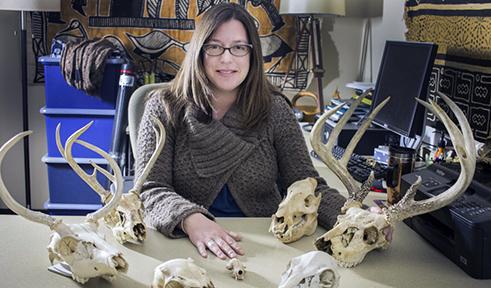
Catherine Beck serves as Associate Professor of Geosciences and Co-Director of Geoarchaeology at Hamilton College, where she leads research reconstructing Cenozoic paleoenvironments through sedimentary and stratigraphic records. Her work focuses on the East African Rift Valley, particularly the Turkana Basin in Kenya, integrating field research, continental scientific drilling, and laboratory analyses to understand paleoclimate dynamics and their relationship to early hominin evolution. Beck earned her Ph.D. and M.S. from Rutgers University and B.S. from Tufts University. Her educational foundation supports expertise in sedimentology, stratigraphy, and isotope geochemistry, with fieldwork spanning Kenya's Rift Valley and New York's Adirondack region. She directs the Hamilton Isotope Lab (HIL), collaborating with instrument technician Bruce Wegter to advance paleoenvironmental research. Her research centers on coupling lake sediment studies with paleoecology and stable isotope analyses to constrain conditions during hominin evolution. Key methodologies include grain-size analysis, XRF scanning, ostracod sclerochronology, and enamel proteomics. Recent work examines orbital-scale climate controls, hydrologic changes since the Mid-Miocene Climatic Optimum, and alkaline soil development in rift valleys. She emphasizes multi-proxy approaches to resolve complex paleoenvironmental questions across the Miocene to Pleistocene. Analysis of Beck's 15 most recent publications reveals dominant themes in Turkana Basin paleoenvironmental reconstruction, with strong emphasis on hominin evolution contexts. Her work bridges paleoclimatology, archaeology, and geology through techniques like dental microwear analysis, proteomics, and biomarker studies. Recurring methodologies include high-resolution grain-size analysis, stable isotope geochemistry, and integration of drilling core data with outcrop studies. Beck received the Class of 1963 Excellence in Teaching Award in Spring 2017. Her research is supported through the Hominin Sites and Paleolakes Drilling Project (HSPDP) and institutional resources like the Hamilton Isotope Lab. She actively mentors students through Senior Thesis courses and field studies, with publications highlighting educational innovations like "Early and Often" field course integration. As Co-Director of Geoarchaeology and HIL director, Beck leads collaborative teams involving students, technicians, and international researchers. Her work with the ICDP workshop on Deep Drilling in the Turkana Basin exemplifies her commitment to large-scale interdisciplinary projects exploring climate-hominin linkages. Current efforts focus on 29-million-year enamel proteome datasets and orbital-scale hydroclimate variability.
Sabrina Curran is an Associate Professor in the Department of Sociology and Anthropology at Ohio University's College of Arts and Sciences. She is affiliated with the Ohio Center for Ecology and Evolutionary Studies (OCEES) and conducts interdisciplinary research in biological anthropology, focusing on paleoanthropology, paleoecology, and ecomorphology. Her work spans field sites in Eastern Europe (particularly Romania) and Eastern Africa (Ethiopia, Kenya, Tanzania). Ph.D., University of Minnesota, 2009 B.A., Arizona State University, 2001 Her research integrates geometric morphometrics, taphonomy, and multiproxy paleoenvironmental analyses to understand hominin evolution and ecological contexts during the Pliocene and Pleistocene. She specializes in the ecomorphology of Artiodactyla and uses faunal assemblages to reconstruct ancient environments relevant to early human dispersals. Her recent publications show a strong trend in reconstructing early hominin habitats in Eurasia and Africa, with high-impact studies appearing in Nature Communications , Palaeogeography, Palaeoclimatology, Palaeoecology , and Journal of Human Evolution . Her work often involves international collaboration and integrates zooarchaeological, isotopic, and morphometric data. She has received no explicitly listed scientific awards in the provided text. Sabrina Curran advises students in biological anthropology and teaches courses such as ANTH 2010 (Introduction to Biological Anthropology), ANTH 4730 (Human Evolution), and ANTH 4740 (Zooarchaeology). While specific student names are not listed, she mentors in research methods and human diversity. There is no mention of external grants, but her sustained publication record suggests active research funding. She contributes to major scholarly volumes and collaborates across institutions in paleoanthropological research. She is involved with the Ohio Center for Ecology and Evolutionary Studies (OCEES), which supports interdisciplinary research in evolutionary biology and ecology. Her work contributes to broader team-based projects focused on early hominin dispersals and paleoenvironmental change in key regions of human evolution.
Christopher C. Gilbert is a Professor in the Department of Anthropology at Hunter College, City University of New York (CUNY), where he teaches and supervises undergraduate and graduate students. He leads the Gilbert Primate Evolution Lab, which houses osteological and cast collections analyzed via 3D imaging and anatomical tools. Dr. Gilbert is also a member of the doctoral faculty in the PhD Program in Anthropology at the Graduate Center, CUNY, and a research associate at the American Museum of Natural History's Division of Paleontology. Primary Affiliation: Hunter College (Department of Anthropology) Additional Roles: Graduate Center, CUNY (Doctoral Faculty); New York Consortium in Evolutionary Primatology (NYCEP); American Museum of Natural History (Research Associate) Educational Background: B.A., Biological Anthropology and Anatomy, Duke University Ph.D., Stony Brook University (2008), advisor John Fleagle Postdoctoral Fellowship, Yale University, working with Andrew Hill and Eric Sargis Research Focus: Dr. Gilbert is a primate paleontologist studying 66 million years of primate and mammalian evolution, with emphasis on craniodental anatomy and phylogenetic systematics. His work spans the Eocene to present, including: African and Asian hominoid evolutionary history and biogeography Old World monkey systematics (especially Plio-Pleistocene African papionins) Fieldwork in the Indian Siwalik Hills (2010-present) and Wind River Basin, Wyoming (collaborative projects) Ecological and climatic responses in early primates during the Early Eocene Climatic Optimum Publications Trends: His recent work focuses on: Hominoid evolution gaps (e.g., Ramnagar Miocene ape) Cercopithecoid phylogeny and biogeography 3D imaging applications in fossil analysis Taphonomy and paleoecology of Miocene sites Collaborative studies linking primate and hominin evolution Grants & Collaborations: Dr. Gilbert's research is funded by the National Science Foundation, Leakey Foundation, Wenner-Gren Foundation, and CUNY grants. Collaborators include Rajeev Patnaik (Panjab University), Biren Patel (USC), Chris Campisano (Arizona State), Ross Secord (University of Nebraska), Stephen Chester (Brooklyn College, CUNY), and Amy Chew (Brown University). Labs & Teams: He oversees the Gilbert Primate Evolution Lab at Hunter College and participates in the New York Consortium in Evolutionary Primatology (NYCEP) and the Nutritional Ecology Lab.
Dr. Kevin Kuykendall is a Senior Lecturer in Palaeoanthropology at the School of Biosciences, University of Sheffield. He serves as Course Director for the MSc Palaeoanthropology programme and Postgraduate Research Programmes Admissions Tutor. His career spans academic roles at the University of the Witwatersrand and fieldwork across South African palaeocave sites. Education: BA in Archaeology, University of Arizona (1984) PhD in Dental Development, Washington University, USA (1992) Research Focus: Specializes in Plio-Pleistocene hominin evolution, dental development in primates, CT analysis of fossil crania, and GIS-based landscape approaches to palaeoanthropology. Current projects include UK limestone cave surveys for Neanderthal sites and dental development studies in extant apes. Academic Contributions: Over 15 publications since 2003, emphasizing dental evolution, cave taphonomy, and environmental isotopes. Collaborates with institutions like Creswell Crags Museum and Wessex Archaeology. Professional Memberships: European Society for the study of Human Evolution American Association of Physical Anthropologists Palaeoanthropology Society Advising: Supervises postgraduate research on topics ranging from Neanderthal stone tool use to historical skeletal disease analysis. Teaches courses on human evolution, digital cultural heritage, and quantitative methods in anthropology. Labs/Teams: Leads the South African Palaeocave Survey Project and contributes to public engagement initiatives at Creswell Crags Museum.
John Rowan serves as Assistant Professor in Human Evolution at the University of Cambridge's Department of Archaeology, directing the Palaeobiology Lab and Lothagam Research Project while collaborating with major eastern African initiatives including Hadar, Ledi-Geraru, and Woranso-Mille research expeditions. His academic credentials include: PhD in Evolutionary Anthropology from Arizona State University (affiliated with Institute of Human Origins) Specializing in fossil hominoid analysis within Neogene primate ecosystems, Rowan investigates early hominin adaptations through faunal assemblages and paleoenvironmental reconstruction in Ethiopia and Kenya. His methodological approach integrates field excavation with laboratory analysis of skeletal morphology and isotopic signatures to reconstruct evolutionary trajectories. Current advisees comprise Juliet Aze (MPhil Human Evolutionary Studies), Sara Magee (MA Anthropology), Eve Omondi (PhD Anthropology), and Christianne Ormsby (PhD Anthropology), with Linet Sankau (now PhD candidate at Arizona State University) among recent graduates. The Palaeobiology Lab maintains active field programs across eastern Africa, focusing on Miocene-Pliocene primate evolution through collaborative projects with national museums and international research teams.
Tina Lüdecke is a Junior Group Leader of the Emmy Noether Group for Hominin Meat Consumption (HoMeCo) at the Max-Planck Institute for Chemistry in Mainz, Germany. She also holds several honorary and guest researcher positions including at the University of the Witwatersrand in South Africa, National Museums of Kenya, and Senckenberg Biodiversity and Climate Research Centre. Her research focuses on early hominin diets and paleo-food webs using stable isotope analysis. Dr. Lüdecke's educational background includes: PhD from Johann Wolfgang Goethe University Frankfurt, Germany (2016) - 'Stable isotope-based reconstruction of Neogene terrestrial archives' (magna cum laude) Visiting PhD at Stanford University, School of Earth, Energy & Environmental Science (2014) Diploma (M.Sc.) from Gottfried-Wilhelm-Leibniz-University-Hannover, Germany - 'Late Cenozoic Paleoenvironmental signatures of the Central Anatolian Plateau' Dr. Lüdecke investigates early hominin diets and their ecological context, with a focus on the onset and evolution of meat consumption and the position of Plio-Pleistocene hominins in African paleo-food webs, using stable isotopes in tooth enamel. She also reconstructs Neogene paleolandscapes inhabited by early hominins, examining C4 grassland expansion in relation to changes in seasonality, precipitation, temperature, atmospheric pCO₂, and tree cover. Her work combines extensive field research with geochemical approaches — stable isotopes of carbon, oxygen, nitrogen, and zinc, clumped isotopes, and multi-element analyses — applied to fossil tooth enamel, pedogenic carbonates, and other proxy materials. Her research spans the Miocene to Pleistocene in eastern and southern Africa, including early hominin sites of the Afar Depression (Ethiopia), Manyara Basin (Tanzania), Karonga Basin (Malawi), Urema Basin (Mozambique), and the Cradle of Humankind (South Africa). Dr. Lüdecke's recent publications reflect her pioneering work in nitrogen isotope analysis of tooth enamel to reconstruct ancient diets. Her research has demonstrated that enamel nitrogen reliably preserves dietary isotopic signatures, establishing it as a powerful new paleodietary proxy. Her most recent work challenges previous assumptions about early hominin meat consumption, showing that Australopithecus from Sterkfontein (South Africa) did not consume significant amounts of mammalian meat. Her publications span diverse fields including paleoanthropology, geochemistry, stable isotope analysis, paleoecology, and archaeology. Her notable scientific awards include: International Human Frontier Science Program (HFSP) Research Grant (2023) German Science Foundation (DFG) Emmy Noether Program, Junior Research Group (2021) National Geographic Explorer Grant (2018) DFG – ICDP Priority Program personal grants (2017, 2019) Hermann-Willkomm-Stiftung travel grants (2011, 2012) Dr. Lüdecke supervises multiple graduate students and postdoctoral fellows including Dr. Jana Storsberg, Marissa Vink, Miguel A. Soares Remiseiro, Sven Brömme, and Dr. Jennifer Leichliter. She has secured significant grant funding totaling approximately 2,768,000 € for her research, including major awards from the German Science Foundation, National Geographic Society, and International Human Frontier Science Program. Her research group, HoMeCo, focuses on the onset and evolution of early hominin meat consumption. Dr. Lüdecke is actively involved with the Paleo-Primate Project Gorongosa in Gorongosa National Park, Mozambique, where she serves as the leading geochemist. She also collaborates with institutions worldwide including the National Museums of Kenya, University of the Witwatersrand in South Africa, and Senckenberg Biodiversity and Climate Research Centre in Frankfurt. Her field research spans multiple continents, focusing on early hominin sites across eastern and southern Africa as well as out-of-Africa localities.
Dr. Catalina Pimiento is an Associate Professor in Biosciences at Swansea University, with a PRIMA Fellowship from the Swiss National Science Foundation. She holds dual affiliations with the Paleontology Institute and Museum at the University of Zurich and the Museum für Naturkunde Berlin. Her research focuses on marine megafauna ecology and evolution using fossil records, emphasizing shark diversity dynamics, extinction mechanisms, and conservation applications. She advocates for transformative science education and women in STEM. Research: Specializes in integrating deep-time data into conservation strategies, functional diversity of marine megafauna, and shark evolution. Key projects include MEGACENE (2018–2020) and SHARKS-XT (2020–2025), addressing conservation vulnerabilities and evolutionary pathways. Recent work explores climate legacies on extinction patterns and elasmobranch phylogenetic conservation. Awards: Recipient of PRIMA Fellowship (Swiss National Science Foundation). Teaching: Leads modules on tetrapod evolution (BIO229) and scientific research methods (BIOM25B), emphasizing data analysis and innovative learning tools. Published on blended learning strategies in paleontology education. Grants & Collaborations: Managed £112,401 (MEGACENE) and CHF 1,417,655 (SHARKS-XT). Collaborates globally on projects like the extinct marine megafauna synthesis (2024) and primate niche dynamics (2024). Public Engagement: Authored book chapters, blogs (Nature, The Guardian), and educational resources on fossil sharks and marine conservation.
Jason Head is a Research Fellow at the Department of Zoology, University of Cambridge, specializing in vertebrate paleontology and herpetology. His work bridges the evolution of reptiles with climate change over the past 66 million years, particularly in tropical regions. University of Cambridge, Department of Zoology Focus on paleoclimate reconstruction, conservation biology, and systematics His research combines fieldwork in equatorial Africa, Southeast Asia, and South America with museum collections and living species biology to model modern reptile evolution. Techniques include geometric morphometrics, phylogenetic analysis, and evolutionary modeling of traits like body size and locomotion. Article trends show expertise in Cenozoic reptile evolution, biogeographic dispersal, and climate-ecosystem interactions. Key topics include snake body form evolution, tropical fossil calibration, and Miocene wet-forest ecosystems. No scientific awards explicitly mentioned. Collaborations span North America, Europe, Kenya, Ethiopia, Colombia, and Southeast Asia.
Justin W. Adams, PhD is a Senior Lecturer in the Centre for Human Anatomy Education within the Department of Anatomy and Developmental Biology at Monash University . He has been actively involved in fieldwork and faunal analysis in the Cradle of Humankind UNESCO World Heritage Site since 2003, focusing on Pliocene and early Pleistocene South African mammalian faunas and palaeocave taphonomy. His research integrates comparative methods and advanced 3D imaging to study living and fossil mammal anatomy, with an increasing emphasis on Australian marsupial adaptation and evolution. He collaborates with institutions like the University of Johannesburg as a Research Associate and contributes to UN Sustainable Development Goals through his work. Research trends from his recent articles highlight interdisciplinary approaches spanning Biomedical Engineering (medical device prototyping), Paleontology (saber-tooth evolution, marsupial fossils), and Imaging Studies (3D scanning, synchrotron microscopy). Key subfields include Biomechanical modeling Dental life history analysis Marsupial adaptation Paleoecology Comparative anatomy Medical education technology Scientific awards include ePoster Prize Winner (2015) Monash BDI Awards for Outstanding Achievement (2019) Poster Presentation Award (Sept 2017) He supervises PhD students and leads the Integrated Morphology and Palaeontology Lab , which specializes in 3D imaging and comparative analysis of fossil and extant mammals. His work has garnered significant media attention, including coverage in 49 news outlets in 2019.
Alisa J. Winkler is a Research Professor at Southern Methodist University (SMU) and holds an adjunct appointment in the Department of Cell Biology at the University of Texas Southwestern Medical Center. She earned her Ph.D. in Paleontology from SMU. Her research focuses on systematics, paleobiogeography, and paleoecology of Neogene rodents and lagomorphs, particularly from East Africa and southeast Asia. Primary affiliations: SMU (Earth Sciences) and UT Southwestern (Cell Biology) Current projects include studies of Miocene rodents from Kenya's Maboko Island and Bukwa, Early Miocene fossils in Uganda/Kenya, and the exceptional Laetoli hare fossils. Her work integrates multidisciplinary teams to reconstruct hominoid evolutionary contexts through small mammal faunas. Her research emphasizes understanding climate-driven evolutionary changes in hominids and other taxa using rodent biostratigraphy and paleoenvironmental proxies. She also teaches Human Anatomy at UT Southwestern, bridging paleontology and medical education.
Christopher Gilbert is a Professor of Biological Anthropology at Hunter College and the Ph.D. Program in Anthropology at the CUNY Graduate Center. He is also a member of NYCEP and a Research Associate in the Division of Paleontology at the American Museum of Natural History. His educational background includes a PhD from Stony Brook University in 2008. His primary research interests span primate evolution throughout the past 65 million years, with specific focus on: Neogene primate evolution, biochronology, and biogeography in Africa and Asia Evolutionary history and phylogenetic systematics of catarrhines Plio-Pleistocene cercopithecoids and their relationship to hominin evolution Paleocene-Eocene primate and mammalian ecomorphology, diversity, biogeography, and evolution Character coding methodology in phylogenetic analysis and comparison of cladistic and morphometric methods Professor Gilbert's recent research has focused on several major projects: Cercopithecoid Evolutionary History and Its Relationship to Hominin Biochronology (Wenner-Gren funded) Primate Evolution in the Indian Lower Siwaliks (NSF and Leakey Foundation funded) Nyanzapithecus alesi and its implications for hominoid evolution Early Eocene Primate Evolution: Paleoenvironmental and Paleoecological Responses to Climate Change Taxonomy and Evolutionary Morphology of the Guenons (Tribe Cercopithecini) His publication record shows a strong trend toward interdisciplinary research combining paleontology, evolutionary biology, and anthropology. His work frequently involves international collaboration with researchers from institutions across the United States and abroad, particularly in India and Africa. His research spans both fieldwork and laboratory analysis, with a particular emphasis on phylogenetic methods and biochronology. Among his notable scientific contributions are: Recognition of new primate taxa in the Siwalik Hills of India Reassessment of baboon evolution and biochronology Phylogenetic analyses of African papionins using combined morphological and molecular data Professor Gilbert has mentored numerous students, many of whom have become co-authors on his publications. His research has been supported by major funding agencies including the National Science Foundation, Wenner-Gren Foundation, and Leakey Foundation. He has conducted paleontological fieldwork in multiple international locations, including the Siwalik Hills in India and the Wind River Basin in Wyoming. His laboratory and research team include undergraduate and graduate students who participate in fieldwork and analysis. His work with the NYCEP and AMNH provides additional resources and collaborative opportunities for his research program.
Ahmet Cem ERKMAN is a Professor in the Department of Anthropology at Ahi Evran University's Faculty of Arts and Sciences. He holds a PhD in Paleoanthropology from Ankara University (2008), a Master's in Paleoanthropology (1997) and Economics (2023), and Bachelor's degrees in Anthropology (Ankara University, 1990) and Economics (Anadolu University, 1995). He has been a full-time faculty member since 2009, progressing from Assistant to Associate Professor before attaining his current rank in 2020. His research focuses on Archaeometry , Physical Anthropology , and Primatology , with emphasis on bioarchaeological analysis of ancient Anatolian populations, dental pathologies, trauma patterns, and Miocene vertebrate paleontology. His work integrates field excavations (e.g., Kurutlu Fossil Locality) with interdisciplinary approaches to reconstruct paleoecology and human lifeways. Publications (2019–2025) reveal trends in dental paleopathology (enamel hypoplasia, caries), fossil mammalogy (proboscideans, suids), and bioarchaeometry (stature estimation, trauma analysis). These reflect a consistent focus on Anatolian populations from the Neolithic to Byzantine periods, leveraging osteological, radiological, and geochemical methods. He has advised 15 graduate students on topics including paleoanthropology, zooarchaeology, and dental anthropology. He directs 70+ projects, notably the ongoing Kurutlu Anthropological Excavation and collaborations like the Middle Awash Project (Ethiopia). His grants include support from the Turkish Ministry of Culture and Tourism. He leads the Kurutlu excavation team, coordinating multidisciplinary research in paleontology and archaeology. He has collaborated internationally (e.g., HERC at UC Berkeley) and participated in 22 scientific missions across Turkey.