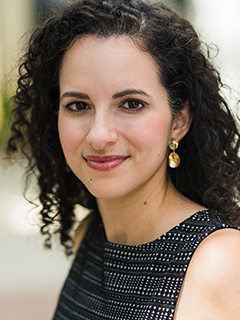
Marysol Quevedo is an Associate Professor at the University of Miami's Frost School of Music, specializing in musicology with a focus on Cuban and Puerto Rican musical cultures. Her research explores intersections between music, politics, and identity in post-revolutionary Cuba and the Caribbean diaspora. Research Themes: Cuban avant-garde music and revolutionary ideology Film music analysis (e.g., Leo Brouwer's scores) Cultural diplomacy through symphonic institutions Puerto Rican music historiography Public ethnomusicology and community engagement Publication Trends: Analyzes Cuban composers' negotiation of socialist values with global artistic movements, emphasizing music's role in ideological narratives through film scores, symphonic programming, and diasporic cultural preservation.
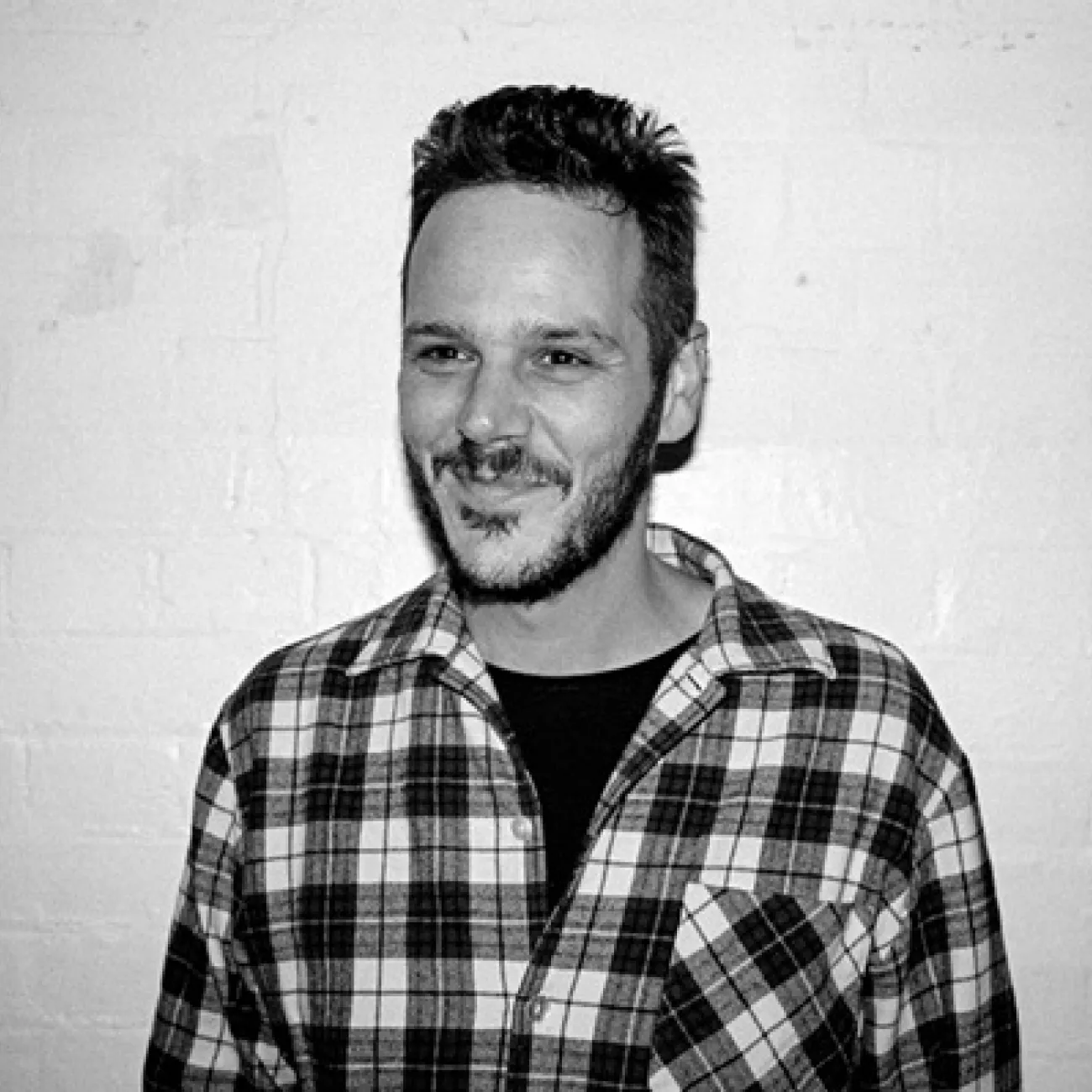
Matthew Shlomowitz is Professor of Composition at the University of Southampton, actively engaged in contemporary music creation and scholarly work. His position places him at the forefront of innovative compositional practices, with collaborations spanning international ensembles and performers including Rubiks Collective, Ensemble Nikel, and major orchestras worldwide. Shlomowitz's research explores contemporary composition with particular focus on notions of artistic voice, music theatre including performance-lectures, neoclassicism, polytonality, and instrumental music with recorded sound. His work investigates technical approaches within music composition, historical textures, and forms that have fallen out of circulation within contemporary music making, seeking new potentialities for these techniques. His publications reveal a consistent exploration of polytonality across multiple volumes, theatrical works spanning monodramas to collaborative pieces, and scholarly examinations of artistic identity in contemporary music. The works demonstrate his interdisciplinary approach that bridges composition, performance art, and musicology, with particular emphasis on the relationship between historical techniques and contemporary practice. Scientific Awards: Johann-Joseph-Fux-Opernkomposition prize by Land Steiermark (2015) Professor Shlomowitz currently supervises multiple PhD students in Music at the University of Southampton, including James Douglas Howell, Linhao Li, Max Syed-Tollan, and Timothy Cape. He has taught on prestigious short courses internationally including Darmstadt Summer Courses (Germany), Impuls Academy (Austria), Time of Music (Finland), Tzlil Meudcan Summer Course (Israel), and Ensemble Offspring Hatched Academy (Australia). Beyond his academic work, he co-directs the new music group Plus Minus Ensemble and hosts the Soundmaking podcast, creating platforms for contemporary musical discourse and performance.
Diana Strazdes is an Associate Professor in the Program in Art History at the University of California, Davis, where she has been a faculty member since 1997. Her academic work focuses on American art and material culture of the long 19th century, with additional expertise in museum studies and transatlantic artistic developments. She is based in Room 162, Everson Hall, and can be reached at dstrazdes@ucdavis.edu. Education: Ph.D., Yale University M.Phil., Yale University M.A., Yale University B.A., Vassar College Her research interests span American painting, sculpture, architecture, and domestic life, with a particular focus on professional identity, public art reception, and the cultural meanings of space. She has published widely on topics ranging from the Hudson River School to the domestic ideology of Catharine Beecher, from museum evolution to the display of ruins. Her work often bridges art history, cultural studies, and material culture analysis. The recent publications in her list reflect a sustained engagement with 19th-century American art, evolving into broader themes of cultural memory, museum display, and transatlantic influences. Her articles frequently appear in leading journals such as Winterthur Portfolio , Master Drawings , and Change over Time , demonstrating her interdisciplinary reach across art history, conservation, and museum theory. She has no listed scientific awards in the provided text. Diana Strazdes teaches a wide range of courses, from introductory surveys like Baroque to Modern Art to advanced seminars on realism, professional identity, and landscape painting. She also leads a seminar on research and writing methods, indicating her commitment to mentoring emerging scholars. While no specific grants or advisees are listed, her extensive publication record and long tenure suggest a robust research program and likely advising activity. She is actively involved in the academic life of the Art History program, contributing to the intellectual development of students through both teaching and research. Her work with museum collections and public art suggests engagement with curatorial teams and cultural institutions, though no formal lab or research team is specified.
Dr. Cora Gilroy-Ware is an Associate Professor in the History of Art at the University of Oxford. Previously, she served as a Lecturer in History of Art at the University of York, where she was nominated for Teacher of the Year (2020-21). Her research focuses on decolonizing art history through re-examining classical art's role in racial constructs and centering BIPOC artists' adaptations of Greco-Roman traditions. She holds a PhD from the University of York, developed via a Collaborative Doctoral Project with the Tate Gallery. Her work bridges academia and practice, including curation at institutions like Tate Britain and MK Gallery, and fellowships at Yale Center for British Art, the Huntington Library, and University College London. She actively engages in contemporary art criticism, published in London Review of Books and X-Tra . Current projects include a second monograph exploring Greco-Roman art adaptations by African and Indigenous American artists, supported by the Henry Moore Foundation. She also edited a volume on Isaac Julien’s film Lessons of the Hour , linking historical scholarship with contemporary art.
Paul Davis is Professor of English in the Department of English Language and Literature at University College London (UCL), where he has served since 1997, advancing to Reader in 2009 and Professor in 2018 after fellowships at Cambridge institutions. His academic formation at the University of Cambridge includes: Bachelor of Arts (1990) Master of Philosophy (1991) Doctor of Philosophy (1994) Davis's research centers on five interconnected domains: Poetry from Charles I's accession to the French Revolution Restoration literature and culture Classicism and classical reception with emphasis on translation/imitation Manuscript verse culture in seventeenth/eighteenth-century court circles Textual editing methodologies His recent publications reveal deep engagement with Joseph Addison's classical criticism, John Wilmot (Earl of Rochester)'s scribal networks, and the transmission of classical texts through Restoration England, consistently bridging manuscript studies, print culture, and literary theory across 36 documented outputs. Professor Davis mentors doctoral candidates on specialized topics including Royalist poetry warfare, Milton's domestic imagery, Ovid's reception, and women poets' classical engagements within eighteenth-century contexts. He currently leads two major editorial initiatives: the five-volume Oxford edition of Addison's Non-Periodical Works (general editor, with Poems and Translations volume editorship) slated for 2024 publication, and co-editing George Herbert's The Temple for Oxford's Complete Works of Herbert (completion expected 2026).
Prof. Dr. Sabine Panzram is Professor of Ancient History at the University of Hamburg's Faculty of Humanities, affiliated with the Department of History. Her academic trajectory includes a Staatsexamen from Albert-Ludwigs-Universität Freiburg and Universitat de Barcelona (1996), and a doctorate from Westfälische Wilhelms-Universität Münster (2001) on Roman urban elites. She completed her habilitation at Universität Hamburg (2013) examining early Christian institutionalization in Hispania. Research interests center on: Urban transformations in Late Antique Iberia/North Africa Social power dynamics through historical anthropology Religious-political intersections in the Western Mediterranean Digital methodologies in ancient studies Reception of antiquity in early modern Europe Her publications demonstrate consistent focus on urban continuity/change, ecclesiastical power structures, and transregional comparisons between Hispania and North Africa, utilizing archaeological, epigraphic, and textual evidence. Awards and leadership roles include: Marie Curie Senior Fellowship (Casa de Velázquez, Madrid) Alexander von Humboldt Scouting recognition Corresponding Member of the German Archaeological Institute Director of DFG-funded centers: RomanIslam (comparative empire studies) and ATLAS (late antique urban atlas project) Extensive advising includes supervision of 8+ doctoral dissertations and 25+ master's theses on Roman urbanism, religious history, and provincial administration. Secured major grants from DFG, ANR/DFG, and Fritz Thyssen Stiftung supporting international collaborations. Leads research networks like Toletum for Iberian antiquity studies and coordinates interdisciplinary teams across European universities.
Douglas Murray is a Professor of English in the College of Liberal Arts & Social Sciences at Belmont University. He specializes in 17th to early 20th-century British literature, with a focus on the 18th century, and teaches undergraduate and graduate courses in British literature, the Gothic, Jane Austen, and First-Year Writing. He is also an accomplished organist at Nashville's Second Presbyterian Church. His research centers on British literary figures such as Jane Austen, John Dryden, Samuel Richardson, and Frances Trollope. Key interests include literary structure, classical myth, visual culture, music in poetry, and narrative spectatorship. He has co-edited major scholarly editions of Jane Austen’s early writings and Frances Trollope’s novels. His recent publications analyze themes such as portraiture in Emma , gaze dynamics in Mansfield Park and Persuasion , and the influence of evangelicalism in Trollope’s fiction. His scholarly work spans interdisciplinary connections between literature, music, and cultural history. Scientific Awards and Honors: Prize-winner, American Guild of Organists National Competition (2012) Prize-winner, American Guild of Organists National Competition (2014) Prize-winner, University of Michigan Competition in Organ Improvisation (2016) Visiting Fellow, Chawton House Library, England (June 2017) Douglas Murray is actively engaged in mentoring students and promoting study abroad, particularly in Britain and France. While no formal advising list is provided, he is deeply committed to teaching and expanding students’ literary horizons. He has not received mention of external grant funding in the provided text. He maintains a dual professional life in academia and sacred music, performing and improvising in French and Baroque styles, particularly music associated with the Church of England.
Krasimir Hristakiev is a Senior Lecturer at the Department of Romance Languages within the University of Veliko Tarnovo. His academic career spans over two decades, focusing on literature and theater studies with a particular emphasis on French and Bulgarian cultural intersections. Primary Affiliations: University of Veliko Tarnovo (Department of Romance Languages) Research Themes: French literature (Molière, Rabelais), Bulgarian literary theory, theater and visual studies, intertextuality, and philosophical discourse. His publications analyze the dialogue between classical and modern literary forms, with recurring themes of madness, labor, and cultural identity. Notable works include studies on Giuseppe Tornatore's cinema, Bakhtinian theory in Bulgarian contexts, and the adaptation of Molière's plays in regional festivals. Recent articles explore the blurring lines between theater and digital media , focusing on structural differences and audience engagement in virtual performances. His bibliography reflects a deep engagement with philological rigor and comparative cultural analysis. Key trends in his work include the reception of French classics in Bulgaria, stylistic evolution in literature, and the metaphorical representation of labor and death in contemporary narratives. He contributes regularly to journals like Visual Studies and Proglas .
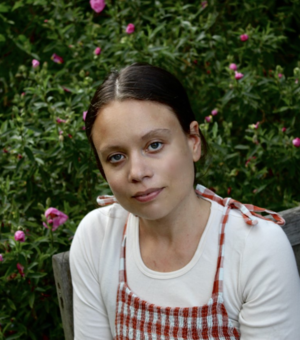
Alexandra Herlitz is an Associate Professor in Art History and Visual Studies at the Department of Cultural Sciences, University of Gothenburg. She also serves as a museum educator at Gothenburg Museum of Art since 2006. Doctoral degree in Art History (2013), University of Gothenburg Academic training at University of Stuttgart, Heinrich-Heine University Düsseldorf, and University of Hamburg Her research focuses on 19th-century Scandinavian art historiography , artists' colonies , artistic national identity , and transnational art networks between Scandinavia and Germany. She explores these themes through publications, podcast episodes, and archival research. Recent publications highlight Nordic rural artists' communities , gender dynamics in art history , and critical analysis of art forgery . Her work spans from 17th-century Scandinavian art to contemporary feminist perspectives , with particular attention to under-documented networks and alternative historiographies. Herlitz co-hosts the art history podcast Konsthistoriepodden , covering topics from medieval religious art to modernist movements , demonstrating her commitment to public art education and multimedia scholarship .
Assoc. Prof. Esat AYYILDIZ is a faculty member at Caucasus University, Faculty of Arts and Sciences , specializing in Arabic Language and Literature . He earned his PhD (2016-2019) and MA (2014-2016) in Arabic Literature from Ankara University Institute of Social Sciences , with a BA (2010-2014) from Selçuk University Faculty of Letters . PhD: Arabic Language and Literature, Ankara University (2019) MA: Arabic Language and Literature, Ankara University (2016) BA: Arabic Language and Literature, Selçuk University (2014) His research focuses on Classical and Modern Arabic Poetry , with an emphasis on Thematic Analysis , Cultural Symbolism , and Comparative Studies between Turkish, Arabic, and other linguistic traditions. Recent publications explore pre-Islamic elegies, Ottoman-era panegyrics, and cross-cultural motifs like the Phoenix in Turkish-Arabic poetry. Key article trends include analyses of classical poetic forms (e.g., qasidas ), gender representation in modern Arabic literature, and historical influences (Egyptian, Ottoman) on contemporary works. His 15 most recent articles span topics such as lamentation poetry , philosophical themes , and symbolic motifs in Arabic verse. He mentors Master’s students in topics like North African Feminism in Arabic Literature and Modern Arabic Maronite Poetry . Currently, he serves as Head of the Department of Eastern Languages and Literatures at Caucasus University, where he has taught since 2019.
Professor Amy C. Smith is a classical archaeologist at the University of Reading , where she serves as Curator of the Ure Museum of Greek Archaeology. Her work bridges Greek iconography, ceramics, digital museology, and pedagogy. Current PhD students: Ilaria Truzzi, Adel Ternovacz, Summer Courts, Nancy Antonellis Key collaborations: Katerina Volioti, Armand Leroi, Katherine Harloe Projects: Testing Beazley, Modern Argonauts educational program Research Focus : Smith specializes in Greek vase iconography, particularly political and religious themes, and digital approaches to museum collections. She explores personifications, festival ware ecology, and the reception of classical antiquity in medieval Britain. Her work combines fieldwork (excavations in Greece and Spain), editorial experience ( American Journal of Archaeology ), and curatorial practice at Yale and Reading. Publication Trends : Her recent articles analyze political symbolism through vases, digital replication methods, and textile contexts. Collaborations with Volioti emphasize cultural education and material studies. The 2016–2024 timeline shows sustained focus on reception studies, museum technology, and interdisciplinary pedagogy. Scientific Awards : Recipient of ERC Proof of Concept Grant (2023–2025) R.D. Milns Professorship (2022) British Academy funding Visiting Fellow at Australian National University (2017) Advising & Grants : Smith supervises doctoral research through University of Reading International Studentships and South West & Wales DTP. She leads study tours to Athens and Rome and co-directs ASCSA Summer Sessions. Labs & Networks : As Ure Museum curator, she pioneered 3D printing applications. Founding member of Pottery in Context Research Network and International Network of Classical Archaeology University Collections.
Alison Yarrington is an Honorary Professorial Research Fellow at the University of Glasgow's School of Culture & Creative Arts, specializing in sculpture studies, cultural history, and 19th-century art practices. Her work examines transnational artistic exchanges, particularly between Britain and Italy, focusing on aristocratic collections, exhibition histories, and the interplay between sculpture and literature. Her research explores themes such as monument design, material culture, and the symbolic roles of sculpture in national identity formation. Notable projects include studies of the 6th Duke of Devonshire's sculpture gallery at Chatsworth and the International Exhibition of 1862's role in staging cultural identities. Yarrington has contributed to over 15 peer-reviewed articles and book chapters since 2001, analyzing topics like Canova's influence, Victorian memorial culture, and the poetics of sculptural display. Her work bridges art history with literary studies, examining how sculpture interacts with poetry and spatial environments. Her publications often address lesser-explored aspects of sculpture's materiality and its role in broader cultural narratives, such as the transubstantiation metaphor in sculpture or the gendered symbolism of classical figures like the Three Graces.
Professor Daniel Orrells is Professor of Classics and Head of Cultures in King's College London's Faculty of Arts & Humanities. He directs the Global Cultures Institute and holds degrees from Cambridge. Research examines receptions of classical literature from Renaissance to modernity, with focus on gender/sexuality studies, postcolonial theory, and aesthetics. His scholarship connects classical antiquity with modern intellectual and literary history. Publications explore classical influences in decadent literature, Freudian theory, and postcolonial contexts. Recent books analyze visualizations of ancient Greece and Freud's engagement with antiquity. Leadership roles: Chair-Director of Global Cultures Institute Head of Cultures, Faculty of Arts & Humanities He has curated exhibitions at the Freud Museum London and advises on LGBTQ+ policy.
Christina Smylitopoulos serves as a Professor of Art History within the School of Fine Art and Music at the University of Guelph, where she has earned recognition as an award-winning researcher and educator. Her scholarly work critically examines eighteenth- and nineteenth-century art and visual culture, explores the pedagogical applications of arts-based methodologies, and investigates the material culture of heavy metal music. Her research centers on the latter half of the early modern period (mid-seventeenth century to 1830s), encompassing the European Age of Exploration, Enlightenment, Revolutionary Wars, and Napoleonic conflicts. She analyzes artistic movements including High Renaissance, Baroque, Rococo, Neoclassicism, and Romanticism while challenging conventional stylistic frameworks through interdisciplinary approaches. Professor Smylitopoulos has received significant professional recognition: Post-Secondary Art Educator of the Year (2023-24) from the Ontario Art Education Association UGFA Distinguished Professor Award for Excellence in Teaching (2019) College of Arts Teaching Excellence Award (2014) Her research program is supported by competitive funding from: Social Sciences and Humanities Research Council (SSHRC Insight Grant, Insight Development Grant, Connection Grant) Ontario Ministry of Science, Research, and Innovation Lewis Walpole Library Huntington Library Swann Foundation for Caricature and Cartoon (Library of Congress) Houghton Library at Harvard Prior to her current position, she held a Postdoctoral Research Associate appointment at the Yale Centre for British Art. As an active faculty member, she mentors students in art historical scholarship while advancing innovative research at the intersection of historical art practices and contemporary cultural phenomena.
Sonia Gentili is a Full Professor at Sapienza University of Rome, where she teaches in the Department of Modern Literature and Culture within the Faculty of Humanities. She has held this position since her national qualification as Professor Ordinario (Full Professor) in 2017, following her appointment as Associate Professor in 2015. Her academic career at Sapienza began in 2007 when she joined as a researcher. Professor Gentili's research focuses on Italian literature with special emphasis on Medieval literature, Dante studies, Petrarch studies, and the reception of classical and biblical sources in Italian literary tradition. Her work explores the intersections between philosophy, particularly Aristotelian thought, and literary production from the Middle Ages through contemporary literature. She has published extensively on Dante's Convivio, the relationship between poetry and philosophy, and the reception of classical texts in Italian literary tradition. Her scholarly work reveals a consistent interest in how philosophical concepts shape literary expression, particularly examining the transmission of Aristotelian ethics through vernacular literature. Her publications demonstrate expertise in both medieval textual analysis and modern literary criticism, with notable contributions to understanding Dante's intellectual context and the legacy of classical thought in Italian literature. Professor Gentili has received significant recognition for her work, including: The 2016 Viareggio Prize for her poetry collection 'Viaggio mentre morivo' The 2009 Literature Prize from the Accademia dei Lincei 'Angiolo Silvio Novaro,' presented by the President of the Italian Republic She serves in important scholarly capacities, including as a member of the Scientific Council of the Società Dantesca Italiana since 2015 and as co-director of the journal 'Studi Danteschi.' Her research activities include directing multiple funded projects, most notably 'Una biblioteca nella Firenze di Dante: i manoscritti di Santa Croce,' examining Dante's intellectual context through the manuscripts of Santa Croce. Professor Gentili is actively engaged in the international academic community, regularly presenting at conferences across Europe and collaborating with institutions including Notre Dame University and the École Française de Rome. Her current research projects include 'Institutional censorship in Italy (1946-1989),' 'The history and manuscripts of Santa Croce: a library in Dante's Florence,' and 'The idea of poetry in the Italian Middle Ages.'