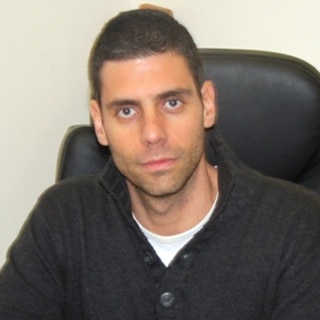
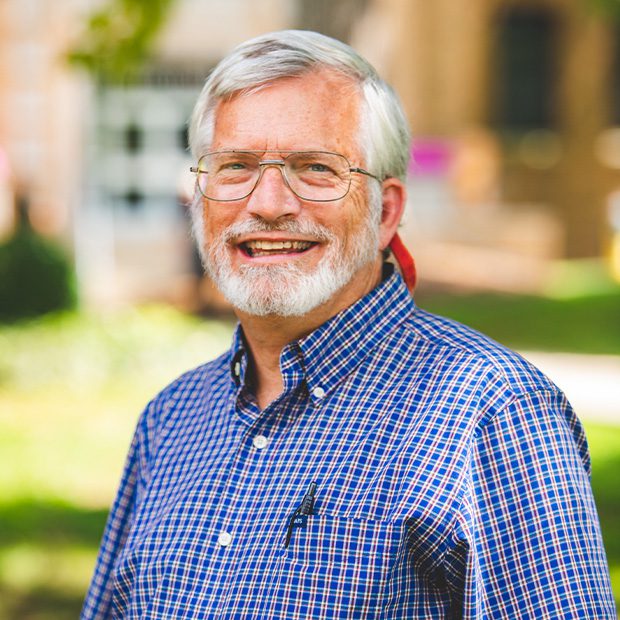
Stephen Pratten is a Professor of Economics and Philosophy at King's Business School, King's College London. He holds additional roles as co-editor of the Cambridge Journal of Economics and Research Associate at the Centre for Business Research (CBR). His research focuses on the methodology of economics, particularly social ontology and realist theorizing, alongside empirical studies on structural and regulatory changes in media industries. Education: PhD in Economics from the University of Cambridge Affiliations: King's College London (since 1999), CBR Research Fellow Research interests include critical realism, neoclassical economics, and the history of economic thought. He has contributed to interdisciplinary projects through the Social Ontology Research Unit, which explores social positioning theory and its applications. Recent work examines monetary theory, Deweyan pragmatism, and institutional analysis. His publications span over three decades, addressing topics from transaction cost economics to the philosophy of social institutions. He supervises PhD students and teaches on undergraduate and postgraduate programs, focusing on social science methodology and industrial organization. Despite no explicit awards listed, his extensive editorial roles and prolific publishing highlight his scholarly impact.
Alan Sutherland is a Professor of Economics at the University of St Andrews' Business School. He specializes in international macroeconomics, monetary economics, and financial market integration. His research focuses on the macroeconomic implications of exchange rate policies, monetary policy regimes, and cross-country financial linkages. He leads projects funded by the Economic & Social Research Council, including 'The Macroeconomics of Financial Globalisation' (2011-2015) and 'Monetary Policy Welfare and International Financial Markets' (2006-2007). Research Interests: International macroeconomic policy design Exchange rate determination Financial market integration effects Numerical methods for macroeconomic modeling His recent work emphasizes the role of international financial flows in transmitting economic shocks between countries. He has developed influential solution methods for analyzing multi-country general equilibrium models. Key contributions include frameworks for understanding optimal monetary policy under incomplete financial markets and asymmetric information conditions. Scientific Recognition: 2013 Fellow of the Royal Society of Edinburgh Recipient of 2 ESRC-funded research grants
Muriel Dal-Pont-Legrand is a University Professor of Economic Sciences at the University of Côte d'Azur, affiliated with the Research Group in Law, Economics, Management (GREDEG) and the EUR ELMI program. She serves as Vice-President for European Affairs at Université Côte d'Azur, coordinating European project participation and institutional visibility in Brussels since 2020. Her research specializes in the history of economic thought with particular focus on business cycles, macroeconomic theory evolution, and economic expertise institutionalization. Key research trajectories include: Analysis of Schumpeter's theories on productive recessions and capitalist dynamics Historical examination of French economic expertise during wartime Interdisciplinary integration of digital humanities with economic thought history Critical assessment of coordination problems across economic theories Her recent publications demonstrate consistent engagement with both classical economic thinkers (Schumpeter, Solow, Leijonhufvud) and contemporary methodological debates, particularly the comparative analysis of DSGE and Agent-Based Modeling approaches in macroeconomics. As co-leader of GREDEG's History of Thought project and co-managing editor of the European Journal of the History of Economic Thought , she maintains significant institutional leadership in her field. Her administrative roles since 2005 include Department of Economics Director and various academic governance positions within the university system.
Georgios Pallis is an Associate Professor at the Department of History and Archaeology , National and Kapodistrian University of Athens , specializing in Byzantine and Post-Byzantine Archaeology and Art . He earned his doctorate from the same institution and previously served in the Greek Archaeological Service. His research focuses on marble sculpture , epigraphy , and monumental topography of the Byzantine and Ottoman periods in Greece. Active in excavations at Andros (2004–2012) and Palaeopolis (since 2015) Key publications: From Lamia to Zitouni (2020), co-edited Ottoman Monuments in Greece (2023) Current research: Byzantine altars, templon screens, and Ottoman architectural legacies
Professor Emma Stafford is a leading scholar in Greek culture at the School of Languages, Cultures and Societies, University of Leeds, within the Faculty of Arts, Humanities and Cultures. She was appointed Professor in 2020, having joined Leeds in 2000 and promoted to Senior Lecturer in 2005. Her work bridges classical scholarship with public engagement and interdisciplinary research. Her educational background includes a BA in Classics from New Hall, Cambridge, an MA from Cambridge, and a PhD from University College London. She held teaching positions at Royal Holloway, Birkbeck, and the University of Leicester before joining the University of Wales, Lampeter in 1995, where she completed her PhD in 1999. Emma Stafford's research centers on Greek social and cultural history, particularly religion, myth, and art. She employs both literary and material evidence to explore personification deities, classical reception, and the enduring legacy of figures like Herakles. Her work emphasizes interdisciplinary methods, combining philology, archaeology, and visual studies. She has a strong interest in how classical myths are reinterpreted across time, especially in Neoclassical sculpture and modern media. The trends in her recent publications reflect a sustained focus on the reception of classical myth, particularly the figure of Herakles/Hercules, across historical periods and media—from antiquity to Enlightenment theatre, modern musicals, and oratorios. Her scholarship spans monographs, edited volumes, encyclopedia contributions, and public-facing illustrated books, demonstrating a commitment to both academic rigor and broader cultural impact. Publicity Officer, Classical Association (2004–2011) Honorary Secretary, Classical Association (2011–2019) Honorary Secretary, Society for the Promotion of Hellenic Studies (2005–2008) Emma Stafford actively supervises postgraduate researchers, including Shakeel Ahmed and Tong Wu, and has led major research initiatives such as the 'Hercules: A Hero for All Ages' project, which involved international conferences, a touring exhibition, an oratorio, and multiple high-profile publications. She has secured collaborative funding and institutional support for public engagement, reflecting her leadership in knowledge exchange. She also serves as Director of Impact from August 2021, underscoring her role in shaping research dissemination and societal influence. She is a core member of research groups in Classics, Gender Heritage, and Theatre, Music and Performance, fostering interdisciplinary collaboration. Her involvement in the 'Hercules' project exemplifies her leadership in creating integrated research environments that combine academic scholarship with public exhibitions, performances, and educational outreach.
Angelica Duran is a Professor of English, Comparative Literature, and Religious Studies at Purdue University, with a courtesy appointment in Critical Disability Studies. She holds a Ph.D. from Stanford University (2000), an M.A. (1988) and B.A. (1987) from the University of California, Berkeley. Her research spans 16th–21st century comparative literature, focusing on English and Spanish traditions, religious studies, disability studies, and translation theory. She has published extensively on Milton, including monographs and edited volumes exploring his global reception, visual adaptations, and pedagogical applications. Her recent publications examine Milton’s transnational influence, the role of prosthetic sign systems in literary interpretation, and intersections of disability, movement, and theological discourse. She bridges early modern and contemporary analyses, addressing issues of translation, cultural adaptation, and digital humanities. Duran has received two Irene Samuel Memorial Awards for her edited volumes Milton in Translation (2017) and Milton Across Borders and Media (2023). She serves on editorial boards and academic committees, including the Renaissance Society of America's Conference Chair (2022–27). As a comparative literature scholar, she connects European, American, and global traditions, emphasizing religious, diasporic, and pedagogical dimensions. Her work explores how texts traverse ideological, physical, and disciplinary boundaries.
Luca Orlandi is an Associate Professor of Architectural History and Urban Studies at the Faculty of Architecture and Design at Özyeğin University. He holds a PhD from Polytechnics of Turin (2005) and has taught at Yeditepe University and Istanbul Technical University. His research focuses on Ottoman architecture, Galata's urban evolution, and cross-cultural architectural exchanges between Italy and Turkey. Education: BA/MA from University of Genoa (2000), PhD from Polytechnics of Turin (2005) International affiliations: ICOMOS Italy, EAUH, AISU Coordinator for Premio Piranesi-Prix de Rome workshop in Villa Adriana Research interests include Mimar Sinan's architectural legacy, Genoese colonial urbanism in the Eastern Mediterranean, and the interplay between aesthetics and politics in architectural design. Recent work examines Istanbul's urban memory erosion and Fascist-era architectural projects in the Dodecanese. Publications analyze 16th-century Ottoman military architecture, Italian sculptor Pietro Canonica's Atatürk monuments, and the architectural impact of post-unification Italian travelers. His articles frequently appear in interdisciplinary urban history and architectural criticism journals.
Francois Geerolf is an Associate Professor and Researcher at Sciences Po, with affiliations at OFCE (Observatoire Français des Conjonctures Economiques) and CEPR. His research focuses on Macroeconomics, Finance, and Housing, with notable work on Pareto distributions, Phillips Curve dynamics, and secular stagnation theories. His recent publications analyze Russian gas embargo implications, Eurozone economic rebalancing, and inflation-unemployment relationships. While empirical methods dominate his teaching, he emphasizes theoretical alignment with data in courses like Evidence-Based Macroeconomics & Finance and Intermediate Macroeconomics . Scientific awards and student lists are not mentioned in the provided text. His work spans dynamic inefficiency, heterogeneous beliefs, and optimal taxation, with a strong focus on financial frictions and macroeconomic policy evaluation.
Josiane Boulad-Ayoub is a Full Professor of Philosophy at Université du Québec à Montréal (UQAM) and holds the UNESCO Chair in Canada for the study of philosophical foundations of justice and democratic society. She is a member of the Royal Society of Canada's Academy of Letters and Humanities. Her work focuses on the history of ideas, modern thought, and cultural history, with particular emphasis on the Renaissance, Enlightenment, and revolutionary periods. Her seminal work The Great Figures of the Modern World (2003) synthesizes intellectual, cultural, and political developments from the Renaissance to the French Revolution. The book includes chapters on key figures like Descartes, Voltaire, and Goethe, as well as analyses of pivotal movements like the Scientific Revolution and Enlightenment. Key research interests include the interplay between philosophy and political structures, the evolution of scientific thought, and the cultural dimensions of intellectual history. Awards include the ACFAS Prize (1999) and recognition for her contributions to humanities scholarship. Boulad-Ayoub's publications also explore topics such as the French Revolution's intellectual foundations, 18th-century political economy, and the legacy of Enlightenment ideals. She has collaborated with institutions like Télé-Québec in educational outreach, emphasizing accessible intellectual discourse.
Robert E. Cumby is a Professor of Economics at Georgetown University's School of Foreign Service, specializing in international trade, finance, and macroeconomics. He holds a Ph.D. in economics from MIT and a BA from the College of William and Mary. His career spans academia, policy roles, and international economic research. Ph.D., Massachusetts Institute of Technology B.A., College of William and Mary His research focuses on international finance, macroeconomic policy coordination, and applied econometrics, with a particular emphasis on liquidity, fiscal-monetary interactions, and exchange rate dynamics. Recent work explores unconventional monetary policy impacts on emerging markets, forward fiscal guidance, and the role of government bonds in policy frameworks. His publications highlight trends in monetary economics , fiscal policy , and international macroeconomic coordination , often addressing liquidity provision, inflation targeting, and cross-border capital flows. At Georgetown, he teaches courses in international trade, finance, and financial markets. He has also held visiting roles at NYU Stern School of Business and served at the IMF, Council of Economic Advisers, and U.S. Department of Treasury.
Giorgos Meramveliotakis is an Assistant Professor of Economic Theory and Policy at Neapolis University Pafos, where he coordinates the Master of Public Administration (MPA) and MSc in European Politics & Governance programs. He concurrently serves as an Associate Editor at the Journal of Innovation & Entrepreneurship (Springer, Q1). His academic career includes teaching roles at the University of Crete, Hellenic Mediterranean University, University of Roehampton, and University of Liverpool. His research focuses on Political Economy, Institutional Economics, and Sustainable Development, with a particular emphasis on property rights, economic policy, and historical economic thought. His work has been recognized by ScholarGPS as among the top 0.35% of global scholars in Sustainable Development over five years. Research Interests: Meramveliotakis explores intersections between political economy and sustainable development, institutional frameworks, and historical economic theories. He critically examines property rights systems, state roles in economic efficiency, and regulatory policies for SMEs. His recent work integrates classical political economy principles with modern sustainability challenges. Publications: His most recent articles analyze sustainable development policy proposals (e.g., energy conservation nudges), Greek SMEs' SDG compliance, and critiques of new institutional economics. These contributions highlight his commitment to bridging theoretical frameworks with practical policy solutions. Awards: His top-tier global ranking in Sustainable Development reflects significant scholarly impact. This recognition underscores his work's relevance to global economic and environmental challenges. Advising & Grants: While no students are listed, his coordination of postgraduate programs suggests active involvement in academic mentorship. His editorial role indicates engagement in shaping scholarly discourse through peer review and journal leadership.
Carlo Mambriani is a Full Professor in the Department of Engineering and Architecture at the University of Parma, where he has been a faculty member since 2006. He is affiliated with the Faculty of Architecture and teaches a range of courses in architectural history, historiography, and conservation. His academic journey began with a cum laude degree in Architecture from Politecnico di Milano in 1993, followed by a PhD in History of Architecture from Politecnico di Torino in 1997. PhD in History of Architecture – Politecnico di Torino (1997) Laurea in Architecture – Politecnico di Milano (1993, cum laude) His research specializes in the history of Parmesan architecture from the 15th to the 19th century, 18th-century French architectural culture in Europe, and the history of gardens, with a focus on ducal gardens in Parma and Colorno. He is currently completing a monograph on Late Baroque Architecture in Parma. His scholarly work bridges academic research with cultural heritage practice, contributing to publications, exhibition catalogs, and national heritage projects. The recent trend in his publications reflects a deep engagement with historical conservation, urban transformations, and the reuse of architectural heritage. His work spans topics from ecclesiastical foundations to river governance and naturalist influences in architecture, demonstrating a broad interdisciplinary approach rooted in architectural history. Carlo Mambriani has collaborated extensively with cultural institutions, including the British Dictionary of Art and the Research Office of the Italian Ministry of Cultural Heritage since 1995. He has authored and edited significant works on architectural history, urban development, and restoration theory. He has supervised and co-authored research projects, including recent publications on the San Rocco complex in Soragna and the cultural reuse of historic buildings. He is actively involved in academic life at the University of Parma, teaching core courses such as History of Modern Architecture , Methods of Historical Research on Architecture , and Analysis and Methods for the Conservation of Historical Gardens , among others.
Dr. Wendell M. "Whit" Jones, Jr. is a Professor of English at Bryan College, where he has taught courses in literature, writing, and Christian integration for over thirty-one years. He earned his Ph.D. and M.A. in English from the University of North Carolina and his B.A. in English from the University of Tennessee, Chattanooga, with a focus on Southern novelist Walker Percy for his dissertation. Ph.D., English, University of North Carolina M.A., English, University of North Carolina B.A., English, University of Tennessee, Chattanooga Dr. Jones’ research emphasizes the alignment of universal human truths in literature with Christian scripture. His work spans Southern literature, philosophical themes like Stoicism and Gnosticism, and the synthesis of pagan and Christian ideals in texts by authors such as Edith Wharton, Shakespeare, and Eudora Welty. He has contributed biographical entries to reference works like Southern Writers: A Biographical Dictionary and The Companion to Southern Literature . His publications and conference presentations—such as at the South Atlantic Modern Language Association and Southeastern Conference on Christianity and Literature—explore topics like postmodern linguistic relativism, the myth of Psyche in fiction, and the negotiation of secular and Christian culture in literary works. He also advocates for the integration of faith in literary theory and the role of Christian values in education.
Corrado Andini is an Associate Professor at the Department of Legal and Economic Studies, Sapienza University of Rome. He serves as Associate Editor for the Journal of Economic Exploitation and Inequality and is a member of the editorial board for Economies (MDPI). Previously held editorial roles include Plos One and Heliyon (Elsevier). Education: M.Sc. in Economics, Pompeu Fabra University (Barcelona) Ph.D. in Economics, Sapienza University of Rome Research Focus: Covers diverse areas including Labour Economics, Macroeconomics, Economic Geography, Industrial Organization, and Political Economy. His work examines income inequality, educational impacts on earnings, monetary systems, public-private partnerships, social capital effects on growth, renewable energy impacts, and heterodox economic theory. Recent publications in Journal of Economic Studies , Emerging Markets Review , and Renewable Energy demonstrate methodological rigor using econometric techniques like quantile regression. Teaching: Offers courses in Monetary and Banking Economics (21 hours) and Political Economy (4th channel Q-Z). Courses integrate theoretical frameworks (Keynesian, Neoclassical, Marxist) with empirical analysis of capitalist systems, monetary policy mechanisms, and fiscal implications. Scientific Recognition: Recipient of the prestigious "Fausto Vicarelli" award for outstanding doctoral research Publishes regularly in high-impact journals like Macroeconomic Dynamics , Review of Political Economy , and Journal of Economic Geography Methodological Expertise: Specializes in econometric techniques for analyzing wage inequality, unemployment persistence, and social capital effects, with recent work exploring the monetary foundations of labor exploitation and endogenous money creation processes.
Dr. Jean-Jacques Velly is a Lecturer at Sorbonne University’s Musicology Department, with expertise in orchestration, neoclassicism, and 19th-20th century musicology. He earned his Doctorate (1992) and HDR (2001) from Sorbonne University, focusing on Richard Strauss’s orchestration and neoclassical aesthetics. His career spans teaching (1980-present), administrative roles (1998-2007 as DESS Head), and international collaborations including a Visiting Professorship in Tunisia (2003). Doctorate: 1992, Sorbonne University HDR: 2001, Sorbonne University Aggregation: 1985 His research centers on orchestration techniques across composers like Debussy, Berlioz, and Janáček, with a focus on semantic richness, national identity, and esoteric compositional systems. Publications include 35+ articles in journals and edited volumes, plus monographs on orchestration and Mahlerian universes. Recent work examines 20th-century musicology intersections with occultism and translation theory, particularly Stravinsky’s Oedipus Rex. He contributes to the European 19th-century Dictionary with entries on composers like Tchaikovsky and Rimsky-Korsakov. Administrative roles include membership in Sorbonne’s Specialist Commission (18th section) and CNU (22nd section, 2011). He co-edited proceedings for international conferences on Janáček (2008) and organized GRIMOIRE research group initiatives.