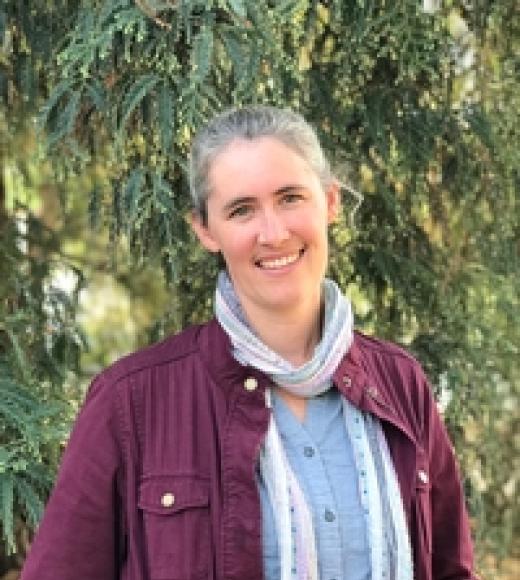
Ian Grettenberger is an Assistant Professor of Cooperative Extension in the Department of Entomology and Nematology at the University of California, Davis. He leads the Grettenberger Lab, focusing on applied entomology in agricultural ecosystems. His work emphasizes pest management strategies, biological control, and sustainable solutions for invasive species threatening California crops. Education: B.S. in Biology, Western Washington University Ph.D. in Entomology, Pennsylvania State University Research Interests: Grettenberger’s expertise spans pest management of field/vegetable crops, invasive species like the Bagrada bug and western striped cucumber beetle, and resistance management in pests such as the alfalfa weevil. He investigates biological control mechanisms, pesticide efficacy, and economic impacts of pest management policies. Key Contributions: Recent work includes studies on insecticide spray optimization, economic implications of pesticide regulations, and biological control of invasive species. His research bridges laboratory and field settings, addressing challenges in California’s agricultural landscapes. Labs/Teams: The Grettenberger Lab collaborates on applied entomology projects, advancing IPM practices and crop protection strategies.
David L Jordan is the William Neal Reynolds Distinguished Professor in the Department of Crop and Soil Sciences within the College of Agriculture and Life Sciences at North Carolina State University. His appointment consists of 50% Extension, 25% Research, and 25% Academic responsibilities. He serves as a Crop Science Extension Specialist with a focus on peanut production and weed management, working closely with the North Carolina Peanut Growers Association, private consultants, industry representatives, and farmers. Dr. Jordan received his educational background from North Carolina State University and the University of Arkansas: PhD in Agronomy, University of Arkansas, 1993 MS in Crop Science, North Carolina State University, 1988 BS in Agronomy, North Carolina State University, 1985 AS, Chowan College, 1983 Dr. Jordan's research focuses primarily on peanut-based cropping systems, integrated pest management in peanut production, and the applied biology and management of weeds. His work addresses critical challenges in sustainable agriculture, including herbicide resistance management, crop rotation strategies, and aflatoxin mitigation in peanut production. He has developed significant expertise in developing risk tools to assist peanut growers and their advisors manage pests. His international work extends to Africa, where he collaborates with colleagues to develop more effective and sustainable pest management strategies for peanut (groundnut) and to improve food safety through aflatoxin mitigation. His recent publications reveal a strong focus on optimizing agricultural practices for peanut, cotton, and soybean production. Key themes include crop rotation effects on weed populations, nematode management in peanut systems, herbicide resistance evolution in agricultural weeds, and international peanut production practices. His research integrates field studies with practical extension applications to address real-world agricultural challenges across multiple continents. Dr. Jordan has received numerous prestigious awards throughout his career: Fellow of multiple professional societies including the American Society of Agronomy, Crop Science Society of America, Weed Science Society of America, and Southern Weed Science Society William Neal Reynolds Distinguished Professor (2015) Academy of Outstanding Faculty in Extension and Engagement, North Carolina State University (2022) Outstanding Extension and Engagement Award, North Carolina State University (2022) Dow AgroSciences Award for Excellence in Education from the American Peanut Research and Education Society (2010) Dr. Jordan has mentored numerous graduate students, serving as advisor or co-advisor for 3 MCS, 13 MS, and 12 PhD students, and has served on 40 MS, 45 PhD, and 7 MA graduate committees. His grant funding totals over $11.9 million from Louisiana State University Agricultural Center (1993-1996) and North Carolina State University (1996-present). He has led multiple USAID-funded international projects focused on peanut production and aflatoxin mitigation in countries like Ghana, Haiti, and Malawi. Dr. Jordan leads a comprehensive research and extension program focused on peanut production systems. His work involves close collaboration with multiple departments at NC State including Entomology and Plant Pathology and Biological and Agricultural Engineering. Internationally, he works with colleagues across Africa to develop sustainable pest management strategies. His program emphasizes interdisciplinary collaboration among many individuals, disciplines, and institutions with the common goal of improving the quality of life of people through agricultural improvements, education, and science.
Pamela Ronald is a Distinguished Professor of Plant Pathology at the University of California, Davis, affiliated with the Department of Plant Pathology within the College of Agricultural and Environmental Sciences. Her research focuses on understanding and enhancing crop resilience, particularly in rice, through genetic and molecular mechanisms. Key areas include plant immunity against pathogens, climate adaptation, and sustainable agricultural practices. Education and Background: Details on her academic qualifications are not explicitly mentioned in the provided text, but her career trajectory suggests advanced training in plant genetics and pathology. Research Interests: Ronald’s work centers on engineering disease-resistant crops, studying plant-microbe interactions, and developing climate-resilient varieties. Notably, she has contributed to identifying genes like XA21 that confer resistance to bacterial infections and pioneered methods to reduce methane emissions in rice. Her studies also explore the role of sulfated peptides in pathogen virulence and host defense mechanisms. Publications Trends: Her recent articles emphasize molecular mechanisms of plant immunity, genetic engineering applications, and sustainability challenges. Themes include directed evolution of immune receptors, machine learning in genotype-phenotype prediction, and mitigation of agricultural greenhouse gases. Awards and Recognition: While specific awards are not listed here, her leadership in plant genetics and advocacy for evidence-based biotechnology policies reflect significant recognition in her field. Grants and Advising: Ronald has led projects funded by agencies like the U.S. Department of Energy, focusing on bioenergy crops like switchgrass. She collaborates globally on initiatives such as the Rice Protein Tagging Project and the AI Institute for Next Generation Food Systems. Labs and Teams: She directs the Crop Genetics Innovation Lab at UC Davis, fostering interdisciplinary research in crop improvement and sustainable agriculture.
Feng Feng is an Assistant Professor in the Department of Biochemistry and Molecular Biology at Oklahoma State University, where he has been employed since August 2020. His research focuses on understanding how plants interact with microbial communities in their rhizosphere under various environmental conditions. Dr. Feng received his Ph.D. in Plant Molecular Biology from Tsinghua University in Beijing, China (2008-2012), followed by an M.S. in Microbiology and B.S. in Biotechnology from Henan Agricultural University in Zhengzhou, China. Ph.D., Plant Molecular Biology, Tsinghua University, Beijing, China (2008-2012) M.S., Microbiology, Henan Agricultural University, Zhengzhou, China (2005-2008) B.S., Biotechnology, Henan Agricultural University, Zhengzhou, China (2001-2005) Dr. Feng's research interests center on plant-microbe interactions, particularly how plants balance immunity and symbiosis signaling pathways when encountering both pathogenic and beneficial microbes in the rhizosphere. His work examines how environmental conditions affect plant decisions to promote or inhibit microbial colonization, with the goal of developing cropping systems that require less chemical fertilizer and are more resilient to climate change. Using molecular, cell biology, genetic, and biochemical approaches, his lab investigates how abiotic environmental factors regulate plant-microbe interactions and how immunity and symbiosis signaling pathways influence broader microbial communities. Dr. Feng's scholarly output shows a consistent focus on plant immunity and symbiosis mechanisms, particularly involving LysM receptor-like kinases and their role in distinguishing between pathogenic and symbiotic microbial signals. His recent work has increasingly emphasized the ecological context of plant-microbe interactions and the potential applications for sustainable agriculture. Dr. Feng serves as an Associate Editor for Frontiers in Microbiology (since 2022) and has editorial roles with several other journals including Frontiers in Plant Science, Horticultural Plant Journal, and iMeta. Associate Editor, Frontiers in Microbiology (2022-present) Editorial Board, Frontiers in Plant Science (2021-present) Editorial Board, Horticultural Plant Journal (2021-present) Editorial Board, iMeta (2021-present) Dr. Feng actively mentors graduate students and postdoctoral researchers, with his lab currently recruiting Ph.D. students and postdocs interested in plant-microbe interactions. He has secured multiple research grants including funding from the U.S. Department of Agriculture and the Oklahoma Center for the Advancement of Science and Technology (OCAST). His laboratory investigates the molecular mechanisms by which plants regulate their interactions with rhizosphere communities, with particular focus on how environmental conditions influence the balance between immunity and symbiosis signaling pathways.
Shahid Siddique is an Associate Professor in the Department of Entomology and Nematology at the University of California, Davis. His research focuses on understanding molecular and applied aspects of plant-parasitic nematode interactions with host plants. He aims to develop sustainable strategies to mitigate nematode-induced crop losses through genetic, biochemical, and biotechnological approaches. His lab is particularly interested in host resistance mechanisms, nematode effector proteins, and biocontrol solutions. Education: MSc, Bahauddin Zakariya University, Multan, Pakistan PhD, University of Natural Resources and Life Sciences, Vienna, Austria Habilitation, University of Bonn, Germany Research Interests: Siddique’s work bridges basic and applied research, including cell surface signaling in plant-parasitic nematode interactions, functional characterization of secretory proteins, molecular diagnostics for nematodes, and biocontrol strategies. Current projects explore recombination hotspots in nematode genomes, CRISPR-based resistance engineering, and redox signaling mechanisms. Teaching: General Plant Nematology (NEM100) in Spring 2020 Labs/Teams: The Siddique Lab focuses on translating molecular discoveries into practical pest management solutions. Collaborations involve genomic analysis, proteomics, and field trials to address global agricultural challenges.
Cynthia C. Lord is an Associate Professor specializing in population modeling at the University of Florida's Institute of Food and Agricultural Sciences (UF/IFAS), specifically at the Florida Medical Entomology Laboratory (FMEL) in Vero Beach, Florida. Her academic appointment is within the Entomology and Nematology Department, where she contributes to research on vector-borne diseases and pathogen transmission dynamics. Dr. Lord's research focuses on medical entomology with particular expertise in vector-borne diseases transmitted by ticks and mosquitoes. Her work encompasses population modeling of disease vectors, analysis of transmission dynamics for pathogens including Rickettsia, Ehrlichia, Anaplasma, and Zika virus, and investigation of vector-pathogen-host relationships. Her research has significant implications for public health interventions and vector control strategies. Her recent publications demonstrate expertise in analyzing the epidemiology and transmission patterns of vector-borne diseases. Her work on Rickettsia pathogens provides comprehensive information on disease-causing species in the United States, while her research on Zika virus examines the emergence and spread of this mosquito-borne pathogen in the Americas. Her publications serve as valuable resources for vector control agencies, public health officials, and medical professionals. Dr. Lord's research has contributed to understanding the distribution and transmission of vector-borne diseases in Florida and throughout the United States, with particular attention to the ecological and epidemiological factors that influence disease emergence and spread.
Dr. Norman Q. Arancon is an Associate Professor of Horticulture and Director in the College of Agriculture, Forestry & Natural Resource Management (CAFNRM) at the University of Hawaiʻi at Hilo. He holds a B.S. from Xavier University (Philippines), and M.S. and Ph.D. degrees from The Ohio State University. His research focuses on vermicomposting, composting, soil ecology, and sustainable agricultural practices, particularly in tropical environments. Dr. Arancon has contributed extensively to understanding the role of vermicomposts in pest suppression, soil health, and crop productivity. His work emphasizes organic agriculture and tropical fruit crop production, with a strong emphasis on practical applications in field settings. Key areas of investigation include the biological control of nematodes, mites, and other pests using vermicompost-derived products, as well as the optimization of waste-to-resource systems for sustainable farming. Dr. Arancon’s academic contributions span peer-reviewed articles, book chapters, and conference proceedings, reflecting his expertise in integrating ecological principles with agricultural practices. He teaches courses such as Hydroponics and Vegetables (HORT 263), Plant Growth/Development (PPHY 310), and Orchard & Horticultural Crops (HORT 352). His research has been published in journals like Crop Protection , Biocycle , and European Journal of Soil Biology . Dr. Arancon collaborates on initiatives like the Global Agriculture Multidisciplinary International Conference (GAMIC) and contributes to programs within CAFNRM, emphasizing conservation biology and environmental science. His work bridges laboratory research and field applications, fostering sustainable agricultural solutions for tropical regions.
Xavier Martini is an Associate Professor in Entomology at the University of Florida's North Florida Research and Education Center (NFREC). His work focuses on integrated pest management (IPM), insect behavior, and chemical ecology, particularly targeting plant pest vectors like the Asian citrus psyllid and ambrosia beetles. He leads research on citrus greening disease, laurel wilt, and invasive species management. His roles include 70% research and 30% extension, bridging academic and applied pest control strategies. Research emphasizes vector biology, semiochemical-based pest control, and community engagement. He collaborates on publications addressing cucurbit production, onion pest management, and organic vegetable systems. Current projects include repellent development for citrus pests and biological control of invasive vines. His lab group works on ecological interactions between plants, pathogens, vectors, and predators. Key achievements include developing traps for small insect vectors and exploring floral resource enhancements for pollinator populations. He contributes to Florida's citrus and vegetable industries through extension guides and workshops, ensuring practical applications of his research.
Terry A. Wheeler is a Professor at Texas A&M AgriLife Research in the Department of Plant Pathology and Microbiology , based in Lubbock. Her work focuses on managing soilborne pathogens affecting cotton, including nematodes and fungal diseases like Verticillium and Fusarium wilt. Research Interests : Identification and management of cotton plant pathogens Testing chemical/biological seed treatments for nematode control Systems-based projects analyzing tillage, irrigation, and crop rotation effects on pathogens Publication Trends : Recent articles emphasize cotton variety resistance to nematodes/fungal wilts, field trial methodologies, and integrated pest management strategies across Texas High Plains production systems. Scientific Contributions : Conducted multi-year variety screening trials for bacterial blight and wilt resistance Developed nematode management protocols for cotton producers Provided extension resources for regional pest/disease control Education : B.S. in Plant Science, Worcester Polytechnic Institute M.S. in Plant Pathology, Texas A&M University Ph.D. in Plant Pathology, North Carolina State University
Nan-Yao Su is a Professor at the University of Florida 's Department of Entomology and Nematology, based at the Fort Lauderdale Research and Education Center . Renowned as an authority on termites, his work focuses on termite biology, population ecology, and innovative control strategies. Established the Sentricon baiting system for termite population control, reducing global pesticide use by over 9,000 metric tons. Recipient of the Presidential Green Chemistry Challenge Award for environmentally sustainable pest management. Technical advisor to governments of New Zealand, China, and Vietnam on termite issues. Research Interests span termite foraging behaviors, microbe interactions within colonies, and development of novel termite control tools. His work bridges fundamental biology with practical area-wide management programs, funded by royalty income from the Sentricon system and USDA-ARS grants. Scientific Contributions include over 260 peer-reviewed publications, with key studies on Formosan subterranean termites' economic impact (e.g., $300M annual losses in New Orleans) and drywood termite dispersal mechanisms. His research has led to standardized identification keys for Florida termites and advanced detection methods like termite-sniffing dogs and chemical barriers. Publications reveal a focus on invasive termite species, chitin synthesis inhibitors, and eco-friendly pest management. Awards include: Presidential Green Chemistry Challenge Award (2019) Establishment of the Nan-Yao Su Award for Innovation in Entomology
Dr. Donna Harris is an Assistant Professor in the Department of Plant Sciences at the University of Wyoming, based at the Sheridan Research & Extension Center. Her academic career includes roles as Senior Scientist at BASF Vegetable Seeds (2015–2020), Research Professional III at the University of Georgia (2007–2015), and prior industry experience with Monsanto and Pioneer Hi-Bred International. She holds a PhD (2014) and MS (2001) in Crop Science from the University of Georgia, alongside a BS (1998) in the same field. Her research focuses on plant breeding and genetics, addressing crop needs for Wyoming producers and consumers. Key areas include soybean rust resistance, quantitative trait loci (QTL) analysis, and germplasm evaluation for disease resistance. She has contributed significantly to soybean breeding programs, identifying novel resistance genes and developing resistant cultivars. Dr. Harris has published extensively on soybean pathology and genetics, with work appearing in Theoretical and Applied Genetics , Molecular Breeding , and Crop Science . Her publications emphasize molecular mapping of resistance genes, germplasm screening, and disease management strategies. While no awards are explicitly listed, her impactful research has shaped soybean improvement efforts in the U.S. and globally. Her professional experience spans academic and industrial settings, with expertise in both theoretical genetics and applied breeding. Current research integrates field-based evaluations with genomic approaches to enhance crop resilience against biotic stresses.
Dr. Philip S. Ward is a Professor of Entomology at the University of California, Davis (UC Davis), where he teaches courses on California insect diversity, insect taxonomy and field ecology, and introductory biology (the tree of life). His research focuses on the systematics, biogeography, and evolution of ants, with particular emphasis on ant-plant mutualisms, phylogenetic relationships, and speciation processes. Education: B.Sc. in Biology from Queens University, Canada (1973); Ph.D. in Zoology from the University of Sydney, Australia (1979). Research: Leads the Ward Lab, which investigates ant taxonomy, evolution, and ecological roles in terrestrial habitats. Current projects include studies on the ant subfamily Pseudomyrmecinae and the California ant fauna. Students: Advises graduate researchers like Jill Oberski (Dorymyrmex biogeography), Zachary Griebenow (Leptanillinae revision), and Ziv Lieberman (Discothyrea ants). Contact: Email: psward@ucdavis.edu | Office: 381B Briggs Hall | Phone: 530-752-0486 Field Courses: Teaches intensive courses ENT 107 and 109 on insect taxonomy and field ecology at UC Davis.
Dr. Alexandra M. Revynthi serves as an Assistant Professor in the Department of Entomology and Nematology at the University of Florida's Institute of Food and Agricultural Sciences (UF/IFAS) Tropical Research and Education Center (TREC) in Homestead, Florida. Her position focuses on agricultural acarology and pest management within Florida's vital ornamental crop industry. Dr. Revynthi earned her PhD in acarology from the University of Amsterdam with specialization in behavioral ecology of predatory mites. This academic foundation supports her research in mite biology, predator-prey relationships, and sustainable pest management approaches. Her research program centers on developing integrated pest management (IPM) strategies for ornamental crops, with particular expertise in acarine pests and invasive species. Dr. Revynthi investigates arthropod behavior, population dynamics, and chemical ecology to create practical solutions that balance agricultural productivity with environmental sustainability. Her work addresses critical challenges facing Florida's horticultural industry, including newly introduced pests that threaten economically important crops. Dr. Revynthi's publication record demonstrates expertise across multiple pest systems including mites, weevils, and invasive snails. Her research shows a consistent pattern of addressing emerging agricultural threats through both fundamental studies of pest biology and practical extension solutions that directly benefit growers. This dual focus ensures scientific rigor while maintaining relevance to real-world agricultural challenges. Dr. Revynthi actively collaborates with growers, extension agents, and regulatory agencies including the Florida Department of Agriculture and Consumer Services, Division of Plant Industry. She participates in compliance agreements for regulated pests and develops practical management recommendations that growers can implement immediately. At TREC, Dr. Revynthi contributes to the Agricultural Acarology Workshop and co-hosts 'Tropical Insights,' a podcast focusing on agricultural and environmental topics impacting southern Florida. Her laboratory conducts research on pest biology, behavior, and management strategies, with particular emphasis on finding sustainable solutions for Florida's unique agricultural challenges.
David Hyten, Jr. serves as the Haskins Professor of Plant Genetics within the Department of Agronomy & Horticulture at the University of Nebraska-Lincoln, where he leads research advancing soybean genomics and breeding methodologies for global food security. Education: Ph.D., University of Maryland, 2005 M.S., University of Tennessee, 2002 B.A., Southern Illinois University, 1999 Research Focus: Dr. Hyten's program integrates high-throughput genotyping with quantitative genetics to dissect complex traits including disease resistance (cyst nematode, stem borer), seed composition (protein/oil), and yield stability. His work pioneers genomic selection pipelines and recombination hotspot analysis to accelerate breeding cycles, with emphasis on translating genomic discoveries into practical cultivar development through marker-assisted selection and predictive modeling. Publication Trends: Recent outputs (2021-2025) reveal evolving emphasis from foundational genomics (recombination mapping, QTL identification) toward applied breeding solutions, including cost-effective DNA extraction methods, pedigree-based imputation techniques, and community strategic planning for soybean genomics. His work increasingly addresses genotype-environment interactions and stability of key traits across diverse production systems.
Cassandra Swett is an Associate Professor in Cooperative Extension at the University of California, Davis. Her research focuses on fungal pathogen ecology in vegetables and field crops, particularly investigating how adaptive water use strategies impact plant-pathogen interactions. She examines the effects of deficit irrigation, soil salinity, and water recycling on disease dynamics in crops such as tomatoes, hemp, strawberries, and nursery plants. Her work bridges fundamental microbial ecology with applied agricultural solutions to address challenges posed by water scarcity and climate change. Key research areas include: (1) managing Fusarium wilt and root-knot nematode complexes in tomatoes under water-stressed conditions, (2) optimizing irrigation practices to reduce soil-borne disease risks in nursery crops, and (3) identifying resistance-breaking pathogen strains threatening California agriculture. Swett collaborates closely with growers to translate scientific findings into practical management strategies. Her lab (http://swettlab.faculty.ucdavis.edu/) develops disease forecasting tools, evaluates water conservation techniques, and explores symbiotic microbial interactions that enhance crop resilience. She emphasizes co-management approaches that balance disease control with sustainable resource use.






.png)