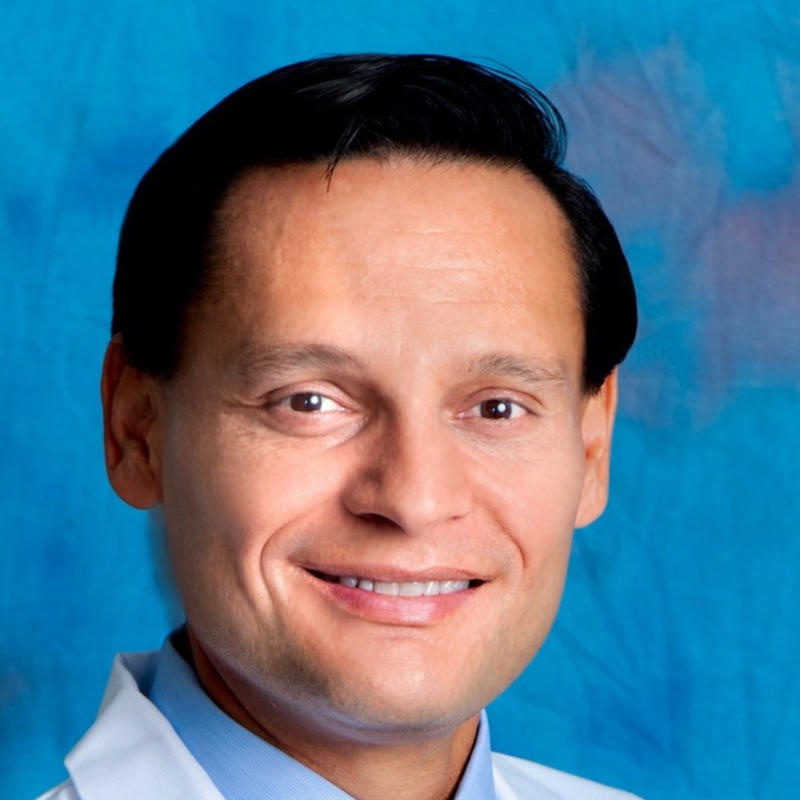
Dr. Philip A. Rea is a Professor of Biology and Rebecka and Arie Belldegrun Distinguished Director of the Life Sciences & Management Program at the University of Pennsylvania's School of Arts and Sciences. With over 100 publications and two co-authored books, his work spans fundamental biochemical research and science communication, focusing on life sciences implementation challenges. Education: D.Sc. (2020) and D.Phil. in Plant Biochemistry (University of Oxford), B.Sc. First Class Honors in Biological Sciences (University of Sussex) Dr. Rea's research explores transport phenomena and cellular detoxification, including vacuolar proton pumps and ABC transporters in plants, yeast, and nematodes. His work has significant applications in phytoremediation and combating parasitic diseases. His recent publications and book Managing Discovery in the Life Sciences (2018) analyze the transition from laboratory discovery to market success through case studies like statins, ivermectin, and metformin. These works highlight serendipity in biomedical innovation and investor-driven discovery management. Scientific Awards: Jesse H. Neal Award (2025) for technical/scientific content AAAS Fellow (2013) for membrane transport research National Academies Cozzarelli Prize (2010) for original research Multiple teaching honors including Lindback Foundation Award (2014) and Ira H. Abrams Award (2009) Society for Experimental Biology President's Medal (1990) Teaching: Proseminar in Management and the Life Sciences (LSMP 1210) Biochemistry (BIOL 2810) Focus on problem-solving with incomplete datasets
Irell and Manella Graduate School of Biological SciencesUnited States
Peter Schultz, PhD, is the President and CEO of Scripps Research, holding the L.S. “Sam” Skaggs Presidential Chair in the Department of Chemistry. He has been a faculty member since 1999, previously at UC Berkeley. His research spans synthetic biology, genetic code expansion, and drug discovery, with a focus on engineering organisms and molecules for biological and medical applications. Education: Ph.D. in Chemistry, California Institute of Technology (1984) B.S. in Chemistry, California Institute of Technology (1979) Research Interests: Expanding genetic codes to incorporate noncanonical amino acids in organisms Engineering endosymbiotic systems to study mitochondrial evolution Developing small molecules for cancer, stem cell therapies, and neglected diseases Designing antibodies and CAR-T cells for targeted therapies Article Trends: Recent work emphasizes small molecule therapies for cancer and fibrosis, synthetic biology applications in endosymbiosis, and genetic code expansion for protein engineering. Key themes include drug repurposing, targeted drug delivery, and molecular mechanisms of biological systems. Awards: Wolf Prize in Chemistry (1994) National Academy of Sciences Member (1993) Paul Ehrlich-and Ludwig Darmstaedter Prize (2002) National Academy of Inventors Fellow (2015) Advising & Grants: Supervises ~15 graduate students and postdocs annually. Secured funding from NSF, NIH, and industry partnerships. Over 85 former students hold academic positions globally. Labs/Teams: Heads the Schultz Lab at the Chi-Huey Wong Laboratories, focusing on biologically inspired synthesis and translational research.
David Ridley is a Professor at Duke University's Fuqua School of Business with additional appointments in the Department of Economics and Sanford School of Public Policy. He serves as Faculty Director of the Center for Health Sector Management (HSM) and is an Executive Core Faculty Member at the Duke-Margolis Institute for Health Policy. His work bridges business, economics, and public policy with a focus on healthcare innovation and policy. Ridley earned his Ph.D. from Duke University in 2001. His academic journey has been focused on applying economic principles to solve complex healthcare challenges, particularly in pharmaceutical markets and global health. Ridley's research centers on health economics , with special emphasis on incentives for innovation and pharmaceutical pricing . He is best known for developing the priority review voucher system, which creates market-based incentives for developing treatments for neglected diseases. His work examines how regulatory frameworks, pricing mechanisms, and market structures influence healthcare innovation and access. Through his research, Ridley has demonstrated how economic tools can be applied to improve health outcomes globally, particularly for underserved populations. Analysis of Ridley's recent publications reveals a consistent focus on pharmaceutical policy, with particular attention to incentive mechanisms like priority review vouchers. His work spans both theoretical economic analysis and practical policy applications, often examining how regulatory decisions impact drug development, pricing, and access. A significant portion of his research addresses neglected tropical diseases and the economic barriers to developing treatments for these conditions. Ridley has led significant research initiatives including the development of the FDA priority review voucher program (2007) and the EPA vector expedited review voucher program (2022). These policy innovations have created market-based incentives for developing treatments for neglected diseases, with the FDA having awarded more than 80 vouchers valued at approximately $100 million each. As Faculty Director of the Center for Health Sector Management, Ridley oversees a program that comprises about 20 percent of Duke MBA graduates each year. His grant portfolio includes significant funding for research on neglected tropical diseases, antimicrobial resistance, and biodefense. Current projects include "The Commercial Value of Pull Mechanisms for Drug Development in Neglected Tropical Diseases" (2024-2025) and "The Next Phase of Antimicrobial Resistance Payment Policy" (2022-2023). Ridley leads and participates in several research teams focused on healthcare innovation and policy. His work with the Duke-Margolis Institute for Health Policy connects academic research with practical policy applications. Through the Center for Health Sector Management, he fosters collaboration between business students and healthcare professionals to address pressing challenges in the health sector.
University of Massachusetts Chan Medical SchoolUnited States
Dr. Mostafa Elfawal is an Assistant Professor at UMass Chan Medical School in the Program in Molecular Medicine, affiliated with the T.H. Chan School of Medicine. His research focuses on developing novel therapeutics against parasitic infections, particularly targeting soil-transmitted helminths and malaria. He completed his PhD in Medical Entomology/Microbiology at the University of Massachusetts Amherst, following a BA and MS in Animal Science from Ain Shams University in Egypt. His work emphasizes high-throughput drug screening and repurposing existing compounds for anthelmintic use, with recent breakthroughs in PIM kinase inhibitors and broad-spectrum antiparasitic agents. He has extensively studied Artemisia annua's antimalarial properties and its role in overcoming drug resistance. Collaborations with institutions like the NIH and international networks highlight his global impact in parasitology and tropical medicine. Key contributions include identifying metabolic enzyme inhibitors as anthelmintics, elucidating hookworm's cognitive and microbiome effects, and advancing yeast particle encapsulation for controlled drug release. His research bridges basic science with clinical application, addressing critical gaps in treating neglected tropical diseases.
Felipe Lobelo, M.D., Ph.D., FAHA, is an Associate Professor in the Hubert Department of Global Health at Emory University's Rollins School of Public Health. He also serves as Director of Graduate Studies for the department and holds roles at Kaiser Permanente Georgia as Senior Consultant for Population Health Research. His expertise spans chronic disease prevention, implementation science, and public health preparedness. Education: MD, Rosario Medical School (Bogotá, Colombia) PhD in Exercise Science, University of South Carolina Epidemic Intelligence Service (EIS) Postdoctoral Training, CDC Research Interests: Dr. Lobelo focuses on lifestyle medicine, health disparities, and the intersection of sports and health. His work emphasizes implementation science to bridge gaps between clinical practice and population health interventions, particularly for vulnerable populations. Key areas include obesity prevention, maternal and child health, and climate-related health challenges. Publications & Awards: Over 140 peer-reviewed publications and numerous citations. Notable awards include the Paffenbarger-Blair Award (2006), American Heart Association Fellowship (2012), and Emory Millipub Club (2018). Grants & Mentorship: Leads research projects funded by national/international organizations. Mentors MPH, medical, and doctoral students across disciplines. Active in training programs, including the Exercise is Medicine initiative. Labs/Initiatives: Founder of the Soccer for Health Initiative. Director of the Exercise is Medicine Global Research and Collaboration Center. Core Faculty, Emory Global Diabetes Research Center.
Hassan Hakimi is an Assistant Professor of Veterinary Parasitology in the Department of Diagnostic Medicine/Pathobiology at Kansas State University's College of Veterinary Medicine. His academic journey includes a DVM from University of Tehran, Iran, an MSc from Obihiro University of Agriculture and Veterinary Medicine in Japan, and a PhD from Gifu University United Graduate School of Veterinary Sciences, Japan, followed by post-doctoral trainings at Nagasaki University and Texas A&M University. He is also a Diplomate of the American College of Veterinary Microbiologists-Parasitology. Dr. Hakimi's research focuses on the functional genomics of important protozoan parasites, particularly Babesia and Theileria (tick-borne pathogens), with special emphasis on the molecular mechanisms that underpin parasite survival within host erythrocytes. He has pioneered the development of genetic tools for Babesia parasites, including establishing a CRISPR/Cas9 system and adapting glmS riboswitch system for conditional gene knockdown. A second major research line focuses on Guinea worm (Dracunculus medinensis), aiming to understand immune responses to develop diagnostic tools for this neglected tropical disease. His publication record shows consistent high-impact research output, with recent papers exploring ves1α genes in cytoadhesion, spherical body proteins in red blood cell modification, and genetic tools for parasite manipulation. The research spans molecular mechanisms, diagnostic development, and comparative genomics across various parasite species. Diplomate of American College of Veterinary Microbiologists-Parasitology Dr. Hakimi serves as co-instructor for the Clinical Veterinary Parasitology course (DMP834) for second-year veterinary students. His work bridges basic molecular parasitology with practical veterinary applications, contributing significantly to our understanding of parasite biology and developing tools for disease control. His research has implications for both veterinary and human medicine, particularly in understanding host-pathogen interactions and developing interventions for parasitic diseases.
Robert J. Doerksen is Professor of Medicinal Chemistry in the Department of BioMolecular Sciences at the University of Mississippi School of Pharmacy , Associate Dean of the Graduate School , and Research Professor in the Research Institute of Pharmaceutical Sciences . Since 2004 he has combined computational chemistry with experimental collaborations to advance drug discovery, particularly in glycoscience and cannabinoid research. Education: B.S. (Double First Class Honours) in Mathematics & Physics, University of New Brunswick, 1986 Graduate Diploma in Christian Studies, Regent College, Vancouver, 1996 Ph.D. in Chemistry, University of New Brunswick, 1998 (Advisor: Prof. Ajit Thakkar) Postdoctoral Fellow, UC Berkeley (with Prof. Martin Head-Gordon) Postdoctoral Fellow, University of Pennsylvania (with Prof. Michael Klein) Research Interests: Dr. Doerksen’s laboratory develops and applies computational medicinal chemistry approaches spanning chemoinformatics , molecular dynamics , virtual screening , and machine learning to understand how small molecules interact with proteins. Central themes include: Glycoscience : lectin–glycan interactions, glycosyltransferase regulation, glycomimetic design. Cannabinoids : CB1/CB2 receptor allosteric modulation, cannabidiol pharmacology, synthetic cannabinoid SAR. Neglected & Infectious Diseases : malaria, hepatitis B, tuberculosis, SARS-CoV-2, urinary-tract infections. Drug Delivery & Formulation : nanoparticle coatings, pharmacokinetic optimization, bioavailability enhancement. Publications Trend: Over 2023–2025 his 15 most recent papers reveal intense activity at the intersection of AI-driven discovery , glycobiology , and cannabinoid pharmacology , with emphasis on anti-infective, anticancer, and CNS-active agents. Key contributions include first-in-class MraY inhibitors for TB, cannabinoid-inspired antivirals against SARS-CoV-2, and glycomimetic antagonists of bacterial adhesins for UTI prevention. Scientific Awards & Honors: UM School of Pharmacy Faculty Service Award (2015–2016) UM School of Pharmacy Faculty Service Award (2010–2011) Editorial Boards: Molecules , AIMS Biophysics , Pharmaceutical Sciences , Perspectives in Medicinal Chemistry Repeated NIH, DoD, NSF, Wellcome Trust, and international grant-review panels (2010–present) Guest Editor for multiple special issues in Molecules and Frontiers journals Advising & Mentoring: As Associate Dean, Dr. Doerksen oversees University-wide graduate programs, chairs the Graduate Recruiting Fellowship and Scholarship Committee, and mentors students across disciplines. Faculty advisor for the UM chapters of the Christian Pharmacists Fellowship International (since 2005) and Taiwanese Student Association (2022–2025). He actively participates in PhD and MS thesis committees worldwide and has delivered NSF GRFP information sessions to support trainee funding. Laboratories & Teams: He directs research within the Computational Chemistry and Bioinformatics Research CORE (CCBRC) , fostering collaborative projects involving medicinal chemists, structural biologists, pharmacologists, and data scientists. The group leverages high-performance computing resources at the University of Mississippi to perform large-scale virtual screening, AI/ML model development, and integrative structural biology studies.
Scott E. Schaus is a Professor of Organic and Medicinal Chemistry at Boston University. He leads the Schaus Group, focusing on enantioselective catalytic methodologies and biomedical research. His work spans development of novel synthetic techniques, including boronate catalysis and asymmetric Mannich reactions, as well as translational science targeting cancer and neglected tropical diseases. Collaborations with the Boston University Center for Molecular Discovery (CMD-BU) drive advancements in chemical library synthesis and drug discovery. Education: B.A. in Chemistry (Boston University, 1995; summa cum laude), Ph.D. in Organic Chemistry (Harvard University, 1999) Research: Specializes in catalytic asymmetric synthesis, natural product construction, and antiparasitic/anticancer drug development. Notable projects include liver cancer treatments with Prof. Ulla Hansen and work on Chagas disease. His lab has produced 20 Ph.D. graduates and 3 postdocs since 2001, with alumni in academia, pharmaceutical R&D, and industry. Current interests include expanding catalytic methodologies and applying chemical synthesis to biomedical challenges. The Schaus Group actively explores small molecule inhibitors, with a focus on LSF transcription factor pathways and antiviral agents.
University of California, San FranciscoUnited States
Geetha Sivasubramanian is an Associate Professor at the University of California, San Francisco (UCSF) within the School of Medicine and Infectious Diseases department. She specializes in Fungal Infections , Health Disparities , and Medical Education . Education: Kasturba Medical College, Manipal, India (Medical School, 03/2002) University of Illinois, Urbana Champaign, IL (Internal Medicine Residency, 07/2007) Wayne State University, Detroit, MI (Infectious Disease Fellowship, 07/2009) Wayne State University, Detroit, MI (Infectious Disease Research Fellowship, 03/2010) Research Interests: Her work spans Fungal Infections (particularly Coccidioidomycosis and Cryptococcosis in Central California), Health Disparities in infectious disease outcomes, and Medical Education innovations. Recent studies examine interactions between fungal infections and immunocompromised states, post-viral complications, and diagnostic challenges in neglected populations. Scientific Awards: Notable recognitions include the ICAAC 2009 George McCracken Infectious Disease Fellow Grant , Humanism and Excellence in Teaching Award (Wayne State), and multiple Teacher of the Year and Scholar of the Year awards during residency. She received 8 awards across India and U.S. institutions for academic excellence in medical school. Collaborations: Works with researchers like Robert Libke , Michele Maison-Fomotar , and Hebah Ghanem at UCSF. Her network includes multicenter consortia such as the Mycoses Study Group Education and Research Consortium (MSGERC) .
Professor Ian Stansfield is a Personal Chair in the School of Medicine, Medical Sciences and Nutrition at the University of Aberdeen. He holds a BSc (Hons) in Microbiology and a PhD in Biochemistry from the University of Sheffield. His research focuses on protein synthesis mechanisms in eukaryotes, translation elongation/termination, and systems biology approaches to model these processes. Collaborations with Prof M.Carmen Romano integrate mathematical modeling to study translation dynamics and synthetic biology applications. Teaching roles include coordinating MSc programs in Biotechnology, Bioinformatics, and Biobusiness, as well as undergraduate modules in Microbiology and Molecular Biology. He led successful iGEM teams, achieving Gold and Silver medals for developing diagnostic systems for neglected tropical diseases using synthetic biology. Key research areas include translational stress management during protein expression, bioinformatic analysis of mRNA sequences, and optimizing yeast as a protein expression system. Notable grants include BBSRC funding for synthetic gene circuits and systems biology analysis of translation termination factors. Scientific awards include iGEM Gold Medals (2009, 2014) and a Silver Medal (2010), with the 2014 entry winning Best Health and Medicine and Best Measurement Device awards. His work spans over 40 peer-reviewed publications, exploring topics from ribosomal pausing to tRNA properties in codon usage. Leadership roles include Director of Research in his School, overseeing research strategy and NHS partnerships. External roles include membership on BBSRC panels and the BioProNet management board, reflecting his influence in biotechnology and bioenergy sectors.
Poornima Ramanan, MD, is a Clinical Professor in the Department of Infectious Diseases at Oregon Health & Science University (OHSU), where she joined in 2022. Previously, she held faculty positions at the University of Colorado, focusing on transplant infectious diseases. Her expertise includes managing infections in immunocompromised patients, particularly those undergoing solid organ or hematopoietic stem cell transplantation. She also has a strong interest in tropical medicine and infections affecting underserved populations. Dr. Ramanan completed her medical degree (M.B.B.S.) at Coimbatore Medical College in India. She pursued postgraduate training in Internal Medicine at Lincoln Medical and Mental Health Center in New York, followed by infectious diseases fellowship at Harlem Hospital and additional fellowships in transplant infectious diseases and clinical microbiology at the Mayo Clinic in Minnesota. She is board-certified in Infectious Diseases and Medical Microbiology. Her research focuses on improving diagnostics for fungal infections, optimizing management of post-transplant infections, and addressing challenges in tropical disease diagnosis. Over 38 publications highlight her work in areas like HTLV-1 transmission, cytomegalovirus management in transplant recipients, and syndromic panel-based testing in microbiology. Dr. Ramanan is actively involved in medical education, particularly in training future clinicians in infectious diseases and transplant medicine. Her clinical practice emphasizes compassionate care for complex immunocompromised patients while advancing evidence-based infection control strategies.
Michael Pollastri serves as Senior Vice Provost and Academic Lead of the Roux Institute at Northeastern University, overseeing academic and research initiatives. He joined Northeastern's Department of Chemistry and Chemical Biology in 2009, became department chair in 2015, attained full professorship in 2017, and served as interim dean of the College of Science from March 2019. His academic journey began with a master's degree from Duke University, followed by a doctorate developed through a unique partnership between Pfizer and Brown University's Department of Chemistry. Duke University: Master's degree Brown University/Pfizer: Doctorate Pollastri's research centers on medicinal chemistry and drug discovery for neglected tropical diseases , with emphasis on human African trypanosomiasis, Chagas disease, and leishmaniasis. His work pioneers kinase inhibitor repurposing , multiparameter compound optimization , and structure-activity relationship studies to develop novel antiparasitic therapeutics. He integrates high-throughput screening with lead optimization strategies to address critical unmet medical needs in resource-limited settings. Analysis of his recent publications (2021-2025) reveals consistent focus on optimizing quinazolines, azaindoles, and carbazole derivatives against kinetoplastid parasites. His work demonstrates systematic progression from hit identification to lead optimization, with particular attention to physicochemical properties, target specificity, and broad-spectrum activity against trypanosomatid pathogens. During his tenure at Boston University (2007-2009), Pollastri established the Center for Molecular Discovery—a collaborative resource integrating high-throughput screening and medicinal chemistry capabilities. This initiative exemplifies his commitment to building infrastructure for antiparasitic drug discovery through academic-industry partnerships.
Dr. Joseph Vinetz is Professor of Medicine (Infectious Diseases), Anthropology, and Epidemiology (Microbial Diseases) at Yale University, with additional affiliations as Research Professor at Universidad Peruana Cayetano Heredia and Senior Investigator at the Alexander von Humboldt Institute of Tropical Medicine. His work bridges clinical practice, laboratory research, and field epidemiology, focusing on malaria and leptospirosis in the Peruvian Amazon, Brazilian Amazon, and Sri Lanka. He leads a research program continuously funded by NIH since 2001, alongside support from WHO, Gates Foundation, and HHMI. Research Highlights: Malaria resilience mechanisms in Amazonian populations Molecular ecology of Plasmodium-Anopheles interactions Leptospirosis diagnostics and vaccine development Genomic studies of malaria vectors and parasites Climate change impacts on tropical disease transmission Scientific Recognition: Elected to American Society for Clinical Investigation Fellow of American College of Physicians Bailey K. Ashford Medal recipient Doctor Honoris Causa from PGIMER, India Academic Leadership: Dr. Vinetz mentors multidisciplinary research teams and contributes to Yale's global health initiatives. His lab develops novel interventions for neglected tropical diseases while translating bench discoveries to clinical and public health applications.
Kevin Tidgewell, PhD, is an Assistant Professor in the Department of Pharmaceutical Sciences at the University of Kentucky. He holds a BS in Chemistry from Mercyhurst University, a PhD in Medicinal and Natural Products Chemistry from the University of Iowa, and postdoctoral training at Scripps Institution of Oceanography and the Smithsonian Tropical Research Institute. His research focuses on marine natural products and synthetic chemistry for CNS disorder drug discovery, particularly targeting pain, depression, and substance use disorders. Tidgewell’s lab integrates marine cyanobacteria-derived compounds with medicinal chemistry to identify novel therapeutics. He has also contributed to educational initiatives, including undergraduate research programs and global health curricula. Education: B.S. Chemistry, Mercyhurst University Ph.D. Medicinal and Natural Products Chemistry, University of Iowa Postdoctoral Fellowships: Scripps Institution of Oceanography (UC San Diego), Smithsonian Tropical Research Institute Research Interests: Tidgewell’s work spans marine natural products chemistry, drug discovery for CNS disorders, and neuromodulatory receptor pharmacology. His lab investigates serotonin receptors (5-HT7R/5-HT2C), TRPV1 channels, and GPCRs as therapeutic targets. Recent efforts emphasize leveraging cyanobacterial metabolites for antiparasitic, anticancer, and analgesic applications. His research also explores the pain-depression comorbidity and opioid alternative therapies. Articles Trends: His publications highlight marine-derived compounds for CNS disorders, synthetic strategies for bioactive molecules, and ethnopharmacological approaches to pain management. Recent work includes structural elucidation of cyanobacterial metabolites and identification of PXR activators in botanical extracts. Advising & Grants: Tidgewell mentors through programs like the Pain Undergraduate Research Experience (PURE), fostering future clinical and scientific leaders. His lab has secured support for drug discovery projects targeting neglected tropical diseases and cancer. Labs & Teams: The Tidgewell Lab at UK focuses on marine natural products synthesis and pharmacology. Collaborations include global institutions in Panama, Darién, and Curaçao for biodiversity-driven drug discovery.
Dr. Deborah McFarland is an Associate Professor at Emory University's Rollins School of Public Health, affiliated with both the Department of Health Policy and Management and the Hubert Department of Global Health. Her work focuses on health policy, health financing, and neglected tropical diseases (NTDs), with extensive involvement in global health initiatives such as the World Health Organization's NTD programs. She has held key roles in organizations like APOC and the Mectizan Expert Committee. Dr. McFarland earned a PhD in strategic management and industrial organization economics, an MSc from the London School of Economics, and multiple MPH degrees. Education includes a PhD from the University of Tennessee, an MPH from the University of North Carolina at Chapel Hill, and an MSc from the London School of Economics. She has been recognized with prestigious awards, including the ASPPH Teaching Excellence Award (2017) and Emory’s highest teaching honor, the Emory Williams Award. Her research emphasizes community-based approaches to NTD control, health systems strengthening, and the ethical and economic dimensions of public health resource allocation. She leads programs like the Foege Fellowship and the Global Field Experience Program, fostering global health education. Dr. McFarland is also involved in initiatives such as the International Religious Health Assets Programme (IRHAP) and the iCHORD research group, focusing on community health outcomes. Recent publications highlight cost-effectiveness analyses of NTD interventions, resilience of community drug distributors, and programmatic impacts on health systems. Her work underscores the importance of integrating NTD control with broader health system goals and leveraging religious and community assets for health promotion.