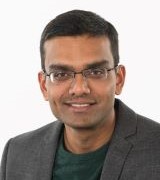
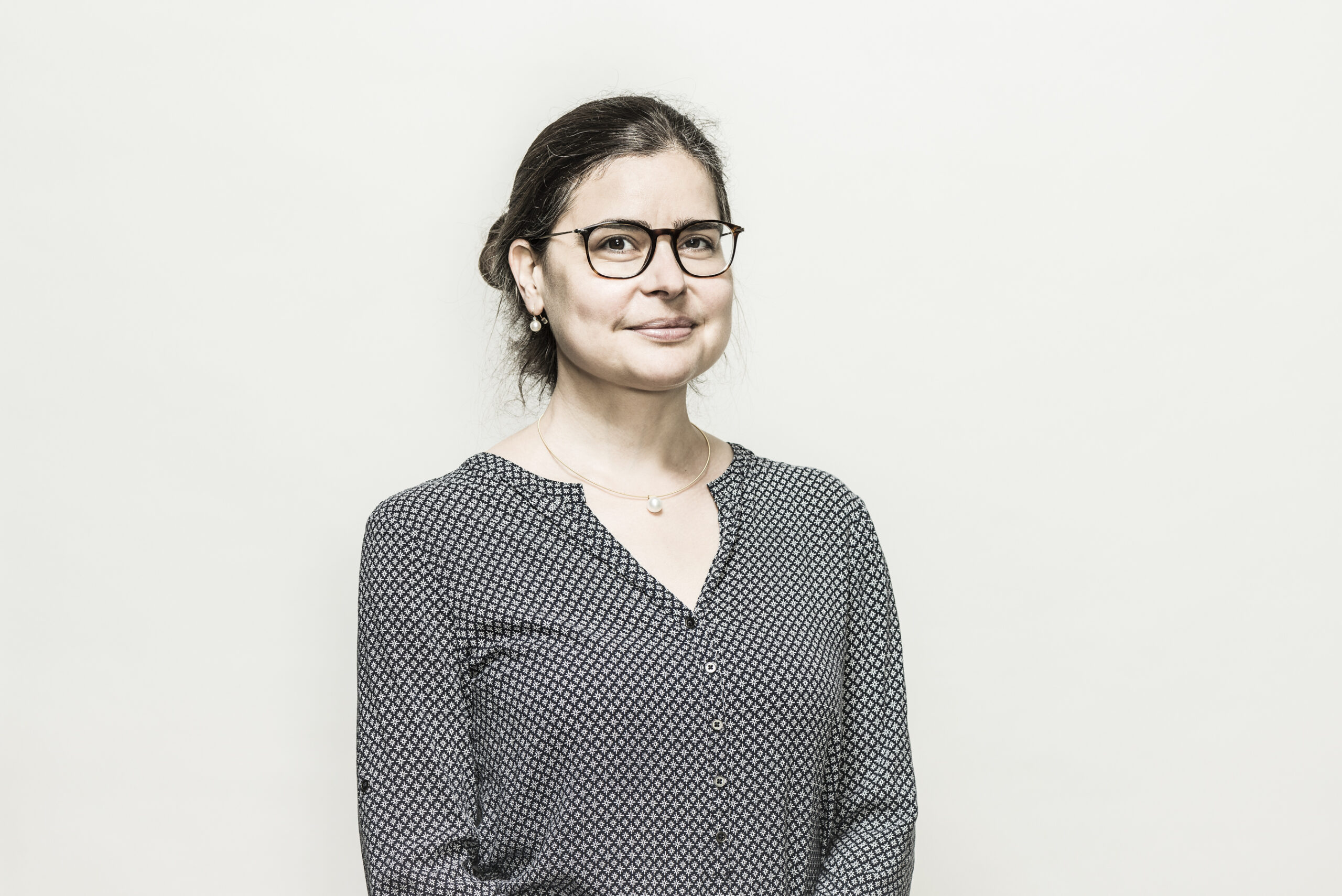
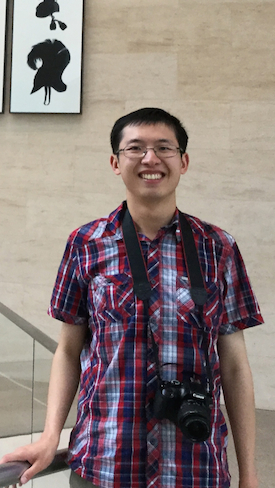
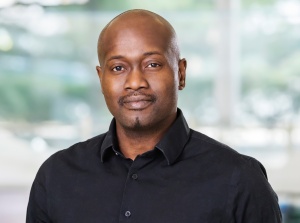
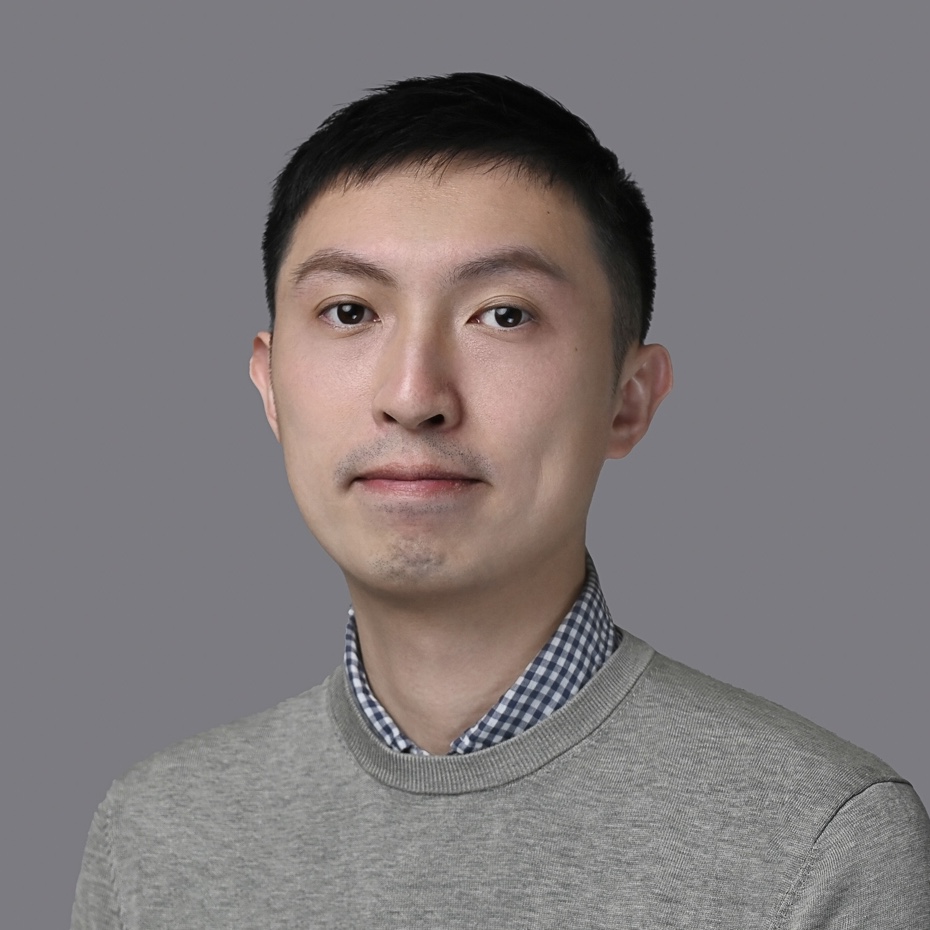
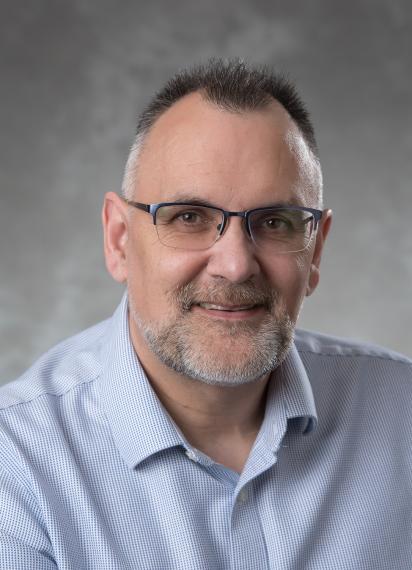
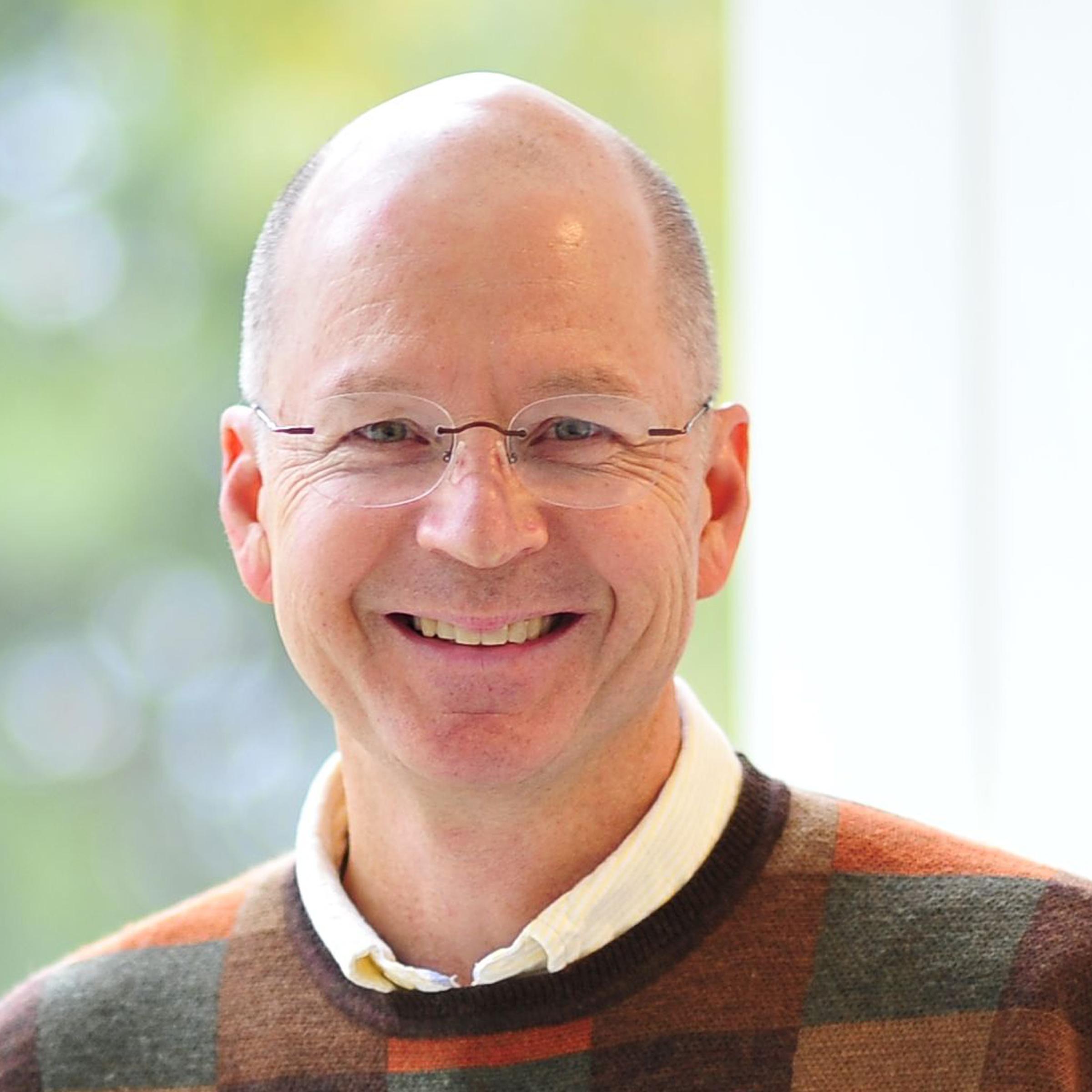
Ankush Agarwal is an Associate Professor in the Department of Statistical and Actuarial Sciences at the University of Western Ontario. His research focuses on mathematical finance, financial statistics, and Monte Carlo methods, with applications to risk management and derivatives pricing. He supervises PhD students in quantitative finance and has taught courses on Monte Carlo methods and advanced financial modeling at Western University. Education: PhD in Mathematics from Tata Institute of Fundamental Research (2015) Research interests span regime-switching models, longevity risk hedging, stochastic differential equations, and rare event simulation. His work combines theoretical probability with computational techniques for financial applications. Recent publications include studies on McKean-Vlasov SDEs, implied Sharpe ratio estimation, and optimal portfolio strategies under stochastic volatility. These works demonstrate his expertise in stochastic processes and financial engineering. Supervision: Current PhD advisees include Ying Liao, Buchun Wang, and Shuya Zhang at the University of Glasgow. Former advisees include Yongjie Wang and Yihan Zou.
Ruth Urner is an Associate Professor in the Department of Electrical Engineering and Computer Science at York University's Lassonde School of Engineering. She holds a PhD in Computer Science from the University of Waterloo (2013) and completed postdoctoral research at Max Planck Institute for Intelligent Systems (Germany), Carnegie Mellon University, and Georgia Tech. She was a Simons-Berkeley Fellow at the Simons Institute in 2017. Research Focus: Dr. Urner develops mathematical foundations for machine learning paradigms including semi-supervised/active learning, transfer learning, and adversarial robustness. Her current work addresses societal impacts of ML through interpretability and fairness frameworks. She leads projects on strategic classification, robust PAC learning, and calibrated model evaluation. Awards & Leadership: Simons-Berkeley Fellowship (2017) Best Paper Award at NIPS 2015 Workshop on Transfer Learning Organizer: Women in Machine Learning Theory workshops (COLT/ALT) Program Committee: NeurIPS, ICML, COLT, ICLR, AISTATS Teaching & Advising: She teaches Machine Learning Theory, Computational Logic, and Introduction to ML at York University. Current student advisees include Master's candidate Alireza Torabian. She has lectured at international summer schools including Hausdorff School on Algorithmic Data Analysis (Germany) and SMILES Summer School (Russia). Affiliations: Faculty affiliate at Vector Institute (Toronto) and collaborator with Max Planck Institute systems. Her lab investigates theoretical guarantees for learning algorithms under distribution shifts and adversarial conditions.
Ke Li is an Assistant Professor at Simon Fraser University (SFU) in Vancouver, Canada. He previously worked at Google and the Institute for Advanced Study (IAS) in Princeton. He holds a Ph.D. from UC Berkeley, advised by Jitendra Malik, and a B.Sc. in Computer Science from the University of Toronto. His research focuses on machine learning, computer vision, and algorithms, with contributions to generative modeling, neural rendering, fast nearest neighbor search, and meta-learning. Education: Ph.D. in Computer Science, UC Berkeley (2016) B.Sc. in Computer Science, University of Toronto (2008) Research Interests: Dr. Li explores foundational challenges in machine learning, including: - Generative Modeling : Developing methods like Implicit Maximum Likelihood Estimation (IMLE) to improve generative model training. - Neural Rendering : Innovating techniques like Proximity Attention Point Rendering (PAPR) for dynamic 3D scene representation. - Fast Nearest Neighbor Search : Pioneering algorithms to overcome dimensionality curses. - Learning to Optimize : Automating algorithm design through reinforcement learning. Professional Activities: Organized the IAS Seminar Series on Theoretical Machine Learning with Sanjeev Arora Lead organizer of the BIRS Workshop on 3D Generative Models Reviewer for NeurIPS, ICML, CVPR, and other top conferences Teaching: Recently taught CMPT 726: Machine Learning and CMPT 983: Generative Models at SFU.
Samory Kpotufe is an Associate Professor of Statistics at Columbia University's Faculty of Arts and Sciences, affiliated with the Data Science Institute (DSI) as a Foundations of Data Science Co-Chair. He holds additional affiliations in Cybersecurity, Health Analytics, and Smart Cities. His academic journey includes a PhD in Computer Science from UC San Diego (2010), followed by research roles at the Max Planck Institute, Toyota Technological Institute at Chicago, and Princeton University's ORFE department. His research focuses on nonparametric methods and high-dimensional statistics, emphasizing adaptive procedures that self-tune to unknown data structures (e.g., manifolds, sparsity) while addressing modern application constraints like computational efficiency and labeling costs. Key themes include transfer learning, active learning, and online algorithms. Notable contributions span theoretical guarantees for nearest-neighbor methods, covariate shift adaptation, and contextual bandits. His work often bridges statistical theory and practical machine learning challenges, with applications in IoT, cybersecurity, and anomaly detection. He has led collaborative grants, such as the NSF CPS project on data augmentation for IoT systems. As a DSI member and Foundations Co-Chair, he contributes to advancing data science foundations through interdisciplinary collaboration. His lab's research frequently explores the interplay between algorithmic performance and intrinsic data properties.
Wayne A Fuller is a Research Professor at Iowa State University , specializing in survey methodology and sampling statistics. His work focuses on advanced techniques for handling missing data, small area estimation, and measurement error models, with applications to agricultural surveys and public health research. Education: PhD in Statistics from Iowa State University Research Interests: Fuller's work bridges theoretical and applied statistics through: Development of fractional hot deck imputation methods Bootstrap techniques for variance estimation Small area prediction under constrained models Measurement error correction in health and agricultural data Time series analysis with autoregressive components Integration of administrative data with survey samples Publication Trends: His recent work emphasizes computational approaches to small area estimation (2016-2025), including bootstrap prediction intervals and benchmarking techniques, alongside methodological advancements in imputation and measurement error correction (2004-2015). Contact: Email: waf@iastate.edu Phone: 515-294-5830 Location: Ames, Iowa
Xiaotian Zheng is an Assistant Professor of Statistics at the University of Georgia. Previously, they were a Postdoctoral Research Fellow with the Australian Research Council Special Research Initiative Securing Antarctica's Environmental Future at the University of Wollongong, working under Professor Noel Cressie and Associate Professor Andrew Zammit-Mangion. They earned their Ph.D. in Statistical Science from the University of California, Santa Cruz, advised by Professors Athanasios Kottas and Bruno Sansó. Their research focuses on developing statistical and machine learning methods for analyzing complex, dependent data, particularly in ecological and environmental contexts. Key areas include spatial/spatio-temporal statistics, probabilistic downscaling, data integration, transfer learning, and statistical deep learning. Xiaotian's publications reflect their work on mixture transition distribution models, nearest-neighbor mixture models, and geostatistical frameworks for discrete-valued processes. These contributions emphasize Bayesian inference, computational efficiency, and real-world applications in environmental science and biodiversity modeling.
Dr. Scott L. Nykl is a Professor in the Department of Computer Science at the Air Force Institute of Technology (AFIT), part of the Graduate School of Engineering & Management. He is a leading researcher in computer vision, real-time 3D graphics, and autonomous aerial systems, with a focus on automated aerial refueling and navigation in GPS-denied environments. Education: Ph.D. in Computer Science, Ohio University (2008–2013), Summa Cum Laude, GPA: 4.0/4.0 M.S. in Computer Science, Ohio University (2011–2012), Summa Cum Laude, GPA: 4.0/4.0 B.S. in Software Engineering, University of Wisconsin–Platteville (2002–2006), Summa Cum Laude, GPA: 3.94/4.0 Dr. Nykl's research interests include computer vision, sensor fusion, interactive virtual worlds, and real-time 3D graphics, with applications in aerospace and defense. His work bridges simulation and real-world deployment, particularly in autonomous aerial refueling using stereo and monocular vision. He has pioneered techniques in pose estimation, occlusion mitigation, and sim-to-real transfer learning. His recent publications and projects show a strong trend toward robust, vision-based navigation systems for unmanned and manned aircraft, with emphasis on reliability, accuracy, and real-time performance. His work frequently appears in IEEE, AIAA, and ION venues, reflecting its high technical and operational relevance. Scientific Awards and Recognitions: 2024 Harold Brown Award – Highest U.S. Air Force scientific honor 2024 General Bernard A. Schreiver Award 2025 AETC Airmen of the Year Multiple Air Force Outstanding Scientist/Engineer Awards (2017–2023) Best Paper Award, ACM SIGGRAPH i3D 2013 Forbes' The Greatest Young Inventors in America (2012) NSF GK-12 Fellow (2006) Dr. Nykl has advised numerous graduate students and collaborated extensively on projects involving automated aerial refueling, 3D reconstruction, and cyber education. He has secured significant research funding, including a $100,000 Ohio Third Frontier grant. His work has led to multiple patents and technology transfers. He leads research integrating virtual worlds, digital twins, and augmented reality for both research and pedagogy. Laboratories and Research Teams: His work is conducted within AFIT’s research ecosystem, involving collaborations with the Air Force Research Laboratory (AFRL), Boeing, and academic partners. He leads projects under the Aerial Refueling Systems Advisory Group (ARSAG) and presents regularly at ION, AIAA, and IEEE conferences.
Fabrizio Lombardi is the ITC Endowed Professor at Northeastern University's Department of Electrical and Computer Engineering, part of the College of Engineering. He previously held faculty positions at Texas Tech University, University of Colorado-Boulder, and Texas A&M University. He earned his B.Sc. from the University of Essex (1977), M.Sc. and Ph.D. from the University of London (1982). His research focuses on fault-tolerant computing, VLSI CAD, quantum computing, and configurable computing systems. He has led major projects like the NSF-funded Neural-Network-based Stochastic Computing Architectures for Machine Learning . He holds leadership roles including President of the IEEE Nanotechnology Council (2022-2023), IEEE Computer Society Vice President (2021), and IEEE PSPB member. His 200+ publications span IEEE Transactions on Computers, Nanotechnology, and Design & Test. Awards include IEEE Fellow, Søren Buus Outstanding Research Award, and multiple research fellowships. His work bridges theory and application, emphasizing defect-tolerant nanosystems and energy-efficient computing hardware. Recent innovations include approximate computing methodologies and secure PUF-based hardware designs.
Lionel Truquet is a Lecturer-Researcher in Statistics at ENSAI (École Nationale de la Statistique et de l'Administration Économique), where he focuses on Statistics for dependent data and Time series analysis . He serves as a Director of Research and has contributed significantly to fields like Markov chains and nonlinear dynamics . Research Interests: Time series models for ecological and economic data Statistical inference for categorical and discrete-valued processes Ergodic properties of Markov chains in random environments Mixing conditions for nonstationary processes Perturbation techniques in stochastic modeling Recent Publications: His work spans nearest neighbor sampling , multivariate autoregressive models , and mixing properties of count processes , with applications in ecology and econometrics. Key trends include nonparametric methods for high-dimensional data and stationarity analysis in time-varying systems. Scientific Awards: TJALLING C. KOOPMANS ECONOMETRIC THEORY PRIZE (2021–2023) for groundbreaking work on multivariate count autoregressions.
Gary Grewal is an Associate Professor at the School of Computer Science , University of Guelph. His research focuses on developing intelligent Computer-Aided Design (CAD) tools for Field Programmable Gate Arrays (FPGAs) , integrating classical optimization techniques with machine learning and deep learning to address challenges in placement and routing for heterogeneous devices. He has received the Michal Servit Award (2017, 2018) for outstanding FPGA research and the University of Guelph Faculty Association Distinguished Professor Award for Excellence in Teaching (2017) . Grewal has held NSERC Discovery Grants annually from 1999 to 2023. Co-founder of the Guelph FPGA CAD Group Key collaborator with institutions like Ryerson University , University of Toronto , and University of British Columbia His work extends to health technology through the IronTracker mobile app , developed with Andrew Hamilton-Wright and students (A. D'Angelo, J. Carter, F. Liu, R. Pattison) to manage Hereditary Hemochromatosis (HHC) . The app, available in four languages and adopted in 100+ countries, was recognized at Parliament Hill and the Ontario Legislature. Scientific Awards : Michal Servit Award (2018) Michal Servit Award (2017) Distinguished Professor Award for Teaching (2017) NSERC Discovery Grants (1999-2023) His recent publications highlight trends in machine learning for FPGA CAD , including reinforcement learning for partitioning, deep learning for congestion estimation, and adaptive algorithms for placement. Grewal remains active in teaching courses like Discrete Optimization (CIS*6070) and Digital Systems I (CIS*3120).
David Mount is a Professor in the Department of Computer Science at the University of Maryland, with an additional appointment at the University of Maryland Institute for Advanced Computer Studies (UMIACS). His primary research focus is Computational Geometry, particularly in designing, analyzing, and implementing data structures and algorithms for geometric problems. Applications of his work span image processing , pattern recognition , information retrieval , and computer graphics . He is a Fellow of the ACM and has received the ACM Recognition of Service Award twice. A member of the Algorithms and Theory Group, Mount has authored over 200 publications, many of which are available on Google Scholar, DBLP, and ArXiV. Research Focus Computational Geometry Algorithm Design and Analysis Geometric Data Structures Nearest Neighbor and Range Searching Clustering Algorithms Recent Publications Mount's recent publications (2023-2025) emphasize non-Euclidean geometry (e.g., Hilbert metric), dynamic geometric structures , and approximation algorithms for polytopes, Voronoi diagrams, and Delaunay triangulations. Collaborative works with students and researchers address challenges in kinetic data compression , label tracking , and geometric software development (e.g., Ipelets for polygonal geometry). Professional Activities Editorial Board Member, TheoretiCS (2021-present) Senior Associate Editor, ACM Trans. on Spatial Algorithms and Systems (2013-2020) Program Committee Member, FOCS , ESA , SODA , and other major conferences Awards ACM Fellow ACM Recognition of Service Award (twice)
Fabrizio Falchi is a researcher at the Artificial Intelligence for Media and Humanities (AIMH) Lab of the Institute of Information Science and Technologies (ISTI) within Italy's National Research Council (CNR). He also maintains an associate position at the Biorobotics Institute of Scuola Superiore Sant'Anna. His work focuses on developing advanced multimedia retrieval systems, with the VISIONE platform being his most notable contribution, which has won international competitions including the Video Browser Showdown in 2024 and placed second in 2023. Falchi's educational background includes: Ph.D. in Information Engineering from University of Pisa (Italy) Ph.D. in Informatics from Faculty of Informatics of Masaryk University of Brno (Czech Republic) M.B.A. from Scuola Superiore Sant'Anna in Pisa His research spans deep learning, convolutional neural networks, deep features extraction, similarity search algorithms, distributed indexing systems, multimedia information retrieval, computer vision applications, and peer-to-peer systems. Falchi has made significant contributions to fine-grained visual understanding, cross-modal retrieval (particularly image-text matching), and robustness of deep learning systems against adversarial attacks. His work demonstrates a strong focus on practical applications of these technologies, particularly in video retrieval systems and safety monitoring solutions. Analysis of Falchi's recent publications reveals a strong focus on video and image retrieval systems, with the VISIONE platform being central to his work. His research shows increasing emphasis on fine-grained understanding in computer vision, cross-modal retrieval, and addressing practical challenges like cross-resolution face recognition. Recent work demonstrates innovation in making these systems more efficient through techniques like knowledge distillation (ALADIN) and leveraging virtual worlds for training data. His publications consistently bridge theoretical advances with practical applications in surveillance, safety monitoring, and multimedia search. Falchi's work has received significant recognition: Best paper award at CBMI 2024 for 'Is ClLIP the main roadblock for fine-grained open-world perception?' VISIONE 2024 won the Video Browser Showdown competition in Amsterdam VISIONE obtained second place at Video Browser Showdown 2023 in Bergen Best Paper Award for 'Learning Safety Equipment Detection using Virtual Worlds' at CBMI 2019 Falchi collaborates extensively with researchers at ISTI-CNR, particularly within the AIMH Lab. His work on VISIONE involves collaboration with Giuseppe Amato, Paolo Bolettieri, Fabio Carrara, Claudio Gennaro, Nicola Messina, Lucia Vadicamo, and Claudio Vairo. As co-chair of Ital-IA 2023, the 3rd National Conference on Artificial Intelligence, he plays an active role in the academic community. He is a member of ACM (since 2012), the Computer Vision Foundation, the Italian Association for Computer Vision Pattern Recognition and Machine Learning (CVPL), and the CINI Lab on Artificial Intelligence and Intelligent Systems. Falchi is a key member of the Artificial Intelligence for Media and Humanities (AIMH) Lab at ISTI-CNR, where he leads research on video retrieval systems. The lab has developed the award-winning VISIONE platform, which combines multiple scientific results in content-based video retrieval. His team focuses on developing systems that enable users to search for target videos using textual prompts, drawing objects and colors, or images as query examples. The lab's work demonstrates strong interdisciplinary collaboration, bridging computer science with practical applications in media, safety monitoring, and urban environments.
Daniel Hlubinka is an Associate Professor at the Department of Probability and Mathematical Statistics, Faculty of Mathematics and Physics, Charles University. He has been an academic staff member since 1999 and was promoted to associate professor in 2007. His teaching includes courses like Statistics for Financial Mathematicians 2 (NMFM332) and Proseminar in Probability and Mathematical Statistics (NMSA262). He supervises bachelor's, diploma, and doctoral theses, with over 30 bachelor's, 20 diploma, and 5 doctoral theses supervised to date, including former students now working as associate professors. Education: Mathematical Physics (1989-1994) at Charles University; Erasmus stay at Limburgs Universitaire Center (1994-1995); Doctorate (1995-1999) under Professor Josef Štěpán. Research Interests: Statistics, theoretical foundations, multivariate functional processes, nonparametric asymptotics, data depth, optimal transport, and mathematics of chance. Academic Affiliations: Member of the Union of Czech Mathematicians and Physicists, Czech Mathematical Society, Czech Statistical Society, European Mathematical Society, Bernoulli Society, and Institute of Mathematical Statistics. Hlubinka's recent research focuses on functional data analysis, multivariate quantiles, and nonparametric testing. His work applies optimal transport theory, empirical characteristic functionals, and permutation tests to functional statistical problems. He contributes to methodological advancements in depth-based classification, time reversibility testing, and regression models.
Lionel Truquet is a Lecturer-Researcher in Statistics and Director of Research at ENSAI (École Nationale de la Statistique et de l'Analyse de l'Information). His research focuses on advanced statistical methodologies, including time series analysis, Markov chains, and ecological data modeling. He has contributed to multivariate autoregressive binary models, compact space time series models, and nonstationary count processes. Research Interests: His work emphasizes statistical theory applied to dependent data, with a strong focus on ecological applications. Key areas include ergodic properties of Markov chains, mixing properties of time series, and modeling presence-absence data. His methods address challenges in high-dimensional and nonstationary environments. Publications: Recent work includes influential contributions such as the TJALLING C. KOOPMANS ECONOMETRIC THEORY PRIZE-winning paper on iterations of dependent random maps. His publications span top journals like Bernoulli, the Annals of Applied Probability, and the Journal of Time Series Analysis, reflecting his expertise in both theoretical and applied statistics. Teaching: He teaches advanced courses such as Asymptotic Statistics and Dependence at the M2 level, reflecting his commitment to training future statisticians in cutting-edge methodologies.
Rameshwar Pratap is an Associate Professor in the Department of Computer Science and Engineering at the Indian Institute of Technology Hyderabad (IIT Hyderabad). Previously, he served as an Assistant Professor at the School of Computing and Electrical Engineering, IIT Mandi for three years. Education: Ph.D. in Theoretical Computer Science, Chennai Mathematical Institute Research Interests: His research lies at the intersection of theory and practice, focusing on extremely simple yet practical approximation algorithms with provable guarantees . Key themes include: Sketching and dimensionality reduction algorithms for tensors and similarity measures Improving speed, scalability, and accuracy of existing sketching methods Applications in machine learning: node embedding in large-scale networks, itemset mining, model compression He extensively employs techniques from matrix and tensor algebra, sampling, random projection, and randomized hashing . Publications Overview: Across 2021–2025 his work has appeared in top venues such as IEEE Globecom, Theoretical Computer Science, Acta Informatica, Information Processing Letters, Algorithmica, UAI, ICALP, Machine Learning, TKDE, and ACML. Recurring themes are randomized sketching, locality-sensitive hashing, compressed matrix multiplication, variance reduction, and subspace approximation , demonstrating both theoretical depth and practical impact. Awards & Honors: Early Career Research Grant (PM-ECRG) 2025, Anusandhan National Research Foundation (ANRF) Best Paper Award, COCOON 2020 Students & Funding: First Ph.D. student: Bhisham Dev Verma (co-advised with Prof. Manoj Thakur) graduated June 2025 MS by Research student: Punit Pankaj Dubey graduated October 2022 Currently hiring 1 Junior Research Fellow for the PM-ECRG project “Improving Similarity Search in Practice” Labs & Teams: Works within the Algorithms & Theory group at IIT Hyderabad, collaborating with national and international researchers. Erdös number is 3.