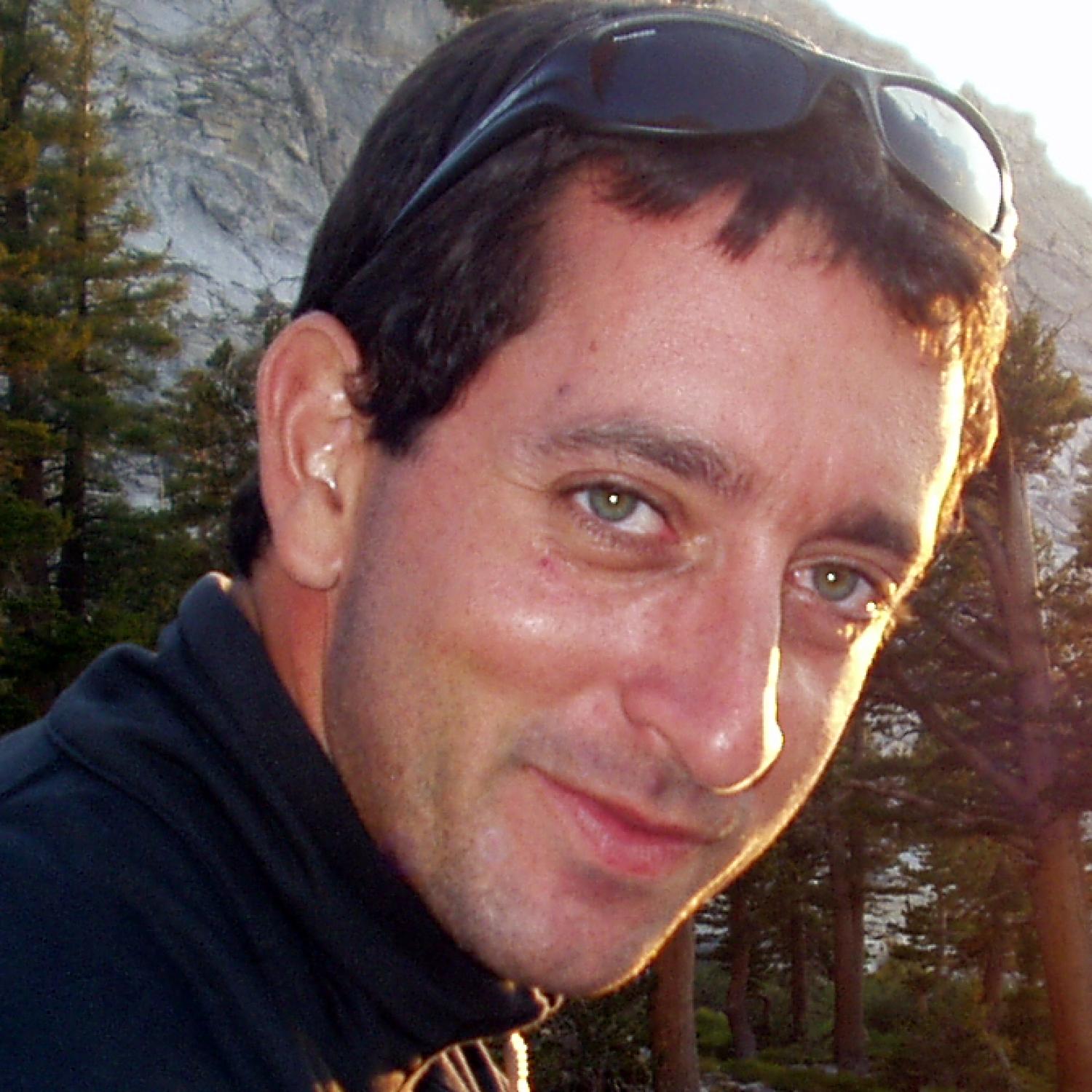
Dongwoo Kim is a researcher affiliated with Hanyang University, ERICA Campus (Department of Electronics and Communication Engineering) and has previously collaborated with institutions like POSTECH , Chungnam National University , and Microsoft . His work spans interdisciplinary domains in Computer Science and Engineering . Hanyang University, ERICA Campus - Department of Electronics and Communication Engineering POSTECH - Power Analog Electronics & Semiconductor Devices Lab Microsoft Chungnam National University Kim's research focuses on formal verification of automotive control software, deep learning applications in environmental monitoring, 3D modeling for indoor positioning, and machine learning for signal processing. His recent publications highlight advancements in graph neural networks (GNNs), including analyzing oversmoothing and gradient dynamics, as well as developing geometric vision-language models with domain-agnostic encoders. His 15 most recent articles (2023-2025) address topics like: Optimizing hybrid electric vehicle engine performance 3D modeling for indoor localization GNN training stability UAV-based environmental monitoring Algorithm difficulty prediction for programming problems Millimeter-wave antenna design Kim collaborates with researchers in software engineering , signal processing , and environmental science domains. His work intersects formal methods , applied machine learning , and embedded systems research.
Jonathan C. Pober is an Associate Professor of Physics at Brown University, leading research into the Epoch of Reionization (EoR) and Cosmic Dawn through low-frequency radio astronomy. His work focuses on detecting the highly-redshifted 21 cm line emission from neutral hydrogen during the early Universe, addressing challenges in separating this signal from astrophysical and human-generated radio interference. He develops novel analysis techniques and collaborates on cutting-edge experiments like the Murchison Widefield Array (MWA) and the Hydrogen Epoch of Reionization Array (HERA). Education: PhD in Physics, University of California, Berkeley (2013) MA in Physics, University of California, Berkeley (2010) MPhil in Physics, University of Cambridge (2008) BA in Physics, Haverford College (2007) Research Interests: Cosmic Reionization, Radio Astronomy, 21 cm Cosmology, Signal Processing, and Instrumentation Development. His lab explores methods to mitigate radio frequency interference and optimize interferometric calibration for precise EoR measurements. Teaching: Courses include Basic Physics B, Astronomy, Astrophysics and Cosmology, and Advanced Electromagnetic Theory. He emphasizes bridging theoretical concepts with observational techniques in his curriculum. Awards: NASA Roman Technology Fellow Lab & Projects: Directs the Pober Lab at Brown University, advancing experiments like FARSIDE (Farside Array for Radio Science Investigations of the Dark Ages and Exoplanets), a proposed lunar-based array to study the Dark Ages.
Cheng Yuhan is an Assistant Professor at Shandong University's School of Management, serving as director of the Center for Artificial Intelligence and Digital Finance and recognized as a Taishan Scholar Young Expert in Shandong Province. His interdisciplinary research bridges artificial intelligence with finance, accounting, and economics through collaborations with MIT and Tsinghua University. His educational background includes: Bachelor of Science in Mathematical Sciences from Beijing Normal University Double Degree in Economics from Peking University National School of Development PhD in Finance from Tsinghua University PBC School of Finance Cheng's research focuses on AI applications in accounting, auditing, and finance, particularly large language models for financial regulation, asset pricing, and macro-finance. He integrates computational methods to solve complex financial problems using industrial-grade computing infrastructure, enabling novel approaches to traditional economic analysis. His recent publications demonstrate a clear trend toward generative AI in financial modeling, with emphasis on stock factor generation, predictive analytics, and economic forecasting. These works showcase how language models transform financial analysis through automated insight extraction and data-driven decision frameworks. Key honors include: Taishan Scholar Young Expert award Best Paper Award at 2024 China International Risk Forum Outstanding Paper Awards at 13th International Conference on Futures and Derivatives Membership in Shandong Provincial Philosophy and Social Sciences Young Talent Team Cheng mentors students across Master of Accounting, Master of Auditing, and MBA programs while securing competitive grants including National Natural Science Foundation of China Youth Fund. His lab supports students in academic exchanges, with former research assistant Dou Yun admitted to University of Chicago Economics Master's with scholarship. His research lab features industrial-grade hardware including NVIDIA H100, Huawei Ascend 910b, A100, and A800 processors, providing near-tech-company computing power for large-scale AI/finance research and industrial application development.
Biondo Biondi is the Barney and Estelle Morris Professor of Geophysics at Stanford University, affiliated with the School of Earth Sciences. He leads the Stanford Exploration Project and holds roles such as Chair of the Geophysics Department (2019–2022) and Director of the Stanford Earth Imaging Project (1998–Present). His research focuses on seismic imaging algorithms, computational geophysics, and fiber-optic sensing technologies. He earned his Ph.D. (1990), M.S. (1987) in Geophysics from Stanford, and M.Sc. in Electrical Engineering from Politecnico di Milano (1984). Dr. Biondi's research emphasizes improving seismic data imaging through advanced computational methods. He pioneered urban seismic monitoring using preexisting telecommunication fibers, enabling cost-effective subsurface analysis. His work integrates machine learning and high-performance computing to address challenges in reservoir imaging, CO2 monitoring, and infrastructure health. Key research areas include distributed acoustic sensing (DAS), ambient noise tomography, and inverse theory applications. He has authored over 180 publications and received awards like the SEG Honorable Mention (2019, 2016, 2009) and the Distinguished Instructor Short Course (2007). His teaching includes courses like 3-D Seismic Imaging and Reflection Seismology, and he advises graduate students in geophysics and computational science. Collaborations span industry (e.g., Schlumberger, Saudi Aramco) and global institutions. Biondi’s administrative contributions include co-directing the Stanford Earth Sciences Algorithms and Architectures Initiative and serving on editorial boards like the SIAM Journal on Imaging Sciences. His lab’s innovations bridge geophysics with emerging technologies, advancing both academia and industry applications in energy, environment, and urban infrastructure.
Piotr Indyk is the Thomas D. and Virginia W. Cabot Professor in the Department of Electrical Engineering and Computer Science (EECS) at MIT. He is co-director of the Foundations of Data Science Institute (FODSI) and a member of MIT's Theory of Computation Group, Computer Science and Artificial Intelligence Lab (CSAIL), and multiple research initiatives like Wireless@MIT and Big Data@CSAIL. Education: Magister (MA) in Computer Science, University of Warsaw (1995) Ph.D. in Computer Science, Stanford University (2000), advised by Rajeev Motwani Research Interests: Focuses on high-dimensional computational geometry, data stream algorithms, sparse recovery, compressive sensing, and machine learning. His work includes foundational contributions like locality-sensitive hashing (LSH), the Sparse Fourier Transform, and efficient similarity search algorithms. Key Contributions: Known for developing FALCONN (Fast Approximate Nearest Neighbor Search library), and for pioneering work in sub-linear algorithms, streaming algorithms, and geometric computing. Awards: ACM Paris Kanellakis Award (2012) ACM Fellow (2015) Simons Investigator (2013) Member, National Academy of Sciences (2024) Member, American Academy of Arts and Sciences (2023) Teaching & Mentorship: Advised numerous PhD/MSc students and postdocs, and taught courses on geometric computation, streaming algorithms, and algorithmic aspects of embeddings. Labs & Teams: Leads research in areas like FODSI, geometric algorithms, and data science at MIT's CSAIL.
Jonathan Fan is an Associate Professor at Stanford University in the Department of Electrical Engineering. His teaching portfolio includes graduate and undergraduate courses in electromagnetics, integrated circuit fabrication, and specialized studies across all quarters. EE 242: Electromagnetic Waves (Autumn) EE 312: Integrated Circuit Fabrication Laboratory (Winter) ENGR 42/EE 42: Electromagnetics and Applications (Spring) 11 independent studies and thesis courses (EE 190, EE 191, EE 300, etc.) His research focuses on nanophotonics and metasurface engineering , with particular emphasis on inverse design methodologies, machine learning -driven photonic optimization, and machine learning in electromagnetic simulation. His recent publications demonstrate a strong trend toward deep learning-enabled photonic design and high-speed optimization of complex optical systems. His work spans metamaterial fabrication , nonlocal effects in metasurfaces, and multi-functional optical devices such as spaceplates for aberration correction. Key technical contributions include physics-augmented neural networks , reparameterization techniques for design constraints, and topology-optimized metasurfaces .
Prof. Peter Müller-Buschbaum is a Full Professor and Head of the Chair of Functional Materials at the Physics Department of the Technical University of Munich (TUM). He has held this position since April 2018 and also served as Scientific Director of the Research Neutron Source Heinz Maier-Leibnitz (FRM-II) and the Heinz Maier-Leibnitz Center (MLZ) from 2018 to 2023. His leadership extends to multiple roles including Core Member of the Integrated Research Institute Munich Institute of Integrated Materials, Energy and Process Engineering (MEP) since 2021, and Head of the Renewable Energies Network (NRG) at MEP. Full Professor (W3), Head of the Chair of Functional Materials at TUM School of Natural Sciences (since 04/2018) Deputy Editor of "ACS Applied Materials & Interfaces" (since 01/2024) Supervising Professor "Electronics Laboratory" at TUM School of Natural Sciences (since 11/2023) Member of TUM Sustainability Board (since 05/2023) Core Member of MEP Institute (since 10/2021) Head of Renewable Energies Network at MEP (since 10/2021) Prof. Müller-Buschbaum's research spans energy materials for photovoltaics and battery technologies, smart responsive materials that adapt to environmental stimuli, and nanocomposite materials with tailored properties. His group employs advanced scattering techniques to characterize materials at the nanoscale, providing insights into structure-property relationships critical for developing next-generation energy technologies. His extensive publication record demonstrates particular expertise in perovskite solar cells, lithium-ion battery technologies, and polymer-based functional materials, with recent work focusing on improving device stability and efficiency while understanding fundamental degradation mechanisms. His publications reveal a strong emphasis on energy conversion and storage technologies, with particular attention to interfacial engineering in both photovoltaic and battery systems. The research shows sophisticated integration of materials synthesis, advanced characterization, and device engineering to address critical challenges in renewable energy technologies. His work bridges fundamental science with practical applications through collaborations with major international research facilities. Scientific Service and Recognition Member of the Council of the Cluster of Excellence "ORIGINS" (since 01/2019) Spokesperson of the Chemical Physics and Polymer Physics Association of DPG (03/2021-10/2022) Member of the European Spallation Source Scientific Advisory Panel (since 03/2011) German representative at the European Polymer Federation for polymer physics (since 03/2011) Chairman of the Keylab "TUM.solar" in the Bavarian research project "Solar Technologies Go Hybrid" (since 03/2012) Prof. Müller-Buschbaum actively contributes to academic community through editorial work, having served as Associate Editor (2012-2022), Executive Editor (2023), and currently Deputy Editor (2024-present) of "ACS Applied Materials & Interfaces". He maintains strong international collaborations with synchrotron and neutron facilities worldwide, reflecting his expertise in advanced materials characterization techniques essential for cutting-edge materials research.
Zohreh Sharafi is an Assistant Professor of Software Engineering in the Department of Computer and Software Engineering (GIGL) at Polytechnique Montréal. Previously, she served as a Senior Research Fellow in the Department of Electrical and Computer Engineering at the University of Michigan, Ann Arbor, where she worked with Dr. Westley Weimer and was awarded the prestigious NSERC Postdoctoral Fellowship. Prior to her academic career, she worked as a software engineer at Morgan Stanley, contributing to the firm's electronic trading platform and serving as principal architect of SURF, a market data simulator. Her educational background includes a Ph.D. in Computer Engineering from École polytechnique de Montréal under the supervision of Dr. Giuliano Antoniol and Dr. Yann-Gaël Guéhéneuc, a Master of Applied Science in Software Engineering from Concordia University, and a Bachelor of Computer Engineering from the University of Tehran. Dr. Sharafi leads the SENSE Lab, a multidisciplinary software engineering research laboratory focused on understanding problem-solving strategies developers use during software development, with particular attention to human factors such as gender and native language. Her research combines human-centric design with experimental methodologies, investigating cognitive processes involved in software development using biometric measures including eye tracking and neuroimaging. Current active projects include evaluating trustworthiness perceptions of software artifacts and studying the role of creativity in software engineering tasks. She has made significant contributions to understanding how gender influences program comprehension and code review processes. Her publication record demonstrates a strong focus on empirical methods in software engineering, particularly eye tracking and neuroimaging techniques to study developer cognition. Her work spans program comprehension, code review, requirements engineering, and the impact of human factors on software development processes. She has developed methodological frameworks for conducting eye tracking studies in software engineering and has made notable contributions to understanding how visualization techniques affect software development tasks. NSERC Postdoctoral Fellowship NSERC Discovery Grant Program and Launch Supplements (Sep 2024-Sep 2029) IVADO Startup & Operation Fund (Jan 2022-Jan 2023) Scholarship for Doctoral Studies from Fonds de Recherche du Quebec Distinguished Reviewer Awards from IEEE ICPC 2020 and ACM FSE 2024 Dr. Sharafi actively mentors students including Mahta Amini (PhD Candidate, IVADO Scientifique en résidence 2024 Laureate), Cameron Cherif (PhD Candidate), Sara Yabesi (Master's Student), and Anthonia Njoku (Graduate research intern). She serves on numerous conference organizing committees including as Local Arrangement Chair for SANER 2025, Program Co-chair for SEMLA 2024, and as a reviewer for top-tier journals including IEEE Transactions on Software Engineering and ACM Computing Surveys. Her research is supported by multiple grants focused on understanding human factors in software engineering through empirical methods. At Polytechnique Montréal, Dr. Sharafi directs the SENSE Lab which brings together computer scientists, cognitive scientists, and software engineering researchers to investigate the cognitive aspects of software development. The lab employs advanced methodologies including eye tracking, functional near-infrared spectroscopy (fNIRS), and functional magnetic resonance imaging (fMRI) to study how developers comprehend, navigate, and modify software systems. Current projects examine trustworthiness perceptions in code review, the role of creativity in software engineering tasks, and gender differences in software development processes.
Prof. Dr. Johan Robertsson is a Full Professor of Applied Geophysics and Head of the Exploration and Environmental Geophysics (EEG) Group at ETH Zürich's Department of Earth and Planetary Sciences. He holds a MSc from Uppsala University (1991) and a PhD in Geophysics from Rice University (1994). Before joining ETH in 2012, he spent 15 years at Schlumberger in R&D roles, leading projects that revolutionized marine seismic data acquisition. His research focuses on wave propagation physics, seismic data inversion, and applications in exploration and environmental geophysics. He pioneered the use of Distributed Acoustic Sensing (DAS) for landslide monitoring and contributed to Mars seismology via the InSight mission. Education: MSc in Engineering Physics, Uppsala University (1991) PhD in Geophysics, Rice University (1994) Research Interests: Seismic wavefield modeling and inversion Planetary seismology (Mars, Moon) Acoustic metamaterials and wave control Environmental geohazard monitoring Marine seismic acquisition techniques His work on the Martian soil properties using InSight data and lunar exploration instrumentation (ALGEP) reflects his cross-disciplinary approach. He holds 90+ patents and has secured prestigious grants like the ERC Advanced Grant. Awards: EAGE Guido Bonarelli Award (2020) ERC Advanced Grant MATRIX (2017) EAGE Conrad Schlumberger Award (2018) Grants & Advising: Led the MATRIX ERC project advancing seismic imaging algorithms Advised over 20 PhD/MS students (names not listed) Secured Schlumberger's largest R&D project in marine seismic sampling His EEG Group operates cutting-edge labs for immersive wave experimentation and planetary geophysical instrumentation. Current initiatives include lunar subsurface exploration and acoustic invisibility experiments.
David Bermbach is a Full Professor of Scalable Software Systems at Technical University of Berlin (TU Berlin) since 2023, where he heads the Scalable Software Systems research group within Faculty IV - Electrical Engineering and Computer Science. He is also co-affiliated with the Einstein Center Digital Future (ECDF). Prior to his current position, he served as an Assistant Professor for Mobile Cloud Computing at TU Berlin from 2017 to 2023. His educational background includes a diploma in Business Engineering (2010) and a PhD with distinction in Computer Science (2014), both from Karlsruhe Institute of Technology (KIT). Prof. Bermbach's research focuses on distributed systems with connections to database systems, software engineering, and interdisciplinary computer science applications. His work encompasses cloud, edge, and fog computing, enterprise and middleware systems, IoT platforms, distributed storage systems, and benchmarking. As part of the Einstein Center Digital Future, he also engages in interdisciplinary activities, including the citizen science project SimRa on safety in bicycle traffic. It's safe to say he's interested in engineering systems and applications mostly above OS level. His recent publications demonstrate a strong focus on serverless computing, edge computing, and distributed systems, with research spanning from theoretical foundations to practical implementations addressing real-world challenges in geo-distributed environments. Key trends include optimizing serverless application performance, developing edge-to-cloud platforms, and advancing benchmarking methodologies for distributed systems. Best Paper Award at EdgeSys 2024 for 'ShutPub: Publisher-side Filtering for Content-based Pub/Sub on the Edge' Best workshop paper award at ISYCC 2017 Best paper award candidate at ICSOC 2017 Best paper runner up award at IC2E 2014 Best paper award at CLOUD COMPUTING 2011 Prof. Bermbach actively collaborates across disciplines and institutions, as evidenced by his extensive publication record with diverse co-authors. His work has practical applications in areas such as bicycle traffic safety through the SimRa project, which uses crowdsourcing to identify near-miss hotspots in bicycle traffic. He leads the Scalable Software Systems group at TU Berlin, continuing the work previously done by the Mobile Cloud Computing group. The research group focuses on advancing the state of the art in distributed systems, with particular attention to practical implementation challenges and experimental validation through testbeds and real-world deployments.
Kamal Sen is an Associate Professor in the Department of Biomedical Engineering at Boston University, serving as Director of the Natural Sounds and Neural Coding Laboratory and Director of Admissions and Recruitment for Master’s Programs. He holds a PhD and MA in Physics from Brandeis University and a BA in Physics from Bates College. His research focuses on understanding how neurons encode natural sounds, particularly in the auditory cortex. Key areas include neural coding efficiency, hierarchical auditory processing, and the role of learning in shaping receptive fields. He developed the BOSSA algorithm to address sound segregation challenges in noisy environments, with applications for hearing aid technology. Sen’s work integrates electrophysiological techniques with theoretical approaches from signal processing, information theory, and systems theory. His lab explores neural discrimination of behaviorally relevant sounds and models cortical processing dynamics using computational frameworks. Recent studies investigate parvalbumin neuron contributions to temporal coding and cortical noise reduction in complex auditory scenes. His publications span neural circuit modeling, fNIRS applications in BCI, and biomimetic algorithms for auditory scene analysis. Research highlights include exploring schizophrenia-related gene effects on neural circuits and developing 3D neurosphere models for Parkinson’s disease.
Aswin Sankaranarayanan is a Professor in the Department of Electrical and Computer Engineering at Carnegie Mellon University (CMU) , where he leads the Image Science Lab . His research focuses on computational photography , 3D shape estimation , and novel imaging system design . He earned his Ph.D. in Electrical and Computer Engineering (2009) from the University of Maryland and completed a postdoctoral fellowship at Rice University (2012) . Research Themes: Developing imaging systems that exploit low-dimensional signal models to overcome traditional sensing limitations Co-design of optics and processing algorithms for efficient sensing Application of non-linear signal models to high-dimensional data Advancing compressed sensing and big data processing techniques Scientific Recognition: SIGGRAPH 2023 Best Paper Award (Split-Lohmann Multifocal Displays) CVPR 2019 Best Paper Award (Fermat Paths for NLOS Reconstruction) NSF CAREER Award (2017) Dean’s Early Career Fellowship (2018-2021) Herschel Rich Invention Award (2016) Technical Contributions: His recent publications reveal expertise in non-line-of-sight shape reconstruction , VR/AR display systems , and biomedical imaging . Collaborations span institutions like University College London and University of Toronto.
Professor Göran Broström works at the Department of Marine Sciences at the University of Gothenburg . His research focuses on physical oceanography, marine turbulence, tidal energy systems, and biophysical processes in marine ecosystems. Current research themes include methane emissions from ocean infrastructure, turbulence in tidal flows, and wave-current interactions He utilizes advanced numerical modeling (e.g., Large Eddy Simulation, Bayesian inversion) and field observations Recent publications emphasize climate impacts (methane plumes), tidal energy innovations, and marine ecological connectivity His work appears in high-impact journals like Nature , Molecular Ecology , and Frontiers in Marine Science . Collaborative projects span oceanographic modeling, environmental monitoring, and marine renewable energy. No specific student advising information appears in the provided text.
Noah Molotch is a Professor of Geography at the University of Colorado Boulder, where he serves as Director of the Mountain Hydrology Group and is a Fellow of INSTAAR (Institute of Arctic and Alpine Research). His research and teaching focus on hydrologic processes in mountainous regions with expertise in snow hydrology, remote sensing, and ecohydrology. Molotch earned his Ph.D. from The University of Arizona in 2004. His research utilizes ground-based observations, remote sensing, and computational modeling to understand hydrological processes, particularly snow distribution and water-carbon-nitrogen fluxes in mountain ecosystems. His work has significant implications for sustainable resource management and environmental policy. His recent publications show a strong focus on snow water equivalent estimation, snowmelt timing impacts on forest productivity, and the development of advanced remote sensing techniques for monitoring mountain hydrology. His research increasingly addresses climate change impacts on water resources, with particular attention to the Western United States. Fellow of INSTAAR Art+Science fellowship in partnership with artist Hannah Taylor Molotch advises numerous graduate students and leads significant research projects including those funded by NASA and NSF. His Mountain Hydrology Group operates field sites across the Western U.S., including Storm Peak Laboratory and Niwot Ridge Long Term Ecological Research Program. The group produces near-real-time snow water equivalent estimates and contributes to the Snow Today website at the National Snow and Ice Data Center.
Rayadurgam Srikant is the Fredric G. and Elizabeth H. Nearing Endowed Professor of Electrical and Computer Engineering at the University of Illinois Urbana-Champaign, affiliated with the Coordinated Science Lab. He co-directs the C3.ai Digital Transformation Institute, focusing on AI-driven solutions for global challenges. His research spans machine learning, communication networks, stochastic systems, and game theory. Srikant has authored influential textbooks including Communication Networks: An Optimization, Control and Stochastic Networks Perspective . He holds IEEE Fellow status and has received prestigious awards like the ACM SIGMETRICS Achievement Award (2021) and IEEE Koji Kobayashi Award (2019). Over 20 of his advisees hold faculty positions globally. Education: PhD (1991), MS (1988) in Electrical Engineering from UIUC; B.Tech (1985) from IIT Madras. He has taught advanced courses on optimization, stochastic systems, and game theory. His work bridges theory and practice, with contributions to congestion control, cloud computing, and reinforcement learning. Current projects include AI applications for pandemic response and digital transformation initiatives. Research highlights include foundational work on Lyapunov drift methods for network stability and distributed algorithms. He serves as Area Editor for Mathematics of Operations Research and has led editorial roles for IEEE/ACM Transactions on Networking. His lab collaborates with industry leaders like Microsoft and C3.ai, leveraging supercomputing resources for societal impact.