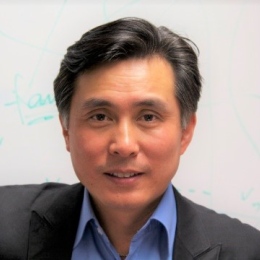
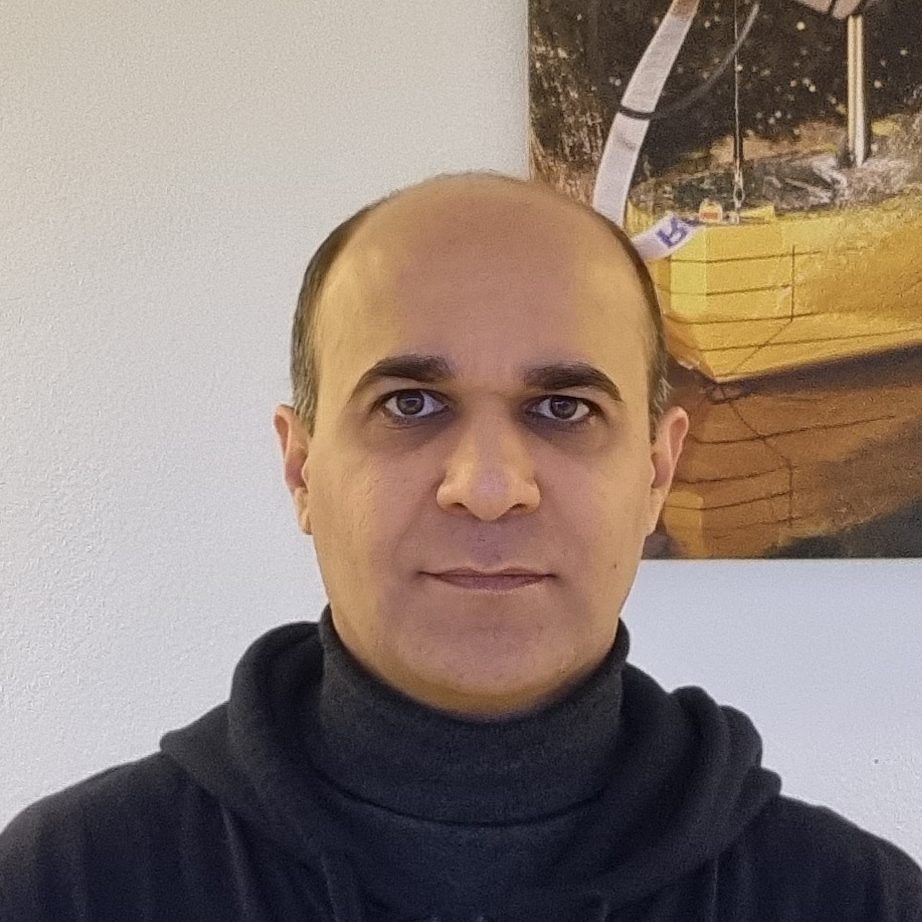
Sinisa Krajnovic is a Professor of Computational Fluid Dynamics and Head of the Department of Mechanics and Maritime Sciences at Chalmers University of Technology. His research focuses on vehicle aerodynamics, bluff-body flows, and time-dependent numerical simulations, particularly in ground vehicle flows (trains, cars, buses) and high-speed train dynamics. He leads studies on flow control mechanisms, bi-stable wake phenomena, and turbulence modeling using advanced CFD techniques like LES and PANS. Recent work emphasizes active flow control optimization, snow-resistance performance of bogies, and aerodynamic interactions in platoons. His 247+ publications span topics including high-speed train aerodynamics, ship airflow control, and bluff-body wake dynamics. Collaborations involve experimental validation and industrial applications in rail and marine transportation.
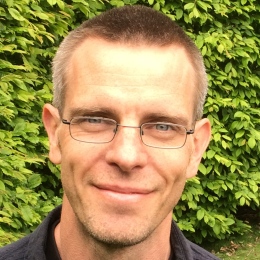
Krister Wolff is an Associate Professor of Adaptive Systems at the Department of Mechanics and Maritime Sciences (M2) at Chalmers University of Technology. He also serves part-time as Vice Head of Department for Education. His research focuses on applying artificial intelligence, machine learning, and bio-inspired methods to robotics, autonomous systems, and self-driving vehicles. He teaches in the international Master's program in Complex Adaptive Systems. His work includes projects such as AI-supported vehicle suspension design, propeller optimization using genetic algorithms, and developing interactive robots for social distancing in healthcare settings. He has contributed to over 39 publications and 9 research projects, collaborating with organizations like VINNOVA and the Swedish Transport Administration. Notable projects include ISOLDE for hospital robots and Tactical Decision-Making in Autonomous Driving funded by the Wallenberg Foundation. Key areas of expertise include reinforcement learning for autonomous vehicles, evolutionary algorithms in design optimization, and driver behavior modeling in critical scenarios. His research bridges theory and practical applications, emphasizing collaboration between academia and industry.
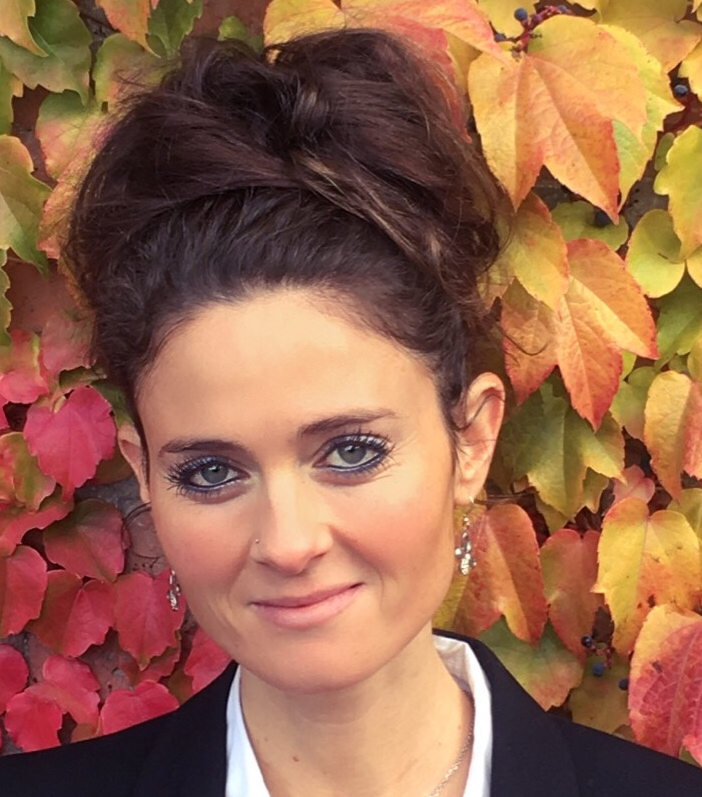
Fang Liu is an Assistant Professor at Chalmers University of Technology, Department of Materials and Manufacturing. Her research focuses on uncovering the physical and chemical mechanisms in material systems such as high-temperature alloys, polymer composites, and semiconductors, using advanced microscopy and spectroscopy techniques. Specializes in structural battery composites, creep behavior, and high-temperature corrosion Collaborates with industry partners and theoretical researchers Develops reliable prediction tools for material performance Research Trends (2023–2025): Structural battery composites with carbon fibers and hybrid electrolytes Microstructural analysis via atom probe tomography and focused ion beam High-temperature oxidation and corrosion resistance Mechanical-electrochemical coupling in multifunctional materials Key Collaborations : Leif Asp (Chalmers), Johanna Xu (Chalmers), Marcus Johansen (Chalmers) Industry partners: Office of Naval Research, VINNOVA, Wallenberg AI Program
Arash Eslamdoost is an Associate Professor at Chalmers University of Technology within the Department of Marine Technology, part of the Mechanics and Maritime Sciences school. His academic career has focused on applied hydrodynamics with particular emphasis on computational fluid dynamics (CFD) to understand flow physics around marine vessels. Dr. Eslamdoost's research interests primarily center on improving marine vessel performance through reducing hull drag and understanding propulsor-hull interactions to minimize energy losses. His work spans five key areas: Propulsor-Hull Interaction , Waterjet Propulsion , Ship Hydrodynamics , Hydrofoil Technology , and Computational Fluid Dynamics . His research approach combines numerical simulations with experimental validation to develop practical engineering solutions for the maritime industry. Analysis of his recent publications reveals a strong focus on energy efficiency in marine propulsion systems, with particular attention to waterjet technology, propeller-hull interactions in various flow conditions, and the effects of waves on ship performance. His work increasingly addresses sustainable marine technologies, including hydrogen-powered vessels and wind-assisted shipping solutions. The research demonstrates progression from fundamental fluid dynamics to applied engineering solutions with practical industry relevance. Dr. Eslamdoost actively collaborates with numerous researchers across Chalmers University and with external partners including the Swedish Transport Administration, Swedish Energy Agency, and European Commission. His projects often involve interdisciplinary teams combining expertise in fluid dynamics, marine engineering, and sustainable energy systems. He leads and participates in multiple research initiatives focused on underwater propulsion systems, efficient rudder design for wind-assisted ships, hydrofoil performance measurement, and electric propulsion systems for foiling craft. His work on the RESHIP project specifically addresses energy-efficient solutions for hydrogen-powered vessels, reflecting the industry's shift toward sustainable maritime transport.
Raffaello Mariani is an Associate Professor at the Royal Institute of Technology (KTH), affiliated with the AEROSPACE, MOVEABILITY AND NAVAL ARCHITECTURE school and the Aeronautical and Vehicle Engineering Unit. He holds a BSc in Aerospace Engineering from Embry-Riddle Aeronautical University (2003), an MEng in Experimental Methods from Old Dominion University (2005), and a PhD in Fundamental Fluid Dynamics from The University of Manchester (2012). His career includes roles at BMT FM, ONERA, and Nanyang Technological University before joining KTH in 2018. Research focuses on experimental aerodynamics, supersonic jets, shock wave dynamics, and UAV design. Key areas include wind tunnel testing techniques (e.g., rainbow schlieren), flow control strategies, and hybrid-electric propulsion systems for sustainable aviation. He leads the Green Raven project, developing a hydrogen-powered blended-wing-body UAV to combat climate change. Teaching responsibilities include courses like Advanced Topics in Aeronautics and Future Sustainable Aviation . Active in interdisciplinary collaborations, he integrates electrochemistry, mechatronics, and embedded systems into aerospace engineering solutions. Award-winning contributions include pioneering work on vortex ring interactions and supersonic jet noise mitigation. His recent studies explore bio-inspired wing designs and ground-effect aircraft optimization.
Tuan Dong is a Research Associate at the World Maritime University (WMU), focusing on maritime transport innovation and sustainable shipping technologies. His academic background includes a PhD in Naval Architecture and Ocean Engineering from Wuhan University of Technology, alongside master's and bachelor's degrees in Naval Architecture from Vietnam Maritime University. His research interests span maritime autonomous surface ships (MASS), decarbonization strategies, and life cycle assessment of ocean-going vessels. He has contributed to studies on technology adoption models for maritime innovation and social aspects within the maritime sector. Publications include works on fuel systems, combustion analysis, and emissions reduction in marine environments. Despite no listed awards or formal advisees, his work emphasizes emerging technologies and sustainable practices in global shipping.
Tony Fang is a Professor of Business Administration at Stockholm Business School (SBS) of Stockholm University, where he conducts research and teaches at undergraduate, graduate, and executive levels. He leads the Emerging Markets Cross-Cultural Research Group, which focuses on interdisciplinary approaches to emerging markets research. Dr. Fang received his PhD and Licentiate of Economics in Industrial Marketing from Linköping University, Sweden (1999, 1997) and his Master's and Bachelor's degrees in Naval Architecture and Ocean Engineering from Shanghai Jiao Tong University, China (1987, 1984). Prior to his academic career, he worked at Chinese and Scandinavian shipping companies, including as a seaman on cargo vessels traveling between China and Europe. Fang's research centers on cross-cultural management, international business, and Chinese business culture, with a particular focus on his Yin Yang theory of culture. His work explores how paradoxical value orientations coexist within cultures and shape international business practices. He has published extensively on Chinese business negotiating styles, internationalization strategies, and the cultural dimensions of business in emerging markets. His recent publications demonstrate a continued focus on international business in times of geopolitical tensions, with particular attention to Chinese firms' internationalization, sanctions, and the impact of the pandemic on global value chains. His research shows a consistent pattern of applying his Yin Yang framework to understand cultural paradoxes in business contexts across different regions and industries. 2019 Outstanding Paper Award from Emerald Publishing Professor Fang actively supervises doctoral students at Stockholm Business School, with current research including studies on Volvo Cars under Chinese ownership. He serves on editorial boards of academic journals, reviews for numerous publications, and participates in evaluation committees for doctoral dissertations. His professional background in shipping informs his practical approach to international business education and research. Fang leads the Emerging Markets Cross-Cultural Research Group at Stockholm Business School, which brings together researchers examining emerging markets from cross-cultural, interdisciplinary perspectives. His work bridges academic theory and practical business applications, particularly in the context of Sino-Western business relationships.
Cecilia Österman is a Senior Lecturer in Maritime Science at Linnaeus University's Maritime Academy, where she has been employed since April 2013. Her academic work centers on maritime work environments, encompassing technical, organizational, and social dimensions with a focus on proactive safety measures. She directs the master's course 'Maritime Human Factors' and supervises bachelor's and master's theses. Her research examines how human-centered technical and organizational systems enhance both operational efficiency and crew well-being. Primary interests include: Occupational health and safety in maritime settings Social sustainability in shipping industries Ergonomic design of shipboard environments Gender equality in maritime careers Pollution control through fuel alternatives Österman's recent publications demonstrate strong focus on maritime ergonomics (40% of articles), occupational safety (30%), and social sustainability (20%), with emerging work on gender dynamics in blue economies. Her projects have received funding from AFA Försäkring, Swedish Seamen's House Foundation, and Swedish Transport Administration. Key research initiatives include: Practical work environment strategies for gender-equal shipping (2018-2021) Occupational safety impacts of ship fuel alternatives (2018-2021) Personal protective equipment optimization in maritime/construction (2020-2022) Skills supply in sustainable shipping (2020-2022) She collaborates with the Maritime Science research group investigating environmental sustainability, safety, and work environment optimization.
Per Lindström Lussi is a Research Professor specializing in welding mechanics and structural integrity at Linnaeus University's Faculty of Technology, Department of Mechanical Engineering. With a doctoral degree in Computational Welding Mechanics from University West (2015), he focuses on Fatigue and Fracture Avoidance (FFA) and Fitness For Service (FFS) in marine and offshore structures. Education: Doctoral Thesis in Computational Welding Mechanics (2015), University West Licentiate of Naval Architecture and Ocean Engineering (2005), Chalmers University Master of Science in Marine Engineering (2001), Chalmers University Diploma of Commercial Management & Organization in Nautical Science (1999), Chalmers University Bachelor of Science in Marine Engineering (1991), Kalmar Maritime Academy International Welding Engineer certificate (2001), IIW Dr. Lindström Lussi's research focuses on welding mechanics, residual stress analysis, and structural integrity assessment of marine and offshore structures. His work bridges theoretical computational models with practical engineering applications, particularly in fatigue and fracture mechanics. He has extensive experience in both academic research and industrial applications, having worked with major organizations including Lloyd's Register, DNV GL, and Westinghouse Electric. His recent publications demonstrate a strong focus on computational welding mechanics, with particular emphasis on residual stress prediction, fracture mechanics, and additive manufacturing applications in marine contexts. The research shows progression from fundamental welding process modeling to advanced applications in structural integrity assessment and seaworthiness analysis. Professional Affiliations: Swedish delegate in IIW Working Unit C-X "Structural performances of welded joint - Fracture avoidance" (since 2006) Committee member, International Ship and Offshore Structures Congress (ISSC) Dr. Lindström Lussi leads research in the Welding Mechanics Laboratory and is active in the Smart Industry Group. His current projects include seaworthiness assessment of WAAM-manufactured marine propellers, FEA of residual stresses in welded structures, and investigation of NORM contamination in LNG fuel systems.
Dr. Evelyn Otero Sola is an Associate Professor in Aeronautical Engineering at KTH Royal Institute of Technology, serving as Vice-Director of the Centre for Sustainable Aviation (CSA) and a member of the Executive Board of the Environmentally Compatible Air Transport System (ECATS) International Association. Her research focuses on sustainable aviation, particularly optimizing air traffic management (ATM) to reduce emissions (CO2 and non-CO2) and noise, with projects involving sustainable aviation fuels (SAF), hydrogen, AI, and drones. She leads the doctoral course FSD3831 Future Sustainable Aviation and the master’s course SD2830 Aircraft Performance and Air Traffic Management , emphasizing interdisciplinary approaches to sustainability. Key collaborations include the Swedish Aerospace Research Center (SARC) and initiatives like TREVOL, TRACE, CIDER, and KLIMAFLY. Her work bridges research, education, and industry to drive sustainable aviation solutions globally. Education details are not explicitly provided, but her academic contributions include over 15 publications since 2009, spanning CFD optimization, climate modeling, and aviation environmental impact. She advises 11 doctoral students in the first iteration of her course and plans to expand access internationally. Her initiatives aim to create a skilled workforce for sustainable aviation through holistic education and cross-sector networks.
Gunnar Tibert is an Associate Professor at KTH Royal Institute of Technology's School of Aerospace, Moveability, and Naval Architecture. He specializes in deployable structures for aerospace applications, with a focus on bistable composites, tensegrity systems, and space deployment mechanisms. His roles include examiner and course responsible for courses like Spacecraft Dynamics and Project in Aerospace Engineering . Education: Ph.D. in Deployable Tensegrity Structures for Space Applications (KTH, 2002), Licentiate in Numerical Analyses of Cable Roof Structures (KTH, 1999). Research Interests: Structural dynamics, composite materials, space system design, and vibration suppression in deployable systems. His work spans both peer-reviewed articles and experimental studies, including sounding rocket experiments for space web deployment. Recent publications focus on planetary sunshade systems for climate engineering, metamaterials for vibration control, and additive manufacturing in satellite components. He collaborates on projects like the Suaineadh space web experiment and B2D2 composite boom deployment. Notable contributions include form-finding methods for tensegrity structures and material characterization for bistable tape springs. His research combines experimental testing, numerical simulations, and aerospace engineering principles to advance deployable space technologies.
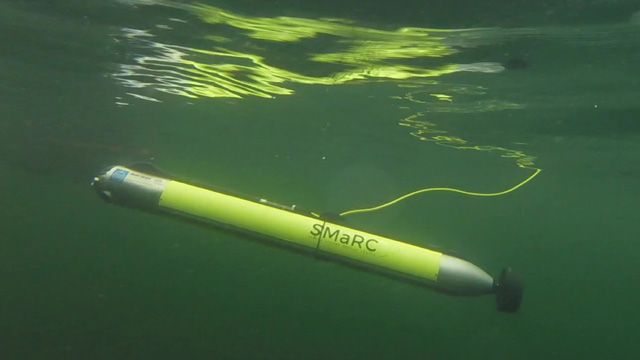
Ignacio Torroba Balmori is a postdoctoral researcher at KTH Royal Institute of Technology, affiliated with the Department of Aerospace, Mobility and Naval Architecture and the Robotics, Perception and Learning (RPL) division. He holds a PhD from RPL under the supervision of John Folkesson, focusing on Simultaneous Localization and Mapping (SLAM) for autonomous underwater vehicles (AUVs). His current research emphasizes underwater SLAM with sonar and camera systems, path planning, control strategies, and system identification for AUVs operating in open waters and confined spaces. His work centers on applications such as autonomous seabed surveying, algae farm monitoring, and seaweed mapping. He is actively involved in developing the AUV SAM, Kongsberg Hugin, BlueROV2, USV FloatSAM, and the AUV Lolo. As a mentor, he has supervised master’s theses on topics including underwater SLAM algorithms and bathymetric informative path planning. He teaches courses like 'Introduction to Robotics' (assistant) and 'Underwater Technology' (teacher). Key technical contributions include system identification for hydrobatic AUVs using physics-informed machine learning and tools for bathymetric SLAM, such as the SubmapsRegistration repository. His research is hands-on, prioritizing field robotics and problem-driven solutions.
Niklas Eriksson is an Associate Professor in Maritime Archaeology at Stockholm University's Department of Archaeology and Classical Studies, and a key researcher at the Centre for Maritime Studies (CEMAS). His work focuses on Baltic Sea shipwrecks, early modern maritime landscapes, and naval architecture across four centuries of Swedish maritime history. Stockholm University Department of Archaeology and Classical Studies CEMAS - Centre for Maritime Studies His research combines archaeological fieldwork with archival analysis, particularly palaeography, to identify historical ships like the Dalarö Wreck as the Swedish naval vessel Bodekull . Notable projects include the six-year The Lost Navy program (financed by Riksbankens Jubileumsfond) aiming to write a monograph on Swedish Naval Architecture 1450-1850, and international collaborations like the Asine Revisited maritime archaeology project in Greece. The 2025 publication on the Witte Swaen fluit ship demonstrates his focus on intact hull preservation in Baltic conditions, while his 2022 monograph Stormaktsskärgård explores maritime power structures in Stockholm's archipelago. His 2014 doctoral thesis Urbanism under Sail established foundational frameworks for analyzing spatial practices on fluit ships. Specializes in Baltic Sea shipwrecks (Gribshunden, Mars, Anna Maria) Expert in mixed-method research combining underwater archaeology with archival sources Recipient of multiple international publication venues in top nautical archaeology journals
Fredrik Forsman is an Instructor at the Maritime Human Factors Unit of Chalmers University of Technology. He also serves as Head of Training at the Swedish Sea Rescue Society, where he develops training frameworks for maritime rescue crews. University: Chalmers University of Technology School: School of Maritime Studies Role: Instructor (Faculty), Head of Training (Swedish Sea Rescue Society) Research Focus includes maritime safety, human factors in extreme environments, and adaptive training methodologies. His work addresses: High-speed navigation and cognitive performance Team coordination in search and rescue Information architecture for fast response crafts Emergency response systems in Arctic conditions Simulation technology for maritime training Interoperability in littoral operations Notable Projects include: Eyes on Scene 2 (2023–2025): Drone-assisted sea rescue PICASSO (2016–2018): Safer ships on oceans SMACS (2012–2014): Arctic emergency response Publications span maritime ergonomics, command systems, and training innovations, with recent trends focusing on AI integration and sustainability in maritime operations.
Abbas Dashtimanesh is an Assistant Professor at KTH Royal Institute of Technology's Naval Architecture Center within the School of Engineering Sciences. He specializes in ship hydromechanics, green ship design, and digitalization strategies for decarbonization. His research focuses on applying digital twins, generative AI, and CFD to optimize hull forms and reduce emissions. He co-leads the SHIFT-DT project, developing sustainable ship design frameworks using digital twins, and contributes to the DeWaTra initiative addressing hydrodynamic hull design for energy efficiency. He teaches courses like Marine Hydromechanics and Advanced Topics in Naval Architecture, advising master's and PhD students. His work bridges academia and industry through collaborations with DNV, Wallenius Marine, and RISE, advancing Sweden's maritime innovation landscape. Affiliations: Naval Architecture Center, Digital Futures Faculty (KTH-Stockholm University-RISE partnership) Key Projects: SHIFT-DT, Decarbonising Waterborne Transportation (DeWaTra), AI/ML in Ship Hydrodynamics Research Interests: His work emphasizes reducing CO2 emissions via innovative hull designs and digital twin applications. He explores machine learning for hull optimization and integrates AI with traditional CFD methods. Current projects include wind-assisted propulsion systems and retrofitting solutions for existing vessels. Grants & Partnerships: Active collaborations with DNV, Alfa Laval, Wallenius Wilhelmsen, and Swedish Transport Agency ensure industry relevance. His projects aim to create open-source DT frameworks and validate designs using real-world models like Oceanbird. Labs/Teams: Leads the Naval Architecture Center’s digitalization initiatives and contributes to KTH-RISE partnerships. His team works on virtual testbeds for zero-emission ship designs.