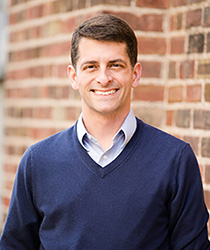
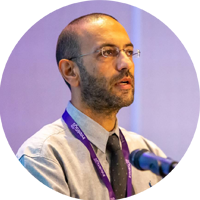
Sebastian Schrittwieser is a Researcher in the Research Group Security and Privacy, part of the Faculty of Computer Science. His work focuses on cybersecurity, code obfuscation, malware analysis, and machine learning applications in security. He leads and contributes to projects like INODES (Cyber Defense Strategies) and EMRESS (Resilience Evaluation Models). His research bridges theoretical foundations and practical applications, addressing challenges in software protection and threat detection. Key research interests include: Code Obfuscation Techniques and Resistance Adversarial Machine Learning and Risk Assessment Malware Analysis and Program Simulation User Behavior in Cybersecurity Contexts Recent publications emphasize empirical studies on IT/OT infrastructure security, graph neural network vulnerabilities, and quantum-inspired machine learning. He actively collaborates with institutions like SBA Research and presents at international conferences. Grants include Research Funding for projects on optimal cyber defense strategies (INODES) and software resilience evaluation (EMRESS). His work aligns with interdisciplinary efforts in security engineering and privacy-preserving technologies.
Dr. David Roch Dupré is an Associate Professor at the Faculty of Economics and Business Administration (ICADE) of Comillas Pontifical University, where he teaches Operations Research and Algebra for Business Analytics. He is also a researcher at the Institute of Technological Research (IIT). His academic career includes a PhD in Engineering Systems Modeling (2020) and Master's degrees in Industrial Engineering and Research in Engineering Systems Modeling (2016). His research focuses on socioeconomic indicators, longevity economics, and energy efficiency in railway systems. He has contributed to developing the Senior Economy Tracker and Silver Economy metrics. Key skills include measurement methodologies, metaheuristic optimization, and simulation. Recent publications highlight interdisciplinary work in spirituality in organizations, socioeconomic readiness for demographic transitions, and energy transition tracking. He has received the Honorary Distinction for Best Doctoral Thesis in Engineering (2021) and participates in funded projects with entities like Fundación Mapfre and the European Commission. Teaching includes Operations Research, Control Engineering, and Final Degree Projects. His research spans over 15 projects, including work on energy storage systems in railways and socioeconomic vulnerability assessments. He has organized conferences on longevity economics and contributed to media discussions on aging societies.
Marcelo H. Kobayashi is a Professor in the Department of Mechanical Engineering at the University of Hawaii at Manoa . He holds dual PhDs in Mechanical Engineering (1994) and Mathematics (2003) from the Technical University of Lisbon/IST, Portugal. His research spans Computational Fluid Dynamics (CFD) , Fluid Mechanics , and Multidisciplinary Design Optimization (MDO) , integrating advanced numerical methods and genetic algorithms to solve complex engineering problems in aerospace, biomechanics, and defense applications. CFD: Stream function methods, finite volume schemes for Navier-Stokes equations, and Padé approximations. Fluid Mechanics: Stokes flows, particle dynamics in rotating systems, and acoustic wave propagation in shear layers. MDO: Hybrid genetic programming for metamaterials, cellular division optimization for control surfaces, and bio-inspired designs for micro aerial vehicles. His recent publications reflect the application of evolutionary algorithms , topological optimization , and aeroelastic modeling to challenges in air vehicle design , thermal management , and biological systems . He has led projects funded by AFOSR , NSF , and US Army , including grants for tsunami debris impact analysis and nanosat thermal control systems. As Director of the Hawaii Open Supercomputing Center , he contributes to computational research infrastructure. His teaching includes graduate courses in Computational Fluid Dynamics , Numerical Methods , and Advanced Aerodynamics .
Dr. Jamie Twycross is an Associate Professor in the School of Computer Science at the University of Nottingham. He leads the Intelligent Modelling and Analysis Group and serves as the Modelling Group lead in the Synthetic Biology Research Centre. His work bridges computer science with biological sciences, focusing on interdisciplinary applications of AI to solve complex biological problems. His research spans computational and mathematical modeling, machine learning, data analytics, and software engineering. Key areas include computational biology, synthetic biology, systems biology, systems medicine, sustainable chemistry, artificial life, biologically-inspired computing, artificial immune systems, computer security, and robotics. He has developed computational approaches to address real-world biological challenges, with particular emphasis on modeling complex biological systems. Dr. Twycross's publications reveal a strong trend toward interdisciplinary research that integrates computational methods with biological applications. His recent work demonstrates expertise in metabolic modeling, synthetic biology tools development, machine learning applications in bioinformatics, and sustainable chemistry software solutions. His research consistently addresses complex problems at the intersection of computer science and life sciences. Discipline External Examiner, Computer Science, Northeastern University London (2023-2027) Panel Member, UKRI Interdisciplinary Assessment College (2023-2025) Quality Assessor, Office for Students (OfS) (2023-2027) Member of Pool of Experts, Biotechnology and Biological Sciences Research Council (BBSRC) (2023-2026) Dr. Twycross has supervised an extensive number of students across multiple levels, including 4 postdocs, 14 PhD students, 1 M.Phil student, 21 M.Sc. dissertation students, and 21 B.Sc. dissertation students. His grant portfolio includes funding from national and international agencies, reflecting the significance and impact of his interdisciplinary research. He has also served on numerous grant review panels for UKRI, BBSRC, EPSRC, and other major funding organizations. As group lead of the Intelligent Modelling and Analysis Group and the Modelling Group in the Synthetic Biology Research Centre, Dr. Twycross directs research teams focused on developing computational approaches to address hard, real-world biological problems. His team's work includes developing software tools like libtissue for implementing artificial immune systems, as well as contributing to significant advancements in metabolic modeling and synthetic biology applications.
Brent Never serves as Associate Dean and Associate Professor of Public Affairs at the University of Missouri-Kansas City's Henry W. Bloch School of Management, while directing the Midwest Center for Nonprofit Leadership. His dual role bridges academic scholarship with practical nonprofit sector engagement across Kansas City. His research employs Geographic Information Systems (GIS) and spatial regression to analyze underserved communities and financially distressed nonprofits within decentralized human service systems. This work extends to urban blight mitigation through data-driven approaches, notably the Alteryx Excellence Award-winning Abandoned to Vibrant (A2V) consortium addressing abandoned housing. His methodology integrates property violations, 311 calls, crime data, and Census demographics to transform blighted properties into productive community assets. Recent publications demonstrate consistent evolution from nonprofit financial distress analysis toward cutting-edge applications of deep learning for abandoned property identification and zero-fare transit health impact studies. This trajectory reflects growing emphasis on spatial analytics for public policy innovation, particularly in human services delivery and urban revitalization. His scientific recognition includes: Fulbright Scholar appointments in Benin (2003-04) and Northern Ireland (2007) Kresge Foundation Young Scholar Research Grant (2011-2013) Alteryx Excellence Award for civic data innovation (2018) Elmer F. Pierson Award for Teaching Excellence Bloch Student Award for Impactful Teaching Never advises students across Master of Public Administration, Executive MPA, Executive MBA, and MBA programs while securing foundation funding for spatial policy research. His service includes ARNOVA Track Chair duties (2014-2016), manuscript reviewing for top journals, and civic engagement through Kansas City's Citizens’ Commission on Municipal Revenue. The Abandoned to Vibrant consortium exemplifies his translational research approach, collaborating with KCMO Open Data, Land Bank of Kansas City, Legal Aid of Western Missouri, and neighborhood groups to convert Alteryx-powered data analytics into tangible urban renewal outcomes across historically redlined corridors.
Professor Michael Papoutsidakis is affiliated with the Department of Industrial Design and Production Engineering at the University of West Attica. His academic career spans research in industrial automation, mechatronics, and intelligent control systems, with a focus on applications in hydraulic/pneumatic systems, robotics, and Industry 4.0 technologies. PhD from Bristol Robotics Laboratory (2004) MSc in Automatic Control Systems from University of the West of England (2004) Graduated from TEI Piraeus Automation Engineering (2000) His research interests include: Modeling of fluid power systems AI-driven control algorithms Smart logistics and ERP systems Embedded systems for motion devices Autonomous robotic platforms Wireless sensor networks in industrial applications Recent publications highlight his work at the intersection of 3D printing, robotics, and Industry 4.0, including advancements in digital twins, biomimetic manufacturing, and drone technology. His research emphasizes practical implementations for industrial and educational contexts. 2005 Patent for robotic training base 2025 Digital Twin Systems research 2024 UAV fuzzy control systems Contact: mipapou@uniwa.gr
George Priniotakis is a Professor in the Department of Industrial Production Systems at the University of West Attica. He specializes in innovative textile technologies for multifunctional clothing, with a focus on medical and military applications, wearable sensors, and sustainable materials. His work bridges engineering, ergonomics, and environmental stewardship. University of Leeds – M.Sc. in Fiber Science and Technology (1992) University of Ghent – PhD in Conductive Textile Materials His research interests include: Smart systems using conductive textiles Risk management via wearable sensors Recyclable yarn development Innovative educational tools for engineering Professor Priniotakis has led numerous research projects as a scientific director and coordinator, participated in over 100 international conferences, and maintains an H-index of 12. He serves as President of the Organizing Committee for the biennial AITAE conference.
Vasilios Papadakis serves as an Assistant Professor at the University of West Attica with over two decades of international research and teaching experience spanning Delft University of Technology, Foundation for Technology and Research, University of Crete, and Hellenic Mediterranean University. His expertise centers on non-destructive testing, multispectral imaging, and diagnostic methodology development for material surface analysis under stress conditions. His academic foundation includes dual doctoral achievements: PhD in Spectral Tissue Imaging (Medical School, University of Crete) PhD in Organismal Behavior Observation via Machine Vision (Department of Biology, University of Crete) Dr. Papadakis' research integrates optical physics and engineering to pioneer diagnostic solutions. Core focus areas include: Spectroscopic characterization through Raman, infrared, and fluorescence techniques Material differentiation based on spectral signatures Optoelectronic device design for industrial information systems Dynamic surface analysis during stress exposure Analysis of his 150+ publications reveals dominant themes in Industry 4.0 implementation and sustainable manufacturing . Recent work demonstrates cross-disciplinary impact through 3D-printed infrastructure, biomimetic drone components, and machine learning-driven predictive maintenance systems—bridging theoretical mathematics with practical engineering solutions. As an educator, he teaches foundational engineering mathematics (Linear Algebra, Calculus) and specialized courses including Strength of Materials and Unmanned Aerial Systems. His pedagogical innovations feature low-cost robotics platforms like DuBot and sustainability integration through upcycled materials in mechatronics labs. He directs the Non-Destructive Testing and Systems Diagnosis Methodologies Laboratory , where his team develops imaging solutions for industrial quality control, with particular emphasis on stress-induced surface phenomena and embedded diagnostic systems for material science applications.
Dr. Fang Yu is an Associate Professor at the Department of Management Information Systems, National Chengchi University, specializing in software security, formal verification, and string analysis. They hold a Ph.D. in Computer Science from the University of California, Santa Barbara. Research Expertise: Dr. Yu focuses on cybersecurity, formal methods for software verification, and machine learning applications in data clustering and adversarial example detection. Their work bridges theoretical computer science with practical security solutions. Publication Trends: Recent articles address biomedical data clustering ( scGHSOM ), explainable AI ( XFlag ), and adversarial defense mechanisms. Topics span bioinformatics, security verification, and fairness testing in neural networks. Awards: 資深優良教師(10年) (2020, National Chengchi University) 國科會研究獎勵 (2019, National Science Council, Taiwan) Projects: Principal Investigator for 15+ grants from Taiwan's National Science and Technology Council and Ministry of Education, focusing on AI security, IoT verification, and financial technology.
Dr. Siddhartha Bhattacharyya is a Professor in the Department of Computer Science and Engineering at Christ University, Bangalore, with expertise spanning hybrid intelligence, quantum computing, and multimedia data processing. He has authored/edited 65 books and published over 300 research articles, focusing on interdisciplinary applications of machine learning and computational methods. Editorial Board Member, PeerJ Computer Science Holder of two PCT patents Active in academic leadership (organizing conference committees) His research integrates Artificial Intelligence , Computer Vision , and Quantum Computing to solve complex problems in education, healthcare, and environmental monitoring. Recent work includes multimodal student learning assessment, gas plume detection, and Metaverse applications. He leads an active academic lab focused on hybrid intelligence systems and their practical implementations. Key trends in his publications include: deep learning architectures for computer vision (YOLOv7, CNN-Transformer), quantum-inspired algorithms for graph coloring and bioinformatics, and educational technology innovations for remote learning environments. His work bridges theoretical advancements with real-world applications across diverse domains.
Cédric Elloumi is a Professor at the CEDRIC Laboratory within Conservatoire National des Arts et Métiers (CNAM), specializing in combinatorial optimization and mathematical programming. With a continuous publication record since 1992, he has established himself as a leading researcher in quadratic programming, binary optimization, and facility location problems. His research interests focus on developing exact and approximate methods for discrete optimization problems, particularly through convex reformulation techniques. Elloumi has made significant contributions to the p-center and p-median problems, quadratic assignment problems, and more recently, quantum-inspired optimization methods. His work bridges theoretical advancements with practical applications in network design, energy systems, and telecommunications. Analysis of his recent publications (2022-2025) reveals a continued focus on facility location problems, with increasing attention to robust optimization under uncertainty and emerging applications in quantum computing. His research demonstrates consistent methodological innovation, particularly in reformulation techniques that transform difficult non-convex problems into tractable forms. Throughout his career, Elloumi has maintained extensive collaborations with researchers including Billionnet, Lambert, Alès, and Plateau, resulting in numerous publications in top-tier optimization journals such as Journal of Global Optimization, Computers and Operations Research, and Mathematical Programming.
Mirosław Szaban is an Assistant Professor at the Institute of Computer Science, Faculty of Natural Sciences, University of Siedlce. His research focuses on applying Deep Learning and Nature-Inspired Methods to security challenges, with a strong emphasis on Cryptography , Cellular Automata , and Algorithm Design . Research interests: Cryptography, Cellular Automata, Security Optimization, Mathematical Cryptography, Artificial Intelligence, Number Generation Citation metrics: h-index (Scopus) = 6, h-index (WoS) = 2, Total IF = 7.974, Total CiteScore = 18 Email: miroslaw.szaban@uws.edu.pl
Dr. Vytautas Dūdėnas is a Researcher at the Institute of Theoretical Physics and Astronomy (ITPA) within the Faculty of Physics at Vilnius University. His primary research focuses on particle physics theory and phenomenology, with specific expertise in quantum field theory, renormalization techniques, and beyond standard model physics. His work bridges theoretical frameworks with experimental applications in laser physics and optics. Dr. Dūdėnas' research interests span particle physics theory, quantum field theory, renormalization methods, and beyond standard model physics. His recent publications demonstrate a significant focus on laser-matter interactions, nonlinear optics, and advanced optical techniques. His work explores fundamental aspects of particle interactions while applying these principles to cutting-edge optical technologies and material processing techniques. The consistent theme across his research is the investigation of fundamental physical phenomena through both theoretical frameworks and experimental applications. Analysis of his recent publications reveals a strong emphasis on Bessel beams, supercontinuum generation, femtosecond laser processing of materials, and advanced optical techniques. His work demonstrates expertise in both theoretical physics concepts and their practical applications in photonics and materials science. The interdisciplinary nature of his research connects fundamental particle physics with applied optical technologies. Dr. Dūdėnas teaches advanced physics courses including Quantum Field Theory II and Mechanics, contributing to the education of future physicists at Vilnius University. His ORCID profile (0000-0001-9405-9959) provides access to his complete publication record, while his research outputs are extensively documented on INSPIRE-HEP.
Assoc. Prof. Dr. Algirdas Lančinskas is a Senior Researcher and Associate Professor at Vilnius University's Faculty of Mathematics and Informatics, working within the Global Optimization Group at the Institute of Mathematics and Informatics. His academic career spans over a decade at Vilnius University, where he has progressed from Junior Researcher to his current position as Associate Professor and Chief Researcher on multiple projects. He maintains an active international research profile with collaborations across Europe. Doctor of Physical Sciences (Informatics, 09P), Vilnius University Institute of Mathematics and Informatics, 2013 Dissertation: Parallelization of random search global optimization algorithms Dissertation supervisor: Prof. Dr. (HP) Julius Žilinskas Dr. Lančinskas specializes in global optimization, particularly competitive facility location problems, discrete optimization, and parallel computing. His research bridges theoretical optimization methods with practical applications in business, spatial economics, and public health. He has made significant contributions to nature-inspired optimization heuristics, developing novel algorithms for solving complex location problems with applications ranging from business expansion strategies to pandemic testing protocols. His work often involves multi-objective optimization approaches and the development of efficient parallel algorithms to handle computationally intensive problems. Analysis of his recent publications reveals a strong focus on competitive facility location modeling, with particular expertise in discrete optimization problems where multiple competitors vie for market share. His research increasingly incorporates robustness considerations under uncertainty in customer behavior, reflecting the growing complexity of real-world location decisions. The integration of ranking-based approaches with traditional optimization techniques represents a distinctive methodological contribution across his work. Dr. Lančinskas actively supervises doctoral students and has served on multiple dissertation defense councils. His research is supported by significant funding from the Research Council of Lithuania and international collaborations through COST actions. He has led multiple research projects focused on optimization algorithm development and their applications. As a member of the Global Optimization Group, he contributes to Vilnius University's strong tradition in optimization research, collaborating closely with Prof. Julius Žilinskas and international partners across Spain, the UK, and other European institutions. His work exemplifies the institute's commitment to both theoretical advances and practical applications of optimization methods.
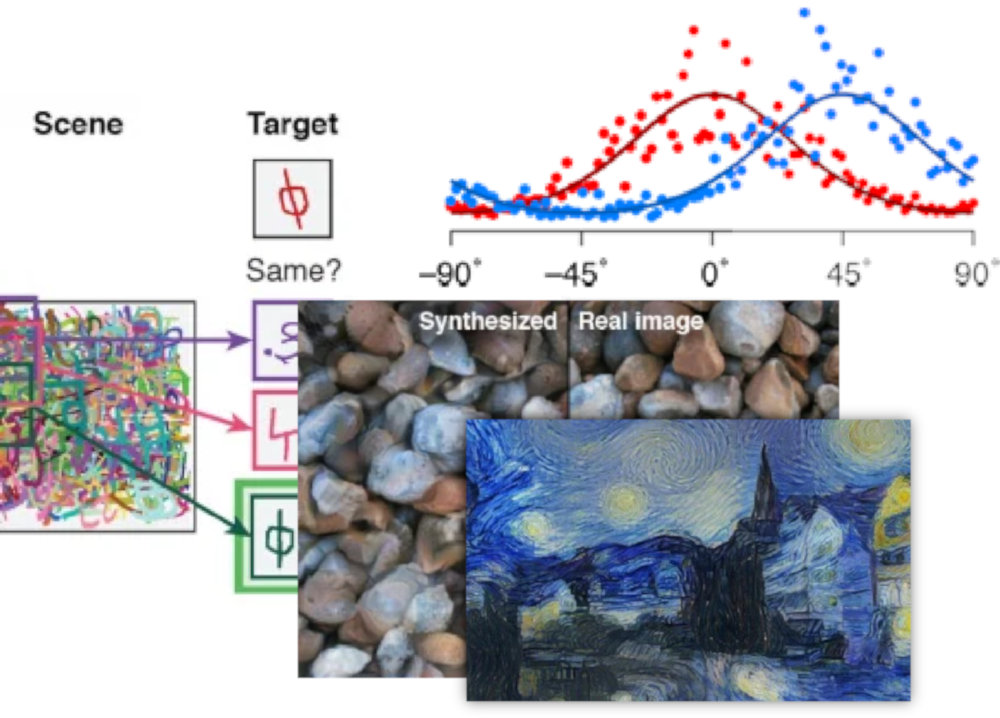
Prof. Dr. Alexander Ecker is Professor of Data Science at the Institute of Computer Science, University of Göttingen, and concurrently holds the prestigious Max Planck Fellow position at the Max Planck Institute for Dynamics and Self-Organization. Since 2020 he also serves on the Executive Board of the Campus Institute Data Science in Göttingen. He leads the Neural Data Science research group, comprising 14 PhD students and 2 postdoctoral researchers, focusing on the interface of machine learning and computational neuroscience. His educational background includes a Dr. rer. nat. in Neuroscience (2014) from the Graduate School of Neural and Behavioral Sciences/IMPRS, University of Tübingen, followed by post-doctoral and group-leader positions at the University of Tübingen and the Max Planck Institute for Biological Cybernetics. Research Interests Machine Learning & Deep Learning: developing novel algorithms for representation learning and generative modeling. Computational Neuroscience: large-scale data-driven modeling of visual cortical circuits. Visual Perception: bridging biological vision and computer vision via biologically inspired architectures. His work has produced a steady stream of influential publications (2019-2025) in leading journals such as Nature Communications , Nature , Nature Methods , PLOS Computational Biology , ICLR , NeurIPS , and CVPR . The publications trend toward integrating high-resolution neural recordings with state-of-the-art machine-learning models to uncover principles of sensory processing, neuron-type classification, and behavior. Scientific Awards & Honors Max Planck Fellow, Max Planck Institute for Dynamics and Self-Organization (ongoing) Executive Board Member, Campus Institute Data Science, Göttingen (since 2020) Teaching, Advising & Grants Regularly teaches advanced courses: “Deep Learning for Image Synthesis”, “Current Topics in Deep Learning”, and “Graph Machine Learning”. Supervises 14 current PhD students and 2 postdocs within the Neural Data Science Group. Offers numerous Bachelor’s and Master’s thesis projects, with topics ranging from neuronal morphology clustering to primate vocalization analysis. Leads or co-leads large collaborative consortia with labs in Göttingen, Tübingen, Baylor College of Medicine, and other institutions across the US and Germany. Labs & Teams The Neural Data Science Group operates at the Institute of Computer Science, University of Göttingen, and is tightly integrated with the Max Planck Institute for Dynamics and Self-Organization. The group maintains active collaborations with over a dozen partner laboratories, including groups led by Fabian Sinz, Andreas Tolias, Thomas Euler, Tim Gollisch, and Viola Priesemann, fostering an interdisciplinary environment that spans computer science, physics, biology, and psychology.