Dana Kamphorst is a researcher at Wageningen University & Research, specializing in Regional Development and Spatial Use. Her work focuses on nature conservation, local governance, and environmental policy, with significant contributions to rural development and agricultural sustainability. Research Interests: Nature conservation and biodiversity in rural areas Local governance and policy integration Environmental law and land-use planning Grassland management and ecological transitions Stakeholder discourse in agricultural transformation Key Projects: Active project (2024-2025): Evaluation of land-use instruments in Krimpenerwaard Completed projects (2019-2024): Nature-inclusive agriculture initiatives Contributor to national rural development programs and farming system analyses
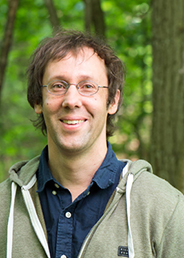
Fabrice Ottburg is a Researcher at Wageningen University & Research , specializing in Animal Ecology . His work focuses on nature-inclusive development, road ecology, and biodiversity monitoring in agricultural and urban contexts. Key Research Areas: Wildlife conservation, environmental science, agroecology, urban ecology, road ecology Recent Projects: Global Roadkill Data analysis, soil fauna monitoring via carpet tile methodology, delta riverine nature resilience Publications include datasets and reports addressing: Terrestrial vertebrate mortality from vehicle collisions (2025) Soil fauna assessment in agroecological farms (2024) Urban biodiversity enhancement frameworks (2025) Activities span workshops, oral presentations, and media contributions (2020-2025), with emphasis on: Mini-symposiums on pollinator-friendly urban design Technical dissemination of agroecological sampling methods Expert commentary on invasive species and climate-driven ecological shifts Current Projects : KD-2024-073 : Wolf reference values (2025-2025) Systeemmaatregelen voor robuuste rivieren : 2023-2026
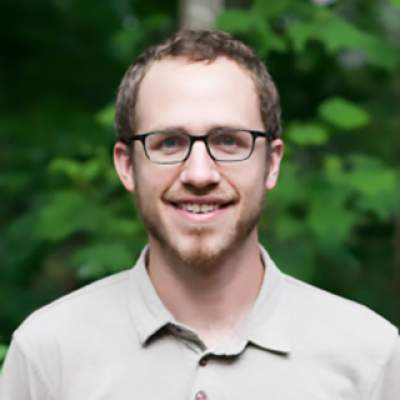
Robbert Snep is a researcher at Wageningen University & Research , specializing in biodiversity conservation, urban ecology, and nature-based solutions. His work focuses on integrating ecological principles into urban planning, particularly for climate adaptation and environmental justice in social housing contexts. Snep has published extensively on topics such as biodiversity monitoring, green infrastructure, and stakeholder collaboration in sustainable urban development. Key Research Areas: Biodiversity conservation, urban resilience, climate adaptation, environmental justice, nature-inclusive design Projects: Project leader for LVVN initiatives including 'Nature-Based Solutions for Future-Proof Cities' and 'Biodiversity-Resilient Urban Areas' Recent Trends: Emphasis on robotics in biodiversity monitoring, equitable greenspace distribution, and scalable nature-based solutions for urban resilience Snep’s publications highlight practical implementations of ecological models in urban settings, with a focus on stakeholder engagement and policy development. His work bridges scientific research with actionable urban governance frameworks.
Laurie van Reemst is a researcher at Wageningen University & Research, focusing on food safety and sustainable agricultural practices in East Africa. She actively contributes to projects examining pesticide residues on fresh vegetables and the socio-economic potential of organic farming in Uganda. Current roles: Project leader for 'CommonGround Uganda' and 'Towards safe Organic Agricultural practices Uganda' PhD research on empowerment and farm management in Bududa district Active participant in African soil science conferences since 2016 Her work covers broad research areas including: Pesticide residue analysis in fresh produce Organic farming systems and market dynamics Gender roles in sustainable agriculture Land degradation prevention strategies Household-level agricultural economics Science communication in African contexts Research trends analysis: Recent publications focus on chemical safety of fresh vegetables, organic farming economics, and gender-inclusive agricultural development across East Africa. Her work combines technical pesticide analysis with socio-economic studies of farming households. Key collaborations: Partnerships with Dutch Ministry of Agriculture, Nature and Food Quality; Wetenschapswinkel Wageningen; and international soil science networks.
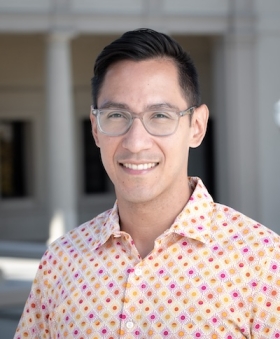
Raul Navarro is an Associate Professor of Chemistry at Occidental College, appointed in 2017. His research focuses on developing new transition metal-catalyzed reactions for synthesizing biologically active natural products within a primarily undergraduate research environment that emphasizes inclusivity and collaboration. Education: B.S. in Chemistry from Yale University Ph.D. in Chemistry from California Institute of Technology (Caltech) Postdoctoral research at Stanford University Research Interests: Navarro's work centers on synthetic organic chemistry , specifically palladium-catalyzed decarboxylative allylic alkylation for constructing complex molecules. His lab explores alkaloid synthesis , propellane core construction , and heterocyclic compound development , while integrating chemical genetic tools and diversity initiatives into chemistry education. Publication Trends: Recent publications (2022-2024) demonstrate methodological advances in transition-metal catalysis for synthesizing isoindolinones and alkaloid analogues, alongside educational research on diversity in STEM. His work bridges fundamental reaction development with biological applications while maintaining undergraduate research accessibility. Scientific Awards: NIH AREA grant (2023) for Pd-catalyzed decarboxylative coupling research Invitation to Center for Computer Assisted Synthesis (C-CAS) Data Chemists Network (2023) Advising and Grants: Navarro mentors undergraduate researchers through hands-on laboratory projects funded by competitive grants. His NIH-supported work trains students in cutting-edge synthetic techniques, resulting in multiple co-authored publications and student placements in graduate programs. Lab and Team: The Navarro Lab cultivates an inclusive research culture where undergraduate students contribute to all aspects of project design and execution. Current work focuses on expanding catalytic reaction scope for bioactive molecule synthesis while maintaining strong community engagement within Occidental's chemistry department.
Prof. Dr. Martin Sauerwein is a Professor of Geography at the University of Hildesheim's Institute of Geography, part of the Faculty of Mathematics, Natural Sciences, Economics & Computer Science. His research spans soil geography, urban ecology, geoarchaeology, and Education for Sustainable Development (ESD), with regional focuses on Mediterranean landscapes and Central Germany. He holds a doctorate (1998) and habilitation (2005) from the University of Halle and has held academic positions at Jena and Leipzig universities. Research Interests: Sauerwein investigates anthropogenic impacts on soil systems, landscape evolution, and sustainability education. His work integrates field-based geoecology with applied solutions for soil protection, cultural landscape conservation, and climate-adaptive land use. Key themes include urban soil functions, geoarchaeological material balances, and transformative pedagogies for ESD. Administrative Roles: He served as Dean of Faculty 4 (2011–2019), is currently Deputy Dean of Studies, and joined the University Senate in 2023. He edits the Hildesheimer Geographische Studien journal and oversees projects like the Junior Research Group 'CULTURAL LANDSCAPES'. Awards: Martin Luther Medal (1999) for doctoral research on urban soils Science Prize for Geography from the Prof. Dr. Frithjof Voss Foundation (2005)
Louise Taylor is Professor of Education and Student Experience at Oxford Brookes University, affiliated with the School of Psychology, Social Work and Public Health and the Department of Psychology, Social Work and Public Health. She is a Chartered Psychologist, Principal Fellow of the Higher Education Academy, and Associate Fellow of the British Psychological Society. Her educational background includes a PhD, and she has been actively contributing to academic life since at least 2014, progressing from Lecturer to full Professor. She has held multiple academic roles, including External Examiner and Co-Editor of Psychology Teaching Review . Louise's research centers on psychological factors in human development, particularly in education and wellbeing. Key areas include student identity formation, the impact of the 'student-as-consumer' model, racial equity in higher education, children’s understanding of reality and fantasy, and resilience in social work students. Her work often applies Self-Determination Theory to explore motivation, autonomy, and inclusion. Her recent publications reveal a strong focus on higher education pedagogy, identity, and equity. Themes across her articles include the negative effects of consumer identities on learning, strategies to support BME students, the role of authenticity in museum learning, and the cognitive benefits of fantasy in childhood. Her research is interdisciplinary, spanning psychology, education, and social policy. National Teaching Fellow Collaborative Award for Teaching Excellence, Advance HE (2022) University Alliance Braveheart Award (2021) Finalist, Higher Education Psychology Teacher of the Year (2021) Pearson HE Innovate Teaching Award (2021) Best Academic Advisor, Student Union Led Teaching Awards (2017-18) Louise supervises PhD students including Siân Anderson, Roger Hiley, and Alice Wilby. She has led multiple funded research projects, such as those on BME student success, resilience in social work students, and museum-based learning. Her consultancy work includes collaborations with Action for Children, Disneyland Paris, and the Office for Low Emission Vehicles. She leads the Student Identities and Inclusion Projects (SIIP) and is committed to anti-racist pedagogy and inclusive education. She is an active contributor to public discourse through blog posts, media appearances, and invited talks, advocating for a post-pandemic, flexible, and equitable university system.
Prof. Dr. Denny Paulicke is a Professor of Medical Education and Vice President at Akkon Hochschule , where he also serves as a member of the executive board of the Institute for Applied Innovation in Healthcare (ITAC) . He teaches in programs such as Medical and Emergency Education (BA) and Health, Nursing and Medical Education (MA) . His academic work spans digital health, transformative education, and evidence-based practice in healthcare. Research Interests: His primary research areas include digital health education, co-creation in healthcare, assistive technologies, implementation science, and transformative learning concepts. He focuses on integrating digital tools into nursing and caregiving, particularly through participatory and evidence-based approaches. His work emphasizes empowerment, digital sovereignty, and user-centered design. Recent Research Trends: His recent publications highlight a strong focus on virtual reality in nursing education, digital competence development, assistive technologies for elderly and caregivers, and innovative delivery systems like medical drones. The use of mixed-methods and participatory research is a recurring theme, reflecting a commitment to practical, implementable solutions in healthcare. Scientific Contributions: Extensive peer-reviewed publications in journals like ZEFQ , PLoS ONE , JMIR , and Bundesgesundheitsblatt . Active peer reviewer for journals such as PFLEGE and ZEFQ . Domain expert on 'Human Enhancement' in the AI Observatory of the Federal Ministry of Labour and Social Affairs. Advising and Grants: While specific students are not listed, he leads and co-leads numerous funded research projects from sources like BMBF, BMG, and Springer Nature. As Principal Investigator and Project Leader, he oversees grants totaling over €400,000, focusing on digitalization in care, telemedicine, and educational innovation. Labs and Teams: He leads the Digital Health Education group at the University Medical Center Halle and is a founding member of ITAC. He collaborates with interdisciplinary teams across institutions, including Martin Luther University Halle-Wittenberg, Hochschule Anhalt, and various healthcare providers.
Jolanta Kilanowska is an Associate Professor in the Department of Primary and Secondary Teacher Education at Oslo Metropolitan University, Faculty of Education and International Studies. She serves as Head of Studies for a designated area of responsibility, contributing significantly to teacher education programs. Her work spans research, teaching, and leadership in multilingual education and physical education pedagogy. Position: Associate Professor Institution: Oslo Metropolitan University Faculty: Faculty of Education and International Studies Department: Department of Primary and Secondary Teacher Education Email: jolanta.kilanowska@oslomet.no Her research focuses on multilingual development, particularly among Polish-Norwegian children, early language acquisition, and inclusive educational practices. She is actively involved in the SAMBA research group (Language and Learning Environment in Early Years) and the Body, Learning and Diversity group, exploring how language, movement, and identity intersect in educational contexts. The analysis of her recent publications (2021–2025) reveals a strong thematic focus on bilingualism, teacher professional development, and curriculum innovation. Her work bridges linguistic research with practical applications in early childhood and teacher education, often involving large-scale collaborative projects like PolkaNorski. She frequently publishes on parental interventions, vocabulary assessment, and reflective practices in physical education, demonstrating interdisciplinary engagement across linguistics, psychology, and pedagogy. Jolanta Kilanowska has made significant contributions to academic dissemination, with numerous presentations at international conferences such as AIESEP, IASCL, and WILD. Her collaborative research network includes scholars from Norway, Poland, and beyond, reflecting a strong commitment to cross-cultural and transnational educational research. She mentors pre-service teachers and contributes to school practicum development, emphasizing reflective practice and student-centered learning. While specific grant details are not provided, her involvement in structured research projects and dissemination activities indicates active participation in funded research initiatives. Kilanowska is embedded in key research teams including the SAMBA group and the Body, Learning and Diversity collective, which support interdisciplinary inquiry into language, cognition, and physical education. These groups facilitate collaboration on projects addressing multilingualism, early learning environments, and inclusive pedagogies.
Jeanette Helleberg Dybvik is an Associate Professor at Oslo Metropolitan University (OsloMet), affiliated with the Faculty of Education and International Studies and the Department of Primary and Secondary Teacher Education. She also serves as Head of Studies for Area of Responsibility 4, contributing to academic leadership in teacher education. Her work bridges art, design, and pedagogy, with a strong emphasis on creative processes and inclusion. Her research interests center on art education , aesthetic learning , emotional design , and sustainability in design . She explores how creative joy ( skaperglede ) can enhance learning, particularly in teacher training and special needs contexts. Her work also investigates the role of performance, video, and reuse materials in fostering inclusion and environmental awareness. The recent publications highlight a consistent focus on design education, emotional engagement, and sustainability. Her articles reflect interdisciplinary collaborations and presentations at international design education conferences (e.g., E&PDE). Themes include the use of everyday objects in emotional design, artistic interventions in healthcare, and pandemic-adapted art teaching. Scientific Dissemination and Artistic Practice: Regular participation in national and international conferences on design and art education. Exhibitions of acrylic paintings in venues such as the Venice International Art Fair and Nordberg Lions’ art exhibition. Co-creation of performances like REbelrebEL to promote inclusion. Jeanette Helleberg Dybvik actively contributes to both scholarly and artistic dissemination, integrating research with practical aesthetic experiences. She collaborates with colleagues on projects related to teacher education, special needs, and interdisciplinary art. While no formal advising or grant information is listed, her leadership role and extensive dissemination suggest active mentorship and project involvement. Labs and Research Groups: She is associated with KunstForsk – Arts-based and artistic research , and her work intersects with philosophy, art, and culture. Her research is often contextualized within design literacy and aesthetic processes in educational settings.
Dr. Watjana 'Waty' Lilaonitkul is a Lecturer (Assistant Professor) in Digital Health Technologies at University College London's Global Business School for Health , with over 15 years of experience spanning academia, industry, and international development. She holds a PhD in Electrical Engineering from the Massachusetts Institute of Technology (MIT) and serves as Deputy Director of Alumni and Student Experiences and Research EDI (Equality, Diversity, and Inclusion) Lead at UCL. Education: PhD in Electrical Engineering (MIT) Academic Affiliation: University College London Research Areas include: AI-driven healthcare innovation with focus on rare diseases and pandemic preparedness Dynamic time risk prediction for personalized treatment outcomes Complex systems and network physiology for digital biomarker discovery Human-in-the-loop AI for clinical decision support Active learning optimization for rare disease contexts Open-source AI platforms for drug development (PKPDAI.com) Article Trends reveal expertise in applying machine learning to pharmacokinetic data extraction, retinal diagnostics, post-COVID conditions, sepsis monitoring, and multiorgan imaging. Her work emphasizes data scarcity solutions and responsible AI deployment in clinical settings. Scientific Awards : UKRI Rutherford Fellowship (2018-2023) Grant & Advisory Roles : 2024: Appointed to Medical Research Council's Better Methods Better Research (BMBR) panel 2023: Expert reviewer for EPSRC AI Innovation funding and UKRI AI Centre for Doctoral Training 2021: Reviewer for Medical Research Council's COVID-19 Big Data Secondment Call Leadership includes developing three international patents (UK/EU/US) and co-directing the MSc Digital Health and Entrepreneurship program's flagship module GBSH0044, which trains students to build scalable AI healthcare solutions through startup-style team projects.
Laurent Lehmann is a Full Professor at the University of Lausanne, holding a position in the Department of Ecology and Evolution within the Faculty of Biology and Medicine. He has served as director of the master's program 'Behaviour, Economics, and Evolution' since 2015. Previously, he was an Assistant Professor at the University of Lausanne (2011-2015) and the University of Neuchâtel (2009-2011). His academic journey includes postdoctoral research at Stanford University with Prof. Marc Feldman, Cambridge University with Dr. François Balloux, and the University of Helsinki with Prof. Hanna Kokko. Lehmann's research focuses on mathematical and simulation models to study the evolution of social behaviors, including cooperation, altruism, and learning. His work spans three primary areas: individual decision processes, life-history evolution, and the transition to large-scale human societies. His theoretical approach addresses fundamental questions about how social behaviors evolve through natural selection, with particular attention to the roles of kinship, spatial structure, and cultural transmission. Analysis of his recent publications reveals a strong emphasis on mathematical modeling of social evolution, with recurring themes including Hamilton's rule, kin selection, cultural transmission, and evolutionary game theory. His work bridges theoretical biology with anthropological questions about human social evolution, particularly examining how large-scale cooperation emerged in human societies. Recent papers demonstrate increasing integration of cultural evolution with traditional population genetic approaches. As an academic mentor, Lehmann has supervised doctoral students including Fumagalli E. (2014), with research focusing on information sharing and social network dynamics. His work has received funding from major research agencies including ERC and SNSF Starting Grants, as noted on his departmental profile. Lehmann leads a research group within the Department of Ecology and Evolution that develops mathematical models to understand social behavior evolution. His group collaborates across disciplinary boundaries, connecting evolutionary theory with economics, anthropology, and cognitive science to address fundamental questions about human sociality and cooperation.
Samuel J. Keith is an Assistant Professor of Outdoor Leadership at North Greenville University and a doctoral candidate in Parks, Recreation & Tourism Management at the University of Georgia (expected completion 2024). He holds an M.S. from Clemson University (2016) and a B.S. from Texas A&M University (2014). His research focuses on urban greenways, environmental gentrification, and pro-environmental behavior in outdoor recreation. University of Georgia Ph.D. candidate (2024 expected) Assistant Professor at North Greenville University (2022-present) Former instructor at Clemson University (2014-2016) His research examines urban greenways (Atlanta BeltLine), environmental gentrification (equitable greening), trails (Pacific Crest Trail), and pro-environmental behavior . He has published in journals like Landscape and Urban Planning , Journal of Sustainable Tourism , and Environment and Behavior . Key collaborators include Dr. Ken Woosnam and Dr. Lincoln Larson. Recent publications reveal trends in urban ecology , recreation sociology , and environmental psychology . His work addresses environmental justice (Atlanta BeltLine), community-based conservation (R3 hunting workshops), and climate change education (educational travel interventions). Teaching experience includes Social Science Methods in Natural Resources, Protected Area Management, and Introduction to Travel & Tourism at the University of Georgia (2018-present), plus camping and kayak instruction at Clemson University (2014-2016). He works with the Woosnam Lab at UGA and contributes to community tourism planning through field studies.
Ruben Navarro Paton serves as a University Lecturer in the Area of Didactics of Body Expression at the University of Santiago de Compostela, where he teaches across multiple education programs including Primary Education, Early Childhood Education, and Educational Nature Activities. His research focuses on adapting motor activities for people with functional diversity, integrating physical education within inclusive pedagogical frameworks, and developing nature-based educational methodologies. He specializes in translating theoretical movement science into practical classroom applications that address diverse student needs while promoting health and motor development. Navarro Paton actively contributes to the research group Motricity, Physical Education and Health, which investigates interdisciplinary connections between movement sciences, educational theory, and wellness promotion across different learning environments.
Laura Hobbs is a Senior Research Fellow in Science Communication at the University of the West of England, working across the College of Health, Science and Society and the College of Arts, Technology and Environment. Her position within the Science Communication Unit focuses on developing innovative communication, engagement, and research projects that bridge scientific disciplines with public outreach, particularly through digital platforms and gaming technologies. Dr. Hobbs holds an MSci in Geology and a PhD in Environmental Science, providing her with a strong foundation in earth sciences that informs her interdisciplinary approach to science communication. Her educational background enables her to effectively translate complex environmental concepts into accessible learning experiences. Her research spans multiple critical areas in contemporary science communication, with particular emphasis on informal science learning for underserved audiences. A significant portion of her work utilizes computer games, especially Minecraft, to create engaging educational experiences in environmental science and engineering. She has developed the successful Science Hunters program which uses Minecraft to engage children with earth science concepts, environmental engineering, and sustainability education. Her research also addresses important social dimensions of science engagement including women in STEM, wellbeing, arts-science integration, and science communication during crises such as the COVID-19 pandemic. Dr. Hobbs approaches science communication through multiple lenses including educational psychology, environmental justice, and digital literacy. Analysis of Dr. Hobbs' recent publication trends reveals a strategic evolution in her research focus. While maintaining her core expertise in game-based environmental education, she has increasingly incorporated sustainability frameworks, particularly the United Nations Sustainable Development Goals. Her work demonstrates growing attention to inclusive practices, with recent publications addressing neurodivergent learners, gender diversity in engineering, and community resilience. The interdisciplinary nature of her research connects environmental science with social sciences, education, and digital humanities, creating a unique niche in science communication scholarship. Royal Academy of Engineering Ingenious Award for Engineering for Sustainable Societies project Dr. Hobbs has secured significant research funding through projects like Engineering for Sustainable Societies and Science Hunters, which have enabled extensive community engagement and educational outreach. Her work on the VIP-CLEAR project during the pandemic demonstrated innovative approaches to maintaining science engagement during lockdowns. Through collaborations with schools, community organizations, and professional bodies like the Royal Academy of Engineering, she has developed impactful programs that extend beyond traditional academic boundaries. Her research on women in STEM and neurodivergent learners reflects a commitment to addressing systemic barriers in science education. Dr. Hobbs leads the Science Hunters initiative, a multi-faceted program that has become a model for game-based science education. Her work extends across multiple research centers including the Science Communication Unit and collaborations with the Centre for Environment, Society and Resilience. Through her projects, she has built interdisciplinary teams that combine expertise in environmental science, education, game design, and social research. Her leadership in adapting science engagement during the pandemic demonstrated the resilience and adaptability of her approach, with successful transitions to remote delivery while maintaining engagement with underserved audiences.