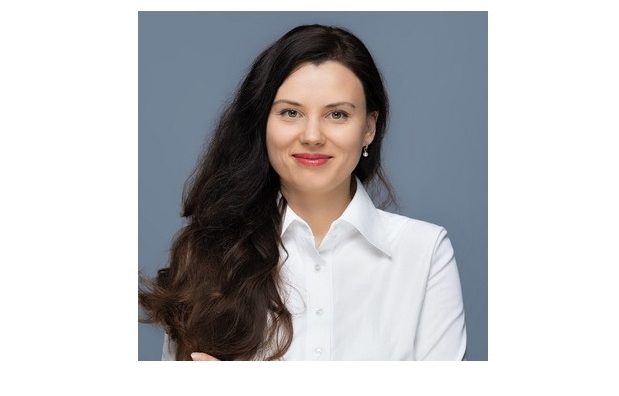
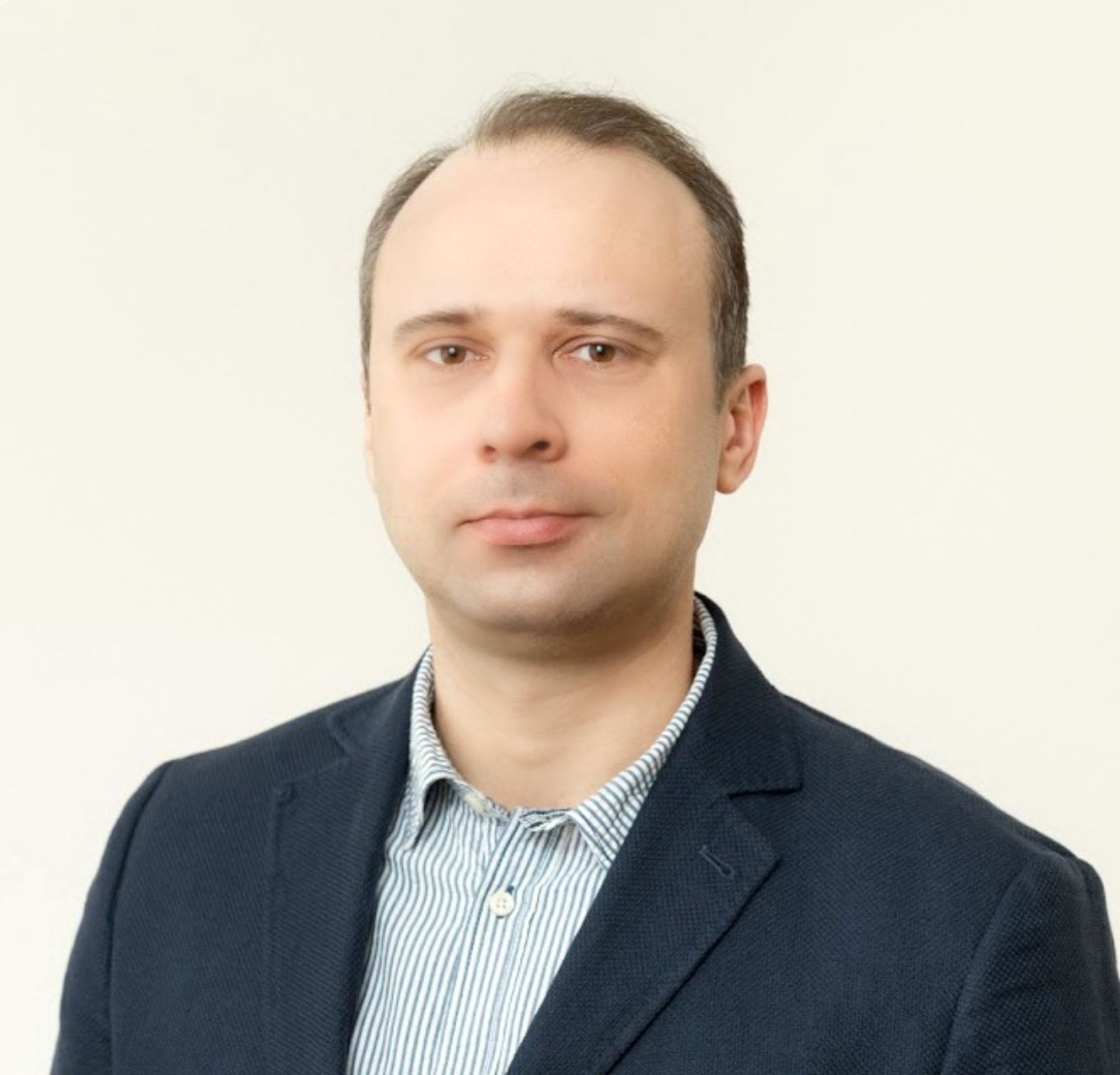
Katažyna Bogdzevič is a Professor at Mykolas Romeris University (MRU) Law School, specializing in Private International Law , European Law , Human Rights , and Environmental Law . She leads the MRU Human Rights LAB and contributes to the Environmental Management Research LAB, focusing on legal frameworks for ecosystem services, climate change mitigation, and stakeholder engagement. Key Research Themes: Integration of Private International Law with Environmental Law , analysis of legal conflicts in nature-based solutions, and name rights under international human rights conventions. Policy Engagement: Serves as advisor to Lithuania's Minister of Justice Ewelina Dobrowolska , emphasizing knowledge transfer to legislative and judicial practices. Email: roffice@mruni.eu
Prof. Dr. Vita Akstinaitė is a Professor and Vice-Rector for Research and Faculty at ISM University of Management and Economics (Lithuania). She leads the Master's program 'Global Leadership and Strategy' and the Executive Master's module on rhetoric/communication. As a Visiting Researcher at IDIAP (Switzerland) and Visiting Fellow at the University of Lausanne, she bridges academic and applied research. Her work focuses on leadership dynamics, hubris, linguistic markers, and AI applications in leadership assessment. Education: MSc Organizational Psychology (King's College London) and PhD in Business (University of Surrey), with research on linguistic markers of hubris. She co-founded The Hubris Hub and Knowledge4Hubris initiatives, fostering interdisciplinary collaboration. Notable projects include EU-funded AI leadership research (2021) and NordForsk's remote work study (2023-2026, €99k+). Research emphasizes innovative methods like AI-driven text analysis to evaluate leadership behaviors. Key areas include: executive hubris measurement, AI's role in leadership skill assessment, and ethical leadership frameworks. Her work spans international collaborations with institutions like Umeå University (Sweden), Murdoch University (Australia), and the London School of Economics. Awards include ISM Research Communicator of the Year (2023), Murdoch Teaching Excellence (2021), and EU research grants. Her publications explore topics like linguistic predictors of hubris, AI in leadership diagnostics, and pandemic leadership failures. Recent articles address data-driven executive role transformations and ethical leadership in AI contexts. Grants include €59k for AI leadership research (2021-2023) and €99k NordForsk funding. Active in conferences such as British Academy of Management and interdisciplinary leadership symposia. She advises on leadership development and serves as a module leader for global leadership courses. Labs/Teams: Co-leads The Hubris Hub research collective and directs ISM's executive communication initiatives. Current work explores AI ethics in leadership assessment and cross-industry sustainability leadership preferences.
Darius Plikynas is a Senior Researcher at the Smart Technologies Research Group within the Institute of Data Science and Digital Technologies at Vilnius University . His research integrates computational intelligence methods with agent-based simulation to model cognitive and social processes. Position: Senior Researcher, Chief Researcher in the Project Address: Akademijos St. 4, room 224, Vilnius Contact: +370 5 210 9333, +370 620 95101 Email: darius.plikynas@mif.vu.lt Personal page: http://www.dariusplikynas.eu Dr. Plikynas' research spans interdisciplinary domains including neuroscience, physics methods, complexity theory, and distributed cognitive systems. He led the 2017–2019 project "Development of a metric, conceptual and simulation model of the social impact of cultural processes" under the LMT Research Group Funding Program. His recent publications (2016–2025) reflect trends in combining machine learning with social science questions (fake news analysis, propaganda detection) and agent-based modeling of cultural/social capital dynamics. Key collaborations include Leonidas Sakalauskas, Rimvydas Laužikas, and Arunas Miliauskas. Scientific supervision includes doctoral students: Andrius Budrionis (University of Tromsø, Norway) Ieva Rizgelienė (PhD topic: "Propaganda detection and classification in social media using hybrid deep learning") He also serves as an expert at Vilnius University and has contributed to projects involving: 2D financial market visualization Neural oscillation-based cognitive modeling Indoor navigation for blind individuals Cultural participation impact on social capital
Danguolė Kalinauskaitė is a Lecturer at Vytautas Magnus University , affiliated primarily with the Department of Lithuanian Studies under the Faculty of Humanities . She also collaborates with the Faculty of Informatics and the Research Institute of Natural and Technological Sciences , contributing to the Digital Language Data and Intelligent Technologies cluster. Since 2019, she holds a Doctor of Sciences degree and actively engages in academic activities. Research Interests : Her work spans Linguistics , Philology , and Lithuanian Language studies, with a focus on Digital Humanities and Language Technology . She applies computational methods to linguistic data analysis within the university's interdisciplinary research cluster. Contact Information : Email: danguole.kalinauskaite@vdu.lt Languages : Lithuanian (Native) English (Proficient) Basic proficiency in German, Spanish, Latvian, and Russian
Paulius Rauba is a Visiting Lecturer at ISM University of Management and Economics and a PhD candidate in Machine Learning at the University of Cambridge. He holds a BSc from ISM and an MSc from the University of Oxford, where he is also an Oxford Shirley Scholar. His research focuses on fundamental machine learning, model evaluation, robustness, and quantitative social science. He teaches courses in Econometrics, Data Science, and Elements of Artificial Intelligence. Paulius leads Gauss, a company specializing in deploying machine learning models, and has advised the European Commission on AI systems. His work spans academia, industry, and international organizations, emphasizing data-driven solutions for business and social challenges. Education: BSc, ISM University of Management and Economics MSc, University of Oxford His research explores model robustness, AI applications in healthcare, and conflict analysis through statistical and neural methods. Recent articles address topics like self-healing ML frameworks and context-aware model testing. Paulius is committed to advancing AI ethics and practical deployment. Awards: Oxford Shirley Scholar As a leader in Gauss, he bridges academic innovation with industry needs, focusing on scalable AI solutions. His advisory roles and grants underscore his interdisciplinary impact.
Dr. Vytautas Čyras serves as an Associate Professor at Vilnius University's Faculty of Mathematics and Informatics, specifically within the Institute of Computer Science and Department of Software Engineering. With over three decades of academic experience since 1984, he bridges computer science and legal theory through groundbreaking interdisciplinary research. Education: Master's in Applied Mathematics (Computer Science) from Vilnius University (1979) Doctorate from Moscow State University's Faculty of Computational Mathematics and Cybernetics (1985) Second Master's in Law from Vilnius University and German Law Centre (2007) Dr. Čyras' research spans legal informatics, information systems, and computer science. His primary focus includes artificial intelligence and law, regulatory compliance, legal requirements, and pioneering work in legal visualization. His Structural Blanks approach to programming with recurrences demonstrates deep expertise in both foundational computer science and legal applications. His research explores how visual and multisensory approaches can transform legal reasoning and compliance in digital environments. His publication trajectory reveals an evolution from technical computer science topics toward sophisticated legal informatics applications. Recent work emphasizes multisensory legal machines, legal visualization frameworks, and the integration of AI with legal reasoning systems. He has made significant contributions to understanding how legal norms can be transformed into operational rules for virtual environments and digital governance systems. Professional Activities: Active participant and organizer of major legal informatics conferences including IRIS, Baltic DB&IS, and EGOVIS Contributor to European Framework Programme projects including VirtualLife and SKY-Scanner Longstanding member of the Lithuanian Computer Society and its Intellectics Section Dr. Čyras teaches courses including Artificial Intelligence, Knowledge Representation, and Human-Computer Interaction. His interdisciplinary background enables him to bridge theoretical legal concepts with practical applications in regulatory compliance systems and legal technology development.
Viktor Medvedev is an Associate Professor and Senior Researcher at Vilnius University's Institute of Data Science and Digital Technologies, where he serves as Project Lead Researcher in the Blockchain and Quantum Technologies Group. His work focuses on the intersection of machine learning, data visualization, and cybersecurity applications. Dr. Medvedev earned his Doctor of Science in Computer Science Engineering in 2007 from Vilnius Gediminas Technical University and the Institute of Mathematics and Informatics. His doctoral research centered on 'Research on the application of feedforward neural networks for multidimensional data visualization,' establishing the foundation for his continued work in data analysis and visualization techniques. His research interests span machine learning , deep learning , data visualization , and cybersecurity applications . Specifically, he has made significant contributions to keystroke dynamics authentication , behavioral biometrics , dimensionality reduction techniques , and medical data analysis . His work often bridges theoretical computer science with practical applications in security and healthcare domains. Dr. Medvedev's publication record demonstrates a consistent trajectory of research excellence, with recent work focusing on advanced authentication systems using deep learning, pancreatic cancer detection through machine learning, and innovative approaches to data visualization. His research shows a clear evolution from foundational work in neural networks for data visualization to contemporary applications in cybersecurity and medical diagnostics. ICAISC'06 - Best Presentation Award (The 8th International Conference on Artificial Intelligence and Soft Computing) ICANNGA 2007 - Best Young Researcher Paper Award in Neural Networks DAMSS 2021, 2022, 2023 - Best Poster Awards As a Project Lead Researcher in the Blockchain and Quantum Technologies Group, Dr. Medvedev oversees research initiatives that combine cutting-edge technologies with practical applications. His work in cybersecurity has particular relevance to critical infrastructure protection, where insider threat detection using behavioral biometrics represents a significant contribution to the field.
Linas Aidokas is a Researcher at the Artificial Intelligence Laboratory within the Institute of Data Science and Digital Technologies at Vilnius University . His work focuses on humanoid robots, robotics, and human-robot interaction, particularly in educational and assistive contexts. Education: Not explicitly mentioned in the text. Research Interests: Linas specializes in humanoid robots and robotics, with a strong emphasis on their applications in education and therapy. His research also explores human-robot interaction, including communication control systems using the Lithuanian language. Additionally, he investigates data visualization techniques to address cognitive biases like exponential growth bias. Recent Publications: His 2024 studies examine humanoid robots' potential for autism therapy and Lithuanian language integration in robot interaction systems. Earlier 2023 works focus on exponential growth bias in data visualization and educational interventions to mitigate it. Other Activities: Linas served as a judge for the VILIPO competition and participated in the Science Popularization Festival "Spaceship Earth" from 2021 to 2022. Contact: Reach him at Akademijos St. 4, 621, Vilnius, or via phone at +370 69 34 8901.
Gintautas Grigas is an Associate Professor and Affiliated Scientist at the Institute of Mathematics and Informatics , Vilnius University, Lithuania, serving within the Educational Systems Group . Since joining the Institute in 1965, he has become one of Lithuania’s most prolific authors in computer science education and software localization. Education: 1959 – Graduated, Faculty of Electrical Engineering, Kaunas Polytechnic Institute (now Kaunas University of Technology) 1970 – Candidate of Technical Sciences (post-graduate), nostrified 1992 to Doctor of Mathematical Sciences Continuing education courses in programming languages, data types and programming technology at Vytautas Magnus University, Vilnius University and Vilnius Pedagogical University Research Interests Grigas’ scientific work centres on four tightly interwoven themes: abstract data types , programming teaching methodology , computer terminology , and software localization . His contributions range from theoretical analyses of data structures to practical guidelines for localizing major software suites into Lithuanian. He has also pioneered studies on how interface defects influence national language culture and on letter-frequency analyses supporting cryptography and linguistic research. Publication Trends Across more than 150 scholarly and professional works, a clear progression is evident: early focus on programming fundamentals and Lithuanian computing history, followed by intensive investigation of localization pedagogy, and more recently, mobile-device text input and cultural impacts of internationalization errors. Collaborative volumes such as the Encyclopedic Dictionary of Computing and the textbook Fundamentals of Software Localization have become standard references in Lithuanian computer science curricula. Awards & Recognition No specific competitive awards are listed; however, his sustained output—40 books, 100+ scientific articles, 250+ popular/professional articles—is itself a testament to national academic recognition. Doctoral Advising & Grants While individual doctoral students are not named, Grigas has long contributed to doctoral education through the Institute’s doctoral committees and study guides. His research has been supported by national projects on software localization and educational technology, although explicit grant numbers are not provided in the text. Labs & Teams He carries out his work within the Educational Systems Group , a subdivision of the Institute of Mathematics and Informatics, located at Akademijos St. 4, Vilnius. The group investigates learning technologies, curriculum design, and the societal impact of digital systems, providing a collaborative environment for his ongoing projects.
Dr. Alfredo Hernandez Sanchez is a Research Fellow at the Institute for International Relations and Political Science (TSPMI) at Vilnius University and a Senior Fellow at the Institute for Studies on the Mediterranean and the Middle East (IBEI). He holds a PhD in Political Science from Central European University and a BA in International Relations from UNAM, with expertise in Computational Social Sciences, Natural Language Processing (NLP), and Quantitative Text Analysis. His work bridges FinTech, International Political Economy, and anti-corruption research, including policy contributions for UNESCO, Transparency International, and the IADB. PhD in Political Economy, Central European University (2020) BA in International Relations, UNAM His research focuses on FinTech regulation , Big Data applications in governance, and corruption risk measurement using large-scale datasets. Current projects include the Political Economy of FinTech grant and the Water Integrity Risk Index initiative with UNESCO. Publications span Springer, Bloomsbury, and Emerald, covering topics like pandemic-era procurement ethics and defense corruption networks. Recent work highlights FinTech policy , anti-corruption metrics , and quantitative methods in political economy, with a trend toward AI-driven analysis of governance structures. He is also a Data Visualization enthusiast, contributing to the D·Viz blog and academic discourse via Bluesky. Notable affiliations include: Marie-Curie ERA Postdoctoral Fellow (Vilnius University) Research Fellow (IBEI) Contributor to UNESCO and IADB projects
Lina Navickaitė-Martinelli is a Professor at the Lithuanian Academy of Music and Theatre (LMTA), where she serves in the Department of Musicology within the Faculty of Music. She holds the position of Chairperson of the LMTA Senate and is also the Chair of the Musicologists' section at the Lithuanian Composers' Union. As an academic leader, she has founded and directs LMTA HARPS (Hub of Artistic Research and Performance Studies), establishing herself as a significant figure in both Lithuanian and international musicology circles. Professor Navickaitė-Martinelli's research interests span a wide range of topics in musicology and performance studies. Her work primarily focuses on the semiotics of musical performance, performer identity, authenticity in interpretation, and the relationship between music, body, and communication. She has made significant contributions to understanding how performers express individuality through sound, the cultural significance of performance schools, and the evolving nature of musical communication in digital contexts. Her research bridges theoretical frameworks with practical performance considerations, examining how historical traditions interact with contemporary performance practices. Her extensive publication record reveals a consistent scholarly trajectory examining musical performance through semiotic, cultural, and philosophical lenses. Over the past two decades, her work has evolved from foundational studies on performance schools and cultural identities to more nuanced investigations of performer identity, audience communication, and the impact of digital media on musical reception. Her recent scholarship demonstrates increasing attention to the performer's corporeal presence, gestural language, and the complex relationship between authenticity and creativity in musical interpretation. As the founder and director of LMTA HARPS, Professor Navickaitė-Martinelli has established a significant research hub focused on artistic research and performance studies. This initiative reflects her commitment to creating institutional frameworks that support innovative approaches to music performance and scholarship. Her leadership in this area has helped position the Lithuanian Academy of Music and Theatre as a center for cutting-edge research in performance studies.
Andrii Zabrodskyi is a Junior Researcher at Vytautas Magnus University's Department of Agricultural Engineering and Safety within the Agricultural Academy. He also serves as a Senior Specialist in the International Cooperation and Marketing Unit and works at the Bioeconomy Research Institute. Originally from Ukraine, Zabrodskyi has established himself as a researcher focusing on soil science and agricultural engineering. His educational background includes: Bachelor's degree in Electrical Engineering and Electrical Technology from State Telecommunications University (2015) Master's degree in Electrical Engineering (2016) Dr. Zabrodskyi's research interests focus on agricultural soil management, with particular emphasis on: Soil compaction mechanisms Soil tillage practices Soil degradation processes Agricultural tire technology and its impact on soil health His doctoral dissertation examines "THE EFFECT OF MAINTAINING OPERATING PARAMETERS OF AGRICULTURAL TIRES TO MINIMIZE SOIL COMPACTION," reflecting his specialized expertise at the intersection of agricultural machinery and soil conservation. Dr. Zabrodskyi has actively participated in several international conferences including Rural Development 2023, Human and Nature Safety 2022, Rural Development 2021, and Human and Nature Safety 2020, demonstrating his engagement with the broader scientific community in sustainable agriculture and environmental protection research. His language proficiency includes: Ukrainian (native) Lithuanian (good) Russian (very good) English (good) Chinese (basic)
Dr. Stanislavas Mostauskis is a Professor and Senior Research Fellow at Vilnius Academy of Arts' Kaunas Faculty, Department of Art Research and Innovation. His career spans from 1997 as lecturer to full professorship since 2020, with concurrent roles at Lithuanian Culture Research Institute since 2010. PhD in Humanities (Art History, Philosophy of Art, 03H) M.A. in Art History (Vilnius Academy of Arts, 1993) Doctoral dissertation: The problem of intercourse between art and madness (2002) His research focuses on intersections between aesthetics and philosophy of art , with special attention to contemporary Western and Lithuanian art, psychoanalytic theories, post-structuralist discourse, and memory studies. Key publications examine Foucault's theories of madness, Heideggerian concepts of thinking, Derrida's 'differance', and the cultural significance of artists like Algis Uždavinis and M.K. Čiurlionis. As a leading Lithuanian art therapist , he explores interdisciplinary applications of art in healthcare and existential frameworks. His 15 most recent publications analyze madness in art, cultural identity, post-Soviet visual culture, and theoretical intersections between psychoanalysis and artistic practice. Academic affiliations include editorial roles for Estetikos ir meno filosofijos tyrinėjimai and Neklasikinė filosofija series at Lithuanian Culture Research Institute. He contributes to conferences on art therapy, postmodern aesthetics, and cultural identity formation. Active in art projects both locally and internationally, Mostauskis bridges academic research with artistic practice, particularly in analyzing how memory, identity, and psychoanalytic theory manifest in Lithuanian and Western art traditions.
Linas Petkevičius serves as an Associate Professor at Vilnius University's Faculty of Mathematics and Informatics, actively teaching courses including Introduction to Quantum Computing across 10 consecutive academic years from 2016/2017 through 2025/2026 as evidenced by institutional schedules. His research demonstrates remarkable interdisciplinary breadth spanning quantum computing algorithm optimization, medical diagnostics through digital pathology analysis, and satellite-based environmental monitoring. He develops machine learning solutions for breast cancer prognosis using Ki67 heterogeneity metrics, creates quantum circuit schemes adapted to hardware constraints, and implements deep learning models for algal bloom detection in Baltic waters using Sentinel-2 data. His work consistently bridges theoretical computer science with practical healthcare and environmental applications. Analysis of his 15 most recent publications (2023-2025) reveals three dominant research thrusts: 1) Quantum computing optimization for NISQ devices, 2) Medical image analysis focusing on spatial tumor microenvironment characterization in breast cancer, and 3) Remote sensing applications using transformer models and few-shot learning for satellite change detection. His publications show increasing specialization in combining deep learning architectures with domain-specific constraints across these fields. Scientific Awards: No scientific awards were mentioned in the provided materials. Advising and Grants: The provided texts contain no information regarding student advisement, research grants, or funded projects.
Rolandas Gricius is a PhD student and junior assistant at Vilnius University's Institute of Data Science and Digital Technologies, specializing in Computer Science within the Smart Technologies Research Group. His research focuses on content recognition in digitized structured documents under the supervision of Prof. Dr. Igor Belov.