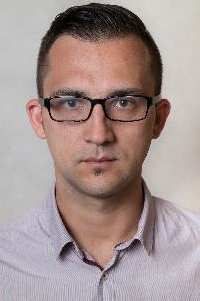
Máté Szabó is an Assistant Professor at the University of Debrecen , affiliated with the Faculty of Informatics and the Department of Information Technology . His email contact is szabo.mate@inf.unideb.hu . He works in areas such as Machine Learning , Smart Cities , and Mobile Computing . His research spans topics like microservice architecture for ensemble models, Markov modeling of traffic flows, and distributed machine learning on mobile platforms. He has explored neural models for conversational AI and gamification in programming education through Minecraft-based challenges. His work also addresses edge computing and data parallelism in mobile environments. His publications (2016–2024) reflect trends in machine learning deployment on Android platforms smart city traffic analytics gamified educational tools cognitive modeling of numerical understanding microservice-based model integration .
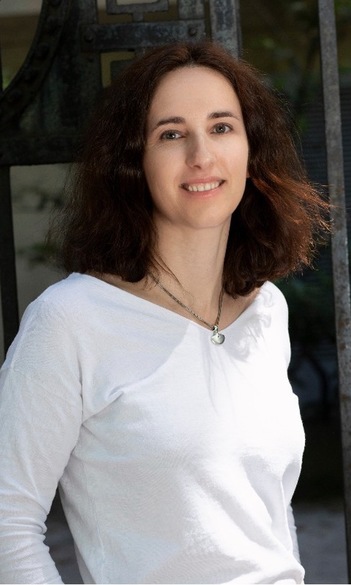
Agnes Melinda Kovacs serves as Associate Professor in the Department of Cognitive Science at Central European University (CEU), where she directs the Cognitive Development Center and co-leads the Center for Belief Update and Debiasing (DEBIAS) as Project Leader and Principal Investigator. Her research investigates early social cognition—including perspective taking, theory of mind, and tracking others' epistemic states (knowledge, belief, uncertainty)—alongside foundational abstract thought processes like generalization, compositionality, and evidence-based belief updating in children and adults. This work has been featured in Nature , Scientific American , The New York Times , and major international media outlets. Scientific Awards: ERC Starting Independent Research Grant Advising and Grants: She supervises multiple PhD candidates and has graduated students including Dora Kampis and Martin Freundlieb (as co-supervisor). Her DEBIAS project received FWF Special Research Area funding for investigating coherent belief systems. Current PhD advisees include Maja Blesic and Maria Mavridaki. Labs and Teams: She directs CEU's Cognitive Development Center and co-founded the Center for Belief Update and Debiasing (DEBIAS), focusing on experimental paradigms to study cognitive biases and developmental trajectories.
Dr. Johanna Domokos is an Associate Professor at the Department of Theatre Studies, Faculty of Humanities and Social Sciences, Károli Gáspár University of the Reformed Church in Hungary. With a distinguished academic career spanning several institutions including University of Bielefeld and UCLA, she has established herself as a leading scholar in multilingualism, Sámi literature, and Finno-Ugric studies. Her educational background includes a PhD in Comparative Literary Studies (1999) from József Attila University with a dissertation on Translation-semiotic analysis of Lapp poetry , multiple MA degrees in Finno-Ugric Studies, Hungarian Language and Literature, and English Language and Literature (1994, 2000), and the prestigious Dr. Habil degree from Eötvös Loránd University (2011). Domokos's research focuses on multilingualism in the arts , particularly examining literature, theatre, and visual arts in Northern and Central Europe, with special emphasis on Finland, Estonia, Sámi/Lapland, and the Carpathian Basin. Her work explores artistic rituality, mystical poetry, and interlingual and intersemiotic translation. She has led numerous research projects including the 'International Mediation of Sámi Literature' (2016-2019) and 'Rituality, Theater, Literature' (2018-2020). Her recent scholarly output reveals a strong trend toward Anthropocene studies and code-switching research , with publications examining multilingual creativity, Sámi literature, and the intersection of theatre with ecological concerns. Her work demonstrates growing interdisciplinary connections between literary studies, environmental humanities, and performance theory. Scientific Awards: Faludy-Díj (1992) Karriert Támogató Díj and Kutatói Díj from UCLA (2005, 2007) Kulturális Szervezői Kitüntetés from Los Angeles Hungarian Embassy (2008) Inger Sjöberg Prize from Scandinavian Society, USA (2022) Dr. Habil degree from Eötvös Loránd University (2011) Domokos has supervised doctoral students including Molnár Attila (on multimedia in contemporary art), Miklós Krisztina (on multilingualism and corporeality in Tompa Andrea and Sofi Oksanen's novels), and Bilibok Apollónia (on streamed theatre performances during the pandemic). She has served on numerous doctoral committees, most recently examining Balázs Renáta's work on contemporary Hungarian and Finnish national literary history constructions (2025). Her research has been supported by prestigious Humboldt Scholarships at Bielefeld University (2010-2011, 2018). She leads the Translation Workshop at Károli Gáspár University and has been instrumental in establishing the university's translation laboratory. Her international research group 'Kódváltás a kortárs művészetben' (Code-Switching in Contemporary Art) continues to produce significant scholarly work bridging linguistic and artistic disciplines.
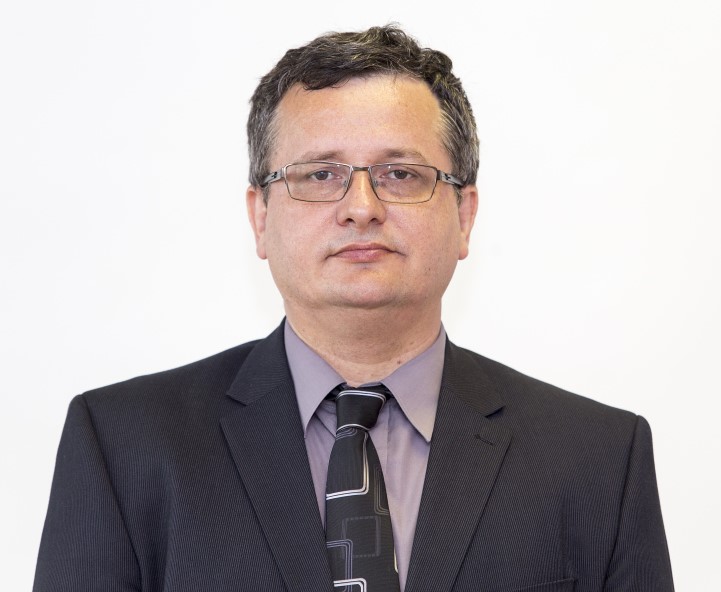
Szilard Szlavik serves as a Lecturer at the Department of Translation and Interpreting within the Institute of Language Mediation at Eötvös Loránd University (ELTE) in Budapest, Hungary. His academic base is located at 1088 Budapest, Múzeum körút 4/F, Room F I/9, with primary contact via szlavik.szilard@btk.elte.hu. His professional profile integrates teaching with cutting-edge research at the intersection of human translation and machine-assisted workflows. Dr. Szlavik's research centers on machine translation (MT) and post-editing (PE), with particular emphasis on quality assurance mechanisms in human-in-the-loop MT systems. His work investigates error identification protocols, lexical cohesion preservation in neural MT outputs, and the cognitive dimensions of developing post-editing competence. He actively employs corpus-based methodologies, utilizing tools like Sketch Engine for lexical analysis, while exploring pedagogical applications through platforms such as Quizlet for translation training. His research bridges theoretical linguistics with practical translation technology implementation. Analysis of his 2021-2024 publications reveals a consistent trajectory in MT-human collaboration research, characterized by empirical studies on English-Hungarian specialized translation, terminological standardization challenges, and cognitive aspects of post-editing. His corpus-based approach extends to edited volumes examining Hungarian translation research practices, demonstrating methodological rigor across both Hungarian and international scholarly contexts. No scientific awards were documented in available sources. Information regarding student supervision, grant funding, or research team leadership was not specified in the source materials. His professional activities appear focused on individual scholarship and departmental teaching responsibilities within ELTE's translation framework.
Dr. Attila Imre is a Full-Time Professor in the Department of Power Machines and Systems at Budapest University of Technology and Economics (BME) . He also serves as a Part-Time Scientific Advisor at the MTA Energy Research Center . His research spans thermodynamics, energetics, physical chemistry, and ecology, with a focus on working fluids, phase transitions, and energy systems. Doctor of Science (DSc), Hungarian Academy of Sciences (2015) PhD in Physics, ELTE (1996) DrUniv in Solid-State Physics, ELTE (1994) MSc in Physics, ELTE Faculty of Physics (1990) Imre’s research integrates theoretical and applied studies in thermodynamic cycles, metastable fluids, and supercritical systems. He has pioneered work on working fluid selection, cycle efficiency, and cold energy utilization, particularly in organic Rankine cycles and power-to-methane technologies. His 15 most recent publications emphasize artificial intelligence in energy systems, economic analyses of sustainability, and thermodynamic modeling of extreme-state fluids. Key trends include AI-driven performance mapping, techno-economic evaluations of waste heat recovery, and ecological applications of fractal geometry. Scientific Awards : Humboldt Scholarship, Johannes Gutenberg University, Mainz, Germany (1999) Imre has held prestigious postdoctoral roles at the University of Tennessee and senior research positions in Hungarian institutions. His work bridges energy engineering, computational modeling, and interdisciplinary challenges in translation and cultural studies.
Eszter Rita Katona is an Assistant Professor at Eötvös Loránd University's Faculty of Social Sciences, Department of Social Research Methodology. She serves as a lecturer at multiple research centers including the Research Center for Computational Social Science (RC2S2), Survey Methods Room Budapest, and Széchenyi István College for Advanced Studies. Education: PhD in Interdisciplinary Social Research (Doctoral School of Sociology, 2018-2023) Computer Science specialization (Faculty of Informatics, 2016-2017) Survey Statistics MSc (Faculty of Social Sciences, 2015-2018) Social Sciences BA (Faculty of Social Sciences, 2011-2015) German Studies BA (Faculty of Humanities, 2012-2015) Angelusz Róbert College for Advanced Studies (2014-2018) Research Focus: As a computational social scientist, her work spans three major domains: NLP and data visualization applications in social research Discursive framing of depression in online communities Corruption risk assessment in public procurement Teaching Expertise: In her academic role, she teaches: BA courses: Data Collection Methods, Data Visualization, Introduction to Sociological Research, Quantitative Data Analysis MSc courses: Advanced Data Visualization, Python Programming, Communication and Data Visualization, Text Analytics Scientific Contributions: Her recent publications and conference presentations focus on: Machine learning for depression discourse analysis Digital lens approach to Holocaust testimonies Corruption risk modeling in public procurement Interdisciplinary NLP applications Computational social science methodology Contact: katona.eszter@tatk.elte.hu
Dr. János György Horváth is a Professor at the Department of General Psychology and Methodology within the Faculty of Humanities and Social Sciences at Károli Gáspár Reformed University. He also serves as a Scientific Advisor and Group Leader at the Experimental Psychology Research Group within the Institute of Cognitive Neuroscience and Psychology at HUN-REN Natural Sciences Research Center. His academic journey includes positions at the Hungarian Academy of Sciences' Institute of Cognitive Neuroscience and Psychology (2008-present), University of Leipzig (2006-2008), and the Hungarian Academy of Sciences' Psychological Research Institute (1998-2006). Horváth completed his PhD in Cognitive Psychology at Eötvös Loránd University in 2002, with his dissertation focusing on acoustic environmental regularities in auditory memory using event-related potential studies. He holds dual MA degrees in Physics and Psychology from the same institution (1997, 2002). His research primarily investigates attention and distraction mechanisms, particularly in the auditory modality, along with action regulation, intentional action, and perception-action interactions. He employs experimental psychology and cognitive neuroscience methods, with a strong emphasis on event-related potential analysis. Horváth has been principal investigator on numerous significant research grants including NKFIH projects on proprioceptive and motor functional brain connectivity during stroke rehabilitation (K 134787), sensory-motor reflections of intentional action (K 128083), and action-induced changes in perceptual processing (K 108783). His publication record shows consistent high-impact output, with research focusing on motor adaptation, action-effect integration, auditory distraction, and the neural correlates of perception-action interactions. Bolyai plakett, Hungarian Academy of Sciences, 2015 János Bolyai Research Scholarship of the HAS (2015-2016) János Bolyai Research Scholarship of the HAS with Bolyai plakett award (2011-2014) Horváth serves as co-editor of Psychophysiology (since 2016) and was associate editor of the Hungarian Journal of Psychology (2012-2017). He has supervised doctoral students including Márta Volosin (ELTE, 2019), Bence Neszmélyi (BME, 2020), Sámuel Varga, and Fanni Dóra Kovács. His research group focuses on experimental approaches to understanding the neural mechanisms underlying attention, distraction, and action-perception integration.
Carsten Q. Schneider is a Professor in the Department of Political Science and the Doctoral School of Political Science, Public Policy, and International Relations at Central European University (CEU). He has been a key academic and administrative leader at CEU since 2004, serving as department head (2014–2017), program director for the MA in Political Science (2021–2022), and currently as Pro-Rector for External Relations since 2022, overseeing academic partnerships, communications, outreach, and alumni relations. PhD in Political and Social Science, European University Institute Diploma in Political Science, Free University, Berlin His research and teaching focus on political regime change, democratization in Europe and Latin America, and comparative methodology—especially qualitative comparative analysis (QCA) and set-theoretic methods. He is the author of multiple leading books on QCA published by Cambridge University Press and has published extensively in top journals such as Comparative Political Studies , Political Analysis , and Democratization . His recent publications demonstrate a strong trend toward integrating computational methods—particularly machine learning and automated text analysis—with traditional comparative frameworks. His 2025 article on illiberal leaders uses 38,000+ speeches across 120 countries to show how right-wing strongmen exacerbate inequality. This reflects a broader interdisciplinary shift in his work, combining political theory, methodological innovation, and large-scale data analysis. David Collier Mid-Career Achievement Award, American Political Science Association (2019) CEU Distinguished Teaching Award (2019) Elected Member, German Academy of Young Scientists (2009–2014) As Pro-Rector for External Relations, Schneider leads CEU’s engagement with academic networks, including CIVICA: The European University of Social Sciences, where he chairs the Permanent Design Team. He represents CEU in the Austrian Private Universities Conference (ÖPUK) and serves on internal governance bodies such as the Senate Committee on Strategic Development. He has advised on research transparency standards and promotes open science in qualitative and multimethod research. He has conducted research stays at Harvard University, UC Berkeley, WZB Berlin, and Pompeu Fabra, reflecting his strong international academic network.
Borbála Simonovits is an Associate Professor at Eötvös Loránd University's Faculty of Education and Psychology, affiliated with the Institute of Intercultural Psychology and Education. She holds a PhD in Sociology and an AMA in Social Policy Analysis from ELTE and Leuven, respectively. Her research focuses on international migration, sharing economy dynamics, trust mechanisms, discrimination, and attitudes, with notable contributions to EU-funded projects like CEASEVAL (H2020) and FP7 initiatives. Currently leading NKFIH FK-127978 ("Trust and Discrimination in the Sharing Economy") and OTKA K-147169 (shared mobility services), she also serves on ELTE's Quality Management Committee. Research interests include field experiments analyzing discrimination in housing, sports access, and digital platforms, alongside migration policy and social trust. Awards include ELTE's 2019 Promising Researcher recognition and the 2024 János Bolyai Scholarship. She chairs the Intercultural Psychology and Education Research Group and edits the Sociological Review .
Zsuzsanna Havasi is a Lecturer at the Institute of Hungarian Linguistics and Finno-Ugric Studies and the Department of Hungarian Historical Linguistics, Sociolinguistics and Dialectology within Eötvös Loránd University's Faculty of Humanities. Her institutional affiliation highlights a focus on Hungarian language studies across historical, sociolinguistic, and dialectological dimensions. Her research explores: Hungarian linguistics and Finno-Ugric studies with emphasis on historical evolution Metaphor identification methodologies and computational applications Legal language discourse in historical contexts, particularly witch trials and authority structures Sociolinguistic aspects of medieval Hungarian society and gender dynamics Recent publications (2018-2025) demonstrate consistent focus on metaphor analysis, historical text interpretation, and legal linguistics. Works frequently incorporate diachronic perspectives, methodological adaptations for Hungarian language processing, and interdisciplinary approaches combining linguistics with historical jurisprudence.
Orsolya Ring serves as an Assistant Professor at the Institute of Historical Studies, Eötvös Loránd University (ELTE), and as a Senior Researcher at the Institute of Political Science, Centre for Social Sciences, Hungarian Academy of Sciences. She maintains dual institutional affiliations that reflect her interdisciplinary research bridging historical studies, political science, and computational methods. At ELTE, she is associated with the Faculty of Humanities and the Department of Auxiliary Studies of History, while at the Hungarian Academy of Sciences, she works within the Department of Governance and Public Policy. Dr. Ring's research spans quantitative methods, artificial intelligence, text mining, sentiment and emotion analysis, content analysis, and social history with particular focus on the Hungarian socialist era. Her work addresses the challenge of applying computational methods to the morphologically rich Hungarian language, developing specialized tools and datasets for political text analysis. She has created manually annotated sentiment datasets for Hungarian political news (5700 sentences) and fine-tuned language models like HunEmBERT specifically for Hungarian political communication analysis. Her publication trajectory reveals an evolution from foundational work on text mining in R toward increasingly sophisticated AI applications in historical and political analysis. Her recent work focuses on transformer-based models for sentiment classification, multilingual policy topic classification, and geopolitical analysis of media representation. Simultaneously, she maintains significant contributions to cultural and theatre history, examining institutions like the National Theatre and József Attila Theatre within their political contexts during the socialist period. Dr. Ring leads several major research projects including 'Identifying News Slant in Crisis Communication Using Artificial Intelligence' (Visegrad Fund), 'V-SHIFT MOMENTUM' studying shifting global allegiances of Visegrád countries, 'PROMPT' researching misinformation propagation, 'MORES' (Horizon EU) examining moral emotions in politics, and 'PLEDGE' (Horizon EU) investigating politics of grievance and democratic governance. These projects demonstrate her commitment to applying computational methods to pressing questions in political science and historical analysis.
Dr. Carolin Hannusch is a Senior Lecturer at the Department of Computer Science, Faculty of Informatics, University of Debrecen, Hungary. She holds a B.Sc. (2009) and M.Sc. (2011) in Mathematics from the University of Debrecen, and completed her Ph.D. there in 2015. Her office is located in Room I129 of the Faculty of Informatics building. Her primary research focuses on algebraic coding theory and cryptography , with expertise in error-correcting codes, combinatorial designs, discrete mathematics, and applications in cybersecurity. She also publishes in mathematics education and digital text analysis. Her recent publications demonstrate strong interdisciplinary work across coding theory (e.g., binary self-dual codes, Goppa codes), cryptographic systems (e.g., hash functions, symmetric cryptosystems), and educational technology (e.g., digital text management, online trigonometry instruction). Awards include: Special Price at XXX. Students' Conference Hungary (2011) Universitas Prize for Young Researchers (2015) University of Debrecen's "Thesis of the Year" Prize (2018) She maintains collaborations with researchers across Europe and has presented work at international conferences including FedCSIS, CITDS, and Central European Conference on Cryptology.
Emese Tímea Tóth is a Lecturer at the Faculty of Social Sciences , Eötvös Loránd University , affiliated with the Department of Social Research Methodology , the Institute of Empirical Studies , and the Research Center for Computational Social Science (RC2S2) . Position: Lecturer Departments: Social Research Methodology, Empirical Studies Research Focus: Computational Social Science, Social Media Analysis Her research explores social media discourse through computational methods, particularly applying natural language processing to sustainability topics. While no awards or student advisement details are publicly listed, her work bridges digital humanities and environmental communication frameworks. Contact: toth.emese@tatk.elte.hu
Dr. Ediboglu Bartos Gaye is an Assistant Professor at Óbuda University, located in Székesfehérvár, Hungary. Their research focuses on machine learning applications in handwriting recognition, multilingual systems, and pattern recognition. They hold an office at building K room 17 on the Budai út campus. Research interests include developing deep learning models for offline handwritten character recognition, creating multilingual datasets, and improving feature extraction techniques. Their work emphasizes cross-language analysis and performance optimization in handwriting classification systems. Recent publications span topics such as case-sensitive classification, Hungarian handwriting recognition, and pre-processing methods. Though no scientific awards are listed, their contributions to multilingual dataset development and cultural context in semantic systems demonstrate impactful research directions. Advising and grant details are not provided in available materials. No lab or team affiliations are explicitly mentioned, though their work suggests involvement in computational linguistics and AI research groups.
Gábor Palkó is an Associate Professor and Head of the Department of Digital Humanities at the Institute of Historical Studies, Faculty of Humanities, Eötvös Loránd University (ELTE) in Budapest. His research integrates computational methods with humanities scholarship, focusing on Hungarian literature, cultural heritage preservation, and natural language processing. Research Focus: Primary interests include: Development of machine-annotated corpora for Hungarian poetry and folk songs Blockchain applications for trustworthy web archiving (e.g., WARChain project) Semantic text analysis and NLP tools for Hungarian Digital publishing and postmodern intertextuality Handwriting recognition and email legacy preservation Publication Trends: Recent works (2022-2025) demonstrate strong emphasis on building multilingual poetry databases (PoeTree), pretraining Hungarian language models, medical terminology analysis during pandemics, and enhancing digital heritage infrastructure. His articles frequently intersect computational linguistics, archival science, and literary studies. Lab Affiliation: Leads research at ELTE's Digital Humanities Lab (DH Lab), developing tools for cultural heritage digitization and text analysis.