Dr. Dong Gong is a Senior Lecturer and ARC DECRA Fellow (2023-2026) at the School of Computer Science and Engineering (CSE), UNSW. He holds an adjunct position at the Australian Institute for Machine Learning (AIML), University of Adelaide. His research focuses on machine learning challenges in dynamic environments, including continual learning, foundation models, generative models, and applications in interdisciplinary areas like mining and agriculture. Research interests include learning with non-ideal supervision, foundation model adaptation, generative models, and interdisciplinary problems combining CV/ML with domain-specific applications. His work often addresses real-world scenarios such as mineral exploration and soil trait analysis using CV/ML technologies. Outstanding Reviewer: NeurIPS 2018 Outstanding Area Chair: ACM MM 2024 ARC DECRA Fellowship (2023-2026) Advising and grants: Actively supervises PhD/MPhil students in computer vision and ML. Collaborates with industry and government on research projects. Utilizes advanced infrastructure like UNSW's Katana supercomputing cluster and Gadi (NCI). Labs/Teams: Involved in interdisciplinary research groups at UNSW CSE and AIML, focusing on dynamic learning paradigms and real-world applications of AI.
Daniel Campbell is a Lecturer in Web Development & Web AI at the Computer Science department of Edge Hill University. His work contributes to UN Sustainable Development Goals related to health and innovation. He is affiliated with the Centre for Intelligent Visual Computing and the Data and Complex Systems Research Centre. Education: He completed his Doctoral Thesis in 2018 titled 'An Ontology-Driven Approach To Personalised mHealth Application Development' under supervisors E. Pereira, G. McDowell, and C. Balakrishna. Research focuses on mHealth applications, ontology-driven frameworks, machine learning for health monitoring, and software engineering practices like bug prediction and open-source repository analysis. Recent projects include a Knowledge Exchange initiative with the water industry (2024-2026) as a Co-Investigator. His articles explore topics ranging from accelerometer-based elderly activity prediction to automated classification of software repository messages. Collaborations span institutions globally, with active engagement in topics like healthcare technology and user-centric design.
Hamidreza Mahyar is an Assistant Professor at the Faculty of Engineering , McMaster University , and an Associate Member of the Computing and Software department. His academic journey includes postdoctoral work at Boston University and TU Wien , and a Ph.D. in Computer Science from Sharif University of Technology . Research Focus: Mahyar's work bridges machine learning and network science , emphasizing graph neural networks for applications in social networks , recommendation systems , drug discovery , and generative AI . His research spans industrial AI (Industry 4.0 projects at Infineon Technologies), biomedical engineering (organoid morphology analysis), and semiconductor manufacturing (wafermap modeling). Scientific Recognition: McMaster Teaching Merit Award (2022) Vector Scholarship in AI (2023) NSERC USRA Award (2022) Google Cloud Platform for Research Award (2018) Best Paper Selection, Complex Networks (2018) Academic Leadership: He mentors PhD students (Taraneh Ghandi) and MSc students (Reza Namazi, Mohammad Khodadad, Ali Shiraei), while leading AI initiatives at Mind Lab 56 and BrainMaven . Former mentees include industry leaders at Google, Accenture, and ETH Zurich.
Diane M Beck is Professor and Head of Psychology at the University of Illinois, with additional affiliations in the Neuroscience Program and Beckman Institute for Advanced Science and Technology. She earned her Ph.D. from the University of California, Berkeley. Her research investigates cognitive processes and neural mechanisms underlying visual perception and attention. Key interests include: Factors determining visual awareness and object representation Neural constraints on simultaneous item processing Attention modulation in visual cortex Efficient processing of natural scenes Roles of statistical regularities in perception Methodologies include fMRI, behavioral experiments, and transcranial magnetic stimulation (TMS). Research publications demonstrate strong emphasis on visual cognition (58%), attention mechanisms (25%), and neural encoding of statistical regularities (17%), with neuroimaging being the primary methodology (72% of recent works). Directs the Attention and Perception Lab, advising 4 current graduate students and 18+ alumni. Major collaborators include Fei-Fei Li (Stanford), Kara Federmeier (Illinois), and Gabriele Gratton (Illinois).
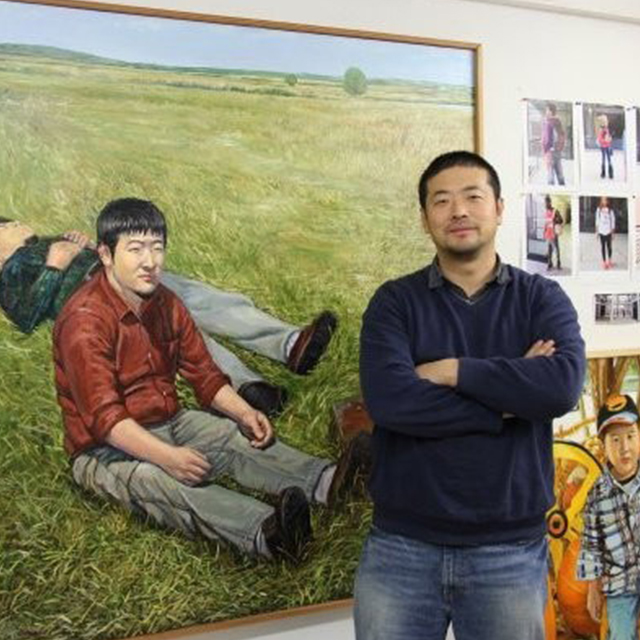
Nan Liu is a Professor at Florida A&M University (FAMU) since 2020, with prior academic ranks including Associate Professor (2014-2020), Assistant Professor (2010-2014), and Visiting Assistant Professor (2007-2010). He holds a Ph.D. and MFA from Florida State University , MA in Art Education from University of Arkansas at Little Rock and Capital Normal University , and BFA in Chinese Painting from Nan Kai University . Research Interests focus on cross-cultural art education, Chinese brush painting adaptation in the US, and figurative/landscape art pedagogy. His work bridges Eastern traditional techniques with Western contemporary practices, emphasizing natural expression and cultural synthesis. Exhibitions include 21 solo shows and 128 group exhibitions across the US and China, with awards from Sumi-e Society of America, St. Augustine Art Association, and Gadsden Arts Center. Scientific Awards include: Best of Show Calligraphy, Sumi-e Society (2023) Teacher of the Year, FAMU (2021-2022) Founder’s Award for Painting, Sumi-e Society (2022) Multiple regional competition awards Publications encompass translated textbooks and original research on US-China art education comparison. Grants include FAMU Faculty Research Awards and travel grants for academic presentations.
Michele Gattullo serves as an Assistant Professor within the Department of Mechanics, Mathematics & Management at the Polytechnic University of Bari, Italy, specializing in design methods for industrial engineering (ING-IND/15). His research bridges cutting-edge extended reality technologies with practical industrial applications, focusing on human-centered solutions for manufacturing, maintenance, and workplace design. Dr. Gattullo's research portfolio centers on Augmented Reality, Virtual Reality, and Biophilic Design, with significant contributions to Human-Computer Interaction in industrial contexts. He investigates how nature-inspired elements in virtual workspaces enhance employee well-being and productivity, while simultaneously developing practical AR tools for assembly guidance, technical documentation, and maintenance support. His work uniquely integrates ergonomics, cognitive psychology, and industrial engineering to optimize human-technology interaction in complex production environments. Analysis of his 15 most recent publications reveals two dominant research trajectories: biophilic design frameworks for virtual/metaverse workspaces (2023-2025) and industrial AR authoring methodologies. The biophilic stream establishes evidence-based guidelines for digital nature integration, while the AR stream delivers validated tools like ADAM and minimal AR approaches that streamline technical documentation creation. Both trajectories emphasize user experience validation through rigorous industrial studies, demonstrating strong interdisciplinary impact across computer science, industrial engineering, and environmental psychology. Scientific Awards: No awards or honors were documented in the available sources. Advising and Grants: The provided materials contain no information regarding graduate student supervision, research grants, or funding sources. His academic profile emphasizes publication output over mentoring activities or project financing details. Laboratories and Teams: While Dr. Gattullo's research involves advanced XR technologies, the source text does not specify laboratory facilities, research groups, or collaborative teams associated with his work at Politecnico di Bari.
Harry Hochheiser is an Associate Professor at the University of Pittsburgh School of Medicine, affiliated with the Department of Biomedical Informatics and the Intelligent Systems Program. He serves as Director of the Biomedical Informatics Training Program and is a Pitt Cyber Affiliate Scholar, focusing on interdisciplinary research at the intersection of computer science and healthcare. Education: MS and BS in Electrical Engineering and Computer Science from MIT (1991) His research spans human-computer interaction, information visualization, bioinformatics, universal usability, security, privacy, and public policy implications of computing systems. He emphasizes user-centered design for biomedical data exploration, including electronic health records and clinical informatics. His recent work includes NSF-funded projects on computer security education and computational thinking, alongside teaching courses in algorithms, human-computer interaction, and information visualization. Analysis of his publications reveals a focus on biomedical informatics, machine learning in healthcare, clinical data modeling, and natural language processing applications. Collaborative efforts include projects on gene networks, drug interactions, and clinical decision support systems. His current projects aim to develop interactive systems for biomedical data exploration, with applications in cancer informatics, pharmacogenomics, and clinical workflow optimization. He actively contributes to evaluation frameworks for visual analytics in healthcare and participates in policy discussions through roles like the Association of Computing Machinery's US Public Policy Committee.
Malena Janson is a Lecturer at the Department of Child and Youth Studies , Stockholm University , specializing in children's culture and moving image media. Her work spans teaching, research, and public engagement across multiple disciplines. Swedish Film Institute network member for film educational research Steering group member of BIN Norden (Nordic children's culture network) Co-editor on multiple children's culture anthologies Research Focus : Historical and contemporary children's film/TV aesthetics Child figure functions in moving images Child-animal relationships in media Narrative liminality and phantasmagoria Norm criticism in visual culture Adaptation and transmediality Recent Publications address Swedish children's cinema history, Bergman film analysis, and media's role in shaping democratic citizenship. Articles since 2022 explore posthumanist narratives and eco-activism in children's television. Teaching Materials developed for Swedish Film Institute include guides for films like Heartstone , Your Name , and Matilda , emphasizing aesthetic learning and critical thinking.
Gaute Barlindhaug serves as an Assistant Professor in the Department of Language and Culture at UiT The Arctic University of Norway, within the Faculty of Humanities, Social Sciences and Teacher Education. His academic work bridges artistic practice with scholarly research in sonic arts and cultural documentation. His research interests span Sonic Arts , Sound Studies , Music Technology , and Digital Humanities , with particular focus on the ontological status of sound recordings, the intersection of traditional and digital sound technologies, and the preservation of cultural heritage through both artistic and technological approaches. His work often examines how sonic mediations transform aesthetic experiences and cultural expressions. Analysis of his publications reveals a consistent trajectory exploring the relationship between technology and sonic expression, with recent work incorporating artificial intelligence applications in document preservation. His research demonstrates an interdisciplinary approach that combines artistic practice with scholarly inquiry, particularly evident in his contributions to the Journal for Artistic Research. Barlindhaug is actively involved in multiple research initiatives: Engaging Conflicts in a Digital Era (ENCODE) Worlding Northern Art LAMCOM – Libraries, archives, and museums in the community His scholarly output includes both traditional academic publications and creative works, reflecting his position at the intersection of artistic practice and academic research. His contact information is available through the university directory at gaute.barlindhaug@uit.no.
L. Jason Anastasopoulos is an Associate Professor of Public Administration and Policy and Statistics (by courtesy) at the University of Georgia's School of Public and International Affairs (SPIA). He holds dual appointments as a Faculty Fellow at the Benson-Bertsch Center for International Trade and Security (formerly CITS) and a faculty affiliate at the Institute for Artificial Intelligence, with additional affiliation at USC’s Civic Leadership Education and Research Initiative. His research centers on the political economy of technology, investigating how political institutions adapt to technological change and its implications for democratic governance. Key focus areas include AI’s impact on bureaucracy, causal inference methodologies, machine learning applications in social science, historical analysis of democratic backsliding during technological transitions, and the evolving political role of central banks. His methodological work emphasizes Bayesian approaches and computational techniques for improving empirical analysis in political science. Recent publications reveal a dominant trend in integrating artificial intelligence with public administration and political economy, spanning temporal causal inference frameworks, comparative AI governance across sectors, historical technological disruptions (e.g., rural electrification), and algorithmic bias in public services. His work consistently bridges theoretical political science with cutting-edge computational methods, particularly natural language processing and deep learning applications for policy analysis. Dr. Anastasopoulos has mentored eight graduate students across International Affairs, Political Science, Public Administration, and Statistics programs. His advisees include tenure-track professors at Ripon College, University of Florida, and California State University, alongside industry professionals at Lockheed Martin and the Tampa Bay Rays. He actively contributes to interdisciplinary research through leadership roles at the Benson-Bertsch Center for International Trade and Security and UGA’s Institute for Artificial Intelligence.
Kobus Barnard is a Professor in the Department of Computer Science at the University of Arizona, with his office located in GS 708. His research bridges computer vision, machine learning, and interdisciplinary scientific applications across diverse domains. Education: Ph.D. from Simon Fraser University (1999) His research interests focus on extracting meaningful insights from complex data through computer vision and probabilistic modeling. Key areas include machine learning for environmental monitoring (flood detection, plant disease analysis), social dynamics (interpersonal coordination, emotional coregulation), astronomy (transient classification), and multimodal learning (visual-linguistic integration). His work consistently applies deep learning to real-world problems requiring high-resolution data interpretation. Analysis of his 2022-2025 publications reveals three dominant trends: (1) Environmental applications using satellite imagery for flood mapping and agricultural monitoring, (2) Cognitive modeling of human teams and emotional dynamics through probabilistic frameworks, and (3) Astronomical data analysis leveraging host galaxy properties for transient classification. These threads demonstrate his commitment to solving practical scientific challenges through computational innovation. While scientific awards aren't documented in available sources, his leadership in projects like FloodPlanet and ToMCAT indicates significant contributions to data infrastructure. His advising and grant activities remain unreported in the source material, though his extensive interdisciplinary collaborations suggest substantial mentorship impact. Barnard's work operates at the intersection of multiple scientific communities, evidenced by applications spanning neuroscience, agriculture, astronomy, and social science. His current focus on high-resolution data fusion and multimodal modeling positions him at the forefront of real-world AI deployment.
Nicholas J Volpe, MD is the Chair of the Department of Ophthalmology and George W. and Edwina S. Tarry Professor of Ophthalmology at Northwestern University's Feinberg School of Medicine. He leads the Department of Ophthalmology within the Feinberg School of Medicine, overseeing clinical, educational, and research activities in ophthalmology. Dr. Volpe received his education from Stuyvesant High School (1980), Brooklyn College of CUNY (BS, 1983), and SUNY/State University of New York (MD, 1987). His postgraduate training included an internship in Medicine at Beth Israel Medical Center (1988), residency in Ophthalmology at Massachusetts Eye & Ear Infirmary, Harvard Medical School (1991), fellowship in Neuro-ophthalmology at Massachusetts Eye & Ear Infirmary, Harvard Medical School (1992), and served as Chief Resident in Ophthalmology at Massachusetts Eye & Ear Infirmary, Harvard Medical School (1993). He is board certified in Ophthalmology by the American Board of Ophthalmology. Dr. Volpe's research spans neuro-ophthalmology, retinal diseases, glaucoma, and medical education. His work includes investigations into optic nerve disorders, neurodegenerative diseases with ophthalmic manifestations, imaging technologies like Optical Coherence Tomography, and innovative approaches to ophthalmology education and surgical training. His recent publications show a trend toward integrating advanced imaging techniques, artificial intelligence applications in ophthalmic diagnosis, and exploring connections between systemic diseases and ocular manifestations. Dr. Volpe has received numerous awards and honors throughout his career: American Ophthalmological Society membership (2015) Honor for 'A.E. Finley Distinguished Visiting Professor', University of North Carolina (2014) Dubins Professor, Albany Medical College (2010) Silver Apple for Best Surgery Teacher, University of Pennsylvania (multiple years) Senior Achievement Award, American Academy of Ophthalmology (2008) Marianna Mead Lectureship, Massachusetts Eye and Ear Infirmary (2007) Robert Dunning Dripps Memorial Award for Excellence in Graduate Medical Education (2006) As an educator, Dr. Volpe has held numerous leadership positions in medical education, including Chair of the Residency Selection Committee at the Scheie Eye Institute, University of Pennsylvania, and various roles with the American Academy of Ophthalmology's education committees. He has been instrumental in developing surgical simulation programs and innovative approaches to ophthalmology residency training. His department has received significant research funding, including grants from Research to Prevent Blindness to support investigators advancing the field of ophthalmology and vision science. Dr. Volpe serves in numerous professional leadership roles and is actively involved with multiple ophthalmology and neuro-ophthalmology societies.
Hironori Washizaki is a Professor at Waseda University's School of Fundamental Science and Engineering, Department of Information and Computer Science, and serves as Director of the Global Software Engineering Laboratory. He also holds a visiting professorship at the National Institute of Informatics and serves as outside director at SYSTEM INFORMATION CO.,LTD. and eXmotion Co., Ltd. With a Doctorate in Information and Computer Science from Waseda University (2003), he has established himself as a leading researcher with 384 publications and an h-index of 36 according to Google Scholar. His research spans multiple domains including software engineering methodologies, security patterns, programming education, and the application of machine learning to software development. His work has significantly contributed to the fields of software patterns, quality assurance, and educational tools for programming. With over 20 years of academic experience, his career progressed from Research Associate (2002-2004) to Assistant Professor (2004-2008), Associate Professor (2008-2016), and Professor (2016-present). Washizaki's recent publications demonstrate a strong focus on applying AI and machine learning techniques to software engineering challenges, including prompt engineering patterns, program repair methods, and vulnerability assessment. His work bridges theoretical research with practical applications in both educational and industrial contexts, particularly in B2B software development and programming education for diverse age groups. KDDI Foundation Award (2022) Spirit of the Computer Society Award (2022) Distinguished Contributor, IEEE Computer Society (2022) IEEE Computer Society Golden Core Member (2022) Fellow, International Academy, Research, and Industry Association (2022) Computer Research Contribution Award, APSCIT (2016) Washizaki has served as chair of the IEEE CS Japan Chapter and SEMAT Japan Chapter, director of ACM-ICPC 2014 Asia Regional Tokyo Contest, and Convenor of ISO/IEC/JTC1/SC7/WG20. His editorial work includes positions at IEICE Transactions on Information and Systems and International Journal of Software Engineering and Knowledge Engineering. His leadership extends to programming education initiatives like SamurAI Coding, demonstrating his commitment to developing the next generation of software engineers.
Chris Danforth is a Professor in the Department of Mathematics & Statistics at the University of Vermont and serves as Director of the Vermont Advanced Computing Center. Co-founder of the Computational Story Lab with Peter Dodds, he applies mathematical principles to analyze complex systems across social media, behavioral health, and cultural dynamics. Education: Not explicitly stated in text Affiliation: University of Vermont His research spans Computational Social Science , Machine Learning , and Behavioral Health Analytics , focusing on quantifying human behavior through social media analysis, wearable device data, and literary structures. Key projects include the Hedonometer (Twitter happiness measurement), Storywrangler (cultural timeline analysis), and LEMURS (longitudinal study on student well-being). Recent publications demonstrate expertise in Nonlinear Dynamics , Data Privacy , and Urban Demographics . Articles explore topics ranging from pandemic attention dynamics to computational paremiology (proverb analysis), with applications in mental health prediction, market efficiency, and social justice metrics. 2022 Kroepsch-Maurice Excellence in Teaching Award NSF, AMD, and MassMutual funding Co-developer of Storywrangler and Hedonometer tools As director of the Vermont Advanced Computing Center, Danforth leads high-performance computing initiatives while maintaining an active research agenda with interdisciplinary collaborations across medicine, computer science, and social sciences.
Heather Miller is a tenure-track Assistant Professor in the Software and Societal Systems Department within Carnegie Mellon University's School of Computer Science. Her academic journey includes prior roles as an Assistant Clinical Professor at Northeastern University's College of Computer and Information Science and as Executive Director of the Scala Center at EPFL. Miller's research centers on distributed and concurrent computation through the lens of programming languages, with particular emphasis on data-centric systems, big data processing, and edge computing. A defining theme throughout her work is composability - enabling construction of complex distributed systems through composition of components that are correct by construction. Her projects span distributable closures, flexible serialization techniques, futures and promises for asynchronous programming, and deterministic concurrent dataflow models. Her recent publications demonstrate strong trends in applying programming language theory to practical distributed systems challenges, with increasing focus on WebAssembly instrumentation, microservice resilience, and language model pipelines. This evolution reflects her commitment to bridging theoretical foundations with real-world system requirements. Dahl-Nygaard Junior Prize (2023) Mentorship forms a significant component of Miller's academic work. She actively supervises multiple PhD, MS, and undergraduate researchers at CMU, including Christopher Meiklejohn, Matthew Weidner, Huairui Qui, Ria Pradeep, and Luke Dramko. Her service contributions span numerous top-tier conferences including PLDI, SPLASH, ECOOP, and ICSE where she has served as committee member, chair, and keynote speaker. Miller co-founded the Curry On conference to foster industry-academia dialogue, hosting successful editions in Prague, Rome, Barcelona, Amsterdam, and London. She leads research groups focused on distributed programming models and maintains strong industry connections through Two Sigma, where she holds an affiliation. Her work consistently emphasizes practical open-source implementations, primarily within the Scala ecosystem where she's been a core contributor since 2011.