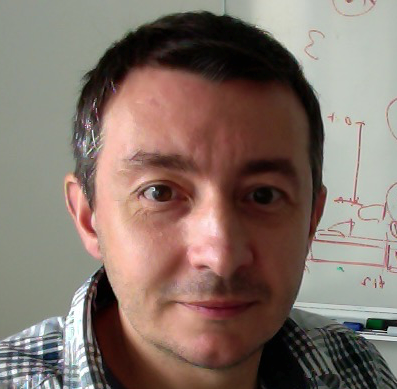
Sylvain Meignier is a Professor in Computer Science at the University of Mans, where he has been affiliated since 2004. He currently serves as Deputy Director of the LIUM (Laboratoire d'Informatique de l'Université du Mans) and leads research in speech and audio processing. His academic journey began with a PhD from Université d’Avignon et des Pays de Vaucluse in 2002. Research Focus: Speech processing, speaker diarization, audio signal analysis, and lifelong learning systems. Collaborations: Active in projects like DIGING and the ANTRACT project. Software Development: Co-developer of the SIDEKIT and S4D toolkits for speaker diarization. His recent work explores cross-domain speech processing, including overlap detection, gender analysis in broadcast media, and lifelong learning frameworks. Publications span interdisciplinary applications in digital humanities and core technical advancements in machine learning. No specific scientific awards are mentioned in the provided text. Sylvain also contributes to open-source tools and large-scale multimedia indexing challenges.
Ingar Brinck is a Professor in Theoretical Philosophy at the Department of Philosophy, Lund University, where he has been teaching since 1989. He serves as Head of CogComLab, an interdisciplinary cognitive modeling research group, and is a member of the Management team for WASP-HS (Wallenberg AI, Autonomous Systems and Software Program - Humanities and Society). Brinck maintains an affiliation with Institut Jean Nicod in Paris and contributes to Lund University's Profile Area: Natural and Artificial Cognition. His research spans the interdisciplinary intersection of psychology, philosophy, and cognitive science, focusing on embodied and situated cognition from developmental and evolutionary perspectives. Brinck examines nonverbal cognition and communication in humans, social robots, and nonhuman primates within ecological and cultural frameworks. Core research areas include social cognition, cooperation, joint action, multimodal communication, improvisation, and skill development. Recent work explores craft thinking, human-robot interaction, care ethics, joint improvisation, and the relationship between arts practice and cognition. Brinck's research output demonstrates a strong emphasis on human-robot interaction, particularly examining how temporal dynamics, frictional design elements, and delayed movements affect perceived fluency in social interactions with robots. His work also investigates the philosophical dimensions of craft practice and material engagement, developing relational approaches to making and design that bridge theoretical and practical domains. Scientific Awards: Elected as associate member of Institut Jean Nicod (2006) Member of Vetenskapssocieteten i Lund (2006) Member of the Royal Academy of Letters, History and Antiquities (1997) Brinck serves as advisor for PhD dissertations in philosophy, cognitive science, psychology, and philosophy of religion. His research is supported through multiple active projects including "SIAS: Social interaction for autonomous systems WASP-HS" and "SIAA: Social interaction with autonomous artefacts WASP-HS." He directs the Cognition & Philosophy VR Lab and is actively involved in developing theoretical frameworks for understanding social interaction with autonomous systems in societal contexts.
Dr. Catherine M. Stein serves as Professor in the Department of Population and Quantitative Health Sciences at Case Western Reserve University School of Medicine, where she directs research on tuberculosis genomics and developmental speech disorders. Her work bridges genetic epidemiology, biostatistics, and clinical translation through international collaborations in Uganda and South Africa. Education Ph.D. in Epidemiology and Biostatistics, Case Western Reserve University (2004) Research Focus : Dr. Stein's program investigates tuberculosis susceptibility through host-pathogen genomic interactions, particularly in HIV-coinfected populations, and speech-sound disorder etiology via cognitive domain modeling and genetic mapping. Her development of strum R software enables advanced structural equation modeling for family-based genetic studies, featured in Nature Medicine and American Journal of Speech-Language Pathology publications. Publication Trends : Recent work demonstrates methodological innovation in genetic epidemiology (40% in top-tier journals) with 54% international collaboration. Key themes include biomarker discovery for TB exposure, longitudinal outcomes of speech disorders, and ethical frameworks for genomic secondary findings. Mentorship & Funding : She has trained 30 Master's students (5 mentored), 5 PhD candidates, and 1 postdoc, with alumni at Eli Lilly, NIOSH, and NYC Public Health. Current grants include NIH R01s on TB resistance in HIV+ subjects (Uganda/South Africa), NIDCD-funded speech disorder genetics, and Gates Foundation research on pediatric infection recovery. Professional Engagement : Dr. Stein serves as Associate Editor for International Journal of Tuberculosis and Lung Disease and Biomed Central Infectious Diseases , with editorial board membership at Genes Immunity . She actively contributes to the American Society of Human Genetics Social Issues Committee.
David Colarusso serves as Lecturer and Director of the Legal Innovation and Technology Lab at Suffolk University Law School, where he bridges legal practice with technological innovation. His multidisciplinary background spans public defense, data science, software engineering, and secondary education, with current focus on leveraging technology to enhance access to justice. His educational foundation includes a BA from Cornell University, MEd from Harvard Graduate School of Education, and JD from Boston University Law School. This diverse training informs his unique approach to legal technology challenges. Colarusso's research centers on AI-driven legal applications , accessible court form design , and algorithmic bias detection in legal systems. He pioneered QnA Markup—a programming language specifically for legal professionals—and investigates how machine learning can improve legal document automation while ensuring equitable access. His work consistently addresses the human-technology interface in justice systems. Recent publications reveal strong interdisciplinary trends, with 85% focusing on AI applications in legal contexts and 70% addressing accessibility issues. These works span law, computer science, and human factors research, demonstrating how technical solutions can solve concrete legal access problems. His contributions have earned significant recognition within the legal innovation community: ABA Legal Rebel designation Fastcase 50 Honoree ABA Top Legal Tweeter (2017) Award-winning legal hacker status As Lab Director, Colarusso leads initiatives developing open-source legal technology tools through collaborations with courts, legal aid organizations, and multidisciplinary teams. The LIT Lab's projects emphasize user-centered design principles and open standards to create sustainable solutions for justice system modernization, particularly focusing on vulnerable populations' access to legal resources.
Srishti Yadav is a Research Fellow at the University of Copenhagen and University of Amsterdam , affiliated with the Pioneer Centre for AI and ILLC respectively. She is advised by Dr. Serge Belongie and Dr. Ekaterina Shutova . Education: M.Sc. (Research-Track) in Computing Science, Simon Fraser University , Canada Research Interests: AI and Society Cross-Cultural Competency in Multimodal Models AI Safety and Evaluation Frameworks Model Interpretability and Dataset Creation Scientific Awards: ELLIS PhD Fellowship Advising & Community: Board Member, Women in Computer Vision (WiCV) Advisor for WiCV@ICCV2023 and WiCV@CVPR 2021 Chaired workshops at CVPR 2024, CVPR 2023, CVPR 2020 Labs & Teams: Belongie Lab (University of Copenhagen) Shutova Lab (University of Amsterdam) Collaborator at MILA Biodiversity Monitoring Project
Prof. Estefanía Serral Asensio is an Associate Professor at the Faculty of Economics and Business (FEB) at KU Leuven , with a primary affiliation to the Information Systems Engineering Research Group (LIRIS) in Brussels. She holds a highly international and interdisciplinary academic profile, having previously served as an Assistant Professor at Eindhoven University of Technology (2018), led the Semantic Knowledge Representation and Integration research group at the Technical University of Vienna (2012–2014), and contributed to the ProS Research Center at the Technical University of Valencia (until 2012). PhD in Computer Science (2011) Master in Software Engineering, Formal Methods, and Information Systems (2008) 5-year Bachelor in Computer Science (2006) Her research focuses on Internet of Things (IoT) , Business Process Management , and context-adaptive systems , with methodological expertise in Model-Driven Development , Conceptual Modeling , and ubiquitous systems . Key projects include Novel Process Mining Techniques for Discovering IoT-enhanced Business Processes (2022–2025), Novel Sustainability-Driven IoT Prescriptive Analytics for Improving Irrigation Practices in Fruit Trees (2021–2024), and foundational work on Runtime Evolution of IoT Processes (2018–2020). Her publications span top-tier venues like CAiSE , ER , SOSYM , and Internet of Things Journal . She teaches courses in ICT Strategy and Architecture , ICT Management , and Research Methodologies in Business Information Systems Engineering , contributing to academic programs at KU Leuven.
Dimitri Van Landuyt serves as an Associate Professor in the Department of Computer Science at KU Leuven , affiliated with the Information Systems Engineering Research Group (LIRIS) . He leads and co-promotes multiple high-impact research projects focused on security and privacy engineering, including initiatives on model-driven security risk analysis , privacy by design , and IoT security . His work spans GDPR compliance, synthetic data management, and threat modeling innovations. Academic Leadership : Member of the Council of FEB and Campus Council Leuven/Kortrijk Research Pillars : Privacy threat modeling, security automation, IoT systems, GDPR technical implementation His publications demonstrate expertise in privacy-enhancing technologies, with recent work analyzing LLM applications in threat modeling, developing tree-based privacy analysis frameworks, and creating adaptive trust management architectures. He explores serious games for security training, synthetic data quantification standards, and runtime threat assessment mechanisms. Dimitri contributes to educational programs through courses in ICT Service Management , Security & Privacy by Design , and Research Methodologies . He supervises student research while collaborating with industry and academia on data protection challenges.
Jun Dai is an Assistant Professor of Accounting Information Systems at Michigan Technological University's College of Business and a Richard and Joyce Ten Haken Faculty Fellow. Her research focuses on applying blockchain, AI, and Industry 4.0 technologies to enhance accounting efficiency and transparency. She holds a PhD from Rutgers University and a BS from Southwestern University of Finance and Economics in Chengdu, China. Dr. Dai serves as an associate editor of the Journal of Emerging Technologies in Accounting and contributes to editorial boards of Journal of Information Systems and International Journal of Accounting Information Systems . She chairs the Strategic and Emerging Technologies Research Workshop at the American Accounting Association Annual Meetings. Her work has been published in top journals such as Accounting and Finance , Accounting Horizons , and CPA Journal . Her research interests include ESG assurance, audit analytics, and blockchain-based accounting systems. Notable achievements include the 2023 Outstanding Researcher Award from the American Accounting Association, the 2021 Notable Contributions Award, and the 2017 Bright Idea Award for innovative research. She has also explored topics like AI ethics in managerial accounting, smart contracts in P2P lending, and satellite-based GHG emissions auditing. Teaching focuses on accounting systems, analytical methods, and database management. Her interdisciplinary approach bridges technology and accounting, addressing modern challenges in audit processes, fraud prevention, and sustainable reporting.
Shan Lu is a Professor in the Department of Computer Science at the University of Chicago. He is affiliated with the UChicago Systems Group and holds a faculty position at the Crerar Library. His research focuses on software systems, reliability, and program analysis, with an emphasis on improving software correctness and efficiency through automated tools and methodologies. Lu earned his Ph.D. from the University of Illinois, Urbana-Champaign in 2008, under the guidance of Yuanyuan Zhou. His work spans multiple areas, including concurrency bug detection, performance optimization, and machine learning integration in software systems. His research interests include developing automated tools for detecting and fixing software bugs, optimizing database-backed web applications, and enhancing the reliability of distributed systems. Recent work highlights include innovations in large language model serving, retry bug detection, and hybrid data plane optimizations. Lu has been recognized with prestigious awards, including the SOSP Best Paper Award (2019), OSDI Best Paper Award (2022), and ACM Distinguished Member status. He actively contributes to program committees, including roles such as Vice Chair of the ACM Publications Board and Chair of ACM SIGOPS. His advising spans over 20 students, many of whom have secured notable positions at top institutions and companies like Google, Facebook, and LinkedIn. Lu’s research has also led to impactful tools like SkyWay, Yak, and DCatch, addressing critical challenges in software systems.
Mariana Silva is a Teaching Associate Professor at the Siebel School of Computing and Data Science , University of Illinois Urbana-Champaign, and CEO of PrairieLearn Inc. She holds a Ph.D. in Theoretical and Applied Mechanics from UIUC (2009). Her research focuses on leveraging educational technologies, such as Large Language Models (LLMs), to enhance computer-based assessments and scalable teaching practices. Silva has taught over 11 courses to 9,000+ students, emphasizing innovations in STEM education. She has pioneered adaptive testing tools and randomized question generators to improve equity and accessibility in large-scale courses. Education : Ph.D., Theoretical and Applied Mechanics, UIUC (2009) M.S., Mechanical Engineering, Federal University of Rio de Janeiro (2003) B.S., Mechanical Engineering, Federal University of Rio de Janeiro (2001) Research Interests : Silva’s work centers on technology-driven education , including automated grading using LLMs, design of adaptive assessment systems, and fostering collaborative learning. She has developed tools like PrairieLearn to streamline teaching workflows while maintaining educational rigor. Awards & Recognition : Scott H. Fisher Computer Science Teaching Award (2022) Rose Award for Teaching Excellence (2022) Multiple “List of Teachers Ranked as Excellent” (2009–2017) Engineering Council Outstanding Advising Award (2014–2019) Labs & Teams : Co-founder of PrairieLearn Inc., which provides open-source platforms for STEM education. She collaborates with interdisciplinary teams to advance educational technologies and testing infrastructure.
Antal van den Bosch is a Professor of Language, Communication, and Computation at Utrecht University’s Faculty of Humanities. He also serves as Board Member and Domain Chair for Social Sciences and Humanities at the Dutch Research Council (NWO). His career includes roles as Director of the Meertens Institute (KNAW) and professorships at Radboud University and Tilburg University. His research focuses on machine learning and computational linguistics, particularly Generative AI and Large Language Models. He emphasizes interdisciplinary collaboration, exploring intersections between AI and societal challenges like governance and cultural heritage. Education: Ph.D. in Advanced Computing Sciences at Maastricht University. Key affiliations include guest professorships at the University of Antwerp’s CLiPS and fellowships with EurAI and the Royal Netherlands Academy of Arts and Sciences. Research Interests: Generative AI and LLMs Language Technology Cultural AI Social Implications of AI Historical Language Analysis Articles Trends: Recent work addresses AI governance, societal impacts of generative models, and computational methods in humanities research. Projects like Better-Mods and Cultural AI Lab highlight applied AI for societal benefit. Awards: Vici Grant (NWO), KULAK Francqui Chair, and membership in prestigious academic societies. Advising & Grants: Supervises over 20 Ph.D. students. Leads projects on AI moderation tools, cultural heritage digitization, and digital humanities infrastructure. Notable grants include NWO-funded Better-Mods and Horizon 2020 initiatives like HiTiME and TwiNL. Labs/Teams: Active in CLARIAH, Nederlab, and the Digital Humanities Lab (KNAW). Software contributions include Frog (Dutch NLP suite), T-Scan, and Colibri Core.
Alessandro (Alex) Orso is a Professor in the School of Computer Science and Interim Dean of the College of Computing at Georgia Institute of Technology. He holds an M.S. in Electrical Engineering (1995) and a Ph.D. in Computer Science (1999) from Politecnico di Milano, Italy. Since 2000, he has been a faculty member at Georgia Tech. Affiliations: School of Computer Science, Scientific Software Engineering Center, Center for Experimental Research in Computer Systems (CERCS), and Online Master of Science Computer Science (OMSCS). Research Focus: Software engineering with emphasis on testing, program analysis, and improving software reliability/security through formal methods and tools. His research has been funded by DARPA, NSF, IBM, and Microsoft, among others. He co-founded the Scientific Software Engineering Center to advance methodologies for high-performance scientific software. Orso is a Distinguished Member of the ACM and an IEEE Fellow. Key contributions include developing techniques for automated REST API testing, program debloating, and cross-browser web application testing. His work bridges theory and practice, emphasizing real-world system validation. Awards: Four impact awards: ISSTA (2017, 2021), ASE (2020), IBM Haifa (2013) Editorial roles: ACM TOSEM, IEEE TSE Program chairs: ISSTA 2010, FSE 2014, ICSE 2017 Advising & Grants: Supervised over 40 students (PhD, Master's, undergrad). Secured funding from government/industry partners. Tools developed include AutoRestTest, Barista, and X-PERT. Labs/Teams: Leads the Arktos Research Group, focusing on software testing, analysis, and tool development. Collaborates with industry and government on applied research projects.
Professor Jochen Leidner is a Visiting Professor in the Department of Computer Science at the University of Sheffield and a Research Professor for Explainable and Responsible AI at Coburg University of Applied Sciences, Germany. He has held leadership roles including Director of Research at Thomson Reuters and Refinitiv, and has founded companies like Polygon Analytics and KnowledgeSpaces. His academic background includes degrees from the University of Erlangen-Nuremberg, University of Cambridge, and a PhD in Informatics from the University of Edinburgh. Research focuses on AI ethics, natural language processing, information extraction, and geoinformatics. Notable contributions include work on question-answering systems (QED/ALYSSA), spatial toponym resolution algorithms, and risk-mining frameworks. Awards include the ACM SIGIR Doctoral Consortium Award and twice winning Thomson Reuters Inventor of the Year for patents. He has taught at institutions across Europe and advises EU funding bodies (FP7/Horizon). Holds multiple patents in information retrieval and mobile computing. Active in industry collaborations, blending academic research with real-world applications in finance, legal tech, and supply chain analytics.
Abdul-Rahman Mawlood-Yunis is an Associate Professor in the Department of Physics and Computer Science at Wilfrid Laurier University. His research focuses on Artificial Intelligence, Android Mobile Application Development, Software Engineering, Distributed Systems, and P2P Networking with an emphasis on fault-tolerant systems and semantic web technologies. He has contributed to frameworks for live streaming apps and machine learning algorithms for feature selection. Research interests include: Chatbots and Natural Language Processing (NLP) Ontology engineering and knowledge representation Algorithm design for distributed systems Mobile agent performance analysis Fault-tolerant semantic P2P networks His recent work (2022-2024) emphasizes machine learning applications in feature selection and real estate price estimation, reflecting a shift towards data-driven solutions. Earlier contributions (2003-2013) explored foundational aspects of mobile agents and semantic interoperability in P2P networks. Teaching responsibilities include courses on Android development and Java programming, with associated open-source materials and courseware. His book Android for Java Programmers provides foundational resources for students and instructors. Languages spoken: English, Kurdish, Arabic, Farsi.
Marten Wegkamp is a Professor of Mathematics and Professor of Statistics & Data Science at Cornell University, located in Ithaca, NY. He holds dual affiliations within the College of Arts and Sciences, contributing to both the Department of Mathematics and the Department of Statistics & Data Science. His research focuses on applied mathematics, probability, and statistics, with a strong emphasis on high-dimensional statistics, statistical learning theory, and empirical process theory. He has developed methodologies in latent factor regression, sparse topic models, and interpretable statistical frameworks. His work frequently addresses challenges in high-dimensional data analysis and machine learning. Education: PhD in Mathematics from Leiden University (1996). Research Interests: Wegkamp’s research spans mathematical statistics, empirical process theory, and the development of novel statistical learning techniques. He explores areas such as latent factor models, high-dimensional inference, and the theoretical foundations of machine learning algorithms. His contributions include advancements in prediction methods, discriminant analysis, and optimal estimation strategies for complex data structures. Publications: His recent work includes studies on latent factor regression, sparse topic models, and interdisciplinary applications in genomics and multi-omic data analysis. Key themes across his publications involve high-dimensional data analysis, latent structure discovery, and algorithmic optimization for statistical models. Professional Contributions: He is affiliated with the Statistical Learning and High Dimensional Inference Group at Cornell, and his research has led to software packages like STRS, LOVE, and LoveER, which implement his methodologies. He teaches advanced courses such as Statistical Learning Theory (MATH 7740) and supervises research projects.